Is Lake Tahoe good for shore fishing?
Lake Tahoe, with its breathtaking sapphire waters and majestic Sierra Nevada backdrop, draws countless visitors year-round. For many anglers, the thought of fishing such an iconic lake is thrilling, but a common question quickly arises: "Is Lake Tahoe good for shore fishing?" While the lake is renowned for its deep-water Mackinaw trout and incredible boat fishing opportunities, trying to figure out if you can have a productive day casting from the shore without a boat can be a real head-scratcher. This guide aims to tackle that very question, providing you with realistic expectations, prime spots, and essential tips for successful shore fishing in the Nevada portion of Lake Tahoe.
Understanding Lake Tahoe's Shore Fishing Landscape
Many anglers arrive at Lake Tahoe expecting easy shore access and plentiful catches, only to be met with crystal clear, incredibly deep water right off the bank, and fish that are notoriously shy. It's not like your average local pond, and setting your expectations correctly is the first step to enjoying your time. The sheer size and depth of Tahoe mean that fish often have vast expanses of water to roam, and the extremely clear conditions can make them wary of anything moving on the surface or casting shadows.
The Allure and Challenges of Shore Fishing Tahoe
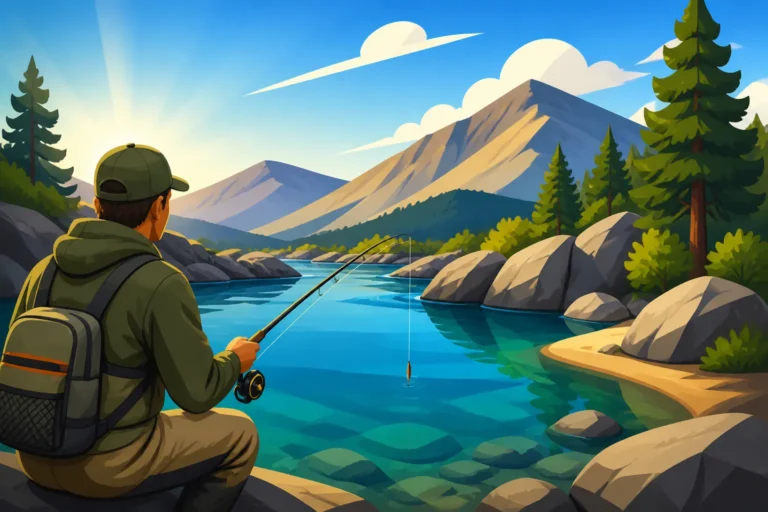
There's an undeniable charm to casting a line from the shore of Lake Tahoe. You get to soak in the stunning views, enjoy the tranquility, and avoid the costs and complexities associated with launching and maintaining a boat. For families or those just looking for a peaceful escape, shore fishing offers a simpler, more accessible way to connect with the water. You can explore various coves and points at your own pace, often finding solitude that's harder to come by in popular boating areas. Plus, you don't need a heavy-duty setup; a good spinning rod and a small tackle box can get you started.
However, these benefits come with their own set of challenges. Lake Tahoe's depths plummet dramatically close to shore in many areas, meaning prime fish habitat like structure or drop-offs might be out of casting range. The gin-clear water, while beautiful, is a double-edged sword: it allows fish to see you just as easily as you can see them, leading to extreme caution on their part. Finding consistent fish activity close to shore can require patience and a keen eye for subtle signs, and anglers often need to adjust their techniques significantly compared to fishing murky waters.
Common Fish Species to Target from the Bank
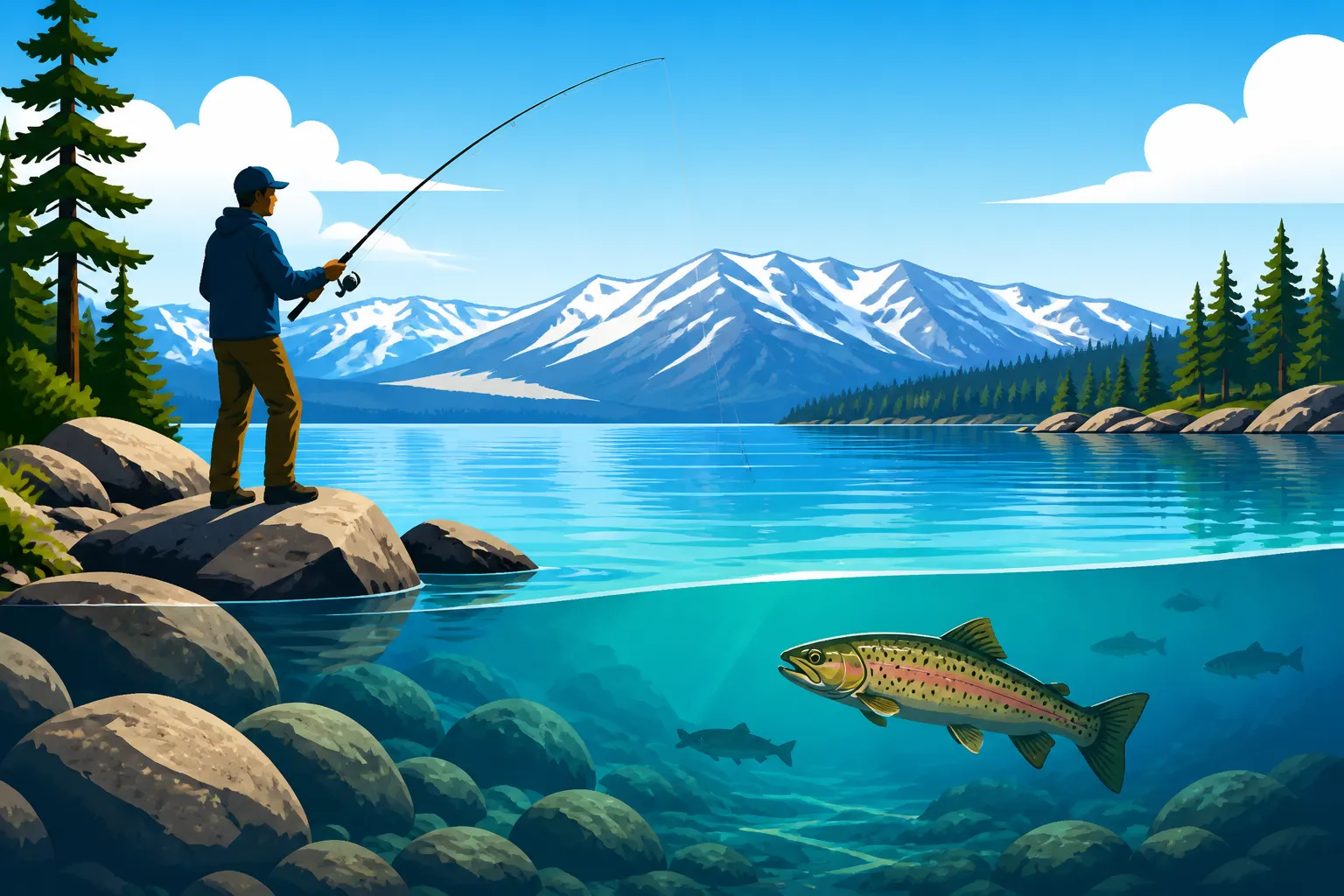
When you're shore fishing at Lake Tahoe, your primary targets will usually be rainbow trout and brown trout. These species tend to cruise closer to the shoreline, especially during certain times of the year or day when they're actively feeding on insects, minnows, or other small aquatic life. You might encounter an occasional kokanee salmon, particularly if there have been recent stockings or if you're fishing near their spawning runs in late summer and fall, though these are more typically caught by boaters.
Mackinaw (lake trout) are the apex predators of Lake Tahoe, and while they grow to impressive sizes, they predominantly inhabit the deeper, colder waters. Catching a Mackinaw from shore is a rare feat, often requiring specialized gear and techniques, like deep jigging from a very steep rocky point, and even then, it's not a common occurrence. Your best bet for a productive day from the bank will definitely be focusing on the rainbows and browns that patrol the shallows.
Prime Shore Fishing Locations on Lake Tahoe's Nevada Side
The Nevada side of Lake Tahoe offers some truly spectacular shorelines, but not all of them are equally suitable for fishing. Knowing where to go can make all the difference between a frustrating blank and a memorable catch. Public access points are key, as much of the shoreline is privately owned.
East Shore Gems for Anglers
The East Shore of Lake Tahoe, particularly the stretch along US-50 and SR-28, is renowned for its stunning scenery and some of the best public access points on the Nevada side. Spots like Sand Harbor State Park, while incredibly popular for recreation, can offer decent shore fishing opportunities, especially during off-peak hours or seasons. Look for rocky outcrops and areas where the water doesn't drop off too precipitously. The key here is early mornings or late evenings to avoid crowds and target cruising trout.
Another excellent area is near Cave Rock, a truly iconic landmark. The fishing here can be quite good due to the unique underwater structure created by the rock formations. Anglers often find success casting from the breakwater or rocky points. It's a bit more rugged, so good footwear is a must. Further south, the Zephyr Cove area provides public beaches and some more gradual slopes into the water, which can be productive for casting power bait or worms. For more insights on specific locations, checking out local resources or fishing forums can reveal hidden gems. You might even find some local knowledge on a platform like FishingBooker, where guides often share insights about the broader lake.
North Shore Access and Opportunities
As you head north along the Nevada side towards Crystal Bay, you'll find a mix of public and private access. Crystal Bay itself, with its rocky shoreline and deep pockets, can be an interesting spot. However, some areas are quite developed, limiting public access. If you're looking for more comprehensive information on fishing spots across the entire lake, a resource like "Lake Tahoe Nevada Fishing Guide" can be incredibly helpful.
While much of the North Shore borders California, the Nevada segments around Incline Village offer some smaller beaches and rocky points that can be fished. Parking and access can sometimes be a challenge, so planning ahead is crucial. Focus on areas where there's some underwater structure, like submerged rocks or ledges, which provide cover for fish. These areas are often prime feeding grounds for rainbow and brown trout.
Exploring Southern Nevada Shorelines
The southern end of Lake Tahoe on the Nevada side is generally more developed, with larger residential areas and casinos, which can limit public shore fishing opportunities. However, designated state park beaches or public access points, though fewer, might still offer a chance to cast a line. For instance, Nevada Beach Recreation Area sometimes has sections that can be productive, particularly away from the main swimming areas.
Fishing from a pier, if one is accessible, can also be a viable option, allowing you to cast into slightly deeper water without a boat. While not as extensive as the east or north shores for natural shoreline access, the southern portion still holds potential for the determined angler. Just be sure to check local regulations and access rules before heading out.
Essential Gear and Techniques for Lake Tahoe Shore Anglers
To maximize your chances of success when shore fishing at Lake Tahoe, you'll need the right gear and a strategic approach. It's not about brute force, but often about finesse and presentation in the clear water.
Rods, Reels, and Line for Distance and Finesse
For shore fishing on Lake Tahoe, a medium-light to medium action spinning rod, typically 7 to 9 feet in length, will be your best friend. The longer length helps with casting distance, which is often crucial for reaching productive water from the bank. Pair this with a reliable spinning reel in the 2500-3000 size range, spooled with 4-8 lb monofilament or fluorocarbon line. Fluorocarbon is an excellent choice for Tahoe's clear water due to its low visibility and excellent abrasion resistance. You want line that's light enough to be nearly invisible to wary trout but strong enough to handle a feisty fish.
Many experienced anglers on Lake Tahoe will even use a leader of lighter fluorocarbon, say 2-4 lb test, tied to a slightly heavier main line (like 6-8 lb monofilament) to present baits as naturally as possible. The goal is to make your offering look like an easy meal, not a trap attached to a thick line. For more detailed gear advice, consider checking out guides like "Best Fishing Rods for Nevada Lakes" which cover general Nevada fishing, much of which applies to Tahoe.
Effective Baits and Lures for Tahoe Trout
When it comes to baits, consistency is key. Popular choices include PowerBait (in various colors like rainbow, green, or chartreuse), live nightcrawlers or mealworms, and even small pieces of corn. These are all natural food sources or mimics that trout find appealing. When using PowerBait or worms, use a small, light hook (size 10-14) with a minimal amount of split shot to allow the bait to drift naturally or hover just off the bottom. A popular setup for this is a sliding sinker rig, allowing the fish to pick up the bait without feeling immediate resistance.
For lures, small spoons like a Kastmaster or a Little Cleo in silver, gold, or blue/silver combinations can be very effective, especially when retrieved with an erratic stop-and-go motion that imitates a wounded baitfish. Small spinners, such as Mepps or Rooster Tails, in similar colors can also entice strikes. Focus on casting parallel to the shore or out to any visible structure. Remember, in clear water, presentation matters, so avoid heavy splashes and unnatural movements.
Reading the Water and Optimizing Your Approach
One of the most valuable skills for any Lake Tahoe shore angler is learning to "read" the water. Look for subtle changes in depth, submerged rocks, weed beds (if any are present), or areas where feeder creeks enter the lake. These are all potential holding spots for trout. Pay attention to wind direction; a light breeze can create a chop on the surface, breaking up the light and making fish feel more secure closer to shore. Overcast days or low-light conditions (dawn and dusk) are often the most productive times for shore fishing, as trout are more likely to move into shallower water to feed.
Keep an eye out for any surface activity, like rising fish or baitfish schools being chased. Sometimes, even the smallest ripple can indicate a feeding trout. Don't be afraid to move around and try different spots if one isn't producing. Experiment with retrieve speeds and lure depths until you find what the fish are responding to. Remember, patience is a virtue, especially when fishing a challenging yet rewarding body of water like Lake Tahoe.
| Shore Fishing Location (Nevada Side) | Primary Fish | Best Time to Fish | Typical Access | Notes |
|---|---|---|---|---|
| Sand Harbor State Park | Rainbow, Brown | Early AM/Late PM | Easy (fee) | Popular, so avoid peak hours. Look for rocky edges. Good for PowerBait, small spoons. |
| Cave Rock | Rainbow, Brown | All Day (variable) | Moderate | Unique structure. Cast from breakwater or rocky points. Requires careful footing. |
| Zephyr Cove Beach Area | Rainbow, Brown | Early AM/Late PM | Easy (some fee) | More gradual slope, good for drifting baits. Can get busy. |
| Crystal Bay | Rainbow, Brown | Early AM/Late PM | Moderate | Rocky shoreline, deep pockets. Look for public access points around development. |
| Nevada Beach Recreation Area | Rainbow, Brown | Early AM/Late PM | Easy (fee) | Less natural shoreline but can offer opportunities away from swimming areas. |
Navigating Regulations and Permits for Lake Tahoe Fishing
Fishing on Lake Tahoe isn't just about technique; it's also about understanding and adhering to the specific rules and regulations that govern this unique fishery. Failing to do so can result in hefty fines and a ruined day.
The All-Important Nevada Fishing License
First and foremost, if you're fishing on the Nevada side of Lake Tahoe, you absolutely need a valid Nevada fishing license. This isn't just a suggestion; it's a legal requirement for anyone aged 12 and older. You can purchase these licenses online through the Nevada Department of Wildlife (NDOW) website, or at various licensed vendors throughout the state, including many sporting goods stores and even some marinas around the lake. Make sure you understand the difference between resident and non-resident licenses, and consider options like annual or short-term permits, depending on the length of your stay. For a detailed breakdown, check out the "Nevada Fishing License Guide" or "Nevada Fishing License Cost Breakdown".
Don't forget to carry your license with you while fishing, either as a physical copy or a digital version on your phone. Game wardens regularly patrol the lake, and they will ask to see it. It's a small step that ensures you're legally enjoying your time on the water.
Lake Tahoe Specific Rules and Inter-State Considerations
Lake Tahoe has its own set of rules, which are critical to know. These include specific bag limits, size restrictions for certain species, and sometimes even tackle restrictions. For instance, the "Nevada Trout Daily Limit Rules" are crucial here. Mackinaw trout have specific size slot limits, and while you're less likely to catch them from shore, it's good to be aware. Always consult the current Nevada Fishing Regulations booklet, available online or at license vendors, before you head out. These regulations are updated annually and can change, so what was true last year might not be true this year.
One of the biggest pitfalls for Tahoe anglers is unknowingly crossing state lines. Lake Tahoe straddles both Nevada and California, and a Nevada fishing license is only valid on the Nevada side of the lake. If you cast a line from the California side, even unintentionally, you'll need a California fishing license. There are no reciprocal agreements between the states for Lake Tahoe. This is particularly important around areas like Kings Beach or Stateline. A helpful resource to consult would be "Lake Tahoe Nevada Fishing License Rules" to avoid any cross-state issues. Some anglers find it easier to book a guided trip through services like FishingBooker if they're unsure about boundaries, as guides will handle all the legalities for their boat and often have state-specific permits.
Protecting Tahoe's Fragile Ecosystem
Beyond licenses and limits, practicing responsible angling is vital for Lake Tahoe's health. This means practicing catch-and-release, especially for smaller or protected species, handling fish gently, and using barbless hooks where required or preferred. It also means leaving no trace – pack out all your trash, including fishing line and bait containers. The lake's pristine environment is a major draw, and it's up to all of us to keep it that way. The clearer the water, the more sensitive the ecosystem, so be mindful of your impact on this incredible natural treasure.
Disclaimer
The information provided in this guide is for general informational purposes only and is subject to change. Fishing regulations, license requirements, and access points can vary and are updated periodically by the Nevada Department of Wildlife (NDOW) and other governing bodies. Always consult the official, most current Nevada fishing regulations booklet and any specific rules for Lake Tahoe before engaging in any fishing activities. Compliance with all applicable laws and regulations is the sole responsibility of the individual angler.