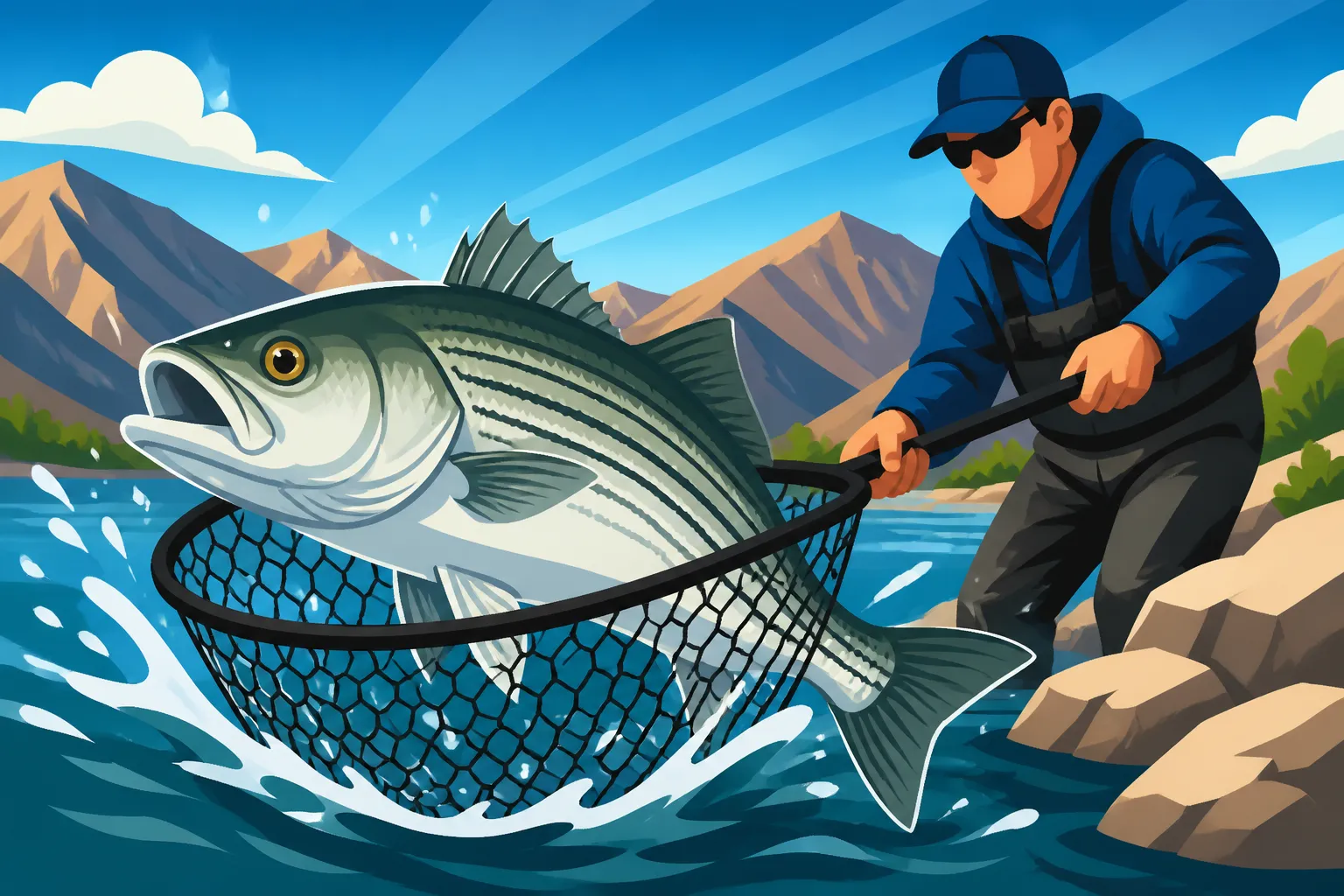
Best net for landing a big striped bass
There's nothing quite like the adrenaline rush of a big striped bass hitting your line, especially in a vast Nevada reservoir like Lake Mead. These powerful fish put up an incredible fight, and getting them to the boat or shore is often just half the battle. Many anglers have felt the heartbreak of losing a trophy striper right at the last moment because their net wasn't up to the task. This guide will help you understand what makes a net truly effective for landing these formidable fish, ensuring your next encounter ends with a successful catch and release, or a prized addition to your cooler.
The Undeniable Need for a Proper Net When Targeting Nevada Striped Bass
Let's be honest, trying to hand-land a thrashing, toothy striped bass is a recipe for disaster. Not only can it lead to lost fish, but it can also result in injury to you, the fish, or even damage to your fishing gear. A proper landing net isn't just a convenience; it's an essential piece of safety and conservation equipment when you're targeting big, powerful species like striped bass in Nevada.
The Power and Thrash of a Nevada Striper
Anyone who has hooked into a decent-sized striped bass knows they are not gentle creatures. These fish are pure muscle, built for speed and aggression. When you bring one alongside your boat or within reach from the shore, it's often at its most volatile, using every ounce of energy for one last desperate fight for freedom. Their bodies are rigid, their fins are sharp, and their gill plates can cut if not handled with extreme care. A small, flimsy net simply won't cut it. It will either bend, break, or the fish will flop right out of it, leaving you with nothing but a story of the one that got away. Imagine fighting a spirited 15-pound striper at Lake Mead after a long retrieve, only for it to snap your net hoop right as you attempt to scoop it. That's a frustrating scenario many have faced, and it's easily avoidable with the right gear. Understanding the behavior of these fish is key, and you can learn more about their movements in Striped Bass Seasonal Patterns.
Protecting Your Fish and Your Gear
Beyond preventing a lost fish, a good net protects both the striped bass and your expensive fishing tackle. When you're trying to subdue a fish by hand or with a weak net, hooks can get tangled, leaders can snap, and rod tips can break. More importantly, mishandling a fish can cause serious injury to it, reducing its chances of survival if you intend to release it. A soft, properly designed net cradles the fish, minimizing scales rubbed off, fin damage, and stress. This is crucial for catch-and-release, which is a common practice for many anglers who value the fishery. A responsible angler uses every tool at their disposal to ensure the health of the fish, whether it's destined for the table or to fight another day.
Beyond Landing: Conservation and Responsible Angling
In a state like Nevada, where many fisheries are carefully managed, conservation is paramount. Using a proper net that allows for quick, safe handling and release, particularly nets with rubberized or knotless mesh, aligns perfectly with responsible angling practices. These nets help minimize the removal of the protective slime layer on the fish, reduce fin damage, and keep the fish calm during the brief moment it's out of the water. This mindset extends to all species, even those like Lahontan Cutthroat Trout in Nevada, where careful handling is often a regulatory requirement due to their protected status. Investing in a quality net isn't just about your success; it's about contributing to the long-term health of the fishery for everyone to enjoy.
Essential Features of the Best Net for Big Stripers
When you're shopping for a net capable of handling a big, feisty striped bass, you can't just grab the first one you see. There are specific design elements and materials that make a huge difference in performance, durability, and fish safety. Think of it as a specialized tool for a specialized job.
Size Matters: Hoop Dimensions and Handle Length
First and foremost, a net for striped bass needs to be big. We're talking about fish that can easily exceed 20 pounds, and occasionally push into the 30-pound range or more in places like Lake Mead. A hoop that's too small will make landing incredibly difficult, forcing you to try and jam the fish in, which is stressful for both you and the fish. Look for a hoop opening that's at least 24 inches wide, but preferably 30 inches or larger. This provides a generous target and allows the fish to slide in headfirst with minimal fuss.
The handle length is equally critical, especially if you're fishing from a boat or high bank. A short handle might be fine for panfish, but for a big striper, you need reach. Handles that extend from 3 to 6 feet are often ideal, with many models featuring telescoping handles that can be adjusted for different situations. If you're fishing from a center console or a larger pontoon boat, that extra reach can be the difference between a clean scoop and a missed opportunity. For shore anglers, a longer handle can help you reach out over submerged rocks or weeds to secure your catch. You can find a good range of options, from compact designs to extra-long telescoping models, at retailers like Bass Pro Shops.
Mesh Material: Choosing Between Rubber, Nylon, and Knotless
The material of the net mesh is crucial for both the fish's well-being and preventing hooks from getting hopelessly tangled.
- Rubber Coated or Full Rubber Mesh: This is often considered the gold standard for catch-and-release fishing. The rubber is gentle on the fish's scales and slime coat, significantly reducing injury. Critically, hooks rarely get snagged in rubber mesh, making unhooking a quick and stress-free process. While rubber nets can be a bit heavier and bulkier, their benefits for both fish and angler are undeniable. For trophy striped bass, a full rubber net with large, open cells is highly recommended.
- Knotless Nylon Mesh: A good compromise if a full rubber net isn't an option. Knotless nylon is softer and less abrasive than traditional knotted nylon, causing less damage to the fish. It's also less prone to snagging hooks compared to knotted versions, though not quite as resistant as full rubber. These nets are generally lighter and can be more compact.
- Knotted Nylon Mesh: While still widely available and often the most affordable, knotted nylon mesh is generally discouraged for larger game fish, especially if you plan to release them. The knots can abrade the fish's slime coat, and hooks tend to get severely tangled, prolonging the unhooking process and increasing stress on the fish. While it might get the fish into the boat, it's not the most responsible choice for a big striper.
Construction and Durability: Built to Last
A big striper net needs to withstand serious abuse. Look for heavy-duty construction in the hoop and handle. Aluminum is a popular choice for frames because it's strong yet relatively lightweight and corrosion-resistant, which is important when dealing with water. The connection points where the handle meets the hoop should be reinforced and feel solid, not flimsy.
Consider the hinge mechanism on folding or telescoping nets; it should lock securely and operate smoothly. Stainless steel hardware is a definite plus for longevity, especially in the damp environments common to fishing. A robust handle grip, often made of EVA foam or textured rubber, will also give you a firm hold even when wet and fighting a powerful fish. Don't compromise on durability; a cheap net that breaks on your first big striper will end up costing you more in frustration and potentially lost fish. When buying online, platforms like Amazon offer extensive customer reviews that can give you insights into the real-world durability of different brands and models.
Selecting the Right Net for Your Striped Bass Fishing Style
Your fishing environment and technique play a huge role in determining the ideal net for landing big striped bass. What works perfectly from a large boat might be completely impractical for a shore angler, and vice-versa. Matching your net to your fishing style ensures maximum effectiveness and convenience.
Boat Fishing Nets: Reach, Maneuverability, and Storage
For boat anglers, the primary concerns are reach, maneuverability around obstacles (like other fishing rods or boat railings), and storage. When you're dealing with a powerful striper right beside the boat, you need a net that can quickly extend into the water and scoop the fish without too much fumbling.
- Telescoping Handles: These are a godsend for boat fishing. They allow you to extend the net to reach fish further from the boat or deep below the surface, then retract it for easier storage. You might need that extra length when fishing from larger boats that sit high off the water, or if you're fishing with friends and need to reach around them.
- Large Hoops: As mentioned, a large hoop is vital. On a boat, you usually have more space to work, so a wide net head won't be as cumbersome. The best net for landing a big striped bass from a boat will likely have a hoop in the 28-inch to 36-inch range.
- Compact Storage: Even on a boat, space is often at a premium. Many boat nets are designed to fold or collapse, allowing them to be stowed away neatly when not in use. Some even come with cases or straps to keep them out of the way. When you're speeding across Lake Mead to your favorite Lake Mead Striped Bass Hotspots, you don't want your net flopping around.
| Feature | Ideal for Boat Fishing | Considerations |
|---|---|---|
| Hoop Size | Large (28-36 inches) | Provides ample target, accommodates big fish |
| Handle | Telescoping (4-8 ft extended) | Adjusts for reach over boat sides, collapses for storage |
| Mesh Type | Full Rubber or Rubber Coated | Best for fish safety, tangle-free |
| Storage | Folding/Collapsible frame | Saves space on deck, easier transport |
| Durability | Heavy-duty aluminum frame, stainless steel hardware | Withstands heavy use and harsh marine environments |
| Buoyancy | Floating handle/net | Prevents loss if dropped overboard |
Shore Fishing Nets: Portability and Extended Reach
Shore anglers face a different set of challenges. Portability is key, as you might be hiking to your spot, and you often need to reach fish that are just beyond the immediate shoreline, over rocks, or through vegetation.
- Extended Reach Handles: Shore fishing almost always benefits from a longer handle. Many shore nets feature handles that extend 8, 10, or even 12 feet, allowing you to reach fish that are further out from the bank or navigate tricky shoreline obstacles. This is especially true when tackling large fish from a rocky bank where the water might be shallow close to shore, but deeper further out.
- Lightweight Construction: If you're carrying your gear any distance, weight matters. Look for aluminum or composite handles that offer strength without excessive bulk.
- Backpack-Friendly Design: Some shore nets are specifically designed to fold down into a compact size that can be easily strapped to a backpack. This is a huge plus if you like to explore less-accessible areas or walk along the shorelines of reservoirs like Lake Mohave. Remember, a net that's easy to carry is one you'll actually bring with you!
Combination Nets and Specialty Options
For anglers who switch between boat and shore, or those with unique fishing situations, combination nets offer versatility.
- Mid-Range Telescoping Nets: These nets might not have the extreme reach of a dedicated shore net or the massive hoop of a large boat net, but they strike a balance, offering decent reach and a substantial hoop in a more manageable package. They are excellent all-rounders if you fish from varied locations.
- Wade Nets: While less common for big striped bass, a wade net is a compact, usually shorter-handled net designed for anglers who are literally in the water. For smaller stripers or if you're fishing shallow river systems where big stripers occasionally venture, this could be an option. However, for true trophy stripers, you'll want something much more robust.
- Net Coatings and Features: Some nets come with additional features like rulers printed on the handle for quick measurements, integrated scales, or specialized non-slip grips. While not essential, these can be nice additions for convenience and fish management, especially when adhering to Nevada Statewide Bag Limits Explained.
Ultimately, the best net for landing a big striped bass is one that fits your specific fishing scenario and allows you to safely and efficiently land the fish, whether you're tossing Best Lures for Striped Bass from the shore or jigging from a boat.
Caring for Your Striper Net and Ensuring Its Longevity
You've invested in a quality net that's ready to handle those powerful Nevada stripers. To ensure it performs flawlessly trip after trip and lasts for many seasons, proper care and maintenance are absolutely essential. Neglecting your net will lead to premature wear, unpleasant odors, and potential equipment failure when you need it most.
Proper Cleaning and Drying Techniques
This is arguably the most important step for net longevity. After every fishing trip, especially if you've landed fish, your net will be covered in fish slime, possibly blood, and lake or river water.
- Rinse Thoroughly: As soon as possible after your trip, rinse your net completely with fresh water. A garden hose works perfectly for this. Pay close attention to the mesh, handle, and all hinge points. Get rid of all visible debris, slime, and any bits of bait.
- Gentle Cleaning (if needed): If your net is particularly slimy or smelly, a mild soap solution (like dish soap) and a soft brush can be used on the mesh. Scrub gently to avoid damaging the material. Always follow up with a very thorough rinse to remove all soap residue.
- Complete Drying: This step is crucial to prevent mildew, rot, and unpleasant odors. Hang your net in a well-ventilated area, out of direct harsh sunlight, to air dry completely. Don't fold or store it wet, even if it feels mostly dry. Any residual moisture can lead to mold and a lingering "fishy" smell that you definitely don't want in your vehicle or garage. If you're using a full rubber net, it will dry much faster than nylon, but still needs to be fully air-dried.
Storage Solutions to Prevent Damage
How you store your net when it's not in use directly impacts its lifespan and readiness.
- Protected Environment: Store your net in a place where it won't be exposed to extreme temperatures, direct sunlight for prolonged periods, or accidental damage. A garage, shed, or dedicated storage locker is ideal. Avoid leaving it out in the elements.
- Organized Storage: If your net folds or telescopes, utilize those features for compact storage. Many nets come with a strap or clip to keep them collapsed. For larger boat nets, a dedicated spot on the boat that keeps it secure during transit is important. You might consider hanging it to prevent the hoop from getting bent or the mesh from getting snagged on other gear.
- Avoid Piling: Don't pile heavy gear on top of your net. This can bend the hoop, damage the handle, or compress the mesh, leading to tears. Treat it with the same respect you give your Best Fishing Rods for Nevada Lakes. If you're transporting it in the back of a truck, make sure it's not going to get crushed by coolers or tackle boxes.
Repairing Minor Damage and When to Replace
Even with the best care, nets can suffer wear and tear.
- Mesh Repairs: Small tears in nylon mesh can sometimes be repaired with heavy-duty fishing line or specialized net repair kits. For rubber nets, minor punctures or tears might be patched with a strong, flexible adhesive. However, if the damage is extensive, especially on the bottom of the net, it's usually time for a replacement. A hole in the net means a lost fish, and that's the last thing you want after a long fight.
- Handle and Hoop Fixes: Bent aluminum hoops can sometimes be carefully straightened, but be cautious not to weaken the metal. Loose screws or bolts on telescoping mechanisms can be tightened. If a handle is cracked or a hinge mechanism is failing, it's often more cost-effective and safer to replace the entire net. A failing handle is a safety hazard and will inevitably lead to a lost fish.
- Know When to Retire: There comes a point where a net is simply beyond its useful life. If the frame is severely bent, the handle is unreliable, or the mesh is extensively damaged and prone to tangles, it's time to replace it. A good quality net should last for many years with proper care, but eventually, even the toughest gear wears out. Consider a new one from a reputable brand like those found at Bass Pro Shops or through online retailers like Amazon to ensure you're always ready for that next big striper.
By giving your net the attention it deserves, you'll ensure it's always ready to perform, protecting both your trophy striped bass and your angling enjoyment for many seasons to come.
Disclaimer
This article is for general informational purposes only and does not constitute professional advice. Laws, prices and regulations vary by location and change over time. Consult a qualified professional for guidance on your specific situation.