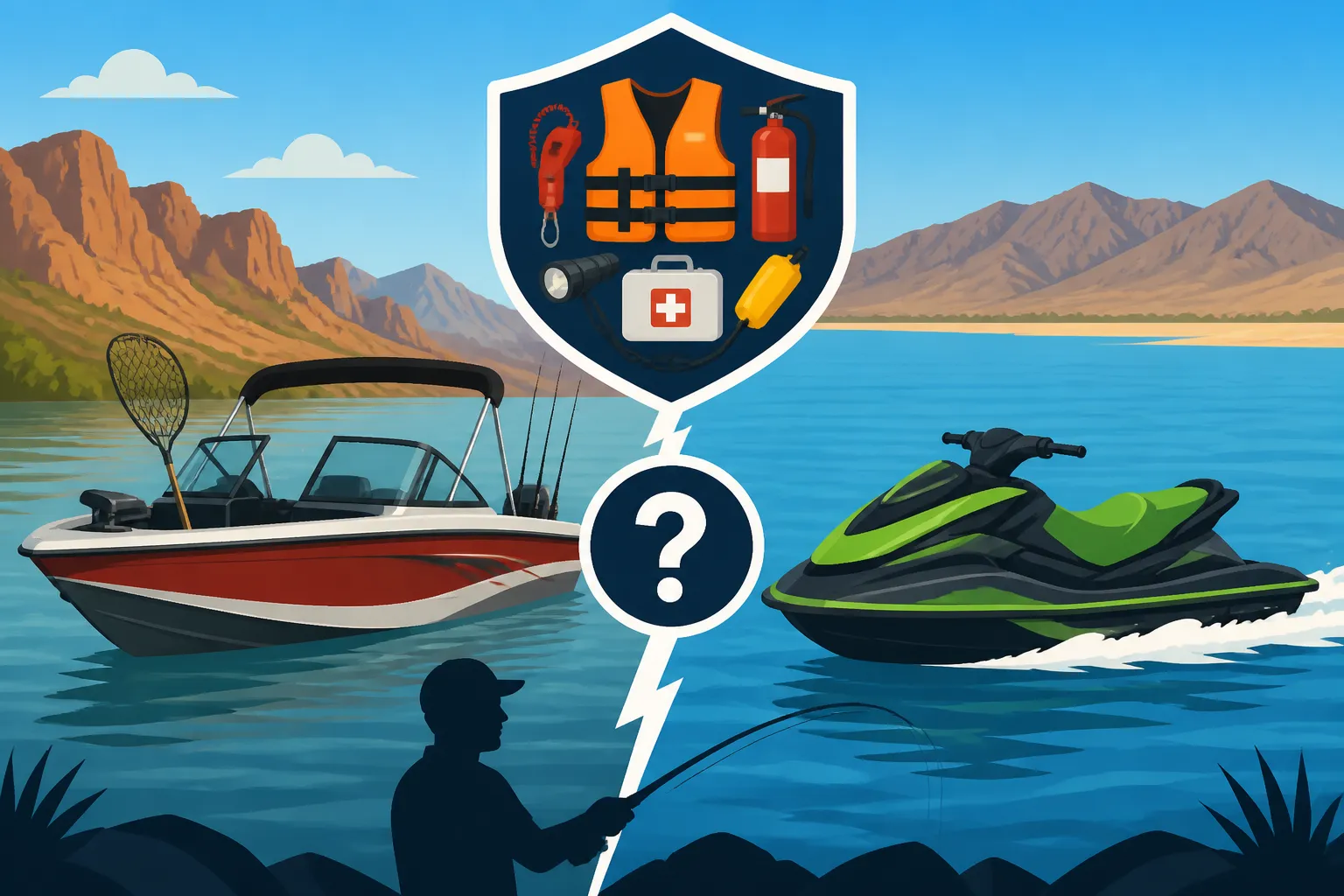
Do personal watercraft need the same gear as boats in Nevada?
Navigating the rules and regulations for personal watercraft (PWCs) in Nevada can feel a bit like trying to read a map in a sandstorm. Many folks assume a PWC, whether it's a Jet Ski, Sea-Doo, or WaveRunner, is just a smaller version of a boat, and therefore the gear requirements must be identical. While there's certainly overlap, there are crucial distinctions that every PWC owner needs to understand to stay safe and legal on Nevada's beautiful waterways. This guide will cut through the confusion and lay out exactly what gear personal watercraft need in Nevada compared to traditional boats, ensuring you're prepared for your next adventure.
The Core Question: Are PWCs Just "Small Boats" in Nevada's Eyes?
It’s a common misconception, and frankly, it's easy to see why people get confused. You're out on Lake Mead, seeing everything from tiny kayaks to massive houseboats, and your PWC is just another vessel on the water, right? Well, yes and no. Nevada law, through agencies like the Nevada Department of Wildlife (NDOW) and the Department of Motor Vehicles (DMV), often groups all motorized vessels, including PWCs, under broad categories for registration and general safety. However, they also recognize the unique nature of PWCs, which often leads to specific, non-negotiable gear requirements.
Understanding Nevada's Classification of Watercraft
For many administrative purposes, such as Nevada Boat Registration for Anglers, the state views PWCs as "Class A" vessels, meaning they are less than 16 feet in length. This might lead you to believe that the regulations are exactly the same as for any other small boat. However, a personal watercraft is specifically defined as a vessel that uses an inboard engine to power a jet pump as its primary propulsion, and it's designed to be operated by a person sitting, standing, or kneeling on, rather than within, the craft. This distinction is absolutely critical.
This isn't just bureaucratic jargon; it reflects the different ways these vessels are operated and the inherent risks involved. A traditional boat offers more stability and enclosure, whereas a PWC exposes the operator more directly to the elements and the water, and its high maneuverability demands different safety considerations. Forgetting these specific nuances can not only put you at risk but also land you a hefty fine from a game warden who’s seen it all.
Why the Distinction Matters for Safety and Enforcement
The specific characteristics of PWCs – their speed, agility, and the operator's exposed position – directly influence the safety gear mandated by law. When you’re zipping across the surface of Lake Mohave, you're experiencing a very different ride than someone cruising in a pontoon boat. The potential for sudden ejection, capsizing, or rapid speed changes means that certain safety measures become paramount.
Enforcement officers are keenly aware of these differences. They're not just checking for a generic "boat safety kit." They're specifically looking for PWC-related safety gear that addresses the unique risks of these vessels. If you're pulled over, simply having a PFD stowed in your bow compartment won't cut it if you're required to be wearing it. These distinctions are in place to save lives and prevent accidents on busy waterways, making them a top priority for everyone involved.
Mandatory Safety Gear for Personal Watercraft in Nevada
When it comes to hitting the water on your PWC in Nevada, there are certain items that aren't just good ideas, they are absolute requirements by law. These aren't suggestions or recommendations; they're mandatory pieces of equipment designed specifically for your safety and the safety of others on the water.
Personal Flotation Devices PFDs
This is perhaps the most crucial and often misunderstood requirement for PWCs. For traditional boats, Nevada law generally states you must have one Coast Guard-approved wearable PFD for each person on board, readily accessible. However, for personal watercraft, the rule is much stricter: every person on a PWC must wear a Coast Guard-approved PFD at all times while operating or riding. This is a non-negotiable rule. It doesn't matter if you're an Olympic swimmer or just going five miles an hour; the PFD must be on your person and properly fastened.
Imagine a scenario on a busy summer day on Lake Mead. You're cruising along, hit a wake unexpectedly, and are ejected from your PWC. If your PFD is stowed, it's virtually useless. The PWC could drift away, leaving you stranded in the water. By requiring it to be worn, the law ensures immediate flotation, dramatically increasing your chances of survival and reducing the time it takes for help to reach you. Always ensure your PFD fits snugly and is appropriate for your body weight and the type of activity you're doing.
Lanyards, Fire Extinguishers, and Sound-Producing Devices
These three items are fundamental to PWC safety and are often unique or specifically enforced for personal watercraft.
First, the engine cutoff switch lanyard is perhaps the most distinctive PWC safety requirement. It's a short cord that attaches the operator to the PWC's ignition system. If the operator falls off or is otherwise separated from the PWC, the lanyard pulls out, instantly shutting off the engine. This prevents the PWC from becoming a runaway vessel, which could endanger swimmers, other boaters, or even the ejected operator. Attaching this lanyard to your wrist or PFD is not just a smart practice; it’s mandated by law in Nevada for all PWCs.
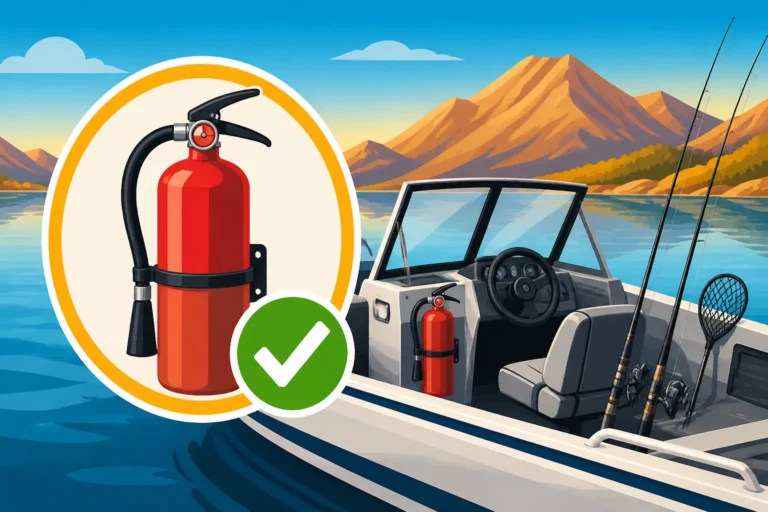
Second, a Coast Guard-approved portable fire extinguisher (typically a Type B-I) is required on board all PWCs. While they might seem less prone to engine fires than larger boats with enclosed compartments, fires can and do happen on PWCs, especially from fuel leaks or electrical malfunctions. Having a readily accessible extinguisher can be the difference between a minor incident and a total loss of your vessel. Make sure it's mounted in an accessible location and is regularly checked to ensure it's charged and ready for use.
Third, you must carry a sound-producing device capable of producing a two-second blast audible for at least half a mile. This usually means a whistle or a horn. This small but mighty piece of gear is essential for signaling in emergencies, alerting other boaters to your presence in low visibility, or warning them of potential hazards. Whether you're trying to get the attention of a slow-moving houseboat or signaling for help, a reliable sound device is a must-have.
Visual Distress Signals VDS and Navigation Lights
While many PWC users prefer to operate during daylight hours, anyone planning to be on the water after sunset or before sunrise, or in conditions of reduced visibility (like fog or heavy rain), needs to pay close attention to these additional requirements.
Visual Distress Signals (VDS) are devices designed to help you signal for help in an emergency. If you're operating your PWC on certain large inland lakes or between sunset and sunrise, you are generally required to carry Coast Guard-approved VDS. This typically means pyrotechnic flares (which have expiration dates and must be replaced) or non-pyrotechnic alternatives like an electronic visual distress signal (EVDS). These signals are crucial if you become stranded in the dark or in conditions where your PWC might not be easily visible to search and rescue teams. It’s a requirement many PWC owners overlook, but it's vital for extreme situations.
Similarly, navigation lights become mandatory if you plan to operate your PWC between sunset and sunrise or during periods of restricted visibility. This means having a red light visible from the port (left) side, a green light visible from the starboard (right) side, and an all-around white light visible from 360 degrees. These lights ensure that other vessels can see you and understand your direction of travel, preventing collisions in low-light conditions. While many PWCs come with these lights factory-installed, always check that they are functional and properly displayed before heading out after dark. This is another area where PWC rules directly align with those for larger vessels, emphasizing the shared responsibility for safety on the water.
Common Gear Overlaps with Traditional Boats
While PWCs have their specific requirements, there's also a significant overlap in regulations and recommended gear that applies to nearly all motorized vessels in Nevada. These are the foundations of safe and responsible boating, regardless of whether you're on a ski boat or a personal watercraft.
Registration, Documentation, and Boater Education
Just like traditional motorboats, all personal watercraft in Nevada must be registered with the Nevada Department of Motor Vehicles (DMV). This involves providing proof of ownership, paying the necessary fees, and receiving registration numbers and validation decals. These numbers must be clearly displayed on both sides of the PWC's bow, and the decals must be affixed as directed. Failing to properly register your PWC and display the necessary markings can lead to fines. You'll want to review the full details in the Nevada Boat Registration for Anglers guide.
Beyond registration, it’s imperative to carry your official registration certificate and proof of ownership with you whenever you operate the PWC. These documents are your official identification on the water and will be requested by law enforcement if you are stopped. Furthermore, Nevada has a mandatory boater education requirement. Anyone born on or after January 1, 1983, must complete an approved boating safety course and carry their Nevada Boater Education Card when operating any motorized vessel, including a PWC. This shared requirement underscores the state's commitment to ensuring all operators, regardless of their vessel type, have a foundational understanding of boating laws and safety practices. If you're unsure if this applies to you, checking out Who needs a boater education card in Nevada would be a wise move.
Anchors, Fenders, and Docking Lines
While these items may not be legally mandated safety equipment for PWCs in the same way as PFDs or fire extinguishers, they are incredibly practical and highly recommended for safe and convenient operation. An anchor, even a small, compact one, can be invaluable. Imagine you're out on a popular spot on Lake Tahoe, want to stop for a swim, or perhaps just take a break from riding. Without an anchor, your PWC will drift, potentially into hazards or other vessels. A small, folding grapnel anchor can easily fit into a PWC's storage compartment and prevent these headaches.
Similarly, fenders and docking lines are your PWC's best friends when you're pulling up to a dock, tying off to a buoy, or rafting up with other watercraft. Fenders protect your PWC's hull from bumps and scratches against hard surfaces or other boats. Compact PWC-specific fenders are available and take up minimal space. Docking lines allow you to secure your PWC safely. While it might seem like overkill for a PWC, a stray gust of wind or an unexpected wake can easily send your vessel crashing into a dock, causing costly damage. These are small investments that provide significant peace of mind.
First-Aid Kits and Repair Tools
No one expects an accident or a breakdown, but being prepared for the unexpected is a hallmark of a responsible boater. A basic first-aid kit is not legally required for PWCs, but it’s a wise addition to your gear. Minor cuts, scrapes, sunburns, or even headaches can put a damper on your day, and having essential supplies like bandages, antiseptic wipes, pain relievers, and motion sickness medication readily available can make a huge difference. Consider a waterproof or water-resistant kit that can be easily stowed.
Beyond personal injuries, mechanical issues can sometimes arise, even with well-maintained PWCs. A small, essential repair tool kit can be a lifesaver. This might include a multi-tool, a few basic wrenches, pliers, a screwdriver, and perhaps spare spark plugs. A loose battery terminal, a fouled spark plug, or a minor adjustment could be the difference between getting back to shore under your own power and needing a tow. You can find compact, marine-grade tool kits at many sporting goods stores, or even online through retailers like Amazon, that are designed to fit in limited PWC storage. While you might not be able to fix every problem, these basic tools can often address common minor issues that arise on the water.
PWC-Specific Gear & Considerations for Nevada Waters
Beyond the basic requirements, there are specialized items and considerations that are particularly relevant for personal watercraft, especially when navigating the unique challenges of Nevada's diverse aquatic environments. Thinking specifically about your PWC's design and typical usage can greatly enhance your safety and enjoyment.
Specialized PWC Anchoring and Docking Solutions
Because PWCs are smaller and often used for different activities than larger boats, specialized anchoring and docking solutions have emerged that cater to their unique needs. For anchoring, you might consider a telescoping or folding anchor specifically designed for PWCs, often weighing less and taking up less space than traditional boat anchors. Some even come with dedicated PWC-friendly storage bags. These are perfect for quickly setting up in a sandy cove on Lake Mohave or pausing to fish for a bit.
For docking, look for PWC fenders that are compact and attach securely to your craft without interfering with your ride. There are even inflatable fenders that can be deflated for storage when not in use. Similarly, specialized bungee dock lines offer built-in shock absorption and allow for quick, tool-free attachment to docks or cleats, making it much easier to tie up rapidly without fumbling with complex knots. These kinds of thoughtful accessories, often found at places like Bass Pro Shops, acknowledge the limited space and quick-action nature of PWC use.
Storage Solutions and Waterproof Gear Bags
One of the biggest challenges for PWC operators is limited storage space. Unlike a large boat with multiple compartments, a PWC usually has a small bow storage area, a glove box, and perhaps a small rear compartment. This makes intelligent storage solutions absolutely critical. Waterproof dry bags are your best friend here. These bags, available in various sizes, are essential for keeping your phone, wallet, keys, registration documents, and any spare clothing completely dry. Losing a phone to a rogue wave or having soaked documents can quickly ruin a day on the water.
Beyond dry bags, consider specialized PWC saddlebags that attach to the rear seat or custom-fit cargo boxes for the bow. These can dramatically increase your carrying capacity for snacks, extra water, sun protection, or even a compact first-aid kit. Maximizing your storage with well-designed, waterproof options allows you to carry essential items without them getting damaged or becoming a hazard. Many of these innovative storage solutions are readily available through online retailers like Amazon, often with reviews from other PWC enthusiasts.
Sun Protection and Hydration for Desert Riding
Nevada's desert environment presents unique challenges, particularly when it comes to sun exposure and hydration. The sun's intensity on lakes like Lake Mead or the Colorado River can be extreme, even on what feels like a mild day. Comprehensive sun protection is not just about comfort; it's about health and safety. Always apply a high-SPF, waterproof sunscreen generously and reapply frequently, especially after swimming or prolonged exposure to spray.
Beyond sunscreen, consider wearing sun-protective clothing, including long-sleeved shirts made from breathable, UV-blocking fabrics. A wide-brimmed hat (secured with a chin strap so it doesn't fly off at speed) and polarized sunglasses are also crucial. The glare off the water can be intense and damaging to your eyes, and quality sunglasses will also help you see submerged objects or fish.
Perhaps most importantly, hydration is non-negotiable. Dehydration can sneak up on you quickly in the desert heat, leading to fatigue, headaches, and impaired judgment, which can be dangerous on the water. Always carry ample water, more than you think you'll need, and drink it regularly, even if you don't feel thirsty. Insulated water bottles or hydration packs are excellent choices to keep your water cool. Preparing for the Nevada sun means you can enjoy your PWC adventure safely and comfortably, from dawn until dusk.
| Gear Item | General Boat Requirement (Nevada) | PWC-Specific Requirement (Nevada) |
|---|---|---|
| Personal Flotation Devices (PFDs) | One Coast Guard-approved wearable PFD for each person on board, readily accessible. | One Coast Guard-approved wearable PFD for each person on board, required to be worn while operating or riding. |
| Engine Cutoff Switch Lanyard | Required for boats 26 feet or less with an open cockpit and certain engine types (if installed by manufacturer). | Mandatory for all PWCs, attached to the operator. |
| Fire Extinguisher | Required for boats with inboard engines, closed compartments, or permanent fuel tanks. | Required for all PWCs (typically one B-I type). |
| Sound-Producing Device | Required (whistle, horn, or bell). | Required (whistle or horn audible for 0.5 mile). |
| Navigation Lights | Required for operation between sunset and sunrise or in restricted visibility. | Required for operation between sunset and sunrise or in restricted visibility. |
| Visual Distress Signals (VDS) | Required for operation on coastal waters or certain large inland bodies between sunset and sunrise. | Required if operating between sunset and sunrise, or in restricted visibility. |
| Registration & Decals | Required for most motorized vessels. | Required for all PWCs. |
| Boater Education Card | Required for operators born on or after Jan 1, 1983, for motorized vessels. | Required for operators born on or after Jan 1, 1983. |
| Anchor/Dock Lines/Fenders | Recommended for safety and convenience. | Highly recommended for safety and convenience. |
| First-Aid Kit | Recommended. | Recommended. |
Disclaimer
This article is for general informational purposes only and does not constitute professional advice. Laws, prices and regulations vary by location and change over time. Consult a qualified professional for guidance on your specific situation.