Nevada boat registration numbers placement rules
There's nothing quite like the excitement of getting your boat ready for a new season on Nevada's beautiful lakes and reservoirs, whether it's Lake Mead, Lake Tahoe, or a hidden gem like Wildhorse Reservoir. But before you hit the water, you've got to deal with the sometimes-tricky world of registration. One of the most common headaches anglers and boaters face is making sure those all-important boat registration numbers are displayed exactly right. This comprehensive guide will walk you through every detail of Nevada's official rules for placing your boat registration numbers, helping you avoid frustrating fines and ensuring you're compliant and ready for the water.
Why Your Nevada Boat Registration Numbers Matter So Much
I totally get it – after the excitement of buying a new boat or even just renewing your registration, the last thing you want to do is spend time fussing over sticker placement. It can feel like just another piece of bureaucratic red tape. But trust me, getting those registration numbers right is more important than you might think. It's not just about satisfying a rule; it's about safety, accountability, and avoiding a headache out on the water.
The Purpose Behind the Placement Rules
Think of your boat's registration numbers as its unique fingerprint. They serve a vital role for both law enforcement and for your own peace of mind. First and foremost, these numbers are for identification. In an emergency situation, whether you're dealing with a breakdown, a medical issue, or even a missing person, those visible numbers allow the Nevada Department of Wildlife (NDOW) game wardens, sheriff's deputies, and Coast Guard auxiliary to quickly identify your vessel. Without clear, correctly displayed numbers, precious time could be lost trying to figure out who's who.
Beyond emergencies, the placement rules also ensure consistency. Imagine if everyone could just slap their numbers wherever they wanted, in any size or color. It would be a nightmare for enforcement officers trying to spot violations or verify ownership. The standardized placement ensures that everyone is playing by the same rules, making it easier for authorities to do their job and keep our waterways safe for everyone. It helps prevent misunderstandings and makes routine checks much smoother.
Common Misconceptions and Costly Mistakes
It's easy to fall into the trap of assuming "close enough" is good enough when it comes to boat registration numbers. I've seen countless boaters make simple, honest mistakes that end up costing them time, money, and a good dose of frustration. One common misconception is thinking that simply having the numbers somewhere on the bow is sufficient. Nevada's rules are quite specific about height, font, color contrast, and even spacing. Many people grab a set of generic vinyl letters from an auto parts store, not realizing they might not meet the minimum height or block letter style requirements.
Another frequent mistake is applying numbers poorly, perhaps on a dirty surface or in a rush. The harsh Nevada sun and constant exposure to water can quickly degrade low-quality decals or improperly applied paint. Peeling or faded numbers are just as bad as incorrect placement in the eyes of the law, as they obscure identification. People often forget about the validation decal, too, or place it too far from the numbers. Trust me, it's far better to spend a little extra time upfront getting it right than to face a ticket, have to re-order expensive decals, and re-apply them when you'd rather be fishing for Lahontan Cutthroat Trout in Nevada or Striped Bass Fishing in Nevada.
The Official Nevada Guidelines for Displaying Registration Numbers
Navigating the exact requirements for your boat's registration numbers can feel a bit like deciphering a secret code, but it doesn't have to be. The Nevada Department of Wildlife (NDOW) is pretty clear about what they expect, and once you know the specifics, it's much easier to get it right. Let's break down the nitty-gritty details so you can apply those numbers with confidence.
Size, Color, and Font Requirements
When it comes to your boat registration numbers, there are a few non-negotiable standards you need to meet:
- Minimum Height: Each character – that's every letter and number – must be at least three inches (7.6 cm) high. No exceptions. This ensures visibility from a reasonable distance, which is key for identification on the water.
- Block Style: The letters and numbers need to be in a plain, vertical block font. This means no fancy script, no italics, no thin lines, and no intricate serifs that could make them hard to read quickly. Simple and straightforward is the name of the game.
- Contrasting Color: This is crucial. Your numbers and letters must be in a color that sharply contrasts with the color of your boat's hull where they are applied. If your boat is light-colored (white, yellow, light blue), your numbers should be dark (black, dark blue, red). If your boat is dark-colored, then light numbers are necessary. The goal here is maximum legibility.
- Permanently Attached: The numbers must be permanently attached to the boat. This usually means high-quality, weather-resistant vinyl decals or painted stencils. They shouldn't be temporary, like those magnet letters you might use on a car. They need to withstand the elements – sun, water, wind, and even mild scrubbing. This permanency ensures they don't fall off mid-voyage or get easily removed.
It might seem overly prescriptive, but these rules are in place for a good reason. Imagine a game warden trying to read faded, small, or fancy script numbers from a moving patrol boat – it's nearly impossible. By adhering to these standards, you're contributing to a safer and more efficient boating environment for everyone.
Placement on the Hull
The "where" of your boat registration numbers is just as important as the "what." Nevada law specifies where these numbers must be displayed on your vessel:
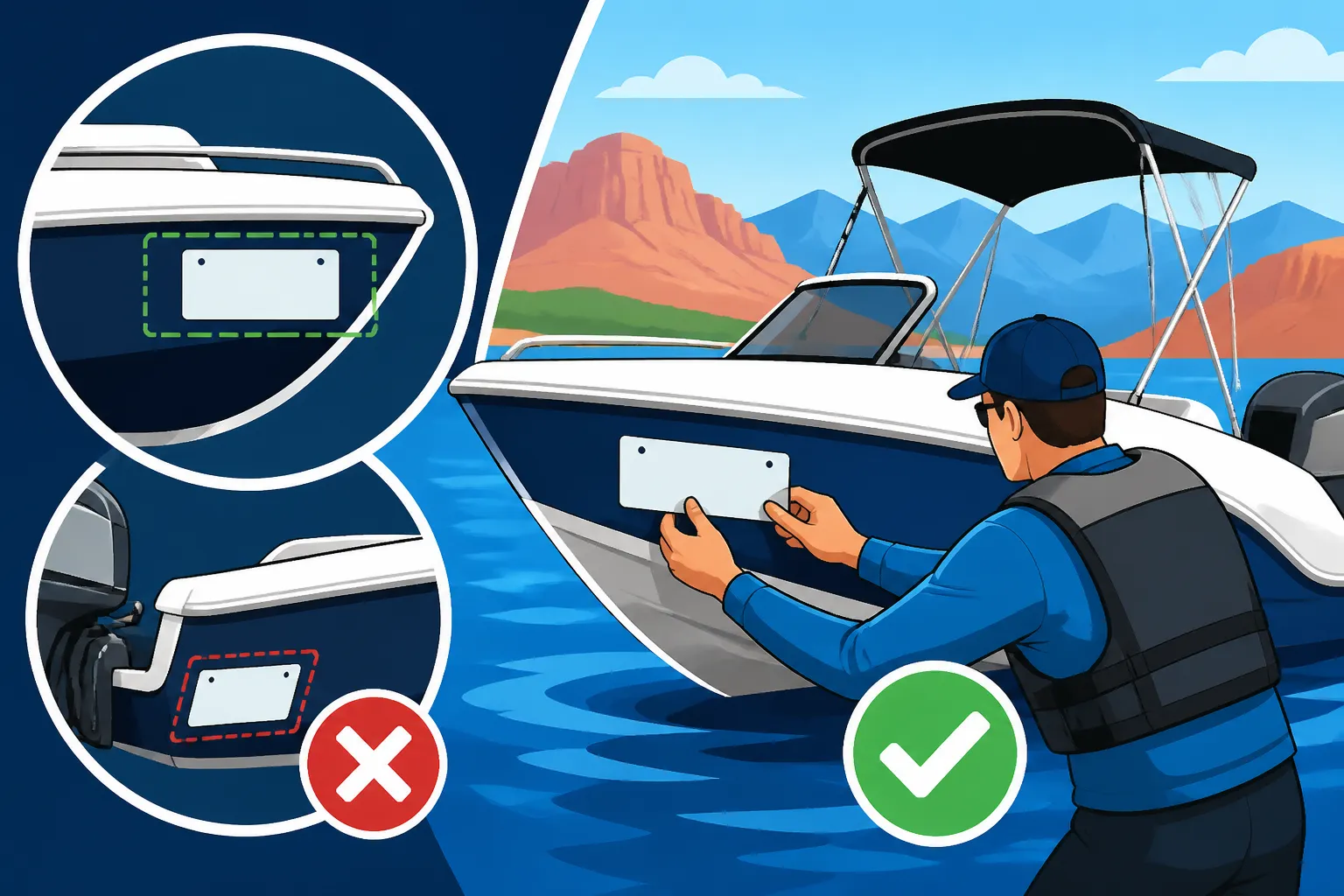
- On the Forward Half of the Vessel: This means on the bow or the front half of your boat. You can't put them on the stern, the sides near the back, or hidden away somewhere. They need to be prominently displayed up front.
- On Each Side of the Bow: The numbers must appear on both the port (left) and starboard (right) sides of the boat's bow. They should be mirror images of each other, easily readable from either side.
- Above the Waterline: This might seem obvious, but it's important to state. The numbers must be positioned so they are clearly visible when your boat is in the water under normal operating conditions. Don't place them too low where they might be submerged or frequently splashed, making them unreadable.
- No Obstructions: The numbers cannot be obscured by anything – not by ropes, anchors, fenders, boat names, or any other equipment. They need a clear, unobstructed field of view. Some boat designs have tricky curves or sharp angles on the bow; you might need to get creative to find a flat-enough surface that meets all criteria, but the numbers must be readable from fore to aft without distortion.
Spacing and Order of Characters
This is where some boaters get tripped up, but it's actually quite simple once you know the pattern. Nevada registration numbers follow a specific format:
NV-1234-AB
Here's what each part means and how it should be spaced:
- "NV" Prefix: All Nevada-registered boats start with "NV." This identifies the state of registration.
- Four Numbers: Following the "NV" are four numeric digits.
- Two Suffix Letters: The sequence concludes with two alphabet letters.
The critical part is the spacing. There must be a space or a hyphen between the "NV" prefix and the numbers, and another space or hyphen between the numbers and the suffix letters. You can't just run them all together.
Here's a quick visual guide to compliant versus non-compliant formats:
| Format | Compliance | Notes |
|---|---|---|
NV-1234-AB |
Compliant | Hyphens are clear separators. |
NV 1234 AB |
Compliant | Spaces are clear separators. |
NV1234AB |
Non-Compliant | No separation between character groups. |
NV-12-34-AB |
Non-Compliant | Incorrect internal spacing within the number group. |
NV1234-AB |
Non-Compliant | Missing separation between NV and numbers. |
1234-AB-NV |
Non-Compliant | Incorrect order of characters. |
nv-1234-ab |
Non-Compliant | Must be uppercase letters. |
Remember, these rules are designed for quick and easy identification. When a game warden looks at your boat, they should be able to instantly read and understand your registration. Getting this right is a simple step to ensure you're compliant, whether you're cruising Lake Mead Nevada Fishing Guide or exploring the waters of Wildhorse Reservoir Nevada Fishing Guide.
Practical Tips for Applying Your Boat Registration Numbers
You've got the rules down, which is a huge step! Now comes the actual application. Don't worry, it's not rocket science, but taking a little extra care here will ensure your numbers look great, last long, and keep you on the right side of the law. Nobody wants peeling letters halfway through the season.
Choosing the Right Materials and Methods
When it comes to actually putting those numbers on your boat, you generally have two main options: high-quality vinyl decals or stenciled paint.
- High-Quality Vinyl Decals: This is by far the most popular and often easiest method for most boaters. Look for marine-grade vinyl decals that are specifically designed to withstand UV rays (the Nevada sun is no joke!) and saltwater or freshwater exposure. Cheaper vinyl will fade, crack, and peel much faster, leaving you with a mess and needing to reapply. You can find excellent options online from retailers like Amazon or at specialized marine and sporting goods stores like Bass Pro Shops. Many of these places can even custom-cut your specific registration numbers to the correct size, font, and spacing, taking a lot of the guesswork out of it for you. This is a smart move, especially for beginners.
- Stenciled Paint: For some boats, particularly those with a custom paint job or unique hull materials, painting the numbers on might be preferable. If you go this route, make sure to use marine-grade paint that is durable and resistant to fading. You'll need stencils that meet the 3-inch block letter requirement, and a steady hand! This method often requires more skill and a longer drying/curing time but can offer a very seamless, permanent look.
Whichever method you choose, durability is key. The harsh environment of Nevada's lakes and reservoirs demands materials that can stand up to the elements. You want these numbers to last for the entire registration period, at minimum, without looking worn out or illegible.
Step-by-Step Application Process
Applying the decals or paint correctly is crucial for both appearance and longevity. Here’s a basic step-by-step process:
- Clean the Surface Thoroughly: This is arguably the most important step for decals. The area where the numbers will go must be impeccably clean, dry, and free of any wax, grease, dirt, or old adhesive residue. Use a good marine-grade cleaner or rubbing alcohol and a clean cloth. Any contaminants will prevent the decals from adhering properly, leading to premature peeling.
- Measure and Mark: Use a measuring tape and a pencil (or painter's tape) to carefully mark the exact placement of your numbers on both sides of the bow. Ensure they are level, centered (if that's your aesthetic preference), and completely above the waterline. Remember, they need to be placed on the forward half of the vessel and be visible without obstruction. Double-check your measurements against the "3-inch high, block style" rule.
- Create a Straight Guide Line: A long strip of painter's tape, applied perfectly level, can serve as an excellent guide for keeping your numbers straight. You can use it as the bottom or top edge for your characters.
- Apply the Decals (or Paint):
- For Decals: Most quality decals come with transfer paper. Carefully peel the backing from the decal, align it with your guide marks, and slowly apply it to the boat's surface, smoothing it out with a squeegee or a credit card from the center outwards to remove any air bubbles. Then, slowly peel off the transfer tape, leaving the letters behind. Take your time!
- For Paint: Secure your stencils firmly in place with painter's tape. Apply thin, even coats of marine paint. Multiple thin coats are always better than one thick coat, as it reduces drips and ensures better adhesion. Allow ample drying time between coats and before removing the stencils.
- Check for Compliance: Once everything is applied and dry, step back and visually inspect your work. Are the numbers at least three inches high? Are they block style? Do they contrast sharply with the hull? Is there proper spacing (NV-1234-AB or NV 1234 AB)? Are they on both sides of the bow, above the waterline, and unobstructed? Don't forget to double-check against Nevada's specific regulations, which you can often find detailed in the Nevada Fishing Regulations Explained guide or directly from the NDOW website.
What to Do When Things Go Wrong (Troubleshooting)
Even with the best intentions, sometimes things don't go perfectly. Don't panic!
- Crooked Numbers: If you notice a decal is slightly crooked right after application, you might be able to carefully peel it back up and re-position it if the adhesive hasn't fully set. For painted numbers, you might need to carefully mask off and touch up, or if it's really bad, sand and repaint the section. This is why marking your lines precisely is so important!
- Peeling or Fading Decals: If your decals start peeling or fading prematurely, it's usually a sign of low-quality materials or improper surface preparation. Your best bet is to remove the old decals entirely (a heat gun on a low setting can help soften the adhesive, but be very careful not to damage your boat's finish) and then clean the surface meticulously before applying new, higher-quality ones. Remember, spending a bit more on good marine-grade vinyl upfront often saves you this headache later.
- Air Bubbles Under Decals: Small bubbles can sometimes be gently pressed out with a squeegee. For stubborn ones, you can carefully pierce them with a tiny pin or needle and then smooth the air out. Don't try to peel and reapply large sections if the adhesive has already set.
Taking the time to do this right means you'll pass any inspection with flying colors and can focus on enjoying your time on the water, whether you're targeting Nevada Trout Lakes or casting for Nevada Bass Lakes.
Beyond the Numbers: Other Important Nevada Boating Requirements
While getting your registration numbers squared away is a big win, it's just one piece of the puzzle for responsible boating in Nevada. There are a few other critical items you absolutely need to have in order to stay compliant and safe on the water.
Displaying Your Nevada Validation Decal
Think of your validation decal as the "license plate sticker" for your boat. It proves that your registration is current for the given year.
- Placement: The current validation decal must be displayed on the right-hand (starboard) side of your vessel, and importantly, it needs to be no more than six inches to the right of your registration numbers. It shouldn't be above, below, or too far away. The goal is for it to be easily identifiable and associated with the official registration numbers.
- Visibility: Just like your numbers, this decal needs to be clearly visible and unobstructed. Make sure it's not tucked away or covered by anything.
- Annual Renewal: Remember that your boat registration needs to be renewed annually. When you renew, you'll receive a new validation decal, and you'll need to remove the old one and replace it with the new one. Keep an eye on that Nevada annual fishing license expiration date – and your boat registration expiration date, too!
Missing or improperly displayed validation decals are another common reason for stops and potential citations. It's a quick check for a game warden, so make sure yours is correct and current.
Ensuring Your Vessel Name and Hailing Port If Applicable
Now, not every pleasure craft in Nevada needs a name and hailing port displayed, but if you've chosen to document your vessel with the U.S. Coast Guard, or if it's a commercial vessel, then these requirements apply to you. Most smaller fishing boats or recreational kayaks won't fall into this category, but it's good to know!
- Placement: If your boat is documented, its name and hailing port must be marked on the stern (the back) of the vessel.
- Size and Visibility: The name must be at least four inches high and painted or permanently attached in a contrasting color. The hailing port (e.g., "Las Vegas, NV") must be marked in a visible manner as well.
- Why it Matters: Documentation is a federal registration, typically for larger vessels, and has different requirements than state registration. Don't confuse the two! For most recreational boaters in Nevada, only the state registration numbers and decal are required. If you're unsure if your boat needs documentation, it's best to check with the U.S. Coast Guard or a marine documentation service.
Essential Safety Equipment Checklist
Beyond just registration, your boat needs to be outfitted with the proper safety gear. This isn't just about avoiding a fine; it's about protecting yourself, your passengers, and others on the water. Game wardens in Nevada are diligent about checking for these items.
Here’s a quick overview of some essential safety items, though you should always refer to the official Nevada required safety equipment checklist for boats for the most current and comprehensive list:
- Life Jackets (Personal Flotation Devices – PFDs): You must have at least one wearable PFD for every person on board, and they must be readily accessible and in good, serviceable condition. Children aged 12 and under are required to wear a U.S. Coast Guard-approved PFD at all times when underway on any vessel. For more details, check out Nevada life jacket requirements for kids.
- Fire Extinguisher: If your boat has an enclosed fuel compartment, closed living spaces, or permanently installed fuel tanks, you'll likely need a marine-type fire extinguisher.
- Sound-Producing Device: A whistle, horn, or other sound-producing device is required to signal intentions or alert others.
- Navigation Lights: If you're operating between sunset and sunrise, or during periods of restricted visibility, proper navigation lights are a must.
- Throwable Flotation Device: Vessels 16 feet or longer (excluding canoes and kayaks) must have at least one U.S. Coast Guard-approved throwable PFD (like a ring buoy or seat cushion) readily available.
These are just a few of the basics. Being prepared with all the necessary safety gear, understanding Nevada Boater Education Card Requirement (especially if you're a younger boater), and keeping your boat well-maintained means you're being a responsible steward of Nevada's beautiful waterways. Knowing these rules ensures your days out are spent enjoying the fishing, not worrying about an unexpected check.
Disclaimer
This article is for general informational purposes only and does not constitute professional advice. Laws, prices and regulations vary by location and change over time. Consult a qualified professional for guidance on your specific situation.