Who needs a boater education card in Nevada
Cruising Nevada's stunning waterways, whether it's the vast expanse of Lake Mead, the shimmering depths of Lake Tahoe, or a smaller, tranquil reservoir, is an experience unlike any other. However, with the freedom of the open water comes the serious responsibility of safety and knowing the rules. Many anglers and recreational boaters often find themselves scratching their heads, wondering, "Do I really need a boater education card in Nevada?" The answer isn't a simple yes or no for everyone, and this guide is here to untangle those confusing threads, laying out exactly who needs this certification, why it's important, and how you can easily get yours to stay safe and compliant on Nevada's beautiful waters.
Understanding Nevada's Boater Education Card Mandate
Let's cut right to the chase because this is where a lot of the confusion often starts. The State of Nevada, through the Nevada Department of Wildlife (NDOW), requires specific individuals to complete a boater education course and carry proof of certification. This isn't just a suggestion; it's a legal mandate designed to enhance safety for everyone on the water.
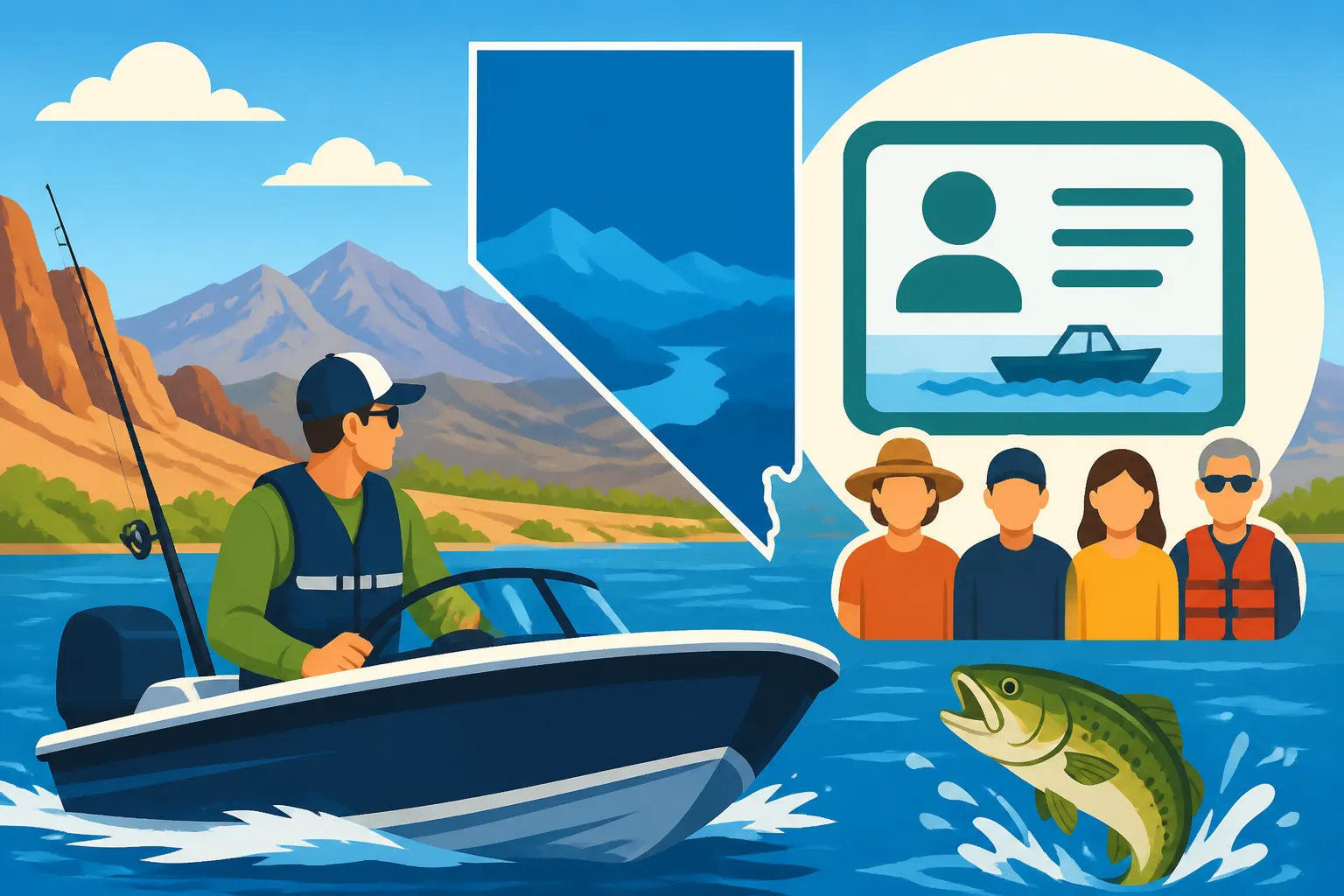
The core requirement is quite clear: anyone born on or after January 1, 1983, who operates a motor-powered vessel on Nevada waters, must possess a valid boater education card. This applies whether you're behind the helm of a mighty bass boat on Lake Mohave, steering a pontoon boat for a family outing on Wildhorse Reservoir, or zipping across Lake Tahoe on a personal watercraft (PWC) like a Jet Ski. If your vessel has a motor, and you were born in '83 or later, this rule applies to you. It's a critical piece of identification that game wardens are legally allowed to request, much like your fishing license.
This mandate came into effect to address growing concerns about boating accidents and to ensure that operators have a foundational understanding of boating laws, safety practices, and responsible waterway stewardship. Think of it like getting your driver's license for a car; you need to prove you understand the rules of the road before hitting the highway. The same principle applies to Nevada's lakes and rivers. It's not about being a seasoned angler; it's about being a safe operator. Even if you've been fishing these waters for years, if your birth year falls into this category, you'll need the card.
Age Requirements and Specific Scenarios
The "born on or after January 1, 1983" cutoff is the golden rule, but let's dive a little deeper into how this impacts different age groups and types of vessels. It's not just about turning 40; it's about the year you were born, making it a fixed requirement for a large segment of the boating population.
For instance, if you're a younger angler, perhaps a teenager just getting into the sport with your first small fishing boat or learning to operate a family PWC, this requirement is absolutely paramount. Specifically, if you are 12 years of age or older and operating a motor-powered vessel, and you fall into that post-1983 birth category, you'll need that card. This applies to vessels of all sizes, from a small aluminum boat with a trolling motor to larger cruisers. The intent is to instill good habits and knowledge from an early age, making the next generation of Nevada boaters more responsible and safer. While there isn't a specific Nevada fishing license age requirements for young children, the boating education requirement steps in to ensure responsible operation when motors are involved.
What about those under 12? Can they operate a boat? Generally, the law states that a person under 12 years of age may not operate a motorboat unless accompanied by a person who is at least 18 years of age and who possesses the required boater education card (if applicable) and is capable of taking immediate control of the vessel. For personal watercraft (PWCs), the rules are even stricter: a person under 14 years of age may not operate a PWC at all, regardless of supervision. Once they turn 14, if they were born on or after January 1, 1983, they absolutely need that boater education card. This provides a clear guideline on "Can a 15-year-old drive a boat with a motor in Nevada?" – yes, but they need the card if they meet the birthdate criteria.
It's crucial to understand that these age and education requirements are designed to prevent tragedies. Operating a vessel on a busy lake can be complex, with constantly changing conditions, other boaters, swimmers, and wildlife. Knowledge of navigation rules, proper lookout procedures, and understanding things like wake etiquette are invaluable. Without this foundational education, even seemingly simple maneuvers can lead to dangerous situations. So, whether you're planning a quiet morning of fishing from your small boat or a thrilling afternoon on a PWC, take a moment to confirm if you, or anyone operating your vessel, meets this requirement.
Exemptions from the Boater Education Requirement
While the general rule is clear, there are indeed a few specific scenarios where a boater education card isn't required in Nevada. It's important to understand these exemptions thoroughly, as assuming you're exempt without proper verification could lead to fines or worse.
One common exemption applies to non-residents operating a vessel for less than 60 consecutive days on Nevada waters, provided they hold a valid boating safety certificate or license issued by another state or country that is recognized by the National Association of State Boating Law Administrators (NASBLA) or the U.S. Coast Guard. So, if you're visiting from Arizona for a two-week fishing trip on Lake Mead and you've already completed a NASBLA-approved boating safety course in your home state, you're likely covered. However, it's always wise to carry proof of that certification with you. This also ties into the general concept of "Nevada boat registration rules for an out-of-state boat", where temporary visitors often have different rules.
Another category of individuals who are exempt includes those who are licensed by the U.S. Coast Guard to operate a vessel. This typically applies to captains of commercial vessels or those with extensive professional maritime training. Similarly, persons operating a vessel in an emergency or those engaged in commercial fishing operations may also be exempt, given the nature of their work. Members of the U.S. armed forces operating official vessels, and persons performing official duties for a governmental agency, also fall under exemptions. However, for the average recreational angler, these specific exemptions are generally not applicable.
It's also worth noting that vessels not propelled by a motor are naturally exempt from this specific requirement. If you're paddling a canoe, rowing a dinghy, or enjoying a serene day on a sailboat without an auxiliary motor, you won't need the card. This distinction is clearly outlined in Nevada Nonmotorized Boat Rules, which cover vessel registration and safety equipment for human-powered craft. However, even if your non-motorized vessel doesn't require the card, it's still good practice to understand basic boating safety. The spirit of the law is about motorized vessel safety, where speeds are higher and potential for accidents increases significantly.
How to Obtain Your Nevada Boater Education Card
Getting your Nevada Boater Education Card is a straightforward process, thanks to the availability of approved courses. The Nevada Department of Wildlife (NDOW) recognizes several online and in-person courses that fulfill the requirement. The key is to ensure the course you choose is indeed approved by NDOW and is NASBLA-certified.
The most popular and convenient option for many busy individuals is an online boating safety course. Websites like Boat-Ed.com offer comprehensive, interactive programs that you can complete at your own pace from the comfort of your home. These courses cover all the essential topics: navigation rules, boating laws specific to Nevada, safety equipment, emergency procedures, environmental responsibilities, and even basic first aid related to boating accidents. Many people find it helpful to supplement their online learning with a study guide, which can sometimes be found on platforms like Amazon to reinforce key concepts before the final exam. After completing the course material, you'll take a final exam, and upon passing, you'll receive your certification.
For those who prefer a more traditional learning environment, in-person classes are also offered periodically by various organizations throughout the state. These classes often provide hands-on demonstrations and opportunities to ask questions directly to experienced instructors. While less flexible than online options, they can be excellent for those who thrive in a classroom setting. You can usually find a list of approved courses and schedules on the NDOW website or by contacting them directly. Choosing from these Nevada Boater Education Course Options ensures you get a legitimate certification.
Once you've successfully completed your chosen course and passed the exam, you'll receive a boating safety education certificate or card. This is the document you need to carry with you whenever you're operating a motor-powered vessel on Nevada waters. It’s physical proof that you’ve met the educational requirement. It’s also a good idea to keep a digital copy on your phone in case you misplace the physical card. Remember, this card is just one part of your compliance. You'll also need to ensure your boat is properly registered, as detailed in the Nevada Boat Registration for Anglers guide, and that you have all the necessary safety equipment on board.
Consequences of Non-Compliance and the Importance of Safety
Ignoring the Nevada boater education requirement isn't just a minor oversight; it can lead to legal penalties and, more importantly, put yourself and others at risk. Nevada law enforcement, including NDOW game wardens, actively patrols waterways to ensure compliance with boating regulations.
If you are stopped and found to be operating a motor-powered vessel without the required boater education card (and you fall within the "born on or after January 1, 1983" category), you could face a citation and a fine. The exact amount of the fine can vary, but it's typically a few hundred dollars. In some cases, repeated offenses or other concurrent violations could lead to more severe penalties. It's simply not worth the risk. Imagine being excited for a day of fishing, only to have it cut short by a game warden and an unexpected fine because you didn't have a small piece of plastic in your wallet.
Beyond the legal ramifications, the true consequence of not having proper boater education is the increased risk of accidents. The courses aren't just about passing a test; they're designed to equip you with critical knowledge that can prevent serious incidents. Understanding navigation rules can prevent collisions. Knowing how to use safety equipment, like fire extinguishers or signaling devices, can be life-saving in an emergency. Being aware of the dangers of carbon monoxide poisoning, hypothermia, or even just proper boat etiquette can make the difference between a pleasant day and a tragic one. Equipping yourself with items like life jackets, first aid kits, and a marine radio, which are highlighted in the Nevada required safety equipment checklist for boats, becomes infinitely more effective when you also have the knowledge to use them correctly.
Safe boating practices extend beyond personal safety. They encompass protecting our precious Nevada waterways and wildlife. Boater education courses also touch on environmental stewardship, such as preventing the spread of aquatic invasive species and proper waste disposal. So, while you might initially view the boater education card as just another bureaucratic hurdle, try to see it as an investment in your safety, the safety of your passengers, and the preservation of the beautiful aquatic environments we all love to enjoy. Safe boating is responsible boating, and an educated boater is a prepared boater, whether you're bringing out your Best Boats for Nevada Reservoir Fishing or just a small rental. You can even find essential safety gear, from personal flotation devices to signaling horns, readily available on Amazon to ensure you're fully prepared for any eventuality.
| Boater Education Card Requirements in Nevada | Detail |
|---|---|
| Who Needs It | Anyone born on or after January 1, 1983, operating a motor-powered vessel (including personal watercraft) on Nevada waters. |
| Minimum Age to Operate (Motorboat) | 12 years old (with required education card if born post-1983). Under 12 must be accompanied by an adult 18+ who can take immediate control and meets the education requirement. |
| Minimum Age to Operate (PWC) | 14 years old (with required education card if born post-1983). No one under 14 may operate a PWC. |
| How to Obtain | Complete an NDOW-approved and NASBLA-certified boating safety course (online or in-person) and pass the final exam. |
| Proof Required | Must carry the physical or digital copy of the boater education card/certificate while operating. |
| Key Exemptions | USCG licensed operators, non-residents operating for <60 days with equivalent valid certification, emergency responders, commercial fishermen. |
| Penalties for Non-Compliance | Fines, potential citations. |
Disclaimer
Please note that boating laws and regulations can change. While this guide provides comprehensive and up-to-date information, it is always recommended to consult the official Nevada Department of Wildlife (NDOW) website or contact them directly for the most current and specific regulations before heading out on the water. This information is for educational purposes and should not be considered legal advice.