Nevada Boat Registration Fees by Length
Figuring out exactly how much it's going to cost to get your boat registered in Nevada can feel like navigating a maze, especially with different fees popping up for different vessel sizes. It’s not just about the state’s beautiful waterways; it’s also about understanding the financial side before you even launch. This guide will cut through the confusion, breaking down Nevada’s boat registration fees based on your vessel's length, so you can hit the water with confidence, knowing you've got all your ducks (and fees) in a row.
Understanding Nevada's Boat Registration Basics
Before we dive into the nitty-gritty of the costs, it's really important to grasp the fundamental reasons behind Nevada's boat registration system. It’s not just about collecting money; it’s about safety, accountability, and managing our precious aquatic resources for everyone to enjoy. Think of it as a small investment in keeping our lakes and rivers healthy and safe.
Why Boat Length Matters for Fees
You might wonder why the length of your boat plays such a significant role in how much you pay to register it. It's a fair question! Generally, larger boats tend to require more resources to manage – they might use more public facilities like larger launch ramps, contribute differently to water usage patterns, and potentially have a greater impact on the environment if not properly maintained. The state's fee structure reflects this, with longer vessels typically incurring higher registration costs. It’s a common practice across many states, aiming to create a system that’s somewhat proportional to the size and potential impact of the vessel on public waterways. So, whether you're eyeing a small fishing skiff for the urban ponds or a larger cruiser for Lake Mead, that tape measure will be your first financial tool.
Furthermore, boat length often correlates with other factors such as horsepower, passenger capacity, and even the type of safety equipment required. While these aren't directly tied to the registration fee itself, they are part of the broader regulatory landscape that bigger boats tend to fall under. The Nevada Department of Wildlife (NDOW), which oversees boat registration, uses this tiered system to help fund its various programs, including law enforcement on the water, boater education initiatives (which can be super important, by the way, especially for new boaters needing a Nevada Boater Education Card Requirement), and maintaining public access points. It’s a holistic approach to managing the state’s diverse boating community.
Who Needs to Register a Boat in Nevada
This is a question that trips up a lot of folks, and it's essential to get it right from the start. In Nevada, all motorized vessels, regardless of size, must be registered with the Nevada Department of Wildlife (NDOW) before they can be legally operated on public waters. This includes everything from the smallest electric trolling motor on a canoe to massive houseboats on Lake Mohave. If it has an engine, it needs a registration number and current decals.
However, there are a few exceptions. Most notably, non-motorized vessels like kayaks, canoes, paddleboards, and rafts typically do not need to be registered in Nevada, unless they have any form of propulsion other than human power. If you’re a keen paddler, you'll want to check out the specific Nevada Nonmotorized Boat Rules to ensure you're compliant. Also, vessels documented with the U.S. Coast Guard (which are usually commercial vessels or very large recreational yachts) are exempt from state registration but still need to comply with Nevada's operational laws. Always remember, ignorance of the law is no excuse, so if you're unsure, it's always best to err on the side of caution and check with NDOW directly. This is a critical step in getting your Nevada Boat Registration for Anglers squared away.
It's not just Nevada residents who need to worry about this. If you're an out-of-state visitor bringing your boat to Nevada waters for more than 90 consecutive days, you'll also need to register it here. Short-term visitors can typically operate under their home state's registration. But for those longer stays, the Silver State wants you properly registered. This protects our waters and ensures everyone is playing by the same rules, which ultimately benefits all of us who love being out on the water.
Nevada Boat Registration Fee Schedule by Length
Alright, let's get down to the numbers, because this is where most of the confusion often lies. Nevada has a pretty straightforward tiered system for its initial registration and annual renewal fees, directly linked to the length of your vessel. Understanding these categories will give you a clear picture of what to expect when you head to the NDOW office or apply online. Keep in mind that these fees are subject to change, so it's always a good idea to double-check the latest figures on the official NDOW website, especially when it comes time for your Nevada Boat Registration Renewal Deadline.
Small Boats Under 16 Feet
This category is typically where you'll find a lot of personal watercraft (PWC), small fishing boats, jon boats, and even inflatable boats with small outboards. These are often the workhorses for quick fishing trips to urban ponds or zipping around a smaller reservoir. The good news is that these smaller vessels generally have the lowest registration fees, making them a more accessible entry point into motorized boating.
For vessels under 16 feet, the initial registration and subsequent annual renewal fee is designed to be affordable. While exact figures can shift, expect a base fee in the ballpark of $20-25 for these smaller craft. This makes a lot of sense, as these boats tend to have less environmental impact and typically don't demand as much in terms of specialized infrastructure. So, if you're looking at a smaller fishing boat to cast for trout in spots like Wildhorse Reservoir, this fee category is where you'll land. Don't forget, even for these smaller vessels, understanding the Nevada Fishing License Guide is key before you cast your first line.
It's also worth noting that specific types of small vessels, like jet skis, often fall into this category but sometimes have a slightly different fee structure, which we'll touch on later. The bottom line here is that smaller boats are the most budget-friendly when it comes to registration, but they still require all the proper paperwork, safety gear, and adherence to regulations.
Medium-Sized Vessels 16 to 26 Feet
This is probably the most popular category for recreational anglers and boaters in Nevada. Think bass boats for chasing largemouth on Lake Mead, deck boats for family outings on Lake Mohave, or even mid-sized sailboats. These boats offer a good balance of space, power, and maneuverability for enjoying Nevada’s larger lakes and reservoirs. Naturally, with increased size comes a slightly higher registration fee.
For boats measuring 16 feet up to, but not including, 26 feet, the registration fee sees a moderate increase. You can generally expect to pay somewhere in the range of $30-45 for the initial registration and annual renewal for vessels in this size class. This increase accounts for the larger footprint these boats have on the water, their greater demand on launch and docking facilities, and the broader scope of operations often associated with them. Owners of these boats might also consider investing in a good fish finder to make the most of their time on the water, something you can often find on places like Amazon if you're looking for gear.
This category often represents the sweet spot for many serious anglers who need enough space for gear, multiple passengers, and the ability to handle larger bodies of water. Whether you're trolling for Mackinaw trout on Lake Tahoe or jigging for striped bass at Lake Mead, a boat in this size range is often ideal. Just remember that the total cost isn't just the registration; it's also about fuel, maintenance, and potentially slip fees if you don't trailer it regularly.
Larger Boats and Houseboats Over 26 Feet
When you start talking about boats 26 feet and longer, you're usually entering the realm of cabin cruisers, large pontoon boats, and of course, those iconic houseboats found on Lake Mead and Lake Mohave. These are often considered "big water" boats, designed for comfort, extended stays, or significant capacity. As you might expect, the registration fees for these larger vessels reflect their substantial size and potential impact.
For boats 26 feet and over, the registration fee jumps again. You should anticipate a fee in the range of $50-75 or more for both initial registration and annual renewal. This higher tier directly correlates with the increased demands these large vessels place on state resources, from requiring larger and more robust launch facilities to specialized marine law enforcement patrols. Owning a boat of this size is a significant commitment, and the registration fees are just one piece of that larger financial puzzle.
It's particularly common for houseboats, which are essentially floating homes, to fall into this category. They are often permanently moored or moved infrequently, but their large size necessitates higher fees to contribute to the overall management of the waterways they inhabit. Regardless of your vessel type, if it's over 26 feet, be prepared for this top-tier registration cost.
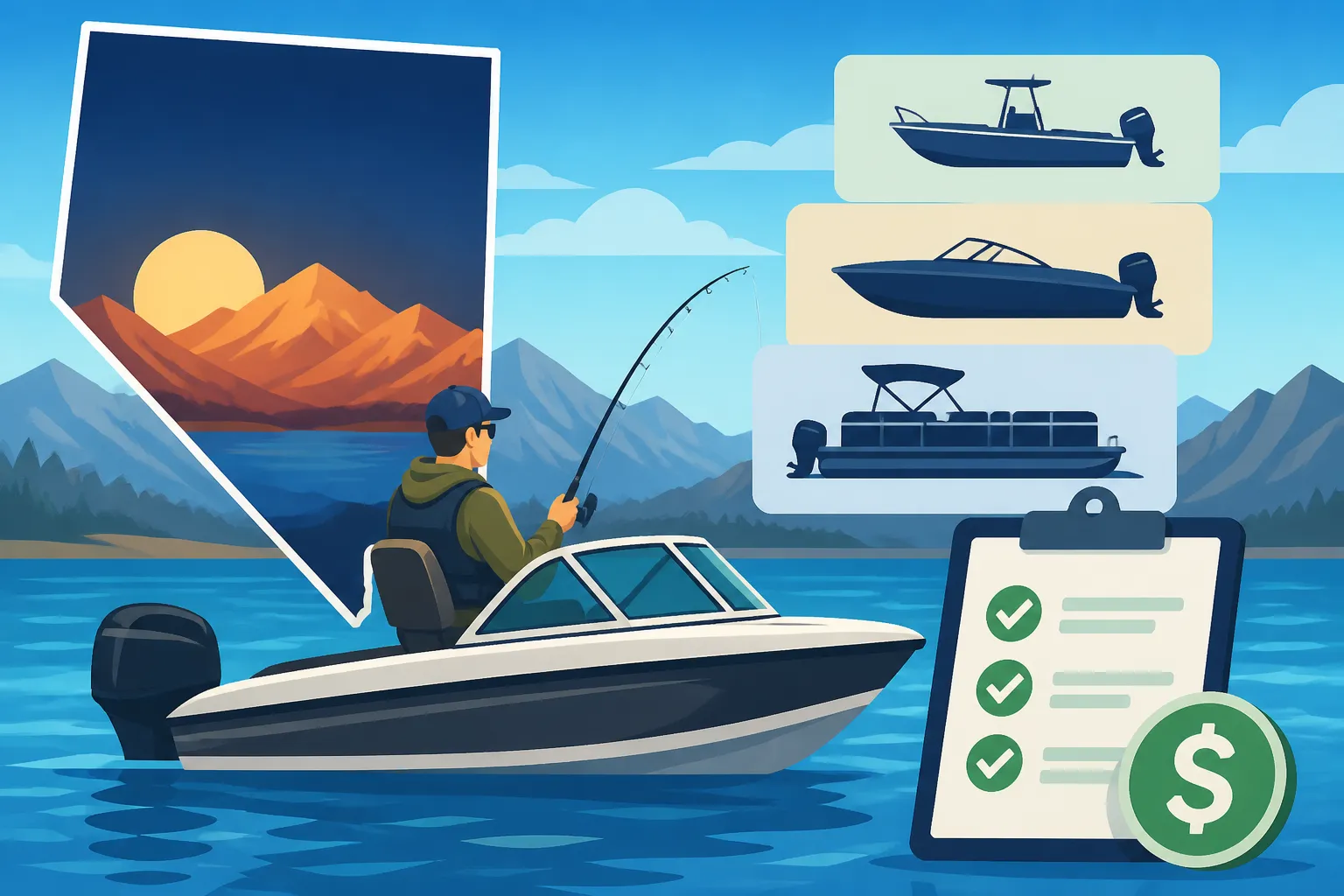
Here’s a quick overview of the typical annual registration fee ranges based on boat length in Nevada:
| Boat Length Category | Approximate Annual Registration Fee | Common Vessel Types |
|---|---|---|
| Less than 16 feet | $20 – $25 | PWCs, Jon boats, Small fishing boats |
| 16 feet to 25 feet | $30 – $45 | Bass boats, Deck boats, Mid-size runabouts |
| 26 feet and over | $50 – $75+ | Cabin cruisers, Large pontoons, Houseboats |
Note: These are approximate ranges and can change. Always check the official NDOW website for the most current fee schedule.
Additional Fees and Costs Beyond Length
While the length-based registration fee is the primary cost you'll encounter, it's crucial to remember that it's often not the only fee you'll pay when acquiring or maintaining a boat in Nevada. There are other associated costs that can add up, and being aware of them upfront will help you avoid any unwelcome surprises. Think of it like buying a car; there's the sticker price, but then there's also tax, title, and registration. Boats are very similar!
Titling Fees and Sales Tax Considerations
Just like your car, your boat needs a title, and with that comes a titling fee. When you purchase a new or used motorized vessel in Nevada, you'll need to apply for a Nevada Certificate of Title. This process confirms you as the legal owner and usually comes with a separate, smaller fee, typically around $20. This fee is a one-time charge as long as you own the boat, unlike the annual registration. The Nevada Boat Titling Process is a separate, but equally important, step to ensure your ownership is legally recognized.
Perhaps more significantly, if you purchase your boat from a dealer or an individual in Nevada, you'll also be subject to Nevada sales tax. This tax applies to the purchase price of the vessel itself, and it can be a substantial amount, especially on higher-value boats. For instance, if you buy a boat for $20,000, and the current state sales tax rate is around 8%, you're looking at an additional $1,600 in sales tax. This is often the largest "hidden" cost many new boat owners overlook. The Nevada boat sales tax rate is something you absolutely need to factor into your budget if you're buying locally. Even if you buy from out-of-state and bring it into Nevada, you might owe a use tax if you haven't paid sales tax in another state or if the rate was lower. It's always best to be clear on this with your purchase.
Renewal Fees and Late Penalties
Once you’ve got your boat initially registered, the clock starts ticking for your annual renewal. Nevada boat registrations are valid for one year and expire on December 31st, regardless of when you initially registered it during the year. So, if you register in July, it still expires on December 31st of that same year. When January 1st rolls around, you'll need to renew for the next year. The good news is that the annual renewal fee is generally the same as the initial registration fee based on your boat's length category. You'll typically receive a renewal notice in the mail, but it's ultimately your responsibility to ensure it's renewed on time.
Missing the renewal deadline can lead to some frustrating and unnecessary late penalties. NDOW imposes fees for expired registrations, and these can add up the longer your registration remains lapsed. Operating a boat with an expired registration is also illegal and could result in a citation from game wardens or other law enforcement officers on the water. Nobody wants that hassle when they're trying to enjoy a peaceful day fishing on Lake Tahoe. So, set a reminder on your phone, mark it on your calendar – whatever it takes to ensure you get that renewal in on time! Staying on top of your Nevada Boat Registration Renewal Deadline will save you both money and headaches.
There are also specific types of vessels that might have slightly different fee structures. For example, if you're looking into getting a personal watercraft, you'll want to specifically check the Cost to register a jet ski in Nevada as sometimes these rates can vary slightly or have additional considerations for certain operators, like age restrictions. Every detail matters when it comes to staying legal on the water.
Navigating the Registration Process Smoothly
Understanding the fees is just one part of the equation; actually getting your boat registered is the next big hurdle. While it might seem like a bureaucratic headache, the process is designed to be as straightforward as possible, especially if you come prepared. A smooth registration process means you'll be on the water faster, which is what we all want, right?
Essential Documents and Where to Apply
To register your boat, you'll need a handful of critical documents. Gathering these ahead of time will prevent multiple trips to the NDOW office or delays with an online application. Here's a typical rundown of what you'll need:
- Proof of Ownership: This is paramount. For a new boat, you'll need the Manufacturer's Statement of Origin (MSO). For a used boat, you'll need a properly endorsed title from the previous owner (if titled in Nevada) or a bill of sale and previous registration (if from a non-titling state). Make sure the bill of sale includes the hull identification number (HIN), make, model, year, and purchase price.
- Application for Registration: This is the official form provided by NDOW. You can usually download this from their website or pick it up at a local office.
- Photo ID: For verification purposes.
- Payment for Fees: Be ready with the applicable registration, titling, and sales tax payments.
You have a few options for where to apply. The most common is visiting a local NDOW office or one of their authorized license agents, which often include sporting goods stores. This allows for in-person assistance and immediate issuance of temporary registration. More and more, people are opting for the convenience of online registration through the NDOW website. This is a great option if you have all your documents scanned and ready. For a comprehensive list of what to bring, check out the Nevada Boat Registration Paperwork Checklist. It's a lifesaver!
If you're buying a used boat, it’s a good idea to ensure there are no liens or outstanding issues with the title. A quick check of the HIN with NDOW or a title search can save you a lot of grief down the road. Remember, the goal is a seamless transfer of ownership and registration so you can enjoy your boat without complications.
What Happens After You Register
Once your registration is successfully processed and all fees are paid, NDOW will issue you a Certificate of Number (your registration card), registration decals, and, if applicable, your boat's title.
The Certificate of Number is your official registration card, and you must have it onboard your vessel whenever it's in operation. Think of it as your boat's driver's license – always carry it!
The registration decals are just as important. These are stickers that display your current registration year. You'll need to affix these decals to your boat, typically on either side of the bow, in line with your registration numbers. The placement requirements are specific, so make sure to follow the instructions carefully to avoid any issues during a vessel inspection. The registration numbers themselves, which are assigned to your boat, must be clearly displayed on the forward half of the vessel, on both sides, in block characters at least three inches high, contrasting with the color of the boat.
Your boat's title (if applicable) is a legal document proving ownership. Keep this in a safe place, not on your boat, as it's crucial for future sales or proof of ownership. Make sure you understand the nuances of the Nevada boat title fee as part of this process. It’s a bit of paperwork, but once it’s done, you’re officially good to go, ready to enjoy the expansive waters of Lake Mead or the serene beauty of Wildhorse Reservoir.
Exemptions and Special Considerations
While the general rules for boat registration in Nevada are pretty clear-cut, there are a few scenarios where the rules might be a bit different. It’s always worth understanding these nuances, as they could apply to your specific situation and save you some unexpected hassle or costs.
Non-Motorized Vessels and Out-of-State Boats
As we touched on briefly, non-motorized vessels like kayaks, canoes, stand-up paddleboards, and rowboats typically do not require registration in Nevada. This is great news for those who prefer to explore Nevada's quieter waters under their own power. However, the moment you attach any kind of motor, even a small electric trolling motor, to one of these vessels, it immediately falls under the motorized vessel category and must be registered. So, if you've been thinking about adding a little power to your paddle, remember to budget for that registration fee! For more details, you can always refer to the Do you need to register a kayak in Nevada? resource.
For those visiting Nevada from out of state, the rules are generally quite accommodating. If your boat is currently registered in another state and you're visiting Nevada waters for less than 90 consecutive days, you typically do not need to register it in Nevada. Your home state's registration is sufficient. This policy makes it easy for tourists and seasonal visitors to enjoy our lakes and rivers. However, if your stay extends beyond 90 consecutive days, Nevada law requires you to register your vessel in the state. This is primarily to ensure that long-term users of Nevada's resources contribute to their maintenance and regulation. Be sure to familiarize yourself with the Nevada boat registration rules for an out-of-state boat if you plan a longer visit.
Antique Vessels and Dealer Registrations
Nevada also has specific provisions for certain types of vessels, such as antique boats and those operated by dealers. Antique vessels, generally defined as boats manufactured over a certain number of years ago (often 30 or more), may qualify for a special "historic vessel" registration. These usually come with unique plates or decals and sometimes a reduced fee, recognizing their historical value and typically limited use. If you're a proud owner of a classic wooden boat or a vintage runabout, it's worth checking with NDOW to see if your vessel qualifies for this special category. It's a nice way to honor boating history.
For boat dealers, there's also a different registration system. Dealers operating multiple boats for sale, demonstration, or testing purposes can apply for dealer registrations, which allow them to use a set of transferable numbers and decals across their inventory. This streamlines the process for businesses and ensures that even boats that are temporarily in use for commercial purposes are properly identified and accounted for. This isn't something most recreational boaters need to worry about, but it's part of the broader regulatory framework that keeps our boating industry running smoothly. So whether you're bringing in a brand-new vessel or an antique beauty, the system has a pathway for you to get on the water legally and safely.
Disclaimer
Please note that the information provided in this guide is intended for general informational purposes only and is subject to change. While we strive to provide accurate and up-to-date content, state regulations, fees, and requirements can be updated by the Nevada Department of Wildlife (NDOW) at any time. It is always recommended to consult the official NDOW website or contact them directly for the most current and specific information regarding Nevada boat registration fees and requirements before making any decisions.