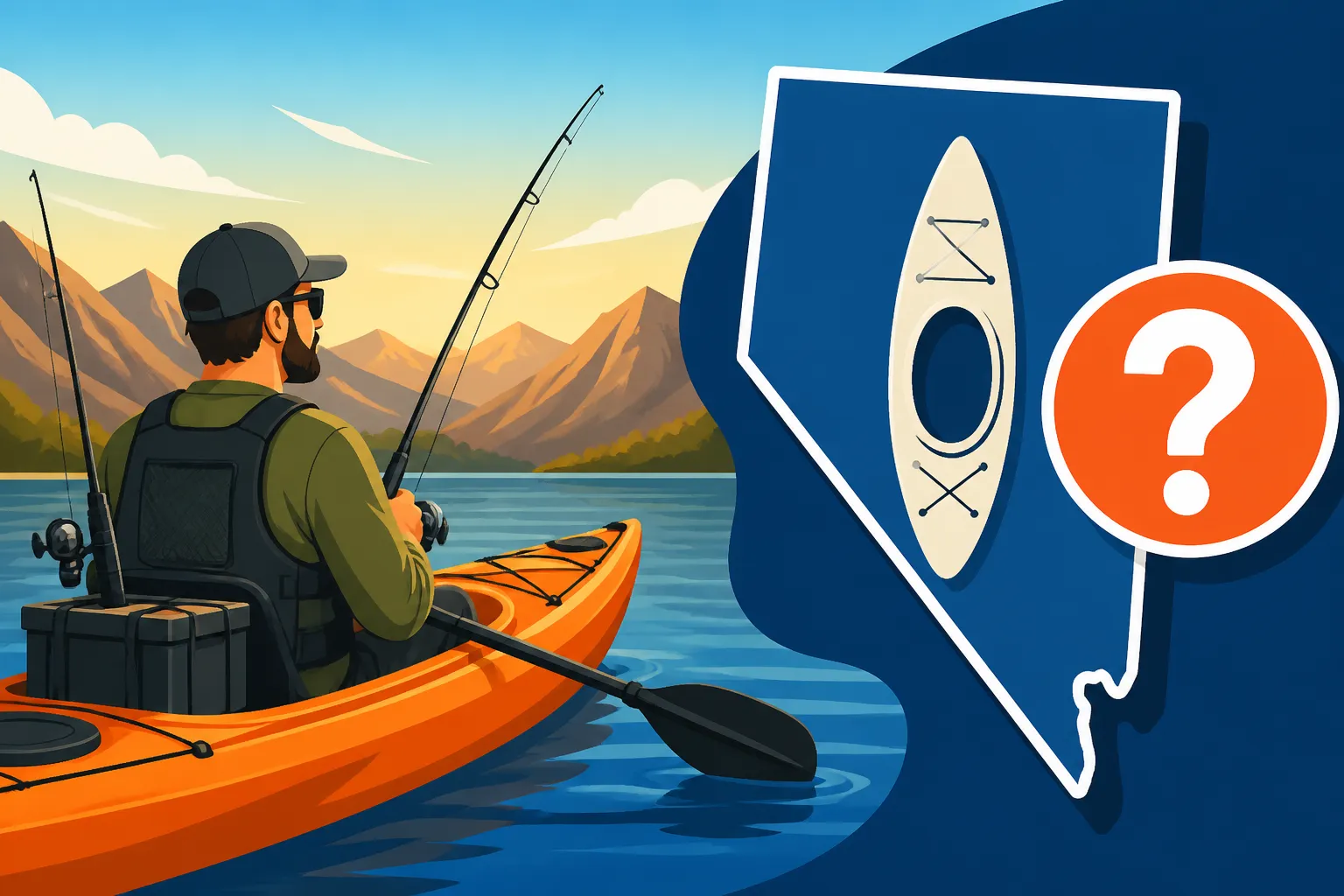
Do you need to register a kayak in Nevada?
It can be incredibly confusing trying to figure out all the rules and regulations when you just want to get out on the water, especially with smaller craft like kayaks. Many folks naturally assume if it floats and you can fish from it, it needs to be registered, but Nevada has some specific exemptions. This guide will clarify exactly when your kayak needs to be registered in the Silver State and what steps you'd take if it does.
Understanding Nevada's Boat Registration Requirements
The Nevada Department of Wildlife (NDOW) is the governing body for all things boating and fishing in our beautiful state. Their regulations dictate which vessels need to be registered, and thankfully, they have specific provisions that often exempt kayaks from the red tape.
What Constitutes a "Vessel" in Nevada?
First, let's understand what NDOW considers a "vessel." In Nevada, a vessel is broadly defined as practically any watercraft, other than a seaplane, used or capable of being used as a means of transportation on water. This umbrella term includes everything from massive houseboats to personal watercraft (PWCs) and, yes, even your beloved kayak or canoe.
However, just because something is a "vessel" doesn't automatically mean it needs to be registered. The state aims to regulate boats that pose a certain level of environmental risk or demand a higher level of safety oversight due to their power or size. This is where the exemptions become crucial for paddle craft enthusiasts.
The Key Exemption: Manual Propulsion
For most recreational kayakers and canoeists, the most important rule to know is this: a vessel propelled solely by oars or paddles is exempt from registration in Nevada. This is a huge relief for many of us who prefer the quiet glide of a paddle over the roar of a motor. If your kayak is truly just you, your paddle, and the water, you likely don't need to register it. This applies whether you're out for a leisurely paddle on Lake Tahoe or exploring the quiet coves of Lake Mohave. This exemption helps keep things simple for the vast majority of human-powered watercraft users.
So, if you've got a standard sit-on-top, a touring kayak, or even a stand-up paddleboard (which falls under similar exemptions as it's paddle-propelled), and it doesn't have any mechanical or sail propulsion, you're probably in the clear regarding state registration. You can simply grab your Nevada Fishing License Guide (if you plan to fish, of course!) and hit the water.
The "Catch": When Do Kayaks Need Registration?
While most kayaks are exempt, there are indeed specific scenarios where your trusty paddle craft will need to be registered with NDOW. It all comes down to the method of propulsion.
Adding Mechanical Propulsion
The moment you attach a motor to your kayak, whether it's an electric trolling motor or a small gas outboard, it transitions from an exempt paddle craft to a "mechanically propelled vessel." Even if you still primarily paddle, the presence of an auxiliary motor means it no longer falls under the "propelled solely by oars or paddles" exemption.
This is a common change for anglers looking to cover more water or fight strong winds on large reservoirs like Lake Mead or Wildhorse Reservoir. If you decide to motorize your kayak, even with a small electric motor, you'll need to go through the full registration process, just like any other powerboat. This includes obtaining a hull identification number (HIN) if it doesn't already have one, and displaying registration decals and numbers.
Equipping with a Sail
Similarly, if your kayak is equipped with a sail as its primary or auxiliary means of propulsion, it will also require registration. While less common for typical fishing kayaks, some specialized kayaks or canoes can be rigged with sails. If you're venturing into the world of sail-powered kayaking, you'll need to ensure your vessel complies with state registration rules. The intent behind this rule is to cover vessels that rely on wind power, similar to larger sailboats, ensuring they meet safety and identification standards.
It's important to remember that these rules are in place for safety and to help game wardens identify vessels on the water, especially in case of emergencies or regulations enforcement. So, while it might seem like a hassle, it's about keeping everyone safe and accountable on Nevada's beautiful waterways.
Common Kayak Types and Registration Scenarios
Let's break down the most popular types of kayaks you see on Nevada's lakes and rivers and clarify their typical registration status.
Standard Paddle-Powered Kayaks and Canoes
This is the most straightforward category. If your kayak, canoe, or even a paddleboard relies solely on human power via a paddle, you are almost certainly exempt from state registration. This covers the vast majority of recreational kayaks, whether you're using a single-bladed paddle for a canoe or a double-bladed paddle for a kayak. You don't need to worry about displaying registration numbers or carrying proof of registration from the state.
This is great news for families enjoying a quiet day at Floyd Lamb Park or adventurers exploring the serene waters of Spring Valley State Park. The focus for these vessels shifts more to safety equipment, like having a life jacket readily accessible for each person on board, and making sure you have the appropriate Nevada Fishing Regulations Explained on hand if you plan to cast a line. Most retailers, whether you buy from a local sporting goods store or online via Amazon, will not require registration information for these types of kayaks because it's simply not needed.
Motorized Kayaks and Pedal-Drive Kayaks with Motors
Here's where things change significantly. If you've got a kayak that uses an electric trolling motor, even a small one, or if you've attached a gas outboard, it must be registered. This applies even if your kayak also has pedals or paddles. The moment mechanical propulsion is present, the exemption for manual-only vessels is no longer applicable.
Many serious kayak anglers opt for motorized setups to navigate larger bodies of water, reach distant fishing spots, or make it easier to fight winds on places like Rye Patch Reservoir or Topaz Lake. For these anglers, the convenience of a motor outweighs the registration requirement. If you choose this path, be prepared for the registration process, which involves paperwork, fees, and displaying your registration numbers clearly on the hull. Remember, a vessel with any form of mechanical propulsion is subject to registration.
It's also worth noting that if you have a pedal-drive kayak, which is human-powered by your feet, it still falls under the "solely by oars or paddles" spirit of the exemption – meaning it's generally not required to be registered. However, if you then add an electric motor to that pedal-drive kayak, you move squarely into the registration-required category. It's the motor that triggers the requirement, not the pedal drive itself.
Sail-Equipped Kayaks and Canoes
While less common than motorized kayaks, if your kayak or canoe is rigged with a sail, even a small one for辅助 propulsion, it will also typically require state registration. The definition of an exempt vessel specifically refers to those "propelled solely by oars or paddles." A sail introduces another means of propulsion that goes beyond manual power.
You might see these types of setups on larger tandem kayaks or canoes designed for expeditions where wind can be a significant factor. If you're planning to navigate a sail-equipped kayak, be aware that you'll need to follow the same registration procedures as a motorized boat. This ensures that all wind-powered vessels on Nevada's waters are properly identified and accounted for. This is often true even for very small sailboats, as the principle remains the same.
The Registration Process if Your Kayak Requires It
So, you've decided to motorize your kayak, or you have a particularly unique sail-equipped model that needs registration. Don't worry, the process, while involving some paperwork, is manageable.
Necessary Documents and Information
If your kayak requires registration, you'll need to gather a few key pieces of information and documents to successfully complete the process with NDOW:
- Application for Registration: This is the primary form you'll fill out, available on the NDOW website or at their offices.
- Proof of Ownership: This is crucial. It could be a manufacturer's statement of origin (MSO) for a new kayak, a bill of sale if you purchased it used, or a title if the previous owner had one. Make sure the bill of sale clearly identifies the buyer, seller, date, purchase price, and a description of the kayak (make, model, HIN if available).
- Hull Identification Number (HIN): Most manufactured kayaks will have a HIN, which is a unique 12-character serial number usually found on the transom (rear) of the kayak. If your kayak is homemade and doesn't have an HIN, NDOW will assign one during the registration process.
- Proof of Nevada Residency (if applicable): If you're registering as a Nevada resident, you'll need to provide proof of residency (e.g., driver's license, utility bill). This can impact the registration fees.
- Payment for Fees: Be prepared to pay the applicable registration fees, which vary based on the vessel type and duration of registration. You can find details on the Nevada Boat Registration Fees by Length on the NDOW website.
It's always a good idea to double-check the latest requirements on the official NDOW website or by calling one of their offices before you head in, as procedures can sometimes be updated.
Where to Register Your Kayak
NDOW makes it fairly convenient to register your vessel:
- NDOW Offices: You can visit any Nevada Department of Wildlife office in person. They have locations across the state, including in Las Vegas, Reno, Elko, and Fallon. This is often the best option if you have questions or need an HIN assigned.
- Mail: You can mail your completed application and supporting documents to the main NDOW headquarters in Reno.
- Online: While you can't typically complete initial registration for a new vessel online (especially if it needs an HIN or careful document review), NDOW does offer online services for renewals once your kayak is already in the system. To learn more about digital options, you might check out resources like How to buy a Nevada fishing license online, as some processes share similarities.
Understanding Registration Fees and Validity
Nevada boat registrations are typically valid for one year. The fees will depend on the length of your kayak (if it's over 8 feet and motorized/sailed) and whether you are a resident or non-resident. For example, the Nevada boat registration cost for a 16 foot boat would be higher than for a shorter, similarly equipped vessel. These fees help fund NDOW's efforts in managing waterways, enforcing regulations, and providing public access.
When your registration is complete, you'll receive a Certificate of Number and validation decals. The decals must be affixed to each side of the bow (front) of your kayak, and the registration numbers must be painted or permanently affixed to both sides of the bow in block characters at least three inches high, contrasting sharply with the background color. Carrying your Certificate of Number onboard your kayak whenever it's in operation is also a legal requirement.
Important Safety and Permitting Considerations Beyond Registration
Even if your kayak doesn't need to be registered, there are still crucial rules and best practices to ensure your safety and legality on Nevada's waters.
Essential Safety Gear for All Kayaks
Regardless of whether your kayak is registered or not, safety is paramount. NDOW enforces specific safety equipment requirements for all vessels, including kayaks.
- Life Jackets (PFDs): Every person on board any vessel must have a U.S. Coast Guard-approved wearable personal flotation device (PFD) readily accessible. Children 12 years of age and younger must wear a PFD at all times while on board a vessel that is underway. This is one of the most critical safety rules, and game wardens take it very seriously. You can find a wide range of comfortable and reliable PFDs from brands like NRS or Onyx, easily available on Amazon or at local outdoor retailers.
- Sound-Producing Device: All vessels (including kayaks) must carry a sound-producing device like a whistle or horn, capable of producing a 4-second blast audible for at least half a mile. This is crucial for signaling other boaters, especially in low visibility or emergency situations.
- Visual Distress Signals: While generally required for vessels operating on federal waters at night, it's a good practice to carry a flashlight or lantern on your kayak, especially if there's any chance you might be out near dusk or dawn.
- Navigation Lights: If operating your kayak between sunset and sunrise, you must display appropriate navigation lights. For kayaks, this usually means a white light visible 360 degrees around, which can be easily attached to your PFD or kayak.
Having a Nevada Boater Education Card Requirement isn't typically necessary for purely paddle-powered kayaks, but understanding general boating safety is always a good idea, especially on larger, busier lakes.
Fishing Licenses and Special Permits
If you plan to use your kayak for fishing, remember that the kayak's registration status is separate from your personal fishing license requirements.
- Nevada Fishing License: Anyone 12 years of age or older needs a valid Nevada fishing license to fish in the state's public waters. This applies whether you're fishing from a boat, kayak, or the shore. You can easily purchase your license online or at many sporting goods stores. To clarify specific age rules, check out Nevada Fishing License Age Requirements.
- Special Permits: Certain specific bodies of water in Nevada, most notably Pyramid Lake, require additional permits beyond the state fishing license. If you're dreaming of catching a trophy Lahontan cutthroat trout at Pyramid Lake, you'll need a tribal fishing permit, which is separate from your state license. Make sure to consult the Pyramid Lake Fishing Permit Guide before you go. Lake Tahoe also has unique rules, so always check Lake Tahoe Nevada Fishing License Rules if you plan to fish there, especially concerning the state line.
Understanding Local Waterway Rules
Beyond state-level regulations, some local authorities or specific waterways might have their own rules. For example, large federal reservoirs like Lake Mead are managed by the National Park Service and might have specific zones or regulations regarding vessel operation or access. Always check with the managing authority of the specific lake or river you plan to visit, especially if it's your first time there. This helps ensure a smooth, legal, and enjoyable experience on the water.
Kayak Registration Summary
To make things a bit clearer, here's a quick rundown of typical kayak registration scenarios in Nevada:
| Kayak Type | Primary Propulsion | Nevada Registration Required? |
|---|---|---|
| Standard Recreational Kayak/Canoe | Paddles/Oars | NO |
| Pedal-Drive Kayak (no motor) | Pedals | NO |
| Kayak with Electric Trolling Motor | Electric Motor | YES |
| Kayak with Gas Outboard Motor | Gas Motor | YES |
| Kayak with Sail | Sail | YES |
| Homemade Kayak (no motor/sail) | Paddles/Oars | NO |
| Homemade Kayak (with motor/sail) | Motor/Sail | YES |
This table provides a snapshot, but always refer to the detailed regulations from NDOW if you have any doubts about your specific vessel.
Disclaimer
Please note that fishing and boating regulations can change. While every effort has been made to provide accurate and up-to-date information, it is always your responsibility to consult the official Nevada Department of Wildlife (NDOW) regulations or contact them directly for the most current and specific requirements before heading out on the water.