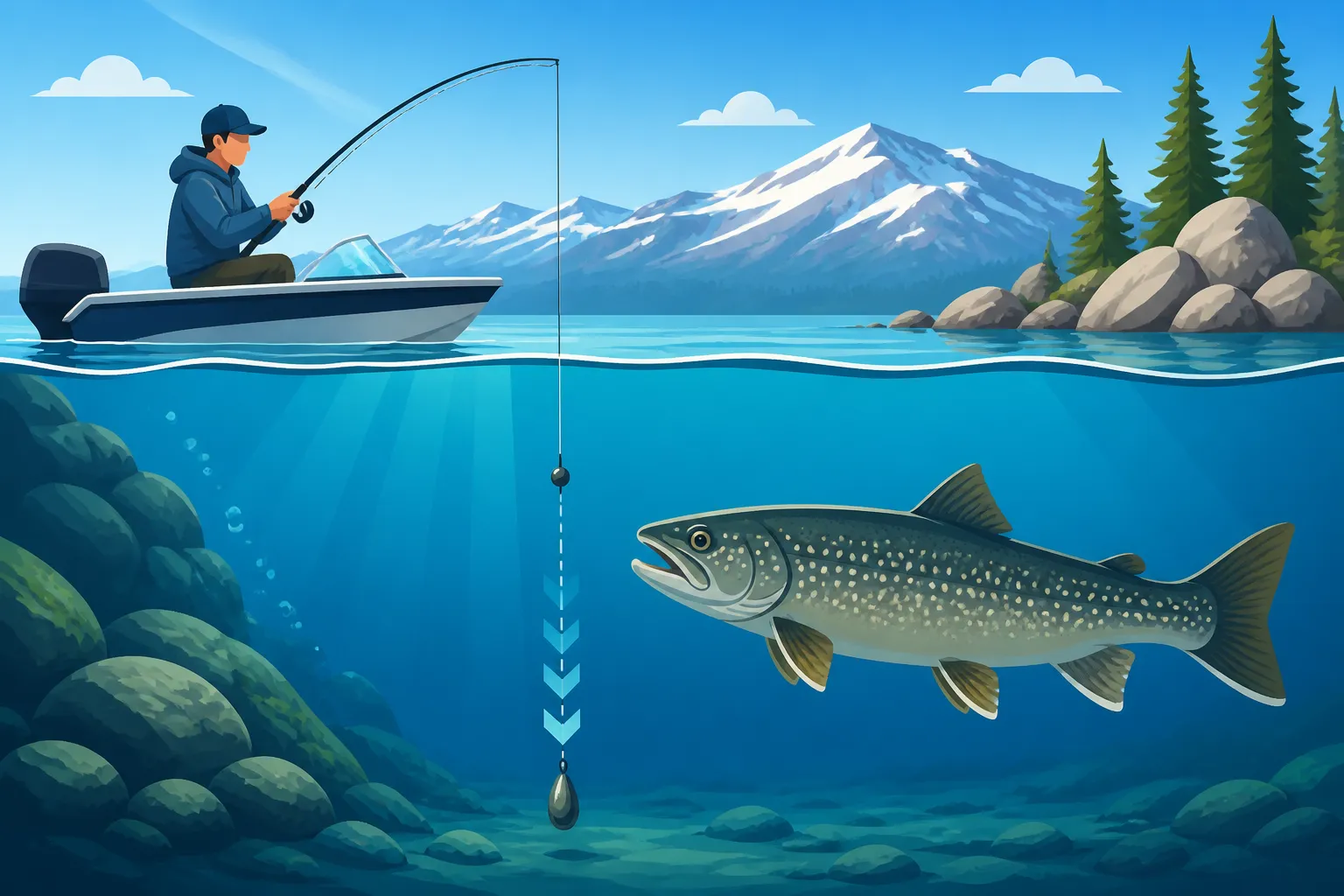
How deep to fish for Mackinaw trout at Lake Tahoe
Trying to figure out just how deep you need to drop your lines to tempt those elusive Mackinaw trout in Lake Tahoe can feel like solving a complex puzzle. These incredible fish are masters of the deep, and chasing them requires a keen understanding of their habitat and seasonal movements. This guide will dive deep into the specific depths where Mackinaw (also known as Lake Trout) thrive in Lake Tahoe, offering practical advice and techniques to help you hook into a true High Sierra giant.
Why Mackinaw Trout Prefer the Deep, Cold Embrace of Lake Tahoe
The beauty of Lake Tahoe isn't just on its surface; beneath those stunning azure waters lies a complex ecosystem perfectly suited for Mackinaw trout. These fish, Salvelinus namaycush, are cold-water specialists, and Tahoe's immense depth and consistent low temperatures provide their ideal sanctuary. Understanding why they hug the bottom or suspend in specific thermoclines is crucial for any angler hoping to connect with them.
The Thermocline Effect and Oxygen Levels
Lake Tahoe is a prime example of a deep, oligotrophic lake, meaning it's generally low in nutrients but high in oxygen, even at great depths. Mackinaw thrive in water temperatures ranging from about 40 to 55 degrees Fahrenheit. During much of the year, especially in summer, the lake stratifies into layers: a warmer surface layer (epilimnion), a transitional layer with a rapid temperature drop (thermocline), and a cold, deep layer (hypolimnion). Mackinaw often position themselves in or just below the thermocline where cooler temperatures and ample oxygen converge with their preferred forage. This isn't just about comfort; it's about survival and finding their next meal efficiently.
For instance, during the peak of summer when surface temperatures can soar, a Mackinaw might feel completely out of its element near the top. Imagine trying to run a marathon in a heavy winter coat – that's how a Mackinaw would feel in warm water. They seek out the cold, often moving deeper as the sun climbs high and the upper water column heats up. This is a primary reason why knowing how deep trout go in summer is vital for success on Lake Tahoe. Their entire physiology is adapted to these colder conditions, making depth a primary determinant of their whereabouts.
Forage Fish and Bottom Structure
While temperature is a major driver, the presence of food is equally important. Mackinaw are opportunistic predators, and their diet in Lake Tahoe primarily consists of smaller fish, particularly kokanee salmon and various minnows. These baitfish also have their preferred depths and movements, which in turn dictate where the Mackinaw will be lurking. Often, large schools of kokanee will suspend at certain depths, and you can bet the Mackinaw won't be far behind, shadowing them like silent submarines.
Beyond baitfish, Mackinaw are also drawn to specific bottom structures. Lake Tahoe boasts an incredibly varied underwater landscape, with dramatic drop-offs, underwater shelves, rocky reefs, and vast expanses of relatively flat bottom. These structures provide ambush points, hiding spots, and areas where baitfish might congregate. A sharp ledge or a submerged point can be a magnet for Mackinaw, regardless of the season, as it offers a strategic advantage for feeding. This relationship between predator, prey, and structure means that understanding the lakebed topography is just as crucial as knowing the water temperature.
Seasonal Shifts in Mackinaw Trout Depth at Lake Tahoe
The "right" depth for Mackinaw in Lake Tahoe isn't static; it's a dynamic variable that changes throughout the year. The biggest influences are water temperature and the spawning cycles of both the Mackinaw and their prey. Successful Mackinaw anglers aren't just good at fishing deep; they're adept at understanding these seasonal migrations and adjusting their tactics accordingly. If you want to know the Best Time of Year to Fish in Nevada for Mackinaw, understanding these patterns is key.
Spring and Fall – The Shallower Opportunities
Many anglers find spring and fall to be some of the most exciting times to target Mackinaw in Lake Tahoe. As the lake water cools in the fall and warms slightly in the spring, the thermocline either begins to break down or hasn't fully established itself, leading to more uniform temperatures throughout the water column. This "turnover" period allows Mackinaw to roam more freely and often shallower than they would in the oppressive heat of summer.
In early spring, right after the ice melts in higher elevations (though Tahoe rarely fully freezes), Mackinaw can be found anywhere from 30 to 100 feet deep, sometimes even shallower if baitfish are present near the shore. They're actively feeding after a cold winter, and the warming surface waters can draw baitfish up. Similarly, in the fall, particularly from September through November, Mackinaw congregate in shallower areas, often 40 to 150 feet, as they prepare for their own spawning rituals or chase schooling kokanee. This is when you might have some of your best chances at Lake Tahoe Nevada Shoreline Fishing, though dedicated deep water techniques are still paramount for larger fish.
Summer and Winter – The Deepwater Game
When summer fully arrives and the surface waters heat up, Mackinaw retreat to their deepwater strongholds. From late June through early September, expect to find them consistently in depths ranging from 100 feet down to 300 feet, or even deeper in some parts of the lake. They're searching for that ideal cold water and stable oxygen levels. This is classic deep-water trolling territory, requiring specialized gear to present your lures at such extreme depths.
Winter fishing for Mackinaw in Lake Tahoe, while less common for recreational anglers due to weather conditions, often mirrors summer depths. The entire water column remains cold, but Mackinaw will still seek out structure and baitfish in those deeper zones, generally from 100 to 250 feet. Ice fishing isn't really a thing on the main body of Lake Tahoe due to its immense size and infrequent complete freezing, but for those venturing out on boats, the deepwater approach remains consistent. The main challenge in winter is often the weather and access, not necessarily the fish's depth preference, as they simply continue to inhabit the depths where they are most comfortable and find food.
Table: Seasonal Mackinaw Trout Depth Guide for Lake Tahoe
| Season | Typical Depth Range (feet) | Primary Factors | Key Forage Location |
|---|---|---|---|
| Early Spring | 30 – 100 | Warming surface, post-winter feeding | Shallower baitfish, warming coves |
| Late Spring | 80 – 180 | Thermocline begins to form, active feeding | Moving deeper with baitfish |
| Summer | 100 – 300+ | Strong thermocline, cold water refuge | Deep baitfish schools, structure |
| Early Fall | 40 – 150 | Water cooling, pre-spawn movements | Shallow baitfish, spawning areas |
| Late Fall | 100 – 250 | Post-spawn, winter transition | Deeper structure, scattered bait |
| Winter | 100 – 250 | Consistent cold water, stable conditions | Deep structure, bottom hugging |
Targeting Mackinaw: Recommended Depths and Techniques
Successfully fishing for Mackinaw in Lake Tahoe is a blend of knowing where they are (depth), understanding why they're there, and employing the right tactics to get your bait in front of them. This isn't a game for light tackle or casual casts from shore; it demands dedication and often specialized equipment. If you're serious about hooking a trophy, you'll need to embrace the deep. Our comprehensive guide on the Lake Tahoe Nevada Fishing Guide provides even more insight.
The Art of Trolling with Downriggers
For most of the year, particularly during summer and winter, trolling is the most effective method for Mackinaw. But we're not talking about flat-lining a lure behind the boat. To reach those significant depths, you'll need a downrigger setup. A downrigger uses a heavy lead ball to carry your fishing line and lure down to a precise, desired depth, then releases the line when a fish strikes. This allows you to present your offering right in the strike zone, whether it's 150 feet or 250 feet down.
When trolling, precise depth control is paramount. You want your lure swimming just above, in, or through the same depth as the fish and bait you're marking on your fish finder. A common technique for Trolling Techniques for Lake Tahoe Mackinaw involves using large spoons, dodgers, and flashers with a trailing grub or minnow imitation. Speed is also a factor; Mackinaw often prefer a slower troll, typically 1.5 to 2.5 miles per hour, but sometimes varying speed can trigger a strike. Experimentation is key to figuring out the best trolling depth for lake trout in summer or any other season. Pay attention to your electronics; if you're marking fish at 180 feet, set your downrigger to 175 or 185 feet.
Utilizing Electronics for Precision Targeting
Modern fish finders and sonar units are indispensable tools for Mackinaw fishing on Lake Tahoe. These aren't just for locating fish; they're essential for understanding the underwater topography, identifying bait schools, and monitoring water temperature at different depths. Many high-end units, like those from Garmin or Humminbird, offer crystal-clear imaging that can differentiate between schools of kokanee and individual Mackinaw.
Before you even drop a line, spend time cruising potential spots. Look for sudden depth changes, underwater ledges, and prominent rock formations. Then, keep an eye out for "arches" indicating fish or dense clouds suggesting bait. If you mark fish at 170 feet and bait at 160 feet, you've found your target depth. The ability to mark your location and depth accurately is a game-changer. Services like FishingBooker often recommend guides who are experts in using these technologies to put clients on fish, emphasizing how crucial they are for success in Lake Tahoe Deep Water Mackinaw Spots.
Deepwater Jigging and Bait Presentation
While trolling dominates, deepwater jigging can also be highly effective, especially when you've pinpointed a school of Mackinaw on your electronics. This technique involves dropping heavy jigs, usually in the 1 to 3-ounce range, down to the fish's depth and then vertically jigging them with a lift-and-drop motion. The idea is to mimic a wounded baitfish or create enough flash and vibration to provoke a strike.
Live bait, particularly shiners or minnows, fished on a dropper loop rig or under a slip sinker, can also be devastatingly effective. The challenge is getting them down to the correct depth and keeping them there. Using a three-way swivel with a heavy lead weight on a short dropper line, and your bait on a longer leader, allows the bait to swim enticingly just off the bottom or at a suspended depth. This can be particularly effective when fish are less active or when you're anchored over a promising piece of structure, and it perfectly complements the comprehensive approach outlined in our guide on How to Catch Mackinaw Trout at Lake Tahoe.
Essential Gear for Deepwater Mackinaw Success on Lake Tahoe
Tackling Lake Tahoe's Mackinaw requires more than just enthusiasm; it demands the right tools for the job. Standard freshwater gear simply won't cut it when you're trying to fish effectively at hundreds of feet deep. Investing in appropriate equipment will significantly increase your chances of success and make the entire experience more enjoyable.
Rods, Reels, and Line Built for Depth and Power
For deepwater trolling, you'll want a sturdy, medium-heavy to heavy action trolling rod, typically 7 to 9 feet in length. These rods need enough backbone to handle heavy downrigger balls and strong Mackinaw, but also a sensitive tip to detect subtle bites. Pair this with a robust baitcasting or level-wind reel, like a Penn Squall or an Ambassadeur 7000, spooled with 25-50 lb test braided line. Braided line is crucial because it has almost no stretch, providing excellent sensitivity to feel bites at extreme depths, and its thinner diameter cuts through the water with less resistance. You'll then attach a fluorocarbon leader of 15-25 lb test, which is virtually invisible underwater. You can find excellent options for Best Trolling Rods for Lake Trout at most reputable tackle shops.
For jigging, a shorter, more powerful rod, around 6 to 7 feet with a fast action, is ideal. This gives you the leverage and sensitivity to work heavy jigs and feel strikes. Again, a reliable baitcasting reel with strong drag and braided line is the go-to setup. Considering the size and power of these fish, often reaching significant sizes as discussed in Mackinaw Trout Size and Age at Lake Tahoe, having a dependable setup is non-negotiable.
Specialized Equipment: Downriggers, Electronics, and More
As mentioned, downriggers are practically mandatory for consistent Mackinaw success when trolling beyond 60-80 feet. Brands like Scotty and Cannon offer reliable electric downriggers that make depth control effortless. Don't skimp on your fish finder either; a quality unit with CHIRP sonar, side imaging, or even 3D mapping capabilities will give you an unparalleled view of the underwater world. Garmin ECHOMAP or Humminbird HELIX series are excellent choices for Best Fish Finder for Reservoir Fishing.
Other essential items include a large, sturdy landing net designed for big fish, a long pair of pliers for hook removal, and a cooler large enough to hold your catch – Mackinaw can get big! If you plan to release fish, a de-hooking tool and a means to quickly revive them (like a release cradle for larger fish) are highly recommended. For those looking for the ultimate experience, booking a guided trip through a service like FishingBooker can provide access to all this specialized gear and the expertise of a seasoned local captain. They often have the Best Boats for Nevada Reservoir Fishing equipped with all the bells and whistles. Remember, the Mackinaw Trout Lifespan at Lake Tahoe means these fish can grow to impressive sizes, so be prepared!
Safety First on Big Water
Lake Tahoe is a massive body of water, and conditions can change rapidly. Always prioritize safety. This means having all required safety equipment on board, including life jackets for everyone, a working marine radio, flares, and a first-aid kit. Inform someone of your float plan, and keep a close eye on weather forecasts. The immense size of Lake Tahoe, combined with the often chilly temperatures even in summer, means you must be prepared for anything. Don't let the allure of deepwater Mackinaw make you complacent about the power of this beautiful, yet sometimes unforgiving, lake. Being prepared means you can focus on the fishing, knowing you've taken all necessary precautions.
Disclaimer
Please remember that fishing regulations in Nevada, including those for Lake Tahoe, can change. Always consult the latest Nevada Department of Wildlife (NDOW) regulations booklet or website before heading out. This guide provides general information and recommendations, but it is your responsibility to be aware of and comply with all current laws and limits.