Best wader material for cold mountain streams
For any angler who has ever dared to brave the pristine, yet often frigid, mountain streams of Nevada, the biting cold is a familiar and unwelcome companion. That bone-chilling sensation seeping through your inadequate gear can quickly turn a peaceful day of fly fishing into an exercise in misery, forcing you off the water long before you've had your fill. This comprehensive guide is here to unravel the mystery of wader materials, helping you choose the best protection against the cold so you can focus on the tug of a trout, not the shivers.
Understanding the Chilling Reality of Nevada's Mountain Streams
Nevada might be known for its deserts, but don't let that fool you – our high-elevation mountain streams, often fed by snowmelt from the Sierra Nevada or Ruby Mountains, are incredibly cold, even during the height of summer. These aren't your gentle, warm lowland rivers; these are crisp, clear, and often fast-flowing arteries of ice-cold water that demand respect and proper gear. Without the right waders, you’re not just uncomfortable, you're potentially putting yourself at risk.
Why Cold Water is More Than Just Uncomfortable
It’s easy to shrug off a little chill, thinking you’ll just tough it out. But when you’re standing waist-deep in a stream that might hover just above freezing, that "little chill" can escalate quickly. Prolonged exposure to cold water, especially when your core temperature starts to drop, isn't just unpleasant – it can lead to serious health issues like hypothermia. Your muscles can cramp, your dexterity decreases, and your judgment can become impaired, making simple tasks like changing a fly or navigating slippery rocks surprisingly dangerous. Many an angler has cut a trip short, packed up their gear, and headed for the warmth of their vehicle, all because the cold had simply become unbearable.
The Core Function of Waders in a Mountain Environment
At their most basic, waders are meant to keep you dry. But in a cold mountain stream, their role expands significantly. They are your primary barrier against the elements, serving as both a waterproof shell and, depending on the material, an insulating layer. When you're constantly moving through water, crossing currents, or even just standing patiently in a prime fishing spot, your waders are working overtime. They need to be robust enough to withstand scrapes against rocks and branches, flexible enough for comfortable movement, and crucially, capable of maintaining your warmth in conditions that would otherwise make you question your life choices. Thinking about Nevada Fishing Gear Essentials should always start with reliable waders for these environments.
Diving Deep into Wader Materials: Pros and Cons for Cold Streams
When it comes to keeping warm and dry, there are two main types of wader materials that dominate the market, along with some hybrid options. Each has its own strengths and weaknesses, making your choice a personal one based on your specific fishing habits and the temperatures you typically encounter.
Neoprene Waders: The Traditional Cold-Weather Champion
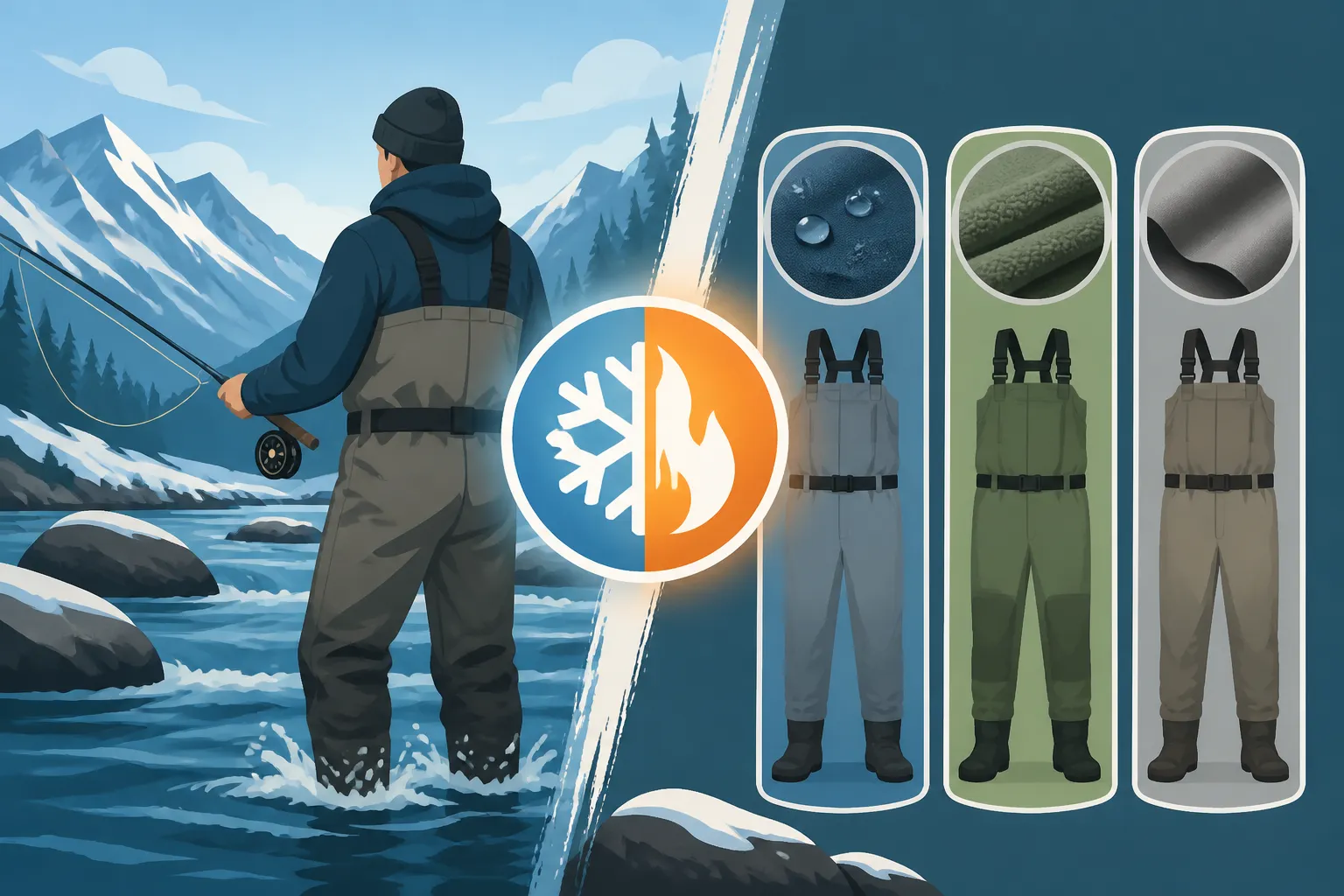
Neoprene is likely what comes to mind for many when they think of warm waders. It's the same material used in wetsuits, and for good reason: it excels at insulation. The material traps a thin layer of water against your skin (or your base layers), which your body then warms up, creating an insulating buffer against the colder outside water. Neoprene waders are typically thicker, ranging from 3mm to 5mm or even 7mm, with thicker options offering more warmth.
They are fantastic for truly cold conditions, such as early spring trout fishing when the snowmelt is still roaring, or for those chilly late fall days when the air temperature dips dramatically. If you're planning to be stationary for extended periods in icy water, neoprene can be a lifesaver. However, this excellent insulation comes with a significant trade-off: breathability. Neoprene doesn't breathe, meaning any sweat you generate from hiking to your fishing spot or simply being active will stay trapped inside, making you feel clammy and eventually leading to a chill once you stop moving. They can also be quite bulky and restrict movement, making longer hikes or complicated casting motions a bit more cumbersome.
Breathable Waders with Layering: The Modern Angler's Choice
In recent years, breathable waders have become incredibly popular, and for good reason. Made from advanced materials like GORE-TEX or proprietary waterproof-breathable fabrics, these waders are designed to allow moisture vapor (sweat) to escape while preventing water from getting in. This keeps you much drier and more comfortable, especially if you're doing a lot of hiking or fishing on warmer days that might still involve cold water.
The key to warmth with breathable waders isn't the material itself, but your layering underneath. You build your insulation by wearing appropriate thermal base layers (wool or synthetic, never cotton!) and mid-layers. This system offers incredible versatility: on warmer days, you can wear fewer layers; on truly frigid days, you can pile on the warmth. This adaptability is why many anglers prefer them for Fly Fishing in Nevada across different seasons. The downside? High-quality breathable waders can be a significant investment, and if you don't layer correctly, they won't keep you warm in cold water. They also tend to be more susceptible to punctures than neoprene, though modern materials are remarkably tough.
Hybrid Waders: Best of Both Worlds?
Some manufacturers have started offering hybrid waders, attempting to combine the best features of neoprene and breathable materials. These might feature a breathable upper body for comfort during hikes and active casting, paired with a neoprene lower half for maximum warmth when standing in cold water. This can be an excellent compromise for anglers who face a mix of conditions – needing both insulation for icy depths and breathability for long walks along the Truckee River Fishing Near the Nevada Line.
While these hybrids aim to offer a balanced approach, they often come with their own set of considerations. The seams where the different materials meet need to be exceptionally well-constructed to prevent leaks, and the overall bulk might still be a factor, albeit less so than full neoprene. It's about finding the right blend that suits your specific fishing style and the varying temperatures you might encounter during a single trip.
Here's a quick comparison of the primary wader materials for cold mountain streams:
| Feature | Neoprene Waders | Breathable Waders (with layering) | Hybrid Waders |
|---|---|---|---|
| Primary Advantage | Excellent inherent warmth and insulation | Superior comfort, breathability, and versatility | Blend of warmth and breathability |
| Insulation | Built-in (3-7mm thickness) | Provided by user's base/mid-layers | Targeted insulation (e.g., neoprene bottom, breathable top) |
| Breathability | Very low/None (can lead to sweat accumulation) | High (allows sweat vapor to escape) | Varies by design, typically good on top, low on bottom |
| Flexibility | Moderate to Low (can be bulky) | High (allows for greater range of motion) | Moderate to High |
| Weight | Heavier, especially when wet | Lighter | Moderate |
| Durability | Good puncture resistance, but can tear | Good, but generally less puncture resistant than thick neoprene | Varies, seam integrity is key |
| Best For | Very cold water, stationary fishing, ice fishing | Variable conditions, active fishing, long hikes | Anglers needing both warmth and mobility |
| Cost | Generally more affordable | Can be a significant investment for high-end models | Mid to high-range |
Key Features to Look for Beyond Material
Beyond the material itself, several other features can significantly impact your comfort and effectiveness when choosing waders for cold Nevada mountain streams. Thinking holistically about your gear, including items like your Best Fishing Rods for Nevada Lakes, will ensure a much more enjoyable day on the water.
Insulation and Layering Strategy
This cannot be stressed enough, especially for breathable waders. When selecting your gear, plan your layering system. For base layers, merino wool or synthetic materials are your best friends. They wick moisture away from your skin, keeping you dry and warm even if you sweat a little. Avoid cotton at all costs; once wet, cotton loses all insulating properties and will actively chill you. On colder days, a mid-layer like fleece pants or insulated hiking pants can go a long way under your waders. Think of it as building a customizable warmth system. Companies like Patagonia, Simms, or Orvis offer excellent layering options designed specifically for anglers.
For neoprene waders, while they offer inherent warmth, a good pair of moisture-wicking socks and perhaps a thin base layer can still improve comfort by managing any sweat build-up. Remember, the goal is to stay dry and warm.
Bootfoot vs. Stockingfoot: The Footwear Dilemma
This is a classic debate among anglers, and for cold mountain streams, the choice can significantly impact your warmth and traction.
- Bootfoot Waders: These have boots permanently attached. The advantage here is convenience – you just step into them, and you're ready to go. They often come with insulated boots, which is a huge plus for cold water. There's no worrying about cold gaps between your wader and wading boot. However, the fit can be less precise, and if the attached boots don't fit perfectly, you can experience discomfort or blisters on longer treks. They're also bulkier to pack and transport. For those quick trips to a popular spot like a Nevada urban pond fishing rules location that might be stocked in colder months, bootfoot can be super convenient.
- Stockingfoot Waders: These come with neoprene "socks" at the bottom, requiring you to wear separate wading boots. This system offers superior fit and customization. You can choose wading boots that fit your feet perfectly and provide the specific traction you need for slippery, rocky stream beds. The ability to wear thick wading socks underneath adds another layer of warmth. Stockingfoot waders also tend to be lighter and more packable. The main drawback is the extra step of putting on separate boots, and the initial cost can be higher since you're buying two components. However, for serious stream anglers who value comfort, support, and the best possible grip on challenging terrain, stockingfoot waders are often the preferred choice. For fishing remote high mountain lakes, the lighter weight and custom fit of stockingfoot waders are invaluable.
Durability and Puncture Resistance
Nevada's mountain streams are beautiful, but they are also rugged. Sharp rocks, thorny bushes, and fallen branches are common hazards. The last thing you want is a pinhole leak (or worse!) halfway through your fishing day. Look for waders that boast reinforced knees and seat areas, as these are high-wear zones. Pay attention to the seam construction; double-taped or sonic-welded seams generally offer better longevity than single-stitched seams. While no wader is entirely puncture-proof, investing in a reputable brand with a good warranty can provide peace of mind. Many anglers carry a small wader repair kit, a smart move for any trip into the backcountry.
Making Your Choice: Matching Waders to Your Nevada Adventure
Ultimately, the "best" wader material isn't a one-size-fits-all answer. It depends entirely on how and where you plan to fish in Nevada's often unpredictable mountain environments. Are you a dedicated winter warrior, or do you prefer to chase trout year-round?
Scenario: The Dedicated Winter Angler
If your idea of a perfect fishing day involves snow on the banks, ice in the guides, and water temperatures barely above freezing, then maximum warmth is your absolute priority. In this case, thick neoprene waders (5mm or more) are going to be your most comfortable option. They provide immediate, built-in insulation that can be hard to beat when you’re standing stationary in truly frigid conditions. Pair them with heavily insulated bootfoot waders for convenience and extra warmth, or robust wading boots with several layers of thick wool socks if you opt for stockingfoot. You might also consider a "winter specific" pair that you only pull out for these extreme conditions, knowing that while they may not breathe, they will keep you warm. Remember to check Nevada Fishing Seasons by Month for optimal winter fishing dates.
Scenario: The Four-Season Stream Hopper
Perhaps you enjoy the versatility of hitting the streams in early spring, during the temperate summer, and into the crisp fall, chasing different species or just enjoying the changing scenery. For this type of angler, breathable waders are often the superior choice. Their ability to manage moisture and adapt to varying temperatures through layering means you’re comfortable whether you’re hiking a mile to a secluded stretch of the East Walker River in Nevada on a warm autumn day or standing in knee-deep snowmelt on a brisk spring morning. You'll invest in quality base and mid-layers, allowing you to tailor your insulation precisely. This approach gives you the flexibility to chase How to Fish for Trout in Nevada all year long without needing multiple pairs of specialized waders.
Where to Find Quality Waders
When you're ready to make your investment, you've got options. Local fly shops are fantastic resources; their staff often fish the very waters you're targeting and can offer invaluable advice on specific models and proper fit. Large outdoor retailers like Bass Pro Shops also carry a wide selection, allowing you to try on different brands and styles. If you prefer shopping from the comfort of your home, online retailers such as Amazon offer an extensive range, often with detailed reviews from other anglers. Just be sure to pay close attention to sizing charts, as wader fit is crucial for both comfort and performance. Reading reviews that mention how well a particular model performs in cold water can also be incredibly helpful.
Disclaimer
This article is for general informational purposes only and does not constitute professional advice. Laws, prices and regulations vary by location and change over time. Consult a qualified professional for guidance on your specific situation.