Best fire extinguisher size for a small fishing boat
Navigating Nevada's vast and often remote waterways in your small fishing boat is an incredible experience, but the thought of an emergency, especially a fire, can quickly turn that peaceful outing into a nightmare. It’s a genuine concern many anglers have – how do you pick the right gear to stay safe, and what are the actual rules for something like a fire extinguisher? This guide is here to cut through the confusion and help you understand exactly what kind of fire extinguisher is best suited for your small fishing boat, ensuring you're both compliant and well-prepared for anything the Silver State's waters might throw your way.
Why a Fire Extinguisher Isn't Just a Good Idea (It's the Law!)
You might think a small fishing boat, perhaps a 12-footer with an outboard, is too simple to really need a fire extinguisher. After all, you’re just puttering around a cove on Lake Mohave or perhaps hitting one of the urban ponds. But here's the kicker: even the simplest motorized vessel can be legally required to carry one, and more importantly, a fire can happen anywhere, anytime. Fuel spills, electrical shorts, or even a carelessly tossed cigarette (though we hope you're not doing that!) can quickly escalate, especially with a boat full of flammable materials and limited escape routes.
The federal regulations, which Nevada's boating laws often align with, typically state that if your boat has an inboard engine, enclosed compartments where flammable or combustible materials can accumulate (like a storage locker), or even certain types of fuel systems, you'll likely need a fire extinguisher. And even if your open fishing skiff doesn't technically meet those criteria for a legal requirement, common sense, and the desire to protect yourself and your investment, should lead you to carry one anyway. It's truly one of those pieces of safety gear that you hope to never use, but are immensely grateful for if the moment arises. Think of it as your first line of defense, giving you those precious seconds to potentially prevent a small issue from becoming a catastrophic event.
Imagine you're out enjoying a perfect morning trying for Lake Mead Largemouth Bass Coves or casting for trout in a high mountain lake. Suddenly, a strange smell, then a flicker of flame from the engine well. Without an extinguisher, your options are incredibly limited, and a minor mechanical issue could quickly consume your entire boat. Having the right extinguisher on board means you have a fighting chance to smother that blaze before it gets out of control, saving your boat, your gear, and most importantly, your life. It’s a small investment for massive peace of mind.
Understanding Fire Extinguisher Classes and Ratings for Boats
When you start looking at fire extinguishers, you'll quickly notice letters and numbers like "5-B:C" or "10-B:C." These aren't just random codes; they tell you what kinds of fires the extinguisher can fight and how much fire it can put out. Understanding these is crucial for selecting the right one for your boat.
Fire Classes for Boating Safety
There are three main classes of fires you need to worry about on a boat, and your extinguisher needs to be rated for them:
- Class A Fires: These involve ordinary combustible materials like wood, paper, cloth, and plastics. While less common to start a boat fire, your seat cushions, towels, or other gear could fuel one. An extinguisher rated for "A" fires tackles these.
- Class B Fires: This is the big one for boaters. Class B fires involve flammable liquids and gases – things like gasoline, oil, grease, paint, propane, or even cooking oils if you have a galley. Since most small fishing boats run on gasoline or have oil in their engines, a "B" rating is absolutely essential.
- Class C Fires: These are electrical fires. Modern fishing boats, even small ones, are packed with electronics: fish finders, trolling motors, navigation lights, bilge pumps, and more. A short circuit or faulty wiring can easily spark an electrical fire. An extinguisher rated for "C" fires is designed to be safe and effective on live electrical equipment without conducting electricity back to you.
So, when you see an extinguisher labeled "B:C," it means it's suitable for both flammable liquid and electrical fires, which covers the most common and dangerous fire scenarios you're likely to encounter on a boat. You generally won't need an "A" rating as a primary concern for the typical small fishing boat fire, but many B:C extinguishers also have A ratings.
Understanding the Numerical Rating
The number before the "B:C" (e.g., "5-B:C" or "10-B:C") indicates the relative extinguishing capacity for that class of fire. For Class B fires, the number roughly correlates to how many square feet of a flammable liquid fire it can extinguish. A "5-B" extinguisher can tackle about 5 square feet of fire, while a "10-B" extinguisher can handle about 10 square feet. For Class C, there's no numerical rating, as it simply signifies that the extinguishing agent won't conduct electricity.
For small fishing boats, federal regulations often require at least one B-I type extinguisher. This corresponds to a 5-B:C rating. However, many experienced boaters, myself included, often opt for a slightly larger 10-B:C if space and budget allow, simply because more extinguishing power is never a bad thing when a fire breaks out. It provides a larger margin of error and more confidence in a stressful situation. While a small fire might be easily contained by a 5-B:C, a slightly larger or rapidly spreading one will be much better served by the extra capacity of a 10-B:C.
Choosing the Right Size and Type for Your Small Fishing Boat
Now that we understand the ratings, let’s talk practical application for your small fishing boat. The vast majority of small recreational vessels in Nevada will need what's called a B-I or B-II type fire extinguisher.
The B-I and B-II Classifications
The U.S. Coast Guard classifies portable fire extinguishers based on their size and extinguishing capacity.
- B-I Extinguishers: These are the most common and generally the minimum required for smaller boats. They typically contain around 2.5 pounds of extinguishing agent and have a minimum rating of 5-B:C. These are compact, relatively lightweight, and easy to handle in a pinch. They're often seen as the baseline for compliance.
- B-II Extinguishers: These are larger, heavier-duty units, typically containing around 10 pounds of extinguishing agent and a minimum rating of 10-B:C. While not usually mandated for truly small boats (under 26 feet), they offer significantly more extinguishing power, which can be a huge advantage. If you have a larger small fishing boat, say a 20-25 foot center console with a larger engine and more fuel, moving up to a B-II or having two B-I extinguishers might be a wise decision.
For most small fishing boats – think anything under 26 feet – a single B-I (5-B:C) dry chemical extinguisher is usually the minimum legal requirement. These are readily available at marine supply stores, Bass Pro Shops, or even through online retailers like Amazon. They use a dry chemical agent, typically monoammonium phosphate, which is effective on Class A, B, and C fires. It's important to note that while effective, dry chemical extinguishers can make a mess and potentially damage sensitive electronics, but in a fire emergency, putting out the flames is the top priority.
Key Considerations for Your Boat
When making your choice, think about a few things beyond just the minimum legal standard:
- Boat Size and Layout: Even within the "small fishing boat" category, there's a big difference between a 14-foot Jon boat and a 23-foot bay boat. A larger boat with more enclosed spaces, a bigger engine, or a longer run to shore might warrant a larger extinguisher or even two smaller ones strategically placed.
- Engine Type and Fuel: Gasoline engines are the primary concern for most small boats. Ensure your extinguisher is specifically rated for Class B fires (flammable liquids). If you carry a portable fuel tank, consider its proximity to the engine and potential ignition sources.
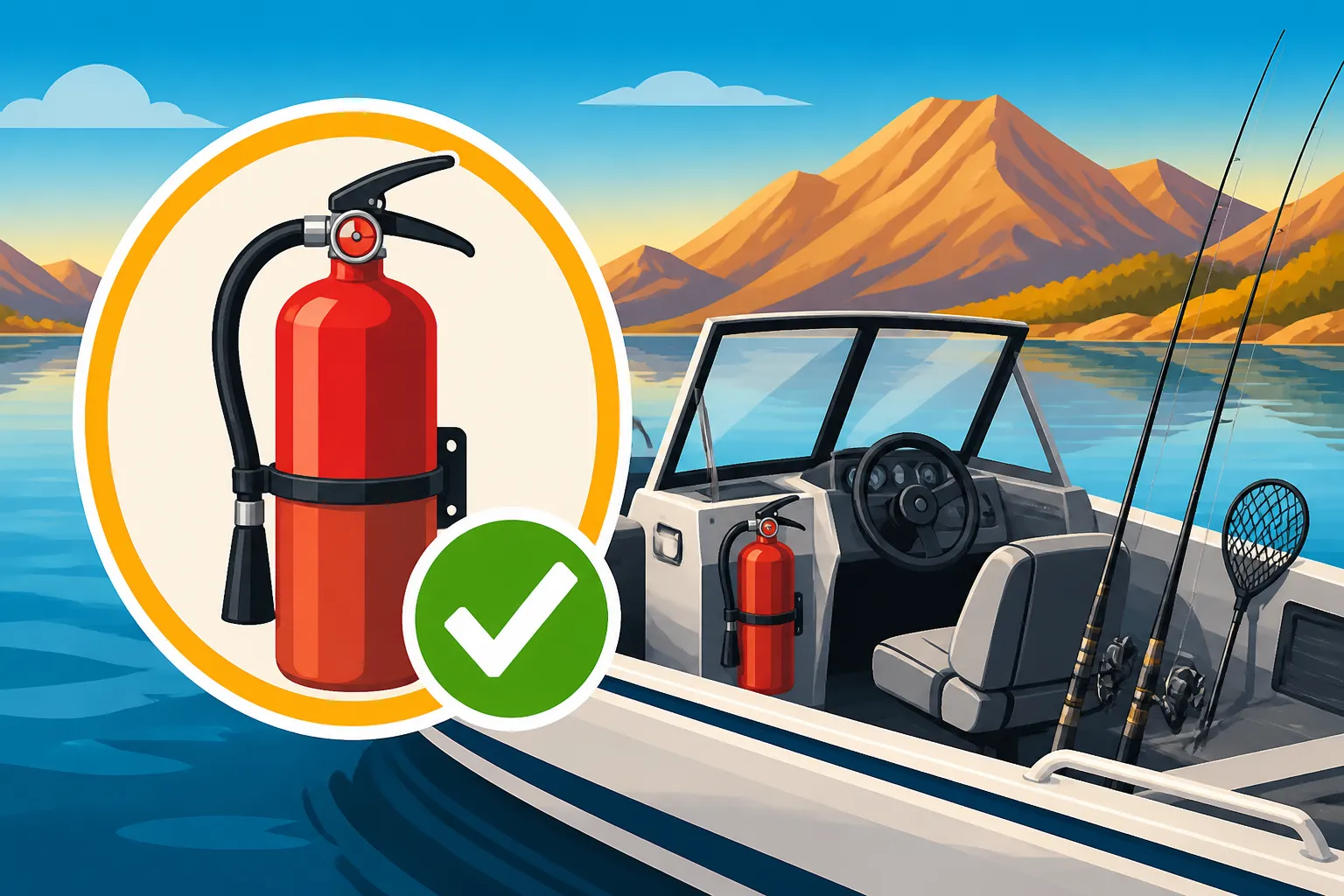
- Accessibility: This is paramount. An extinguisher does you no good if it's buried under tackle boxes or strapped down in a locked compartment. It needs to be mounted in a highly visible, easily accessible spot, typically near the helm or cockpit, and away from potential fire sources if possible. You need to be able to grab it, activate it, and use it within seconds.
- Ease of Use: Dry chemical extinguishers are generally very user-friendly. Most operate with a simple "pull the pin, aim, squeeze" (PASS) method. Familiarize yourself with how yours works before an emergency.
- Corrosion Resistance: Marine environments are harsh. Look for extinguishers designed for boat use, often with corrosion-resistant brackets and finishes. Even then, regular inspection is key.
Here's a quick comparison of common extinguisher options for small fishing boats:
| Extinguisher Type | Rating (Minimum) | Agent Type | Typical Size | Pros | Cons | Ideal For |
|---|---|---|---|---|---|---|
| USCG B-I | 5-B:C | Dry Chemical | 2.5 lbs | Compact, lightweight, affordable, common | Limited capacity, messy residue, short discharge time | Most small motorized fishing boats (under 26 ft) |
| USCG B-II | 10-B:C | Dry Chemical | 5-10 lbs | More extinguishing power, longer discharge | Heavier, larger, more expensive | Larger small boats, added safety margin |
| Halon Substitute | Varies | Clean Agent | Varies | No residue, safer for electronics | More expensive, less common in small boat sizes, limited availability | High-value electronics areas, optional upgrade |
For most Nevada anglers with a small fishing boat, a B-I type (5-B:C) dry chemical extinguisher will meet the requirements and provide a good level of protection. You can often find a good selection when browsing stores like Where to Buy a Nevada Fishing License or your local marine supply store.
Maintenance and Placement: Keeping Your Extinguisher Ready
Having the right fire extinguisher is only half the battle. If it's not properly maintained or is hidden away, it might as well not be on board. The rigorous conditions of boating, especially in Nevada's fluctuating desert temperatures and sun exposure, can take a toll on safety equipment.
The Importance of Regular Inspections
Think of your fire extinguisher as a living thing on your boat; it needs care to stay healthy. A quick monthly check can save your life. Here's what to look for:
- Pressure Gauge: Most dry chemical extinguishers have a pressure gauge. The needle should be in the green zone, indicating it's properly charged. If it's in the red, it needs to be recharged or replaced immediately.
- Seal and Pin: The tamper seal and safety pin should be intact. This indicates the extinguisher hasn't been accidentally discharged or tampered with. If the seal is broken or the pin is missing, assume it's compromised.
- Nozzle and Hose: Check that the nozzle is clear of obstructions (dirt, insect nests) and that the hose (if applicable) isn't cracked or damaged.
- Exterior Condition: Look for any signs of corrosion, dents, or physical damage to the cylinder. A compromised cylinder might not hold pressure or could fail when needed.
- Shake Test: For dry chemical extinguishers, it’s a good idea to gently invert it and shake it once a month. This helps prevent the dry chemical powder from compacting at the bottom, ensuring it flows freely when discharged.
In addition to these monthly checks, it's generally recommended that dry chemical extinguishers be professionally inspected every year or two, and typically replaced after a certain number of years, even if unused. Check the manufacturer's recommendations printed on the label for specific guidelines. If you have an older extinguisher with no gauge or visible defects, it's often better to just replace it, especially if it's been exposed to extreme heat or cold over many seasons. A trip to a local marine retailer or even a general outdoor store like Bass Pro Shops can easily get you a fresh, reliable unit.
Strategic Placement for Quick Access
Where you mount your fire extinguisher is just as critical as its condition. An extinguisher that's hard to reach in an emergency is almost useless.
- Visibility and Accessibility: Mount your extinguisher in a highly visible location, preferably near the helm or in the main cockpit area where you spend most of your time. It should be easily accessible from your normal operating position. Avoid tucking it away in a hard-to-reach locker, especially if that locker could be blocked by fire or smoke.
- Away from Potential Fire Sources: While it needs to be accessible, try not to mount it directly on a potential fire source. For instance, mounting it right next to a volatile fuel tank might not be the smartest idea. Instead, consider mounting it on a bulkhead across from the engine compartment, or near the exit point of the boat, to give you a clear path if you need to retreat.
- Secure Mounting: Use a sturdy, marine-grade mounting bracket. You don't want the extinguisher bouncing around in choppy water or coming loose during a sudden stop. Ensure the bracket holds it firmly but allows for quick release.
- Consider a Second Extinguisher: For added safety, particularly on slightly larger small boats, consider having a second extinguisher. One could be near the helm, and another closer to the stern or engine compartment. This provides redundancy and a backup if the primary unit isn't reachable or fully effective. You can find good deals on twin packs sometimes on Amazon.
- Protection from Elements: While they're designed for some resilience, try to mount the extinguisher in a spot that offers some protection from direct sun and harsh weather. Constant UV exposure and temperature extremes can degrade the unit over time, even if it’s marine-rated.
Remember, a fire on a boat is an incredibly dangerous situation, and quick action is paramount. By choosing the correct size and type of extinguisher (a 5-B:C dry chemical is a solid starting point for most small fishing boats), inspecting it regularly, and mounting it in an easily accessible, secure location, you're taking a significant step towards ensuring your safety and enjoyment on Nevada's beautiful waters. This is an essential part of your Nevada required safety equipment checklist for boats. If you are looking to learn more about boating rules, consider reading up on the Nevada Boater Education Card Requirement or Nevada Boat Registration for Anglers. Safe boating is smart boating!
Disclaimer
This article is for general informational purposes only and does not constitute professional advice. Laws, prices and regulations vary by location and change over time. Consult a qualified professional for guidance on your specific situation.