Best wind direction for bass fishing on a reservoir
One of the most frustrating aspects of bass fishing on Nevada's vast reservoirs can be the relentless wind. You spend hours planning your trip, only to arrive at Lake Mead or Lake Mohave and find whitecaps, making casting a nightmare and boat control a battle. It can feel like the wind just shuts everything down, but that's not always the case. Understanding how different wind directions influence bass behavior can turn a seemingly impossible day into a successful one, and this guide will help you decipher the wind's secrets for better bass fishing.
Understanding Wind's Impact on Bass Behavior
Wind isn't just a nuisance; it's a powerful force that profoundly impacts the entire aquatic ecosystem, and by extension, bass activity. Many anglers mistakenly believe that any wind is bad wind, but that's far from the truth. The key is to understand how it affects the water and the fish, so you can adjust your approach.
Oxygenation and Water Movement
Think about a hot summer day on a calm reservoir. The surface of the water can get stagnant, and oxygen levels, especially in shallower areas, can drop. When the wind blows, it creates ripples and chop, which churns the surface water and mixes it with the air, significantly increasing oxygenation. Bass, like all fish, need oxygen, and they'll often move to areas with higher concentrations. This can draw them closer to the windy side of a lake or into coves that are getting a good "wash."
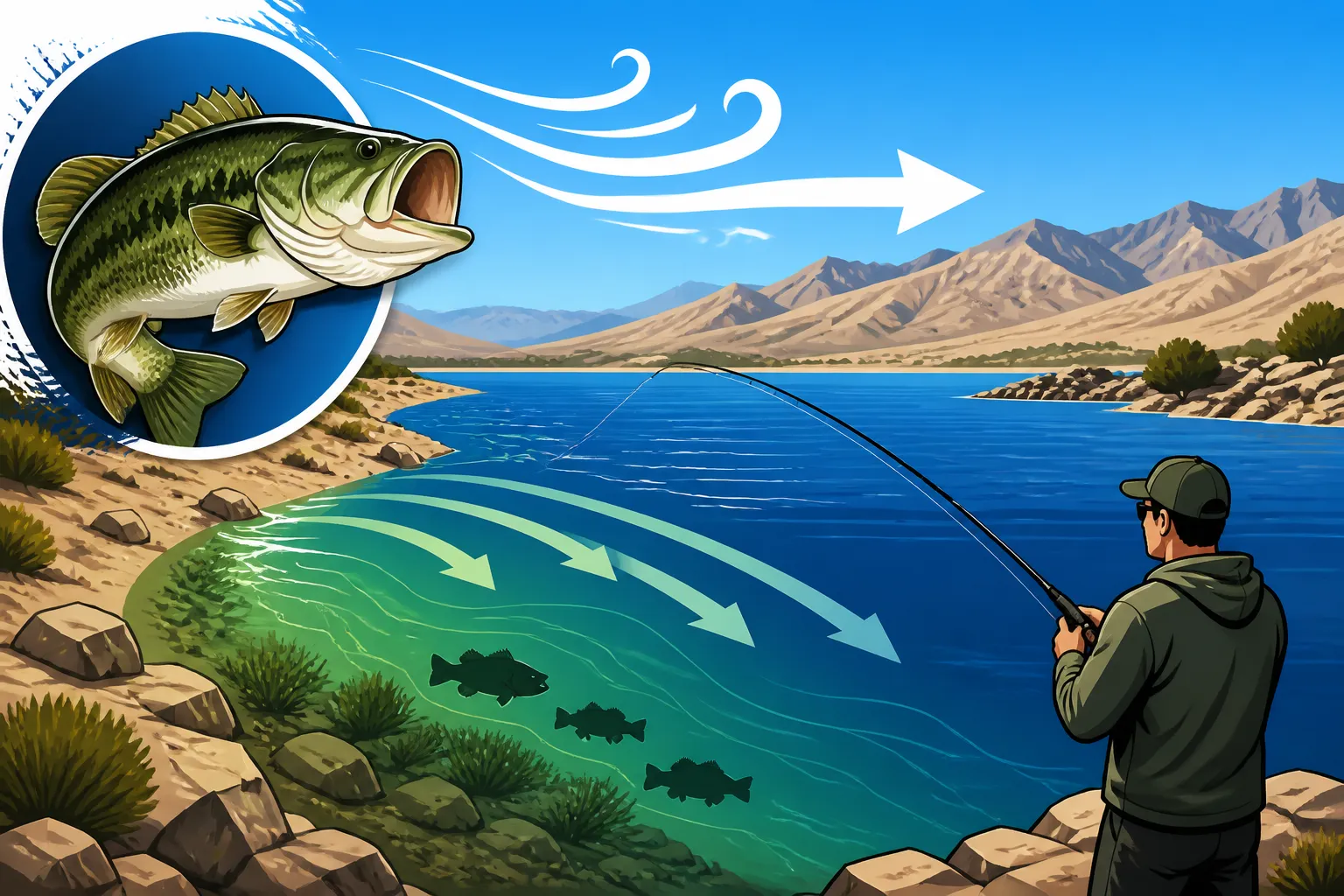
Furthermore, wind creates currents, even in stillwater reservoirs. These currents can push warmer or cooler water around, move plankton, and most importantly, push baitfish. Where the baitfish go, the bass often follow. A consistent, moderate breeze can create a feeding lane where bass ambush prey that's being swept past. This is a crucial concept for understanding why a windy day isn't always a bust for bass.
Forage Concentration and Light Penetration
The wind acts like a giant broom, sweeping surface debris, insects, and smaller baitfish towards a specific shoreline – the "windblown bank." This concentration of potential food makes these areas incredibly attractive to bass looking for an easy meal. Imagine tiny shad being pushed against a rocky point or a patch of submerged brush; a largemouth bass or smallmouth bass will position itself perfectly to ambush them.
Beyond food, wind also plays a role in light penetration. On bright, sunny days, clear desert lake water can be incredibly intense, pushing bass deeper or into heavy cover. A choppy surface created by wind disperses and breaks up that light, creating a less intimidating, more comfortable environment for bass to move into shallower water and feed. This can be particularly beneficial in clear-water lakes like Lake Mohave, where bass can be very sensitive to direct sunlight.
The "Good" Winds: Southwesterly and Westerly Breezes
While there's no single "best" wind for bass fishing that applies 100% of the time, generally speaking, southwesterly and westerly breezes are often considered favorable, especially across many Nevada reservoirs. These winds tend to be warmer and more consistent, and they bring with them specific benefits.
Consistent, Moderate Southwesterly Winds
A consistent southwesterly wind, usually between 5-15 mph, can be a bass angler's best friend. These winds often accompany stable weather patterns, which fish generally prefer. They push warmer surface water and baitfish onto northern and eastern shorelines. These windblown banks become prime targets, as bass will often stack up there, waiting for meals to be delivered right to them. Think about those long, gradual points on Lake Mead or the rocky shores of Lake Tahoe. A steady push of water creates a current that positions bass perfectly for ambush.
When you're fishing these conditions, focus on casting parallel to the windblown banks or points. Use lures that can be easily retrieved with the current, allowing them to mimic struggling baitfish. Spinnerbaits, chatterbaits, and shallow-running crankbaits are excellent choices. Don't be afraid to experiment with different retrieve speeds; sometimes a faster, more erratic retrieve works when the bass are actively feeding in the chop. For a wide selection of these lures, you can always check out options on Amazon.
Westerly Winds and Transition Zones
Westerly winds are also frequently productive, especially as they often transition from other directions or indicate changing weather. Like southwesterly winds, they tend to move warmer water and forage. The western side of many Nevada lakes might be exposed to the prevailing winds, but the eastern shorelines often become the wind-impacted zones. These windblown eastern banks are where baitfish will get pushed, attracting bass.
Consider fishing transitional areas where the wind-driven current meets calmer water, like the edges of coves or behind larger points. These "seams" are often where bass will hold, darting out to grab anything swept past. Also, look for visible "mud lines" or areas where the wind has stirred up the bottom, creating a less clear environment that bass appreciate for ambush cover. This is particularly effective in areas where the bottom isn't too silty, preventing too much dirty water. Mastering Deep Water Techniques for Lake Mead Bass in these conditions can be very rewarding.
The "Bad" Winds: Northerly and Easterly Gusts (and when they might surprise you)
Not all wind is created equal, and some directions can make fishing significantly more challenging. Northerly and easterly winds, while not always a death knell for a fishing trip, often bring with them conditions that can make bass less active or harder to locate.
Northerly Winds and Cold Fronts
Northerly winds are generally the most dreaded by bass anglers, especially in Nevada. These winds typically follow a cold front, bringing with them a sharp drop in air and water temperatures. This rapid change in conditions can send bass into a state of shock, making them lethargic and unwilling to feed. The cold wind can also push warm surface water away, leading to a significant temperature stratification that forces bass deeper to find stable conditions.
When a strong northerly wind hits, don't expect the same aggressive bites you might get on a warm, southwesterly breeze. Bass will often move off windblown banks and seek refuge in deeper water or tight cover, like heavy brush or submerged timber in protected coves. They become much harder to tempt. Your best bet in these conditions is often to slow down your presentation, use finesse techniques, and target sheltered areas. Think dropshot rigs, Texas-rigged worms, or slow-rolled jigs in deep pockets or steep bluffs that block the wind. Even then, expect fewer bites.
Easterly Winds: The Unpredictable Challenge
Easterly winds are often unpredictable and can be frustrating. They don't have the clear patterns of warming or cooling associated with other directions. Sometimes an easterly wind can be associated with stable, high-pressure systems, but it can also be a precursor to storms or unstable weather. This unpredictability translates to fish behavior, making them skittish and harder to pattern. Many old-timer anglers have a saying about how "the east wind brings no good for man nor beast," and there's often some truth to it in fishing.
When faced with an easterly wind, you might find bass scattered or holding tightly to cover, not actively feeding. The water on the windblown western banks might actually be cooler if the wind has been blowing for a while. Your best strategy is often to experiment. Try both shallow and deep presentations, and don't commit to one area for too long. Focus on structure that offers both current breaks and access to deeper water, allowing bass to move up and down as they please. Consider checking Nevada Statewide Bag Limits Explained before you head out, just in case you manage to find that elusive bite!
Adapting Your Strategy for Any Wind Condition
The beauty of bass fishing, especially in diverse environments like Nevada, is that you can almost always find a way to adapt. No matter the wind direction or intensity, there are strategies and gear choices that can help you succeed.
Boat and Tackle Management in Windy Conditions
Controlling your boat in strong winds is paramount. A good trolling motor with GPS Spot-Lock technology can be a lifesaver, allowing you to hold position and focus on fishing instead of constantly battling the elements. If you're bank fishing or in a smaller craft like a kayak, choosing protected shorelines or coves is often the smart move. For those fishing from a larger vessel, make sure you have a reliable anchor designed for windy desert lakes, which you can also find on Amazon.
When it comes to tackle, line choice becomes critical. In windy conditions, braided line with a fluorocarbon leader can be advantageous due to its minimal stretch and sensitivity, helping you feel bites even when your line is bowing in the wind. Using heavier lures like deep-diving crankbaits or substantial jigs can help you cast into the wind and maintain better contact with the bottom. Don't forget proper sun protection gear for desert fishing, as even on windy days, the Nevada sun can be intense.
Reading the Water and Fine-Tuning Your Approach
Learning to "read the water" is an art, and it's never more important than on a windy day. Look for visual cues: where are the waves breaking? Are there foam lines or debris accumulating? Where are the birds diving? All these can indicate where baitfish are concentrated and, consequently, where bass might be feeding. Observe the clarity of the water – wind can create turbid zones that bass use as cover.
| Wind Direction | General Impact on Bass | Recommended Strategy | Lure Types |
|---|---|---|---|
| Southwesterly | Positive (oxygen, warmer water, pushes bait) | Fish windblown northern/eastern banks; target points and coves | Spinnerbaits, Chatterbaits, Crankbaits |
| Westerly | Positive to Neutral (moves bait, good for transition) | Fish windblown eastern banks; target seams where currents meet | Jigs, Soft Plastics, Jerkbaits |
| Northerly | Negative (cold front, cooler water, lethargic bass) | Fish deep, sheltered areas; slow presentations, finesse techniques | Dropshots, Carolina Rigs, Jigs |
| Easterly | Unpredictable (can be skittish, scattered bass) | Experiment shallow/deep; target structure providing cover & access | Versatile baits, search baits (crankbaits), slow presentations |
Remember that bass, especially Largemouth Bass Fishing in Nevada and Smallmouth Bass Fishing in Nevada, are opportunistic predators. Even on tough days, if you can present a lure effectively in the right zone, you have a chance. Sometimes, the key is simply finding the most protected cove, switching to a lighter presentation, or perhaps focusing on Nevada Urban Pond Fishing Rules if the main lake is too rough. Always stay flexible, observe, and adjust. Fishing is about learning, and every windy day is an opportunity to expand your knowledge of these incredible Nevada waters.
Disclaimer
This article is for general informational purposes only and does not constitute professional advice. Laws, prices and regulations vary by location and change over time. Consult a qualified professional for guidance on your specific situation.