Ice Fishing in Nevada
You might think "ice fishing" and "Nevada" don't belong in the same sentence. After all, isn't Nevada mostly desert? And don't we have all those dazzling, hot summers? It's a common misconception, but the truth is, the Silver State offers some fantastic, albeit often overlooked, opportunities for chasing fish through the hardwater. This comprehensive guide is here to shatter those myths and equip you with everything you need to know to safely and successfully experience the thrill of ice fishing in Nevada's surprisingly diverse frozen landscapes.
Is Ice Fishing Even Possible in Nevada? Dispelling the Myths
It's a question I hear all the time: "Can you really go ice fishing in Nevada?" And I get it! When most people picture Nevada, they imagine the scorching sun of Las Vegas or the vast, dry expanse of the Mojave Desert. But the reality is that Nevada is a state of incredible elevation changes, from valleys below sea level to towering mountain ranges that hold snow and ice well into spring. This dramatic topography creates unique microclimates where winter truly takes hold, blanketing high-elevation lakes and reservoirs with solid, fishable ice. So, yes, ice fishing isn't just possible here; it's a cherished winter tradition for many anglers who know where to look.
The Climate Conundrum: Dispelling Misconceptions
The biggest hurdle for many would-be Nevada ice anglers is simply believing it can be done. It's easy to assume that a state known for its desert heat wouldn't have sustained ice conditions. However, Nevada's average elevation is around 5,500 feet, and many of its prime fishing destinations sit considerably higher. Think about places like Elko County, White Pine County, or even parts of the eastern Sierra Nevada foothills. These areas experience true winters with consistent freezing temperatures, especially at night, which allows for the formation of thick, stable ice on their lakes and reservoirs. It's all about understanding that Nevada is far more than just its lowest, warmest points.
When the mercury consistently drops, particularly in the northern and eastern parts of the state, those picturesque mountain lakes and reservoirs begin to lock up. While our lower elevation urban ponds in places like Las Vegas might see fleeting, unsafe ice on rare occasions, the true ice fishing gems are found further afield, where winter truly settles in. It's a different kind of Nevada experience, one that trades the neon lights for pristine white landscapes and the quiet satisfaction of pulling a fish from beneath the frozen surface.
High-Elevation Havens: Where the Ice Forms
The key to finding reliable ice in Nevada lies in heading to higher altitudes. These are the "havens" where the cold air lingers, and the water body has enough time to freeze solid. We're talking about lakes that often sit above 6,000 feet, sometimes even higher. These areas are typically found in the northern and eastern regions of the state, far from the populous southern deserts.
These high-elevation lakes often have smaller surface areas, which means they freeze faster and more uniformly than massive bodies of water like Lake Tahoe or Lake Mead. While those larger lakes might see some skim ice in sheltered coves, they rarely offer safe, widespread ice fishing opportunities due to their sheer size, depth, and constant water movement. Instead, think about the smaller, colder jewels nestled in mountain valleys. These are the places where you'll find anglers bundling up, drilling holes, and enjoying the serene solitude of a frozen landscape. It’s a stark contrast to the state’s more famous attractions, but for the ice fishing enthusiast, it’s a welcome escape.
Safety First: Understanding Ice Conditions
Before you even think about drilling that first hole, understanding ice safety is paramount. This isn't just a suggestion; it's a non-negotiable rule when you're dealing with frozen water. Nevada's ice can be deceptive, especially in areas where temperatures fluctuate, or where there might be springs, currents, or varying depths. The "four-inch rule" is a widely accepted guideline: at least four inches of clear, solid ice is generally considered safe for individual foot travel. However, this is a minimum, and conditions can change rapidly.
Always check with local authorities like the Nevada Department of Wildlife (NDOW) or reputable bait and tackle shops near your chosen destination for current ice reports. Never assume the ice is safe just because others are on it, or because it looks thick. Spud bars are essential for testing ice thickness as you walk, tapping ahead of you to gauge stability. Additionally, be aware of areas near inlets, outlets, bridges, or dark spots on the ice, as these often indicate thinner or weaker ice. Your safety is always worth more than any fish you might catch.
Prime Nevada Ice Fishing Locations
While Nevada might not boast the sheer number of ice fishing spots found in states further north, it certainly has its gems. These are the places that consistently freeze over and offer good opportunities for winter anglers. Knowing where to go is half the battle, and these locations are well-regarded for their accessible ice and healthy fish populations.
Wildhorse Reservoir: The Northern Gem
If you ask seasoned Nevada ice anglers for their top pick, Wildhorse Reservoir near Elko will almost always be at the top of the list. This fantastic reservoir, located in northeastern Nevada, is renowned for its consistent ice cover and excellent fishing for rainbow trout, brown trout, and yellow perch. The reservoir is quite large, covering over 2,800 acres, but its relatively high elevation (over 6,000 feet) ensures reliable ice through the winter months. You can learn more about this fishery in our Wildhorse Reservoir Nevada Fishing Guide.
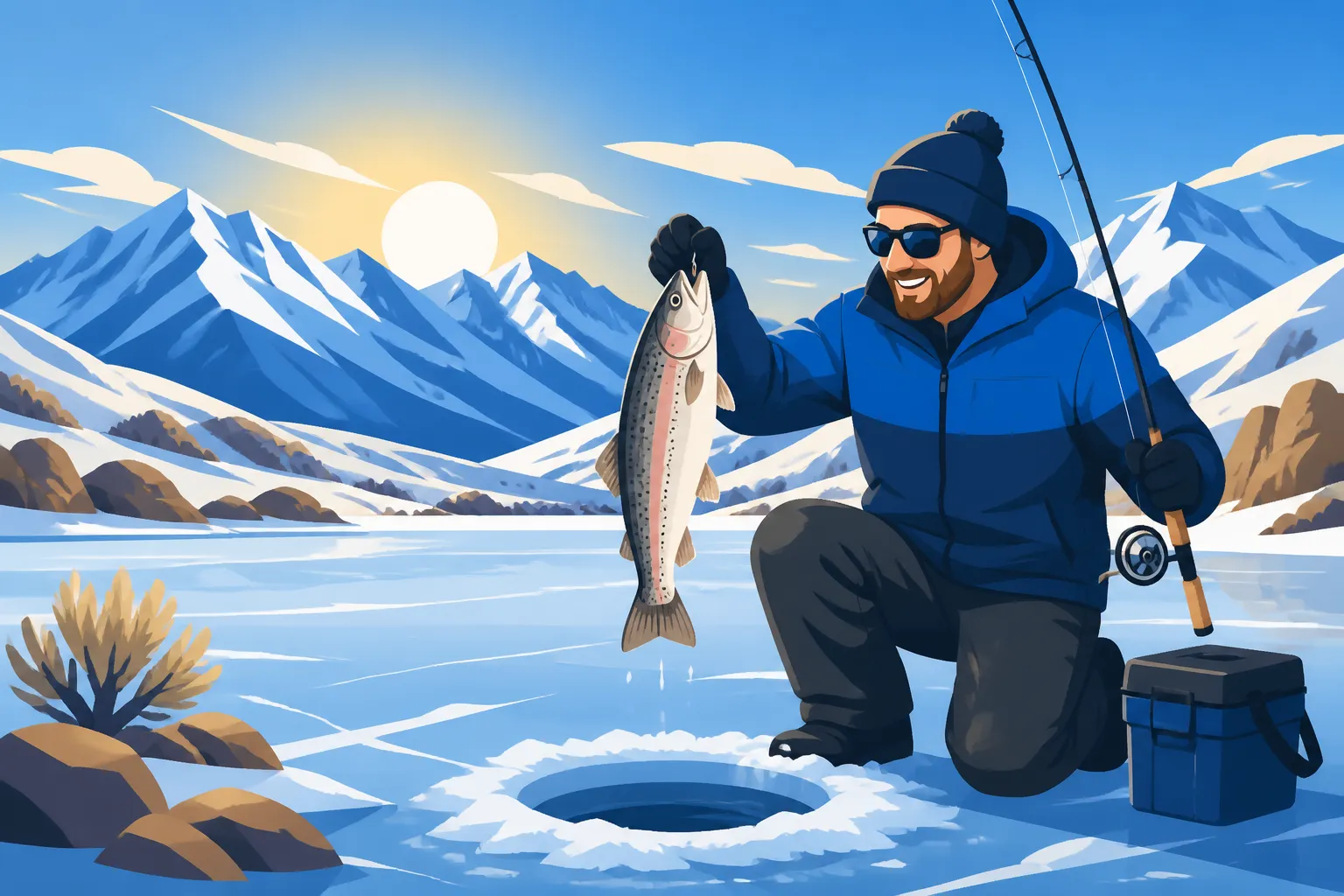
Typically, Wildhorse begins to freeze in December, with safe ice often found from late December through February, and sometimes into March, depending on the severity of the winter. Access is generally good, with several points along the shore. Anglers often set up shelters and spend full days jigging for the reservoir’s abundant yellow perch, which offer consistent action and make for a delicious meal. The trout here can also grow quite large, providing an exciting challenge for those targeting bigger fish. NDOW regularly stocks rainbow trout, ensuring a healthy population, and the browns are wild, offering a true trophy potential.
Ruby Lake National Wildlife Refuge: A Hidden Treasure
Another fantastic option, often overlooked by those not in the know, is Ruby Lake National Wildlife Refuge, nestled in the stunning Ruby Mountains east of Elko. This unique refuge provides a tranquil, picturesque setting for ice fishing, primarily for largemouth bass, rainbow trout, and even some hybrid wipers. The shallow, marshy nature of parts of the lake allows for consistent ice formation, though it's crucial to pay attention to marked areas within the refuge where fishing or access might be restricted for wildlife protection. For more details on this serene spot, check out our Ruby Lake National Wildlife Refuge Fishing guide.
Ice typically forms here in late December or early January and can last through February. The bass fishing through the ice can be surprisingly productive, with anglers using jigs and deadsticked minnows. The rainbow trout are often eager biters, providing steady action, especially for those who brave the sometimes harsh winter conditions of the high desert. The sheer beauty of the Ruby Mountains towering over the frozen lake makes for an unforgettable experience, far removed from the hustle and bustle of everyday life. Always check refuge-specific regulations before you go, as they can differ from statewide rules.
Cave Lake and Comins Lake: Eastern Nevada's Opportunities
Venturing further east into White Pine County, near the town of Ely, you'll find two more excellent ice fishing destinations: Cave Lake State Park and Comins Lake. Both are smaller, more intimate bodies of water that freeze solid and offer great opportunities, particularly for trout. Cave Lake, set within a state park, offers convenient amenities like restrooms and plowed access, making it a popular choice for families and those looking for an easier outing. It's heavily stocked with rainbow trout, ensuring plenty of action.
Comins Lake, just a short drive from Ely, is another reliable trout fishery. While it doesn't have the same developed facilities as Cave Lake, it can often offer a quieter experience and good catch rates. Both lakes typically have safe ice from mid-December through February. Anglers targeting trout often use small jigs tipped with bait like mealworms, corn, or PowerBait. These eastern Nevada lakes are fantastic examples of how the state's diverse geography creates distinct recreational opportunities that many wouldn't expect.
Smaller, Higher Mountain Lakes: Short-Season Chances
Beyond the "big three" ice fishing destinations, Nevada boasts a multitude of smaller, high-elevation mountain lakes that offer brief, but often spectacular, ice fishing seasons. These are typically accessed via forest service roads that might require four-wheel drive or snowmobiles, and they often freeze earlier and longer than larger bodies of water. Examples include some of the lakes in the Jarbidge Wilderness, the Ruby Mountains, or even some of the higher Sierra Nevada lakes on the Nevada side.
These lakes are often home to wild trout populations, including brook trout, cutthroat trout, and sometimes golden trout, offering a unique and challenging experience. The trade-off for their pristine beauty and solitude is often more difficult access and a shorter window of safe, consistent ice. NDOW's Nevada Trout Stocking Schedule can sometimes give clues about which lakes might offer good opportunities, but for these more remote spots, local knowledge and a good sense of adventure are key. Always prioritize safety and be prepared for rapidly changing weather conditions in these remote, high-altitude environments.
Table: Popular Nevada Ice Fishing Destinations Overview
| Location | Primary Fish Species | Typical Ice Season | Notes |
|---|---|---|---|
| Wildhorse Reservoir | Rainbow Trout, Brown Trout, Yellow Perch | Dec – Mar | Excellent Perch fishing, good access, popular for shelters. |
| Ruby Lake NWR | Largemouth Bass, Rainbow Trout, Wipers | Jan – Feb | Unique refuge setting, check specific access rules. |
| Cave Lake State Park | Rainbow Trout | Dec – Feb | Family-friendly, stocked, good facilities, near Ely. |
| Comins Lake | Rainbow Trout | Dec – Feb | Good trout fishing, quieter alternative to Cave Lake. |
| High Mountain Lakes | Brook Trout, Cutthroat Trout, Rainbow Trout | Dec – Feb (shorter window) | Remote, challenging access, often wild fish, check local conditions. |
Essential Gear for Nevada Ice Fishing
Just like any specialized form of fishing, ice fishing requires specific gear to ensure comfort, safety, and success. You can't just take your summer spinning rod and expect to have a good time. From drilling holes to staying warm, having the right equipment makes all the difference, especially when you're out on a frozen lake in Nevada's winter temperatures. Many of these items can be found conveniently on platforms like Amazon, making it easy to prepare for your trip. For a general overview of what you might need, check out our Nevada Fishing Gear Essentials guide.
Augers and Skimmers: Cutting Through the Ice
The first piece of gear you'll need is an ice auger to create your fishing holes. These come in a few types:
- Manual Augers: These are hand-cranked and perfect for occasional use or thinner ice (under 10 inches). They are lightweight and require a bit of muscle, but they're affordable and reliable.
- Propane or Gas Augers: These are heavy-duty options, ideal for thicker ice or if you plan on drilling many holes quickly. Brands like Eskimo and Jiffy are popular. They're heavier and require fuel, but save a lot of effort.
- Electric Augers: Powered by rechargeable batteries, these are becoming increasingly popular for their quiet operation and convenience. Ion and Strikemaster are common brands. They offer a great balance of power and portability, but battery life is a consideration on very cold days.
Once you've drilled your hole, a skimmer (also known as a ladle or scoop) is crucial. This simple tool is used to clear ice chips and slush from your hole, keeping it open and clean for fishing. Without it, your line will constantly get tangled in slush, and your bait won't be visible.
Rods, Reels, and Line: Specialized Setups
Ice fishing rods are typically much shorter than conventional rods, ranging from 24 to 36 inches. This shorter length provides better control in tight spaces (like inside a shelter) and enhances sensitivity for detecting subtle bites. They come in various actions, from ultra-light for panfish to medium-heavy for larger trout or bass.
- Rods: Look for specific ice fishing rods that are designed to withstand cold temperatures and transmit light bites effectively. Brands like Fenwick, St. Croix, and Ugly Stik offer excellent ice rods.
- Reels: While spinning reels are common, some anglers prefer specialized ice reels or even simple fly-style "inline" reels that prevent line twist. Make sure any reel you use is rated for cold weather.
- Line: Fluorocarbon or braided line are popular choices for ice fishing. Fluorocarbon is nearly invisible underwater and doesn't absorb water, resisting freezing. Braided line offers superior sensitivity and strength, but you'll want to use a fluorocarbon leader to counter its visibility and help prevent ice buildup on your guides. Light line (2-6 lb test) is often preferred for finicky winter bites.
Shelters and Heaters: Staying Warm and Comfortable
Nevada winters, especially at elevation, can be brutally cold and windy. A shelter isn't just a luxury; it's often a necessity for comfort and safety.
- Pop-up Shelters: These portable, self-contained shelters are quick to set up and offer excellent protection from wind and cold. Brands like Eskimo, Clam, and Frabill make insulated versions that drastically improve comfort. They come in various sizes, from one-person flip-overs to larger hub-style tents that can accommodate several anglers and all their gear.
- Heaters: A small, portable propane heater (like those from Mr. Heater) can turn a cold shelter into a cozy ice shack. Always ensure proper ventilation when using a heater inside a shelter to prevent carbon monoxide buildup. They're a game-changer for extending your time on the ice.
- Chairs/Buckets: A comfortable, foldable chair or a 5-gallon bucket with an insulated seat cushion can make a long day on the ice much more enjoyable. Some buckets even have built-in rod holders.
Safety Gear: Never Leave Home Without It
Ice fishing inherently carries risks, and being prepared for emergencies is vital. For a more detailed look at safety, consult our Ice Fishing Safety on Nevada Reservoirs guide.
- Ice Picks/Claws: These are perhaps the most important safety item. Worn around your neck, they allow you to pull yourself out of the water if you fall through the ice.
- Spud Bar: A heavy metal bar with a chisel-like end, used to test ice thickness as you walk.
- Life Vest/Flotation Suit: While bulky, a personal flotation device (PFD) or a specialized flotation suit can be a lifesaver. Some ice fishing suits are insulated and designed to provide buoyancy.
- Rope/Throw Bag: A length of rope (at least 50 feet) or a dedicated throw bag can be used to rescue someone who has fallen through the ice without putting yourself in danger.
- First-Aid Kit: Essential for any outdoor excursion.
- Navigation: A GPS device, compass, and map are critical, especially in whiteout conditions or on large, featureless expanses of ice. It's easy to get disoriented.
- Warm Clothing & Footwear: Layers are key. Insulated, waterproof boots are a must. Thermal base layers, fleece, and a waterproof/windproof outer shell are standard. Don't forget a warm hat, gloves, and extra socks.
Techniques for Nevada Ice Fishing Success
Ice fishing might seem simple – drill a hole, drop a line – but effective techniques can significantly improve your catch rate. Understanding how fish behave under the ice and tailoring your approach can make a cold day much more rewarding.
Jigging and Deadsticking: Common Methods
These are the two most prevalent techniques used in ice fishing, and they often work best when used in tandem.
- Jigging: This involves actively moving a small lure (a jig) up and down to attract fish. The idea is to mimic injured baitfish or insects, triggering a predatory response. Small spoons, horizontal jigs, and tungsten jigs tipped with live bait (like mealworms, waxworms, or maggots) are common choices. The retrieve can vary: sharp snaps, subtle quivers, or slow lifts and drops. Experiment with different jigging cadences until you find what the fish are responding to. A fish finder (flasher or sonar) is invaluable for jigging, allowing you to see your lure and the fish's reaction in real time, making adjustments on the fly. Many anglers will jig one rod while leaving another "deadsticked."
- Deadsticking: This technique involves setting a rod in a holder (or propping it up) with a bait suspended at a specific depth, and leaving it largely motionless. A common setup is a small hook with live bait (like a minnow or nightcrawler) or a scented artificial bait (such as PowerBait for trout). The idea is to offer a natural, easy meal for less aggressive or cruising fish. Often, the deadstick will get hit when the fish are wary of the jigging presentation. Many ice anglers will set up multiple rods, especially where regulations allow, to cover different depths and presentations simultaneously.
Target Species: Trout, Perch, and Beyond
Nevada's ice fishing opportunities primarily revolve around trout and yellow perch, though other species can be encountered.
- Trout (Rainbow, Brown, Brook): Trout are often found suspended in the water column or near structure. They respond well to small jigs, spoons, and flies tipped with maggots or PowerBait. For larger trout, deadsticking a minnow or a larger spoon can be effective. In places like Wildhorse Reservoir, you'll find impressive rainbow and brown trout. To deepen your understanding, check out our guide on How to Fish for Trout in Nevada. Remember to check the Nevada Trout Daily Limit Rules before heading out.
- Yellow Perch: Wildhorse Reservoir is famous for its abundant yellow perch. These schooling fish are often found near the bottom or around submerged structures. Small tungsten jigs, tipped with a single maggot or mealworm, are incredibly effective. Once you find a school, the action can be fast and furious, providing endless entertainment. They're also excellent table fare! We have a specific guide on Yellow Perch Fishing in Nevada that dives deeper into these fun fish.
- Largemouth Bass: At Ruby Lake, bass can be targeted through the ice. They tend to be slower in winter but will still strike a small jigging spoon or a deadsticked minnow. Target areas with remaining vegetation or structure.
- Wipers (Hybrid Striped Bass): Occasionally, wipers can be caught through the ice, especially at Ruby Lake. They are powerful fighters and will hit larger spoons or minnows. Their presence can be sporadic, making them a bonus catch.
Reading the Ice and Structure: Finding the Fish
Just like open water fishing, success in ice fishing often comes down to understanding fish behavior and locating prime habitat beneath the frozen surface.
- Fish Finders (Flashers/Sonar): A portable fish finder (often called a flasher) is an invaluable tool for ice anglers. It allows you to see the bottom, any submerged structure, your lure, and most importantly, the fish! By watching your flasher, you can adjust your depth, jigging action, and presentation to entice bites. It takes the guesswork out of "is there even a fish down there?" and helps you identify the active feeding zone. Brands like Vexilar, Marcum, and Humminbird are popular choices, many of which are available on Amazon.
- Look for Structure: Fish will often congregate around underwater structure like points, humps, rock piles, ledges, and remnants of old weed beds. These provide ambush points, protection, and food sources. If you have a map of the lake showing underwater contours, study it before you go.
- Depth and Contours: Pay attention to how the depth changes. Fish might be holding on drop-offs or shelves. Experiment with different depths until you find where the fish are active. Often, you'll find them in slightly deeper water adjacent to shallower feeding areas.
- Holes and Movement: Don't be afraid to drill multiple holes and move if you're not getting bites. Fish move, and so should you. Sometimes, just a few feet can make all the difference. Start by drilling a series of holes in a line, covering different depths and structures, then systematically fish each one.
Understanding Nevada's Ice Fishing Regulations
Fishing in Nevada, whether on open water or through the ice, means adhering to the regulations set forth by the Nevada Department of Wildlife (NDOW). These rules are in place to manage fish populations, ensure fair chase, and protect the state's natural resources. Ignorance of the law is never an excuse, so familiarize yourself with the current regulations before you head out. You can find a more general overview in our Nevada Fishing Regulations Explained guide.
Fishing Licenses and Trout Stamps
The absolute first thing you need before dropping a line through the ice in Nevada is a valid fishing license. This applies to almost everyone over the age of 12.
- Nevada Fishing License: Whether you're a resident or a non-resident, you'll need to purchase the appropriate license. Options typically include annual, short-term (like a 1-day or 5-day permit), or combination hunting and fishing licenses. Always ensure your license is current for the fishing year. For comprehensive details, refer to our Nevada Fishing License Guide or learn How to Get a Fishing License in Nevada.
- Trout Stamp: If you plan on fishing for trout (which is highly likely when ice fishing in Nevada), you will also need to purchase a Nevada Trout Stamp, in addition to your regular fishing license. This stamp supports trout conservation and stocking efforts across the state. Even if you're targeting perch but might incidentally catch a trout, it's best to have the stamp. There are some nuances, like certain short-term licenses sometimes including the trout stamp, but always verify. Our Nevada Trout Stamp Requirements guide can clarify this.
It's your responsibility to carry proof of your license and stamp while fishing. Game wardens regularly patrol popular ice fishing spots, and fishing without the proper documentation can result in hefty fines.
Bag Limits and Size Restrictions
NDOW sets specific bag and possession limits for various fish species, and these apply to ice fishing as well. These limits are crucial for maintaining healthy fish populations.
- Daily Bag Limit: This is the maximum number of fish of a particular species you can keep in a single day. For example, the statewide trout daily limit is often a combined total of a certain number of trout species. Be aware that specific lakes or regions might have different, more restrictive limits. Our Nevada Statewide Bag Limits Explained article provides a broad overview, and for trout specifics, check the Nevada Trout Daily Limit Rules.
- Possession Limit: This is the maximum number of fish you can have in your possession at any given time, including those at your campsite, in your vehicle, or at your home. It's usually twice the daily bag limit. This prevents anglers from accumulating large quantities of fish over multiple days.
- Size Restrictions: For some species or at certain locations, there might be minimum or maximum size limits (slot limits). For instance, some lakes might have a slot limit for Lahontan cutthroat trout, meaning fish within a certain size range must be immediately released. Always consult the most current Nevada Fishing Regulations booklet, available on the NDOW website or at license vendors.
Specific Gear and Bait Rules
While general fishing regulations cover most scenarios, there are a few considerations specific to ice fishing or particular bodies of water in Nevada.
- Number of Rods: Generally, anglers are limited to three fishing poles while ice fishing in Nevada. However, always double-check the current regulations, as this can change or vary by location. Using too many rods can result in a citation.
- Bait Restrictions: Most waters allow the use of live bait, such as worms, mealworms, waxworms, and even live minnows (though minnow use can be restricted in some waters to prevent the introduction of invasive species). However, some waters, especially those managed for native or trophy fish, might have specific restrictions on bait, sometimes even requiring artificial lures only or barbless hooks. Pyramid Lake, for example, has very specific bait and hook rules, and it's not a common ice fishing destination anyway due to its size and depth.
- Shelter Rules: While shelters are generally allowed, some state parks or managed areas might have rules regarding their placement, overnight use, or leaving them unattended. Always be sure to pack out everything you pack in, leaving no trace behind.
- Legal Fishing Hours: Generally, fishing is allowed 24 hours a day in Nevada, including through the ice. However, check specific state park rules or refuge regulations for any exceptions, as some might have night-time closures.
Safety on the Ice: A Non-Negotiable Priority
Ice fishing is a fantastic winter activity, but it carries inherent risks that demand a serious approach to safety. Nevada's often unpredictable weather and fluctuating temperatures mean that ice conditions can change rapidly. Prioritizing safety is not just good practice; it's essential for a successful and accident-free trip. I've seen too many close calls over the years to ever take ice safety lightly.
Assessing Ice Thickness and Stability
The single most critical factor in ice fishing safety is understanding and assessing ice thickness and quality. Never assume the ice is safe.
- "Safe Ice" Guidelines: A widely accepted guideline is that 4 inches of clear, solid new ice is generally considered safe for individual foot travel. For snowmobiles, you typically need 5-7 inches, and for light vehicles, 8-12 inches. However, these are minimums and do not apply to ice that is cloudy, slushy, porous, or honeycombed. Always seek clear, blue ice.
- Tools for Assessment:
- Spud Bar: Carry and use a spud bar (a heavy, sharp chisel on a long handle) to test the ice ahead of you as you walk. Strike it firmly. If it goes through easily on one or two strikes, the ice is too thin.
- Ice Auger: Drill test holes as you go, especially when first venturing onto a new area of the lake or when conditions seem questionable. Measure the actual ice thickness with a tape measure.
- Varying Conditions: Ice rarely freezes uniformly. Be extremely wary of:
- Inlets/Outlets: Moving water from streams or rivers can create dangerously thin ice, even if the surrounding area is thick.
- Springs: Underwater springs can create pockets of thin ice.
- Pressure Ridges: Areas where ice sheets push against each other can be weak and unstable.
- Dark Spots: These often indicate thinner ice. Light-colored or milky ice indicates refrozen ice that may be weaker, or ice with air bubbles or slush layers.
- Snow Cover: Snow acts as an insulator, slowing ice formation and often concealing weak spots. It can also make it difficult to see cracks or hazards.
- Buddy System: Never go ice fishing alone. Always fish with a friend or group, and ensure someone knows your plans, including where you're going and when you expect to return.
What to Do in Case of a Fall Through
Despite all precautions, accidents can happen. Knowing what to do if you or someone else falls through the ice is crucial.
- For Yourself:
- Don't Panic: This is easier said than done, but panic wastes energy.
- Turn Towards the Way You Came: The ice you just walked on was strong enough to hold you.
- Use Ice Picks: Drive your ice picks into the solid ice and kick your feet to propel yourself upwards, like swimming onto a pool deck.
- Roll Away: Once you're out, don't stand up. Roll away from the hole to distribute your weight over a larger area of potentially weak ice.
- Seek Warmth: Get to a warm shelter, change into dry clothes, and warm up immediately to prevent hypothermia.
- Rescuing Someone Else (The "Reach, Throw, Row, Go" Rule):
- Reach: If they are close enough, extend a pole, branch, or anything you can reach them with from a safe position.
- Throw: If they are further, throw a rope (preferably with a flotation device like a throw bag) or anything that floats for them to grab onto.
- Row: If you have a boat (like a small jon boat or kayak), push it out to them from a safe distance.
- Go: This is the absolute last resort and should only be done by trained professionals. Never venture onto thin ice yourself to rescue someone. Always call for professional help (911 or local emergency services).
Dressing for Success and Survival
Hypothermia is a serious risk when ice fishing. Dressing appropriately in layers is not just about comfort; it's about survival.
- Base Layers: Start with moisture-wicking synthetic or merino wool base layers against your skin. Avoid cotton, which retains moisture and robs your body heat.
- Mid-Layers: Add insulating layers like fleece or down vests/jackets.
- Outer Shell: A waterproof, windproof, and breathable outer shell is essential. Look for dedicated ice fishing suits (like those from Striker or Eskimo) that offer excellent insulation, waterproofing, and often built-in flotation.
- Extremities:
- Head: A warm hat is crucial, as a significant amount of body heat is lost through the head.
- Hands: Insulated, waterproof gloves or mittens are a must. Carry spares.
- Feet: High-quality, insulated, waterproof boots (rated for extreme cold, e.g., -40°F) are non-negotiable. Wear wool or synthetic socks, and bring extra pairs.
- Change of Clothes: Always keep a complete set of dry, warm clothes in your vehicle, safely stored in a waterproof bag, just in case.
Best Times and Seasons for Nevada Ice Fishing
Timing is everything when it comes to ice fishing in Nevada. The season is generally shorter and more variable than in traditional ice fishing states, so understanding when and what to expect is key to planning a successful trip. The Nevada Department of Wildlife (NDOW) provides helpful information on typical conditions and stocking efforts, which can be cross-referenced with general Nevada Fishing Seasons by Month to give you the best chance of success.
Peak Ice Fishing Months
While some higher-elevation lakes might start forming skim ice in late November, the consistent, safe ice fishing season in Nevada generally runs from late December through February.
- December: In Northern and Eastern Nevada, some of the smaller, higher lakes might offer safe ice by mid-December, particularly after a prolonged cold snap. This is often when the first eager anglers venture out. Wildhorse Reservoir and Cave Lake might start to become fishable by the end of the month.
- January: This is typically the prime month for ice fishing across Nevada's accessible frozen lakes. Ice is usually at its thickest and most stable during January. Most of the popular spots like Wildhorse, Ruby Lake, Cave Lake, and Comins Lake will be in full swing. The weather is often at its coldest, so bundling up is essential.
- February: The season continues strong through February, especially in the northern parts of the state. As the month progresses, especially towards the end, anglers need to be increasingly cautious about ice conditions. Longer days and potentially warmer temperatures can start to degrade the ice.
- March: By March, the ice fishing season is usually winding down, if not completely over, for most locations. Only the highest and most secluded mountain lakes might still offer safe ice, and even then, conditions can change rapidly. "Late ice" can be productive as fish become more active with increasing light, but it's also the most dangerous period.
Always check local conditions and ice reports from NDOW, bait shops, or online forums before heading out.
Weather's Impact on Ice Conditions
Nevada's desert climate can lead to significant temperature swings, even in winter, which directly impacts ice safety and fishing success.
- Prolonged Cold Snaps: Consistent freezing temperatures, especially overnight, are crucial for thick, stable ice. A week or two of sub-freezing temperatures without significant snow cover is ideal for good ice formation.
- Warm Spells: A sudden warm spell (above freezing for several days) can quickly degrade ice, making it slushy, honeycombed, and unsafe. Even if the ice looks thick, warm weather can weaken its structure from the inside out.
- Snowfall: Heavy snowfall can be a mixed blessing. While it insulates the existing ice, keeping it from melting as quickly, it also insulates the water below the snow, slowing down further ice thickening. Deep snow can also make access difficult and hide dangerous thin spots or slush pockets.
- Wind: Wind can keep lakes from freezing uniformly, especially larger ones, by constantly moving the water. On the ice, strong winds can make fishing miserable, even in a shelter, and contribute to whiteout conditions. Always be aware of the wind forecast.
Daily Timing for Optimal Bites
Just like open water fishing, fish activity under the ice can vary throughout the day. While there's no hard and fast rule, some general patterns emerge.
- Dawn and Dusk: These periods are often considered "golden hours" for many species, including trout and bass. As light levels change, fish often become more active and move into shallower feeding areas. Getting out on the ice before sunrise and staying through sunset can yield some of the best results.
- Midday Slowdown: During the bright, cold middle of the day, fish can become lethargic and less active, often retreating to deeper water or holding tight to structure. This doesn't mean you can't catch them, but bites might be more subtle, and you might need to refine your presentation or try different depths. This is often a good time to target schooling perch if you can find them, as they tend to be less affected by light levels.
- Overcast Days: Overcast days can sometimes lead to more consistent action throughout the day, as the lower light levels mimic dawn/dusk conditions, keeping fish more active.
- Barometric Pressure: While less predictable, changing barometric pressure (often associated with approaching weather fronts) can influence fish activity. A stable high-pressure system often means consistent fishing, while rapidly dropping pressure before a storm can sometimes trigger a feeding frenzy, followed by a post-front slowdown.
Preparing for Your Nevada Ice Fishing Adventure
Embarking on an ice fishing trip in Nevada requires careful planning and preparation. Unlike a quick summer outing, ice fishing in remote, high-elevation areas demands attention to detail, not just for success, but for safety and comfort. Getting ready for your trip involves more than just packing your rods; it’s about anticipating challenges and ensuring you have everything you need.
Pre-Trip Planning and Research
Before you even think about hitting the road, dedicate time to thorough research and planning. This step is arguably the most important for a smooth and enjoyable experience.
- Check Current Conditions: This cannot be stressed enough. Contact the Nevada Department of Wildlife (NDOW) office in the region you plan to visit, or call local bait and tackle shops near your destination (e.g., in Elko for Wildhorse, or Ely for Cave Lake/Comins Lake). They can provide the most up-to-date information on ice thickness, fishing reports, and any specific access issues. Relying solely on past years' information or distant online reports can be dangerous.
- Study Regulations: Download and read the current Nevada Fishing Regulations booklet. Pay close attention to general statewide rules, but also scour any special regulations for the specific body of water you intend to fish. These might include unique bag limits, size restrictions, or bait rules. Remember to secure your Nevada Fishing License Cost Breakdown and a trout stamp if needed.
- Weather Forecast: Check the detailed hourly weather forecast for your exact location, not just the nearest major city. Pay attention to high/low temperatures, wind speed and direction, and any precipitation forecasts. Dress and pack accordingly. Be prepared for conditions to be significantly colder and windier on the ice than in a sheltered town.
- Access and Road Conditions: Many of Nevada's prime ice fishing spots are in remote areas. Check road conditions with the Nevada Department of Transportation (NDOT) or local sheriff's offices. Snow-covered or unplowed roads might require a 4×4 vehicle, chains, or even snowmobiles to access. Don't risk getting stuck in a remote area during winter.
- Share Your Plan: Always inform someone reliable about your itinerary, including where you are going, your planned route, who you are with, and when you expect to return. Have a backup plan if you don't check in. Cell service can be spotty or nonexistent in many remote areas.
Packing the Essentials
Once your research is done, it's time to gather your gear. Create a checklist and stick to it, as forgetting a crucial item can quickly turn a fun day into a miserable or dangerous one.
- Fishing Gear:
- Ice auger (manual, gas, or electric) and extra fuel/battery
- Ice fishing rods and reels (typically 2-3 per angler)
- Appropriate line and leaders
- Tackle box stocked with a variety of jigs, spoons, and bait (mealworms, waxworms, PowerBait, minnows if allowed)
- Skimmer/ladle for clearing holes
- Fish finder (flasher/sonar) with charged battery
- Pliers, line clippers, and a small landing net
- Safety Gear:
- Ice picks/claws (around your neck!)
- Spud bar
- Life vest or flotation suit
- Rope/throw bag
- First-aid kit
- Headlamp or flashlight with extra batteries (for early morning/late evening, or emergencies)
- Whistle
- Fully charged cell phone (though don't rely on it for communication in remote areas)
- GPS device or compass and map (and know how to use them)
- Warmth and Comfort:
- Layered clothing (base, mid, outer/shell)
- Insulated, waterproof boots rated for extreme cold
- Warm hat, gloves/mittens (with spares)
- Portable shelter (pop-up or flip-over)
- Portable heater and extra propane cylinders (with carbon monoxide detector if inside a sealed shelter)
- Folding chair or insulated bucket seat
- Food and plenty of non-freezing liquids (thermos of hot coffee/soup is a godsend)
- Sunscreen and polarized sunglasses (sun glare off snow and ice can be intense)
- Power bank for charging small electronics
- Miscellaneous:
- Trash bag (pack out everything!)
- Cooler or bucket for fish (if keeping them)
- Camera (to capture those frozen memories!)
Remember, you can find a wide array of quality ice fishing gear, from augers to specialized clothing, on Amazon, often with helpful reviews from fellow anglers. Just be sure to cross-reference recommendations with Nevada's specific conditions and regulations.
Respecting the Environment and Other Anglers
As a veteran lifestyle blogger, I can't stress this enough: leave no trace. Nevada's natural beauty, especially in winter, is fragile.
- Pack It In, Pack It Out: Everything you bring onto the ice, you must take off. This includes bait containers, food wrappers, broken fishing line, and especially human waste. Never leave trash, fishing line, or discarded bait on the ice.
- Respect Others: Give other anglers space. Ice fishing often involves spreading out, and crowding someone's spot is poor etiquette. Keep noise to a minimum, especially if using a noisy auger near others.
- Practice Catch and Release Responsibly: If you're releasing fish, do so quickly and carefully, especially in freezing temperatures. Minimize their exposure to the cold air.
- Protect the Ice: Avoid driving vehicles onto ice unless absolutely certain of its thickness and legally permitted. If using an ATV or snowmobile, stick to established routes if possible and be mindful of thin spots.
By following these guidelines and preparing diligently, your Nevada ice fishing adventure can be a safe, rewarding, and truly unforgettable experience, proving that even in the Silver State, winter offers its own unique angling magic.
Disclaimer
The information provided in this guide is for general informational purposes only and is not intended as legal, safety, or professional advice. Ice conditions in Nevada are highly variable and can change rapidly. Always consult the official Nevada Department of Wildlife (NDOW) regulations and local ice reports before venturing onto the ice. Ice fishing involves inherent risks, and individual responsibility for safety is paramount. The author and publisher are not responsible for any accidents, injuries, or legal issues that may arise from the use of this information. Always prioritize safety and exercise extreme caution when ice fishing.