Best line test for striped bass fishing
If you're an angler heading out to chase striped bass in Nevada, whether on the expansive waters of Lake Mead or the narrower stretches of Lake Mohave, one of the most common head-scratchers you'll face is figuring out what fishing line to spool up with. It's a critical decision that can truly make or break your day, leading to either frustrating break-offs and lost fish or successful battles and memorable catches. This guide is dedicated to breaking down everything you need to know about choosing the best line test for striped bass fishing in the Silver State, helping you rig up with confidence and tackle those hard-fighting stripers.
Understanding Striped Bass and Their Fight
Before we dive into the nitty-gritty of line selection, it's crucial to really understand the fish we're after: the striped bass. These aren't your average panfish; they are powerful, aggressive predators, and their fighting style demands respect from your gear. Knowing what you're up against will help you appreciate why certain line choices are more effective than others.
The Power and Habits of Nevada Stripers
Nevada's striped bass populations, especially in Lake Mead and Lake Mohave, are known for their strong runs and sheer power. They often hunt in schools, driving baitfish to the surface in explosive boils or ambushing them in submerged structure. When you hook into a good striper, particularly a larger one, you're going to feel an immediate, strong pull as they try to strip line from your reel. Their initial run can be incredibly fast and powerful, often followed by deep dives and head shakes as they try to throw the hook or rub your line against underwater obstacles.
These fish can range from smaller "schoolies" that are a few pounds, up to much larger trophy fish that can easily hit the 20 to 30-pound mark, or even heavier if you're lucky enough to tie into an old monster. A 10-pound striper fights like a fish twice its size, making appropriate line test absolutely essential. They are typically found in open water, chasing shad and other baitfish, but they also love to hold around points, submerged humps, and canyon walls, where they can ambush prey. Understanding these habits helps predict where your line might encounter resistance beyond just the fish itself.
Why Line Strength Matters for These Fish
Given their fighting prowess and habitat, your fishing line is arguably the most important link between you and a landed striped bass. Think about it: a powerful run can easily snap an under-tested line, especially if there's any abrasion from rocks, logs, or even the fish's own gill plates. Many anglers have stories of epic battles only to end in disappointment because their line couldn't withstand the pressure.
Beyond just the breaking strength, the right line test also impacts your ability to cast effectively, feel subtle bites, and control the fish during the fight. Too heavy a line, and you might spook fish in clear water or struggle with casting distance for lighter lures. Too light, and you're just setting yourself up for heartbreak. It's a delicate balance that needs to be tailored to the specific conditions you're fishing and the size of the stripers you anticipate encountering. The goal is to have enough strength to land the fish without going so heavy that you compromise your presentation or feel.
Factors to Consider When Choosing Line Test
Choosing the right line test isn't a one-size-fits-all situation. Several variables come into play, and experienced anglers know how to adjust their setup based on these factors. Let's break down the key considerations when you're deciding on line test for Nevada stripers.
Water Clarity and Location
Nevada's desert lakes, like Lake Mead and Lake Mohave, are often known for their incredible water clarity. While this is beautiful to look at, it can make fish more line-shy. In gin-clear conditions, a thick, highly visible line can easily spook wary stripers, especially when they're feeding on smaller baitfish or in areas with less cover. This is where the concept of a lighter, more invisible leader often comes into play.
If you're fishing in open, clear water where stripers are actively chasing bait, you might opt for a main line that is thinner in diameter for better casting, and pair it with a fluorocarbon leader that is virtually invisible underwater. Conversely, if you're fishing in areas with slightly stained water, or during low-light conditions like dawn, dusk, or even Night Fishing Techniques for Striped Bass, you might get away with a slightly heavier, more visible line test without negatively impacting your bite rate. Consider specific locations too; open water trolling on Lake Mead might allow for heavier line, while targeting a cautious school in a calm, clear cove on Lake Mohave might demand a more discreet approach.
Fishing Technique and Lure Weight
The way you plan to fish for stripers heavily influences your line choice. Different techniques exert different stresses on your line and require various properties.
- Casting and Retrieving Lures: If you're throwing lighter swimbaits, jerkbaits, or topwater lures, a medium-range line test (think 10-20 lb) is generally appropriate. It allows for good casting distance and sensitivity. However, if you're casting heavy spoons or larger plugs, a heavier main line (20-40 lb) might be necessary to handle the stress of the cast and the retrieve, as well as to horse a big fish away from structure.
- Jigging: Jigging Techniques for Lake Mead Stripers often involves vertical fishing with heavier jigs. For this, a highly sensitive braided line (30-50 lb) as a main line is excellent for feeling subtle bites at depth, especially when paired with a shorter fluorocarbon leader. The lack of stretch in braid makes hook sets more effective.
- Trolling: When trolling deep-diving crankbaits or umbrella rigs, your line needs to withstand constant pressure from the lure's action and the drag of the water. Heavier monofilament (20-30 lb) or braided line (30-65 lb) is common for trolling, as it provides the strength needed to manage multiple lines and handle powerful strikes from fast-moving fish. Heavier line also helps with bait presentation, allowing some lures to dive deeper due to less line resistance.
Obstacles and Abrasion Resistance
Nevada's lakes, while vast, can have plenty of underwater structure that can be brutal on fishing line. Think submerged rock piles, jagged canyon walls, dead trees, and docks. When a big striper makes a run for cover, your line needs to be able to withstand the inevitable contact with these abrasive surfaces. This is where abrasion resistance becomes a paramount concern.
Monofilament lines offer some stretch and a degree of abrasion resistance, but they can be easily cut or frayed by sharp objects. Braided lines are incredibly strong but, surprisingly, can be more susceptible to abrasion than heavy monofilament or fluorocarbon if they rub directly against a rough surface, as individual fibers can be cut. Fluorocarbon shines here; it's highly dense and has excellent abrasion resistance, which is why it's so popular as a leader material. If you know you'll be fishing around heavy cover, a higher line test, especially in a fluorocarbon leader, is a smart move to prevent break-offs.
Target Fish Size
While you can never guarantee the size of the fish you'll hook, you often have a general idea of what to expect based on the fishery and the Best Time of Year to Fish in Nevada. If you're primarily targeting smaller "schoolie" stripers that are typically 5-10 pounds, a lighter line test (10-15 lb main line with a 15-20 lb leader) might be perfectly adequate. This lighter setup often allows for better casting and a more natural lure presentation.
However, if you're actively hunting for those massive, potentially 20+ pound trophy stripers that Lake Mead is famous for, you'll want to beef up your line significantly. A 20-30 lb main line, often braided, paired with a 25-40 lb fluorocarbon leader, will give you the confidence to turn a big fish and keep it out of the snags. Remember, landing a trophy fish is as much about having appropriate gear as it is about skill. Overcompensating with excessively heavy line might reduce bites, but being under-gunned will almost certainly lead to lost fish and lost lures.
Recommended Line Types and Test Strengths for Nevada Stripers
Now that we've covered the factors influencing your decision, let's dive into the specifics of line types and their recommended test strengths for striped bass fishing in Nevada. Each type has its unique advantages and disadvantages, and understanding them will help you build the perfect setup.
Monofilament (Mono) Line
Monofilament is the classic fishing line, made from a single strand of nylon. It's affordable, easy to tie knots with, and offers a good balance for many fishing situations.
Pros for Striped Bass:
- Stretch: Mono has a good amount of stretch, which acts like a shock absorber during a powerful striper run. This can prevent hooks from tearing out of the fish's mouth and absorb sudden jolts.
- Cost-Effective: Generally the most budget-friendly option, making it great for spooling entire reels or for anglers on a tighter budget. You can find quality monofilament at many sporting goods stores and online platforms like Amazon.
- Good Knot Strength: Mono knots tend to hold very well when tied correctly.
Cons for Striped Bass:
- Memory: Mono can develop "memory," especially on spinning reels, leading to coils and tangles.
- Visibility: It's more visible underwater compared to fluorocarbon, which can be a drawback in clear Nevada waters.
- Abrasion Resistance: While decent, it's not as abrasion-resistant as fluorocarbon, which can be an issue around sharp rocks.
- Less Sensitive: The stretch makes it less sensitive for detecting subtle bites at depth, which can be important when How to Fish for Striped Bass in Nevada using certain techniques.
Recommended Test Strengths:
- 15-20 lb: A good all-around choice for casting medium-sized lures from shore or boat. It offers a balance of strength and castability for average-sized stripers.
- 25-30 lb: Ideal for heavier casting applications, trolling, or when fishing around more abrasive structure. This provides the muscle to turn larger fish.
Fluorocarbon (Fluoro) Line
Fluorocarbon is a newer line material that has gained immense popularity, often used as a leader or even as a main line in some situations. It's denser than monofilament, which gives it distinct advantages.
Pros for Striped Bass:
- Near Invisibility: This is its biggest selling point. Fluorocarbon has a refractive index very close to water, making it nearly invisible underwater. This is a huge advantage in clear Nevada lakes, especially for wary stripers.
- Excellent Abrasion Resistance: Its dense structure makes it incredibly tough against rocks, snags, and even the rough mouth plates of a striper.
- Sensitivity: Fluorocarbon has very little stretch, providing excellent sensitivity for feeling bites and detecting bottom structure.
- Sinks: Unlike mono, fluoro sinks, which can be beneficial for getting lures deeper, faster.
Cons for Striped Bass:
- Stiffness: It can be stiffer and have more memory than mono, making it less ideal for spooling entire spinning reels.
- Cost: Generally more expensive than monofilament.
- Knot Tying: Can be trickier to tie knots with, and some knots can slip if not cinched down properly.
Recommended Test Strengths:
- 15-25 lb (Leader): Perfect for clear water conditions, paired with a braided main line. This range offers invisibility and abrasion resistance for average stripers.
- 30-40 lb (Leader/Main Line): For targeting trophy stripers, fishing in heavy cover, or when you need maximum abrasion resistance. Can be used as a main line on baitcasting reels if you prioritize invisibility and sensitivity. Brands available on Amazon are a good source for various strengths.
Braided Line
Braided line is made from multiple strands of synthetic fibers woven together, creating an incredibly strong and thin line. It has revolutionized many forms of fishing, including for striped bass.
Pros for Striped Bass:
- Incredible Strength-to-Diameter Ratio: A 30 lb braid is often much thinner than a 30 lb monofilament, allowing for more line capacity and better casting distance.
- Zero Stretch: This means extreme sensitivity for detecting the lightest bites, even at great depths, and powerful, instant hook sets.
- Durability: Very long-lasting and resistant to UV damage.
- Casting Distance: Its thin diameter and smooth texture can allow for exceptionally long casts, which is beneficial when fishing from shore or covering large areas.
Cons for Striped Bass:
- Visibility: Braided line is highly visible underwater, which is why it's almost always paired with a fluorocarbon leader in clear water.
- Cost: Generally the most expensive line type.
- Abrasion: While strong, it can fray if rubbed against sharp objects, and a full break can occur surprisingly quickly if enough strands are cut.
- Knot Slippage: Can be prone to knot slippage if not tied with specific braid-friendly knots.
- Digging In: Under heavy pressure, thinner braids can sometimes dig into themselves on a reel spool, creating tangles.
Recommended Test Strengths:
- 20-30 lb (Main Line): Excellent for general casting and retrieving, offering great sensitivity and distance. Always pair with a fluorocarbon leader in clear water.
- 40-65 lb (Main Line): Ideal for heavy jigging, trolling Best Lures for Striped Bass with large rigs, or when targeting the biggest trophy stripers. This provides serious pulling power for Lake Mead Striped Bass Hotspots. Many anglers find their preferred braided lines, along with their leader materials, through online retailers like Amazon.
Balancing Strength with Stealth
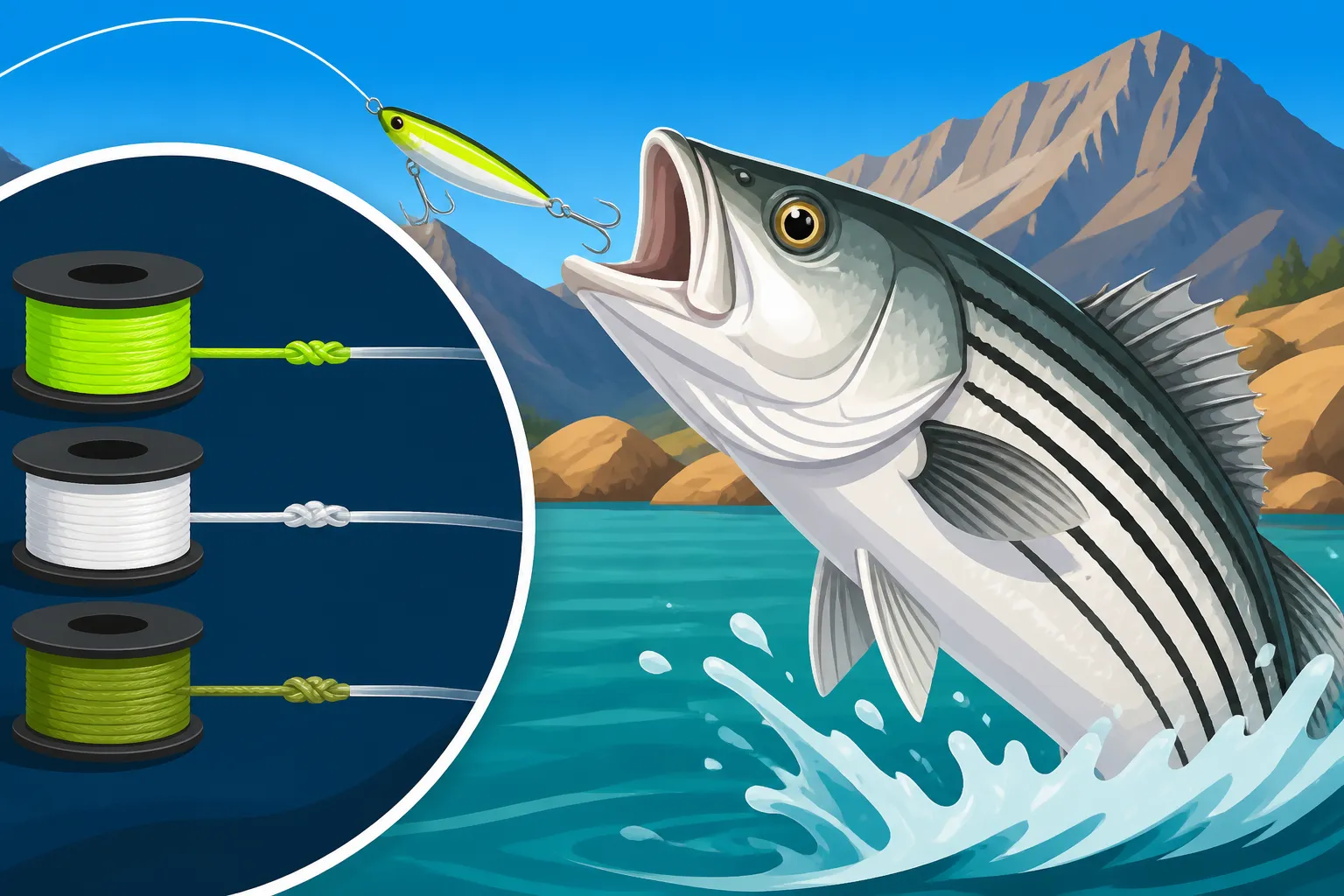
The ultimate goal in choosing your line test for Nevada stripers is to strike a balance between having enough strength to land a powerful fish and enough stealth to get them to bite in the first place. For most situations, a braided main line paired with a fluorocarbon leader is the most versatile and effective setup. This combination gives you the sensitivity and strength of braid, along with the invisibility and abrasion resistance of fluorocarbon right at the business end where the fish sees it.
The length of your leader can vary, but a 3-6 foot fluorocarbon leader is a good starting point for most applications. You might go longer (8-10 feet) if the fish are particularly spooky in super clear water, or shorter (1-2 feet) if you're jigging deep and prioritizing sensitivity. Learning a good knot to connect your braid to your fluorocarbon leader, like the FG knot or a modified Albright knot, is essential to ensure a strong, smooth connection.
Practical Scenarios and Setup Advice
Let's put all this information into practice with some common fishing scenarios you'll encounter while chasing striped bass in Nevada.
Shore Fishing for Stripers
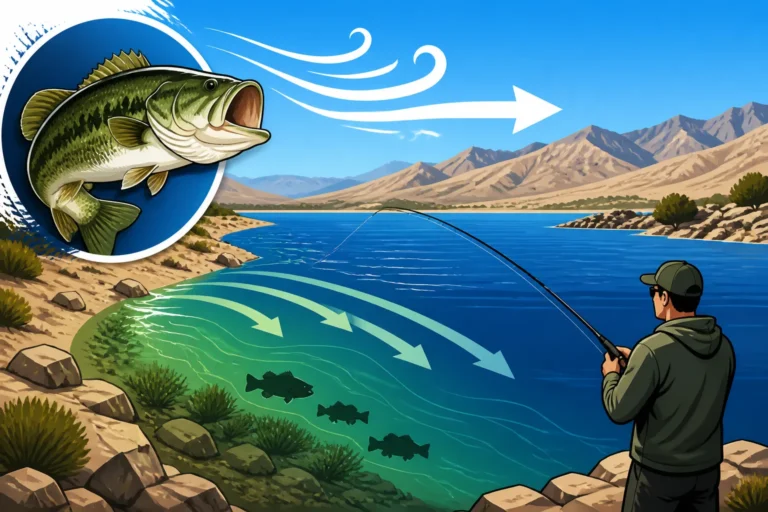
Shore fishing for striped bass, often done at locations like Hemenway Harbor or Government Wash on Lake Mead, presents unique challenges. You need to maximize casting distance to reach schooling fish or deep structure, and your line will likely encounter submerged rocks and brush near the bank.
For shore fishing, a 20-30 lb braided main line is often the best choice. Its thin diameter allows for incredibly long casts, and its zero stretch helps you feel bites and set the hook at a distance. You absolutely need to tie on a 15-25 lb fluorocarbon leader, typically 4-6 feet long. This leader provides the necessary invisibility in clear water and crucial abrasion resistance when your line inevitably scrapes against rocks or shells during the retrieve or a fish's fight. If you're using heavy lures like spoons or large swimbaits, you might even bump up your leader to 25-30 lb to handle the impact of the cast and the fight.
Always check your leader frequently for nicks and abrasions, especially after reeling in through rocky areas or fighting a fish. A small nick can turn into a break-off surprisingly fast when a powerful striper is on the other end.
Boat Fishing Trolling or Jigging
Boat fishing opens up a whole new world of opportunities for striped bass, allowing you to access deeper water and cover more ground, whether you're trolling or jigging.
- Trolling: When trolling deep-diving crankbaits, swimbaits, or umbrella rigs for stripers, you're placing significant stress on your line. A 30-50 lb braided main line is highly recommended. The braid's strength allows you to troll heavier rigs and handle multiple fish, and its thin diameter minimizes water resistance, helping your lures get to their target depth. A 30-40 lb fluorocarbon leader, 4-8 feet in length, is essential. This leader provides shock absorption, invisibility, and protects your main line from abrasion, especially crucial when a hooked fish tries to rub your line on the prop or other parts of the boat. For some specific trolling applications, like downriggers, a heavy monofilament (e.g., 25-30 lb) can also be used for its stretch and shock absorption, directly tied to the leader.
- Jigging: For vertical jigging, the goal is maximum sensitivity to feel those subtle bumps and strikes at depth. A 30-40 lb braided main line is perfect here, as its zero stretch transmits every tap directly to your rod tip. Pair this with a 20-30 lb fluorocarbon leader, typically 2-4 feet long. The leader still provides invisibility and abrasion resistance, but a shorter leader can enhance sensitivity when you're trying to detect light bites in deep water. This setup is fantastic for locating and catching suspended stripers you see on your fish finder.
Leader Material and Connection
As you've probably gathered, a fluorocarbon leader is almost non-negotiable when targeting striped bass in clear Nevada waters. It provides the best combination of invisibility, abrasion resistance, and enough stiffness to handle lures well.
Choosing Leader Material: Always opt for 100% fluorocarbon leader material, not just fluorocarbon-coated mono. The "100% fluoro" ensures you get all the benefits of invisibility and density. Reputable brands offer excellent leader material that you can often find in various spools on Amazon or at local tackle shops.
Connection Knots: The knot connecting your main line to your leader is a critical point of failure, so choose wisely and practice often.
- FG Knot: This knot is incredibly strong, very thin, and slides through rod guides smoothly. It takes practice to tie correctly, but many consider it the strongest and most reliable braid-to-fluoro connection.
- Modified Albright Knot: A more traditional and easier-to-tie knot that provides good strength, though it's a bit bulkier than the FG knot.
- Double Uni Knot: Another relatively easy-to-tie knot that offers decent strength, but it's also a bit bulkier.
Regardless of the knot you choose, moisten it thoroughly before cinching down, and pull slowly and firmly to ensure it seats properly without burning the line. Always test your knots before casting out!
Here's a quick reference table to help visualize these choices:
| Line Type | Pros | Cons | Recommended Test Strengths (Nevada Stripers) | Best Use Case |
|---|---|---|---|---|
| Monofilament | Affordable, good stretch, good knot strength, easy to handle | Visible, memory, less sensitive, moderate abrasion resistance | Main Line: 15-30 lb | General purpose, trolling, where stretch is desired |
| Fluorocarbon | Nearly invisible, excellent abrasion resistance, sensitive, sinks | Stiff, more expensive, trickier knots | Leader: 15-40 lb; Main Line (casting): 15-25 lb | Leaders in clear water, sensitive presentations |
| Braided | High strength-to-diameter, zero stretch, very sensitive, long casts | Highly visible, expensive, needs leader, can fray, knot slippage | Main Line: 20-65 lb | Main line for sensitivity, distance, and power |
In the end, choosing the "best" line test is about equipping yourself for success in the specific conditions you face on a given day in Nevada. By understanding the unique characteristics of striped bass, considering the environmental factors, and matching your line type and test strength to your fishing technique, you'll be well on your way to more hook-ups and more fish in the net. Don't be afraid to experiment, and always pay attention to how your line is performing. Happy fishing!
Disclaimer
This article is for general informational purposes only and does not constitute professional advice. Laws, prices and regulations vary by location and change over time. Consult a qualified professional for guidance on your specific situation.