Jigging Techniques for Lake Mead Stripers
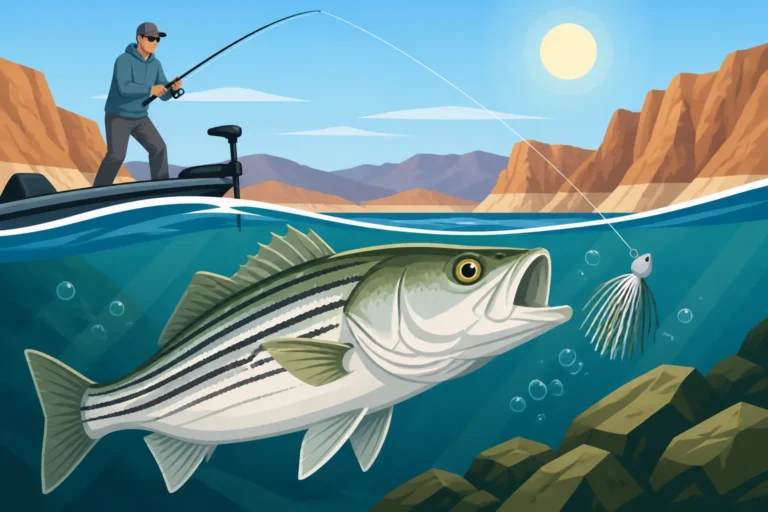
Fishing for striped bass on Lake Mead can feel like trying to find a needle in a haystack, especially with such an expansive body of water. Many anglers get frustrated because stripers can be here one day and gone the next, leaving you wondering if you're even in the right spot or using the right gear. This comprehensive guide is here to unravel the mystery of jigging techniques for Lake Mead stripers, equipping you with the knowledge to consistently locate and land these powerful game fish.
Understanding Lake Mead Stripers and Their Habits
Lake Mead is a phenomenal fishery, but understanding the striped bass that call it home is the first step to success. These fish are predators, constantly on the move, and their behavior is heavily influenced by their environment and their primary food sources. It’s like trying to predict a friend's mood without knowing what they had for breakfast – you're just guessing!
Why Stripers Love Lake Mead
Lake Mead, a vast reservoir formed by the Hoover Dam, offers an ideal habitat for striped bass. Its immense size provides ample open water for schooling and foraging, while the deep channels and abundant structure offer hiding spots and ambush points. While stripers aren't native to Nevada, they've thrived here since their introduction, becoming one of the most sought-after game fish. The sheer volume of water means there's always a new adventure to be had, but it also means knowing where to start can be daunting for newcomers. Many anglers appreciate its convenience as the Closest fishing lake to Las Vegas.
Striped bass are anadromous fish, meaning they typically migrate between saltwater and freshwater. In landlocked environments like Lake Mead, they adapt to a purely freshwater existence, but retain their schooling and predatory instincts. The deep, cool waters provide the perfect conditions for them, especially during the warmer months when they seek thermal refuge. The constant flow from the Colorado River system also brings nutrients and a steady supply of oxygen, contributing to a healthy ecosystem that supports large populations of baitfish.
Unlike some other species that stick to specific structures, stripers are roamers. They follow baitfish, moving across vast expanses of the lake. This nomadic behavior is what makes them so challenging yet exciting to pursue. Understanding the dynamics of Lake Mead itself – its fluctuating water levels, the various coves, and the main channel – is crucial to predicting where these fish might be at any given time. Don't be discouraged if you don't find them immediately; persistence is key.
Understanding Striper Forage and Feeding Behavior
Striped bass are voracious eaters, and their diet primarily consists of threadfin shad and gizzard shad. When these baitfish are abundant, stripers can grow quite large, making them an incredible fight on the end of your line. It's like finding a buffet for them, and they aren't shy about indulging!
Shad form the foundation of the Lake Mead striper's diet. These small, silvery fish move in large schools, and stripers will actively pursue them, often corralling them against a surface or structure before striking. Observing gulls or other waterfowl diving into the water is a classic sign of a feeding frenzy, as they too are targeting the agitated baitfish. Understanding the Striped Bass Feeding Patterns throughout the year is key to anticipating their movements. If you can find the shad, you're usually not far from the stripers.
Stripers are opportunistic predators. While shad are their main meal, they won't pass up an easy meal like smaller fish, crayfish, or even insects if the opportunity arises. Their feeding behavior can range from aggressive surface busts, where they smash into schools of shad, to more subtle, deep-water ambushes. Jigging techniques are particularly effective because they mimic injured or erratic baitfish, triggering that predatory instinct. Think of your jig as a desperate, struggling meal that's too easy for a hungry striper to ignore.
Seasonal Movements and Depths
The movements of Lake Mead stripers are highly seasonal, dictated by water temperature, oxygen levels, and baitfish migration. Ignoring these patterns is like trying to find someone without knowing which city they live in – you'll just be endlessly searching in the wrong place!
In the cooler months of late fall and winter, stripers often move into deeper water, sometimes as deep as 100 feet or more, seeking stable temperatures. As spring arrives, they begin to migrate shallower, especially to coves and points, as water temperatures rise and shad become more active. The pre-spawn period sees them congregating in larger schools, often near spawning areas for baitfish. Knowing these general depth ranges will save you countless hours of fishing unproductive water.
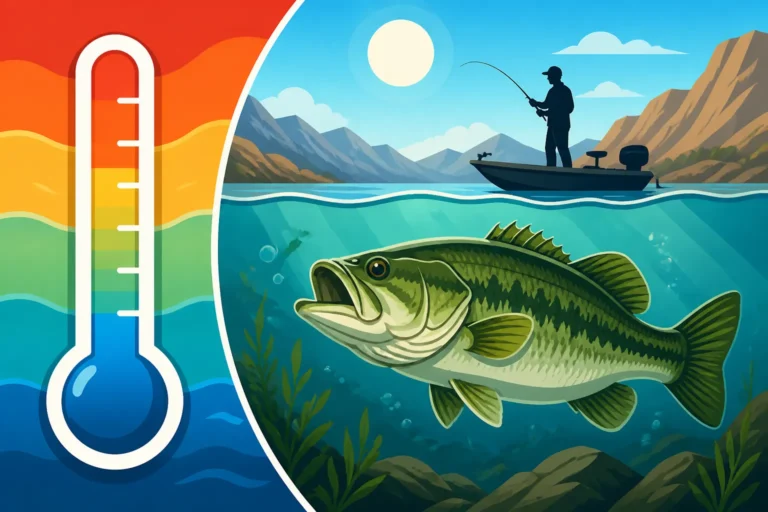
Summer brings its own challenges and opportunities. With the surface waters warming significantly, stripers often retreat to the thermocline – a layer of water where the temperature changes rapidly – seeking cooler, oxygenated water. This often means they’ll be suspended in deeper parts of the main lake channel or near the dam. Understanding these Seasonal Movement of Fish in Reservoirs is critical for targeting them effectively with jigs. As temperatures begin to drop in the fall, stripers become incredibly active, feeding aggressively to build up fat reserves for the winter, often pushing baitfish to the surface in spectacular feeding frenzies.
Essential Jigging Gear for Lake Mead Stripers
Having the right tools for the job makes all the difference, especially when you're battling a hard-fighting Lake Mead striper. Don't let inadequate gear turn a potential trophy into a heartbreak; invest wisely, and you'll be rewarded.
Rods, Reels, and Line Choices
Your rod and reel are extensions of your arm, and your line is the lifeline to your catch. Selecting the right combination will enhance your sensitivity, casting distance, and fighting power. It's like choosing the right brush for painting; the wrong one makes everything harder.
For jigging stripers on Lake Mead, you'll want a medium-heavy to heavy action spinning or baitcasting rod, typically 6'6" to 7'6" long. A fast or extra-fast tip is ideal as it provides the sensitivity to detect subtle bites and the backbone to drive hooks home. Consider something with good leverage, especially if you plan on targeting those larger, deeper fish. Brands like Ugly Stik or St. Croix offer durable options that stand up to the rigors of striper fishing. You can find excellent choices on platforms like Amazon, often with reviews to help guide your decision. Don't be afraid to read user experiences before committing.
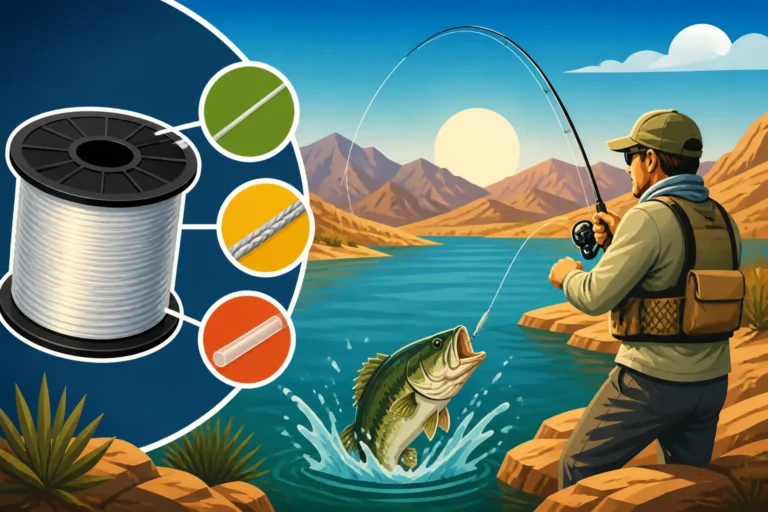
Matching your reel to your rod is crucial. For spinning setups, a 4000 to 5000 series reel is a good starting point, offering enough line capacity and drag power. For baitcasters, a low-profile reel with a strong drag system and a good retrieve ratio (around 6.4:1 to 7.1:1) works well. When it comes to line, braid is king for jigging. Its lack of stretch provides unparalleled sensitivity, allowing you to feel every bump and bite, even in deep water. Spool up with 30-50 lb braided line, and use a 15-25 lb fluorocarbon leader for abrasion resistance and invisibility. Don't skimp on your line; it's the weakest link in your setup! Learn more about the Best line test for striped bass fishing for specific recommendations.
The Right Jigs and Colors
Jigs are the heart of this technique, and selecting the right size, shape, and color can drastically impact your success. It's not just about throwing something in the water; it's about presenting a meal that the stripers can't resist.
When jigging for stripers, you'll primarily be using metal jigs or heavy soft plastic jigs. Metal jigs, often called "spoon jigs" or "vertical jigs," mimic dying baitfish as they flutter and fall. Sizes typically range from 1/2 ounce to 2 ounces, depending on depth and current. Brands like Acme Tackle Kastmaster or Hopkins Shorty are popular choices. For soft plastics, consider swimbait bodies or grub tails rigged on heavy jig heads (1/2 oz to 1 oz) that can get down quickly. The Best Lures for Striped Bass often include these types of jigs.
Color can be a hotly debated topic, but generally, natural colors like chrome, silver, white, or shad patterns are effective when stripers are feeding on baitfish. If the water is murky, or on overcast days, brighter colors like chartreuse or fire tiger can sometimes trigger a strike. However, most experienced Lake Mead anglers will tell you that action and depth are often more critical than color. Always have a variety on hand, easily purchased from online retailers like Amazon, to experiment with what the fish are keying into on any given day. You never know what they'll prefer until you try!
Electronics and Accessories for Success
In a lake as vast as Mead, modern electronics aren't just a luxury; they're a necessity for consistent striper jigging. Trying to find fish without a good fish finder is like driving a car with your eyes closed – you're just hoping for the best.
A good fish finder is your best friend when targeting suspended stripers. Modern units with CHIRP sonar, side imaging, and down imaging capabilities can literally show you schools of baitfish and the stripers lurking beneath them. Pay attention to suspended arches or bait balls. Learning How to use a fish finder to locate suspended stripers will drastically improve your efficiency. Brands like Humminbird, Lowrance, and Garmin offer excellent units that can pinpoint schools, even in deep water. Make sure your unit is properly installed and calibrated for the best results.
Beyond the fish finder, a few key accessories will make your jigging trips more productive. A high-quality boat anchor or a Minn Kota spot-lock trolling motor is invaluable for staying on top of a school once you find it. Line counters on your reels can help you consistently drop your jig to the correct depth where fish are holding. Don't forget a sturdy landing net, especially for those bigger stripers, and a good pair of pliers for hook removal. A reliable headlamp for early morning or Night Fishing Techniques for Striped Bass is also a must-have. You can find many of these essentials with ease on Amazon.
Different Jigging Techniques to Master
Jigging isn't just about dropping a weight to the bottom. There are nuances and variations that can unlock a feeding frenzy or coax a strike from a finicky fish. Mastering these techniques will give you an arsenal of approaches for any given day on Lake Mead.
Vertical Jigging and Deadsticking
Vertical jigging is perhaps the most common and effective technique for suspended stripers, especially when they're schooling in deeper water. It's a direct approach that puts your lure right in front of their noses.
This technique involves positioning your boat directly over a school of fish you've located on your sonar. Drop your jig straight down to or just above the depth where the fish are holding. Once at depth, the action is key. A typical vertical jigging retrieve involves a sharp lift of the rod tip (anywhere from 1 to 3 feet), followed by allowing the jig to flutter back down on a semi-slack line. The strike often occurs on the fall, so pay close attention to any twitch or sudden slack in your line. Repeat this motion, experimenting with the speed and height of your lifts. You're trying to make that jig look like a distressed baitfish struggling to survive.
Deadsticking is a subtle but incredibly effective variation. Once your jig is at the desired depth, simply hold the rod still or place it in a rod holder, allowing the boat's movement or subtle currents to impart minimal action to the jig. This works wonders when stripers are less aggressive or when they're tightly schooled and need a less erratic presentation. Sometimes, the slightest movement is enough to trigger a bite. This method can be particularly potent in winter or after a cold front when fish are sluggish and don't want to expend much energy chasing.
Casting and Retrieve Jigging
When stripers are feeding closer to the surface or pushing bait against banks and points, casting and retrieving jigs can be incredibly productive. This technique allows you to cover more water and mimic a fleeing baitfish.
This technique is often used when you spot active fish breaking the surface or when targeting visible structure like submerged points or rock piles. Cast your jig out, let it sink to the desired depth, then use a retrieve that mimics an injured baitfish. This might involve a series of short, sharp twitches, followed by pauses, or a steady retrieve with occasional jerks. The key is to be versatile and vary your retrieve until you find what the fish are reacting to. This can be particularly effective when targeting Lake Mead Striped Bass Hotspots that are shallower.
For casting, spoon jigs like the Kastmaster or heavy swimbaits are excellent choices. Experiment with retrieve speed – sometimes a fast, erratic retrieve triggers a chase, while other times a slower, more deliberate action is needed. Pay attention to where the bites occur: on the fall, during the retrieve, or on the pause. This feedback helps you fine-tune your presentation. A good rule of thumb is to start fast and slow down until you get a bite, then try to replicate that successful retrieve.
Drop-Shotting for Finicky Stripers
While not a traditional jigging technique in the same vein as vertical jigging, drop-shotting can be a deadly method for stripers, especially when they are lethargic or suspended and not responding to more aggressive presentations. It's about precision and subtlety.
Drop-shotting involves tying a hook directly to your main line (or a leader) a foot or two above a weight. This allows your bait – often a soft plastic worm, shad imitation, or even a small grub – to hover tantalizingly at a specific depth, independent of your sinker which rests on the bottom or is suspended below the fish. The beauty of this rig is that it keeps your bait in the strike zone for extended periods with minimal movement, perfect for coaxing bites from hesitant fish. You're putting an easy, irresistible target right in front of them.
To execute, drop your weight to the desired depth, often just above where you see stripers on your sonar. Then, subtly twitch your rod tip, making the soft plastic dance in place. The weight keeps the bait precisely where you want it, while the subtle action entices bites. This technique offers excellent sensitivity, allowing you to feel even the lightest takes. It's an often-overlooked but highly effective method for stripers, especially when conventional jigging isn't producing. Don't dismiss it just because it's usually associated with bass fishing!
Reading the Water and Locating Stripers
Lake Mead is a massive body of water, and finding fish can sometimes feel like finding a needle in a haystack. Learning to read the water and effectively use your electronics is paramount to success. Without these skills, you're essentially just drifting and hoping for the best.
Interpreting Sonar and Fish Finders
Your fish finder is your eyes beneath the surface. Knowing how to interpret what it's telling you is half the battle won. It's like having X-ray vision into the watery depths.
When looking for stripers, you're primarily looking for two things: baitfish and predator fish. Baitfish will often show up as large, dense clouds or balls on your screen. Stripers, being larger, will appear as distinct arches or larger individual marks, often lurking around or beneath these bait balls. Pay attention to the depth at which these schools are holding. Sometimes they'll be near the bottom, other times suspended in the middle of the water column. Always try to position your boat and present your jig at or just above the depth where you're seeing the most activity. Remember to learn about Best Fish Finder for Reservoir Fishing to ensure you have the right tools.
Don't just scan the surface; actively look for suspended schools of fish. Often, especially in warmer months, stripers will be holding in deeper, cooler water. A good sonar unit can pick up these schools as you motor along. When you mark a promising school, hit your spot-lock or drop anchor immediately. The quicker you can get your jigs down to them, the higher your chances of getting a bite before they move on. Adjust your sensitivity and range to get the clearest picture of the bottom and the water column.
Identifying Key Structures and Depths
Stripers might be roamers, but they still relate to structure, especially when ambushing baitfish. These aren't just random fish; they use the lake's topography to their advantage.
Focus on areas with significant depth changes, submerged points, humps, ledges, and channels. These are natural congregation points for baitfish, which in turn attract stripers. Creek channels and riverbeds that existed before the lake was formed are also prime locations, acting as underwater highways for fish movement. Look for these features on your chartplotter and target them with your jigging techniques. The deeper, cooler waters near the Hoover Dam can also be a hotspot, especially during the peak of summer.
Pay attention to underwater canyons and rocky outcroppings. While stripers are often found in open water, they'll use these features to ambush bait. In areas like Boulder Basin or Overton Arm, understanding the topography of the lakebed is incredibly beneficial. Even subtle changes in depth or bottom composition can hold fish. A good topographic map, either on your fish finder or a paper map, is an invaluable tool for identifying these key structures.
Signs of Active Stripers
Sometimes, the fish will literally tell you where they are and what they're doing. Learning to read these surface signs is like getting a cheat sheet, letting you know exactly where to cast.
The most obvious sign of active stripers is surface activity – birds diving, fish jumping, or water churning. These "boils" or "blow-ups" indicate stripers are actively corralling and feeding on baitfish near the surface. When you see this, motor carefully into casting range, trying not to spook the fish, and cast your jigs into the commotion. This is when casting and retrieving jigs shine. These feeding frenzies can be short-lived, so act fast!
Beyond visual cues, temperature and current can also be indicators. Stripers prefer certain water temperatures, and understanding the thermocline can help locate them in deeper water. While Lake Mead generally doesn't have strong river currents, subtle current lines or eddies can concentrate baitfish and, consequently, stripers. Observing these subtle signs, combined with your electronics, creates a powerful one-two punch for locating actively feeding fish. For a broader understanding of fishing conditions, you might want to review the Best Time of Year to Fish in Nevada.
Seasonal Adjustments for Jigging Success
Just like us, stripers change their behavior with the seasons. What works in spring might not work in summer, so being adaptable is key. Ignoring these seasonal shifts is a sure way to go home empty-handed.
Spring and Pre-Spawn Patterns
As winter chill recedes and the days lengthen, Lake Mead truly comes alive, and so do the stripers. This is a period of renewed energy and increased activity.
In spring, as water temperatures begin to climb into the 50s and 60s, stripers move shallower, often congregating in coves and on points where baitfish are spawning. This pre-spawn period is a fantastic time for jigging. Fish are actively feeding and can often be found in large schools. Focus your jigging efforts in 20-50 feet of water, especially near rocky banks or submerged brush. They are actively bulking up for their spawning ritual, making them more aggressive and eager to strike.
During this time, a mix of vertical jigging with heavier spoons and casting soft plastic swimbaits can be very effective. Look for schools on your fish finder in these shallower areas. The fish might be moving quickly, so having a boat that can maneuver and stay with the school, or a good anchor, is a huge advantage. They are often less finicky during this period, offering excellent opportunities for both quantity and quality.
Summer Deep-Water Tactics
When the Nevada sun really heats up, stripers seek refuge in the cooler, deeper parts of Lake Mead. This can make them harder to find, but by no means impossible.
Summer can be challenging for striper fishing on Lake Mead, but it's far from impossible. As surface temperatures soar, stripers retreat to the thermocline, often found in 60-120 feet of water in the main lake basins like Boulder Basin or near the Hoover Dam. This means your jigging techniques need to adapt to deep-water presentations. Heavy metal jigs (1-2 ounces) are crucial for reaching these depths quickly. Focusing on Summer Fishing Techniques for Hot Desert Lakes will be vital for your success.
Vertical jigging becomes the predominant technique. Use your fish finder to locate suspended schools in these deeper zones. Once found, drop your jigs straight down and work them through the schools. Sometimes, stripers will rise from the depths to chase a jig, but often, you'll need to present it directly at their level. Pay close attention to your retrieve, as summer stripers can be a bit more lethargic, requiring slower, more deliberate jigging actions or even deadsticking.
Fall Feeding Frenzies
Autumn is arguably the most exciting time for striper jigging on Lake Mead, bringing explosive action. If you love fast-paced fishing, this is your season.
As temperatures cool in the fall, stripers enter an aggressive feeding period, gorging themselves in preparation for winter. This is when you'll see those legendary "boils" and surface feeding frenzies. Stripers will push huge schools of shad against the surface or into coves. When this happens, cast your jigs (swimbaits or spoons) into the melee and prepare for an immediate strike! These are fast-paced, action-packed moments that every angler lives for.
During the fall, fish can be found throughout the water column, from the surface to considerable depths, depending on where the baitfish are. Keep an eye out for birds, as diving gulls are often a dead giveaway of a striper boil. Having multiple rods rigged with different jig types can save precious time when the fish are busting. This period often sees some of the largest stripers caught, as they are actively feeding to build up fat reserves.
Winter Slow-Motion Jigging
Don't put away your rods when winter arrives; Lake Mead stripers can still be caught, but you'll need to slow down your approach significantly. Patience truly becomes a virtue in the colder months.
In winter, stripers retreat to the deepest, most stable water, often over 100 feet. They become less active and their metabolism slows, meaning they won't chase a fast-moving bait. This is when vertical jigging with a very subtle, slow presentation becomes paramount. Think slow lifts, long pauses, and even deadsticking. The fish will often be tightly schooled, so once you find them on your sonar, you can often pick off several fish from the same spot.
Smaller jigs, sometimes as light as 1/2 ounce if you can get them down, can be effective, along with soft plastic grubs or tubes. The bites will often be very subtle – a slight tap or just added weight on the line. Sensitivity in your rod and line is absolutely critical here. Be patient, pay attention to every twitch, and you can still have productive days jigging for stripers in the colder months.
Advanced Tips and Common Pitfalls
Beyond the basic techniques, there are always little tricks and common mistakes to be aware of to truly elevate your jigging game. Learning from others' experiences, and your own, is how you grow as an angler.
Matching the Hatch with Jigs
Just like fly fishing, success often hinges on imitating what the fish are already eating. You wouldn't serve steak to a vegetarian, so don't offer the wrong meal to a striper.
"Matching the hatch" refers to selecting a jig that closely resembles the size, shape, and color of the primary baitfish (shad) that stripers are feeding on. Take a moment to observe any baitfish you see in the water or that get coughed up by a striper. Are they small? Silvery? Greenish? Choose a jig that mimics these characteristics. If you're seeing small threadfin shad, a 1/2 oz silver spoon might be perfect. If gizzard shad are larger, a 1 oz white swimbait might be the ticket. While on the water, you might realize you need a different lure. Having a diverse selection of jigs, maybe even from your last Amazon order, can make a huge difference.
Sometimes, the fish are keyed into a very specific size or color. Don't be afraid to experiment. If one jig isn't working, switch it up. Try a different size, a different color, or even a different retrieve. The fish will tell you what they want, but you have to be willing to listen and adapt. This adaptability is what separates a good angler from a great one. For more ideas on what to use, check out our Best Lures for Striped Bass guide.
Using Scent and Attractants
Adding a little something extra can sometimes be the edge you need when the bite is tough. It's like adding a pinch of salt to a dish – it just brings out the flavor.
Fish aren't just sight feeders; they also rely heavily on their sense of smell. Applying a fish attractant or scent to your jigs can increase your strike ratio, especially when fish are less aggressive or when fishing in murky water. Scents that mimic shad or a general baitfish smell are typically good choices for stripers. Brands like Pro-Cure or Berkley Gulp! have a range of options that can be applied directly to your soft plastics or metal jigs.
The idea behind scent is to make your jig not just look like a meal, but smell like one too. This can entice a fish to hold onto the bait longer, giving you more time to set the hook, or simply make it more appealing to a reluctant striper. While it's not a magic bullet, it's an easy addition to your jigging strategy that can provide that extra bit of confidence.
Avoiding Common Jigging Mistakes
Even experienced anglers make mistakes. Being aware of the most common pitfalls can save you frustration and lead to more fish in the boat. Don't fall into these traps!
One of the biggest mistakes is not paying attention to your line. Many striper bites on a jig happen on the fall, which often feels like a subtle tap or a sudden slackening of your line. If you're not constantly watching your line for these indicators, you'll miss strikes. Another common error is not getting your jig to the correct depth. Your fish finder is showing you exactly where the fish are; make sure your jig gets there. Using a line counter reel or simply counting seconds on the fall can help you achieve this precision.
Another pitfall is using too light of a jig for the conditions. If there's current or if you're in very deep water, a light jig will take too long to get down and won't stay vertical. It's better to use a slightly heavier jig to maintain control and get to the fish quickly. Conversely, using a jig that's too heavy for shallower water can spook fish. Finally, don't be afraid to change locations if you're not finding fish. Lake Mead is huge, and stripers are constantly on the move. Sometimes, a quick move to a new point or basin is all it takes to find an active school. Remember, persistence and adaptability are key for Nevada fishing.
| Jig Type | Ideal Conditions | Target Depth Range (Approx.) | Retrieve Style | Notes |
|---|---|---|---|---|
| Metal Jig (Spoon) | Open water, deep schools, aggressive fish | 40-120+ feet | Vertical lift & fall, fast snaps | Mimics injured baitfish, good for quick drops in current. |
| Soft Plastic Swimbait (heavy head) | Surface busts, structured areas, warmer water | 10-60 feet | Cast & retrieve, steady swim, occasional jerk | Versatile, mimics larger baitfish, can be worked slower. |
| Bucktail Jig | Structure fishing, current, bottom bouncing | 20-80 feet | Short hops, drag & stop, vertical jigging | Durable, often tipped with bait, good for imitating bottom-dwelling forage. |
| Drop-Shot Rig | Finicky fish, suspended schools, slow bite | 30-100 feet | Subtle twitches, deadsticking | Presents bait naturally in strike zone without heavy action. |
Disclaimer
Please note that fishing regulations can change. Always consult the latest Nevada Department of Wildlife (NDOW) regulations before heading out on Lake Mead to ensure compliance with all current laws and limits.