Trolling Techniques for Lake Tahoe Mackinaw
Trying to target those elusive Mackinaw trout in the vast, deep waters of Lake Tahoe can feel like searching for a needle in a haystack, especially when you're just starting out. Their tendency to hang out in the coldest, deepest parts of the lake makes conventional fishing tough, leaving many anglers frustrated and empty-handed. This comprehensive guide is designed to cut through that frustration, equipping you with the specific trolling techniques, gear, and strategies you need to successfully land Lake Tahoe's magnificent Mackinaw.
Understanding Lake Tahoe Mackinaw (Lake Trout)
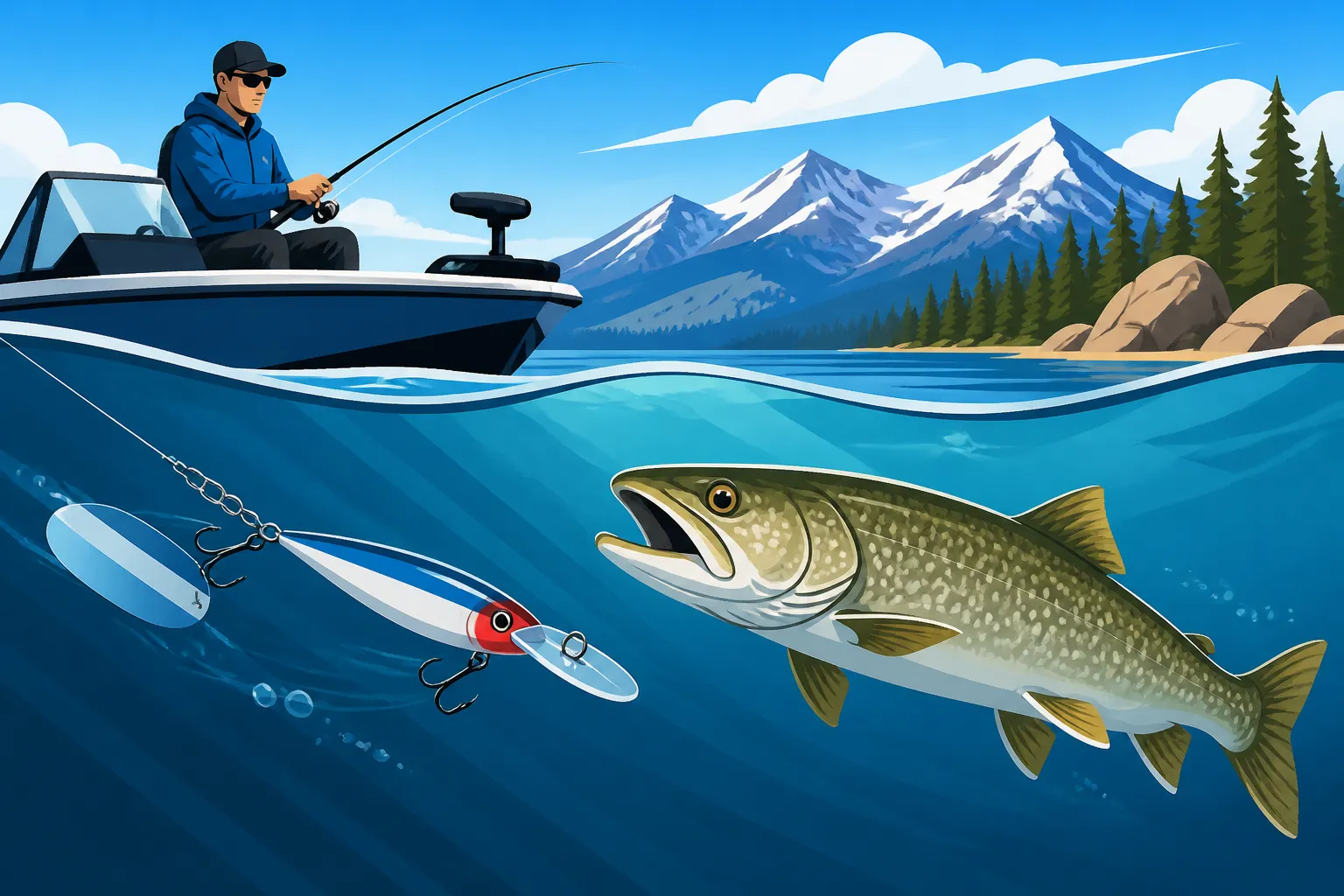
Before you even think about dropping a line, it's crucial to understand the fish you're after. Mackinaw, or lake trout as they're also known, are fascinating creatures perfectly adapted to the cold, clear depths of Lake Tahoe. They aren't your typical pond trout; these are apex predators of the deep.
Their Deep-Water Lifestyles
Lake Tahoe is an incredibly deep lake, plunging to over 1,600 feet in some spots. Mackinaw thrive in these cold, oxygen-rich waters, often preferring temperatures between 40-55°F. This means they spend most of their lives far below the surface, seeking out thermal refuges and structure. Unlike rainbow or brown trout that might patrol the shallows, Mackinaw are typically found hugging the bottom around submerged ledges, rock piles, drop-offs, and underwater points, especially during the warmer months when surface waters heat up.
Their deep-water preference presents the biggest challenge for anglers: how do you get your lure down to where they live, sometimes hundreds of feet below? It's not just about depth, either. Mackinaw are ambush predators, often holding tight to structure, waiting for unsuspecting prey to swim by. Understanding this behavior is key to presenting your lure in a way that triggers a strike, rather than just dragging it through empty water.
Seasonal Movements and Feeding Habits
Mackinaw aren't static; their movements are influenced by the seasons, water temperature, and the availability of their primary food sources. While they generally prefer deep water, their exact depth can vary. In the spring, as the lake's surface layers begin to warm, they might be found slightly shallower as baitfish move up. However, once summer truly hits, they'll retreat to the deepest, coldest parts of the lake, often 100 to 300+ feet down.
Their diet consists mainly of smaller fish like kokanee salmon, Lahontan redside minnows, and sculpins. This means the lures and baits you choose should imitate these natural food sources in terms of size, profile, and action. During certain times of the year, particularly the fall when kokanee are spawning, Mackinaw can become more active and aggressive, moving into slightly shallower waters to feed on these vulnerable fish. This seasonal shift can offer some of the most exciting Mackinaw fishing opportunities, but it still often requires specialized deep-water tactics.
Essential Gear for Lake Tahoe Trolling
Successfully trolling for Mackinaw in Lake Tahoe isn't something you can do with a standard spinning rod and a handful of worms. This is a game that requires specialized heavy-duty gear designed to withstand the rigors of deep-water fishing. Skimping on tackle here will only lead to frustration and lost fish.
Rods, Reels, and Line Selection
For Mackinaw trolling, you'll want a stout trolling rod, typically 7 to 9 feet long, with a medium-heavy to heavy action. These rods need enough backbone to handle heavy weights (like downrigger balls or large lead core setups) and to absorb the shock of a big Mackinaw strike at significant depths. Brands like Daiwa and Ugly Stik offer dependable options that many Lake Tahoe regulars rely on. For reels, a large conventional baitcasting reel is preferred. Look for models with a strong drag system and a high line capacity, capable of holding 300-500 yards of line. You'll be dropping lines hundreds of feet, so capacity is key.
When it comes to line, you have a few options, each with its pros and cons. Monofilament line in the 15-25 lb test range is a good all-around choice due to its stretch and abrasion resistance, which is helpful when battling a powerful fish that might surge and dive. However, some anglers prefer braided line for its minimal stretch, which provides excellent sensitivity for detecting light bites at extreme depths and a more direct hookset. If you use braid, consider a monofilament or fluorocarbon leader to provide some shock absorption and make it less visible to the fish. You can find a good selection of specialized Best Line for Desert Reservoir Fishing options on Amazon, which often carry lines suited for deep, clear waters like Tahoe.
Downriggers and Lead Core
These are arguably the most critical pieces of equipment for reaching Mackinaw depths. Without them, you're essentially just hoping a fish swims up to your shallow-running lure.
Downriggers are mechanical devices that allow you to deploy a heavy cannonball weight, or "downrigger ball," to a precise depth, with your fishing line clipped to a release mechanism on the downrigger wire. Once a fish strikes, the line pops free from the clip, and you fight the fish directly without the weight. They are incredibly effective for targeting specific depth ranges and allowing your lure to run freely once released. High-quality downriggers are essential, especially when considering the strong currents and waves Lake Tahoe can experience. Brands like Scotty and Cannon are popular choices known for their durability and precise depth control. For a comprehensive look at how these tools interact with your vessel, checking out a guide on Best Boats for Nevada Reservoir Fishing can be beneficial.
Lead core line is another popular method, particularly for those without downriggers or as a supplementary setup. It's a specialized fishing line with a lead core encased in a colored Dacron sheath. Each color segment (usually 10 yards) corresponds to a certain depth achieved at a given trolling speed. The advantage of lead core is its simplicity – no complex machinery, just specialized line. The downside is that you're always fighting the fish with the weight of the lead core in the water, which can dull the fight and make it harder to feel subtle bites. Many anglers run a combination of both lead core and downriggers to cover more of the water column.
Electronics for Mackinaw
In the vastness of Lake Tahoe, electronics aren't just a luxury; they're a necessity. You're not just looking for fish; you're looking for structure and depth changes where fish are likely to be.
A fish finder with side-imaging and down-imaging capabilities is invaluable. These units allow you to scan the bottom contours, identify underwater points, ledges, and humps where Mackinaw often ambush prey. More importantly, they show you fish arches, bait balls, and even the thermocline (the layer where water temperature changes rapidly), which can indicate where fish are holding. High-resolution screens make a huge difference in interpreting what you're seeing beneath the boat. Consider brands like Humminbird or Garmin for their clear displays and advanced features, as detailed in many Best Fish Finder for Reservoir Fishing reviews.
GPS and mapping functions are equally important. Lake Tahoe has countless underwater features, and a good GPS allows you to mark productive spots, save trolling paths, and navigate precisely. You can find detailed contour maps of Lake Tahoe that integrate directly with many fish finders, allowing you to follow specific depth contours with accuracy. This precision helps you stay in the strike zone longer and revisit successful locations.
Mastering Trolling Depths and Speed
This is where the real skill in Mackinaw trolling comes into play. It's not enough to just get your lure deep; you need to present it at the right depth, at the right speed, in the right place. These factors are constantly changing, making Mackinaw fishing a true art form of adaptation.
Dialing in Depth with Downriggers
Using downriggers effectively requires more than just dropping a weight to a number on a dial. You need to account for "blowback" – the effect of water resistance on your downrigger wire and the lure itself, which causes them to trail behind and slightly shallower than the measured depth. The faster you troll, the more blowback you'll experience. Different downrigger balls (e.g., pancake weights versus round ones) can also influence blowback.
To counteract this, many seasoned anglers will often set their downrigger depth slightly deeper than the target depth, especially when trolling faster or using larger lures that create more drag. Experimentation is key. Watch your fish finder closely; if you're marking fish at 150 feet, but your downrigger says 150 feet and you're trolling at 2 mph, your lure might actually be closer to 130-140 feet. Adjust by dropping another 10-20 feet on the downrigger. Using specific weights designed to minimize blowback, such as those with hydrodynamic shapes, can also make a noticeable difference.
The Art of Lead Core Trolling
Lead core trolling, while simpler in equipment, requires a good understanding of its depth capabilities. As mentioned, each color of lead core (typically 10 yards) generally sinks to a specific depth at a certain speed. A common rule of thumb is about 5 feet of depth per color at 2 mph, but this can vary greatly depending on your lure size, line diameter, and speed.
For example, if you want to target Mackinaw at 100 feet, and your lead core sinks at 5 feet per color at your chosen speed, you'd need to let out 20 colors (200 yards) of lead core. You'll typically attach a monofilament or fluorocarbon leader (20-50 feet long) to the end of your lead core, which then connects to your lure. The beauty of lead core is the ability to easily adjust depth by simply letting out or reeling in colors. It's also excellent for covering a wider swathe of the water column when you're unsure of the exact depth the fish are holding. Many anglers will run a 5-color, 7-color, and 10-color setup, varying the amount of lead core deployed on each rod to cover different zones simultaneously.
Ideal Trolling Speeds
Trolling speed is a critical factor that can make or break your day. Mackinaw generally prefer slower trolling speeds, typically between 1.5 to 2.5 miles per hour. This slower pace allows your lures to dive deeper, move with a more natural, subtle action, and gives the Mackinaw more time to see and react to them. However, speed isn't a one-size-fits-all setting.
The ideal speed often depends on the type of lure you're using. Spoons, for instance, often have a better wobbling action at slightly higher speeds, while some plugs might perform best at slower paces. Pay attention to how your lure is behaving in the water; if it's spinning erratically or not wobbling correctly, adjust your speed. Additionally, fish activity can influence the optimal speed. On days when Mackinaw are more aggressive, a slightly faster troll might entice a strike. If they're lethargic, slowing down to almost a crawl might be necessary to put the lure right in front of them, giving them an easy meal. Always refer to your fish finder to see how the fish are reacting to your presentation. This dynamic adjustment is part of the challenge and reward of Trolling Techniques for Lake Tahoe Mackinaw.
Top Lures and Baits for Mackinaw
Just like people have their favorite foods, Mackinaw have theirs. Choosing the right lure or bait is about mimicking what they naturally feed on in Lake Tahoe. The clear waters and depth mean that realism, action, and sometimes flash are paramount.
Spoons and Plugs
These are workhorse lures for Lake Tahoe Mackinaw. Spoons are metal lures designed to wobble and flash like an injured baitfish. Popular choices for Mackinaw include the large, heavy sizes of familiar spoons like the Dodger, F-7 Flatfish, and the Needlefish. Colors can vary, but silver, blue/silver, green/silver, and sometimes gold or orange, often imitate the kokanee and other baitfish that Mackinaw prey on. The action of a spoon can be very enticing, especially when trolled at the right speed to give it that irresistible shimmy.
Plugs, on the other hand, are hard-bodied lures that dive and swim with a distinct wobble. Deep-diving crankbaits or specific trolling plugs from brands like Rapala or Luhr-Jensen are excellent. Again, focus on colors that mimic natural prey, and ensure the plug is designed for deep-water trolling. Some plugs come with an adjustable bill that allows you to fine-tune their diving depth and action. The Best Lures for Striped Bass often share similar characteristics to Mackinaw lures in terms of diving depth and fish imitation, so don't be afraid to cross-reference.
Dodges, Flashers, and Attractors
Sometimes, the Mackinaw need a little extra encouragement to notice your lure in the deep, dark water. This is where attractors come in. Dodgers and flashers are non-baited devices designed to create visual flash and vibration in the water, mimicking a school of baitfish or simply drawing attention. They don't have hooks themselves but are rigged in front of your actual lure, typically 12 to 36 inches ahead of it.
Dodgers have a distinct, erratic side-to-side kicking motion, while flashers rotate. Both are highly effective at calling fish from a distance. The size and color of your dodger or flasher should complement your main lure. For Lake Tahoe, chrome, silver, or prism tape finishes are common and effective. You'll often see them paired with small spoons or even a piece of bait. The idea is that the attractor gets the Mackinaw's attention, and then they spot your trailing, more realistic lure.
Live Bait and Scent
While artificial lures are highly effective, sometimes nothing beats the real thing. Live bait, specifically small minnows or baitfish (check current Nevada Fishing Regulations Explained for specific rules and allowed species), can be incredibly potent for enticing finicky Mackinaw. When using live bait, it's often trolled slowly, or even suspended with a downrigger, allowing the natural movements of the bait to do the work. The key is to keep the bait lively and present it naturally.
Scent can also play a significant role, especially in deep, dark waters where visual cues might be limited. Many anglers will add commercial fish scents (like Pro-Cure or Mike's Garlic) to their artificial lures or even to their live bait to enhance its appeal. Scent can mask human odors and provide a strong attractant trail that Mackinaw can follow. Additionally, some anglers tip their spoons or plugs with a small piece of cut bait, like a chunk of sucker or anchovy, to add both scent and a realistic texture. You can find many popular scent options on Amazon.
Strategic Trolling Patterns and Locations
Trolling isn't just about driving in a straight line. It's about intelligently covering water, targeting known fish-holding areas, and adapting to the nuances of Lake Tahoe's underwater landscape. Having a solid strategy can dramatically increase your chances of success.
Targeting Structure
Mackinaw are structure-oriented fish. They don't just swim aimlessly in open water; they associate with features that provide cover, ambush points, and access to food. Therefore, your trolling patterns should prioritize these areas. Look for underwater points, ledges, humps, and steep drop-offs on your electronic charts. These are prime locations where Mackinaw will congregate, especially where baitfish are also present.
When you identify a promising piece of structure, troll around it, not just over it. Try making wide circles or S-turns. This allows your lures to cover varying depths and speeds, as the inside lure will slow down and drop, while the outside lure will speed up and rise. This change in action can often trigger strikes from Mackinaw holding tight to the structure. Remember that these fish often lie in wait, so presenting your lure multiple times from different angles can be key.
The Importance of Contour Trolling
One of the most effective strategies for deep-water Mackinaw is contour trolling. This involves using your GPS and fish finder to follow a specific depth contour along the lake bottom. If you're marking fish at, say, 180 feet, you'll want to program your boat to follow the 180-foot contour line as closely as possible.
This method ensures your lures stay in the prime strike zone for extended periods, rather than just passing through it briefly. Modern fish finders with detailed mapping allow you to set your boat on an auto-pilot course to follow these contours precisely, freeing you up to monitor your rods and electronics. It's particularly effective when you've located a school of fish or identified a consistent depth where strikes are occurring. Combining this with an understanding of How deep to fish for Mackinaw trout at Lake Tahoe will make you more proficient.
Popular Lake Tahoe Mackinaw Hotspots
Lake Tahoe, while massive, has several well-known areas that consistently produce Mackinaw. These hotspots typically feature a combination of deep water, ample structure, and baitfish populations.
On the Nevada side, areas around Crystal Bay are highly regarded for their deep drop-offs and rocky structure. Zephyr Cove also offers excellent deep-water fishing, particularly in the channels and points leading into the deeper basin. The waters near Cave Rock are another productive zone, with distinct underwater features. Further south, the vast deep areas off Glenbrook can also hold impressive Mackinaw. These areas are often detailed in resources like Lake Tahoe Deep Water Mackinaw Spots and are usually clearly marked on comprehensive lake maps. Always be aware of other boat traffic in these popular areas and maintain safe distances.
Reading the Water and Adjusting Your Approach
Fishing, especially for deep-water species like Mackinaw, is rarely a static activity. The best anglers are constantly observing, adapting, and fine-tuning their approach based on what the "water is telling them."
Interpreting Your Fish Finder
Your fish finder is your window into the underwater world of Lake Tahoe. Learning to interpret its readings is paramount. You're not just looking for isolated fish arches; you're looking for patterns. Are there bait balls? If so, at what depth? Mackinaw are rarely far from their food. Are the fish arches hugging the bottom, or are they suspended? This tells you whether to run your lures right on the deck or slightly higher.
Also, pay attention to the bottom contour. Is it a gradual slope, a sharp drop-off, or a rocky rise? Your fish finder will reveal these features, allowing you to position your boat and lures accordingly. Even subtle changes in the bottom composition can hold fish. A good fish finder can also help you identify the thermocline, which is often a key depth zone where fish actively feed or seek comfort. Regularly checking the Best trolling depth for lake trout in summer based on your fish finder's temperature readings can make a huge difference.
Adapting to Conditions
Lake Tahoe's conditions can change rapidly. Wind, light levels, and water temperature fluctuations all influence Mackinaw behavior.
- Wind and Waves: A moderate chop on the water can actually be beneficial, as it breaks up the surface and makes your boat's presence less intrusive. It also imparts a natural, erratic action to your lures. However, strong winds can make boat control and maintaining precise depths extremely challenging. On very windy days, you might need to increase your downrigger weight or switch to heavier lead core setups to stay in the strike zone.
- Light Conditions: Early morning and late evening often provide the best fishing, as lower light levels encourage fish to be more active. On bright, sunny days, Mackinaw tend to be deeper and may prefer more subtle lure presentations or darker colors. Overcast days can sometimes extend the active feeding windows.
- Water Temperature: While Mackinaw prefer cold water, small temperature differences at depth can influence where they hold. Your fish finder's temperature gauge can help you locate those sweet spots. If a cold front moves in, fish might become lethargic and less willing to chase, requiring even slower trolling speeds and a more direct presentation.
The Patience Game
Ultimately, Mackinaw fishing, especially trolling on Lake Tahoe, is a test of patience and persistence. You're covering vast amounts of water, and strikes can be few and far between, sometimes hours apart. It's easy to get discouraged when the bite is slow.
However, consistency pays off. Keep your lures in the water, continue to monitor your electronics, and stick to your strategic trolling patterns. Every pass over a promising piece of structure is another opportunity. Don't be afraid to experiment with different lures, colors, and depths if one approach isn't working. Sometimes, a subtle change is all it takes. Remember, the reward of landing one of Lake Tahoe's magnificent Mackinaw is well worth the effort and the wait. For more overall advice on catching these impressive fish, be sure to consult a comprehensive guide on How to Catch Mackinaw Trout at Lake Tahoe.
Comparing Trolling Methods for Lake Tahoe Mackinaw
Choosing between downriggers and lead core line depends on several factors, including your budget, experience level, and the specific conditions you're fishing. Many seasoned anglers opt to use a combination of both to maximize their coverage.
| Feature | Downriggers | Lead Core Line |
|---|---|---|
| Depth Control | Precise, adjustable to exact depths via counter. | Achieved by length of line deployed (e.g., "colors"). Depth is less exact and speed-dependent. |
| Lure Action | Lure runs freely once released, natural action. | Lure action can be hindered by the weight of the lead core. |
| Feel/Sensitivity | Direct fight with fish after release, good feel. | Less sensitive due to line stretch and weight of lead core; harder to feel subtle bites. |
| Setup Cost | Higher initial investment for unit, weights, releases. | Lower initial cost, just specialized line. |
| Ease of Use | More complex to set up and manage multiple lines. | Simpler to deploy, but requires understanding of depth ratios. |
| Targeting | Excellent for targeting very specific depths/structures. | Good for covering broader depth ranges or unknown depths. |
| Maintenance | Requires regular maintenance (cables, pulleys, motors). | Minimal maintenance. |
| Fighting Fish | Unhindered fight with fish after line release. | Always fighting fish with the resistance of the lead core. |
When you're out on the water, having the right permit is crucial. Don't forget to check the specific Lake Tahoe Nevada Fishing License Rules before you head out. Understanding the Best Time of Year to Fish in Nevada for Mackinaw, which often includes late spring, early summer, and fall, will also significantly improve your chances. Always aim to equip yourself with Nevada Fishing Gear Essentials to ensure a smooth and enjoyable trip, and always be aware of the Mackinaw Trout Size and Age at Lake Tahoe regulations to ensure you're fishing responsibly.
Disclaimer
Fishing involves inherent risks, including but not limited to adverse weather conditions, boating hazards, and sharp hooks. Always prioritize safety, wear appropriate personal flotation devices, and be aware of your surroundings. Regulations regarding fishing licenses, seasons, bag limits, and allowed tackle can change. It is your responsibility to consult the latest official Nevada Department of Wildlife (NDOW) regulations before engaging in any fishing activities. This guide is for informational purposes only and does not constitute legal or professional advice.