Best month to catch striped bass at Lake Mead
Trying to figure out the absolute best month to catch striped bass at Lake Mead can feel like chasing a mirage in the desert – one day they're here, the next they're gone. It’s a huge, complex body of water, and stripers are notorious for their nomadic tendencies, always following the baitfish. This guide will cut through the guesswork and help you understand the seasonal patterns that truly dictate when and where you'll have the most success targeting these hard-fighting fish on Lake Mead.
Understanding Striped Bass Behavior at Lake Mead
Striped bass are apex predators in Lake Mead, and their entire existence revolves around finding and devouring threadfin shad, their primary food source. When you understand the stripers' relationship with these baitfish and the influence of water temperature, you unlock the secrets to consistent catches, no matter the time of year.
Seasonal Movements and Forage
Imagine a massive underwater buffet that's constantly moving. That's essentially what a school of threadfin shad represents to a hungry striped bass. As the seasons change, so does the location of these shad schools, which in turn dictates where the stripers will be. In colder months, shad often retreat to deeper, more stable water, and the stripers follow suit. They become less active, conserving energy, and you'll find them in large, tight schools, often suspended over deep channels or near submerged structures.
Conversely, when the water warms up in spring and fall, the shad become more active and move into shallower coves, points, and even up against the shorelines to feed on plankton blooms. This is when the stripers really perk up, becoming aggressive and pursuing the shad into these shallower areas. They'll push bait to the surface, creating those exciting "boils" that every striper angler dreams of witnessing. Knowing these basic movements is paramount to planning your trip and setting up your gear.
Impact of Water Temperature on Activity
Water temperature is the single biggest factor influencing striped bass activity. Like most fish, stripers are cold-blooded, meaning their metabolism slows down significantly in colder water and speeds up in warmer water. The sweet spot for striped bass on Lake Mead generally falls between 60°F and 75°F. Within this range, they are most active, feeding aggressively, and easier to provoke into striking a lure or bait.
Below 55°F, their activity levels drop considerably. While they still feed, it's often a slower, more deliberate bite, and you'll need to present baits and lures much more slowly to entice a strike. They'll conserve energy, often hunkering down in deeper thermal refuges. Above 80°F, especially during the peak of summer, they can become stressed by the heat and dissolved oxygen levels can drop. While they'll still feed, it often happens in the cooler parts of the day, like early mornings or after dark, or they'll descend to deeper, cooler water. Understanding these temperature thresholds allows you to predict their behavior and adjust your tactics accordingly.
The Prime Seasons for Striped Bass Action
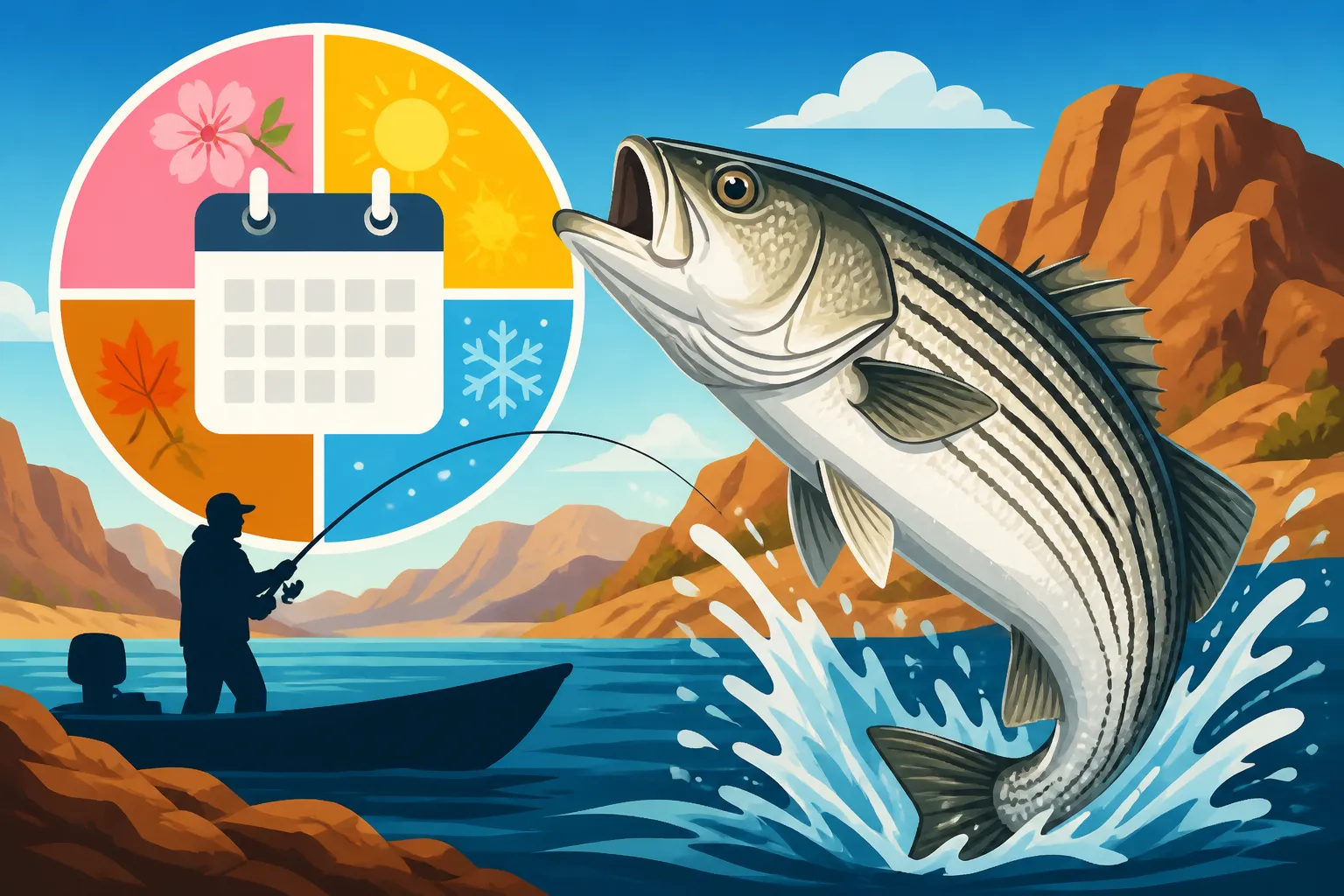
Lake Mead offers year-round fishing opportunities, but certain seasons truly shine for striped bass. Each period presents its own challenges and rewards, and knowing what to expect can vastly improve your chances of a successful outing.
Spring (March – May): Pre-Spawn and Post-Spawn Blitz
Spring is arguably one of the best times of year to fish in Nevada, especially for striped bass on Lake Mead. As the water temperatures begin to climb from the chilly winter lows, typically hitting that magic 55-65°F range, the stripers wake up from their sluggish winter state. This period, from roughly March through May, is characterized by intense feeding as they prepare for and recover from their spawning efforts.
In the early spring, you'll find them migrating from deeper wintering grounds into shallower coves and bays, following the threadfin shad that are also moving into these warmer, nutrient-rich areas. This means both shore anglers and boaters have excellent opportunities. They're often found chasing shad right up against the banks, making for incredible topwater action in the mornings and evenings. Later in spring, after the spawn, they continue to feed aggressively to replenish their energy, offering consistent action throughout the day. This is a time when the fish are often very predictable, concentrating in predictable areas and readily hitting a variety of baits and lures.
Fall (September – November): Cooling Waters and Feeding Frenzies
If spring is "king," then fall is certainly the "queen" for striped bass fishing on Lake Mead. As the scorching summer heat begins to wane and water temperatures start to drop from their peak highs, typically from September through November, the stripers experience a second surge of aggressive feeding. This period is often described as a "feeding frenzy" as the fish bulk up for the upcoming winter.
The cooling waters invigorate the stripers, and they become incredibly active, often schooling up in massive numbers to chase down threadfin shad. This is the prime time to witness spectacular surface boils, where hundreds of stripers erupt on the surface, pushing baitfish into a frothing, chaotic display. Anglers can often follow these boils, casting topwater lures or swimbaits into the melee for non-stop action. The Striped Bass Seasonal Patterns in fall are all about chasing down those active schools, and it's a truly exhilarating experience.
Summer (June – August): Deep Water Challenges and Night Fishing
Summer fishing for striped bass on Lake Mead, from June through August, can be a tale of two extremes. During the day, as surface water temperatures soar into the high 70s and 80s, stripers generally retreat to deeper, cooler waters where oxygen levels are more stable. This means anglers need to employ different strategies, focusing on techniques like downrigging, lead core trolling, or Deep Water Techniques for Lake Mead Bass using heavy jigs and spoons. It requires more specialized gear and often means long hours of searching for those suspended schools.
However, once the sun sets, Lake Mead transforms into a prime spot for Night Fishing Techniques for Striped Bass. As the surface cools and the shad come up from the depths, the stripers follow. Night fishing can be incredibly productive, with stripers readily taking cut bait (like anchovies or sardines) or even glow-in-the-dark lures fished under lights. The lack of boat traffic and the cooler air temperatures make for a more comfortable and often more successful fishing experience than battling the midday summer sun.
Winter (December – February): Slower Pace, Bigger Fish Potential
Winter fishing on Lake Mead, from December through February, is often overlooked by many anglers, but it can be incredibly rewarding for those willing to brave the colder temperatures and adjust their tactics. While the overall numbers of fish caught might be lower than in spring or fall, winter often produces some of the biggest stripers of the year. The fish are less active, conserving energy, but they're still feeding.
During these months, stripers will congregate in deep water, often near the main river channels, steep drop-offs, or submerged canyons. They'll be tightly schooled and relatively sluggish, requiring a slow, methodical approach. Vertical jigging with heavy spoons or large swimbaits is a popular and effective method. You're not looking for a fast bite; rather, you're looking to put your lure right in front of a less active fish and coax a strike. While not as dynamic as other seasons, the chance of landing a true trophy striper makes winter a compelling option for dedicated anglers.
Pinpointing the Best Month: April, May, October, and November
While Lake Mead offers opportunities year-round, certain months consistently stand out as exceptional for striped bass. These periods align perfectly with the stripers' peak activity and feeding patterns, offering the most consistent and exciting action.
Why Spring is Often King (April-May)
If you have to pick one season, spring, particularly April and May, is often considered the peak time for striped bass fishing on Lake Mead. The reasons are numerous and compelling. The rising water temperatures, hitting that ideal 60-70°F range, trigger an aggressive pre-spawn feeding binge. Stripers move shallow, actively chasing schools of threadfin shad into the backs of coves and along prominent points. This makes them accessible to both boat and shore anglers.
During this two-month window, you'll often encounter stripers in large, concentrated schools, making it easier to locate them. The surface action can be phenomenal, with explosive boils providing visual thrills and opportunities for exciting topwater catches. Post-spawn, the fish continue to feed heavily, replenishing their energy reserves, leading to sustained action. Whether you're casting crankbaits, swimbaits, or even chunk bait, the stripers are typically aggressive and willing to bite. This consistent, widespread activity makes April and May truly golden months for striper enthusiasts. Many anglers report finding Lake Mead Striped Bass Hotspots during these months easier to pinpoint.
Fall's Fierce Comeback (October-November)
Close on the heels of spring, the fall months of October and November offer a spectacular resurgence of striped bass action. After enduring the deep-water grind of summer, the cooling water temperatures in the fall re-energize the stripers, prompting another intense feeding period. This is when the fish really start to school up and actively push massive schools of shad towards the surface, creating those iconic "boils" or "blow-ups" that draw anglers from all over.
The stripers are actively chasing bait, gorging themselves in preparation for the leaner winter months. This translates to incredibly consistent action for anglers. Whether you're casting topwater lures into a boil, vertical jigging, or trolling, the fish are often aggressive and willing to hit. The cooler air temperatures also make for a much more comfortable fishing experience compared to the intense summer heat. If you're looking for exciting, visual fishing with high numbers of active fish, October and November are fantastic choices.
Essential Techniques and Gear for Lake Mead Stripers
To maximize your success on Lake Mead, especially during those prime months, having the right techniques and gear in your arsenal is crucial. Stripers can be caught in various ways, and being prepared for different scenarios will give you a significant edge.
Trolling and Jigging for Deep Water Stripers
When stripers are holding deeper, particularly during the summer or winter months, trolling and jigging become your go-to techniques. For trolling, you'll want to use heavy casting or trolling rods paired with reels spooled with at least 20-30 pound monofilament or braided line. Downriggers are often indispensable for getting your lures to specific depths where the stripers are suspended. Popular trolling lures include deep-diving crankbaits, umbrella rigs, and large spoons. Always keep an eye on your fish finder to locate schools of bait and stripers.
When the fish are tightly schooled and holding structure, vertical Jigging Techniques for Lake Mead Stripers can be incredibly effective. Heavy spoons like Kastmasters or Hopkins Shorty jigs, ranging from 1 to 3 ounces, are excellent choices. Large bucktail jigs or soft plastic swimbaits rigged on heavy jig heads also work wonders. The key is to drop your jig directly into the school and work it with an aggressive lift-and-drop motion, mimicking a wounded baitfish. You can find a fantastic selection of these specialized lures and heavy lines on Amazon, ensuring you're ready for deep-water battles.
Anchovy Rigs and Cut Bait for Bank Anglers
For those fishing from the shore or anchored boats, especially during spring and fall when stripers move shallower, fresh or frozen anchovies are an absolute powerhouse bait. Stripers cannot resist the oily scent and natural appeal of anchovies. A simple but effective setup is a Carolina rig: a 1/2 to 1-ounce egg sinker above a swivel, then an 18-36 inch leader (15-20 lb fluorocarbon is ideal) tied to a 2/0 to 4/0 circle hook. Thread the anchovy onto the hook so it lies naturally.
Other effective cut baits include sardines or even pieces of shad if you can catch them. Fishing these baits on the bottom or suspended under a bobber can yield excellent results, especially in areas where stripers are known to congregate. You might want to explore Amazon for high-quality circle hooks, swivels, and leader material to ensure your setup is robust enough to handle these hard-fighting fish. Learning How to fish for striped bass from shore effectively with cut bait can transform your bank fishing success. Another excellent tactic is How to chum for striped bass at Lake Mead, using small pieces of cut bait to attract and hold schools of fish in your area.
Topwater and Reaction Baits for Surface Action
During the prime spring and fall months, when stripers are actively chasing shad on the surface, there's nothing more exhilarating than a topwater bite. Poppers, walk-the-dog style baits (like Heddon Super Spooks), and large floating minnow baits are incredibly effective. The key is to cast these lures into or around active boils and work them aggressively to draw explosive strikes. The visual aspect of a striper blowing up on your lure is something every angler should experience.
Beyond topwater, other reaction baits like lipless crankbaits, swimbaits, and even large spinnerbaits can be deadly when stripers are actively feeding in shallower water. These lures mimic shad and can be retrieved quickly to trigger a predatory response. Experiment with different colors, focusing on natural shad patterns, and retrieves until you find what the fish are keying in on. Many anglers find great deals on these specialized lures and baits on Amazon, often buying multiple colors and sizes to match varying conditions. For more specific lure recommendations, check out our guide on Best Lures for Striped Bass.
Local Knowledge and Adapting to Conditions
While knowing the best months and techniques is crucial, successful striper fishing on Lake Mead often comes down to adapting to daily conditions and utilizing local insights. Lake Mead is a dynamic environment, and what worked yesterday might not work today.
Reading the Water and Weather
Never underestimate the power of reading the water and paying attention to local weather patterns. A strong wind can push baitfish into certain coves, concentrating stripers. Cloud cover can extend morning and evening feeding windows, while bright sun often drives fish deeper. Always check the forecast before you go, and be prepared to adjust your strategy if the conditions change.
Beyond weather, observe the water itself. Are there birds diving? That's a huge clue for surface activity. Are there ripples or splashes that indicate active feeding? These visual cues can tell you more than any fish finder in certain situations. Staying flexible and observant is key to consistent success.
Hotspots and Access Points
Lake Mead is vast, but stripers tend to favor certain areas, especially during peak seasons. In the spring and fall, areas like Hemenway Harbor, Government Wash, and Cottonwood Cove often see significant activity as stripers move shallow. These areas offer both boat and shore access, making them popular choices.
For specific locations, consider exploring guides like Hemenway Bay Fishing Access or Government Wash Fishing Access. These resources often provide detailed information on access points, typical depths, and what kind of structure you might encounter. Even if you don't have a boat, many of these spots offer excellent bank fishing opportunities, especially when the stripers are pushing bait right up against the shore. Don't be afraid to explore new areas, but always prioritize safety, especially on such a large body of water.
Monthly Striped Bass Fishing Outlook for Lake Mead
Here’s a quick overview of what to expect for striped bass action on Lake Mead throughout the year, keeping in mind that conditions can always vary.
| Month | Typical Water Temp Range | Striper Activity Level | Primary Locations / Depth | Recommended Techniques | Notes |
|---|---|---|---|---|---|
| January | 48-52°F | Slow to Moderate | Deep, main channel | Vertical Jigging, Slow Trolling | Chance for trophy fish, but tough bite. |
| February | 50-55°F | Slow to Moderate | Deep, warming coves | Vertical Jigging, Cut Bait | Slight increase in activity, still deep. |
| March | 55-60°F | Moderate to High | Transitioning shallow | Trolling, Cut Bait, Swimbaits | Fish moving up, pre-spawn feeding starts. |
| April | 60-68°F | High | Shallow coves, points | Topwater, Crankbaits, Cut Bait | Prime month! Aggressive pre-spawn, surface boils likely. |
| May | 65-72°F | High | Shallow coves, open water | Topwater, Swimbaits, Trolling | Prime month! Post-spawn feeding frenzy, consistent action. |
| June | 70-78°F | Moderate | Deeper water (day), Shallower (night) | Deep Jigging, Trolling, Night Fishing | Stripers go deep during hot days, excellent night fishing. |
| July | 75-82°F | Moderate | Deepest water (day), Shallower (night) | Deep Jigging, Trolling, Night Fishing | Hottest month, focus on early mornings, late evenings, or night. |
| August | 78-83°F | Moderate | Deepest water (day), Shallower (night) | Deep Jigging, Trolling, Night Fishing | Similar to July, persistent deep or night techniques. |
| September | 75-70°F | Moderate to High | Transitioning shallow | Trolling, Swimbaits, Cut Bait | Water cooling, stripers begin moving up, activity increases. |
| October | 68-62°F | High | Open water, coves | Topwater, Jigs, Trolling, Cut Bait | Prime month! Aggressive fall feeding, big boils common. |
| November | 62-55°F | High | Open water, main channels | Jigs, Trolling, Cut Bait | Prime month! Sustained fall bite, fish preparing for winter. |
| December | 55-48°F | Slow to Moderate | Deep, main channel | Vertical Jigging, Slow Trolling | Fish moving to winter grounds, slower bite but big fish possible. |
Remember, this table provides general guidance. Always check current conditions and reports before heading out on Lake Mead.
Disclaimer
The information provided in this guide is for general informational purposes only. Fishing conditions, regulations, and fish behavior can change rapidly. Always consult the latest Nevada Department of Wildlife (NDOW) regulations and local advisories before engaging in any fishing activities. Ensure you have all necessary licenses and permits. Fishing can be a dangerous activity; always prioritize safety on the water.