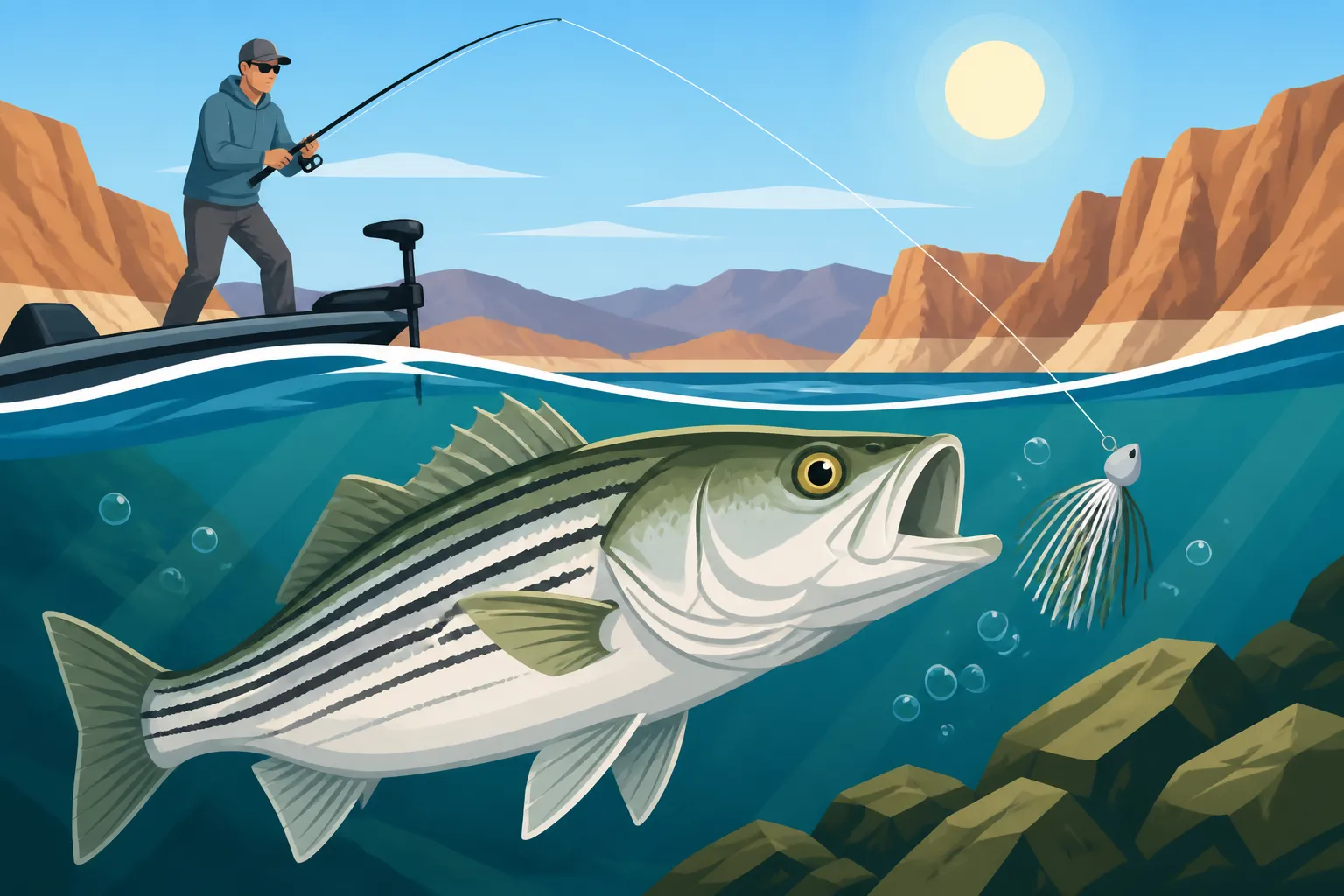
How to jig for striped bass at Lake Mead
There's nothing quite like the rush of a big striped bass hammering your lure, especially on a vast, iconic body of water like Lake Mead. But let's be honest, trying to find and consistently catch these powerful fish, particularly with a specific technique like jigging, can feel incredibly frustrating. You're out there, the sun's beating down, your sonar might be showing something, but those stripers just aren't biting. It's enough to make you wonder if you're doing something wrong. This comprehensive guide is here to cut through that frustration, breaking down the art and science of jigging for striped bass on Lake Mead so you can turn those elusive marks on your screen into thrilling catches.
Understanding Lake Mead Striped Bass Behavior
Before you even think about dropping a jig, you've got to understand the fish you're targeting. Striped bass are creatures of habit, but those habits are heavily influenced by environmental factors unique to Lake Mead. Knowing their routines is half the battle.
Seasonal Movements and Depths
Lake Mead's striped bass don't just hang out in one spot all year; they're constantly on the move, chasing bait and seeking comfortable water temperatures. This means your jigging strategy needs to adapt with the seasons.
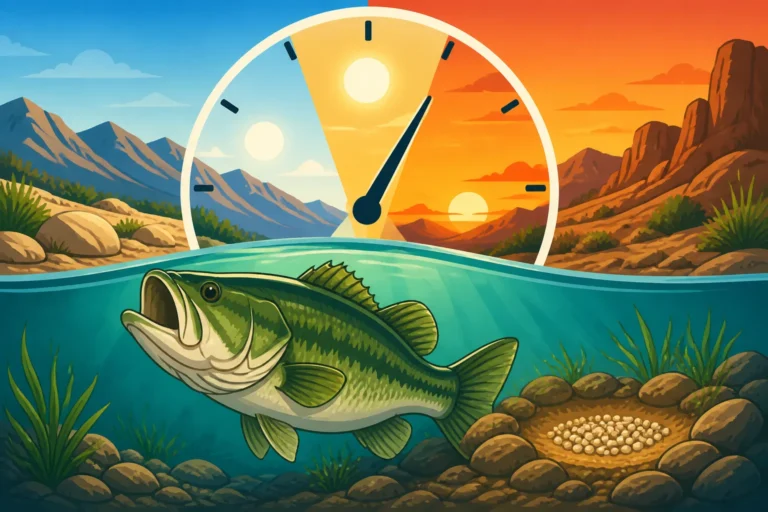
During the warmer months, especially from late spring through summer, Lake Mead stripers often retreat to deeper, cooler waters. You'll find them congregating in large schools, often suspended over old river channels, submerged canyons, or deep points. We're talking depths of 50 to 150 feet, sometimes even deeper. This is prime time for vertical jigging directly over these schools, which you'll need a good fish finder to locate. As the water cools in the fall, stripers become more active and start to move shallower, chasing baitfish closer to the surface and along shorelines, especially in the mornings and evenings. They're trying to fatten up for winter, making them aggressive feeders. Winter can see them move back into deeper pockets, but they might also be found in surprisingly shallow areas if bait is plentiful and the water isn't too cold. Spring is a transition period, with stripers moving from deep wintering grounds to shallower spawning areas, offering excellent opportunities for both deep and shallow jigging.
Preferred Forage and Feeding Habits
What stripers eat dictates where they go and how they feed. In Lake Mead, the primary forage for striped bass is the threadfin shad. These small, silvery baitfish are abundant, and where you find the shad, you'll almost certainly find the stripers.
Striped bass are opportunistic predators, but they primarily feed by ambushing schools of baitfish or herding them against structure or the surface. They often use their sheer numbers to overwhelm their prey. When you see those tell-tale "boils" on the surface, where stripers are busting bait, it's an exciting sight and a clear indicator of aggressive feeding. However, most of their feeding happens below the surface. They’ll actively hunt, using their lateral lines to detect vibrations from struggling shad. Your jig needs to mimic this struggling baitfish. Whether it's a lead head jig with a soft plastic grub or a flutter spoon, the action should imitate a panicked or injured shad trying to escape. Understanding this predatory behavior helps you not only choose the right lure but also imparts the correct retrieve action.
Essential Gear for Jigging Striped Bass at Lake Mead
Having the right tools for the job can make all the difference between a frustrating day and a fantastic one. When it comes to jigging for Lake Mead stripers, your rod, reel, line, and especially your lures need to be up to the task.
Rod, Reel, and Line Selection
Jigging for stripers requires a setup that can handle heavy lures, detect subtle bites, and stand up to the powerful runs of these fish.
For your rod, a medium-heavy to heavy power rod with a fast action tip is usually ideal. The medium-heavy power gives you the backbone to cast heavier jigs and muscle bigger stripers, while the fast action tip provides the sensitivity needed to feel light bites and work your lure with precision. Look for rods in the 7 to 7.5-foot range for good casting distance and leverage. Brands like Ugly Stik offer durable, affordable options, while Daiwa and Penn provide more specialized rods. When choosing from the array of Best Fishing Rods for Nevada Lakes, prioritize those with strength and sensitivity.
As for reels, a robust spinning reel in the 3000 to 5000 size range is a popular choice for its versatility and ease of use, especially for beginners. If you prefer baitcasting, a low-profile baitcaster with a strong drag system is excellent for precise drops and heavier jigs. Ensure your reel has a smooth, reliable drag, as stripers are known for their strong initial runs.
Line choice is critical. Braided line is almost always preferred for jigging due to its zero-stretch properties, which provide maximum sensitivity to detect bites and better hook-setting power in deep water. A 20-30 pound test braided line is a good all-around choice. However, because stripers can be line-shy, especially in Lake Mead's often clear waters, you'll want to add a fluorocarbon leader. A 15-20 pound test fluorocarbon leader, about 3-6 feet long, will give you that stealth advantage while still being strong enough to handle a hard-fighting striper. This combination makes for an excellent setup, as outlined in guides like Best Line for Desert Reservoir Fishing.
Lure Choices and Weights
The world of jigs is vast, but for Lake Mead stripers, a few key types consistently prove effective.
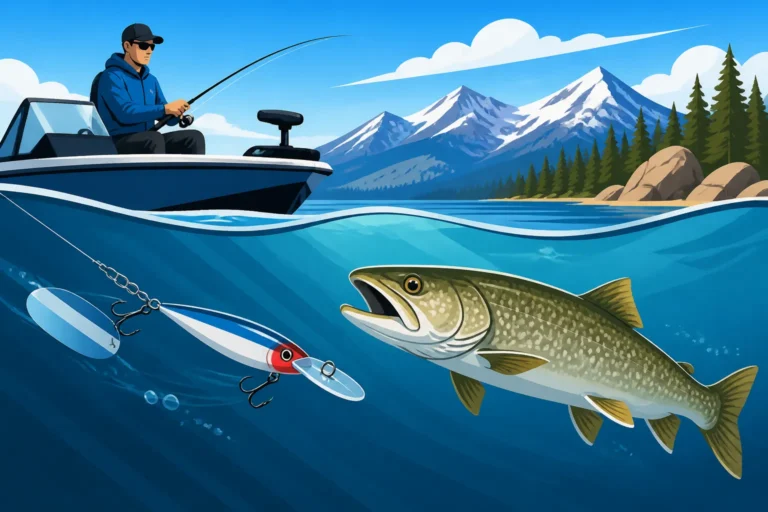
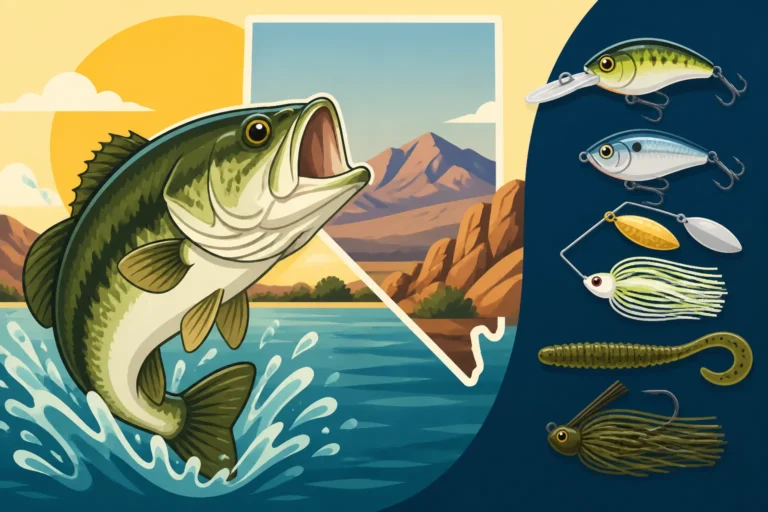
Lead Head Jigs with Soft Plastics: These are arguably the most versatile. Pair a 3/4 oz to 2 oz lead head jig (depending on depth and current) with a 3-6 inch soft plastic swimbait, grub, or fluke-style bait. Colors that mimic threadfin shad are paramount: white, pearl, chartreuse, silver, and various shades of blue/grey. The action of the soft plastic on the jig head is what entices the strike. Popular choices include Berkley Gulp! Swimbaits or Yamamoto Senkos rigged on a jig head. You can find a huge selection of these on Amazon.
Flutter Spoons: These metal jigs, often weighing between 1/2 oz and 2 oz, have a distinct fluttering action on the fall that perfectly imitates an injured baitfish. They're particularly effective when stripers are schooling deep. Chrome, silver, or gold are classic colors, but those with blue or chartreuse accents can also be deadly. Brands like Kastmaster or Hopkins Shorty are staples in many striper anglers' tackle boxes.
Blade Baits: While not strictly a jig, blade baits like the Silver Buddy or Vibrato can be incredibly effective when stripers are feeding aggressively. Their intense vibration on the retrieve can trigger reaction strikes. Again, silver or shad patterns are usually best.
Always carry a variety of weights to match the depth you're fishing and the speed of your drift or troll. Having a good selection, as discussed in Best Lures for Striped Bass, will give you options for different conditions.
Electronics and Accessories
Modern fishing electronics are practically a necessity for successful jigging on Lake Mead, especially when targeting deep-dwelling stripers.
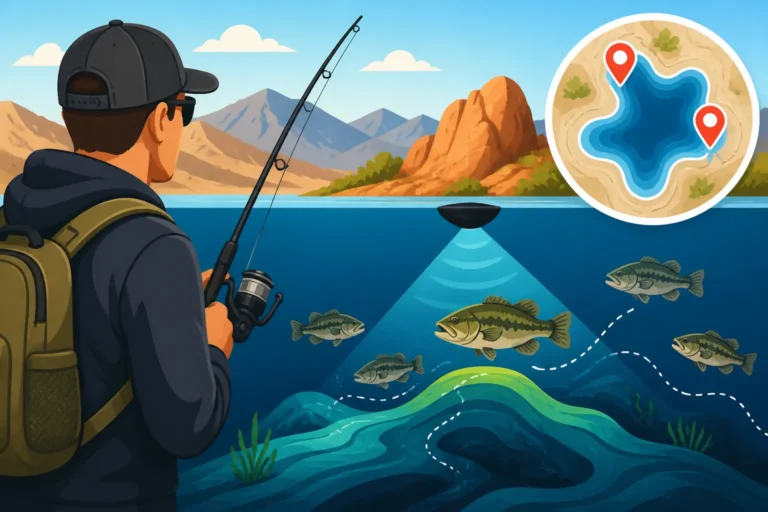
A quality fish finder is your most important tool. Look for units with clear sonar displays, strong transducer power, and preferably side-imaging or down-imaging capabilities. These features allow you to not only see individual fish or schools beneath your boat but also identify submerged structure and contour changes where stripers might be hiding. Being able to mark bait balls and individual stripers on your screen allows you to drop your jig directly into the strike zone, saving you countless blind casts. Units from brands like Humminbird or Lowrance are incredibly popular and effective. Learn more about choosing the right one in Best Fish Finder for Reservoir Fishing.
Beyond the fish finder, other accessories enhance your jigging experience. A GPS-enabled unit helps you mark productive spots and navigate Lake Mead's vast expanses. A good net with a deep, rubberized mesh is essential for safely landing large stripers without damaging their slime coat or getting your hooks tangled. Long-nose pliers or de-hookers are also crucial for quick, safe hook removal, especially if you're practicing catch-and-release. Don't forget a sturdy cooler to keep your catches fresh, especially on a hot desert lake like Mead.
Mastering Jigging Techniques for Stripers
Now that you're geared up, let's talk about how to actually work those jigs to entice a strike. There are a few core techniques that prove consistently successful for Lake Mead stripers.
Vertical Jigging in Deep Water
Vertical jigging is your go-to method when you've located schools of stripers suspended in deeper water. This is where your fish finder truly shines.
First, you need to precisely position your boat directly over the marked fish. This might involve using your trolling motor or making several drifts. Once you're in position, drop your jig straight down. Pay close attention to your depth finder and your line. You want your jig to reach the depth where the fish are holding, or slightly above them, as stripers often feed upwards.
Once at depth, the retrieve is key. There are several effective actions:
- Rip-Jigging: This is an aggressive technique. With your rod tip pointed at the water, reel in any slack, then sharply rip the rod upwards about 2-3 feet. Immediately let the jig fall back on a semi-slack line, allowing it to flutter enticingly. Watch for bites on the fall, as stripers often hit a jig as it drops. Repeat this rhythm.
- Lift-Drop: A slightly less aggressive approach. Lift the rod smoothly, then drop it, letting the jig hit bottom or the target depth. Then, lift again. This creates a more controlled flutter.
- Slow Flutter: Sometimes, when stripers are less aggressive, a slow, subtle flutter is best. Gently twitch your rod tip, just enough to make the jig wobble or subtly fall. This mimics a dying baitfish.
Experiment with the speed and intensity of your jigging until you find what the fish prefer on that particular day. Always be ready for a strike, as they can be subtle or absolutely bone-jarring.
Casting and Jigging Shorelines and Points
While vertical jigging dominates deep water, casting and jigging are highly effective when stripers move shallower, particularly during spring and fall, or early mornings and late evenings. This technique is often used when fishing from a boat near shore, but it's also a fantastic way to fish from land, as discussed in Bank Fishing Techniques for Desert Lakes or even when you're learning How to fish for striped bass from shore.
Target areas include rocky points, submerged humps, weed lines, and transition areas where shallow water drops off into deeper water. Cast your jig out, letting it sink to the desired depth. This might be just a few feet below the surface, or all the way to the bottom if you suspect fish are holding deeper near structure.
Once your jig reaches the target depth, begin your retrieve.
- Hop and Drag: Let the jig hit bottom, then sharply hop it off the bottom with your rod tip, reeling in slack as you do. Let it fall back. This creates puffs of sediment, attracting attention.
- Sweep and Pause: Make a long, sweeping motion with your rod, then reel down to take up slack and pause. This imitates a baitfish swimming erratically.
- Steady Retrieve with Twitches: A consistent, medium-speed retrieve with occasional rod tip twitches can also be effective, especially with soft plastic swimbaits that have a built-in tail action.
The key here is to keep your jig in the strike zone for as long as possible and to impart action that makes it look alive and vulnerable.
Reading Your Fish Finder for Success
Your fish finder isn't just a fancy depth gauge; it's your window into the underwater world of Lake Mead, especially for jigging. Learning to interpret its display is paramount for success.
When you see distinct arches or clusters of marks, that usually indicates individual fish or schools of fish. The size of the arch often corresponds to the size of the fish, and denser clusters mean bigger schools. Often, you'll also see "bait balls" – dense clouds of smaller marks. Stripers are typically found just below, around, or even busting through these bait balls.
Your fish finder also shows you the bottom contour. Look for sudden drop-offs, humps, ledges, or submerged brush and rock piles. These are classic ambush points for stripers. If you see fish holding near these structures, that's a good place to start jigging.
Don't just look for fish; actively use your fish finder to track your jig. Many modern units are sensitive enough to show your lure descending and its action. This allows you to verify that your jig is reaching the correct depth and behaving as you intend. If stripers are at 70 feet, and your jig is only getting to 50, you know you need a heavier jig or a faster sink rate. If fish are suspended at 30 feet, don't waste time jigging the bottom. Adjust your presentation instantly based on what your electronics are telling you. This real-time feedback is invaluable for refining your Jigging Techniques for Lake Mead Stripers.
Advanced Tips and Troubleshooting for Lake Mead Stripers
Even with the right gear and techniques, stripers can be finicky. Sometimes, you need to go a step further or adapt to challenging conditions.
The Importance of Matching the Hatch
"Matching the hatch" isn't just for fly fishing; it's a crucial concept for all types of fishing, especially for Lake Mead stripers. It means selecting a lure that closely resembles the size, shape, and color of the baitfish currently being eaten by the stripers.
Take a moment to observe. Are you seeing small, silvery shad jumping at the surface? Or are there larger, darker baitfish? If you catch a striper, carefully check its stomach contents (if you plan to keep it) to see what it's been eating. Adjust your jig accordingly. If the shad are small, downsize your soft plastic. If they're a vibrant green, try a chartreuse jig head. The more natural your presentation appears, the more likely you are to get a strike. This often involves having a good selection of various sizes and colors, which can be easily sourced from retailers like Amazon.
Dealing with Wind and Current
Lake Mead can get windy, and while there isn't a strong river current like some other fisheries, wind can create surface currents and make boat control difficult. These factors directly impact your jigging success.
When the wind picks up, your boat will drift faster, making it harder to stay over schools of fish for vertical jigging. You'll also need heavier jigs to maintain contact with the bottom or the desired depth. Consider using a drift sock (also known as a sea anchor) to slow your boat's drift. This allows your jig to fall more vertically and gives you more time to work the lure in the strike zone. If you're casting from shore, strong winds can make casting accurately challenging and blow your line around, affecting your jig's action. Try casting downwind or across the wind, and use heavier jigs to cut through the gusts. Always be mindful of your line management to avoid slack that could lead to missed bites.
When Stripers Are Finicky
We've all been there: you see fish on the screen, you know they're stripers, but they just won't bite. This is when you need to troubleshoot and try different approaches.
- Change Your Retrieve: If aggressive rip-jigging isn't working, try slowing down to a more subtle lift-drop or a gentle flutter. Sometimes, a tiny twitch is all it takes. Conversely, if you're fishing slowly, try speeding it up to trigger a reaction strike.
- Vary Lure Size and Color: If your standard white swimbait isn't producing, switch to a smaller, more natural-looking shad color. Or, if the water is murky, try a brighter chartreuse or a lure with more flash. A different profile can make all the difference. Referencing a guide on Best Lures for Striped Bass can help you expand your tackle box for these situations.
- Change Your Jig: Sometimes, a subtle change from a soft plastic to a flutter spoon, or vice versa, is all it takes. Each lure has a different action and vibration.
- Move: If you've tried everything and the fish still aren't biting, it's often best to move to another location. Stripers are nomadic, and they might be more active elsewhere, or a fresh school might be more willing to bite. Often, the best solution to finicky fish is finding active fish. For even more detailed jigging strategies, check out Jigging Techniques for Lake Mead Stripers.
Safety and Regulations on Lake Mead
Enjoying a day of jigging on Lake Mead also means prioritizing safety and adhering to all local fishing regulations. It's not just about compliance; it's about responsible angling and personal well-being.
Boating Safety Essentials
Lake Mead is a massive body of water, and conditions can change rapidly. What starts as a calm morning can quickly turn into a windy, choppy afternoon, especially if you're in an open boat.
Always ensure you have all required safety equipment on board, including Coast Guard-approved Personal Flotation Devices (PFDs) for every person, a fire extinguisher, signaling devices (like a whistle or horn), and navigation lights if you'll be out before sunrise or after sunset. It's a good practice to wear your PFD at all times, especially if you're fishing alone or in rough water. Make sure your boat's engine is in good working order, and always let someone know your float plan – where you're going and when you expect to return. Being prepared is half the battle when it comes to boating safety on big water like Lake Mead. A detailed guide like Essential Safety Gear for Boating on Lake Mead can provide a complete checklist. Additionally, understanding the Nevada Boater Education Card Requirement is crucial for many operators.
Striped Bass Regulations
The Nevada Department of Wildlife (NDOW) sets the rules for fishing in Lake Mead and other Nevada waters. These regulations are in place to ensure sustainable fish populations for everyone to enjoy.
Before you head out, always double-check the current NDOW Fishing Regulations. These can change annually. For striped bass, there are typically daily bag limits and possession limits. For example, while striped bass often have a generous limit due to their invasive nature in Lake Mead, it's vital to know the exact numbers. Ensure you understand the difference between a daily limit (how many you can catch and keep in one day) and a possession limit (how many you can have on your person or in your vehicle at any given time). Familiarize yourself with the general rules laid out in the Nevada Fishing Regulations Explained and specific details in Nevada Statewide Bag Limits Explained. Ignorance of the law is not an excuse, and violating regulations can lead to hefty fines and loss of fishing privileges. Respect the resource and fish responsibly!
Disclaimer
Please remember that fishing conditions, regulations, and fish behavior can change. Always consult the latest Nevada Department of Wildlife (NDOW) regulations before your trip. Fishing inherently carries risks; prioritize safety and be prepared for changing weather conditions on Lake Mead. This guide provides general information and recommendations, but individual success may vary.