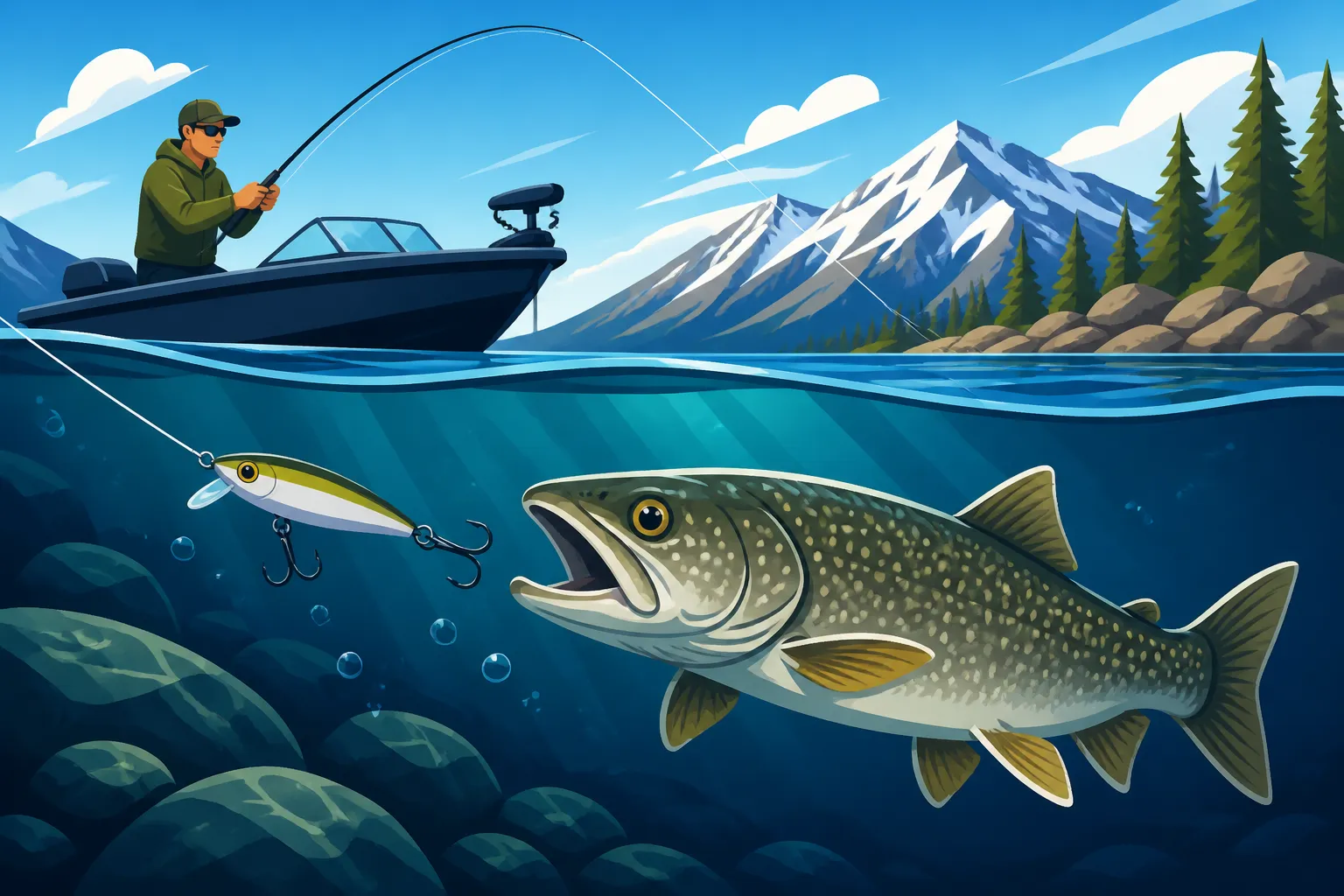
How to troll for Mackinaw trout at Lake Tahoe
Lake Tahoe is undeniably one of the most stunning bodies of water on Earth, but its incredible depth and vastness can make targeting its elusive Mackinaw trout feel like searching for a needle in a very cold, very blue haystack. Many anglers get frustrated trying to crack the code of these deep-dwelling giants, unsure where to start or what gear to even consider. This comprehensive guide is here to demystify the art of trolling for Mackinaw on Lake Tahoe, offering practical, real-world advice to help you hook into that trophy fish.
Understanding Lake Tahoe's Mackinaw
Before you even think about dropping a line, it's crucial to understand the fish you're after. Mackinaw, also known as lake trout, are apex predators in Lake Tahoe, perfectly adapted to its cold, clear, and deep waters. They're not like your typical stocked rainbow trout; these fish are survivors, growing to impressive sizes by hunting the depths.
Mackinaw Behavior and Habitat in Lake Tahoe
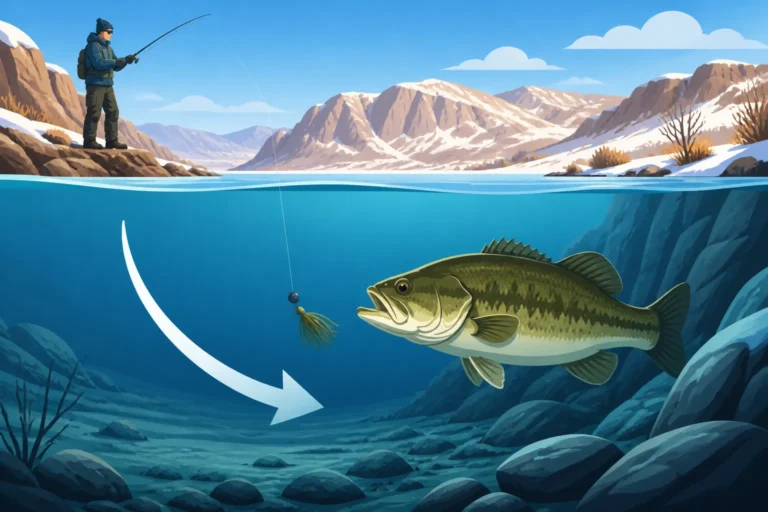
Mackinaw in Lake Tahoe thrive in specific conditions, and understanding these will be your first step to success. Their preferred habitat is typically deep, cold water, often ranging from 80 to over 300 feet. The thermocline, that invisible layer where water temperature changes rapidly, plays a significant role, as it often concentrates their primary food sources. During the warmer months, as surface waters heat up, Mackinaw retreat to these cooler, oxygen-rich depths where they feel most comfortable.
Their diet is varied but heavily influenced by what's available in the lake's ecosystem. Primarily, they feast on Kokanee salmon, the smaller, landlocked sockeye salmon that are abundant baitfish in Lake Tahoe. They also consume Mysis shrimp, a tiny, translucent freshwater shrimp that thrives in the deepest parts of the lake, providing a crucial food source, especially for smaller Mackinaw. Whitefish and sculpins also make up a portion of their diet. Knowing what they eat helps immensely in choosing the right lures and presentations to mimic their prey.
These are long-lived fish, with some individuals reaching impressive ages and sizes. It's not uncommon to hear of Mackinaw over 20 pounds, and occasionally, true giants pushing 30 or even 40 pounds are pulled from the depths. This means they are seasoned predators, often requiring a subtle approach and persistent effort to entice a strike. Their size and longevity make them a true trophy species for many anglers.
The Trolling Advantage for Mackinaw
So, why is trolling the undisputed champion technique for Mackinaw on Lake Tahoe? Simply put, it's about efficiency and precision in a vast environment. Lake Tahoe is enormous and incredibly deep, meaning still-fishing a single spot severely limits your chances of encountering one of these wandering predators. Trolling allows you to cover vast amounts of water, actively searching for fish and bait schools rather than waiting for them to come to you.
Furthermore, trolling provides unparalleled depth control, which is absolutely critical when targeting Mackinaw. Unlike shallower species, these fish don't typically suspend just a few feet under the surface. They could be at 100 feet, 200 feet, or even deeper, and presenting your lure at their exact feeding depth is paramount. Tools like downriggers, which we'll discuss shortly, allow you to achieve this pinpoint accuracy, ensuring your bait is precisely where the fish are holding.
By consistently moving and presenting your lure at a controlled depth and speed, you're mimicking a natural swimming baitfish or injured prey, which can trigger a predatory instinct in a Mackinaw. The rhythmic action of the lure in the water, combined with the subtle vibrations, acts as a beacon in the deep, drawing fish in from a distance. It's an active, dynamic approach that gives you the best odds of connecting with these magnificent creatures.
Essential Gear for Mackinaw Trolling
Getting the right gear for Mackinaw trolling isn't just about convenience; it's about necessity. These fish are deep, strong, and the environment can be unforgiving. Skimping on tackle will only lead to frustration and lost fish.
Rods, Reels, and Line Selection
Your rod and reel setup forms the backbone of your trolling arsenal. For Mackinaw, you're not looking for ultralight finesse gear; you need robust equipment designed to handle heavy weights, long fights, and the stresses of deep-water trolling.
When it comes to rods, think medium-heavy to heavy power with a moderate to fast action. A common length ranges from 7 to 9 feet. The longer rods provide a bit more cushion and leverage when fighting a large fish on a long line, especially with the drag from downrigger weights. Look for rods with a strong backbone to absorb powerful runs and lift heavy weights. Brands like Ugly Stik, Shimano, or Daiwa offer reliable options that can withstand the abuse of trolling. If you're looking for specialized options, check out guides like Best Trolling Rods for Lake Trout for more in-depth recommendations.
For reels, levelwind baitcasting reels are the standard for trolling. You need a reel with excellent line capacity, as you'll be deploying hundreds of feet of line, especially if you're using lead core or copper line in addition to your downrigger. A good drag system is non-negotiable; it needs to be smooth and consistent to prevent break-offs when a big Mackinaw decides to make a run. Many anglers opt for reels with a line counter, which is incredibly helpful for replicating successful depths and patterns. You can find a wide array of reliable trolling reels on platforms like Amazon.
Line selection is critical. For your main line, many experienced anglers prefer braided line (like PowerPro or Berkley X9) in the 30-50 lb test range, especially when fishing with downriggers. Braid offers minimal stretch, which provides superior sensitivity for detecting subtle bites at extreme depths and a solid hookset. It also has a smaller diameter for its breaking strength, allowing for more line on your reel. You'll want to connect your main braid to a strong, invisible fluorocarbon leader via a barrel swivel or a strong knot like a FG knot. A 15-25 lb test fluorocarbon leader, typically 6-10 feet long, is excellent for its invisibility underwater and abrasion resistance against rocks or the fish's teeth.
Downriggers and Planer Boards
These are the tools that allow you to precisely control the depth of your lures, making them indispensable for Mackinaw trolling.
Downriggers are the absolute cornerstone of deep-water Mackinaw fishing. Without them, consistently presenting your lure at 100+ feet would be incredibly challenging. A downrigger uses a heavy cannonball weight (typically 8-12 lbs) to carry your fishing line down to a predetermined depth. Your fishing line is clipped into a release mechanism on the downrigger wire, and when a fish strikes, the line pops free, allowing you to fight the fish directly without the weight. Electric downriggers (like those from Cannon or Scotty) are a huge advantage, allowing for effortless raising and lowering of weights, though manual models are perfectly functional for those on a tighter budget. For serious Mackinaw hunters, having at least two downriggers to run a spread of lines at different depths is ideal.
While planer boards are fantastic for spreading out lines and covering more water horizontally, especially for shallower species like Kokanee or rainbows, they are generally less critical for deep-dwelling Mackinaw. Their primary function is to take lures away from the boat's prop wash and spread them out on the surface or just below. For the extreme depths where Mackinaw often hold, downriggers are your primary tool. You might use planer boards if you're targeting Mackinaw that are occasionally shallower, perhaps in the fall or early spring, or if you're multi-species fishing.
Lures and Baits of Choice
Choosing the right presentation is key to enticing a Mackinaw. Their diet gives us big clues, and successful lures often mimic their natural prey.
Popular Lures:
- Dodgers and Flashers with a Trailing Lure: This is a classic and highly effective setup. Dodgers and flashers are not lures themselves but attractors. They create vibration and flash that mimic a school of baitfish, drawing Mackinaw in. Behind the attractor, you'll attach a short leader (18-36 inches) to a trailing lure.
- Hoochies: These soft plastic squid imitations are deadly, especially in clear water. Pair them with a small piece of bait (like a piece of anchovy) for added scent.
- Minnow Imitations: Hard-bodied or soft plastic minnow imitations like an Apex, Rapala, or similar stickbaits work exceptionally well. Brands like Paul's Custom Lures or Lucky Craft make popular choices for Tahoe.
- Spoons: Trolling spoons, particularly those designed for deep water, are very effective. Classic options include the Crippled Herring, Daredevil, or specialized Mackinaw spoons from brands like Lyman. Silver, blue, green, and chartreuse are perennial favorites, but don't shy away from experimenting with bolder patterns, especially on Amazon, where you can find a wide variety.
- Color Selection: The crystal-clear waters of Lake Tahoe often favor natural colors like silver, white, blue, and green, especially on sunny days. On cloudy days or in deeper, darker water, brighter colors like chartreuse, orange, or even glow-in-the-dark options can be incredibly effective. Always consider water clarity and light penetration when making your choice.
Live/Cut Bait: Sometimes, nothing beats the real thing. Trolling with live minnows (where legal) or fresh cut bait is a highly productive method for Mackinaw.
- Live Minnows: If permitted (always check current regulations as bait rules can change), a lively minnow slow-trolled on a weighted rig can be irresistible.
- Cut Bait: Fillets of Kokanee salmon, anchovies, or sardines are excellent scent producers. Rig them on a special bait harness that imparts a spinning or wounded action, making them appear lifelike. The scent trail they leave behind is a huge draw for Mackinaw. Ensure your bait is fresh; stale bait rarely gets results.
Mastering Trolling Techniques at Lake Tahoe
Trolling for Mackinaw isn't just about dragging a lure behind a boat; it's an art that combines technology, observation, and a bit of intuition.
Reading the Water and Sonar
In a lake as vast and deep as Tahoe, your fish finder (sonar) becomes your best friend. Learning to interpret what it's telling you is paramount to consistent success.
A high-quality fish finder isn't just a luxury; it's an essential tool. It allows you to peer into the depths and identify critical features. You'll be looking for several key things:
- Bait Balls: Mackinaw are predators, and they follow their food. Large concentrations of Kokanee salmon or Mysis shrimp will show up as dense clouds on your sonar. If you find the bait, you're likely to find the Mackinaw.
- Thermoclines: This layer of abrupt temperature change often concentrates baitfish and, consequently, the Mackinaw. Your fish finder can help you identify this thermal layer.
- Structure: Mackinaw love structure, just like bass. Look for underwater points, ledges, rock piles, humps, and drop-offs. These areas provide ambush points and cover for both the predators and their prey. Even in 200 feet of water, a subtle change in bottom contour can hold fish.
- Fish Arches: Learn to distinguish between large, distinct fish arches (potential Mackinaw) and smaller baitfish schools. Sometimes, Mackinaw will appear as faint marks near the bottom or suspended below bait.
Understanding How deep to fish for Mackinaw trout at Lake Tahoe will fluctuate throughout the year and even throughout the day. Your sonar will help you track these changes in real-time. For instance, Mackinaw might be deeper during bright midday sun and rise slightly in low light conditions or during turnover periods.
Depth Control and Speed
These two factors are arguably the most critical aspects of successful Mackinaw trolling. Get them wrong, and you'll be dragging your lures through empty water.
Targeting Depths: As mentioned, Mackinaw are typically found in the 80-250 foot range, but they can be shallower (especially in spring or fall) or much deeper in the peak of summer. Your sonar will guide you to where the fish are currently holding. Once you've identified a depth range with fish or bait, it's time to set your downriggers.
- Downrigger Adjustment: With your downriggers, you can send your cannonball weights to precise depths. Don't be afraid to stagger your depths if running multiple lines (e.g., one at 100 ft, another at 150 ft) to find the fish's preferred feeding zone.
- Leader Length: The length of your leader from the downrigger release clip to your lure is important. A shorter leader (5-10 ft) keeps your lure closer to the downrigger ball, while a longer leader (15-30 ft) allows the lure to "swim" more freely and avoid the immediate influence of the heavy ball. Experimentation is key here.
Trolling Speed: Mackinaw are typically slow-moving predators, so a slow and steady troll is usually best.
- Typical Speed: Most successful Mackinaw trolling happens between 1.5 to 2.5 miles per hour.
- GPS for Precision: Use your boat's GPS to maintain a consistent speed. Even a slight variation can drastically change the action of your lure.
- Varying Speed and Direction: While consistency is good, don't be afraid to introduce slight variations. Making wide turns, briefly speeding up, or slowing down can cause your lure to change its action, sometimes triggering a reaction strike from a hesitant Mackinaw. The "outside" lure on a turn will slow down, and the "inside" lure will speed up, giving you two different presentations simultaneously.
Setting Up Your Spread
A well-executed spread of lines maximizes your chances of finding fish and determining what they're biting.
When using multiple downriggers, the goal is to cover different depths and present various lure types or colors simultaneously. If you have two downriggers, set one deeper and one shallower within your target range. For example, if you see fish between 100-150 feet, you might set one at 110 feet and the other at 140 feet.
Consider the best boat size for Lake Tahoe fishing when planning your spread. Larger boats can handle more downriggers and a wider spread, while smaller boats might be limited to one or two. Ensure your lines are well-spaced to prevent tangles, especially during turns or when fighting a fish. Some anglers use "stacker" clips on their downrigger lines to run two lures off a single downrigger cable, further increasing their presentation options.
Advanced Tips and Lake Tahoe Specifics
Lake Tahoe presents unique challenges and opportunities. Incorporating these advanced tips and local knowledge can significantly boost your success.
Seasonal Considerations
The behavior of Mackinaw trout, and therefore your trolling strategy, can change dramatically with the seasons on Lake Tahoe.
- Summer: This is when Mackinaw go deep. The surface waters warm considerably, pushing the fish into the cooler, oxygenated depths, often 100-300 feet. Early mornings and late evenings will typically be your best bet, as the fish might move slightly shallower or become more active. Look for them around significant underwater structures.
- Winter/Spring/Fall: These seasons can offer fantastic fishing, and fish may be found shallower than in summer. During fall and spring turnover, or when baitfish move up in the water column, Mackinaw can follow. Ice fishing is also popular in some Nevada lakes during winter, but Lake Tahoe rarely freezes sufficiently for safe ice fishing. Always refer to comprehensive guides like Nevada Fishing Seasons by Month for a broader understanding of fish behavior throughout the year.
The key is to use your sonar to identify where the baitfish are located, as the Mackinaw will invariably be close by. Don't assume a static depth; constantly adjust based on what your electronics are telling you.
Best Locations for Trolling Mackinaw
While Mackinaw can be found throughout Lake Tahoe, certain areas consistently produce more fish due to favorable habitat and baitfish concentrations.
On the Nevada side, areas like Zephyr Cove, Logan Shoals, and the waters off Cave Rock are historically productive. These locations feature significant drop-offs and underwater structure that attract bait and predatory Mackinaw. On the California side, the shelves around Tahoe City, Dollar Point, and the deeper waters near Camp Richardson are well-known hotspots.
When exploring new areas, always start by looking for those key structural features and baitfish on your sonar. Combine this with local knowledge (talk to tackle shop owners!) and don't be afraid to motor around until you see promising signs. More detailed information can be found in resources dedicated to Lake Tahoe Deep Water Mackinaw Spots.
Safety and Regulations
Fishing on a large, deep lake like Tahoe requires a keen awareness of both regulations and safety protocols.
First and foremost, always ensure you have the proper fishing license. Lake Tahoe straddles both Nevada and California, so depending on where you launch and fish, you might need a license from one or both states, or an interstate license if available. A comprehensive guide like Lake Tahoe Nevada Fishing License Rules can help you navigate these requirements. Always check the latest regulations booklet from the Nevada Department of Wildlife (NDOW) or California Department of Fish and Wildlife (CDFW) for specific rules regarding bag limits, size limits, and any special tackle restrictions. For example, the Daily limit for Mackinaw trout at Lake Tahoe and the Minimum size for keeping a lake trout at Lake Tahoe are crucial details you must know before you go.
Safety on Lake Tahoe cannot be overstated. The lake can go from calm to dangerously rough in a matter of minutes, even on what starts as a sunny day. Always check the marine weather forecast before heading out.
- Life Jackets: Ensure everyone on board has a properly fitting life jacket, and children are wearing theirs at all times.
- Cold Water: Lake Tahoe's water is always cold, even in summer. Hypothermia is a serious risk if you end up in the water. Dress in layers and have spare dry clothes.
- VHF Radio: Cell service can be spotty on the lake, so a VHF marine radio is a critical piece of safety equipment for communication.
- Emergency Kit: Carry a well-stocked emergency kit including flares, a first-aid kit, extra water, and a charged cell phone in a waterproof bag. Consider reading resources like Essential Safety Gear for Boating on Lake Mead for general boat safety tips applicable to large reservoirs.
- Barbless Hooks: While not always mandatory for Mackinaw, using barbless hooks or crushing your barbs makes for easier and less harmful release, which is good practice, especially for fish you don't intend to keep.
By combining the right gear, smart techniques, and a healthy respect for Lake Tahoe's unique environment, you'll be well on your way to experiencing the thrill of catching one of its magnificent Mackinaw trout.
Lake Tahoe Mackinaw Trolling Lure Comparison
| Lure Type | Best Conditions | Target Depth (Feet) | Typical Trolling Speed (mph) | Notes |
|---|---|---|---|---|
| Dodger/Flasher + Hoochie | Clear water, sunny or cloudy | 100-250+ | 1.5 – 2.0 | Excellent scent dispersion with added bait, irresistible action. |
| Dodger/Flasher + Minnow Plug | All conditions, especially effective on active fish | 80-200 | 2.0 – 2.5 | Mimics baitfish perfectly, great vibration. |
| Heavy Trolling Spoons | Clear or stained water, deeper light penetration | 100-250+ | 1.8 – 2.3 | Classic wobbling action, various colors for different light. |
| Cut Bait Rigs | Slower troll, finicky fish, low light | 50-200 | 1.0 – 1.8 | Natural scent and action, highly effective. Requires fresh bait. |
Disclaimer
The information provided in this guide is for educational and informational purposes only. Fishing regulations, conditions, and fish behavior can change rapidly. Always consult the latest Nevada Department of Wildlife (NDOW) and California Department of Fish and Wildlife (CDFW) regulations before fishing. Exercise caution and prioritize safety when on the water.