Minimum size for keeping a lake trout at Lake Tahoe
There’s nothing quite like the thrill of hooking into a powerful Mackinaw (lake trout) on the vast, beautiful waters of Lake Tahoe. It’s a fight that tests your gear and your grit, often leaving you with sore arms and an unforgettable story. But after you've battled one of these incredible fish to the boat, a common question pops up that can quickly turn excitement into uncertainty: "Can I keep this one?" Confusing regulations around minimum sizes for lake trout on the Nevada side of Lake Tahoe can certainly dampen the mood, making anglers second-guess their catch. This comprehensive guide is here to cut through the confusion, clarify the exact size limits, explain why they exist, and equip you with the knowledge to confidently enjoy your Lake Tahoe fishing experience.
Understanding Lake Tahoe's Mackinaw Trout Regulations
Fishing for Mackinaw in Lake Tahoe is a storied tradition, but it’s one that comes with specific rules designed to protect this magnificent species and ensure healthy populations for years to come. These aren't arbitrary guidelines; they're carefully developed by wildlife agencies to manage one of Nevada's most prized fisheries. Knowing these regulations before you even cast a line is paramount.
The Specific Size Limit for Mackinaw
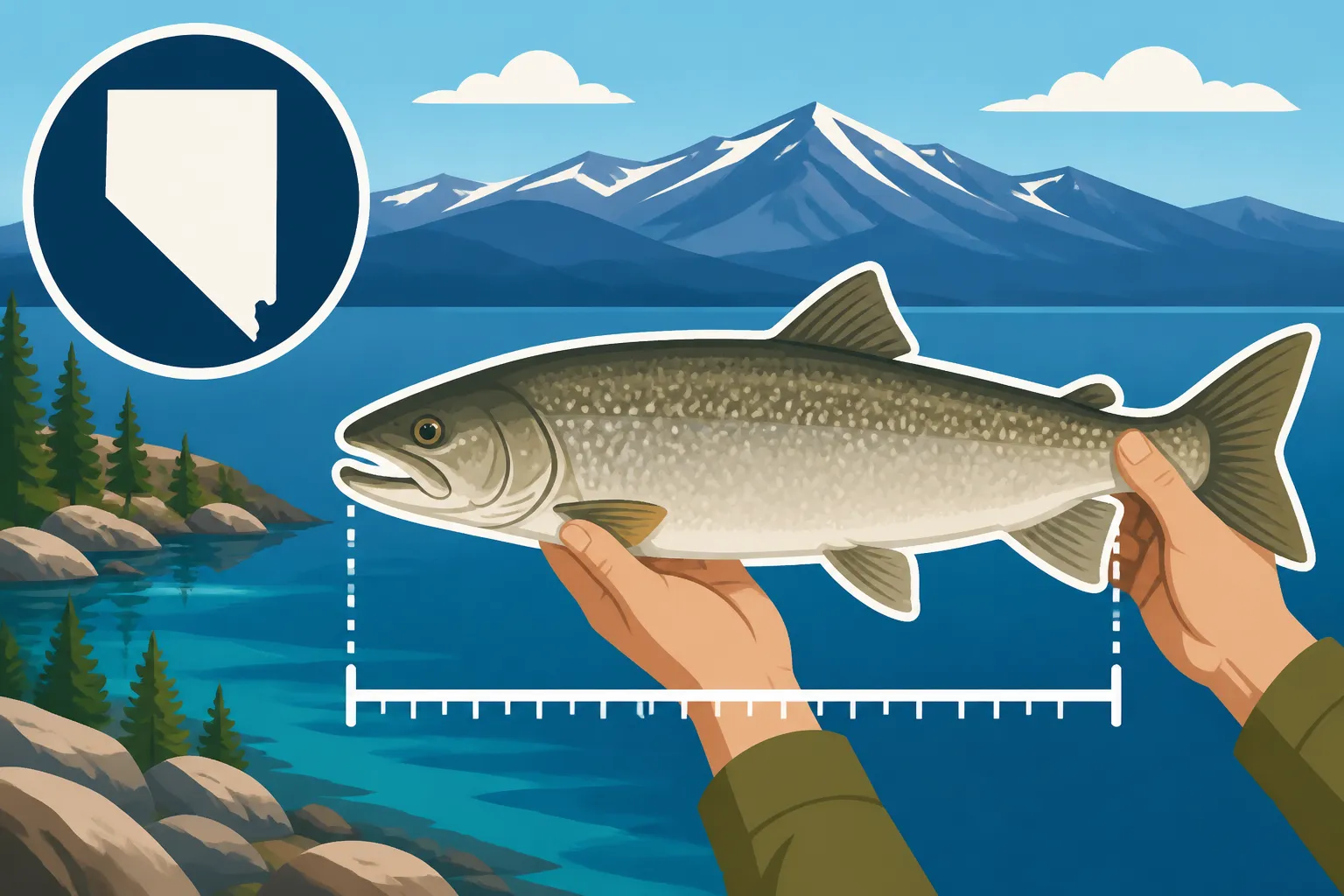
When it comes to keeping a Mackinaw from Lake Tahoe on the Nevada side, the rule is quite clear: any lake trout you intend to keep must be at least 17 inches in length. This isn't a suggestion; it's a hard and fast rule set by the Nevada Department of Wildlife (NDOW). If your Mackinaw measures even a fraction under 17 inches, it must be immediately and carefully released back into the water. The measurement is taken from the tip of the nose to the tip of the tail, with the tail compressed. This minimum size applies year-round, regardless of where on the Nevada side of Lake Tahoe you're fishing. It's a critical part of the overall Nevada Fishing Regulations Explained for this iconic body of water.
The Mackinaw, or lake trout, found in Lake Tahoe are a robust species known for their impressive size and longevity. They are a deep-water fish, preferring the cold, oxygen-rich depths of the lake, especially as surface waters warm in summer. Their slow growth rate and late maturity are key factors behind the strict size regulations.
Why These Limits Exist for Mackinaw
You might wonder why such a specific size limit of 17 inches is in place, especially when you consider that Mackinaw can grow to be much, much larger. The answer lies in the science of fisheries management and the unique biology of the Lake Tahoe Mackinaw population. These regulations are not just about letting little fish go; they are about protecting the future of the fishery.
First and foremost, the 17-inch minimum size is a conservation measure aimed at protecting the reproductive capacity of the Mackinaw population. Lake trout are a slow-growing species, and it takes them several years to reach sexual maturity and begin spawning. By setting a minimum size, NDOW ensures that most fish have at least one, if not several, opportunities to reproduce before they can be legally harvested. This helps maintain a healthy breeding stock, which is vital for the long-term sustainability of the fishery. Without such protection, overfishing of immature fish could quickly deplete the population.
Additionally, the regulation helps to balance angler opportunity with ecological health. Lake Tahoe is an oligotrophic lake, meaning it has low nutrient levels and a relatively slow growth rate for its fish populations. The Mackinaw are the apex predators in this ecosystem, and their population health is indicative of the lake's overall well-being. By managing the harvest, NDOW aims to maintain a stable population structure, ensuring that anglers can continue to enjoy catching these magnificent fish while also preserving the natural balance of Lake Tahoe's aquatic life. For a deeper dive into the species, check out our guide on Mackinaw Lake Trout at Lake Tahoe.
Daily and Possession Limits for Lake Trout
Beyond the minimum size, it's also crucial to understand the daily and possession limits for Mackinaw in Lake Tahoe. These limits dictate how many legal-sized fish you can keep. On the Nevada side of Lake Tahoe, anglers are permitted to keep a daily limit of two (2) Mackinaw trout. This means that in any 24-hour period, you can legally harvest no more than two lake trout, each measuring 17 inches or longer.
The possession limit typically mirrors the daily limit, meaning you can't have more than two Mackinaw in your possession at any given time, whether they are fresh or processed, unless they are at your permanent residence. This prevents anglers from accumulating multiple daily limits over several days, which could put undue pressure on the fish population. It's part of the broader Nevada Statewide Bag Limits Explained and is designed to distribute the harvest more evenly among anglers and protect the resource. Always ensure you consult the most current NDOW fishing regulations handbook, as rules can change.
How to Measure Your Catch Accurately
Knowing the minimum size limit is one thing, but accurately measuring your Mackinaw on a rocking boat or a slippery dock is another challenge entirely. Doing it right is not just about avoiding a citation; it's about treating the fish with respect and minimizing stress, especially if you have to release it.
Proper Measuring Techniques
The official method for measuring fish in Nevada, including Mackinaw, is by total length. This means you measure from the tip of the fish's snout (mouth closed) to the very end of its tail, with the tail fin compressed. Here’s a step-by-step approach to ensure you get an accurate measurement every time:
- Prepare Your Measuring Device: Before you even bring the fish in, have your measuring board or tape ready and wet. A dry measuring surface can remove a fish's protective slime layer, which is essential for its health.
- Handle with Care: Bring the fish into the boat or onto shore as quickly and gently as possible. If it's a deep-water Mackinaw, be aware of potential barotrauma (swim bladder issues from rapid ascent). Use wet hands or a wet, rubberized landing net to minimize damage to the fish's scales and slime coat. Avoid squeezing the fish, especially around its internal organs.
- Lay the Fish Flat: Place the fish flat on its side on your measuring device, ensuring its snout is against the zero mark.
- Compress the Tail: Gently squeeze the tail fin together so the two tips are touching and extend it as far back as possible.
- Read the Measurement: Take your reading at the longest point of the compressed tail.
- Quick Decision and Release: Once you have your measurement, make an immediate decision. If it's undersized, gently slide it back into the water headfirst. If you have a descending device for deep-water fish, use it. If it's a legal keeper and you intend to harvest it, then proceed with handling your catch responsibly. The faster you measure and release, the higher the chance of survival for the undersized fish.
Essential Gear for Measuring Fish
Having the right tools makes all the difference in accurately measuring your catch and ensuring a quick, low-stress experience for the fish. A flimsy tape measure just won't cut it on a bouncing boat with a feisty Mackinaw.
- Rigid Measuring Board: This is by far the best option. A sturdy, non-slip measuring board with clear markings, often made of plastic or aluminum, allows for precise measurements. Many come with a built-in "nose bumper" to ensure the snout is consistently at the zero mark. You can find excellent options for rigid measuring boards on Amazon. Look for ones that are at least 30-36 inches long to accommodate larger Mackinaw and other potential trophy catches.
- Fish-Friendly Landing Net: A rubberized, knotless landing net is essential. It protects the fish's delicate fins and slime coat, making it easier to handle and measure without causing injury.
- Forceps or Pliers: Have a good pair of long-nose pliers or hook removers handy to quickly and cleanly unhook the fish, especially if it's deeply hooked.
- Descending Device (for Deep Water): For deep-water species like Mackinaw caught from significant depths (e.g., 50 feet or more), a descending device can be a lifesaver for released fish. These devices help return the fish to the depth it was caught, allowing its swim bladder to recompress and reducing the effects of barotrauma. Several effective models are available on Amazon.
Dealing with Borderline Fish
It's common to catch a Mackinaw that's just shy of the 17-inch mark, or one that looks exactly 17 inches. When faced with a borderline fish, it's always best practice to err on the side of caution and release it. A few reasons why this is the smart move:
- Legal Protection: If a game warden measures your fish and finds it to be even slightly undersized, you could face a hefty fine and a citation. It’s simply not worth the risk. Their measurement is the final word.
- Fish Health: Releasing a fish that is exactly 17 inches, or a hair under, gives it more time to grow, mature, and contribute to the spawning population. Every extra inch on a fish is a big deal for its survival and reproductive potential.
- Conservation Ethic: As responsible anglers, we have a duty to conserve the resource. Releasing a borderline fish is a small act that contributes to the health of the overall fishery.
If you are genuinely unsure, grab a quick photo, then let it go. There will be other fish, and the peace of mind is worth it.
Navigating the Nevada-California Border Regulations
Lake Tahoe is unique in that it straddles two states: Nevada and California. This geographical reality creates a sometimes-confusing patchwork of regulations that anglers must understand to avoid legal trouble. Simply put, regulations on one side don't necessarily apply to the other.
The Importance of Your Fishing License
The most critical distinction for any angler on Lake Tahoe is the fishing license. A valid Nevada Fishing License Guide is required to fish anywhere on the Nevada side of Lake Tahoe. Conversely, if you plan to fish on the California side, you need a valid California fishing license. A Nevada fishing license does not grant you the right to fish in California waters, and vice-versa. This is a common misconception, especially for visitors who might assume Lake Tahoe is a "concurrent waters" area where either state's license is valid. It is not.
Before heading out, carefully check your planned fishing area and ensure you have the correct state license. For those wanting to learn more about Nevada's specific requirements, our guide on How to Get a Fishing License in Nevada provides all the details. For instance, the general rules for a Nevada Annual Fishing License Renewal will still apply to fishing Tahoe from the Nevada side.
Reciprocity and Concurrent Waters on Lake Tahoe
As mentioned, Lake Tahoe is not a concurrent water with reciprocal license agreements. This means there's no special provision that allows a Nevada license to be valid on the California side, or a California license on the Nevada side. This can be tricky, especially for boat anglers who might inadvertently drift between state lines while trolling. Many boats are equipped with GPS units that display state boundaries to help avoid unintentional violations.
The reason for this lack of reciprocity is complex, involving different state management philosophies, revenue collection, and specific regulations tailored to each state's fisheries. The minimum size for Mackinaw in California waters of Lake Tahoe is also 17 inches, but other regulations (like daily limits) might differ, making it essential to know which state's rules you are under. Always carry your current fishing license and be aware of your location on the lake.
Penalties for Violations
Ignoring or misunderstanding the regulations on Lake Tahoe can lead to serious consequences. Nevada game wardens rigorously patrol the lake, and they are well-versed in both state and federal laws. Penalties for fishing violations can range from significant fines to the confiscation of gear, loss of fishing privileges, and even criminal charges in severe cases.
Common violations include:
- Fishing without a valid license: This is one of the most frequent citations.
- Possessing undersized fish: Keeping a Mackinaw under 17 inches.
- Exceeding daily or possession limits: Having more than two legal Mackinaw.
- Fishing in a closed area or during a closed season: While Lake Tahoe is generally open year-round for Mackinaw, other species or specific areas might have seasonal closures.
It's your responsibility as an angler to know and abide by the law. Ignorance of the law is not a valid defense. Always keep a copy of the current Nevada fishing regulations booklet, available from NDOW offices or their website, with you while fishing.
Best Practices for Catching and Releasing Mackinaw
Even if you're targeting keepers, you're bound to catch undersized Mackinaw that need to be released. And even if a fish is legal, you might choose to release it if you're practicing catch-and-release. How you handle these fish is crucial for their survival, especially for deep-water species like Mackinaw.
Minimizing Harm to Undersized Fish
Mackinaw live in the deep, cold waters of Lake Tahoe. When they are brought rapidly to the surface from significant depths, they can suffer from barotrauma. This is similar to "the bends" in divers: the rapid change in pressure causes gases in their swim bladder to expand, which can damage internal organs and make it difficult for the fish to swim back down. Signs include a distended belly, bulging eyes, or the stomach protruding from the mouth.
To minimize harm and increase survival rates for released Mackinaw:
- Use appropriate tackle: Use heavier tackle that allows you to bring the fish in quickly, reducing the time it spends fighting and exhausting itself. This also minimizes the risk of deep hooking.
- Descend the fish: The best way to help a fish suffering from barotrauma is to return it to its original depth using a descending device. These devices clamp onto the fish's jaw or lip and are weighted to quickly lower the fish. Once at depth, a release mechanism allows the fish to swim free. This is a critical tool for any serious Lake Tahoe Mackinaw angler and can be purchased on Amazon or at local tackle shops.
- Handle with care: As mentioned before, use wet hands or a wet, rubberized net. Minimize the time the fish is out of the water. Avoid touching their gills or eyes.
- Unhook quickly: Use pliers or forceps to remove hooks swiftly. If a fish is gut-hooked, it’s often best to cut the line as close to the hook as possible rather than trying to remove it, which can cause more damage.
Best Lures and Techniques for Targeting Keepers
While you can't guarantee you'll only catch legal-sized fish, certain techniques and lures are more effective at targeting larger Mackinaw. These usually involve fishing deeper and using presentations that appeal to bigger, more aggressive fish.
- Trolling is King: Most trophy Mackinaw in Lake Tahoe are caught by trolling. This involves dragging lures or bait behind a boat at a slow speed, often using downriggers to get your presentation to the desired depth. For detailed methods, refer to Trolling Techniques for Lake Tahoe Mackinaw and How to troll for Mackinaw trout at Lake Tahoe.
- Targeting Depth: Mackinaw typically inhabit depths from 80 to over 200 feet, especially during warmer months. Fish finders are indispensable tools to locate schools of baitfish (like kokanee salmon, a key food source) and the Mackinaw lurking nearby. Consider a quality fish finder as part of your Nevada Fishing Gear Essentials.
- Effective Lures: Large spoons, plugs, and dodger/flasher setups with a trailing minnow (live or artificial) are highly effective. Popular brands often include Apex, J-Plugs, and Rapala lures in various sizes and colors. Sometimes a larger presentation can deter smaller, less aggressive fish.
- Rod and Reel Setup: A stout trolling rod, often 7-8 feet in length, paired with a reliable conventional reel spooled with strong braided line (e.g., 20-30 lb test) is ideal. A fluorocarbon leader (15-20 lb) is often used for stealth. For more information on suitable gear, consult Best Boats for Nevada Reservoir Fishing which touches on gear considerations for larger bodies of water.
Preparing Your Catch for the Table
Once you've successfully landed a legal-sized Mackinaw and decided to keep it, proper handling is essential to ensure the best possible quality for consumption. Lake Tahoe Mackinaw are renowned for their firm, flavorful flesh, but their quality can quickly diminish if not handled correctly, especially in warmer temperatures.
- Bleed the Fish Immediately: This is perhaps the most important step. As soon as you decide to keep the fish, bleed it. Cut one of the gill arches with a sharp knife and place the fish head-down in a bucket of water or over the side of the boat to allow the blood to drain completely. Bleeding removes blood from the flesh, resulting in a cleaner flavor and firmer texture.
- Ice Down Thoroughly: After bleeding, immediately place the fish in a cooler filled with an ample amount of ice slurry (ice and water). The colder, the better. This rapidly chills the fish, preventing bacterial growth and preserving its freshness. Do not just lay it on top of ice; bury it in the ice. Keeping your catch cold is crucial, especially during warm Nevada days, and a good quality cooler is definitely a part of your Nevada Fishing Gear Essentials.
- Clean Promptly: Ideally, clean your Mackinaw as soon as possible after returning to shore. Fillet the fish and remove any dark red meat along the lateral line, as this can have a stronger, "fishier" taste. Rinse the fillets with cold, clean water.
- Store Properly: If not consumed immediately, pat the fillets dry and vacuum seal them or wrap them tightly in plastic wrap and then freezer paper. Store them in the coldest part of your freezer. Properly handled, Mackinaw can maintain excellent quality for several months in the freezer.
Following these practices ensures that your hard-earned Mackinaw provides a delicious meal, reflecting the effort you put into catching it responsibly.
Lake Tahoe Nevada Mackinaw Regulations Summary
| Regulation Type | Specific Rule (Nevada Side) | Notes |
|---|---|---|
| Minimum Size | 17 inches total length (snout to compressed tail tip) | Mandatory for all Mackinaw kept. Undersized fish must be immediately released. |
| Daily Limit | 2 Mackinaw Trout | Maximum number of legal-sized Mackinaw that can be kept in a 24-hour period. |
| Possession Limit | 2 Mackinaw Trout | Maximum number of legal-sized Mackinaw that can be possessed at any given time (away from permanent residence). |
| License Required | Nevada Fishing License | Required for fishing in Nevada waters of Lake Tahoe. Not valid in California. |
| Season | Open Year-Round | Generally open year-round for Mackinaw, but always check current regulations. |
| Gear | Barbless hooks are not required for Mackinaw in Lake Tahoe, but are good for catch & release | Standard fishing methods apply; check for specific bait restrictions if any. |
Disclaimer
The information provided in this guide is intended for general informational purposes only and is subject to change. While we strive to offer the most accurate and up-to-date details, fishing regulations, limits, and licensing requirements can be updated by the Nevada Department of Wildlife (NDOW) at any time. It is the responsibility of every angler to consult the official, current Nevada Fishing Regulations before engaging in any fishing activity. Always refer to the latest NDOW fishing guide or visit their official website for the most current and legally binding information. Fishing responsibly helps ensure healthy fisheries for everyone.