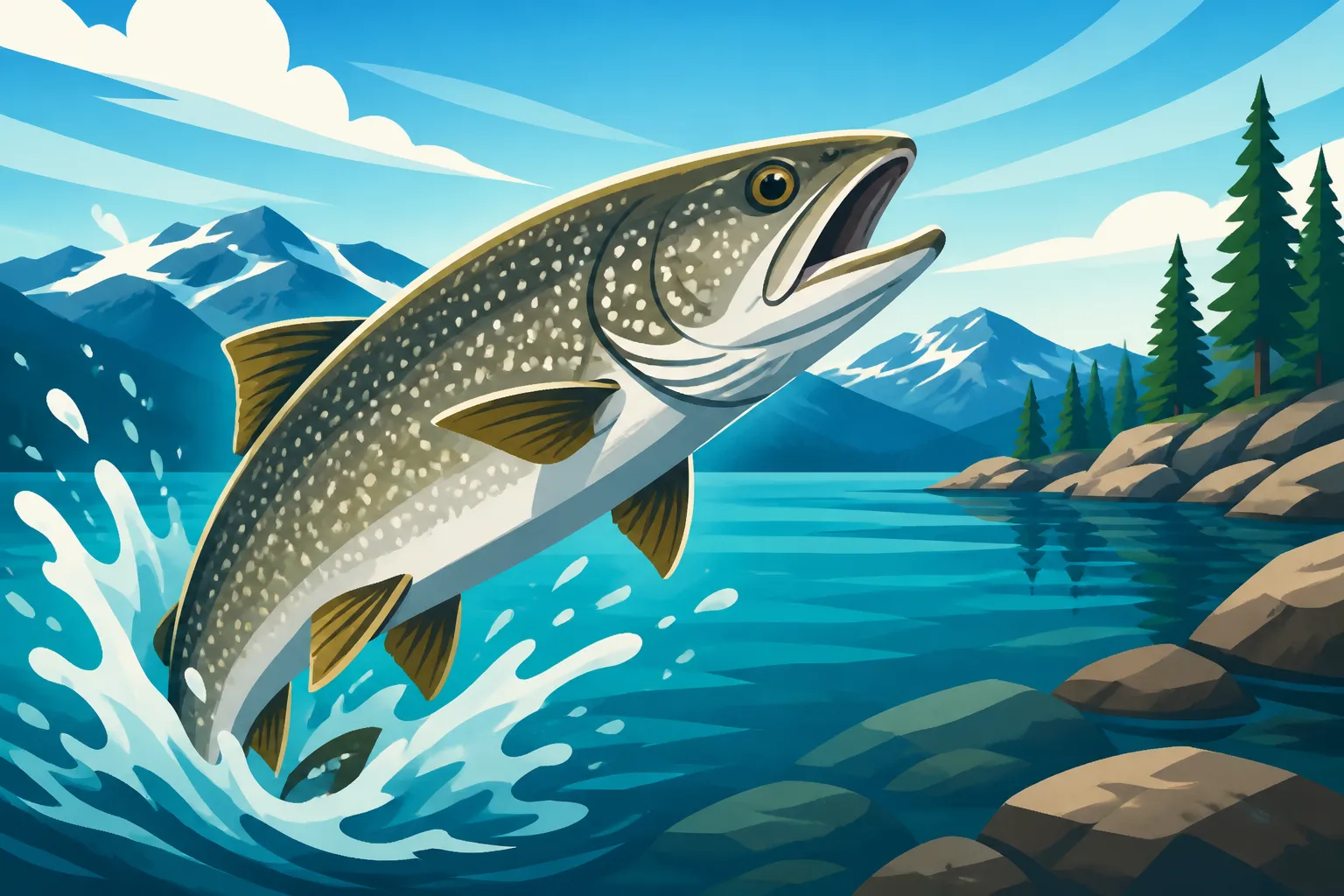
Mackinaw Lake Trout at Lake Tahoe
Fishing for Mackinaw (or Lake Trout, as they're also known) in the vast, deep waters of Lake Tahoe can feel like chasing a ghost. These impressive fish are masters of their cold, dark domain, and many anglers spend countless hours trolling the depths without a solid strike. It's incredibly frustrating when you know these giants are down there but can't quite crack the code. This comprehensive guide will equip you with the knowledge, techniques, and gear insights you need to confidently target and land Lake Tahoe's magnificent Mackinaw, transforming those frustrating outings into thrilling successes.
Understanding the Magnificent Mackinaw of Lake Tahoe
Lake Tahoe holds a special place in the hearts of anglers, not just for its stunning beauty but for the remarkable fish that dwell within its crystal-clear depths. Among them, the Mackinaw Lake Trout stands as a true icon, a species that embodies the challenges and rewards of deep-water fishing. Understanding this fish is the first step toward successfully catching them.
What Exactly is a Mackinaw Trout?
The Mackinaw, scientifically known as Salvelinus namaycush, is actually a species of char, closely related to brook trout and arctic char, but it's universally referred to as a "lake trout." These fish are native to the colder, deeper waters of northern North America, and they thrive in environments like Lake Tahoe where these conditions are met. They are built for endurance and power, with a long, streamlined body, large mouth, and a deeply forked tail that propels them through the water with incredible force.
What's really fascinating about the Mackinaw in Lake Tahoe is their adaptation to this specific environment. They've found a perfect home in the lake's incredible depths and consistently cold temperatures, growing to impressive sizes. Their coloration can vary, often displaying a dark gray or greenish-brown back, fading to lighter sides and a pale belly, all adorned with numerous pale, irregular spots.
The Mackinaw's Unique Place in Lake Tahoe's Ecosystem
In Lake Tahoe, the Mackinaw occupies the top predator position in the deeper waters. They are a significant part of the lake's food web, influencing the populations of other species, notably the Kokanee salmon and the invasive Mysis shrimp. Historically, the lake's original native trout, the Lahontan cutthroat, was extirpated from Lake Tahoe, and Mackinaw were introduced in the late 1800s, thriving in the cutthroat's former deep-water niche.
Their presence dramatically reshaped the fishery, establishing them as the dominant deep-water game fish. While they provide an exciting challenge for anglers, their predatory nature also means that managing their population is a crucial aspect of overall lake conservation, particularly as efforts continue to reintroduce native species and maintain ecological balance. Understanding this delicate balance adds another layer of appreciation for every Mackinaw you encounter.
Why They're So Prized by Anglers
There's a reason why so many dedicated anglers flock to Lake Tahoe specifically for Mackinaw: they are a phenomenal sport fish. For starters, their sheer size can be breathtaking. While many caught are in the 2-5 pound range, Lake Tahoe consistently produces Mackinaw weighing 10, 20, or even 30 pounds, with true giants pushing even heavier. Hooking into a fish of that magnitude in hundreds of feet of water is an unforgettable experience.
Beyond their size, Mackinaw are powerful fighters. They don't typically make acrobatic leaps, but they are strong, relentless pullers, especially when hooked deep. The battle often involves a prolonged tug-of-war, testing your tackle and your resolve. Successfully bringing a big Mackinaw from the depths to the boat is a badge of honor, a testament to skill, patience, and the right strategy. For many, it’s not just about the catch, but the challenge of outsmarting a truly magnificent adversary in one of the most beautiful settings imaginable.
Identifying Lake Tahoe Mackinaw: Key Features
When you're out on the water, especially in a diverse fishery like Lake Tahoe, it's really helpful to know exactly what you've hooked into. While a Mackinaw's size often gives it away, there are specific characteristics that definitively identify them and distinguish them from other trout species you might encounter. Proper identification is important for adherence to regulations and understanding the fish you're targeting.
Distinctive Markings and Coloration
Mackinaw trout have a robust, somewhat elongated body with a prominent, deeply forked tail, which is often a strong initial clue. Their coloration typically ranges from a dark olive or gray on the back, fading to lighter sides, and a creamy white belly. What truly sets them apart are their distinctive pale, often yellowish or whitish, irregular spots covering their back and sides. These spots are usually larger than those found on brown trout and lack the reddish halo often seen on brook trout or brown trout spots.
Another key feature is their mouth. Mackinaw have a large mouth that extends well past the back of the eye, armed with numerous small, sharp teeth. Their fins are relatively large and stout. Pay attention to the dorsal and adipose fins, which often have similar spotting to the body. Compared to other trout in the lake, these specific spot patterns and the deep fork in the tail are your best indicators.
Size and Growth: What to Expect
Lake Tahoe Mackinaw are renowned for their potential to grow large. The average size an angler might encounter is typically in the 2 to 8-pound range, offering a solid fight and a rewarding catch. However, Lake Tahoe is famous for producing "trophy" Mackinaw, with many anglers reporting fish in the 10-20 pound bracket on a regular basis. Every year, a few truly exceptional specimens in the 25-pound-plus category are pulled from the depths.
Their growth rate is influenced by a combination of factors, including the abundance of their primary food sources like Mysis shrimp and Kokanee salmon, the vastness of the lake, and the consistent cold temperatures which allow them to thrive without excessive metabolic stress. A 20-pound Mackinaw in Lake Tahoe could be anywhere from 10 to 20 years old, a true veteran of the deep. This potential for a genuinely massive fish is a huge part of the allure for many who pursue them. To learn more about how old these fish can get, check out Mackinaw Trout Size and Age at Lake Tahoe.
Distinguishing Mackinaw from Other Trout in Lake Tahoe
Lake Tahoe is home to a few different trout species, and it's essential to be able to tell them apart, especially considering varying regulations. Here's a quick rundown to help you differentiate:
| Feature | Mackinaw (Lake Trout) | Rainbow Trout | Brown Trout | Kokanee Salmon |
|---|---|---|---|---|
| Tail | Deeply forked | Slightly forked to square | Square to slightly forked | Deeply forked |
| Spots | Pale, irregular spots on dark background; no red halos | Small, dark spots, often with a distinct pink/red stripe | Dark spots (sometimes with red halos), often on head/dorsal fin | No spots on tail, small spots on back |
| Mouth | Large, extends past eye, distinct teeth | Smaller, extends to back of eye | Large, extends past eye, distinct teeth | Small, jaw hooks (kype) in males during spawn |
| Coloration | Dark gray/olive back, pale spots, lighter sides | Silver/greenish, pink/red stripe on side | Golden-brown to olive, sometimes with red/orange spots | Silvery when young, bright red during spawn |
| Habitat | Deep, cold water (mostly) | Variable, often shallower, near surface, rivers | Variable, often near cover, rivers | Pelagic, open water, feeds on plankton |
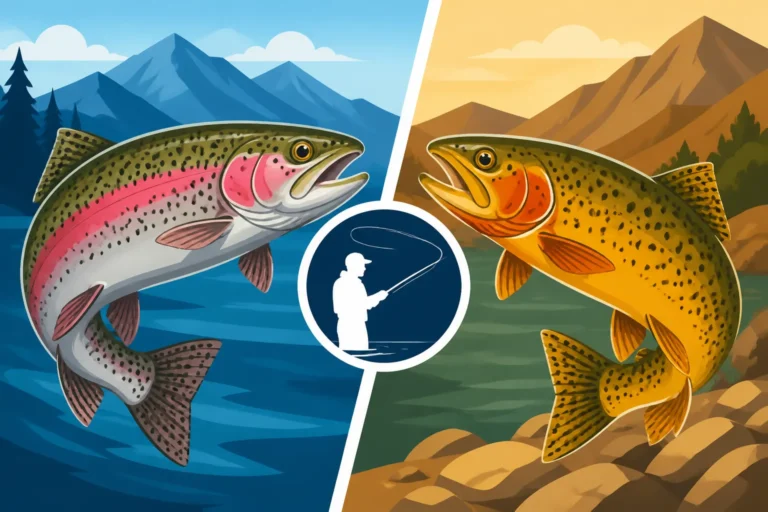
Rainbow trout, while present, are typically stocked and have a more streamlined, silvery body with a distinct pink or red stripe along their lateral line and small, dark spots. Brown trout, another introduced species, can also grow quite large but generally have a more golden or brownish hue with larger, often red-haloed spots, and a less forked tail. Kokanee salmon, a landlocked sockeye salmon, are characterized by their silvery bodies (turning bright red during spawning), lack of spots on their tails, and small, soft mouths. While Kokanee are a significant food source for Mackinaw, they are much smaller and often caught on lighter tackle higher in the water column.
Mackinaw Habitat and Behavior in Lake Tahoe
To consistently catch Mackinaw in Lake Tahoe, you need to think like a Mackinaw. These fish aren't just swimming around randomly; they have specific preferences for temperature, depth, and structure. Understanding their underwater world and how they interact with it is key to putting your bait or lure in the strike zone.
Deep Water Dwellers: Where to Find Them
Mackinaw are truly denizens of the deep. They thrive in Lake Tahoe's abyssal depths because they prefer water temperatures that are consistently cold, typically in the range of 40-55 degrees Fahrenheit (4-13 degrees Celsius). This means you'll almost always find them in deeper parts of the lake, often hundreds of feet down. In the summer months, they retreat to the thermocline or below, seeking out these cooler, oxygen-rich layers.
Look for areas with significant underwater structure. Drop-offs, ledges, submerged rock piles, humps, and underwater canyons are prime Mackinaw real estate. These features concentrate their prey and provide ambush points. Imagine them cruising along a sharp depth change, waiting for an unsuspecting school of Kokanee or Mysis shrimp to pass by. Popular deep-water spots around Lake Tahoe include the shelves off Zephyr Cove, the deep waters near Tahoe City, and various underwater structures in Rubicon Bay. Getting familiar with a good topographical map of Lake Tahoe is invaluable for identifying these potential hotspots. For specific spots, you might want to check out Lake Tahoe Deep Water Mackinaw Spots.
Seasonal Movements and Feeding Patterns
While Mackinaw generally stay deep, their exact locations and feeding behaviors can shift with the seasons. In winter, when the entire lake is cold, they might be found a bit shallower than in summer, but still usually in significant depths. As spring transitions to summer, they descend to greater depths as the surface waters warm up, always chasing that preferred cold water.
Their feeding patterns are also tied to the movement of their prey. Mysis shrimp are a crucial food source, and these tiny crustaceans undertake a daily vertical migration, rising higher in the water column at night and descending during the day. This movement can influence when and where Mackinaw actively feed. Kokanee salmon, especially younger ones, are another significant part of their diet, and Mackinaw will often follow schools of these smaller fish. Understanding these prey movements can help you predict where the Mackinaw might be concentrated and at what depth.
Understanding Their Preferred Forage
If you want to catch Mackinaw, you need to offer them something they want to eat. In Lake Tahoe, their diet primarily consists of two key items: Mysis shrimp and Kokanee salmon. The Mysis shrimp, while small, are incredibly abundant and form the base of the Mackinaw's diet, especially for younger and smaller fish. Many of the lures and jigging techniques used aim to imitate these small, translucent creatures.
As Mackinaw grow larger, they become more piscivorous, meaning they eat more fish. Kokanee salmon are a favorite, especially in the 6-12 inch range. Mackinaw will ambush schools of Kokanee, making them a prime target. Other smaller fish, if present, might also be on their menu. When selecting your lures and baits, consider what these fish are naturally eating. Lures that mimic small baitfish or have a subtle, shrimp-like profile are often the most effective. Knowing their diet helps you choose the right presentation for maximum success.
Essential Gear for Lake Tahoe Mackinaw Fishing
Tackling Lake Tahoe's Mackinaw requires specific gear that can withstand the rigors of deep-water fishing and handle powerful, large fish. You can't just show up with your standard trout setup and expect consistent success. Investing in the right tools makes a world of difference.
Rods, Reels, and Line: The Right Setup
For deep trolling, which is the most common and effective method for Mackinaw, you'll want sturdy trolling rods. These are typically 7 to 9 feet long, with a medium-heavy to heavy power rating and a moderate action that can absorb the shock of a big fish striking at high speeds. Graphite or composite rods are popular for their sensitivity and backbone. You'll need a reel that can hold a lot of line and has a smooth, powerful drag system. Large capacity conventional reels, often with a line counter, are preferred because they allow you to precisely deploy your lures to exact depths.
When it comes to line, a strong braided mainline (like 30-50 lb test) is often favored for its sensitivity and lack of stretch, which helps with hooksets at extreme depths. However, you'll typically want to use a fluorocarbon leader (15-25 lb test) to the lure. Fluorocarbon is nearly invisible underwater and has excellent abrasion resistance against the Mackinaw's rough mouths and rocky bottom structures. Make sure your knots are solid! A reliable setup can easily be found on platforms like Amazon, where many anglers find a wide selection of suitable trolling gear. For a more general overview of what to bring, check out Nevada Fishing Gear Essentials.
Lures and Baits That Mackinaw Can't Resist
Mackinaw are opportunistic feeders, and a variety of lures and baits can entice them. For trolling, dodgers or flashers paired with a trailing lure are incredibly effective. The dodger creates an erratic action and flash that attracts fish, while the trailing lure, often a small spoon, hoochie, or minnow-imitating plug, provides the actual bait presentation. Popular spoon colors include silver, chrome, chartreuse, and blue/silver, often with a bit of glow. Plugs that mimic Kokanee or other small baitfish are also excellent choices.
When jigging, heavy metal jigs (1-4 ounces or more) in various colors (white, glow-in-the-dark, silver, blue) are highly effective. Some anglers tip their jigs with a piece of cut bait, like a minnow or piece of sardine, to add scent and appeal. For live bait, if allowed by current regulations, small minnows or chubs are often irresistible to Mackinaw, fished either on a dropper rig or slowly trolled. Always double-check current regulations for bait restrictions, especially concerning live bait in Lake Tahoe.
Essential Electronics and Accessories
To consistently find and catch deep-dwelling Mackinaw, certain electronics are practically mandatory. A high-quality fish finder or sonar unit is your most important tool. Look for one with good depth penetration and the ability to clearly mark fish and underwater structure. Side imaging or down imaging can also be incredibly helpful for mapping out the lake bottom. Many excellent fish finders are available on Amazon.
Downriggers are almost non-negotiable for effective Mackinaw trolling. These devices allow you to precisely control the depth of your lures, getting them down to where the fish are holding, often hundreds of feet below the surface. A good pair of polarized sunglasses will help you spot surface activity and read the water, though for deep-water fish, sonar is your primary "eyes." Don't forget safety essentials like a good marine radio, GPS, and warm, layered clothing, as even summer days on Lake Tahoe can be chilly, especially at dawn or dusk.
Effective Techniques for Catching Mackinaw Trout
Now that you understand the Mackinaw and have the right gear, it's time to talk about how to actually get them into the boat. Mackinaw fishing is a specialized pursuit, and mastering a few key techniques will dramatically increase your success rate.
Deep Trolling: The Most Common Method
Deep trolling is arguably the most productive and widely used technique for Mackinaw in Lake Tahoe. This involves using downriggers to present lures at precise depths, often hundreds of feet down. The general idea is to cover a lot of water at specific depths where you've identified fish or promising structure on your fish finder.
Your trolling speed is critical. A common starting point is between 1.5 to 2.5 miles per hour, but you'll want to experiment. The correct speed makes your dodgers and lures work effectively, mimicking natural baitfish. Pay close attention to your rod tips; you want to see a subtle wobble indicating the lure is working correctly. When you hook up, the rod will often bend violently as the downrigger clip releases. Maintain a steady boat speed until the fish is away from the downrigger line, then adjust as needed for the fight. Remember to spread out your lines using multiple downriggers if possible, and vary your lure colors and depths until you find what the fish are responding to. For more detailed insights, refer to Trolling Techniques for Lake Tahoe Mackinaw.
Jigging for Mackinaw: A Hands-On Approach
While trolling is dominant, vertical jigging is another highly effective technique, especially when you've located schools of Mackinaw directly beneath your boat using your fish finder. This method is more active and can be incredibly rewarding. It involves dropping heavy metal jigs, often tipped with a piece of bait, directly down to the fish.
The key to successful jigging is finding the fish and then presenting your lure just above them, or directly in their depth. Once your jig is at the desired depth, use a lift-and-drop motion, often with a pause. Experiment with the aggressiveness of your lifts and the length of your pauses. Sometimes they want a sharp, rapid jig; other times, a slow, methodical rise and fall is more appealing. Strikes often occur on the fall, so pay close attention to your line for any subtle tap or slackening. This technique requires a good feel for your line and often works best when drifting over underwater humps or along deep contours.
Shore Fishing and Kayaking for Mackinaw
Let's be realistic: consistently catching Mackinaw from shore or a kayak on Lake Tahoe is challenging, but not impossible, especially for trophy fish. Mackinaw are typically deep-water fish, and getting lures down to their preferred depths from shore or a smaller, unequipped kayak is a significant hurdle. However, during certain times of the year, particularly late fall or early spring when the water is uniformly cold, some Mackinaw might venture into shallower waters near deep drop-offs that are accessible from shore.
For shore anglers, casting heavy spoons or large jigs from points that quickly drop into deep water might yield an occasional strike. Patience and persistence are paramount. Kayakers with fish finders and downriggers can certainly target Mackinaw, but managing multiple lines and fighting large fish in deep water from a kayak requires skill and experience. For those interested in shore-based opportunities, it's worth exploring guides like Lake Tahoe Nevada Shoreline Fishing for general lake access points, though specific Mackinaw success from shore is rare.
Navigating Lake Tahoe's Mackinaw Regulations
Fishing Lake Tahoe isn't just about rods and reels; it's also about rules and responsibilities. Because Lake Tahoe spans both Nevada and California, and because the Mackinaw fishery is so popular, there are specific regulations you absolutely must understand and follow. Ignorance of the law is never an excuse.
Nevada and California: Border Waters and Licensing
Lake Tahoe is unique in that it is a bi-state water body. This means that both Nevada and California have jurisdiction over fishing within their respective state lines. What this boils down to for you, the angler, is crucial: you generally need a fishing license from the state in which you are fishing. If you launch your boat in Nevada and fish solely in Nevada waters, a Nevada fishing license is sufficient. If you cross into California waters, you would technically need a California license.
However, there's a common interstate reciprocity agreement for Lake Tahoe: a valid fishing license from either Nevada or California, including any necessary stamps, allows you to fish in any part of Lake Tahoe, regardless of the state boundary. This simplifies things greatly! Always carry your physical license or digital proof, and make sure it's current. To understand how to get your Nevada license, check out How to Get a Fishing License in Nevada and for costs, Nevada Fishing License Cost Breakdown. This is one of the biggest points of confusion for anglers, so verify the current reciprocity rules before you head out.
Daily Limits and Size Restrictions
Mackinaw are a highly managed species in Lake Tahoe, and both states implement specific daily bag and possession limits, as well as size restrictions. These regulations are subject to change, often annually, so it's vital to consult the current fishing regulations booklet for both Nevada Department of Wildlife (NDOW) and California Department of Fish and Wildlife (CDFW) before each trip.
Typically, there are limits on the number of Mackinaw you can keep per day and a total possession limit. There may also be slot limits or minimum/maximum size requirements designed to protect certain age classes of fish. For example, some regulations might allow keeping fish under a certain length or over a certain length, while protecting fish within a "slot" to safeguard breeding populations. Always measure your fish carefully and release any that don't meet the legal requirements immediately and gently. You can find general information on regulations in Nevada Fishing Regulations Explained.
Protecting the Resource: Catch and Release Best Practices
Because Mackinaw are deep-water fish, handling them properly after being brought to the surface is incredibly important for their survival if you plan to release them. Rapid changes in pressure from deep water can cause barotrauma, where their swim bladder expands, making it difficult for them to swim back down.
If you intend to release a fish, land it quickly and handle it as little as possible. Wet your hands before touching the fish to protect its slime coat. If the fish shows signs of barotrauma (e.g., bulging eyes, stomach protruding from its mouth), you may need to "fizz" the fish using a specialized tool to release gas from the swim bladder. This is a delicate procedure, and it's best to learn from an experienced angler or professional if you're unfamiliar. Barbless hooks can also aid in quicker, less damaging releases. Ultimately, minimizing air exposure and getting the fish back into the water as quickly and gently as possible are the best practices for conservation, especially for those majestic trophy Mackinaw you'll encounter.
Best Times and Locations for Mackinaw Action in Lake Tahoe
Timing and location are everything when it comes to consistently finding Mackinaw. Lake Tahoe is a massive body of water, and while Mackinaw are widespread, certain conditions and areas tend to concentrate them, making your fishing efforts more fruitful.
Seasonal Hotspots and Optimal Depths
Mackinaw can be caught year-round in Lake Tahoe, but certain seasons offer more consistent action.
- Winter: This can be an excellent time as the entire water column is cold, allowing Mackinaw to be slightly more dispersed at varying depths, though still generally deep. Ice fishing isn't common on Lake Tahoe due to its size and depth, but boat fishing in winter can be productive, often targeting depths of 100-300 feet.
- Spring: As the surface warms, Mackinaw will start to descend, but can still be found at more manageable depths (150-300 feet). This is often a great time as the fish are active after the colder months.
- Summer: This is when Mackinaw go deepest, often found between 200-500 feet, sometimes even deeper. You'll need good downriggers to reach them consistently. Early mornings and late evenings can be prime.
- Fall: As surface temperatures cool, Mackinaw might move up a bit in the water column and can be very aggressive as they prepare for spawning. This is often considered one of the best times for trophy fish, with depths similar to spring.
As for locations, look for underwater structure. Drop-offs along the shorelines, especially where the bottom falls quickly into deep canyons, are always good bets. Popular areas include the waters off Zephyr Cove, Logan Shoals, Sugar Pine Point, Rubicon Bay, and near Tahoe City. Anywhere you find significant underwater relief and baitfish concentrations, you'll likely find Mackinaw.
Time of Day Considerations
While Mackinaw are deep-water fish and less influenced by direct sunlight than shallower species, there are still optimal times of day. Generally, low light conditions tend to be more productive. This means early morning (pre-dawn to a couple of hours after sunrise) and late afternoon (a few hours before sunset until dusk) often produce the best results. During these times, their primary forage, like Mysis shrimp, might be more active or vertically migrating, spurring the Mackinaw to feed.
Mid-day fishing can still be productive, especially on overcast days or in extremely deep water where light penetration is minimal anyway. However, the consistent bite often slows down during the brightest parts of the day. A lot of successful Mackinaw anglers are on the water well before the sun comes up, taking advantage of that prime morning bite.
Weather and Water Conditions that Influence Success
Lake Tahoe's weather can be notoriously fickle, and while Mackinaw are deep, conditions on the surface and in the upper water column can still affect your success.
- Wind: Moderate wind that creates a chop on the surface can sometimes improve fishing. The broken surface light can make fish less wary, and the wave action can create current patterns that concentrate bait. However, strong winds can make boat control and downrigger deployment difficult, and safety should always come first.
- Water Clarity: Lake Tahoe is famous for its incredible clarity, which means Mackinaw have excellent visibility. This often necessitates longer fluorocarbon leaders and more natural bait/lure presentations. If there's any turbidity from runoff, it's usually localized and doesn't affect the deep waters.
- Water Temperature Changes: While Mackinaw seek consistent cold temperatures, sudden changes in overall lake temperature (which happen slowly in Tahoe due to its volume) or the depth of the thermocline can influence where fish are holding. Your fish finder will be your best friend in locating these preferred temperature bands. Heavy storms or significant pressure changes might also briefly alter feeding patterns, but generally, Mackinaw are more stable in their deep-water environment than shallow-water species.
Safety and Etiquette on Lake Tahoe
Lake Tahoe is a stunning, vast, and sometimes unforgiving body of water. Fishing for Mackinaw in its depths requires not only angling skill but also a profound respect for the lake's power and its delicate environment. Safety should always be your top priority, followed closely by responsible boating and fishing etiquette.
Lake Tahoe Specific Hazards
The sheer size and depth of Lake Tahoe present unique hazards that anglers must be aware of. First and foremost is the water temperature. Even in the middle of summer, the deep water temperatures where Mackinaw reside are extremely cold, often in the 40s. A sudden capsize or fall overboard can lead to hypothermia rapidly. Always dress in layers, and consider wearing a personal flotation device (PFD) at all times, not just when required by law.
Secondly, Lake Tahoe is prone to sudden, violent storms. Calm mornings can quickly turn into white-capped, dangerous conditions. Winds can funnel down canyons and create hazardous waves. Always check the marine weather forecast before heading out, and be prepared to cut your trip short if conditions deteriorate. Know your boat's limitations and don't push them. The lake's vastness also means that help might be a long way off in an emergency.
Boating Safety Essentials
Beyond personal safety, responsible boating is crucial on Lake Tahoe. Ensure your boat is properly equipped with all required safety gear, including enough PFDs for every person on board, a fire extinguisher, visual distress signals (flares), a sound-producing device (horn or whistle), and an anchor with sufficient line. A VHF marine radio is highly recommended for communication, as cell service can be spotty in certain areas.
Always file a float plan with someone on shore, letting them know where you're going and when you expect to return. Be mindful of your fuel levels; distances can be deceiving on such a large lake. If you're new to boating or operating in cold, deep waters, consider taking a boater education course. Many states, including Nevada, have age-related boater education card requirements, so ensure you or your primary operator meets these. For more details on what's required, you can consult Nevada Boater Education Card Requirement or Nevada Boat Registration and Titling Guide.
Respecting Other Anglers and the Environment
Lake Tahoe is enjoyed by countless visitors for many activities, not just fishing. Practice good etiquette by giving other boats, kayaks, and swimmers ample space. Avoid cutting off other anglers who are trolling, and maintain a respectful distance if someone is clearly working a specific spot. Excessive noise can also be disruptive to wildlife and other recreational users.
Environmental responsibility is paramount. Pack out everything you pack in, and never leave trash or discarded fishing line on the lake or its shores. Preventing the spread of invasive species is also a critical concern for Lake Tahoe. Always "Clean, Drain, Dry" your boat and gear before launching to avoid introducing unwanted organisms like quagga mussels. The pristine beauty of Lake Tahoe is a shared resource, and it's up to all of us to ensure its health and accessibility for future generations.
Disclaimer
This article is for general informational purposes only and does not constitute professional advice. Laws, prices and regulations vary by location and change over time. Consult a qualified professional for guidance on your specific situation.