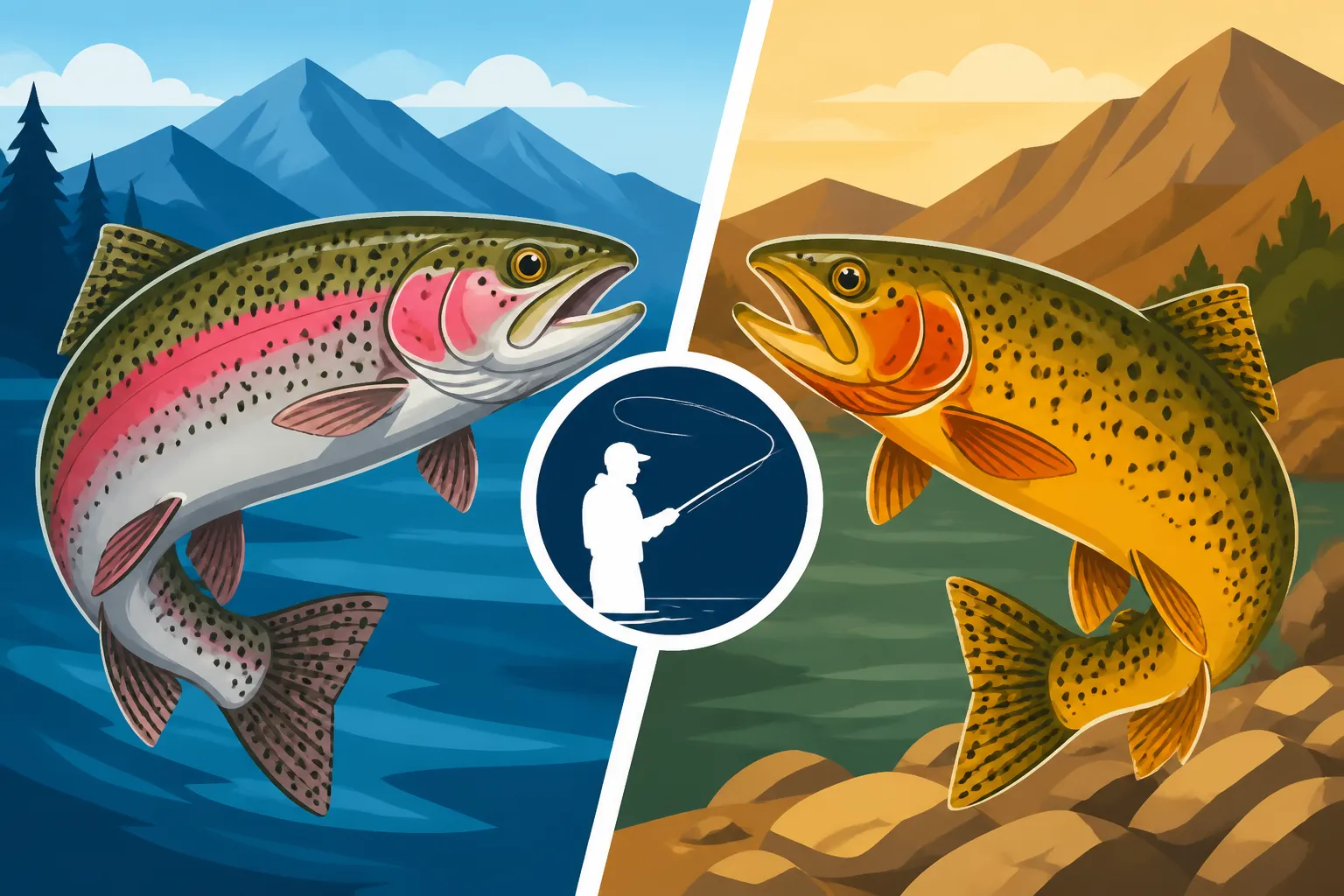
Difference Between Rainbow and Cutthroat Trout
There's a common moment many anglers experience in Nevada: you've got a beautiful trout on the line, its iridescent scales catching the desert sun, and a question pops into your head – "Is this a rainbow or a cutthroat?" Knowing the difference isn't just about satisfying curiosity; it's vital for adhering to regulations, understanding fish behavior, and ultimately, becoming a more successful and responsible angler. This comprehensive guide will walk you through the distinct features, habitats, and fishing nuances that set these two magnificent trout species apart, helping you identify your catch with confidence every time.
The Trout Identity Crisis: Why It Matters to Know the Difference
It might seem like a small detail to a casual observer, but for those of us who spend our time on Nevada's lakes and rivers, distinguishing between a rainbow and a cutthroat trout is a big deal. These fish, while both stunning, have different stories, different regulations, and often, different behaviors that influence how and where we fish.
More Than Just a Pretty Fish: The Angler's Dilemma
Imagine landing a gorgeous fish in a remote Nevada stream. You're beaming, ready to snap a photo, but then you recall the specific catch limits for each species. Was that reddish slash under its jaw just a trick of the light, or is it a genuine cutthroat? If you misidentify it, you could inadvertently violate bag limits or size restrictions. It's a common anxiety, especially for newer anglers or those visiting less familiar waters. The thrill of the catch can quickly turn into a worry about doing the right thing, and nobody wants that kind of stress on a peaceful fishing trip.
Beyond just avoiding trouble, a seasoned angler understands that knowing the species helps them understand the ecosystem they're fishing in. Are you in a stocked pond, teeming with hatchery rainbows that eagerly take power bait? Or are you in a pristine alpine lake, home to wild cutthroat that demand a more subtle fly presentation? The answers guide your gear choices, your techniques, and even your ethical considerations for catch and release. Understanding the fish is understanding the water, and that's the heart of being a good angler.
Conservation and Regulation: Why ID is Crucial
Nevada is home to the Lahontan Cutthroat Trout, a truly iconic and native species with a rich history, particularly in waters like Pyramid Lake. This specific subspecies has faced significant conservation challenges, and as a result, special regulations are often in place to protect it. You might find slot limits, specific bait restrictions, or even mandatory catch-and-release rules for certain sizes or locations. Lahontan Cutthroat Trout in Nevada provides more detail on this amazing species. These rules are put in place by wildlife agencies to ensure the survival and recovery of these populations.
Conversely, rainbow trout are often widely stocked across the state, especially in urban ponds and community fisheries, to provide abundant angling opportunities. Their populations are generally more robust, and while still regulated, the rules often differ significantly from those for cutthroat. You'll find general statewide limits on rainbows, but the nuances can vary depending on the body of water. Confusing the two can lead to serious legal repercussions, not to mention undermining crucial conservation efforts. Always check the latest Nevada Fishing Regulations Explained before heading out.
The Distinctive Features of a Rainbow Trout
Rainbow trout (Oncorhynchus mykiss) are perhaps the most recognizable trout species, widely distributed and beloved by anglers. They're known for their fighting spirit and willingness to bite, making them a fantastic target for both beginners and experienced hands.
The Classic Rainbow Stripe and Speckles
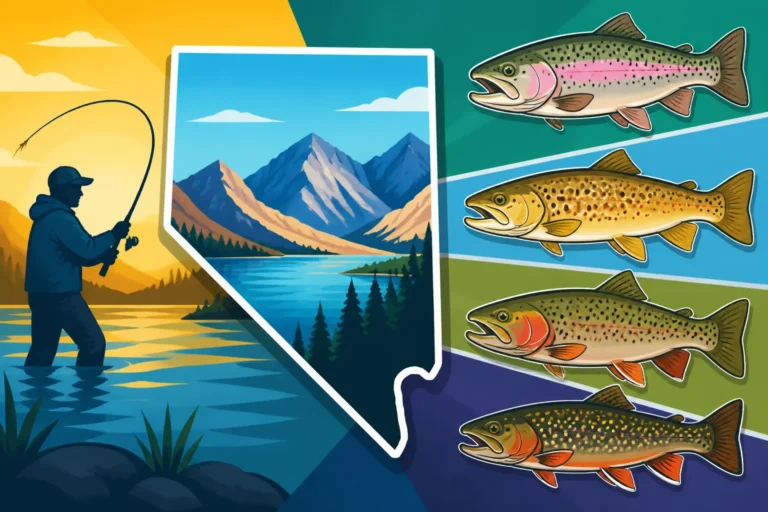
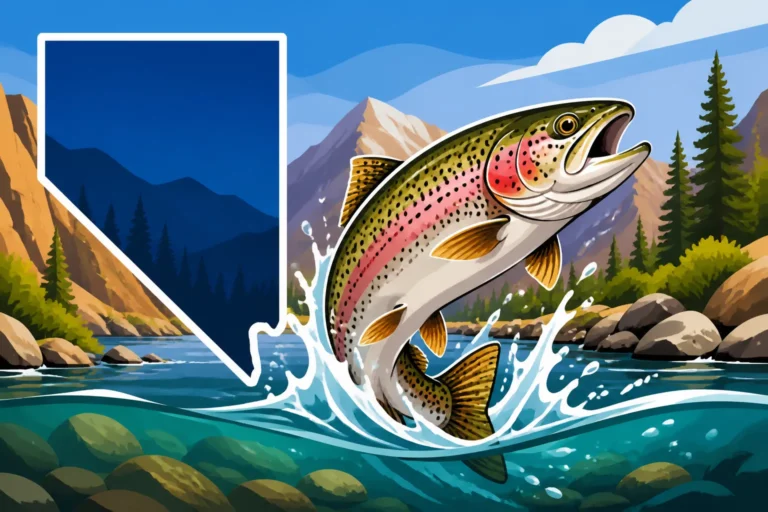
The most iconic feature of a rainbow trout is, as its name suggests, the vibrant, iridescent pink or reddish stripe running horizontally along its flanks, from its gill plate to its tail. This stripe can vary in intensity, sometimes appearing faint in hatchery-reared fish or those in murky water, and becoming strikingly bright during spawning season. It's truly a sight to behold when you pull one of these beauties out of the water, especially in the clear high-desert lakes of Nevada.
Beyond the stripe, rainbow trout are adorned with numerous small, dark spots. These spots are typically concentrated on their back, dorsal fin, and tail, and can extend down onto their sides, though usually not as heavily below the lateral line. The spots are generally round or oval and fairly evenly distributed. This speckled pattern, combined with the rainbow stripe, forms their signature look. Think of it like a natural camo pattern that helps them blend into varied aquatic environments, from rocky riverbeds to vegetative lake shores.
Mouth, Fins, and Tail: Key Physical Cues
When you're trying to make a positive identification, take a close look at the head and mouth. Rainbow trout typically have a relatively small head compared to their body size, and their mouth doesn't extend much past the rear of their eye. Their teeth are small and present on both jaws. This smaller mouth can sometimes influence your lure choice, favoring smaller, more subtle presentations.
Their fins are usually unspotted, or have very minimal spotting, with the exception of the dorsal and caudal (tail) fins, which will often have the same dark spots as their body. The tail fin itself is typically broad and moderately forked or squared off, providing powerful propulsion in fast-moving water or when fighting on the line. As for their overall coloration, it can range from a silvery-blue on the back to olive-green, fading to white or yellowish on the belly, with the famous pink stripe tying it all together. Rainbow Trout Fishing in Nevada goes into more detail on targeting these beauties.
Unmasking the Cutthroat Trout: Its Unique Characteristics
Cutthroat trout (Oncorhynchus clarkii) are the true natives of many western waters, and in Nevada, the Lahontan Cutthroat Trout holds a particularly special place. Identifying them correctly is often a matter of conservation and respect for these unique fish.
The Tell-Tale Orange or Red Slash
The absolute best way to identify a cutthroat trout is by the distinctive orange, red, or sometimes even yellowish "slash" markings on the underside of their lower jaw, in the area where the gill plates meet. It literally looks like someone took a knife and made a little cut, and then painted it with a bright, fiery color. This is the feature that gives them their name, and once you've seen it, it's hard to forget. It can be faint on some fish, particularly smaller ones or those in less pristine conditions, so sometimes you might need to gently lift the gill plate area to get a clear view.
If you're fishing waters known to hold cutthroat, like Pyramid Lake, this is the first thing you'll look for. The presence and intensity of this slash are paramount. While some rainbow trout might have a slight reddish hue in that area, it rarely forms the distinct, knife-like "slash" that defines the cutthroat. This specific marking is your most reliable friend in the field when you're trying to differentiate them.
Spots, Head, and Habitat: Further Differentiating Marks
Cutthroat trout typically have larger, more irregularly shaped spots than rainbow trout. These spots are often concentrated more heavily towards the tail and can extend throughout their entire body, including below the lateral line and onto their belly, though this can vary by subspecies and individual fish. The spots on a cutthroat often appear more like peppered freckles rather than the distinct, round dots of a rainbow. Their overall body color can be quite diverse, from silvery to golden-brown, with shades of green or olive on the back.
Their head is usually a bit larger and more pointed than a rainbow's, and their mouth often extends noticeably beyond the eye. This larger mouth is adapted for feeding on a wider variety of prey, including other fish, and can be a subtle but helpful clue. Additionally, the fins of a cutthroat trout often have some spotting, similar to the body, but usually less pronounced than on the body itself. The tail is generally less forked than a rainbow's, tending to be squarer or even slightly rounded. These detailed observations, combined with the crucial "cut" under the jaw, really solidify your identification.
Habitat and Behavior: Where Each Trout Thrives in Nevada
Understanding where each species prefers to live can be just as helpful as their physical markings in identifying them. Nevada's diverse waters offer distinct environments for both rainbows and cutthroat.
Rainbow Trout's Versatile Nevada Haunts
Rainbow trout are incredibly adaptable and can be found in a wide variety of Nevada's waters. They're the workhorses of the state's stocking programs, meaning you'll often encounter them in easily accessible urban ponds, community lakes, and even some of the larger reservoirs. Think of places like the Las Vegas urban ponds, or many of the smaller state park lakes, which are regularly stocked by the Nevada Department of Wildlife (NDOW) to ensure good fishing opportunities for everyone. Nevada Trout Stocking Schedule can give you a hint where to find them.
They thrive in cooler, well-oxygenated water, but can tolerate a wider range of temperatures than some other trout species. You'll find them in both stillwaters and moving currents, often congregating around submerged structures, drop-offs, or areas with good current breaks where food is funneled to them. When fishing for rainbows, you might use a wide array of techniques, from bait fishing with PowerBait or worms, to casting spinners, spoons, or even fly fishing with nymphs and streamers. They're generally less picky eaters than wild cutthroat, which is part of their appeal. Many anglers find excellent success with artificial lures you can easily find on Amazon, often in bright colors to attract their attention.
Cutthroat Trout's Specialized Niches, Especially Lahontan
Cutthroat trout, especially the native Lahontan strain, are much more particular about their habitat. In Nevada, the most famous stronghold for Lahontan Cutthroat is undoubtedly Pyramid Lake, a vast, ancient lake north of Reno. This unique alkaline lake offers a specific environment that these fish have adapted to over millennia, growing to incredible sizes. You'll also find various subspecies of cutthroat in more isolated, pristine, high-elevation lakes and streams in Nevada's mountain ranges, often in areas requiring a bit of a hike to reach. These are often cold, clear waters with minimal human disturbance.
Lahontan Cutthroat, particularly the large fish at Pyramid Lake, are primarily piscivorous, meaning they feed on other fish, especially the native cui-ui sucker. This specialized diet means they often require different fishing approaches than rainbows. They can be more wary and less aggressive, demanding a nuanced technique. While you might catch them on a variety of lures, fly fishing is a very popular and often highly effective method, especially for larger fish. Pyramid Lake Nevada Fishing Guide is essential reading if you plan to target these magnificent fish. These fish are true survivors, and their presence is a testament to the wild beauty of Nevada's untamed landscapes.
Fishing Strategies: Tailoring Your Approach
Once you can confidently identify a rainbow from a cutthroat, you'll find that adapting your fishing strategy can significantly improve your success. While there's overlap, each species often responds best to certain presentations.
Best Baits and Lures for Rainbows
Rainbow trout, especially those that are regularly stocked, tend to be less finicky eaters. They're often accustomed to pelleted food in hatcheries, making them quite receptive to a variety of baits. For many anglers, dough baits like PowerBait, in a myriad of colors and scents, are a go-to. Worms, corn, and even marshmallows can also be incredibly effective, especially when fished off the bottom with a simple slip sinker rig or suspended under a bobber. You can pick up a wide variety of these baits and small hooks on Amazon to get started.
When it comes to lures, rainbows will often strike at small inline spinners (like Panther Martins or Mepps), tiny spoons, or even small jigs tipped with a piece of worm or grub. Their aggressive nature, especially after stocking, means they're often willing to chase and strike at flashy, moving targets. For fly anglers, standard nymph patterns, small emergers, and even dry flies can work well, particularly in rivers or when insects are hatching. The key with rainbows is often presentation and persistence, trying different depths and retrieves until you find what they're hitting. Get more ideas on Best Bait for Nevada Trout.
Specific Tactics for Tricky Cutthroat
Fishing for cutthroat, particularly wild ones or the large Lahontan Cutthroat at Pyramid Lake, often requires a more refined approach. These fish can be more cautious and less likely to strike at just anything. At Pyramid Lake, fly fishing is legendary. Anglers often "strip" large streamer patterns, imitating baitfish like tui chub, or use balanced leeches and nymphs under an indicator. Shore fishing with jigs or spoons, cast long distances, can also be productive. The key is often covering a lot of water and presenting your offering naturally.
In smaller, high-mountain streams and lakes, cutthroat might be more receptive to traditional fly patterns like dry flies (especially grasshopper or caddis imitations during hatches) or small nymph patterns drifted naturally. Bait fishing might involve smaller worms or salmon eggs, presented very subtly to avoid spooking these wary fish. For any cutthroat, especially if you plan to practice catch and release, using barbless hooks is highly recommended to minimize harm. Always remember to check specific regulations for Pyramid Lake Tribal Fishing Permit waters, as they often have unique rules regarding tackle.
Hybrids and Subspecies: When It Gets Complicated
Just when you think you've got it all figured out, nature throws a curveball. The world of trout isn't always black and white; sometimes, it's a beautiful, confusing blend. Hybrids can make identification a real head-scratcher.
The Blended Line: Rainbow-Cutthroat Crosses
Sometimes, rainbow and cutthroat trout interbreed, creating hybrids that exhibit characteristics of both parent species. These "cutbows" can be particularly tricky to identify, as they might have a faint cutthroat slash combined with a rainbow stripe, or a mix of spotting patterns. Their presence is often a concern for conservationists, especially in waters where native cutthroat populations are being restored, as hybridization can dilute the genetic purity of the native fish.
You might encounter these hybrids in waters where both species are present, especially if stocking efforts have put rainbows in close proximity to cutthroat populations. If you catch a fish that seems to have a mix of features—maybe a very subtle slash, but also a prominent pink stripe—it's likely a cutbow. In such cases, it's always best to err on the side of caution and treat it as the more stringently regulated species if there's any doubt, or simply practice catch and release. This ensures you're doing your part for conservation and staying within the bounds of the law.
Nevada's Lahontan Cutthroat: A Special Case
The Lahontan Cutthroat Trout (Oncorhynchus clarkii henshawi) is more than just a subspecies; it's a living legend in Nevada. Historically, these fish grew to immense sizes, with records of individuals weighing over 40 pounds, living in the ancient Lake Lahontan system. While those giant fish are largely a thing of the past, the Lahontan Cutthroat at Pyramid Lake still offers the chance to catch truly world-class trout, often reaching 10-20 pounds.
What makes the Lahontan so special, beyond its size potential, is its incredible resilience and unique adaptations to its native, often harsh, alkaline environments. These fish are a testament to nature's ability to thrive in challenging conditions. Their protection and recovery are central to Nevada's fisheries management, and strict regulations are in place to ensure their future. Understanding that these are not just "any" cutthroat, but a distinct and culturally significant subspecies, deepens the respect and care an angler should show them. For any angler interested in trout, learning about the Lahontan Cutthroat Trout in Nevada is a must.
Here's a quick comparison to help you distinguish between these two beautiful species:
| Feature | Rainbow Trout (Oncorhynchus mykiss) | Cutthroat Trout (Oncorhynchus clarkii) |
|---|---|---|
| Jaw Markings | Typically absent or very faint reddish hue | Distinct red, orange, or yellowish "slash" under the lower jaw |
| Lateral Stripe | Prominent, iridescent pink or red stripe along the side | Generally absent; if present, usually fainter and less defined |
| Spotting | Numerous small, dark, fairly even spots on back, dorsal, and tail fins | Larger, more irregular spots, often concentrated towards the tail, can extend below lateral line |
| Mouth Size | Mouth typically does not extend past the back of the eye | Mouth often extends noticeably past the back of the eye |
| Habitat | Widely stocked; adaptable to various lakes, rivers, and urban ponds | Native to western waters; prefers cold, clear streams and high-elevation lakes; Pyramid Lake for Lahontan |
| Tail Fin | Moderately forked or squared off | Less forked, often squarer or slightly rounded |
| Head Size | Relatively smaller head compared to body | Often a slightly larger, more pointed head |
Remember, these are general guidelines, and individual fish can vary. When in doubt, always refer to the specific regulations for the water you're fishing. Knowing the Nevada Fishing Seasons by Month can also help you anticipate which species might be more active.
Disclaimer
This article is for general informational purposes only and does not constitute professional advice. Laws, prices and regulations vary by location and change over time. Consult a qualified professional for guidance on your specific situation.