How to tell a largemouth bass from a smallmouth bass
It's incredibly frustrating when you're out on the water, you've just landed a beautiful bass, and then that nagging doubt creeps in: Is this a largemouth or a smallmouth? This question isn't just about satisfying curiosity; it's genuinely important for adhering to Nevada's fishing regulations and even understanding where to find more of them. This guide will walk you through all the telltale signs, so you can confidently identify your catch every single time.
The Tale of Two Bass: Why Differentiating Matters
There's a reason why so many anglers, even seasoned ones, sometimes pause when pulling a bass from the water. Both largemouth and smallmouth bass are prominent sport fish in Nevada, and while they share the "bass" family name, they're distinct species with different characteristics, preferred habitats, and often, different legal requirements for harvest. Misidentifying them could lead to unintentionally breaking a regulation or missing out on a prime fishing spot next time.
Initial Confusion: A Common Angler's Dilemma
Think about it: you're excited, the fish is flopping, maybe you're out with friends or family, and the pressure is on. Both bass species have that classic olive-green to brownish coloring, they both put up a fantastic fight, and they both love a good lure. It's easy to get them mixed up, especially if you're fishing a body of water where both species are present, like parts of Lake Mead or Lake Mohave. One might look a bit bigger, another a bit darker, and suddenly, you're second-guessing yourself. It's not a reflection of your angling skills; it's a testament to how similar they can appear at first glance. The key is knowing what specific details to focus on, and once you train your eye, it becomes second nature.
The Importance of Correct Identification in Nevada Fishing
Beyond bragging rights (though those are important, too!), there are practical reasons why nailing down the identity of your bass is crucial. For starters, Nevada Bass Daily Limit and Size Rules can sometimes differ between species or even specific bodies of water. You wouldn't want to inadvertently keep an undersized smallmouth because you thought it was a legal largemouth, or vice versa. These regulations are in place to protect fish populations and ensure healthy fisheries for everyone, so compliance is a big deal. Furthermore, understanding which bass you've caught gives you invaluable information about the environment you're fishing. If you're consistently catching smallmouth, it tells you something about the water temperature, bottom structure, and available forage. This knowledge helps you refine your techniques and become a more effective angler.
Spotting the Differences: Key Physical Indicators
When you're trying to figure out if you've got a largemouth or a smallmouth, there are a few key physical characteristics that stand out. These aren't subtle nuances; they're generally quite pronounced once you know what to look for. Think of them as your primary checklist when you pull that fish out of the water.
Mouth Size and Jawline: The Most Obvious Clue
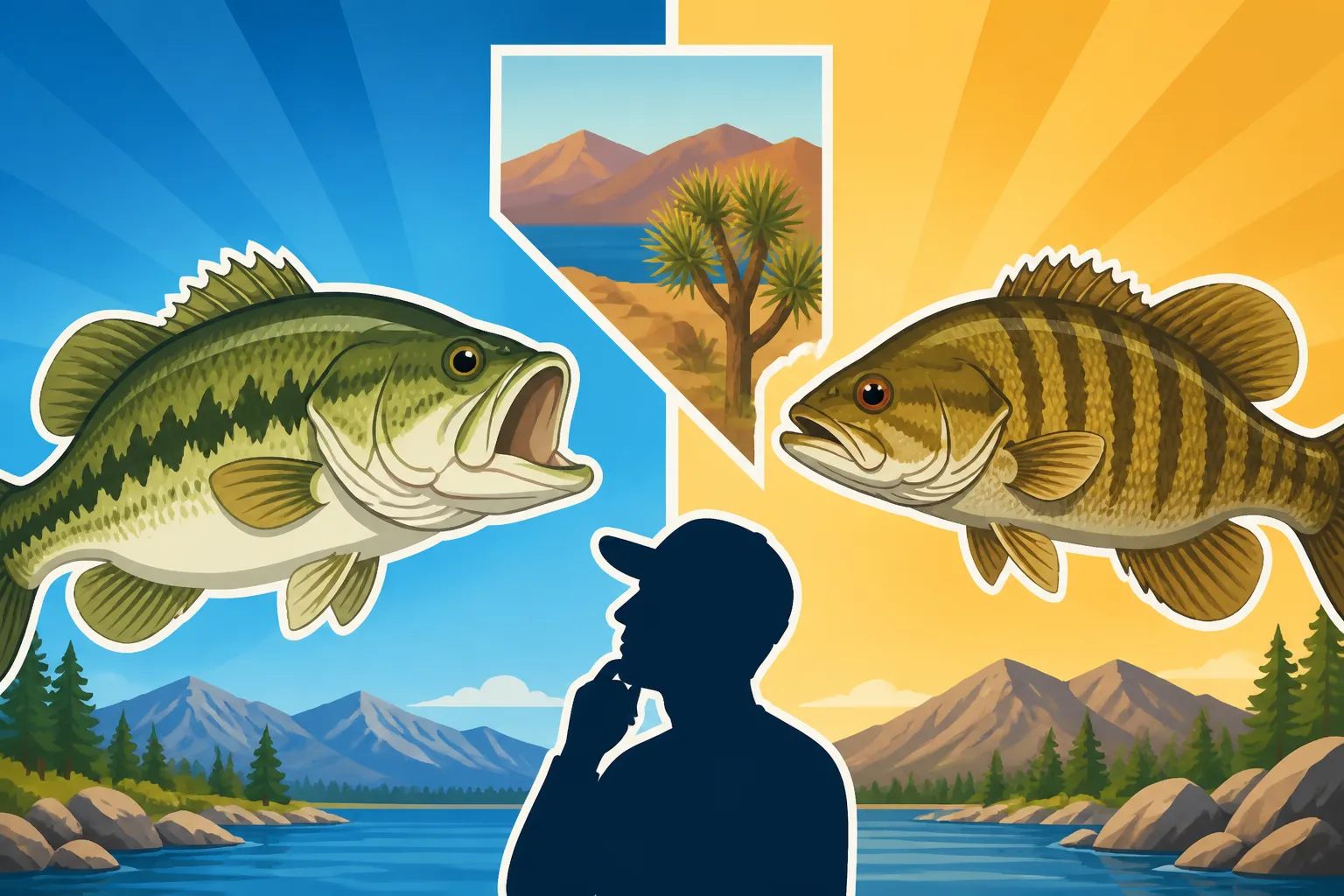
This is often the first thing people learn, and for good reason: it’s usually the most reliable differentiator. Gently close the fish's mouth and observe where the corner of its jaw (the maxillary) extends relative to its eye.
- Largemouth Bass: The corner of its mouth will extend beyond the back of its eye. Imagine drawing a vertical line down from the back of the eye; the largemouth's jaw will clearly pass this line. Their mouths truly are quite large, giving them an almost aggressive or perpetually surprised look. This big mouth is designed for gulping down larger prey, which makes sense given their predatory nature in weedy environments.
- Smallmouth Bass: In contrast, the corner of a smallmouth's mouth will typically not extend beyond the back of its eye. It often stops directly under the eye or even slightly in front of it. Their mouth is noticeably smaller and more compact, suiting their preference for smaller prey items found in rocky areas.
This visual cue alone can often solve the mystery. If you're ever in doubt, just remember: "large mouth, large jaw past the eye; small mouth, small jaw not past the eye."
Dorsal Fin Separation: A Subtle Yet Telling Feature
Now, this is one that many anglers overlook, but it's a super consistent indicator once you know where to look. Both bass species have two dorsal fins on their back, but how they connect is the key.
- Largemouth Bass: Their two dorsal fins – the spiny, anterior fin and the soft-rayed, posterior fin – are almost completely separated. There will be a very deep notch or even a clear break between them, making them look like two distinct fins. You can often almost lay your finger flat in the dip between the two sections. This separation contributes to their generally more elongated and sleek appearance.
- Smallmouth Bass: The dorsal fins of a smallmouth bass are connected, forming one continuous fin. While there might be a slight dip or indentation where the spiny section meets the soft-rayed section, it's not a deep, clear separation like with a largemouth. It looks like a single fin with a gentle curve or slight depression, rather than two distinct pieces.
Checking the dorsal fin is an excellent secondary check to confirm what the mouth size is telling you. It's especially helpful if you're dealing with a juvenile fish where the mouth size might not be as dramatically different yet.
Body Shape and Coloring: More Than Just Camouflage
While coloring can vary greatly depending on water clarity, diet, and habitat, there are some general trends in body shape and pattern that can help you.
- Largemouth Bass: These fish tend to have a more elongated, football-like body shape. Their coloring is usually a darker green to olive on the back, fading to lighter green or white on the belly. The most distinctive color pattern is a prominent, often broken or irregular, horizontal dark stripe or band running along their lateral line from head to tail. This stripe can sometimes be very pronounced, almost black, and sometimes it can be quite faint, especially in very clear water or older fish. Sometimes, you'll also see some scattered dark blotches below this lateral stripe.
- Smallmouth Bass: Smallmouths are often described as having a more compact, almost bronze-colored body. Their back is typically brown to golden-brown, with lighter, sometimes yellowish, sides and a white belly. Instead of a distinct horizontal stripe, smallmouth bass often have vertical bars or tiger stripes along their sides, which can range from very dark to subtle mottling. These vertical bars help them blend in with rocky environments. Also, look at their eyes: smallmouths often have reddish or orange eyes, which is a neat, though not always present, characteristic.
Remember, coloring is the least reliable indicator because it changes so much with environment, but combined with the other features, it helps build a complete picture. A classic largemouth will have that dark, blotchy horizontal stripe, while a classic smallmouth will have those vertical "tiger" bars.
Lateral Line: The Disappearing Act
The lateral line is a sensory organ common to most fish, appearing as a subtle line along their side. While both bass have one, how it appears can be another slight clue.
- Largemouth Bass: The dark horizontal stripe mentioned above is typically on or very close to the lateral line, making the lateral line itself sometimes appear less distinct or almost incorporated into the stripe.
- Smallmouth Bass: With their more mottled or vertically barred patterns, the lateral line on a smallmouth bass usually stands out more clearly as a distinct line, not obscured by a dominant horizontal stripe. It's often a bit lighter in color than the surrounding scales.
This isn't a primary identifier, but it's another piece of the puzzle. Once you've checked the mouth and the dorsal fin, take a moment to observe the overall pattern and body shape, including the lateral line. You can even find specialized fishing scales on platforms like Amazon that allow you to weigh and measure your catch, which can sometimes provide clues if one species tends to grow larger in certain waters.
Where They Live: Habitat as an Identification Aid in Nevada
Knowing the differences in preferred habitat is almost as important as knowing the physical distinctions. If you're fishing a specific type of water, you can make an educated guess about which bass species you're more likely to encounter. This knowledge can also inform your choice of lures and fishing techniques. Nevada offers a variety of aquatic environments, and each bass species has its niche.
Largemouth Bass: The Structure-Loving Ambusher
Largemouth bass are typically found in warmer, shallower, and often more vegetated or structured waters. They are ambush predators who love to hide and dart out to attack unsuspecting prey.
- Preferred Habitat: Look for largemouths around submerged vegetation like weed beds, lily pads, cattails, and brush piles. They also love woody debris, fallen trees, docks, and rocky points with plenty of cover. Think of any place where they can hide and spring out. In Nevada, this means you'll often find them in the shallower coves and arms of larger reservoirs like Lake Mead Largemouth Bass Coves or Lake Mohave, especially where there's some kind of cover. They thrive in slightly warmer water, so during the hotter months, they might move a bit deeper but will still relate to structure.
- Examples in Nevada: Large areas of Lake Mead, Lake Mohave, and many of Nevada's urban ponds are prime largemouth territory. If you're fishing a pond that's been stocked with various species and has plenty of emergent vegetation, chances are you'll be running into largemouths. They're masters of camouflage in these environments, using their darker, blotchy patterns to blend in perfectly with shadows and plant life.
Smallmouth Bass: The Rocky, Open Water Dweller
Smallmouth bass, often affectionately called "bronze-backs" or "brown bass," prefer cooler, clearer water with rocky bottoms. They are more open-water predators than largemouths, often schooling and chasing down their prey.
- Preferred Habitat: Smallmouths are kings of the rocks. You'll find them around rocky shorelines, gravel beds, boulders, submerged ledges, and deep, clear water with current. They don't rely as heavily on dense vegetation for ambush points. Instead, they use the irregular contours of rocks and ledges to their advantage, often chasing baitfish in open water. This makes them perfectly suited for places with extensive rocky structures.
- Examples in Nevada: While both species coexist in large reservoirs, the clearer, deeper, rockier sections of Lake Mead and Lake Mohave are where smallmouths truly shine. You'll often find them on main lake points, rocky humps, and sheer bluff walls where the water is deep and cool. The Best coves for smallmouth bass at Lake Mead often feature more rock than vegetation. If you're fishing a northern Nevada river or reservoir known for its clear, cold water and rocky banks, smallmouths are likely on the menu.
Understanding these habitat preferences can dramatically increase your chances of targeting the specific bass species you're after. If you're casting crankbaits along a riprap bank, you're probably aiming for a smallmouth. If you're flipping a jig into heavy cover, you're likely targeting a largemouth.
Beyond the Visuals: Behavioral Clues and Fishing Implications
While physical features and habitat are your primary guides, understanding the subtle behavioral differences between largemouth and smallmouth bass can further solidify your identification and even help you catch more fish. Their distinct personalities often dictate their feeding strategies and how they react to lures.
Feeding Habits: Aggression vs. Subtlety
Both bass species are opportunistic predators, but they go about their business in slightly different ways.
- Largemouth Bass: They are the classic ambush predators. Largemouths will often sit patiently in dense cover – a weed bed, a submerged log, under a dock – waiting for prey to swim by. When they strike, it's typically with explosive force, gulping down their meal. Their diet often includes larger items like baitfish, crawfish, frogs, and even small birds or rodents that fall into the water. This aggressive, cover-oriented feeding behavior often means they'll hit a lure with a startling impact.
- Smallmouth Bass: Smallmouths tend to be more active hunters, often schooling in open water and chasing down baitfish like shad or minnows. They'll also feed heavily on crawfish found in rocky crevices. While they can be aggressive, their strikes might feel a bit more "pecky" or "ticky" compared to a largemouth's full-on smash, especially when they're targeting smaller prey. They're often found moving along rocky ledges, scanning for food, rather than hunkering down in thick cover. When you feel a bite in deeper, open water, especially a series of quick taps, it's often a smallmouth.
Observing how the fish strikes and where it's holding can offer valuable insights. If you’re getting consistent, hard hits while working a Texas-rigged worm through heavy brush, you’re probably in largemouth territory. If you’re reeling in a spinnerbait over a rocky flat and getting sharp tugs, it’s likely a smallmouth. Many popular fishing magazines and online forums often discuss these nuances, and you can find a wealth of information and specialized gear on sites like Amazon to cater to each species' preferences.
Regulatory Reasons: Why Knowing Your Bass is Crucial
We've touched on it briefly, but it bears repeating: regulations are not a suggestion; they are the law. Nevada's Department of Wildlife (NDOW) carefully manages fish populations, and this includes specific rules for different species, particularly game fish like bass.
- Bag Limits and Size Restrictions: It's common for regulations to impose different daily limits or minimum size requirements for largemouth versus smallmouth bass in certain waters. For instance, you might have a stricter slot limit or a different overall bag limit for one species to encourage population growth or protect larger breeding fish. Always consult the current Nevada Fishing Regulations Explained booklet or the NDOW website before heading out.
- Conservation Efforts: Correct identification also plays a role in conservation. For example, if you accidentally keep an undersized fish due to misidentification, you're not contributing to the sustainability of the fishery. Understanding the differences helps you become a more responsible and ethical angler, ensuring that these fantastic fishing opportunities remain for future generations. If you're interested in deeper dives into species conservation, looking up publications on organizations like Bass Pro Shops or even academic papers can be illuminating.
Knowing the difference also helps you report your catches accurately if you participate in fishing tournaments or citizen science programs. This data is vital for wildlife agencies to assess fish health and make informed management decisions. So, while it might seem like a minor detail when you're just enjoying a day on the water, the ability to accurately identify your bass has far-reaching implications.
Quick Reference Guide: Largemouth vs. Smallmouth
To help you keep these distinctions straight, here's a handy table summarizing the key differences we've discussed. This isn't exhaustive, as individual fish can vary, but these are your go-to indicators.
| Feature | Largemouth Bass | Smallmouth Bass |
|---|---|---|
| Jawline Extension | Extends beyond the back of the eye | Does not extend beyond the back of the eye |
| Dorsal Fins | Deeply separated, almost two distinct fins | Connected, appearing as one continuous fin with a slight dip |
| Body Shape | More elongated, "football" shaped | More compact, "bronze-back" or "stocky" shaped |
| Color Pattern | Prominent horizontal dark stripe/blotches | Vertical bars or tiger stripes, often mottled |
| Primary Color | Dark green to olive | Brown to golden-brown, often with a bronze sheen |
| Preferred Habitat | Warm, shallow, vegetated, and structured water | Cooler, clear water with rocky bottoms and current |
| Eye Color | Typically dark | Often reddish or orange hues |
By using this table as a mental checklist, you'll find yourself confidently identifying your bass in no time. Practice makes perfect, and every fish you catch is an opportunity to hone your identification skills.
Learning to differentiate between a largemouth bass and a smallmouth bass might seem like a small detail in the grand scheme of your fishing adventures, but it's a foundational skill that benefits you in countless ways. From ensuring you're compliant with Nevada Fishing Regulations Explained to understanding the habitat you're fishing and even improving your techniques for catching more fish, this knowledge is invaluable. Take the time to observe your catches, learn these key visual cues, and you'll not only become a more informed angler but also contribute to the sustainable enjoyment of Nevada's incredible fisheries. Happy fishing, and may your next bass be easily identifiable!
Disclaimer
This article is for general informational purposes only and does not constitute professional advice. Laws, prices and regulations vary by location and change over time. Consult a qualified professional for guidance on your specific situation.