How to tell a brown trout from a rainbow trout
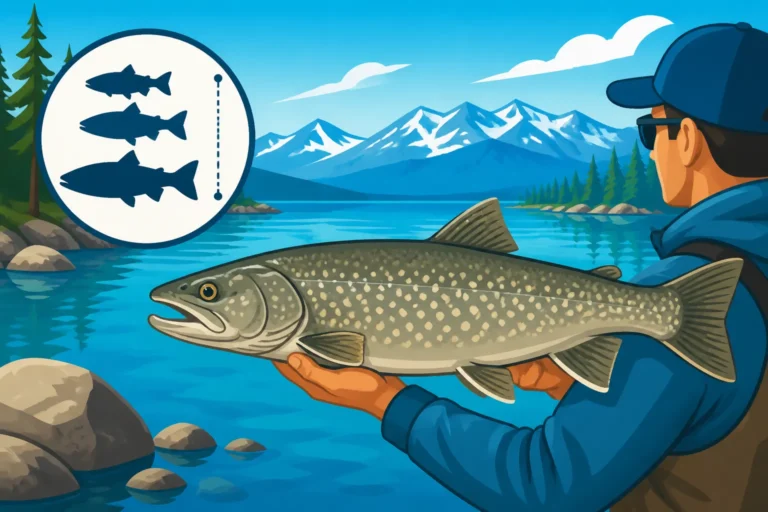
It’s a common scenario out on the water in Nevada, especially for those new to trout fishing: you hook into a beautiful fish, but then you pause. Is it a rainbow? Or a brown? The visual differences can be subtle, and knowing exactly what you’ve caught isn't just about curiosity; it's crucial for adhering to regulations and celebrating your catch accurately. This guide will walk you through the distinct features that separate the magnificent brown trout from the vibrant rainbow trout, helping you confidently identify your next catch.
The Subtle Art of Trout ID: Why It Matters
Mistaking one trout species for another might seem like a minor detail, but in the world of Nevada fishing, it can have real implications. Different trout species often have varying bag limits, size restrictions, or even specific open seasons depending on the waterbody. Imagine catching what you think is a legal rainbow, only to find out later it was an undersized brown, subject to immediate release. This kind of mix-up is not only frustrating but could also lead to issues with game wardens if you're not careful.
Beyond the regulations, correctly identifying your catch enhances your overall angling experience. Knowing which species you’re targeting or have successfully landed allows you to better understand their behavior, preferred habitats, and even diet. This knowledge helps you become a more effective angler, allowing you to refine your techniques and bait choices. Plus, sharing accurate stories and photos of your catches with friends or on social media is always more satisfying when you know exactly what you’re talking about!
Understanding Nevada's Diverse Trout Populations
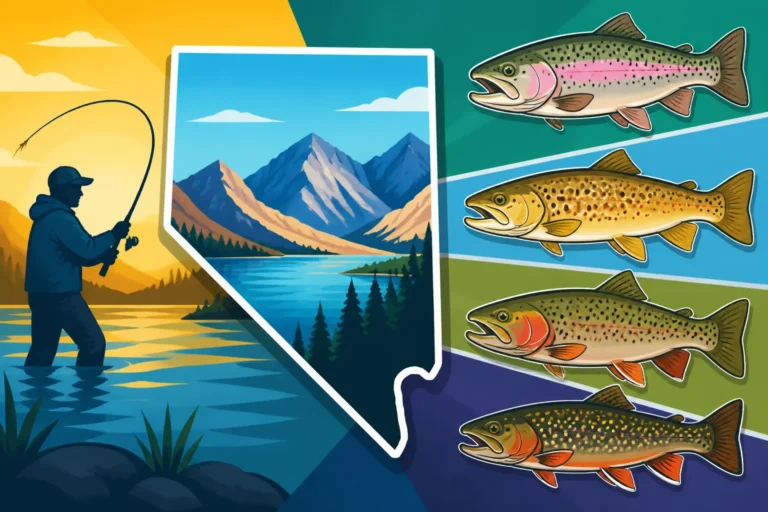
Nevada is home to a fantastic array of trout species, both native and introduced, that thrive in our diverse waters, from high mountain lakes to desert reservoirs. While the Lahontan cutthroat trout holds a special place as our state's native trout and a unique identifier, rainbow and brown trout are far more widespread and commonly encountered by anglers. You'll find rainbow trout in almost every stocked waterway, including many of the urban ponds in places like Las Vegas and Reno, while brown trout, known for their elusive nature and larger size potential, often prefer colder, more secluded waters, and are prized by many anglers.
Knowing the specific characteristics of each species allows you to appreciate the unique beauty of Nevada's fisheries. Are you fishing in a high-alpine stream where wild brown trout might lurk, or an urban pond freshly stocked with rainbows by NDOW? The answer influences not just identification but also your fishing approach. For an in-depth look at regulations, check out Nevada Fishing Regulations Explained and for what species you might encounter, see Nevada Fish Species Guide.
Key Distinguishing Features of Brown Trout
Brown trout ( Salmo trutta ) are often considered the "wise old men" of the trout world. They're typically more solitary, can be incredibly wary, and have a reputation for growing to impressive sizes. Identifying them usually involves looking at a combination of their overall coloration, spotting patterns, and specific fin features.
Coloration and Body Shape
Brown trout display a wide range of colors, which can vary significantly depending on their habitat, diet, and water conditions. However, a common theme is a golden-brown to yellowish-brown hue on their sides, often fading to a cream or yellowish-white belly. Their backs are typically darker, sometimes olive-green or dark brown. This overall brownish or golden tone is a primary indicator.
Their body shape is generally more robust and elongated than a rainbow trout's, giving them a powerful, streamlined appearance. They often have a somewhat larger head in proportion to their body, especially the older, larger specimens. You might notice a bit more of a "shoulder" to them, giving them a thick, muscular look which perfectly suits their predatory nature. They're built for holding strong currents and making powerful runs once hooked.
Spotting Patterns
This is perhaps the most reliable way to differentiate a brown trout from a rainbow trout. Brown trout are characterized by a scattering of dark spots over their back and sides, often extending onto their dorsal fin and sometimes the caudal (tail) fin. These spots are typically larger and fewer in number compared to rainbow trout.
Crucially, many of these dark spots on a brown trout will have a distinct "halo" or a pale ring surrounding them. Imagine a small, dark bullseye with a lighter border – that's often what you'll see. Interspersed among these dark spots, you'll almost always find reddish-orange spots, particularly along their lateral line. These red spots are a hallmark of the brown trout and are rarely, if ever, present on a rainbow trout. The combination of dark, haloed spots and red spots is a dead giveaway. You can learn more about where to find them by reading Brown Trout in Nevada Reservoirs.
Fin Characteristics
Pay close attention to the fins. The adipose fin (the small, fleshy fin between the dorsal and tail fins) of a brown trout often has an orange or reddish tint, which is another excellent distinguishing feature. While not always vibrantly colored, this subtle reddish hue can be very telling.
Their pectoral, pelvic, and anal fins are generally more rounded at the tips compared to the slightly more pointed fins of a rainbow. The tail fin of a brown trout is typically square or only very slightly forked, and usually lacks the heavy spotting that can be present on a rainbow trout's tail. These small details, when combined with their spotting and coloration, solidify the identification.
Key Distinguishing Features of Rainbow Trout
Rainbow trout ( Oncorhynchus mykiss ) are arguably the most iconic trout species in North America, known for their fighting spirit and widespread presence. They are the bread and butter of many fisheries, especially in Nevada, where they are regularly stocked. Identifying them also relies on a combination of color, spot patterns, and unique fin traits.
Coloration and Body Shape
Rainbow trout derive their name from the iridescent, often pinkish or reddish band that runs horizontally along their sides, from their gill plate to their tail. This "rainbow" stripe can be very prominent, especially in mature, wild, or spawning fish, but can also be quite subtle in hatchery-raised or stressed individuals. Their general body color is usually a bluish-green, olive, or steely grey on the back, fading to silvery sides and a white belly.
Their body shape tends to be more uniformly streamlined and torpedo-like compared to the slightly stockier brown trout. They often appear sleeker and less robust. While size can vary greatly depending on age and environment, their build is typically athletic and agile, making them excellent jumpers when hooked. Many anglers will instantly recognize the flash of a rainbow's silver sides and the vibrant pink stripe. If you're looking for where to catch these beauties, check out Rainbow Trout Fishing in Nevada.
Spotting Patterns
Unlike the large, haloed spots of brown trout, rainbow trout are covered in numerous small, dark spots. These spots are typically solid black or dark brown, without any light halos. They are densely distributed over their back, sides, and importantly, often extend profusely onto their dorsal fin and the entire caudal (tail) fin.
This heavy spotting on the tail fin is a particularly good differentiator. If you see a tail covered in small, distinct spots, you're almost certainly looking at a rainbow trout. Furthermore, rainbow trout do not possess the reddish-orange spots that are characteristic of brown trout. If you see red spots, it’s not a rainbow. This difference in spotting pattern is often the most straightforward visual cue for identification.
Fin Characteristics
The adipose fin of a rainbow trout is typically uncolored, matching the dorsal coloration, or sometimes having a dark edge. It generally lacks the reddish or orange tint seen in brown trout. This is another quick check.
Their fins, especially the pectoral and pelvic fins, tend to be a bit more pointed at the tips compared to the rounder fins of a brown trout. The tail fin of a rainbow trout is usually square or slightly forked, much like a brown trout, but as mentioned, it will almost always be heavily spotted with small, dark spots. This heavy spotting on the tail is a reliable indicator and often present even when the lateral stripe is faded.
A Quick Comparison and Field Tips
When you're out on the water, especially if you're fishing a spot known to hold both species, quick identification is key. Sometimes the distinct features might be less pronounced, for example, a hatchery-raised rainbow might have a less vibrant stripe, or a brown trout might be unusually silver. This is where combining observations really helps.
Here’s a handy table summarizing the main differences:
| Feature | Brown Trout | Rainbow Trout |
|---|---|---|
| Primary Color | Golden-brown, yellowish-brown, olive-brown | Bluish-green, olive, or steely grey with silver sides |
| Side Band | Absent | Prominent pink/reddish lateral stripe (rainbow band) |
| Dark Spots | Larger, fewer, often with light halos | Numerous, smaller, solid black, no halos |
| Red Spots | Almost always present, especially on sides | Absent |
| Tail Spots | Usually few to none | Heavily spotted |
| Adipose Fin | Often orange or reddish tint | Typically uncolored or dark-edged |
| Tail Shape | Square to slightly forked | Square to slightly forked |
| Head Size | Often slightly larger relative to body | More proportionate to body |
What to Look for First
When you pull a trout out of the water in Nevada, immediately look for two things:
- The Lateral Stripe: Does it have that distinctive pink or reddish "rainbow" stripe along its side? If yes, it's very likely a rainbow. If no, move to the next step.
- Red Spots and Haloed Dark Spots: Look closely at the dark spots. Do they have lighter halos around them? Are there any reddish-orange spots mixed in, particularly along the lateral line? If yes to either, you're looking at a brown trout.
These two visual cues will typically give you your answer right away. Sometimes, a very dark, wild rainbow might have a faded stripe, or a light-colored brown might seem ambiguous. This is where the tail spotting and adipose fin color come in as secondary checks. Keeping a small, waterproof field guide in your tackle box, maybe one you picked up on Amazon, can be a great reference.
Environmental Factors Affecting Appearance
It’s important to remember that fish coloration can be influenced by their environment and diet. Trout in clear, rocky streams might look different from those in murkier, vegetation-rich reservoirs. For instance, brown trout caught in very clear, cold mountain streams might be darker and more vibrantly spotted, while those from a larger, more turbid reservoir might appear paler or more silvery. The same goes for rainbows; a wild rainbow from the Truckee River might have a deeper, more pronounced stripe than a recently stocked fish from an urban pond.
Even the time of year can play a role. During spawning season, both species can exhibit more intense coloration. Male brown trout, in particular, can develop a pronounced hooked jaw (kype) and become very dark and aggressive-looking. Don't let these variations throw you off too much; always revert to the core distinguishing features like the presence or absence of red spots and the specific patterns of the dark spots. A good pair of polarized sunglasses, available on Amazon, can also help you see these details more clearly, even when the fish is still in the water or just netted. Knowing these distinctions is vital, especially when dealing with specific regulations like those discussed in Nevada Trout Daily Limit Rules or when considering if you need a Nevada Trout Stamp Requirements.
Disclaimer
This article is for general informational purposes only and does not constitute professional advice. Laws, prices and regulations vary by location and change over time. Consult a qualified professional for guidance on your specific situation.