Best water temperature for bass fishing
One of the most frustrating things for any bass angler, especially here in Nevada where conditions can change so dramatically, is hitting the water when the fish just aren't biting. You've got your favorite lures, your lucky hat, and a perfect spot, but if the water temperature isn't right, it can feel like you're casting into a void. This comprehensive guide is going to peel back the layers on how water temperature dictates bass behavior, helping you understand when and where to find those elusive lunkers in Nevada's diverse fisheries.
Understanding Bass Thermoregulation in Nevada Waters
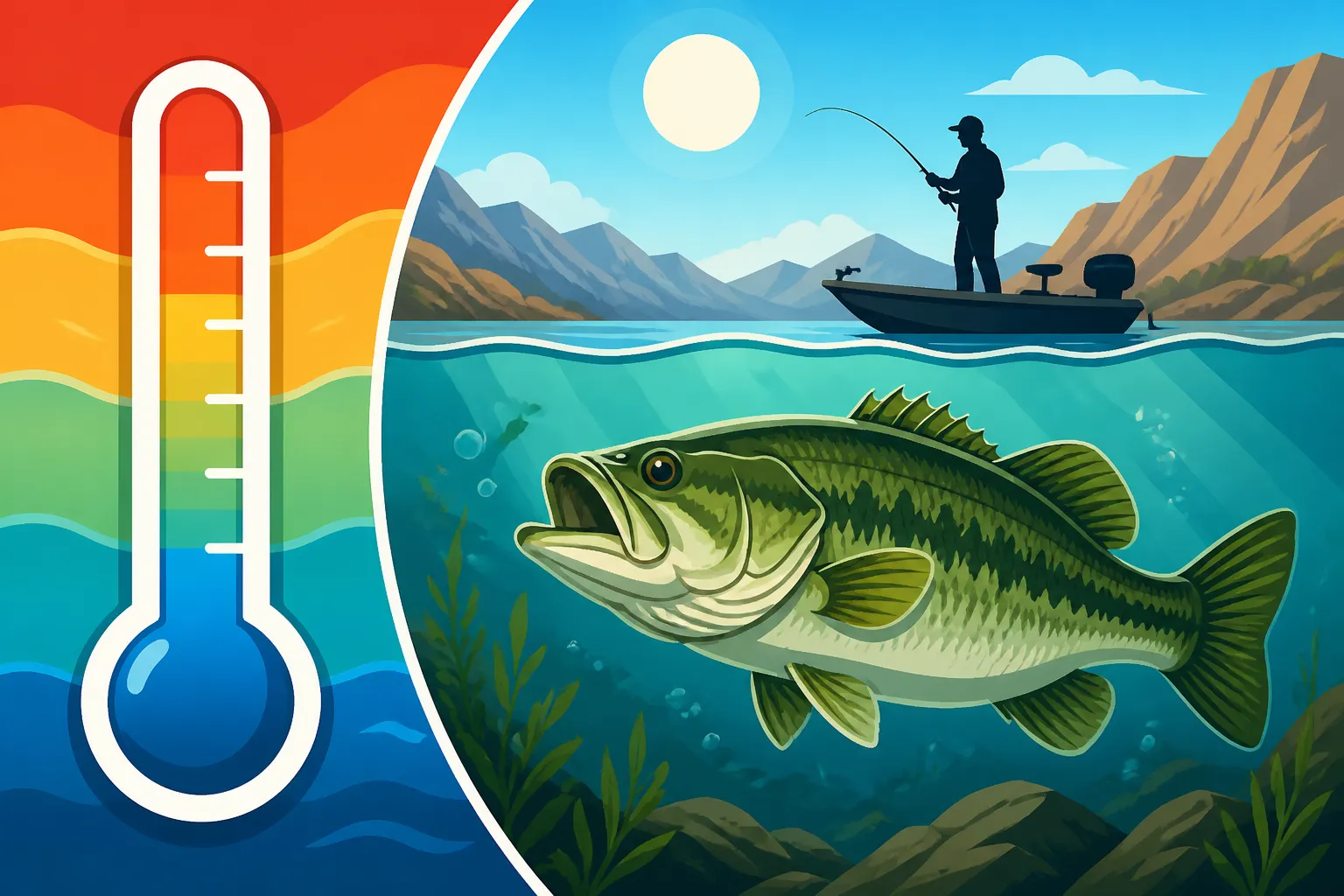
Bass, whether we're talking about largemouth or smallmouth, are cold-blooded creatures. This means their body temperature is directly influenced by the temperature of the water around them. Unlike us, they can't just throw on a jacket or crank up the AC. Their entire metabolic process – from digestion to spawning – is regulated by water temperature, making it arguably the most critical factor in their behavior and location.
How Water Temperature Impacts Bass Metabolism
When water temperatures are too cold, a bass's metabolism slows way down. They become sluggish, move less, and digest food at a much slower rate. Imagine trying to run a marathon after eating a huge holiday meal – it's just not going to happen efficiently. Similarly, bass in very cold water are not actively chasing down prey; they're conserving energy, making them much harder to entice. Their feeding windows shrink, and their movements become minimal, often retreating to deep, stable areas.
Conversely, if the water gets too warm, a bass's metabolism can go into overdrive, becoming stressed and needing to find cooler, oxygen-rich water. This is a common challenge in many Nevada lakes during the scorching summer months. When it's too hot, bass seek out thermal refuges – deep water, shade, or areas with springs – to cool down and maintain a comfortable metabolic rate. They might still feed, but often during cooler parts of the day, like dawn or dusk, and with less aggression, as they're trying to conserve energy and avoid overheating. Finding that "just right" temperature zone is key to consistent success.
The "Comfort Zone" for Nevada Largemouth and Smallmouth
While both largemouth and smallmouth bass are warm-water species, they do have slightly different preferences when it comes to their ideal comfort zones. Knowing these subtle differences can make a huge impact on your success, especially when fishing a lake that holds both, like Lake Mead or Lake Mohave. The specific temperatures are not hard and fast rules, but general ranges where these fish are most active, feeding, and less stressed.
For largemouth bass, their sweet spot generally falls between 60 to 75 degrees Fahrenheit. This range ignites their predatory instincts and gets them actively cruising shallow to mid-depth areas, looking for a meal. Below 50 degrees, they become quite lethargic, and above 80 degrees, they start looking for cooler, deeper water or heavy shade to escape the heat. In Nevada, where the sun beats down relentlessly, recognizing when the water is pushing into that upper limit is crucial for knowing when to target them in deeper haunts or during the coolest hours. If you're looking to consistently hook into these green giants, understanding their preferred thermal zones is paramount, as detailed in our guide on Largemouth Bass Fishing in Nevada.
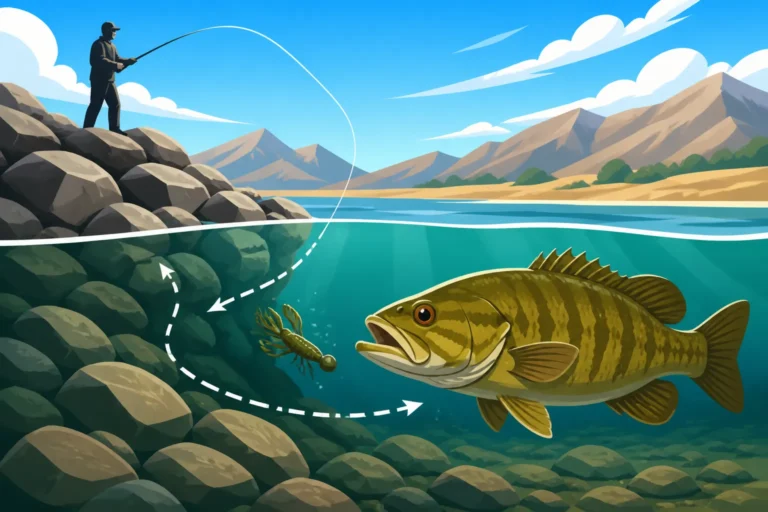
Smallmouth bass, often found in clearer, rockier waters like Lake Mohave, tend to prefer slightly cooler temperatures than largemouths. Their optimal activity range is usually between 55 to 70 degrees Fahrenheit. They're a bit more tolerant of colder water than largemouth, often remaining active deeper into the fall and starting earlier in the spring. However, they're also sensitive to very warm water, and in the heat of a Nevada summer, they'll descend to considerable depths to find their preferred temperatures, often around rocky ledges and drop-offs. Being aware of these temperature preferences is vital for locating them, as explored in our guide on Smallmouth Bass Fishing in Nevada.
Seasonal Water Temperature Patterns and Bass Behavior
Nevada's desert climate means dramatic seasonal temperature swings, which directly impact the behavior and location of bass throughout the year. What works in spring won't work in summer, and vice-versa. Adapting your approach to these seasonal shifts in water temperature is the secret sauce to becoming a successful bass angler here.
Springtime Warming and the Bass Spawn
As the harsh Nevada winter finally gives way to spring, the warming trend in the water is like an alarm clock for bass. Water temperatures begin to climb from the 40s into the 50s, signaling the pre-spawn phase. During this time, bass are emerging from their deeper wintering grounds, moving to shallower bays and flats where the water warms fastest. They're feeding aggressively to build up energy reserves for the upcoming spawn, making this one of the most exciting times to fish. This is when you'll find them cruising transition areas, looking for warmer pockets.
Once water temperatures consistently hit the mid-50s to low 60s Fahrenheit, the urge to spawn becomes overwhelming. This is the spawn phase, a period when bass move into very shallow water, often visible from the bank, to build their nests. For largemouth, this is typically around 60-68 degrees F, and for smallmouth, it's a bit cooler, maybe 58-65 degrees F. During the spawn, bass are highly protective of their beds and eggs. While you can certainly catch them, many anglers practice catch-and-release to ensure the successful reproduction of the species. It's important to be mindful of local Nevada Bass Season and Spawn Timing regulations during this sensitive period.
After the spawn, as water temperatures continue to rise into the high 60s and low 70s, bass enter the post-spawn phase. They're often exhausted from the spawning process and may move slightly deeper to recover, or cruise open-water structures. However, they soon resume feeding, often targeting baitfish that are also prolific in the spring. This phase can be a bit tougher than pre-spawn, but understanding that bass are recovering and still needing to feed will help you adjust your presentation. Look for them around points, submerged cover, and ledges.
Summer Heat and Deep Water Retreats
When the Nevada summer kicks into full swing, water temperatures can soar, especially in the shallower areas of lakes and reservoirs. Once surface temperatures push into the high 70s and 80s, bass will actively seek out cooler water. This is where your knowledge of thermal regulation really comes into play. They won't just disappear; they'll simply move to more comfortable zones.
Often, this means retreating to deeper water. They'll hug channel edges, drop-offs, submerged humps, and even the main lake basin in larger bodies of water like Lake Mead. These areas provide relief from the scorching surface temperatures and usually offer more stable oxygen levels. Finding these deep water holding patterns requires different techniques, which are covered in depth in our guide on Deep Water Techniques for Lake Mead Bass. Using a good fish finder to identify structure and schools of baitfish in these deeper zones becomes invaluable.
Another strategy bass employ to beat the heat is to utilize shade and thermoclines. Shade, whether from overhanging trees, cliff faces, or even large floating structures, can offer a significant temperature drop. Bass will often position themselves in these shaded areas, especially during the brightest parts of the day. Thermoclines, which are distinct layers of water with different temperatures, also play a critical role. Bass will often suspend just above or within the thermocline, as it offers a cooler, more stable environment with adequate oxygen. Early mornings and late evenings, when surface temperatures are cooler, are often the best times to target bass in summer. Check out our guide on Best Time of Day to Fish in Summer Heat for more tips.
Fall Cooling and Feeding Frenzies
As summer heat gives way to the cooler temperatures of fall, bass enter another highly active and rewarding phase for anglers. When water temperatures begin to drop from the high 70s into the low 70s and 60s, it triggers a strong feeding response. Bass instinctively know winter is coming, and they need to pack on calories. This creates a fantastic window for active fishing.
During the early fall, when temperatures are still relatively warm (low 70s), bass might still be found in deeper areas, but they'll start moving shallower more frequently, especially during overcast days or morning and evening hours. As the water continues to cool into the mid-60s, baitfish migrate into creeks and shallower bays, and the bass follow. This creates incredible opportunities for anglers. Look for schools of shad or other forage, and you’re likely to find bass right on their heels.
This is a prime time for power fishing techniques, as bass are aggressively chasing down prey. Large crankbaits, spinnerbaits, and topwater lures can be incredibly effective. Pay attention to main lake points, creek mouths, and areas with submerged timber or rock piles where baitfish congregate. The bass will be actively feeding, making them less finicky about presentations. The drop in water temperature invigorates them, and their focus shifts almost entirely to feeding.
Winter Chill and Dormancy
Nevada winters, especially in the northern parts of the state, can bring frigid water temperatures. Once the water dips below 50 degrees Fahrenheit, bass become much less active. While they don't truly hibernate, their metabolism slows significantly, and they enter a state of semi-dormancy. This doesn't mean you can't catch them, but your approach needs to change dramatically.
In winter, bass will typically move to the deepest, most stable parts of the lake or reservoir. This could be main lake channels, deep points, or areas with significant vertical structure like submerged timber or rock walls. They seek out areas where the water temperature is consistent, often only fluctuating a degree or two, and where they can find cover. Their feeding windows are short, and they prefer slow-moving, easy meals.
Winter bass fishing often requires finesse tactics. Slow presentations, small baits, and patience are key. Jigs, drop shots, and slow-rolled swimbaits can be effective. You're not looking for aggressive strikes; often, a bite will feel like a slight "thump" or just added weight on your line. While challenging, catching a big bass in the dead of winter can be incredibly rewarding due to the skill and patience required.
Reading Water Temperature and Finding Bass Hotspots
Knowing the ideal temperature ranges is one thing, but actually measuring and interpreting water temperature on the fly is another. Modern technology and a keen eye for nature's clues can help you pinpoint those productive zones.
Tools for Accurate Temperature Measurement
In today's angling world, you're not guessing the water temperature. There are several tools available that can give you precise readings, empowering you to make informed decisions about where and how to fish.
The most common and arguably most useful tool is a fish finder with a temperature sensor. Most modern units, even entry-level models available on Amazon, come equipped with a transducer that provides real-time water temperature readings. These are invaluable for identifying thermal breaks, which are sudden changes in water temperature that can concentrate bass. You'll often see these breaks around river inflows, springs, or areas where shallow, warm water meets deeper, cooler water. A good fish finder can also show you depth, structure, and baitfish, making it an essential piece of gear. Our guide on Best Fish Finder for Reservoir Fishing dives deeper into this topic.
For those without a boat or wanting a more portable option, handheld waterproof thermometers are excellent. Many come with long cords, allowing you to get readings at different depths from shore or a kayak. Some even float, making retrieval easy if dropped. Another simple option is a boat-mounted thermometer that dangles off the side, giving you a quick surface reading. While surface temperature isn't the whole story, it's a great starting point, especially in shallower waters. Remember, the deeper you go, the cooler the water usually gets, so a precise temperature at your target depth is ideal.
Beyond dedicated gadgets, you can use online resources and local knowledge. Many Nevada Department of Wildlife (NDOW) websites or local fishing forums sometimes share current lake temperatures, especially for larger reservoirs like Lake Mead or Lake Tahoe. Talking to local bait shop owners or other anglers can also provide invaluable real-time insights into temperature trends and bass behavior. The more data you gather, the better equipped you'll be to predict where the bass are holding.
Locating Temperature-Driven Structure
Once you understand the importance of water temperature, you start looking at structure and cover in a whole new light. Bass aren't just hiding behind a rock; they're hiding behind a rock that's at the right temperature. This means intentionally seeking out features that offer thermal advantages.
In the spring, when bass are seeking warmth, focus on shallow, dark-bottomed coves and north-facing banks that receive maximum sunlight. These areas warm up fastest, drawing baitfish and hungry bass. Look for areas with sparse cover like isolated stumps, small rock piles, or emergent vegetation that offer a slight ambush point in the warming water. For specific tips on these areas, refer to Shallow Water Techniques for Cove Bass Fishing. As the water continues to warm, transition areas like the mouths of these coves or points leading into them become prime targets.
During the sweltering Nevada summer, the game changes entirely. Bass will gravitate towards deep ledges, humps, and submerged timber that create thermal refuges. Look for points that extend far into the main lake, providing access to deep water. Consider areas where cool springs might feed into the lake, creating localized cold water pockets, or where vertical rock walls provide deep shade throughout the day. In many desert lakes, the thermocline (a distinct temperature layer) is crucial. Bass will often suspend just above it, finding the optimal balance of temperature and oxygen. They also use the shade cast by canyon walls or large marinas. On Lake Mead, for instance, the sheer cliffs can provide crucial shade relief for hours during the peak sun.
In the fall, as temperatures begin to drop, bass will follow baitfish to creek channels, main lake points, and shallower flats near deep water access. They're often found around hard cover like riprap, rock piles, or docks that absorb and radiate some heat, making them slightly warmer than the surrounding water on sunny days. Conversely, in winter, they'll be hunkered down in the deepest, most stable parts of the lake, often around the main river channel or deepest sections of the reservoir. Targeting these deeper structures with slow, deliberate presentations is key to coaxing a bite from a lethargic winter bass.
Adapting Your Techniques to Water Temperature
Knowing the water temperature is only half the battle. The other half is understanding how to adjust your lure selection, presentation, and overall fishing strategy to match the bass's mood and activity level, which are directly influenced by that temperature.
Lure Selection and Presentation for Different Temperatures
The types of lures and how you work them are hugely dependent on the water temperature. A fast-moving reaction bait that works wonders in 65-degree water will likely get ignored in 45-degree water.
When water temperatures are cold (below 50-55 degrees F), bass are sluggish and conserve energy. This means slow, deliberate presentations are key. Finesse jigs, drop shot rigs with small worms, and slow-rolled swimbaits or crankbaits are often effective. Colors tend to be more natural or subtle. The retrieve should be agonizingly slow – think small hops, drags, and long pauses. Bass are not going to chase anything fast. They're looking for an easy meal that practically falls into their mouth.
In cool to ideal temperatures (55-75 degrees F), bass are active and aggressive. This is when a wide variety of lures shine. Crankbaits, spinnerbaits, chatterbaits, topwater lures (when temps are above 60F), and Texas-rigged plastics are all excellent choices. Presentation can range from moderate to fast. Bass are willing to chase, so covering water efficiently with reaction baits can be very productive. This is the prime time for many power fishing techniques. Don't be afraid to experiment with brighter colors or more erratic actions. For more specific lure ideas, check out our guide on Best Lures for Nevada Bass.
When water temperatures are warm to hot (above 75-80 degrees F), bass can become lethargic due to the heat, or they might be active in deeper, cooler water. In shallower areas during cooler parts of the day (dawn/dusk), topwater frogs or poppers might still work well, often drawing explosive strikes as bass ambush from cover. However, during the day, you'll often need to go deeper. Large deep-diving crankbaits, heavy jigs, and Carolina rigs presented slowly near structure in deeper water can be effective. Consider natural colors or dark colors that provide a good silhouette against the surface. Remember, bass are trying to conserve energy, so while they may be in deeper, cooler water, their feeding might still be less aggressive than in their optimal range.
Fishing Strategy Adjustments Throughout the Day
The sun beating down on Nevada's lakes means water temperatures can fluctuate quite a bit from early morning to late afternoon, and these daily changes require dynamic adjustments to your fishing strategy.
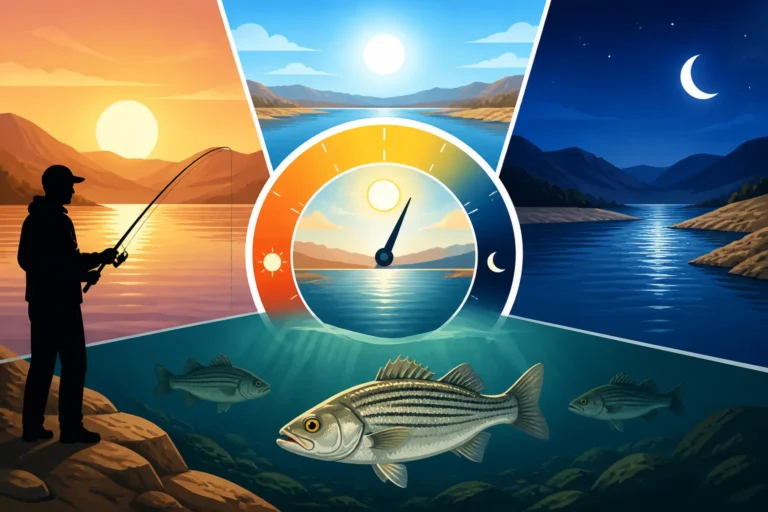
In the early morning, especially during spring, fall, and even summer, surface temperatures are at their coolest. Bass might be found shallower, cruising flats or points that haven't been affected by the sun yet. Topwater lures, jerkbaits, or spinnerbaits can be highly effective as bass might be looking for an easy meal before the heat sets in. This is the time to target those areas that will warm up first.
As the sun rises higher and warms the water, especially in summer, bass will start to retreat. They'll move to deeper water, seek out shaded areas, or position themselves under thick cover. This is when you'll need to adjust your approach, switching to deeper diving baits, jigs, or plastics, and targeting structure that offers thermal refuge. This might mean fishing vertically over deep brush piles, casting into the shade of a cliff, or targeting the mouths of coves where slightly cooler water from the main lake is present. Consider fishing slower, letting your bait sit for longer, as bass might be less willing to chase.
In the late afternoon and evening, as the sun begins to set and surface temperatures start to drop, bass may begin to move shallower again, similar to their early morning patterns. This can trigger another feeding window, especially during the warmer months. Topwater baits can become effective once more as bass come up to feed. This daily cycle of movement driven by temperature is predictable, and by understanding it, you can stay on top of the fish all day long, rather than just during one "hot" period. The ability to switch between Shallow Water Techniques for Cove Bass Fishing and deeper strategies is paramount.
| Water Temperature Range | Bass Behavior | Recommended Lure Types | Presentation Style |
|---|---|---|---|
| Below 50°F | Lethargic, deep, conserve energy | Jigs, Drop Shots, Blade Baits, Small Swimbaits | Very slow, subtle, bottom-oriented |
| 50-59°F (Cold) | Slowly active, pre-spawn/winter | Finesse Jigs, Jerkbaits, Lipless Crankbaits | Slow, methodical, occasional pauses |
| 60-68°F (Ideal) | Highly active, spawning/pre-spawn/post-spawn | Crankbaits, Spinnerbaits, Jigs, Topwater | Moderate to fast, varied retrieves |
| 69-75°F (Warm) | Active, post-spawn/early summer | Topwater, Crankbaits, Frogs, Texas Rigs | Moderate, focus on cover |
| Above 75°F (Hot) | Seeking cooler, deeper water, stressed | Deep Diving Crankbaits, Heavy Jigs, Carolina Rigs | Slow, deliberate, target deep structure |
Disclaimer
Fishing conditions, regulations, and fish populations can change rapidly. Always consult the latest Nevada Department of Wildlife (NDOW) regulations and local advisories before heading out. This guide is for informational purposes only and does not guarantee fishing success. Practice responsible angling, including catch-and-release, to help conserve Nevada's fisheries.