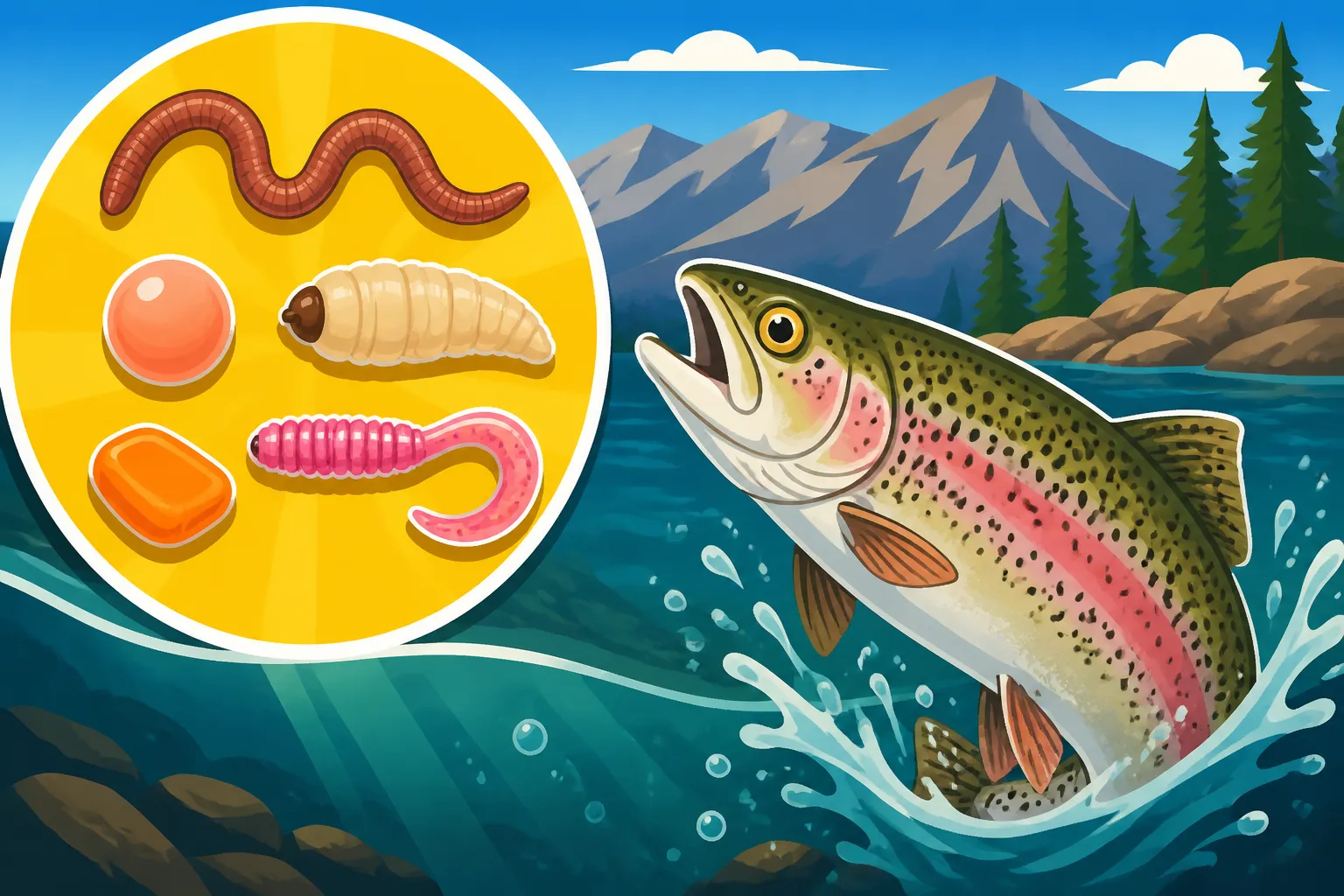
Best Bait for Stocked Trout
Oh, the quest for the perfect bait for stocked trout! It's a conversation I've had countless times with fellow anglers around campfires and at bait shop counters across Nevada. We've all been there: staring at a freshly stocked pond, certain the trout are just begging to bite, only to be met with frustrating indifference. It feels like a puzzle sometimes, trying to figure out what those newly introduced fish are even looking for. This guide is all about cracking that code, diving deep into the baits that really work for stocked trout in our diverse Nevada waters, helping you turn those "no bite" days into memorable catches.
Understanding Stocked Trout Behavior in Nevada Waters
Before we even talk about specific baits, it's crucial to understand who we're fishing for. Stocked trout aren't wild trout. They've lived a very different life, and their initial behavior once they hit a new lake or pond is a direct reflection of that upbringing. This understanding is your first and most important tool in choosing the right bait.
The Transition from Hatchery to Wild
Imagine being raised in a cozy, predictable environment where food is always served on time, always looks and tastes the same, and requires no effort to acquire. That's essentially the life of a hatchery trout. They spend their days in concrete raceways, fed a consistent diet of protein-rich pellets. They don't have to hunt, evade predators, or distinguish between natural food sources. Their world is simple.
Then, suddenly, they're scooped up, put in a truck, and released into a vast, open body of water – perhaps one of our beautiful urban ponds, a sprawling reservoir, or a high mountain lake. It's a massive culture shock! This new environment is full of unfamiliar sights, sounds, and most importantly, smells and tastes. For the first little while, sometimes days or even weeks, these trout are often in a state of bewilderment. They might be disoriented, stressed, and hesitant to feed on anything that doesn't resemble their old, reliable hatchery pellets. This is why certain baits, mimicking that familiar food, become incredibly effective immediately after stocking.
Impact of Stocking Schedules and Location
The Nevada Department of Wildlife (NDOW) does a fantastic job with its stocking programs, strategically releasing trout into various waters throughout the state. Understanding when and where fish are stocked is incredibly valuable. For instance, our urban ponds in places like Las Vegas and Reno often receive frequent stockings, sometimes weekly during cooler months. These fish might remain closer to the release points, and because of the consistent reintroduction, they might retain that "pellet-trained" behavior for longer, or they might become very accustomed to the most popular baits used by local anglers. Knowing the Nevada Trout Stocking Schedule can give you a significant advantage.
Contrast this with a larger reservoir or a more remote mountain lake that might only get stocked once or twice a year. In these bigger, more natural environments, the trout have more space to disperse, and the pressure to adapt to natural food sources is much higher. After the initial shock, they'll often start keying into insects, small baitfish, or even crayfish much more quickly. Your bait choice needs to reflect this adaptation. The sheer size of a body of water like Wildhorse Reservoir, for example, means trout will spread out and find different niches, requiring different approaches than a small community pond.
Environmental Factors Affecting Bites
Even with the perfect bait, environmental conditions play a massive role in whether a stocked trout decides to bite. Nevada's climate can be extreme, and water conditions reflect that. Water temperature is perhaps the most critical factor; trout are cold-water fish and thrive in specific temperature ranges. If the water is too warm, they become lethargic and less likely to feed aggressively. In colder water, their metabolism slows, but they'll still feed, often needing a slower, more appealing presentation.
Water clarity also dictates bait choice. In clear waters, natural colors and subtle presentations are often best, as fish have keen eyesight. In turbid or stained water, brighter colors and baits with strong scents or vibrations can help fish locate your offering. Oxygen levels, often tied to temperature and water movement, also affect fish activity. A stagnant pond on a hot day with low oxygen will likely result in a tough bite, no matter how good your bait is. Paying attention to these subtle environmental cues can help you fine-tune your approach, even if you're using the "best" bait.
The Power of Scent and Flavor: Dough Baits and Pastes
When it comes to stocked trout, especially those fresh out of the hatchery, scent and flavor are often king. These fish are programmed to respond to specific chemical cues, and certain dough baits and pastes are expertly designed to exploit that instinct. They're typically packed with the strong, appealing smells and tastes that trout associate with food, often mimicking their hatchery diet.
PowerBait and Similar Formulations
Let's be honest, for many anglers, especially those just starting out or fishing urban ponds, the first thing that comes to mind for stocked trout is PowerBait (and other similar scented dough baits). And for good reason! These moldable, brightly colored, and often buoyant concoctions are incredibly effective. Their success lies in a few key factors:
Firstly, they are heavily scented to attract trout from a distance. Many formulas incorporate a strong garlic or cheese smell, or even a specific "trout attractant" scent that drives fish wild. This smell, combined with the often vibrant colors like chartreuse, orange, or rainbow, acts as a powerful visual and olfactory beacon. Secondly, their moldable nature allows you to shape them around a small treble hook, creating a compact, appealing presentation. The buoyancy of many PowerBait varieties is also a huge advantage. When rigged correctly with a small split shot above the hook, the bait will float off the bottom, putting it right at eye level for cruising trout who might not be looking down. This subtle lift can make all the difference, especially when fishing over silty or weedy bottoms.
When using PowerBait, don't be afraid to experiment with colors and shapes. Sometimes a small, pea-sized ball is all it takes, while other times a slightly larger, tear-drop shape works better. A little tip from an old-timer: sometimes adding a tiny marshmallow with your PowerBait can give it even more buoyancy and a different texture that can trigger a strike. You can find a vast array of colors and scent profiles at stores like Bass Pro Shops, where you can pick up a few different jars to see what the fish are hitting on a particular day.
Natural Scented Baits: Worms and Eggs
While manufactured dough baits are fantastic, we shouldn't forget the original "scent and flavor" powerhouses: natural baits. These offerings have stood the test of time because they are inherently appealing to fish, stocked or wild, as trout begin to key into natural food sources.
Nightcrawlers, in particular, are a universal trout bait. Their natural scent, movement, and juicy appeal are hard for a hungry trout to resist. For stocked trout, you often don't need a whole nightcrawler. Cutting one into smaller, manageable pieces – say, one to two inches – can make it more appealing and prevent smaller fish from just nibbling without getting hooked. You can hook a piece of nightcrawler once or twice, leaving the ends to wiggle enticingly. Sometimes, floating a small piece under a bobber can be deadly effective, especially near drop-offs or structure where trout might be holding. The subtle wiggling of a live worm is a natural trigger that no artificial bait can truly replicate.
Salmon eggs, both natural and artificial, are another classic. The vibrant color and concentrated scent of cured salmon eggs are incredibly attractive. They can be fished individually on a small hook, or in clusters, especially if you're targeting larger trout. Artificial salmon egg imitations often come in various colors and scents and offer the advantage of being cleaner to handle and staying on the hook longer. Both worms and eggs work well when drift-fished in currents or suspended under a bobber. They provide a familiar, natural food source as trout transition from their hatchery diet, making them an excellent choice if the PowerBait bite slows down or the fish become more accustomed to their new environment.
Live and Imitation Baits for Active Feeders
As stocked trout acclimate to their new surroundings, they begin to shed some of their hatchery habits and tap into their natural instincts. This is when baits that offer movement, lifelike presentation, and the appearance of natural prey become incredibly effective. These are often the baits that entice more aggressive, active feeders.
Worms and Larvae
We touched on nightcrawlers already for their scent, but their live movement is a critical factor for active feeders. A squirming nightcrawler, whether whole or in pieces, sends out vibrations and visual cues that mimic natural aquatic insects or worms, which are a staple diet for trout in the wild. For stocked trout that have been in the water for a few days or weeks, this natural action can be irresistible. Consider using smaller, more active worms like red wigglers or even mealworms and wax worms. These smaller larvae are especially effective in clear water or when trout are being finicky.
When rigging these, try to keep them as lively as possible. For nightcrawlers, a simple single hook through the nose or once through the body allows maximum wiggling. For mealworms or wax worms, threading them onto a small hook (sizes 10-14) is usually best. You can fish them under a small bobber, allowing them to drift naturally with the current, or on a light bottom rig that lets them slowly settle to the bottom. The key is to let the bait's natural action do the work. These can be purchased at most bait shops, or even ordered in bulk online from retailers like Amazon for convenience, ensuring you always have a fresh supply.
Minnows and Small Fish Imitations
While stocked trout might not immediately start hunting larger prey, as they grow and become more accustomed to their environment, their predatory instincts kick in. Small baitfish become a significant part of their diet. This is where using live minnows (check local regulations for legality and size limits!) or lures that convincingly imitate them can be incredibly productive.
If live minnows are legal, hooking them lightly through the back or lips and fishing them under a bobber or free-lining them can be incredibly effective for larger, more aggressive stocked trout. The erratic darting and flashing of a live minnow is a powerful trigger. However, many waters restrict live baitfish, so artificial imitations become essential. Small swimbaits, jerkbaits, or even simple plastic grubs in shad or minnow patterns can work wonders. Colors that mimic local baitfish, like silver, pearl, or olive, are often a good starting point.
These types of baits are particularly useful in larger reservoirs where trout have more room to roam and encounter natural forage. When fishing with minnow imitations, a subtle retrieve that mimics a wounded baitfish – a few twitches, then a pause – can often provoke a strike from a trout that might ignore static bait. This approach often requires a bit more finesse and active fishing than simply waiting for a bite, but the rewards can be substantial, especially for those larger, more wary trout.
Artificial Lures: When Presentation Matters Most
Sometimes, stocked trout want more than just scent and flavor – they want action. This is where artificial lures shine. Designed to mimic injured baitfish, insects, or other prey through their movement, flash, and vibration, lures can trigger an aggressive, reactive strike from a trout that might otherwise ignore a static bait. They demand an active approach from the angler, making them incredibly rewarding to fish.
Spinners and Spoons
Spinners and spoons are among the most classic and effective lures for trout, stocked or wild. Their success lies in their ability to create flash and vibration in the water, mimicking an injured or fleeing baitfish, or even a large insect.
Spinners, like the popular Rooster Tails, Mepps Aglias, or Panther Martins, feature a blade that rotates around a central shaft when retrieved, creating a mesmerizing flash and a distinct thump in the water. This combination is incredibly attractive to trout. Experiment with different blade colors (silver, gold, copper, painted patterns) and body colors (chartreuse, black, white, rainbow). Generally, brighter colors work well in stained water or low light, while more natural metallic finishes are better in clear water. The key to fishing a spinner is a steady retrieve, just fast enough to get the blade spinning properly. You can vary the retrieve speed, add a few twitches, or let it sink a bit before starting to reel to cover different depths.
Spoons, such as the Kastmaster, Phoebe, or Little Cleo, are designed to flutter and wobble as they sink and are retrieved, imitating a wounded baitfish. Their irregular action and flash are irresistible to aggressive trout. Spoons come in various weights, sizes, and colors. Heavier spoons allow for longer casts, which can be crucial when shore fishing large lakes or reservoirs. Lighter spoons have a more exaggerated flutter. Again, metallic finishes like silver and gold are staples, but spoons with painted patterns, like blue/silver or firetiger, can also be highly effective. A stop-and-go retrieve, allowing the spoon to flutter on the fall, often triggers strikes.
Small Jigs and Flies
For a more subtle, finesse approach, small jigs and fly patterns can be incredibly effective, especially when fish are pressured or less aggressive. These lures excel at mimicking aquatic insects, larvae, or small baitfish with minimal disturbance.
Micro jigs, often consisting of a small lead head (1/32 to 1/8 ounce) paired with a tiny plastic grub, tube, or feather tail, are fantastic. The beauty of jigs is their versatility. You can cast them out and slowly retrieve them with subtle twitches, let them fall and bounce along the bottom, or suspend them under a small bobber for a static presentation with minimal movement. Tipping a micro jig with a piece of nightcrawler or a mealworm can create a hybrid bait that combines the visual appeal of a lure with the natural scent of bait, often referred to as "sweetening the deal."
For those who enjoy fly fishing, even for stocked trout, patterns like Woolly Buggers, various nymph patterns (Prince Nymph, Pheasant Tail), or even small midge patterns can be highly effective. While fly fishing often targets wild trout in streams, many stocked waters, especially those with good insect populations, will see trout keying into flies. You can use traditional fly casting techniques, or even incorporate spinning gear with a clear casting bubble to present flies to distant fish without a fly rod. The subtle, natural movement of a well-presented fly can be deadly, particularly in clearer waters where trout are more visually oriented. How to Fish for Trout in Nevada delves deeper into these techniques, and you can explore a range of specific fly patterns at a store like Bass Pro Shops.
Essential Gear for Stocked Trout Success
Having the right bait is only half the battle. The other half is having the appropriate gear to present that bait effectively, feel the subtle bites, and successfully land your catch. For stocked trout, especially in often-pressured environments, light and sensitive tackle is usually the way to go.
Rod, Reel, and Line Selection
For general stocked trout fishing, a light to ultralight spinning combo is often ideal.
- Rods: Look for a rod in the 5'6" to 7' range, with a fast or moderate-fast action. This action allows for both good casting distance with lightweight baits and enough sensitivity to feel those delicate trout bites. A lighter power rating (ultralight or light) is crucial for not overpowering smaller trout and making the fight enjoyable. Many entry-level combos are perfect for this, and you can find excellent options at places like Bass Pro Shops that won't break the bank.
- Reels: A small spinning reel, typically a 1000 or 2000 series, balances well with these lighter rods. Ensure it has a smooth drag system, as even stocked trout can put up a surprisingly good fight, and a consistent drag is key to preventing line breaks.
- Line: This is often overlooked but critical. For stocked trout, I generally recommend 4 to 6-pound test monofilament or fluorocarbon line.
- Monofilament is popular for its stretch, which can act as a shock absorber, and its ease of casting.
- Fluorocarbon is nearly invisible underwater and has less stretch, offering increased sensitivity and a more direct feel to your bait. You can also use a braided mainline (e.g., 10-pound test) with a 4 to 6-pound fluorocarbon leader for maximum sensitivity and strength, though this is a bit more advanced. Light line is especially important in clear Nevada waters where trout can be line-shy.
Terminal Tackle and Accessories
Beyond your main setup, a few key terminal tackle items and accessories will round out your kit for a successful day of trout fishing.
- Hooks: For dough baits, small treble hooks (sizes 10-14) are excellent. For worms and eggs, single bait holder hooks (sizes 8-12) work well. Ensure they are sharp!
- Weights: An assortment of small split shots is essential for adjusting the depth of your floating baits or getting natural baits down. Sliding egg sinkers can be used for bottom rigs, allowing the fish to pick up the bait without feeling immediate resistance.
- Swivels: Small barrel swivels or snap swivels (size 10-14) help prevent line twist, especially when using spinners.
- Bobbers: A variety of small bobbers (slip bobbers for deeper water, fixed bobbers for shallower areas) will help you suspend your bait at the desired depth.
- Pliers: A good pair of needle-nose pliers or hemostats is invaluable for removing hooks, especially from smaller fish or when a hook is deeply set.
- Net: A small, soft-mesh landing net is essential for safely landing trout, especially if you plan on practicing Catch and Release Techniques for Trout. It minimizes stress on the fish and prevents damage to your line or rod tip.
- Cooler: If you're planning to keep your catch (always check Nevada Trout Daily Limit Rules!), a cooler with ice is crucial, especially during warmer months in Nevada, to keep your fish fresh. You can find many practical and affordable options for these accessories, like tackle boxes, pliers, and even compact coolers, online through retailers like Amazon.
Reading Water and Presentation Techniques
Even with the perfect bait and gear, success hinges on your ability to "read" the water and present your bait effectively.
- Finding the Fish: Stocked trout will often congregate in certain areas. Look for structure like submerged rocks, logs, or weed lines. In ponds, deeper areas, especially near the stocking point or aerators, are often productive. In larger lakes, look for points, drop-offs, or areas where tributaries enter. Pay attention to changes in bottom contour or water color.
- Casting and Retrieval: For lures, experiment with different retrieve speeds and patterns until you find what the fish are reacting to. For bait, cast gently to avoid throwing your bait off the hook. Try different depths – trout can be anywhere from just below the surface to deep on the bottom, depending on water temperature and light conditions.
- Observation: One of the best ways to learn is by observing. Watch what other successful anglers are doing. Are they using bobbers? Are they casting lures? What colors or baits seem to be working? Be willing to adapt your strategy if what you're doing isn't producing. Don't be afraid to change baits, depths, or locations frequently until you find what works.
Location Specific Bait Considerations in Nevada
Nevada is a state of incredible diversity, from the high desert to alpine mountains, and our fishing spots reflect that. The "best" bait can actually change quite a bit depending on where you're dropping your line. Understanding these nuances will dramatically increase your success rate.
Urban Ponds and Community Parks
Our urban ponds, like those managed by NDOW in Las Vegas (think Floyd Lamb Park or Sunset Park) or the community ponds in Reno, are probably the most frequently visited waters for stocked trout. These locations are characterized by:
- High Angler Pressure: They see a lot of fishing activity, which means the fish get exposed to a wide variety of baits.
- Frequent Stocking: Trout are often stocked weekly or bi-weekly during the cooler months, ensuring a fresh supply of hatchery-raised fish.
- Controlled Environments: They are typically smaller, shallower, and less "wild" than natural lakes or reservoirs.
Best Bait Strategy: For these waters, you almost can't go wrong with PowerBait in bright colors like chartreuse, orange, or rainbow. The fish are often still keyed into their pellet diet, and the strong scent and familiar look of PowerBait are incredibly effective. A simple rig with a small treble hook, a pea-sized ball of PowerBait floating just off the bottom (achieved with a small split shot weight a foot or so above the hook), is a classic. Las Vegas Nevada Urban Pond Fishing Guide highlights this approach. Small pieces of nightcrawler or live mealworms fished under a bobber are also excellent choices, especially if the PowerBait bite slows down or the fish become a bit more accustomed to natural food.
Larger Reservoirs and Lakes
Nevada boasts some impressive larger reservoirs and natural lakes that receive stockings, such as Wildhorse Reservoir, Spooner Lake (Lake Tahoe region), or even certain sections of Lake Mead. These waters present a different challenge:
- Vastness: Trout have a much larger area to disperse and find natural forage.
- Diverse Habitat: More complex bottom structures, depths, and food sources.
- Less Frequent Stocking (often): Fish have more time to acclimate and develop natural feeding patterns.
Best Bait Strategy: While PowerBait can still be effective, particularly shortly after a stocking, you'll want to expand your arsenal. Here, lures start to shine. Small spinners (Rooster Tails, Mepps) in silver, gold, or black, and spoons (Kastmasters, Little Cleos) that mimic baitfish are excellent for covering water and triggering aggressive strikes. Wildhorse Reservoir Nevada Fishing Guide often points to the success of lures here. When using bait, whole or half nightcrawlers fished on a sliding sinker rig (allowing the bait to float or rest naturally on the bottom) or trolled slowly behind a boat are very productive. As trout acclimate, they begin to feed on insects and small baitfish, so offering something that moves and looks natural is key.
High Mountain Lakes and Streams
While many high mountain lakes and streams in Nevada hold wild trout, some remote locations do receive occasional stockings, often by air, to supplement populations or provide opportunities where trout wouldn't naturally thrive.
- Remote and Pristine: Often less pressured than urban ponds, with clear, cold water.
- Natural Food Abundance: Rich in insect life (aquatic and terrestrial).
- Varied Conditions: From fast-moving streams to still, deep lakes.
Best Bait Strategy: In these pristine environments, a more natural presentation is often best. Small pieces of nightcrawler, mealworms, or salmon eggs are highly effective. For lure fishermen, smaller spinners (sizes 0-2) in natural colors like silver or black are excellent, often retrieved slowly through pools or riffles. Fly fishing truly comes into its own here, with patterns like Woolly Buggers, various nymphs (Prince, Hare's Ear, Pheasant Tail), or even dry flies mimicking local insects being incredibly productive. Even when fishing with spinning gear, using a small, weighted nymph imitation under a bobber can be deadly. Always check the specific regulations for these areas, as some high mountain lakes may have special tackle restrictions or Nevada Western Region Fishing Regulations that differ from statewide rules.
Ultimately, the best bait for stocked trout in Nevada is often a combination of understanding their initial hatchery instincts, observing their acclimatization, and adapting to the specific environment you're fishing. Don't be afraid to experiment, and remember that even the most stubborn stocked trout can be convinced to bite with the right offering!
| Bait Type | Best For | Presentation Tips | Pros | Cons |
|---|---|---|---|---|
| PowerBait/Dough | Freshly stocked trout, urban ponds | Small ball on treble hook, float off bottom with split shot, bright colors. | Strong scent, buoyant, familiar to hatchery fish, wide color range. | Can be messy, fish may become wary after initial stocking. |
| Nightcrawlers | Acclimated trout, all water types | Small pieces on single hook, fished under bobber or on bottom, allow wiggling. | Natural scent & movement, universally appealing, readily available. | Can be delicate, easily stolen by small fish. |
| Salmon Eggs | Early acclimation, clear water | Single egg or small cluster on small hook, drift-fished or under bobber. | Concentrated scent, vibrant color, good for finicky eaters. | Can be easily washed off hook, less movement than worms. |
| Mealworms/Waxworms | Clear water, finicky fish, high mountain lakes | Small hook, threaded on, suspended under bobber or slow retrieve. | Natural, subtle movement, good for small trout. | Very small, can be harder to cast, less "flashy." |
| Spinners | Active feeders, larger waters | Steady retrieve, vary speed, cast to structure, metallic or bright colors. | Flash, vibration, covers water quickly, triggers aggressive strikes. | Requires active retrieve, fish might ignore if lethargic. |
| Spoons | Aggressive trout, deeper water | Erratic retrieve, flutter on fall, cast for distance, metallic or painted patterns. | Mimics wounded baitfish, good for distance casting & varying depths. | Can snag easily in heavy cover, might be too large for small trout. |
| Micro Jigs | Finesse fishing, pressured trout | Slow retrieve with twitches, bounced on bottom, suspended under bobber. | Subtle action, versatile, can be tipped with bait, good for light bites. | Requires sensitive rod, can be difficult to cast in wind. |
Disclaimer
This article is for general informational purposes only and does not constitute professional advice. Laws, prices and regulations vary by location and change over time. Consult a qualified professional for guidance on your specific situation.