Best multi-tool for a fishing trip
We've all been there: out on the water, reeling in a beautiful catch or meticulously setting up our rig, only to realize we need a specific tool. Maybe it's to snip a stubborn braid, pry open a split ring, or even just tighten a loose screw on your reel. You rummage through your tackle box, a jumbled mess of pliers, scissors, and various gadgets, or worse, you realize you left that one crucial item back in the truck. It’s frustrating, time-consuming, and can even cost you a fish. That's why a good multi-tool isn't just a convenience; it's an absolute essential for any angler navigating the diverse waters of Nevada. This guide will help you understand why a multi-tool is a must-have and how to choose the perfect one for your fishing adventures, from the urban ponds of Las Vegas to the windswept shores of Pyramid Lake.
Why a Multi-Tool is a Game Changer for Anglers
Think about how many small tasks you perform on a typical fishing trip. From rigging up to landing a fish, fixing a snag, or even opening a well-deserved beverage, there are countless moments where a specific tool comes in handy. Carrying individual tools for each of these tasks can quickly lead to a heavy, disorganized tackle box. A multi-tool neatly consolidates many of these functions into one compact, easy-to-access device, fundamentally changing how smoothly your day on the water goes.
Streamlining Your Tackle Box
One of the biggest advantages of a fishing multi-tool is its ability to declutter and lighten your load. Instead of having a dedicated pair of cutters, a separate set of pliers, a knife, and maybe a small screwdriver set rattling around, you have one unit that does it all. This is especially vital for anglers who cover a lot of ground, whether you're hiking into a remote high mountain lake in the Ruby Mountains or simply moving between different Las Vegas Nevada Urban Pond Fishing Guide spots. Every ounce counts when you're trekking, and a streamlined kit means less fatigue and more focus on fishing.
Consider a scenario: you’re fishing the Truckee River near Reno, moving along the bank, and your backpack is already filled with extra layers, water, and fly boxes. Do you really want to carry a full set of tools in addition to your Fly Fishing Gear for Nevada Waters? A multi-tool tucked into a belt sheath or a small pocket in your vest is practically unnoticeable until you need it, and then it’s right there at your fingertips. It keeps everything you need within easy reach, eliminating those frantic searches for the right tool when a fish is on the line or you're trying to quickly re-tie after a break-off.
Essential Tools in One Compact Package
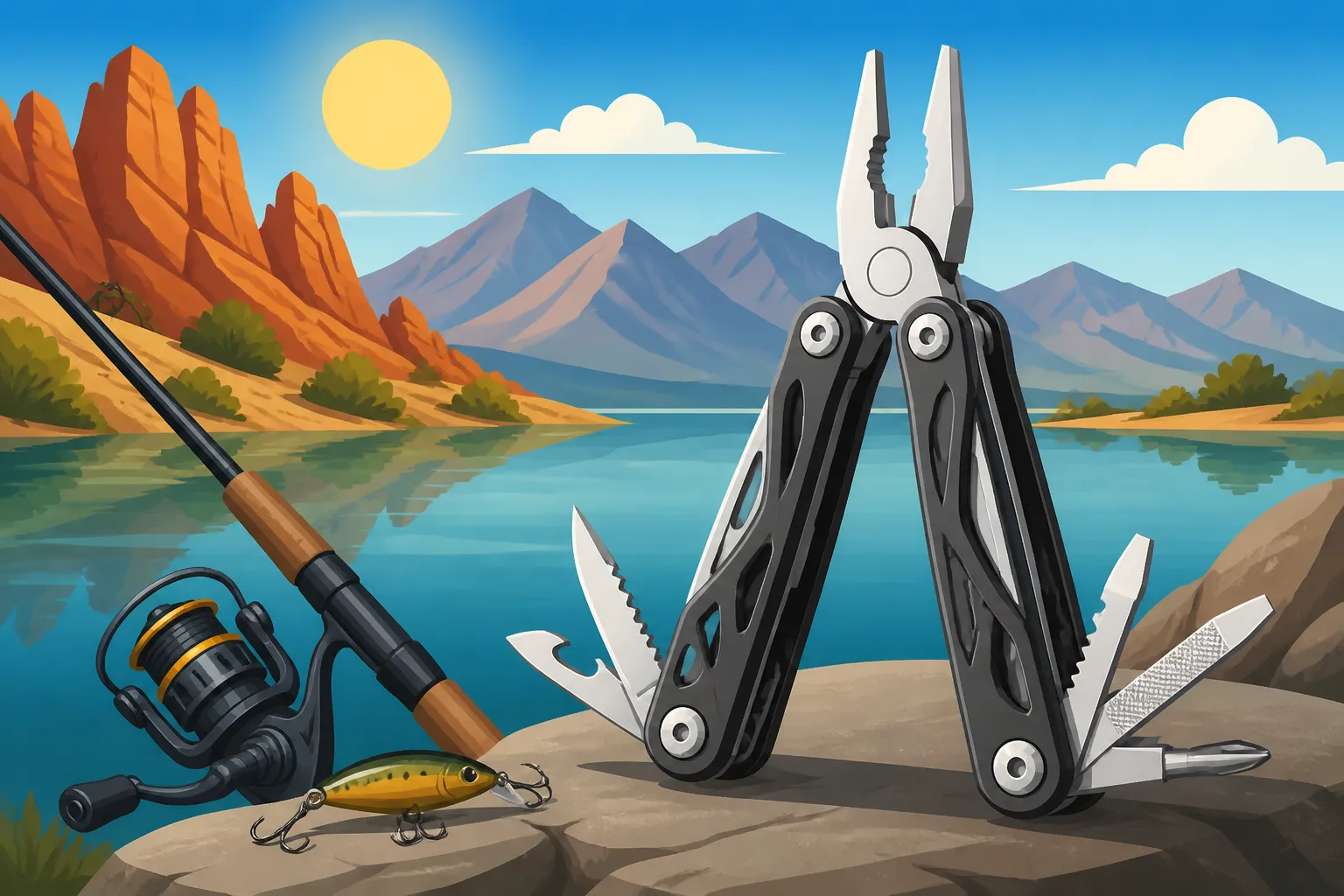
So, what exactly should you expect from a good fishing multi-tool? The best ones offer a thoughtful selection of implements designed specifically for anglers. At its core, you’ll typically find a good pair of pliers, which are invaluable for a multitude of tasks. These aren’t just any pliers; they often feature needle-nose tips perfect for reaching into a fish’s mouth to remove a hook, or for crimping split shot onto your line.
Beyond the pliers, a quality multi-tool will also include robust line cutters. This is a big one, as fishing lines vary so much. You might be running monofilament, fluorocarbon, or the notoriously tough braided line. Having cutters that can cleanly slice through all these without fraying is a lifesaavor. Many multi-tools also incorporate a sharp knife blade for tasks like cutting bait, trimming line, or even field dressing a trout if you decide to keep it. Screwdrivers – both Phillips and flathead – are surprisingly useful for tightening down reel components or adjusting accessories on your rod. Some even come with a file, which can be great for sharpening a dull hook in a pinch or smoothing out a burr on a lure. It's truly about having a miniature toolbox strapped to your hip.
Key Features to Look for in a Fishing Multi-Tool
Choosing the right multi-tool isn't just about how many gadgets it has; it's about the quality and utility of those tools for your specific fishing needs in Nevada's unique environments. From the dry desert air to the occasional dip in freshwater, durability and functionality are paramount.
Material and Durability for Nevada's Environment
Nevada is beautiful, but it can be tough on gear. The intense sun, dry climate, and varied water conditions (from mineral-rich desert lakes to alpine clear waters) demand tools that can withstand the elements. When looking at a multi-tool, pay close attention to the materials. Stainless steel is usually the go-to, as it offers excellent corrosion resistance, which is crucial even in freshwater. While you might not be dealing with saltwater in Nevada, contact with water and fish slime can still lead to rust if the material isn't up to snuff.
Look for high-grade stainless steel that is known for its hardness and resistance to pitting. Some manufacturers go an extra step and apply special coatings, like black oxide or titanium nitride, which further enhance durability and corrosion protection. If you frequently fish at Lake Mead Nevada Fishing Guide or Lake Mohave Nevada Fishing Guide, where the water is warm and can sometimes leave mineral deposits, this added protection will make a huge difference in the longevity of your tool. Imagine trying to cut line with rusted pliers – it’s a nightmare. A well-built multi-tool feels solid in your hand, with no flimsy parts or excessive wiggle. This robust construction ensures it can handle the accidental drops, scrapes, and general abuse that come with an active day of fishing.
Ergonomics and Ease of Use
No matter how many tools a multi-tool packs, it's useless if you can't comfortably and efficiently use it. Ergonomics play a huge role, especially when your hands might be wet, cold, or covered in fish slime. Look for a design that fits well in your hand, with comfortable grips that prevent slipping. Textures or rubberized inserts can greatly improve handling.
One-handed operation is another highly desirable feature. There will be countless times when your other hand is busy holding a fish, managing your rod, or steadying your boat. Being able to deploy the pliers or a knife with one hand, without fumbling, is a huge advantage. Many modern multi-tools incorporate spring-loaded pliers, which automatically open after each squeeze, reducing hand fatigue and speeding up repetitive tasks like crimping sleeves or opening split rings. Locking tools are also non-negotiable for safety and efficiency. Each individual tool should lock securely into place once deployed, preventing accidental closure and potential injury while you're applying pressure. Nothing is more frustrating (or dangerous!) than a knife blade folding back on your fingers mid-cut.
Specific Fishing-Focused Functions
While a general-purpose multi-tool can work in a pinch, one specifically designed for fishing will have features that truly enhance your experience.
- Dedicated Line Cutters: This is paramount. Good fishing multi-tools will have hardened cutters, often with a specific notch or design, that can cleanly sever all types of fishing line. Braided line, especially, can be a pain for standard scissors, but a quality multi-tool with sharp, dedicated cutters will make quick work of it.
- Hook Removers/Disgorgers: These are invaluable for quickly and safely removing hooks, especially from deeper-hooked fish or species with sharp teeth. Longer, thinner plier tips are often ideal for this. Some multi-tools even integrate specialized disgorgers.
- Split Ring Pliers: If you use a lot of lures, particularly those with treble hooks, you'll constantly be changing or replacing split rings. Dedicated split ring pliers on a multi-tool make this fiddly job incredibly easy, preventing broken fingernails and frustration.
- Crimpers: For anglers who use leaders with crimps, having an integrated crimping tool saves you from carrying a separate, bulky crimping pliers.
- Fish Scaler/Gut Hook: While not on every multi-tool, some include a fish scaler or a gut hook tool, which can be handy if you plan on processing your catch right at the shore or on the boat. This means less mess to clean up at home.
When you're out there tackling the mighty Lahontan Cutthroat Trout at Pyramid Lake, having the right tool for the job – like a reliable set of pliers for hook removal or stout cutters for heavy mono leaders – makes all the difference. Bass Pro Shops or online retailers like Amazon often have a wide selection of multi-tools, and reading customer reviews can give you a good idea of how well these specialized features perform in real-world fishing scenarios.
Choosing the Right Multi-Tool for Your Fishing Style
Just like there's no single "best" fishing rod for every type of angler, there isn't one universal multi-tool that suits everyone. Your preferred fishing style, the waters you frequent, and your personal preferences will all guide your choice. Let's break down some common scenarios.
Bank Angler's Best Friend
If your fishing adventures usually involve walking the banks of a river like the Truckee, exploring the shorelines of Lake Mead Striped Bass Hotspots, or casting from a dock at one of Nevada's urban ponds, portability and compactness are likely your top priorities. You don't want a heavy, bulky tool weighing down your pockets or pack.
For bank anglers, a lighter, more streamlined multi-tool that can easily clip to a belt loop, attach to a lanyard, or slip into a small vest pocket is ideal. You'll still want the core functions: good pliers, sharp line cutters, and a useful knife. Tools like split ring pliers might be less critical if you mostly fish with bait or simple rigs, but they're still a great bonus. Focus on models that are quick to deploy and have a secure locking mechanism, as you might be standing on uneven ground or trying to manage your gear with one hand while holding your rod with the other. Ease of access is key when you're moving around.
Boater's Essential Companion
For those who hit the larger lakes and reservoirs by boat – think cruising for big Mackinaw at Lake Tahoe Nevada Fishing Guide or chasing striped bass on Lake Mohave Nevada Fishing Guide – you generally have a bit more space, so you can afford a slightly larger and more robust multi-tool. Durability, however, becomes even more paramount. Your tool will be exposed to more spray, sun, and potentially heavier use.
Boaters might benefit from a multi-tool that includes stronger pliers for bigger hooks or thicker wire, more advanced line cutters for heavier leader materials, and perhaps even tools for minor boat repairs, like a robust screwdriver or a small saw blade. Since you're often dealing with more complex rigging, dedicated split ring pliers are a huge plus. Consider a model that comes with a high-quality sheath that can be securely mounted to a boat console or belt, ensuring it's always accessible but safely stowed away. The focus shifts from extreme portability to maximum utility and resilience against the elements of open water.
Specialty Angler Needs (Fly Fishing, Ice Fishing)
Certain fishing disciplines have unique demands that a specialized multi-tool can address.
- Fly Fishing: For the fly angler on a clear mountain stream or the Truckee River, precision and delicacy are often more important than brute strength. A fly fishing multi-tool might integrate functions like a small pair of hemostats (forceps) for delicate hook removal, a knot-tying tool, an eyelet cleaner for clogged hook eyes, or even a small file for sharpening those tiny hooks. Portability is still key, as fly fishing often involves wading or hiking. Brands known for fly fishing gear might offer multi-tools specifically tailored to these needs.
- Ice Fishing: When you're out on a frozen lake, perhaps at Wildhorse Reservoir Nevada Fishing Guide, conditions are cold, and your dexterity can be limited by gloves. An ice fishing multi-tool should prioritize tools that are easy to grip and operate even with bulky gloves on. Robust line cutters are crucial, as cold line can be brittle. A small pick or reamer can also be useful for clearing ice from rod guides or tackle. Corrosion resistance is still vital, as ice and snow will inevitably get on your tools.
Maintaining Your Fishing Multi-Tool
You've invested in a quality multi-tool designed to withstand the rigors of Nevada fishing, but even the best tools need a little love to keep them performing at their peak. Proper maintenance isn't just about extending the life of your gear; it's about ensuring it works flawlessly when you need it most, preventing frustrating malfunctions on the water.
Cleaning and Rust Prevention
This is perhaps the most crucial aspect of multi-tool maintenance for anglers. Every time your multi-tool comes into contact with water, fish slime, or bait, it's exposed to elements that can accelerate wear and corrosion. After each use, especially if it's been exposed to water:
- Rinse It Thoroughly: Use fresh, clean water to rinse off any fish slime, grit, dirt, or dissolved minerals. Don't just wipe it; a good rinse gets into all the nooks and crannies. If you've been fishing a highly mineralized body of water, this step is doubly important.
- Dry It Completely: This is key. Use a clean cloth to dry the exterior, and then open and close each tool several times to shake out any hidden water. You can even use compressed air if you have it available. Air-dry it in an open position overnight to ensure all moisture has evaporated before stowing it away.
- Lubricate Moving Parts: Apply a light coat of a corrosion-inhibiting lubricant to all the pivot points, springs, and moving components. A few drops of a quality gun oil or a specialized fishing reel oil work wonders. This not only prevents rust but also keeps the tools opening and closing smoothly. Don't overdo it; a little goes a long way, and excess oil can attract dirt.
- Inspect Regularly: Take a moment to visually inspect your multi-tool. Look for any signs of rust, dull blades, or loose components. Addressing small issues early can prevent bigger problems down the line. If you notice rust starting, a fine wire brush or some steel wool can often remove it, followed by a thorough cleaning and re-lubrication.
Proper Storage
Where and how you store your multi-tool when not in use also impacts its longevity.
- Sheath Up: Most quality multi-tools come with a durable nylon or leather sheath. Always use it! A sheath protects the tool from external damage and keeps it from scratching other items in your tackle box or bag. It also keeps sharp blades safely tucked away.
- Keep it Dry and Ventilated: Avoid storing your multi-tool in damp, confined spaces. A tackle box that's been sitting in a hot, humid garage corner isn't ideal. Instead, store it in a dry, cool place with good air circulation.
- Avoid Direct Sun: The intense Nevada sun can degrade plastics, rubber grips, and even the lubricants on your tool over time. Keep it out of direct sunlight when possible, especially during those long summer days on Lake Mead Nevada Fishing Guide.
- Organized Storage: Don't just toss it in with a pile of loose hooks and weights. If not in a sheath, keep it in a designated compartment in your tackle box or gear bag to prevent it from getting scratched or dulling its edges against other metal objects. This also makes it easier to find when you're getting ready for your next trip.
By following these simple cleaning and storage tips, your fishing multi-tool will remain a reliable companion for countless trips to Nevada's diverse fishing spots. Think of it as investing a little time to protect your investment and ensure you always have the right tool at your fingertips, whether you're battling a hard-fighting bass or carefully releasing a prized trout.
Popular Multi-Tool Features and Benefits
Here's a quick overview of some common features you'll find on fishing multi-tools and why they matter:
| Feature | Common Benefits for Anglers | Ideal Use Cases |
|---|---|---|
| Spring-Loaded Pliers | Reduces hand fatigue, allows for quicker, one-handed operation. Great for repetitive tasks. | Hook removal, crimping split shot, working with small tackle components, one-handed tasks in a boat. |
| Hardened Line Cutters | Cleanly cuts all line types (mono, fluoro, braid) without fraying. Essential for quick re-tying. | Snapping off old line, trimming tag ends, making clean cuts for knots, dealing with snags. |
| Locking Knife Blade | Secure cutting action, prevents accidental closure. Critical for safety and effective use. | Cutting bait, opening packaging, minor repairs, field dressing fish. |
| Split Ring Pliers | Designed for easily opening split rings on lures for hook changes. Saves fingernails and frustration. | Swapping out treble hooks, replacing rusty split rings, customizing lures for different species. |
| Screwdrivers (Phillips/Flat) | Handy for tightening loose screws on reels, rod guides, or boat accessories. | Reel maintenance, adjusting rod holders, tightening small electronics components. |
| Bottle Opener | A small but highly appreciated convenience for opening beverages on the water. | Refreshment break on the boat or bank. |
| Corrosion-Resistant Material | Extends tool lifespan, prevents rust even with exposure to fresh or mineralized water and fish slime. | All Nevada waters, especially Lake Mead and Lake Mohave. Essential for frequent exposure to moisture. |
| Ergonomic Grips | Comfortable to hold and operate, even with wet or cold hands. Reduces risk of slippage. | Operating in various weather conditions, handling slippery fish. |
| Lanyard Loop/Pocket Clip | Provides secure attachment options, keeping the tool accessible and preventing loss. | Bank fishing, wading, kayak fishing, ensuring the tool doesn't go overboard from a boat. |
Ultimately, your multi-tool should feel like a natural extension of your hand, providing the specific capabilities you need without adding unnecessary bulk. Whether you choose a highly specialized model from a reputable fishing gear brand or a more general outdoor multi-tool from a major retailer, ensure it meets the demands of your Nevada fishing adventures.
Disclaimer
This article is for general informational purposes only and does not constitute professional advice. Laws, prices and regulations vary by location and change over time. Consult a qualified professional for guidance on your specific situation.