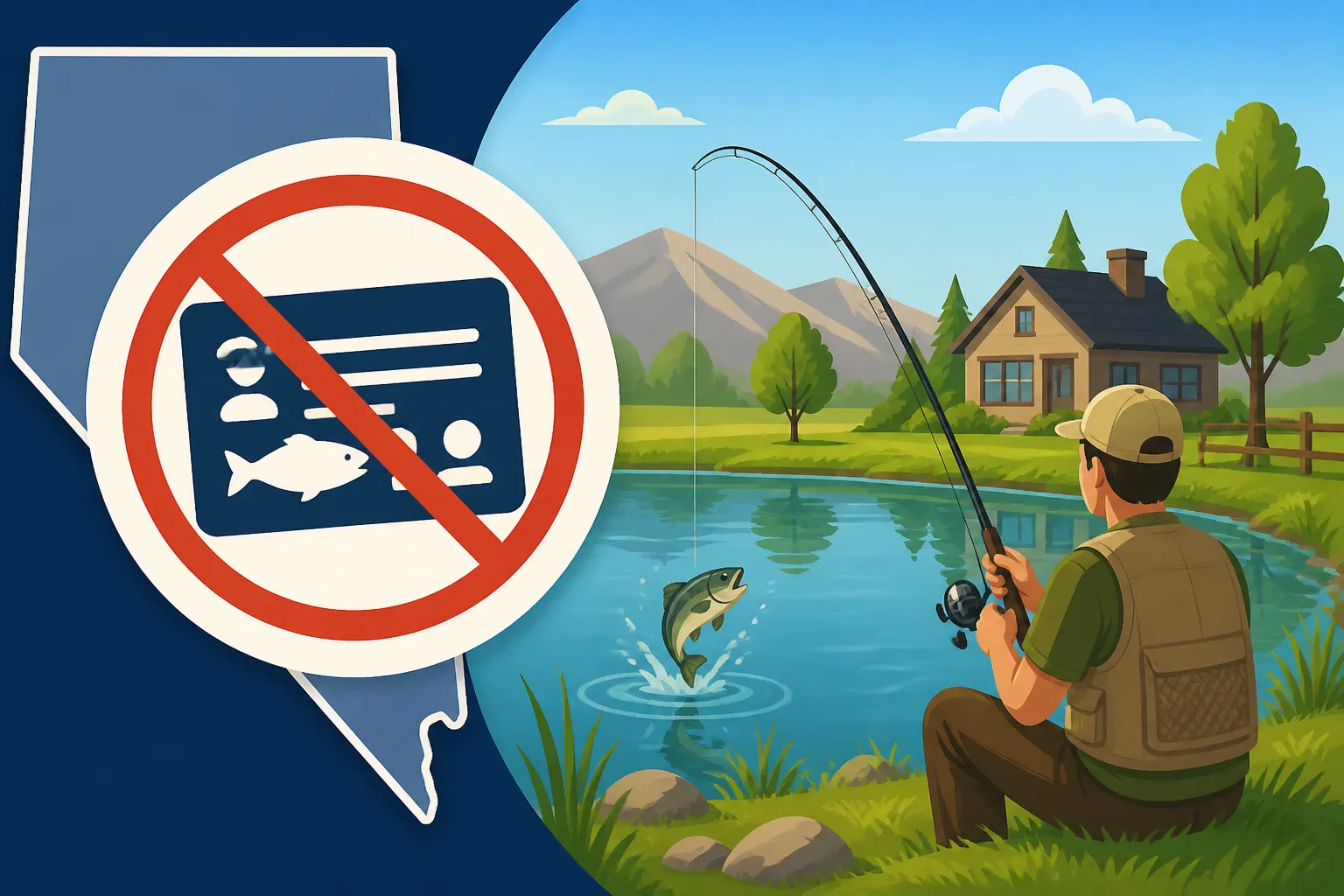
Do you need a license to fish on your own private pond in Nevada?
It’s a common assumption among landowners: if you own the land, you own everything on it, including the fishing rights to a pond. But when it comes to fishing in Nevada, even on what you consider your private property, the rules aren't always as straightforward as you might think. This guide will clarify the sometimes confusing regulations surrounding fishing licenses on private ponds in the Silver State, helping you understand when you need one and when you can legally skip it.
Understanding Nevada's Basic Fishing License Requirements
Before we dive into the specifics of private ponds, it's really helpful to get a handle on the general fishing license landscape in Nevada. The Nevada Department of Wildlife (NDOW) is the agency that sets the rules for pretty much all fishing activities across the state, and their primary goal is to manage and conserve Nevada's diverse aquatic resources for everyone.
The General Rule for Public Waters
The vast majority of anglers in Nevada, whether they're casting a line into the expansive waters of Lake Mead, the clear depths of Lake Tahoe, or the many rivers and streams, absolutely need a fishing license. This isn't just about collecting fees; it's about funding vital conservation efforts like habitat restoration, fish stocking programs, and law enforcement to prevent poaching. Without these funds, our beloved fishing spots wouldn't be nearly as vibrant or healthy. Think of it as your contribution to keeping Nevada's fisheries thriving for future generations. There are, of course, a few exceptions to this general rule, like the annual Nevada Free Fishing Day Guide where anyone can fish without a license for one specific day, but these are rare.
When you're out on any public waterway, like the Truckee River or any of the popular reservoirs, you can expect a game warden to ask to see your valid Nevada Fishing License Guide. It's just part of the routine check to ensure compliance and responsible angling.
Who Needs a License and Who Doesn't (Age & Residency)
Even outside the private pond discussion, the question of "who needs a license?" can be a bit muddy. Generally, anyone 12 years of age or older needs a valid Nevada fishing license to fish in public waters. This means if you're planning a family trip, your little ones under 12 can usually cast away without a license, which is a fantastic way to introduce them to the sport without the extra paperwork. However, once they hit that 12-year mark, it’s time to get them their own. You can find more specific details in the Nevada Youth Fishing License Rules.
Residency also plays a huge role in the type and cost of your license. Nevada residents typically pay less for their licenses than non-residents, which makes sense as residents are already contributing to the state's tax base. If you've just moved to Nevada, make sure you understand the requirements to establish residency before purchasing a resident license, as misrepresenting your residency status can lead to fines. Understanding these basics is critical before you even begin to consider the nuances of a private pond. If you're unsure about the specifics, checking the Nevada Fishing License Age Requirements is always a good first step.
The Role of NDOW
The Nevada Department of Wildlife isn't just a regulatory body; it's also a vital resource for anglers and landowners alike. NDOW is responsible for managing all wildlife and fish in the state, and that jurisdiction extends even to certain aspects of private lands. They maintain detailed records of water bodies, fish populations, and stocking efforts. This is particularly relevant when it comes to private ponds because NDOW's regulations are designed to prevent the spread of invasive species, protect native populations, and ensure the health of connected public waterways. They have specific guidelines for stocking private ponds and might even conduct inspections to ensure compliance. So, while you might own the land, the fish in the water might still be under the watchful eye of NDOW.
The Private Pond Exemption: What Does it Really Mean?
Now, let's get to the heart of the matter: your private pond. The idea that you don't need a license to fish on your own property makes a lot of intuitive sense. After all, it's your land. However, Nevada's regulations are designed with the broader ecological picture in mind, and that means a "private pond" isn't always as simple as it sounds.
Defining a "Private Pond" in Nevada
This is where the rubber meets the road. For a pond to be truly considered "private" in the eyes of NDOW, and thus potentially exempt from state fishing license requirements, it needs to meet some very specific criteria. It's not enough that it simply sits on your deeded property. The key factor is isolation. A truly private pond must be entirely self-contained, with no natural or artificial connections to any public waters, either permanently or seasonally.
Imagine a pond fed solely by rainfall or a well on your property, with no outflow that could carry fish into a public stream or lake, and no inflow that could bring fish from a public source onto your property. This kind of completely landlocked, privately managed water body is what NDOW typically considers exempt. If your pond has a culvert that flows into a creek during spring runoff, or if it's fed by a natural spring that also contributes to a public waterway, then it starts to fall into a gray area that usually requires a license. The intent is to prevent unregulated fishing from impacting fish populations in public waters.
Stocking and Connection to Public Waters
The way your pond is stocked, and its relationship to public water systems, are critical determinants for license requirements. If your pond is naturally occurring and has absolutely no connection to public waters, or if it was man-made and filled from a private well and stocked with fish from a commercial, licensed fish hatchery, you might be in the clear. However, if your pond is stocked by NDOW, even if it's on your private land, then state fishing regulations, including the need for a license, generally apply. This is because NDOW is managing those fish as part of the state's public resource.
Furthermore, any connection, no matter how small or seasonal, to a public waterway can negate the "private pond" exemption. Even if your pond only overflows into a public stream during heavy rains, that connection could allow fish to move between your pond and the public system. This raises concerns about species management, disease control, and ensuring that public fish resources aren't being exploited without proper regulation. It's a complex issue because water systems are often interconnected in ways that aren't immediately obvious, and what seems like a small ditch might be a crucial fish migration path.
When a License IS Still Required on Private Property
It's a frustrating realization for many landowners: just because it's your property doesn't automatically mean you're exempt. There are several scenarios where a Nevada fishing license will still be required, even if you’re fishing on land you own.
One of the most common instances is when your pond is considered a "public water" by NDOW standards due to a connection to streams, rivers, or lakes. This could be a permanent connection, like a flowing creek, or a seasonal one, such as a high-water channel during spring runoff. If fish can freely move between your pond and a public waterway, then the fish in your pond are considered part of the public fishery, and thus, a license is required for anyone fishing them.
Another key factor is if your pond has ever been stocked by NDOW. The Department often stocks various water bodies, including some on private lands, as part of their broader fisheries management plans. If your pond has received fish from NDOW, it generally falls under their regulatory umbrella. This means anyone fishing there, including yourself and your guests, would need a valid Nevada fishing license and would also be subject to all statewide bag limits, size restrictions, and season dates. It’s important to research the history of your pond or contact NDOW directly to confirm if it has ever been stocked by them. Don't get caught without the right paperwork; the penalties for Penalty for fishing without a license in Nevada can be steep.
Implications for Private Pond Owners and Anglers
Navigating the rules for private ponds in Nevada can feel like walking a tightrope. For landowners, understanding these implications is key to avoiding legal trouble and for anglers, knowing when a license is necessary can save a lot of headaches.
What You Can Do Without a License (If Truly Exempt)
If, after all the careful consideration and perhaps a consultation with NDOW, your pond is genuinely deemed a fully private, isolated water body with no connections to public fisheries and has never been stocked by the state, then you're in a unique position. In this rare scenario, you, your family, and any invited guests can typically fish without a Nevada fishing license. This also means that NDOW's statewide bag limits, size restrictions, and season dates might not apply to your pond's fishery.
This offers a fantastic opportunity for truly custom angling. You could manage your pond for trophy fish, experiment with different stocking densities, or simply enjoy a relaxed fishing experience without the usual state regulations. However, even in this ideal scenario, remember that general animal welfare laws and ethical fishing practices should still be observed. While you might not need a state license, you still have a responsibility to manage your private fishery responsibly.
Legal Responsibilities and Risks
For those who own a pond, assuming it's exempt without verification can lead to serious legal consequences. If NDOW determines your pond is not truly private – perhaps due to an undocumented connection to public waters or past state stocking – and you or your guests are found fishing without a license, or exceeding state limits, you could face significant penalties. These can range from fines to confiscation of equipment, and for repeat offenses, even more severe repercussions. Game wardens have the authority to access and inspect waters suspected of being under state jurisdiction, even if they are on private property. The cost of a fishing license is always far less than the fine for being caught without one. Detailed information about potential fines and violations can be found in the Nevada Fishing Violation Penalties.
It’s not just about you, the landowner. If you invite friends or family to fish your pond, and it turns out a license is required, they too could be cited for fishing without a license. This highlights the importance of being absolutely certain about your pond's status before allowing anyone to fish in it. You don't want to inadvertently put your loved ones in a tough spot with the law.
Stocking Your Private Pond Legally
If your pond is truly private and you decide you want to introduce fish, you still can't just throw any species you want into the water. Even on private property, stocking fish generally requires a permit from NDOW. This is a critical regulatory step designed to prevent the introduction of invasive species or diseased fish that could escape into public waters and cause ecological havoc. Imagine introducing an aggressive non-native species that could outcompete native trout, or bringing in fish carrying a pathogen that could wipe out populations in a connected river.
NDOW's permitting process for private pond stocking involves reviewing the species you intend to introduce, the source of those fish (they must come from certified, disease-free hatcheries), and an assessment of your pond's isolation to ensure there's no risk to public fisheries. It’s a measure of responsible stewardship that protects Nevada's fragile aquatic ecosystems. Don't skip this step; unauthorized stocking is a serious offense.
Practical Steps for Clarifying Your Pond's Status
The gray areas around private pond fishing can be stressful, but there are clear steps you can take to get definitive answers and ensure you're always on the right side of the law.
Contacting NDOW Directly
When in doubt, the very best thing you can do is reach out directly to the Nevada Department of Wildlife. They are the ultimate authority on these regulations, and getting their guidance upfront can save you a world of trouble and confusion down the line. Don't rely on hearsay or what a friend of a friend told you. NDOW staff are knowledgeable and can provide specific information based on your pond's location and characteristics.
When you contact them, be prepared with as much detail as possible. This includes:
- The exact location of your pond (GPS coordinates are incredibly helpful).
- Information about its water source (e.g., natural spring, well, rainfall, creek).
- Any known inflows or outflows, even seasonal ones.
- The history of the pond (e.g., how long it's been there, if it's man-made, if you know if it's ever been stocked).
- The types of fish currently in the pond, if any.
The more information you can provide, the easier it will be for them to assess your situation and give you a clear answer. They might even send someone out for a site visit if the situation is particularly complex.
Due Diligence and Record Keeping
If you own a private pond, being proactive about due diligence and maintaining good records can be invaluable. This isn't just about avoiding trouble; it's about having a clear understanding and proof of your pond's status. Keep copies of any permits you've obtained, especially if you've stocked the pond. Document its origins, including any contracts with excavators if it was man-made, or geological surveys if it's a natural feature.
Take photos and videos, especially during different seasons, to show the pond's isolation or lack thereof from public waterways. If you've sealed off a potential connection, document those efforts. These records serve as important evidence if your pond's status is ever questioned by wildlife officials. Think of it as building a robust case for your pond's privacy.
Essential Gear for Any Fishing Trip
Even if you're fishing a truly private, license-exempt pond, you'll still want to be well-equipped. A great fishing experience is always enhanced by having the right gear. For those sunny Nevada days, proper sun protection is non-negotiable – think wide-brimmed hats, polarized sunglasses (you can find an excellent selection on Amazon), and plenty of sunscreen.
You'll also need a reliable rod and reel setup, appropriate for the type of fish you're targeting. For trout, a light to medium action spinning rod is often ideal, while bass fishing might call for a heavier baitcaster. Don't forget a well-stocked tackle box with a variety of lures, hooks, and weights. Many anglers like to keep a pair of fishing pliers (also available on Amazon) for hook removal and line cutting, and a landing net is always a good idea, especially if you're planning on catch and release. Even a basic first-aid kit and plenty of water are smart additions to your Nevada Fishing Gear Essentials, whether you're on public or private waters.
Here's a quick overview to help clarify:
| Scenario | Nevada Fishing License Required? | Notes |
|---|---|---|
| Fishing on Public Lake/River | Yes | Applies to all anglers 12 years and older. |
| Private Pond, no connection to public water, privately stocked | No | Must be truly isolated and stocked from a commercial hatchery with NDOW permit. |
| Private Pond, fed by or drains into public water | Yes | Even seasonal connections can qualify it as public water. Fish movement is the key factor. |
| Private Pond, stocked by NDOW | Yes | NDOW-stocked waters are managed as public resources, regardless of land ownership. |
| Private Pond, naturally occurring, connected to public water | Yes | If natural fish movement from public waters is possible, it falls under NDOW jurisdiction. |
| Fishing by kids under 12 | No | Generally exempt on any water, public or private. |
| Nevada Free Fishing Day | No | Applies only on specific designated day(s), all other regulations (bag limits, etc.) usually still apply. Check the official NDOW dates. |
As you can see, the waters can be a bit murky, but with a little research and direct communication with NDOW, you can ensure your private pond fishing is always legal and enjoyable. And remember, for all your gear needs, from fishing line to sun hats, Amazon is a great place to start your search. You can stock up on all the essentials you need for a fantastic day by the water, whether it's on your private retreat or a bustling public lake. Make sure you check out our guide on the Best Tackle for Nevada Trout Fishing if trout are your target, or perhaps the Best Lures for Nevada Bass if you're after those bigger bites. And for peace of mind, always carry your license (if required) and respect the regulations.
Disclaimer
The information provided in this guide is for general informational purposes only and does not constitute legal advice. Fishing regulations in Nevada can change, and interpretations may vary. It is always the angler's responsibility to verify the most current regulations directly with the Nevada Department of Wildlife (NDOW) before fishing. Relying solely on the information presented here without independent verification is done at your own risk.