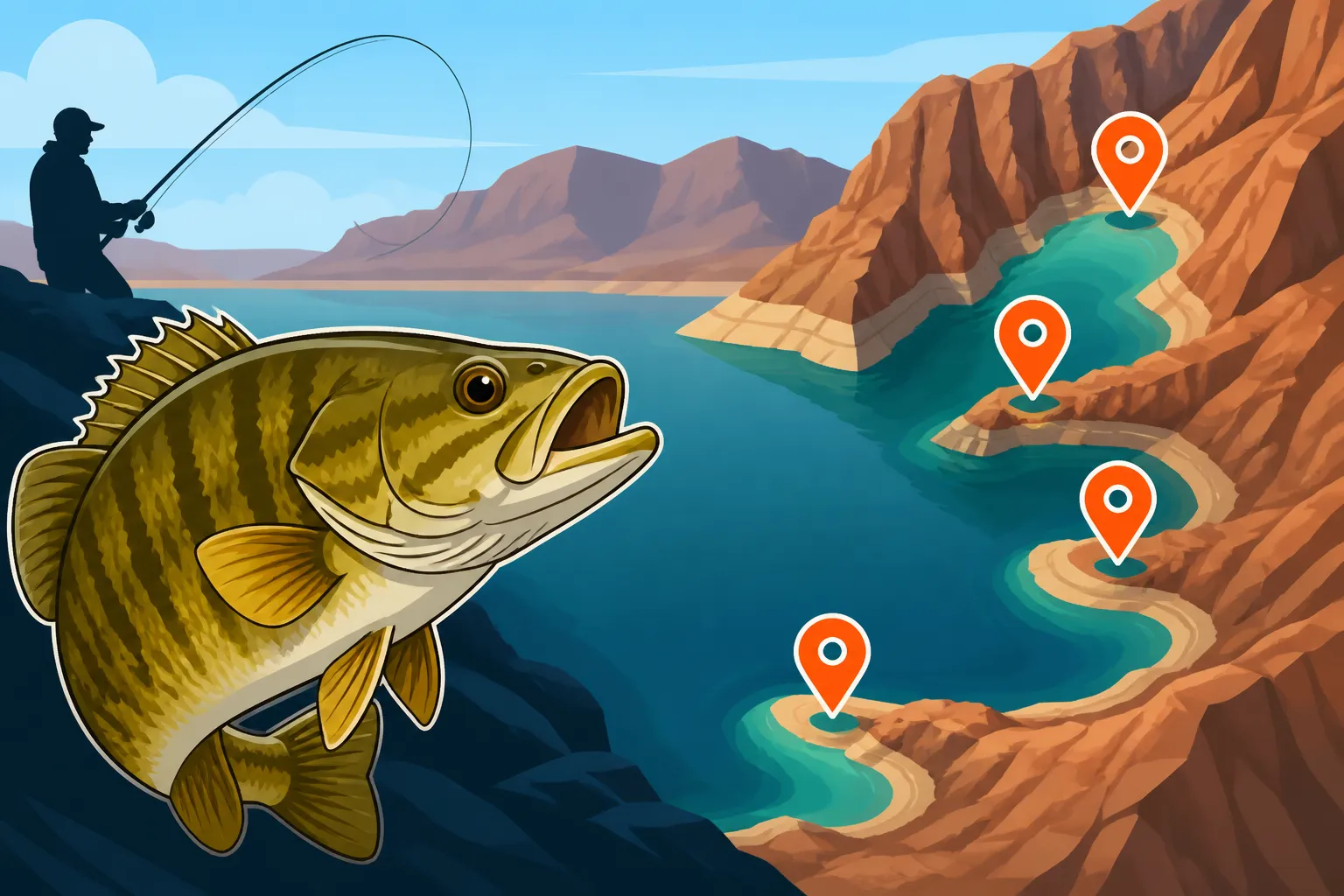
Best coves for smallmouth bass at Lake Mead
Finding those feisty smallmouth bass in the vast expanse of Lake Mead can feel like searching for a needle in a haystack, especially with its ever-changing water levels and complex shoreline. It’s easy to get overwhelmed by the sheer size of this reservoir and not know where to even start looking for these hard-fighting beauties. This guide is dedicated to helping you pinpoint the best coves and structures where these intelligent fish love to hang out, giving you a clear roadmap to a successful smallmouth adventure.
Understanding Smallmouth Bass Preferences in Lake Mead
Smallmouth bass, often called "bronzebacks" or "brown bass," are a truly exhilarating game fish to target, and Lake Mead offers some fantastic opportunities for them, though they might not get as much attention as their striped bass cousins. Unlike largemouth bass, which often prefer warmer, shallower water with plenty of vegetation or woody cover, smallmouth are creatures of rocky habitats, cooler temperatures, and clearer water. In Lake Mead, this means you'll typically find them congregating around specific types of structure within coves rather than just any sheltered area. Understanding these preferences is your first step to unlocking their secrets.
The Appeal of Rocky Structure and Drop-offs
Smallmouth bass thrive where there are abundant rocks, ledges, boulders, and steep drop-offs. These features provide them with everything they need: ambush points for prey, protection from predators, and access to varying depths where they can regulate their body temperature. In Lake Mead, years of fluctuating water levels have created incredible underwater landscapes, exposing vast expanses of rock formations that are prime smallmouth territory. These fish will often sit on transition lines, where shallow rocky flats suddenly plummet into deeper water, waiting for unsuspecting baitfish like shad or bluegill to swim by. If you’re looking for Smallmouth Bass Habitat at Lake Mead, focusing on these rocky areas is paramount.
Seasonal Behavior and Depth Changes
Smallmouth bass in Lake Mead are highly influenced by water temperature and the time of year. During the cooler months of spring and fall, you’ll find them shallower, often aggressively feeding in depths of 5 to 25 feet. This is when the fishing can be particularly fast-paced, especially during the spawn in late spring when they move onto gravelly or rocky flats to create their nests. As the brutal Nevada summer heat sets in and water temperatures rise, smallmouth will retreat to deeper, cooler waters, often suspending over structure in 30 to 60 feet or even deeper, making them a bit more challenging to locate. Conversely, during winter, they’ll also hold deep but will often relate to vertical structures like bluff walls or submerged humps where they can find stable temperatures and ambush opportunities. Keeping an eye on the Best Time of Year to Fish in Nevada can make all the difference for smallmouth.
Identifying Productive Smallmouth Coves at Lake Mead
Not all coves are created equal when it comes to smallmouth bass. While any cove offers some degree of shelter, the most productive ones will share specific characteristics that cater to the smallmouth's preferred environment. It's about looking beyond the surface and understanding the underwater topography.
Key Structural Elements within Coves
When scouting for smallmouth coves, visualize what lies beneath. You're looking for coves that feature:
- Rocky Points and Ledges: These are absolute magnets for smallmouth. A point that extends out into deeper water, especially one with a sharp breakline, creates current breaks and ambush opportunities. Smallmouth will often sit on the down-current side of these points.
- Submerged Humps and Islands: These hidden gems act like underwater mountains, concentrating fish. If a cove has a submerged hump that rises from a deep basin, smallmouth will use it as a feeding station. They’ll hold on the sides or top, depending on the time of day and water conditions.
- Bluff Walls and Steep Drop-offs: Coves that are flanked by sheer rock walls or have sudden, dramatic depth changes are excellent. Smallmouth use these vertical structures to ascend and descend quickly, following baitfish that move up and down the water column.
- Transition Zones: The areas where different types of bottom meet (e.g., gravel to rock, rock to sand) are also key. Smallmouth often patrol these edges. Look for these transitions within the coves.
Understanding Water Clarity and Current in a Cove
Smallmouth generally prefer clearer water than largemouth bass. They are sight feeders, relying on their keen vision to hunt prey. While Lake Mead can have varying clarity, seek out coves that aren't overly turbid, especially after heavy winds or rain. Current, even subtle current, can be a beneficial factor. In large reservoirs like Lake Mead, true current might be limited, but wind-driven currents or subtle flows around points can bring baitfish into a cove and position smallmouth for feeding. A cove with a gentle, consistent water flow will often be more active than a completely stagnant one.
Here’s a quick overview of what makes a smallmouth cove shine:
| Feature | Smallmouth Preference | Why It's Productive |
|---|---|---|
| Bottom Composition | Rocks, boulders, gravel, ledges | Provides cover, ambush points, and ideal spawning substrate. |
| Depth Variation | Steep drop-offs, submerged humps, deep basins | Allows fish to move to comfortable temperatures and follow baitfish vertically. |
| Water Clarity | Clear to moderately clear | Essential for their sight-feeding nature and visual hunting. |
| Proximity to Open Water | Coves near main lake points or channels | Offers easy access to open-water baitfish schools and deeper thermal refuges. |
| Shelter from Wind | Can be beneficial, but points with slight current are key | Calm days can make sight fishing easier; moderate wind can stack baitfish. |
Top Coves and Areas for Smallmouth Bass at Lake Mead
Lake Mead is enormous, stretching across Nevada and Arizona, but certain regions and coves consistently prove to be smallmouth hotspots due to their specific underwater topography. While smallmouth can be found throughout the lake where the habitat is right, these areas are excellent starting points. Many anglers find success by exploring around the Boulder Basin and areas leading into the main lake body.
Boulder Basin and Its Rocky Inlets
The Boulder Basin, particularly the Nevada side, is renowned for its excellent smallmouth fishing. This area is characterized by abundant rocky shorelines, numerous islands, and deep water access.
- Near Hemenway Harbor and Government Wash: While these areas are famous for striped bass, the rockier pockets and points extending from the shore offer prime smallmouth habitat. Focus on coves that have clean, hard bottoms and substantial rock formations rather than silty flats. The drop-offs near the marina or around prominent rock outcrops can hold good numbers of smallmouth, especially during the spring and fall. A lot of anglers find their charter through FishingBooker in this area because of the diversity of species available.
- Kingman Wash: Moving further south along the Nevada shoreline, Kingman Wash offers a similar rugged, rocky environment. Look for small, unnamed coves and inlets with steep, rocky banks and submerged structure. The clearer waters here often attract smallmouth, particularly when they are actively feeding on crawfish or shad.
Overton Arm and Temple Bar Regions
While the Overton Arm is generally shallower and more prone to siltation, there are specific spots, especially closer to the main body of the lake and around the Temple Bar area, that hold excellent smallmouth.
- Temple Bar Marina Coves (Arizona Side): On the Arizona side, the coves surrounding Temple Bar are often very productive. These areas have a mix of rock and gravel, with sharp drop-offs into the main channel of the Overton Arm. Target the entrances to these coves and any prominent points within them. These areas can be fantastic for smallmouth, especially during cooler seasons.
- Echo Bay (Nevada Side): Further up the Overton Arm on the Nevada side, Echo Bay also presents opportunities. While some parts are shallower, scouting around the entrance and deeper, rocky cuts can yield results. Look for areas with exposed bedrock and less silt. Early mornings or late evenings often provide the best bites here, as the smallmouth move shallower to feed.
Remember that water levels at Lake Mead can fluctuate dramatically, so what was a prominent point one year might be submerged deep or completely exposed the next. Always consult current charts and perhaps even aerial views to get a sense of the current conditions before heading out. Sometimes, getting a local guide through platforms like FishingBooker can give you an invaluable edge, as they know the current hot spots better than anyone.
Essential Techniques and Gear for Lake Mead Smallmouth
Catching smallmouth bass at Lake Mead requires a specific approach, especially when compared to fishing for other species like striped bass or largemouth. Their preference for rocky habitats and their aggressive feeding habits mean certain lures and techniques will outshine others. Having the right Nevada Fishing Gear Essentials makes a big difference.
Recommended Baits and Lures
Smallmouth bass are opportunistic predators, but they have a particular fondness for baits that mimic crawfish, shad, or other small baitfish found in Lake Mead.
- Jigs: Absolutely essential. Tube jigs (like the Strike King Coffee Tube) in green pumpkin, brown, or shad colors are incredibly effective, especially when hopped along rocky bottoms. Ned Rigs with small, buoyant plastics are also killer, providing a subtle presentation that smallmouth can't resist.
- Crankbaits: Deep-diving crankbaits that can deflect off rocks are excellent for covering water and triggering reaction strikes. Colors mimicking crawfish or shad (e.g., chrome/blue, natural shad, red craw) work well. Lipless crankbaits can also be effective, particularly in the spring.
- Soft Plastics: Grubs, small swimbaits, and finesse worms rigged on a shaky head or drop-shot are deadly for smallmouth, especially when they are finicky or holding in deeper water. The drop-shot rig is particularly effective for targeting suspended fish or those holding tight to vertical structure.
- Topwater Lures: During low light conditions in spring and fall, smallmouth will often explode on topwater baits like walking baits or poppers, providing an exhilarating bite.
When choosing your lures, consider the Best Lures for Nevada Bass and adapt them to the rocky, clear water preferences of smallmouth.
Rods, Reels, and Line for Success
For smallmouth bass, a versatile setup is key.
- Rods: A medium-light to medium power spinning rod (6'6" to 7'2") with a fast action is ideal for finesse techniques like jigs, Ned rigs, and drop-shotting. This allows for sensitive feel and strong hooksets. For crankbaits and slightly heavier presentations, a medium power baitcasting rod can be more effective.
- Reels: Pair spinning rods with a 2500-3000 series spinning reel. For baitcasting rods, a high-speed reel (7.1:1 or higher gear ratio) is excellent for quickly taking up slack and fighting fish.
- Line: Fluorocarbon line (6-10 lb test) is often preferred for its low visibility and sensitivity, especially in Lake Mead's clearer waters. Some anglers prefer a braided main line with a fluorocarbon leader for even greater sensitivity and strength, particularly when fishing around abrasive rocks.
If you're fishing from a boat, having a good fish finder is incredibly helpful for locating submerged humps, ledges, and schools of baitfish that smallmouth will be targeting. Even if you're exploring from the bank, understanding the depth contours around points and coves is critical. Many smallmouth pros utilize services like FishingBooker to connect with local guides who have the top-tier gear and knowledge to navigate Lake Mead's unique challenges. They'll also provide insight on things like Summer Fishing Techniques for Hot Desert Lakes or how smallmouth react to pressure.
Disclaimer
Fishing conditions and regulations in Nevada can change. Always consult the latest Nevada Department of Wildlife (NDOW) regulations before heading out. Information provided in this guide is for general informational purposes only and should not be considered legal or professional advice. Anglers are responsible for their own safety and adherence to all local, state, and federal laws.