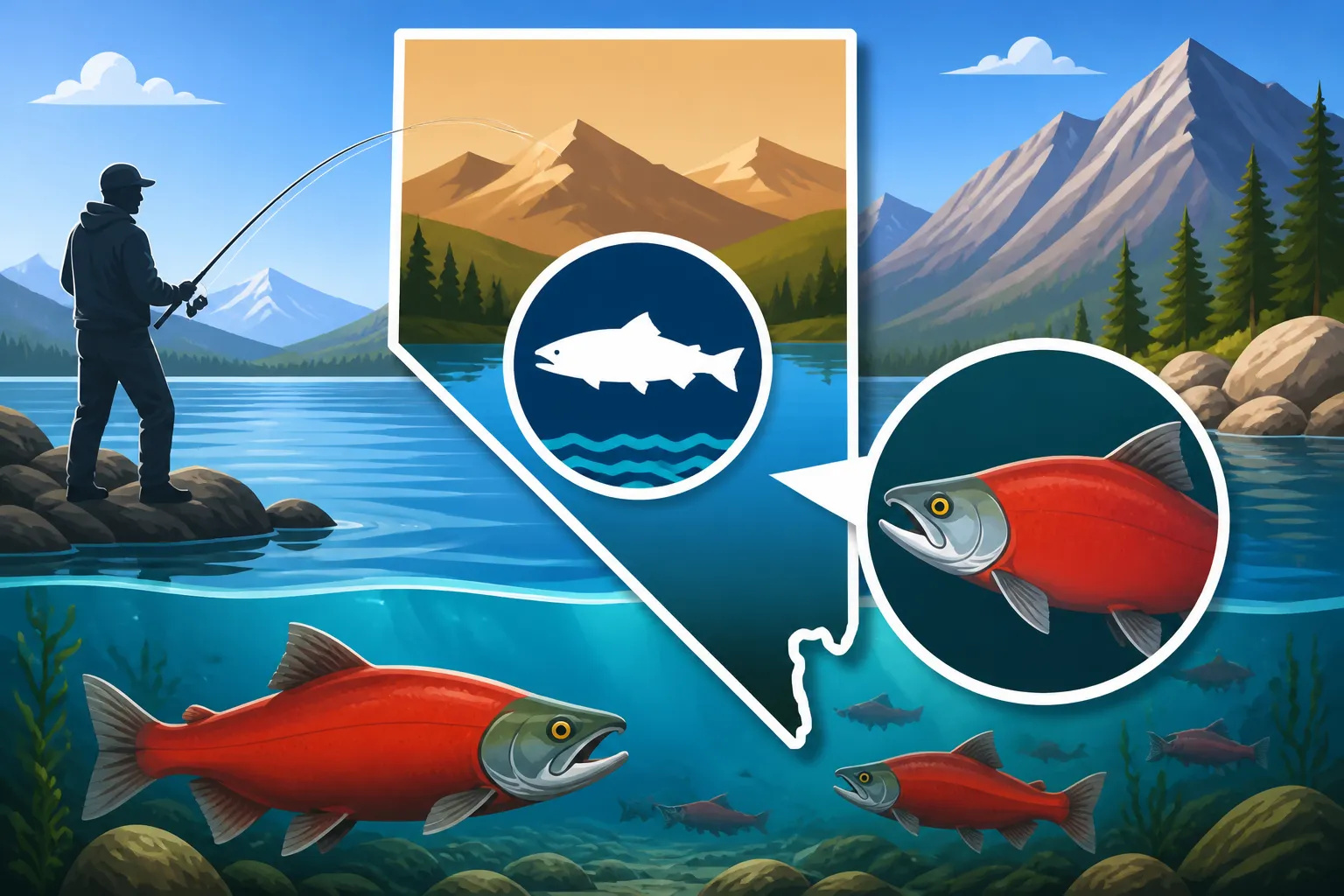
Does Nevada have any lakes with kokanee salmon?
It’s a question many curious anglers find themselves pondering: are there kokanee salmon in Nevada’s vast and varied waterways? If you’ve been hoping to target these vibrant, landlocked sockeye, you might feel a bit stumped by the lack of readily available information. Many people assume that with all the trout and bass Nevada has to offer, kokanee must be abundant too, but the reality is a little more complex. This guide will dive deep into whether kokanee salmon call the Silver State home, where you might find them, and why they’re not as common as other popular game fish here.
Unraveling the Kokanee Salmon Mystery in Nevada
For many, the mention of salmon conjures images of vast ocean runs or large, glacier-fed rivers. Kokanee salmon, however, are a unique landlocked variety of sockeye salmon, meaning they complete their entire life cycle in freshwater. They’re known for their beautiful silver-blue coloring, turning a brilliant red during their spawning phase, and for being fantastic table fare. But the big question remains: do they truly thrive in Nevada?
A Brief History of Kokanee in the Silver State
Historically, kokanee salmon haven't been a cornerstone of Nevada's sport fishery in the same way that trout or bass have. The Nevada Department of Wildlife (NDOW) primarily focuses its stocking efforts on species like rainbow trout, brown trout, and various bass species to maintain popular fisheries across the state. While there have been sporadic or experimental stockings of kokanee in certain waters over the decades, these efforts often haven't resulted in widespread, self-sustaining populations.
The truth is, kokanee have very specific habitat requirements that much of Nevada’s arid landscape and its reservoirs simply can't consistently provide. Unlike their anadromous (sea-run) relatives, landlocked kokanee rely entirely on freshwater conditions for survival and reproduction. This means finding them in Nevada often requires looking at specific, unique ecosystems rather than the general fishing spots you might frequent for other species.
The Elusive Nature of Nevada's Kokanee
If you're an angler who enjoys booking fishing trips and exploring new waters, you might use services like FishingBooker to scout locations. When searching for kokanee in Nevada, you'd quickly notice that dedicated kokanee fisheries are not widely advertised. This isn't an oversight; it's a reflection of their elusive nature here. The few places where they do exist are often either border waters or highly specialized environments.
Kokanee are particularly sensitive to water quality, temperature, and the availability of zooplankton—tiny crustaceans that form the bulk of their diet. Many of Nevada's desert reservoirs, while fantastic for warm-water species like bass and striped bass, simply don't offer the sustained cold, deep, and oxygen-rich environments that kokanee need to thrive year-round and successfully reproduce. This makes them a bit of a needle in a haystack for most Nevada anglers, except in one very notable exception.
Identifying Potential Kokanee Waters in Nevada
While kokanee aren't swimming in every Nevada lake, there is one significant body of water that offers a legitimate chance to catch these prized fish. It's not exclusively Nevada water, but a shared treasure that runs along the state's western border.
Lake Tahoe: Nevada's Kokanee Hotspot (with a Catch)
Without a doubt, Lake Tahoe is the place to go if you're targeting kokanee salmon near Nevada. This majestic alpine lake, straddling the border with California, boasts a robust and healthy kokanee population. However, it's crucial to understand that while a significant portion of Lake Tahoe is within Nevada, the kokanee fishery is often discussed in a broader, bi-state context.
Kokanee in Lake Tahoe are typically smaller than some of their counterparts in other states, often ranging from 10 to 14 inches, though larger ones are caught. They are famous for their fall spawning runs, especially up the Taylor Creek area on the California side, where thousands turn brilliant red and attract onlookers every year. On the Nevada side, during the late summer and fall, you can find them congregating in deeper waters before their spawn. Anglers often target them by trolling with small dodgers and lures.
Remember, fishing Lake Tahoe means adhering to specific regulations that can vary depending on which state's waters you are in. Always check the current Lake Tahoe Nevada Fishing License Rules and ensure you have the correct Nevada Fishing License Cost Breakdown if you're fishing on the Nevada side, or the appropriate California license if you cross into their jurisdiction. Knowing the Nevada Fishing Season Dates and Limits for Lake Tahoe is also critical to ensure you're fishing legally.
High Mountain Lakes and Historical Efforts
Beyond Lake Tahoe, the presence of kokanee salmon in Nevada is far less certain. Some high-elevation mountain lakes, particularly those with deep, cold waters fed by snowmelt, might seem like ideal candidates. In the past, there may have been experimental stockings in a few of these remote lakes. However, sustaining a self-reproducing population requires very specific conditions, including suitable spawning tributaries, which are often lacking.
For instance, Marlette Lake, a pristine alpine lake in the Carson Range, is known for its pure Lahontan cutthroat trout genetics and strict access rules. While it fits the bill for cold, deep water, it's not a public kokanee fishery. Any other potential high-mountain kokanee populations would be incredibly localized, difficult to access, and likely not actively managed for sport fishing by NDOW. So, while the idea of finding a hidden gem is appealing, for kokanee, Lake Tahoe truly is your best, and often only, bet in or near Nevada.
Why Kokanee Salmon Are Not Common in Nevada's Lakes
Understanding why kokanee are so limited in Nevada helps explain their "elusive" status. It's not for lack of trying by wildlife agencies in some cases, but rather a fundamental mismatch between the fish's ecological needs and the state's predominant aquatic environments.
Water Temperature and Oxygen Requirements
Kokanee salmon are a cold-water species. They thrive in lakes with a strong thermocline, meaning a distinct layer of cold, oxygen-rich water at depth, even during the hottest summer months. They typically prefer water temperatures between 45 and 55 degrees Fahrenheit (7-13°C) and require high levels of dissolved oxygen.
Many of Nevada's larger reservoirs, like Lake Mead or Lake Mohave, are deep but experience prolonged periods of warm surface temperatures, especially during the scorching desert summers. While they might have cooler water at depth, oxygen levels can deplete, creating "dead zones" where kokanee cannot survive. Even smaller, higher-elevation reservoirs, while cooler, might not maintain the consistent thermal stratification and oxygen levels needed year-round to support a healthy population. This is a stark contrast to species like Largemouth Bass Fishing in Nevada or Striped Bass Fishing in Nevada, which tolerate warmer waters far better.
Specific Spawning Habitat Needs
Another critical factor is their spawning requirements. Like all salmon, kokanee have an anadromous instinct, even when landlocked. They will migrate from the main body of the lake into clean, gravel-bottomed streams or rivers to lay their eggs. These tributaries need to be free of excessive siltation, have appropriate water flow, and maintain consistent cold temperatures.
Many Nevada lakes and reservoirs lack these ideal spawning tributaries. Some have ephemeral streams that dry up, or they have rivers that are too warm, too silty, or have flow regimes heavily altered by irrigation and urban use. Even if a lake has a healthy kokanee population, a lack of suitable spawning habitat can prevent natural reproduction, making it impossible for the population to sustain itself without constant, expensive stocking. This contrasts with trout, which are often stocked directly into lakes as fingerlings or catchables as part of the Nevada Trout Stocking Schedule.
Forage Base and Competition
Kokanee salmon are primarily planktivores, meaning they feed almost exclusively on zooplankton. A lake must have a robust and consistent population of the right type and size of zooplankton to support a healthy kokanee fishery. Many of Nevada's reservoirs, particularly those supporting large populations of striped bass, trout, or other game fish, have a different zooplankton community or experience intense competition for this food source.
For example, large populations of exotic species or even other trout can outcompete kokanee for the available food, or even prey on juvenile kokanee. This ecological competition, combined with suboptimal water conditions, makes it incredibly challenging for kokanee to establish a dominant or even significant presence in most Nevada waters.
Targeting Kokanee Salmon in Border Waters and Beyond
So, if you’re dead set on catching a beautiful kokanee salmon, your best bet will be venturing to Lake Tahoe. To make the most of your trip, it helps to be prepared with the right gear and knowledge. If you're planning a guided trip, checking FishingBooker for Lake Tahoe guides who specialize in kokanee is a great starting point.
Essential Gear and Techniques for Kokanee
Kokanee salmon fishing is often a specialized art, typically involving trolling from a boat in deeper waters. Here’s a rundown of what you’ll need:
- Rods and Reels: Light to medium-light spinning or baitcasting rods (6-7 feet) with a sensitive tip are ideal. Pair these with small, smooth reels spooled with 6-10 lb test monofilament or fluorocarbon line. Many anglers prefer a low-stretch line to feel those subtle kokanee bites.
- Downriggers: These are almost essential for consistently reaching the depths where kokanee hold, especially during the summer. Downriggers allow you to precisely control the depth of your lure.
- Lures and Baits:
- Dodgers/Flashers: Small, elongated dodgers or flashers (like Sling Blades, Kokanee Killers, or Lake Trolls) are used to create attraction and vibration in the water. They don't have hooks themselves but are rigged in front of your lure.
- Lures: Small, brightly colored spoons, hoochies (squid skirts), or wedding rings are popular. Pink, orange, green, and chartreuse are often effective colors. Brands like Vance's Tackle, RMT, and Paulina Peak are popular for kokanee.
- Bait: Tipping your hook with a kernel or two of shoepeg corn, often scented with kokanee-specific attractants (like Pautzke's Krill or Pro-Cure scents), is almost mandatory. The corn provides scent, flavor, and a visual trigger.
- Electronics: A good fish finder can be invaluable for locating schools of kokanee and identifying the thermocline where they prefer to feed.
- Nets: A fine-mesh landing net is helpful for safely landing these delicate fish.
The typical technique involves trolling at slow speeds (usually 0.8 to 1.5 mph) with your lures set at varying depths until you find where the fish are active. The Nevada Fishing Gear Essentials guide can help ensure you have all the basics covered before heading out.
Best Times to Fish for Kokanee
While kokanee can be caught year-round in Lake Tahoe, certain seasons offer better opportunities:
- Spring (April-June): As the ice melts and water temperatures rise, kokanee become more active and start feeding aggressively. They might be found shallower than in summer, making them a bit easier to target without extreme depths.
- Summer (July-August): This is when kokanee move to the deeper, colder parts of the lake. Downriggers are crucial during these months. Early mornings and late evenings can be productive.
- Fall (September-November): This is the most exciting time for many kokanee anglers, as the fish undergo their dramatic color change and begin their spawning run. While many focus on the California side's Taylor Creek, anglers can find concentrations in deeper waters near spawning areas on the Nevada side as well. However, be mindful that during the actual spawn, rules might be tighter, and focusing on pre-spawn fish is often more rewarding for active fishing. Always check the specific Nevada Fishing Season Dates and Limits for Lake Tahoe before planning your trip.
Navigating Regulations for Cross-Border Fishing
Fishing Lake Tahoe presents a unique regulatory challenge because it's managed by both Nevada and California. You absolutely need to be aware of which state's waters you are in and possess the appropriate fishing license.
- Nevada Waters: If you launch and primarily fish on the Nevada side (e.g., from Zephyr Cove or Incline Village), you'll need a Nevada fishing license. You can easily find out How to Get a Fishing License in Nevada online or at authorized vendors.
- California Waters: If you venture into California waters (e.g., near South Lake Tahoe or Tahoe City), you'll need a California fishing license.
- Lake-Wide Regulations: Some regulations, like limits on boat speed or invasive species prevention, are often harmonized or strictly enforced across the entire lake. Always consult the latest fishing regulations booklet from both the Nevada Department of Wildlife (NDOW) and the California Department of Fish and Wildlife (CDFW) before your trip. Penalties for Nevada Fishing Violation Penalties can be steep, so it’s always best to be informed.
For those considering fishing with a boat, remember that Nevada Boat Registration for Anglers and related boating safety rules apply. Also, if you’re just starting out or want to try new techniques, consider a guided trip. A knowledgeable guide, which you can often find listed on platforms like FishingBooker, will not only have the right gear but will also be intimately familiar with the local regulations and the best spots.
Here’s a quick comparison of general characteristics for common Nevada game fish versus Kokanee Salmon:
| Feature | Kokanee Salmon (Lake Tahoe) | Rainbow/Brown Trout (Various Nevada Lakes) | Largemouth/Smallmouth Bass (Lake Mead, Mohave) | Striped Bass (Lake Mead, Mohave) |
|---|---|---|---|---|
| Typical Size | 10-14 inches (Lake Tahoe) | 10-20 inches (stocked and wild) | 1-5+ lbs (common) | 1-10+ lbs (common) |
| Preferred Water Temp | 45-55°F (7-13°C) | 50-65°F (10-18°C) | 60-80°F (15-27°C) | 60-75°F (15-24°C) |
| Diet | Primarily zooplankton | Insects, crustaceans, small fish, zooplankton | Baitfish, crawfish, insects, frogs | Shad, smaller fish, crustaceans |
| Primary Habitat | Deep, cold, oxygenated lakes with tributaries | Cold lakes, rivers, reservoirs | Warm, structured shallow areas in lakes, ponds | Open water, rocky points, deep channels in reservoirs |
| Spawning Requirement | Gravelly streams/rivers | Gravelly streams (wild), stocked (ponds/lakes) | Shallow, vegetated areas (nests) | Open water (often don't reproduce naturally in reservoirs) |
| Commonality in Nevada | Limited (primarily Lake Tahoe) | Widespread (stocked and wild populations) | Widespread (stocked and natural populations) | Widespread in large desert reservoirs |
| Primary Fishing Method | Trolling with downriggers | Bait, lures, flies, trolling | Lures (plastics, crankbaits), live bait | Trolling, jigging, live bait, topwater |
As you can see, the specific needs of kokanee salmon differentiate them significantly from the more commonly found species in Nevada. While the thrill of catching one in Lake Tahoe is undeniable, it's important to approach this fishery with specialized knowledge and respect for its unique ecosystem and regulations.
Disclaimer
Please note that fishing regulations, stocking schedules, and fish populations can change. Always consult the latest official regulations from the Nevada Department of Wildlife (NDOW) and, if applicable, the California Department of Fish and Wildlife (CDFW) before planning any fishing trip. This guide is for informational purposes only and does not constitute legal advice.