Deep Water Techniques for Lake Mead Bass
It can be incredibly frustrating when the shallow bite disappears on Lake Mead, leaving you wondering where all the bass have gone. Many anglers experience this, especially as the scorching Nevada summer heats up or after the spring spawn, when those elusive largemouth and smallmouth bass retreat to the cool, stable depths. This comprehensive guide will arm you with the knowledge and tactics to locate and successfully catch bass in Lake Mead's deeper waters, turning those frustrating days into rewarding ones.
Understanding Lake Mead's Deep Bass Habitat
Lake Mead is a massive and complex body of water, and understanding its unique characteristics is the first step to unlocking its deep-water bass potential. It's not just a big pond; it's a deep, clear desert reservoir with fluctuating water levels and distinct geological features that dictate where bass will hold.
The Influence of Thermocline and Water Clarity
One of the most critical factors influencing where bass hang out in deeper water is the thermocline. During warmer months, Lake Mead stratifies into layers: a warmer, oxygen-rich upper layer (epilimnion), a transition layer where temperature changes rapidly (thermocline), and a colder, less oxygenated bottom layer (hypolimnion). Bass, particularly largemouth, will often suspend or hold just above the thermocline, where they can find comfortable temperatures and adequate oxygen. Smallmouth bass, however, tend to tolerate deeper, colder water more readily, often hugging rock structures well below the thermocline if oxygen levels allow.
The exceptional clarity of Lake Mead's water also plays a huge role. While beautiful to behold, clear water means bass have excellent visibility, making them harder to approach in shallower areas and pushing them deeper to seek refuge from sunlight and predators. This clarity also dictates lure choices, often favoring more natural colors and subtle presentations. When you're out there, you'll notice how far down you can see, and that's exactly what the bass are seeing too.
Key Deep Water Structures and Features
Bass don't just swim aimlessly in open water; they relate to structure, even when they're deep. On Lake Mead, this means understanding the underwater topography. Look for old roadbeds, submerged rock piles, humps, ledges, and channels. These features provide ambush points, shade, and shelter from current or wave action. Imagine these underwater landscapes as highways and neighborhoods for the fish. For instance, a steep drop-off near an old submerged canyon can be a fantastic holding spot for both largemouth and smallmouth.
You'll also find bass congregating around artificial structures like submerged brush piles (sometimes placed by anglers or nature) or even remnants of old towns that were flooded when the lake was formed. The constantly changing water levels of Lake Mead, which you can learn more about in our guide on How water level affects fishing at Lake Mead, often expose new or reveal old structures, requiring anglers to adapt and learn new patterns each season. Don't overlook these unique features; they're often bass magnets.
Essential Gear for Deep Water Bass at Lake Mead
Fishing deep water effectively requires a slightly different approach to gear than your typical shallow-water flipping or topwater setup. You need equipment that can handle heavier lures, detect subtle bites, and bring powerful fish up from considerable depths. Skimping on the right tools here can lead to frustrating break-offs and missed opportunities.
Rods, Reels, and Line for Depth
When targeting deep bass, you'll want longer, more powerful rods than you might use for shallow presentations. A medium-heavy to heavy power spinning rod (7' to 7'6") is excellent for finesse techniques like drop-shotting or shaky heads, offering sensitivity and backbone. For cranking or jigging heavier baits, a medium-heavy to heavy power casting rod (7'3" to 8'0") with a moderate-fast to fast action is ideal, allowing for long casts and powerful hooksets. These longer rods provide better leverage for fighting fish from deep water and also aid in casting heavier baits further.
Reel choice depends on your technique. For spinning setups, a 3000 to 4000 size reel provides sufficient line capacity and cranking power. Baitcasting reels with a gear ratio in the 6.X:1 to 7.X:1 range are versatile for many deep-water applications, offering a good balance of retrieve speed and power. Our guide on Best Fishing Rods for Nevada Lakes offers more insights on specific rod and reel combinations.
Line selection is paramount. Fluorocarbon line is a deep-water angler's best friend due to its low stretch, incredible sensitivity, and near-invisibility underwater. Opt for 10-15 lb test for most applications, going heavier if you're targeting true monsters around heavy cover. Braid can be used as a main line with a fluorocarbon leader for ultimate sensitivity and casting distance, especially with heavier jigs or Texas rigs. Just remember that the longer the leader, the more stretch you introduce. For more specifics, check out our piece on Best Line for Desert Reservoir Fishing.
Specialized Lures for Deep Water Tactics
Fishing deep requires lures designed to get down quickly and stay in the strike zone. This is where your tackle box needs to expand beyond the usual shallow-running favorites.
One of the most effective deep-water lures is the deep-diving crankbait. These lures, with their large bills, can reach depths of 15-25 feet or more, allowing you to cover vast amounts of water quickly. Brands like Strike King, Rapala, and Berkley offer excellent deep-diving options, and you can often find great deals on these workhorses on Amazon. Match the color to the forage base (shad, crawfish) and water clarity.
Football jigs and heavy casting jigs are also indispensable. Their heavy heads help them sink fast and maintain bottom contact, which is crucial when bass are hugging the lakebed. Pair them with bulky soft plastic trailers to mimic crawfish or baitfish. For those super clear Lake Mead waters, subtle finesse jigs with smaller profiles can also be deadly.
Then there's the drop shot rig, a finesse technique that excels in deep, clear water. This rig allows your bait to suspend at a specific depth above a weight, making it incredibly effective for targeting suspended bass or those hugging hard bottom. Small soft plastic worms, minnows, or creature baits are typically used. And don't forget spoons and blade baits for vertical jigging, especially when you mark schools of baitfish or bass on your electronics. These compact, heavy lures flutter enticingly on the fall and can trigger reaction bites from even lethargic deep-water bass.
| Lure Type | Typical Depth Range | Best Use Case | Key Characteristics |
|---|---|---|---|
| Deep-Diving Crankbait | 15-25+ feet | Covering large areas, targeting aggressive fish | Large bill, wobbling action, rattles |
| Football Jig | 15-50+ feet | Bottom contact, mimicking crawfish/forage | Heavy head, weed guard, skirted |
| Drop Shot Rig | Any depth (vertical) | Suspended fish, finesse presentation, subtle bites | Weight at bottom, hook above, various soft plastics |
| Jigging Spoon | Any depth (vertical) | Reaction strikes, targeting schooling fish | Heavy, metallic, erratic flutter on fall |
| Blade Bait | Any depth (vertical) | Cold water, vertical jigging, reaction bites | Vibrating action on retrieve, metal body |
| Carolina Rig | 10-40+ feet | Covering open flats, presenting soft plastics | Leader, swivel, weight, slow retrieve, bottom bouncing |
Top Deep Water Techniques for Lake Mead Bass
Now that you've got the gear, let's talk about the specific techniques that will put Lake Mead bass in your boat when they've gone deep. These aren't just random casts; they're calculated approaches designed to appeal to bass in their deep-water sanctuaries.
Deep Cranking and Trolling Patterns
Deep cranking is an excellent way to cover water and find active fish, especially when they're relating to humps, points, and ledges. The key is to select a crankbait that can reach or slightly exceed the depth you're targeting. Cast it out as far as you can, then reel it down quickly to get it to its maximum depth. Once it's running deep, vary your retrieve: slow roll it, pause it, rip it, or try deflecting it off submerged structure. That erratic deflection is often what triggers a strike. Remember, you're trying to imitate a fleeing baitfish. Focus your efforts around known deep-water structure, working your crankbait over and around it.
For some anglers, particularly those targeting a mix of species, slow trolling deep-diving crankbaits can also be effective, allowing you to present a lure at a consistent depth over long stretches of structure. This is especially useful for exploring new areas or when bass are widely scattered. Keep an eye on your fish finder to stay on the correct depth contours and watch for baitfish schools.
Vertical Jigging and Drop Shotting
When bass are suspended in open water, holding tight to vertical structure, or you're experiencing highly pressured conditions, vertical jigging and drop shotting become invaluable.
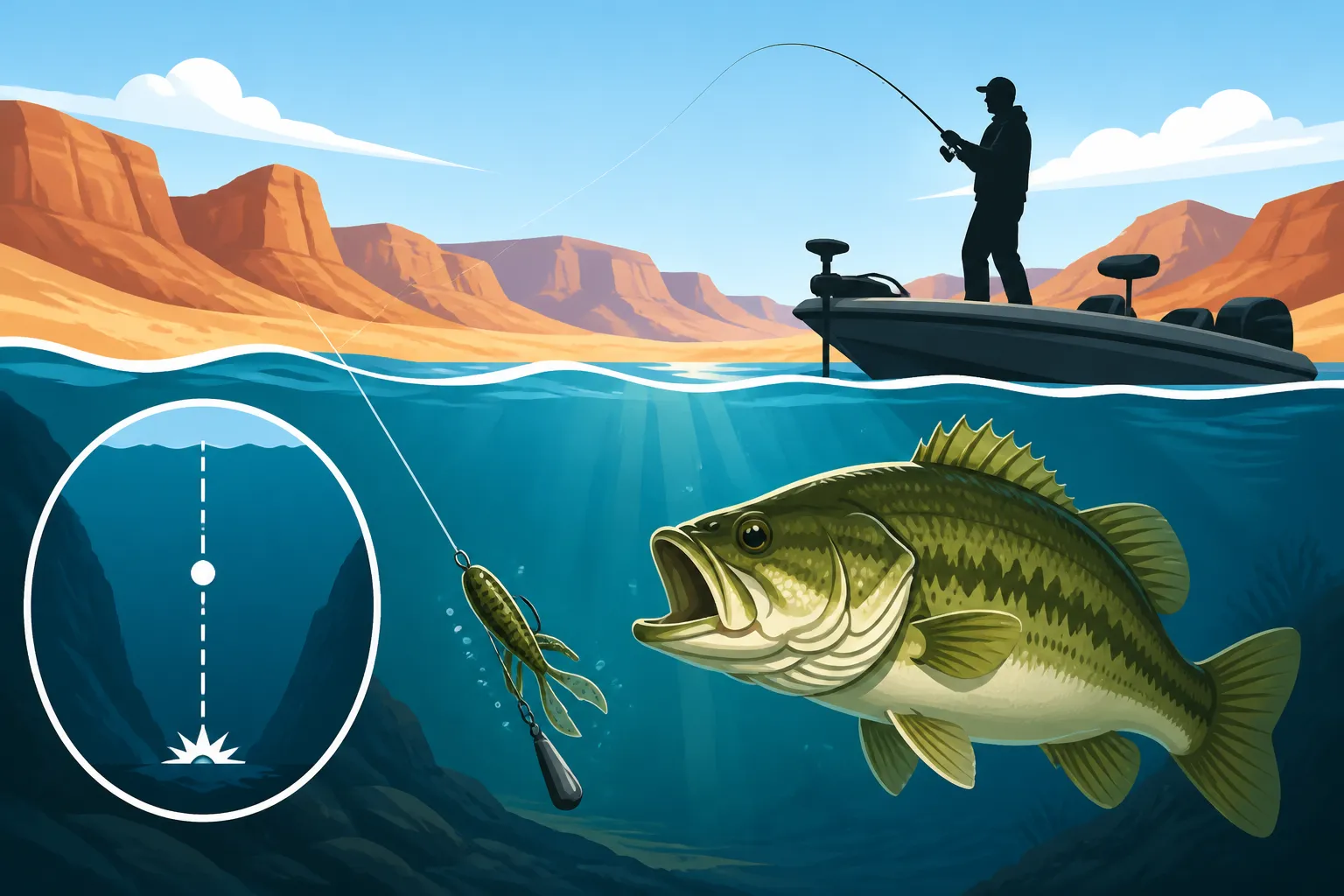
Vertical jigging involves dropping a heavy jigging spoon or blade bait straight down to the depth where you're marking fish on your electronics. Once at depth, use short, sharp lifts of your rod tip to make the lure dart and flutter, then let it fall back on a semi-slack line. Most strikes happen on the fall, so pay close attention to any twitch or sudden slack in your line. This technique is highly effective for schooling bass, as it can mimic a dying baitfish.
Drop shotting is a finesse tactic that excels when bass are picky or suspended. The beauty of the drop shot is that you can present a small, natural-looking bait at a precise depth, independent of the weight's position on the bottom. To rig it, tie a hook (often an octopus or specialized drop-shot hook) directly to your line, leaving a long tag end. Tie a weight to the end of that tag, allowing your bait to suspend above the bottom. The length of the tag end determines how high off the bottom your bait will sit. Cast it out, let it sink, and subtly shake your rod tip to impart action to the bait without moving the weight. This subtle movement can entice even the most reluctant bass. This technique is a must-have in your arsenal for Largemouth Bass Fishing in Nevada and Smallmouth Bass Fishing in Nevada.
Carolina Rig and Heavy Texas Rig
For covering deep flats, points, and ledges with a slower, more deliberate presentation, the Carolina rig is hard to beat. This rig consists of a heavy sinker (often 1/2 oz to 1 oz bullet or egg sinker), a bead, a swivel, and a leader (typically 2-4 feet of fluorocarbon) tied to a hook with a soft plastic bait. The heavy weight helps you cast a long distance and maintains bottom contact, while the leader allows your bait to float or glide naturally behind it, mimicking a foraging creature.
The Carolina rig is particularly effective when you want to present a worm, lizard, or creature bait in an open, deep environment without snagging excessively. Slowly drag or sweep your rod, then reel in the slack. The separate weight and bait often lead to a more natural presentation that deep-water bass find irresistible.
When bass are holding tight to deep cover like submerged brush or rock piles, a heavy Texas rig with a stout hook and weight (3/8 oz to 1 oz) is the way to go. This weedless setup allows you to punch through vegetation or crawl over rocks without snagging. Slowly work your bait through the cover, feeling for any subtle ticks or resistance that indicate a bite. Sometimes, getting that bait right into the heart of the cover is the only way to trigger a strike from a big bass.
Seasonal Considerations for Deep Bass Fishing
Lake Mead's deep-water bass bite isn't a constant; it shifts dramatically with the seasons. Understanding these patterns is crucial for predicting where and how to find fish throughout the year.
Summer and Early Fall Deep Water Patterns
Summer is perhaps the most obvious time to target bass in deep water. As surface temperatures soar into the 80s and 90s, bass seek refuge in the cooler, more stable environment below. This is when the thermocline becomes a key factor, with bass often suspending just above it or relating to deep-water structure below it. You'll find them on deep points, ledges, humps, and submerged islands. Vertical jigging, drop shotting, and deep cranking really shine during these months.
Early fall sees a transition. As surface temperatures begin to cool, some bass may move shallower, but many will still remain deep, especially if the water stays warm for an extended period. This is often an excellent time for deep cranking and Carolina rigging, as bass become more active and start to feed heavily in preparation for winter. Watch for baitfish schools moving deeper; the bass won't be far behind. Knowing the Best Time of Year to Fish in Nevada can significantly increase your success.
Winter and Early Spring Deep Water Strategies
Winter on Lake Mead, while not as harsh as some northern lakes, still sees bass retreating to the deepest, most stable water. They become less active, conserving energy, and often hold tight to structure or suspend in large schools over deep channels or humps. Vertical jigging with spoons, blade baits, or slow-finesse presentations like drop shots are highly effective. Focus on areas with steep drops or deep ledges that offer quick access to different depths. This is often a game of patience, slowly working your bait in areas where you've marked fish.
Early spring, before the spawn fully kicks in, can be a fantastic time for deep-water bass. As water temperatures slowly climb, bass will begin to stage on deep points and secondary ledges leading into spawning coves. While the Nevada Bass Season and Spawn Timing is generally focused on shallower water, these pre-spawn staging areas can hold massive fish. Deep crankbaits and football jigs can be incredibly effective during this period, as bass are feeding up for the energy-intensive spawning ritual. They're still deep, but they're starting to get more aggressive.
Reading Your Electronics for Deep Water Success
Modern marine electronics are absolutely non-negotiable for successful deep-water bass fishing on Lake Mead. Without them, you're essentially fishing blind, hoping to stumble upon fish in a vast desert reservoir. Learning to interpret what your fish finder is telling you will drastically improve your catch rates.
Interpreting Sonar and Down Imaging
Your 2D sonar is your primary tool for seeing what's directly beneath your boat. On Lake Mead, with its clear water and deep structures, you'll be looking for distinct arches that indicate individual fish or dense clouds that suggest schools of baitfish. Pay close attention to the bottom contour – how steep are the drop-offs? Are there humps or rock piles? The clarity of Lake Mead means you often get excellent returns, making it easier to distinguish structure from fish. Learn to differentiate between a single large fish and a tight school.
Down Imaging (DI) or DownScan provides a photographic-like view directly beneath your boat, showing much greater detail of structure and how fish relate to it. Instead of arches, fish often appear as bright dots or streaks. You can see individual trees in a brush pile, distinct rocks on a ledge, or even a fish nestled right up against a submerged wall. Using 2D sonar to locate potential fish and then switching to Down Imaging to confirm their position relative to structure is a powerful combination. This is where your investment in a quality fish finder really pays off, and there are many great options for Best Fish Finder for Reservoir Fishing available, often on Amazon.
Utilizing Side Imaging and Mapping
Side Imaging (SI) or SideScan is a game-changer for deep-water exploration, especially on a huge body of water like Lake Mead. Instead of just seeing what's directly below, SI allows you to see out to the sides of your boat (often 100-200 feet or more on each side). This lets you quickly scan vast areas for submerged roadbeds, rock piles, ledges, or schools of baitfish and bass that would be missed by traditional 2D sonar or Down Imaging. You can literally drive over an area and map out the underwater landscape and locate fish holding off to the side, then make a precision cast.
Combine your Side Imaging with detailed GPS mapping (like those from Lowrance or Garmin) to mark waypoints on productive structures or fish schools. Modern fishing apps like Navionics or C-MAP also offer incredibly detailed contours and even shaded relief maps that highlight underwater terrain, making it easier to identify potential deep-water bass haunts before you even launch the boat. Learn to read these maps and mark those deep points, creek channels, and humps – these are your starting points for a successful deep-water day.
Lake Mead Specific Challenges and Solutions
Fishing Lake Mead for deep-water bass presents a unique set of challenges that require specific adaptations. It's not just about finding deep water; it's about navigating the peculiarities of this vast desert reservoir.
Dealing with Wind and Vastness
Lake Mead can get incredibly windy, especially in the wider main lake basins. Strong winds can make boat control difficult, obscure your electronics, and make precise presentations nearly impossible. When the wind picks up, consider seeking shelter in larger coves or areas protected by canyon walls. Alternatively, use a strong trolling motor with GPS anchoring capabilities (like a Minn Kota Ultrex or a Garmin Force) to hold your position over deep structure, allowing you to focus on fishing rather than fighting the wind.
The sheer vastness of Lake Mead can also be daunting. Instead of trying to fish the entire lake, break it down into smaller, manageable sections. Focus on specific areas known for good bass fishing, such as Hemenway Bay, Government Wash, or the Boulder Basin, as detailed in our Lake Mead Nevada Fishing Guide. Use your electronics to systematically explore deep points, ledges, and humps within these chosen areas. Don't be afraid to put your boat in neutral and just drift over a promising area while watching your electronics, letting the wind or current slowly move you over key structures.
Adapting to Water Level Fluctuations
Lake Mead's water levels are famously dynamic, fluctuating significantly over months and even years. These changes dramatically alter the shoreline and the relationship of fish to structure. What was a shallow flat last year might be deep enough to hold bass this year, or vice-versa. Always check the current lake level before your trip. Websites like the Bureau of Reclamation often provide up-to-date data.
When water levels drop, previously submerged structures like old roadbeds, foundations, and rock piles become shallower or even exposed. This can concentrate fish around the remaining deeper channels and structure. Conversely, rising water can flood new terrestrial vegetation, offering new cover for bass to explore. Be prepared to adapt your fishing spots and techniques based on the current conditions. Old maps can be invaluable here, helping you visualize what's now underwater. This constant change means you have to be a detective every time you visit Lake Mead, but it also means there's always something new to discover. For more on this, check out How water level affects fishing at Lake Mead.
Disclaimer
Fishing inherently involves risks. Always prioritize safety, wear appropriate personal flotation devices, and be aware of weather conditions. This guide provides general information and recommendations; local regulations and conditions can change. Always consult the latest Nevada Department of Wildlife (NDOW) regulations before fishing.