Best livewell setup for a small bass boat
Anyone who's spent a glorious, sun-drenched day chasing bass on Nevada's vast reservoirs knows the sinking feeling: you've landed some beautiful fish you want to weigh in for a tournament or just show off to the family, but keeping them alive and healthy in a small boat can be a real challenge. The desert sun, limited space, and power concerns all conspire against your best intentions. This guide is all about equipping you with the knowledge to set up and manage the best possible livewell system for your small bass boat, ensuring your prized catches stay vibrant and ready for release or the weigh-in scales.
Understanding the Essentials of a Livewell for Small Boats
When we talk about livewells, it's easy to picture those massive, elaborate systems found in high-dollar tournament bass boats. But for us regular folks who love to hit the water in a smaller craft, whether it's an aluminum john boat, a small utility boat, or a compact bass rig, the game changes quite a bit. It’s not just a matter of scaling down; it's about making smart choices that work within your boat's limitations while still effectively caring for your fish.
Why a Livewell is Different for a Small Boat
First off, let's acknowledge the elephant in the boat: space. A smaller vessel simply doesn't have the generous deck area or storage compartments of its larger cousins. This means every inch of space dedicated to a livewell system is precious. You can't just drop in a massive insulated tank and call it a day; you need something that fits without making your boat feel like a crowded sardine can.
Then there's the weight. Every extra pound in a small boat has a more significant impact on performance, fuel efficiency, and even safety. A full livewell can add considerable weight, affecting how your boat planes, steers, and rides through chop. We're talking about balancing the need for sufficient water volume with keeping the overall load manageable. You might have seen some anglers trying to use a large cooler as a makeshift livewell, only to find their boat struggling to get on plane once it's full of water and fish. It’s a real consideration, especially on waters like Lake Mead where you might cover long distances.
Finally, the power draw. Smaller boats typically have smaller batteries and less robust electrical systems. Running a livewell pump for hours on end, especially if it's an aerator or recirculation pump, can quickly drain your battery, leaving you stranded or, at the very least, unable to start your main engine. This often leads to a tricky dance of turning the pump on and off, which isn't ideal for the fish's well-being. Understanding these unique challenges is the first step toward finding a workable solution.
Key Components of a Basic Livewell System
At its heart, a livewell system is pretty simple: it's a container designed to hold water and fish, equipped with a way to keep that water fresh and oxygenated. Even in a small boat, the core components remain the same, though their size and integration might differ.
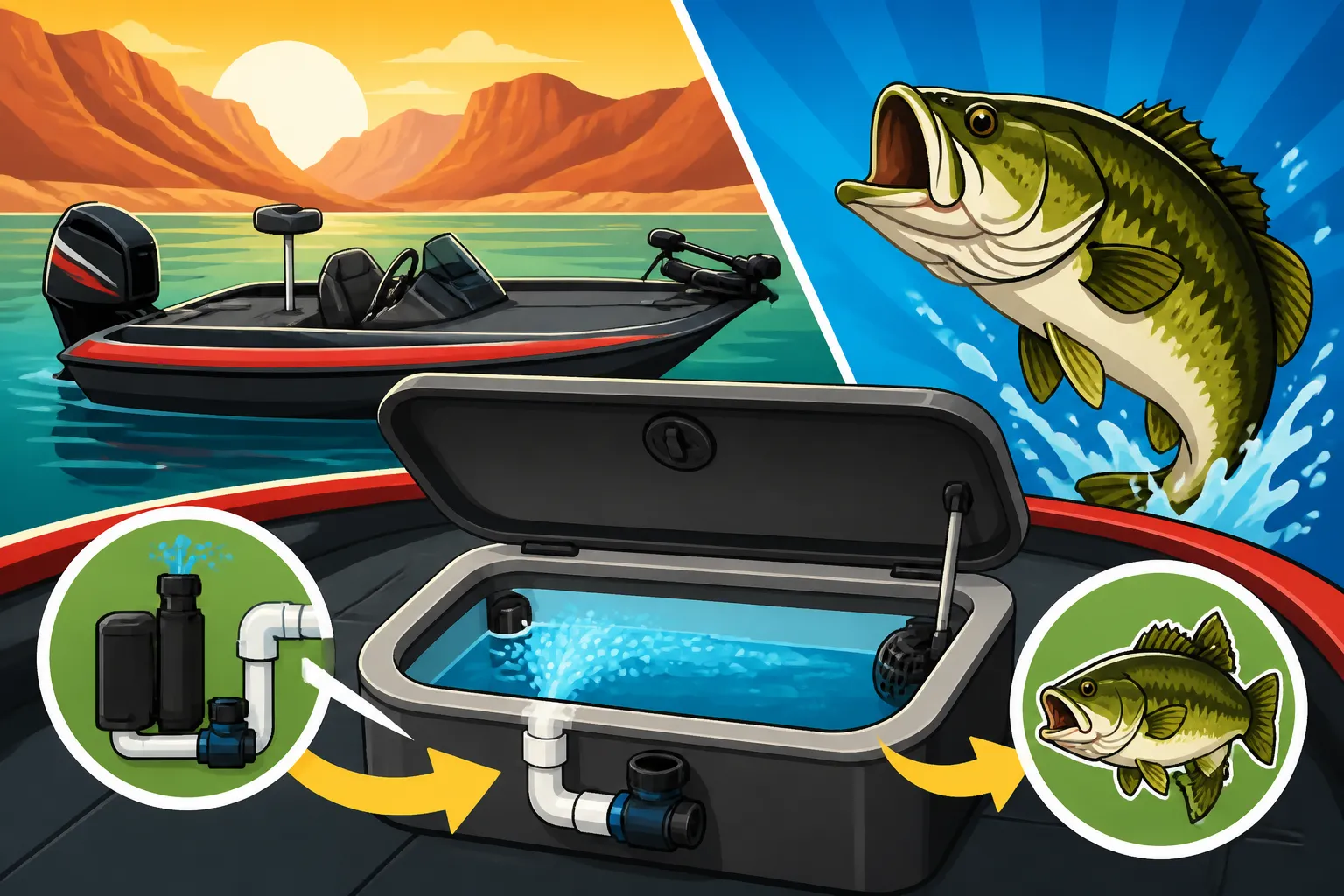
The tank itself is the most obvious part. For a small boat, this could be anything from a purpose-built plastic container to a modified cooler or even a dedicated compartment built into the boat. The key is insulation to help regulate water temperature, a smooth interior to protect fish, and enough volume to comfortably hold your catch without overcrowding them.
Next, you'll need pumps. Typically, a livewell system will involve a fill pump, which brings fresh water into the tank from outside the boat, and an aerator/recirculation pump. The aerator is crucial for continually introducing oxygen into the water, usually through a spray bar or an air stone, preventing the fish from suffocating. A recirculation pump can be part of the aerator, ensuring the water within the tank is constantly moving and refreshed. There's also an overflow system, often a simple standpipe, that allows excess water to drain out as new water comes in, preventing the livewell from overflowing into your boat. Finally, a drain allows you to empty the livewell at the end of the day.
The importance of continuous oxygenation cannot be overstated, especially when fishing for bass in the warmer Nevada months. Stagnant water quickly depletes oxygen, leading to stressed and dying fish. Beyond oxygen, maintaining good water quality means avoiding excessive ammonia buildup from fish waste and keeping the temperature stable. Think of it like a miniature, portable ecosystem that you're trying to keep in balance.
Types of Livewell Systems and Their Suitability for Small Bass Boats
When it comes to outfitting a small bass boat, you're generally looking at two main categories of livewell systems: those that are integrated into the boat's design and those that are portable. Each has its own set of advantages and disadvantages, and the "best" option really depends on your specific boat, your budget, and how often you plan to use it.
Built-In vs. Portable Livewells
Built-in livewells are what most people envision. These are typically part of the boat's original design, often located in the bow or stern, and might even be a single, long compartment or twin wells. They usually feature dedicated plumbing, fill and drain systems, and often advanced aeration. For a small bass boat, a built-in livewell is fantastic if you have it. It's seamless, doesn't take up floor space, and is generally more efficient. However, adding a built-in system to a boat that wasn't designed for one can be a major undertaking, often requiring fiberglass work, extensive plumbing, and electrical wiring. This can be costly and might not be practical for every small boat owner.
Portable livewells, on the other hand, offer incredible flexibility, especially for smaller vessels like john boats, canoes, or even larger kayaks that might be used for fishing. These are self-contained units, often insulated coolers, that come with their own battery-powered aeration system. You simply fill them with water, drop in your fish, and plug in the aerator. The biggest pro here is that they can be removed from the boat, used in other boats, or stored when not needed. This frees up precious deck space when you're just cruising or using the boat for other activities. You can find excellent portable livewell solutions from retailers like Bass Pro Shops or even a wide array of options on Amazon, offering different sizes and features to fit various needs and budgets.
Here's a quick comparison to help you weigh your options:
| Feature | Built-In Livewell | Portable Livewell |
|---|---|---|
| Space | Integrated, frees up deck space | Occupies deck space, but removable |
| Installation | Complex, often factory or professional job | Simple, plug-and-play |
| Cost | Higher initial cost (if retrofitting) | Generally lower, more budget-friendly options |
| Capacity | Can be larger, more optimized shape | Limited by size and weight, often smaller |
| Power | Wired into boat's electrical system, potentially stronger pumps | Battery-powered, more prone to draining smaller batteries |
| Flexibility | Fixed location | Highly flexible, transferable to other boats |
| Insulation | Often well-insulated | Varies, but many good insulated cooler options exist |
For many small boat anglers in Nevada, a high-quality portable livewell, perhaps an insulated cooler with a robust battery-operated aerator, might be the most practical and efficient choice. It addresses the need for Nevada Fishing Gear Essentials without requiring major boat modifications.
Aeration and Recirculation Methods
Regardless of whether you go with a built-in or portable system, the method of keeping the water oxygenated and clean is paramount. There are generally two primary ways to introduce oxygen and manage water quality: air stones/pumps and spray bars.
Air stones and air pumps work much like a fish tank aerator. An air pump sits outside the water, pushing air through a tube to an air stone submerged in the livewell. The air stone creates a steady stream of fine bubbles, which oxygenate the water as they rise to the surface. This method is quiet, relatively low power, and very effective at keeping oxygen levels high. It's a common and excellent choice for portable livewells, especially those you might set up yourself. Many smaller portable units you'd find on Amazon or at Bass Pro Shops will utilize this basic, reliable technology.
Spray bars are often found in more advanced built-in systems. These work by pumping water from the livewell or directly from outside the boat through a perforated pipe or nozzle, spraying it back into the livewell. The act of spraying agitates the surface of the water, introducing oxygen. Some systems combine this with a recirculation mode that constantly cycles the water within the livewell while also spraying it, further enhancing oxygenation and helping to mix in any water additives. The benefit of a spray bar is often better water circulation throughout the tank, ensuring fresh, oxygenated water reaches all fish.
Beyond oxygenation, a good livewell system, especially for those longer, hotter days fishing in Nevada, needs to think about filtration. While full-blown filtration systems are rare in smaller livewells due to space and power, some anglers will use simple mesh bags to collect debris or even add a small, submersible filter. The main goal of circulation, whether through bubbles or spray, is to prevent "dead spots" in the livewell where oxygen might deplete, and to ensure any water conditioning additives you use are evenly distributed. This continuous movement also helps to keep the fish calmer, reducing stress.
Setting Up and Maintaining Your Small Bass Boat Livewell for Nevada Conditions
Getting your livewell set up correctly is only half the battle; keeping it running optimally, especially under the challenging conditions often found in Nevada, is where the real skill comes in. From installation nuances to daily best practices, a little forethought can make a huge difference in fish survival.
Installation Considerations for Optimal Performance
If you're retrofitting a livewell or building your own, careful planning is essential. For a portable unit, "installation" might just mean finding the most stable, out-of-the-way spot in your boat where it won't tip over or block access. For something more integrated, even a semi-permanent cooler conversion, placement is key. You want to keep the weight centered and low in the boat to maintain stability and performance. Avoid placing it too far forward or back, as this can dramatically impact how your small boat handles, especially when it's full.
Wiring for any electric pumps needs to be done safely and efficiently. Use marine-grade wire, properly fused, and connect directly to your battery (or a dedicated accessory battery if you have one). Smaller boats often have limited battery capacity, so consider adding a small, dedicated deep-cycle battery just for your livewell and other accessories. This prevents the livewell from draining your starting battery and leaving you stranded. When considering options, some portable livewells available from retailers like Bass Pro Shops come with self-contained battery packs, simplifying the wiring, which can be a real boon.
Plumbing for fill and drain lines should be as direct as possible to minimize potential clogs or leaks. Use quality marine hoses and secure all connections with hose clamps. For a portable unit, this might be as simple as a flexible tube for the fill pump that you drop over the side of the boat and a drain plug for emptying. For a more permanent setup, ensure your fill pump intake is below the waterline and your drain/overflow system allows for complete emptying. Remember, a leaky livewell is not just messy, it can introduce unwanted water into your boat's bilge, affecting stability and potentially damaging electrical components.
Best Practices for Fish Health in Nevada's Climate
Nevada's climate presents unique challenges for fish care in livewells, particularly during the warmer months when water temperatures can soar. The primary goal is to minimize stress on the fish, which means focusing on water temperature, oxygen levels, and overall water quality. This is particularly important for bass, which can be sensitive to rapid changes.
Water temperature management is critical. Warm water holds less oxygen and puts more stress on fish. On a hot summer day at Lake Mead or Lake Mohave, your livewell water can quickly become deadly. A common and effective trick is to use frozen water bottles or frozen gel packs in your livewell. Do NOT use loose ice, as the chlorine and other impurities in tap water can be detrimental to fish. Rotate these frozen bottles throughout the day to keep the water temperature down, aiming for a consistent range that's comfortable for the fish (usually below 75 degrees Fahrenheit for bass). You might also consider specific livewell water additives, available at most sporting goods stores, which help neutralize ammonia, reduce stress, and replenish electrolytes.
Water changes are another vital practice. Even with aeration, water quality degrades over time due to fish waste and slime. Periodically exchanging some of the livewell water with fresh lake water can make a huge difference. For built-in systems, you can run the fill pump for a few minutes while the overflow is open. For portable units, you might need to use a bucket to scoop out old water and replace it with fresh, taking care to match temperatures as closely as possible to avoid shock.
Avoiding overcrowding seems obvious but is easily overlooked in the excitement of a good fishing day. Each fish adds to the biological load and reduces the available oxygen. Be mindful of how many fish your livewell can realistically support without undue stress. If you're catching a lot, consider keeping only your largest or target fish in the livewell and releasing others immediately. Good fish handling practices, like those detailed in Catch and Release Techniques for Trout or Handling and Releasing Lahontan Cutthroat Trout, apply equally to bass in a livewell. Minimize handling time, use wet hands, and get them into the livewell gently.
Common Challenges and Troubleshooting a Small Boat Livewell
Even the best livewell setups can encounter issues, especially when dealing with the demanding environment of Nevada's lakes and reservoirs. Knowing how to identify and quickly address these common problems can be the difference between a successful fishing trip and a disappointing one.
Power Management and Battery Drain
One of the most persistent headaches for small boat owners with livewells is battery drain. A pump running continuously can quickly deplete a standard marine battery, especially if it's also powering your fish finder, navigation lights, or other accessories. You don't want to find yourself unable to start your main engine at the end of a long day of Nevada bass fishing.
To combat this, consider upgrading your battery if your boat's electrical system allows. A deep-cycle marine battery is designed for sustained power draw and will outperform a cranking battery in this role. If space is limited, even a second, smaller deep-cycle battery dedicated solely to your accessories and livewell can be a lifesaver. Ensure both batteries are charged fully before each trip.
Timers and intermittent running can also help. While continuous aeration is ideal, if battery conservation is paramount, you might set your livewell pump to run for 10-15 minutes every half hour. This is a common practice, though it's a trade-off: less power consumption means slightly less optimal conditions for the fish. For portable livewells, especially those from brands like Bass Pro Shops, look for models with built-in timers or low-power modes. Some anglers even carry a small, portable jump starter or a compact solar charger for emergencies or to top off a deep-cycle battery during extended fishing trips. This becomes especially relevant if you're out all day practicing Summer Fishing Techniques for Hot Desert Lakes.
Addressing Leaks and Malfunctions
Leaks are, frankly, a nightmare. They can go unnoticed until your bilge pump is working overtime or your feet are soaked. Common leak points include hose connections that aren't properly clamped, cracks in the livewell tank itself (especially in older plastic portable units), or faulty drain plugs. Regularly inspect all hoses, clamps, and the tank for any signs of wear or damage. A simple, inexpensive solution can be carrying extra hose clamps and marine sealant for quick, on-the-water repairs.
Pump issues are another frequent culprit. Pumps can clog with debris, get airlocked, or simply fail due to age or electrical problems. If your pump isn't running or isn't moving water, first check the fuse. Next, inspect the intake screen for any weeds, mud, or other obstructions. Sometimes, removing and cleaning the impeller can resolve the issue. If the pump is making noise but not moving water, it might be airlocked; try shaking it gently or priming it by holding it underwater if it's a submersible type.
Always carry a spare pump if you have a built-in system, or a spare battery for your portable unit, especially if you're fishing remote areas. You'd be surprised how quickly a bad pump can ruin a day when you're trying to meet a Nevada Largemouth Bass Minimum Size Limit requirement for a weigh-in. A small troubleshooting kit with basic tools like a screwdriver, pliers, electrical tape, and a few spare fuses can save your trip. Remember, the goal is to keep your fish as comfortable as possible, and a malfunctioning livewell quickly jeopardizes their health.
| Troubleshooting Issue | Common Cause | Quick Fix / Prevention |
|---|---|---|
| Battery Draining Fast | Continuous pump use, undersized battery | Upgrade to deep-cycle battery, use a timer, carry spare battery. |
| Pump Not Running | Blown fuse, clogged intake, electrical connection | Check/replace fuse, clean intake, inspect wiring. |
| Pump Running, No Water | Airlock, clogged impeller, cracked housing | Shake pump, clean impeller, inspect for damage. |
| Livewell Leaking | Loose hose clamps, cracked tank, faulty drain plug | Tighten clamps, patch cracks, replace drain plug. |
| Fish Stressed/Dying | High water temp, low oxygen, overcrowding | Add frozen water bottles, check aeration, reduce fish count, use additives. |
| Foul Water Smell | Ammonia buildup, stagnant water | Perform water changes, ensure good circulation, use ammonia neutralizer. |
Having a well-functioning livewell in your small bass boat gives you the freedom to fish responsibly, knowing your catches are being cared for, whether they're destined for the frying pan or a healthy release. It's an investment in the health of the fish and the enjoyment of your time on the water.
Disclaimer
This article is for general informational purposes only and does not constitute professional advice. Laws, prices and regulations vary by location and change over time. Consult a qualified professional for guidance on your specific situation.