Handling and Releasing Lahontan Cutthroat Trout
It’s a moment etched into every angler’s memory: the pull on the line, the powerful fight, and finally, the stunning Lahontan Cutthroat Trout at the end of your leader. These magnificent fish, especially those found in Nevada's iconic Pyramid Lake, are not just a catch; they're a living piece of history and a testament to remarkable conservation efforts. Yet, getting them safely back into the water after a photo can be trickier than it looks, and mishandling can negate all the good intentions of catch and release. This guide will walk you through the proper techniques for handling and releasing these incredible trout, ensuring their survival and the health of this vital fishery.
Understanding the Lahontan Cutthroat Trout
Before we even get into the nitty-gritty of handling, it’s crucial to understand what makes the Lahontan Cutthroat Trout so special and why every single one we interact with deserves the utmost care. These aren't your average stocked rainbows; they're resilient, unique, and incredibly important to Nevada's natural heritage.
A Brief History and Conservation Status
The Lahontan Cutthroat Trout (Oncorhynchus clarkii henshawi) is the largest subspecies of cutthroat trout and is native to the Lahontan basin, which includes areas of Nevada, California, and Oregon. Historically, these fish thrived in huge numbers, especially in lakes like Pyramid Lake and Lake Tahoe, growing to immense sizes. Imagine trout that regularly topped 20 pounds, with historical records pushing well over 40! Their journey, however, has been fraught with challenges. Overfishing, habitat destruction, and the introduction of non-native species led to a drastic decline in their populations throughout the 20th century. In fact, for a time, they were thought to be extinct in their native Pyramid Lake.
Thanks to incredible conservation efforts by the Pyramid Lake Paiute Tribe and state agencies, these fish have made a remarkable comeback, particularly at Pyramid Lake. However, they remain a federally listed Threatened and Protected Fish Species in Nevada and are still vulnerable. This status means that every angler has a profound responsibility to treat each fish with respect, ensuring that any released fish has the best possible chance of survival. We’re not just fishing; we’re participating in a living legacy.
Key Characteristics and Identification
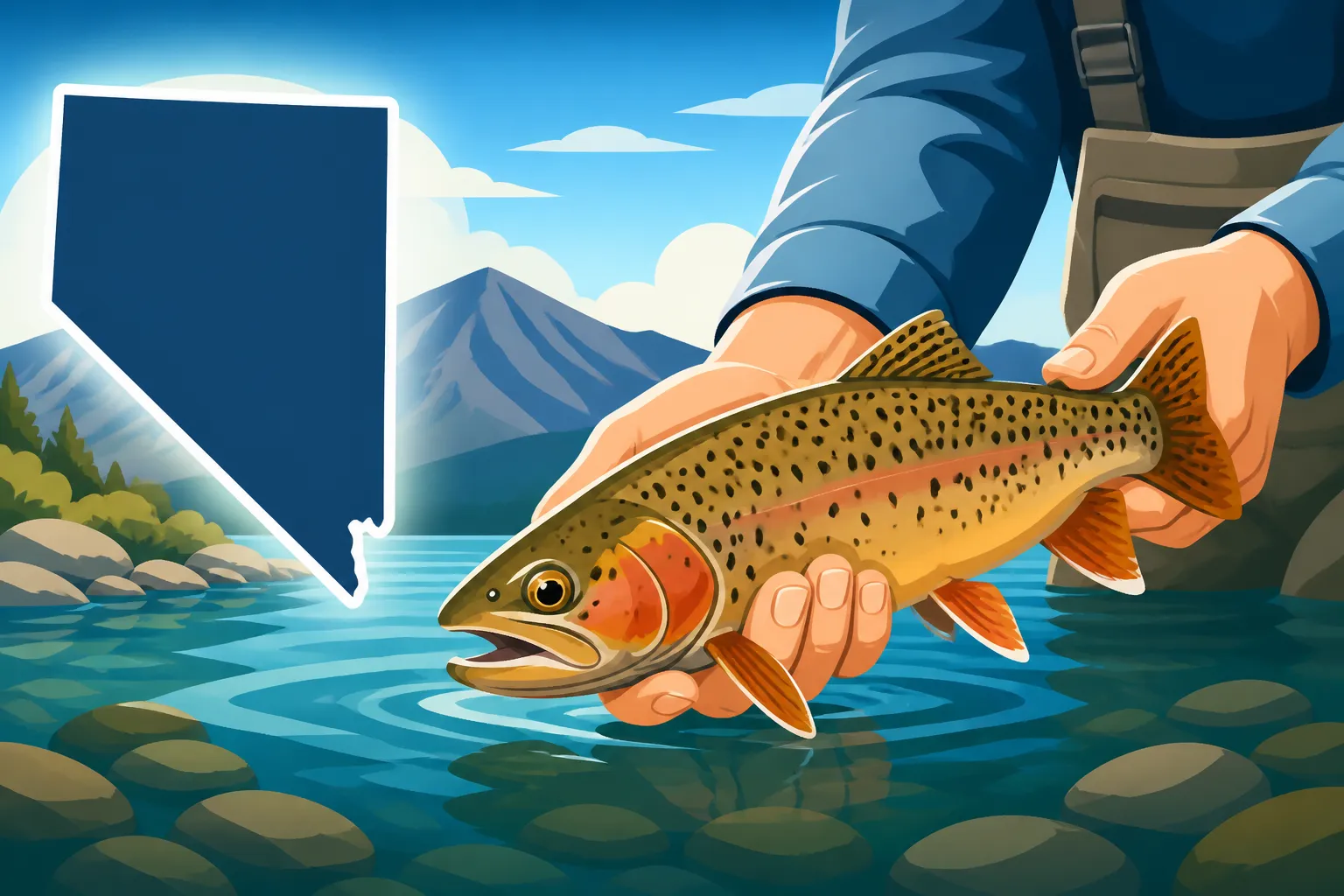
Identifying a Lahontan Cutthroat Trout is usually straightforward once you know what to look for, but it's important to be certain, especially since they can coexist with other trout species in some waters. The most distinctive feature, and the one that gives them their name, is the brilliant red or orange "cutthroat" slash marks on the underside of their lower jaw. This vibrant splash of color is typically quite pronounced.
Beyond the "cutthroat," these trout often exhibit a silvery-bronze body coloration, sometimes with olive-green or yellowish hues on their backs, fading to a lighter belly. Their bodies are usually adorned with numerous small, irregularly shaped black spots, which are often concentrated more towards the tail. Compared to rainbow trout, which generally have more evenly distributed spots and a pinkish lateral line, the Lahontan Cutthroat's spots tend to be more pronounced and less uniform. It’s a good idea to familiarize yourself with Lahontan Cutthroat Trout Identification before you head out, as mistaken identity can lead to unintended harm or even legal issues if you keep a protected fish.
Habitat and Behavior at Pyramid Lake
Pyramid Lake, located north of Reno, is truly a jewel of the high desert and the primary stronghold for trophy-sized Lahontan Cutthroat Trout. This ancient lake is one of the oldest in North America and possesses a unique ecosystem that allows these trout to grow to truly massive proportions. The lake's vast, deep, and often cold waters, combined with its abundant food sources like the cui-ui sucker fish, create the perfect environment for these powerful predators.
Anglers often find these fish in various parts of the lake depending on the season and water temperature. During colder months, they cruise the shallows and near-shore areas, making them accessible to shore anglers using ladders or specialized techniques. As temperatures rise, they typically retreat to deeper, cooler waters. Their behavior is largely dictated by their feeding patterns – they are opportunistic feeders, preying on baitfish, insects, and even smaller trout. Understanding their seasonal movements and preferred depths is key to successful and efficient fishing, which in turn minimizes the stress on any fish you catch. Remember, a fish that spends less time on the line is a fish with a better chance of swimming away strong.
Essential Gear for Responsible Catch and Release
Let's be honest, we all love our gear. But when it comes to Lahontan Cutthroat, your equipment choices go beyond just what’s cool or expensive; they become a critical part of ethical angling. Using the right tools isn't just about catching more fish, it's about minimizing harm and ensuring a healthy release.
The Right Rod, Reel, and Line
Choosing the correct rod, reel, and line for Lahontan Cutthroat Trout, especially those at Pyramid Lake, is a delicate balance. You need gear that can handle the sheer power and size of these fish, preventing an excessively long fight that can exhaust and stress them, but also not so heavy that it rips the hook out or causes unnecessary tissue damage. For most Pyramid Lake scenarios, anglers typically use longer rods (9-11 feet for shore fishing, 7-8 feet for boat fishing) with a medium-heavy action. This length helps cast further and absorb the powerful runs of a large trout.
For spinning gear, a robust reel in the 4000-6000 size range, spooled with 15-20 lb braided line and a fluorocarbon leader of 10-15 lb test, is a common setup. For fly fishing, a 7-8 weight rod with a matching reel and sinking line is generally appropriate. The key here is not to under-gun yourself, which leads to prolonged fights, or to over-gun, which can be too aggressive. A good quality drag system on your reel is paramount; it allows the fish to take line when it needs to, preventing snapped lines and excessive strain on the fish, and ultimately ensures you can land the fish efficiently. You can find many reliable rod and reel setups on Amazon, perfect for handling these powerful trout.
Crucial Terminal Tackle: Hooks and Leaders
When it comes to terminal tackle, hook choice is perhaps the single most important factor for catch and release. Barbless hooks are not just a good idea; they are often a mandatory regulation in many sensitive fisheries, including Pyramid Lake. If you're wondering, Are barbless hooks required at Pyramid Lake?, the answer is a resounding yes for many lures and flies! Even if not explicitly required for all situations, opting for barbless hooks significantly reduces damage to the fish’s mouth and makes hook removal much quicker and less traumatic. You can buy hooks that are already barbless, or you can easily crimp down the barb on your existing hooks with a pair of pliers. This simple act is one of the most effective ways to promote fish survival.
Your leader material and strength should also be considered. A fluorocarbon leader is often preferred for its invisibility underwater and its abrasion resistance. Matching the leader strength to the size of fish you expect to encounter is important. Too light, and you risk breaking off, leaving a hook in the fish. Too heavy, and it might deter bites, or be overkill for smaller fish. Generally, 8-15lb test fluorocarbon is a good starting point for Lahontan Cutthroat, allowing for a good fight without undue risk of losing the fish with tackle still attached.
Landing Nets and Fish Grips
Landing a large, powerful fish can be exhilarating, but the method you choose can make or break its chances of survival. Forget those old string nets with wide knots that strip off a fish’s protective slime layer and damage fins. A high-quality, knotless, rubberized or silicone landing net is an absolute must-have. These nets protect the fish’s scales, fins, and slime coat, which is their primary defense against disease and infection. When using a net, guide the fish headfirst into it and keep as much of the fish submerged as possible. For bigger fish, a net with a wide mouth and deep basket is essential for secure handling.
While some anglers use fish grips for other species, they are generally not recommended for trout, especially large Lahontan Cutthroat. Grips can put undue stress on a fish's jaw, potentially dislocating it or causing internal damage. Your best bet is always a proper net, or if you must handle the fish, use wet hands and support its weight horizontally. If you're looking for a good quality rubberized net, Amazon offers a wide selection from brands like Frabill and Ego S2.
The Catch: Minimizing Stress During the Fight
The moment a fish strikes, the clock starts ticking. Every second it spends fighting on the line, out of its natural environment, adds to its stress levels. As responsible anglers, our goal is to bring the fish to hand as quickly and gently as possible.
Playing the Fish Quickly and Efficiently
When a Lahontan Cutthroat hits your lure or fly, the immediate instinct might be to horse it in. However, the most effective approach for both landing the fish and ensuring its survival is to play it firmly but not aggressively. Your rod and reel's drag system are your best friends here. Let the fish make its powerful runs, but apply consistent pressure to tire it out without breaking your line or ripping the hook. A long, drawn-out fight, especially in warmer water, can cause a severe buildup of lactic acid in the fish's muscles. This "lactic acid poisoning" can be lethal, even if the fish swims away appearing healthy.
Aim to land the fish within a reasonable timeframe – typically a few minutes for a healthy fight. Don't let it rest and recover repeatedly, as this just prolongs the ordeal. Keep the rod tip up, maintain tension, and guide the fish towards your landing net as soon as it begins to tire. This efficient approach conserves the fish’s energy, leaving it with enough strength to recover post-release.
Keeping the Fish in the Water
This is the golden rule of catch and release, and one that cannot be stressed enough: keep the fish in the water as much as possible. A fish’s gills are designed to extract oxygen from water, not air. Exposing them to air, even for a short time, is akin to holding your breath. The longer a fish is out of water, the more severe the oxygen deprivation and the greater the damage to its delicate gill filaments, which can fuse together and prevent future oxygen absorption.
Ideally, the fish should be unhooked and released while still in the net, submerged in the water. If you absolutely must bring it out for a quick photo, ensure your hands are wet, support its full weight horizontally, and keep it out for only a matter of seconds. Avoid dropping it on the bank or letting it flop around in the bottom of a boat. The best practice is to always prioritize the fish's well-being by keeping it submerged.
Avoiding Excessive Handling
We all want that trophy shot, but resist the urge to manhandle your catch. Each time you touch a fish, especially with dry hands, you strip away its protective slime coat. This mucous layer is the fish's first line of defense against bacteria, parasites, and fungi. Without it, the fish becomes highly susceptible to infections once it's back in the water.
If you need to handle the fish, always wet your hands thoroughly beforehand. Cradle the fish gently, supporting its belly and tail, and avoid squeezing it, particularly around the gill plates or abdomen, where vital organs are located. Try not to put your fingers in the gills, as this can cause severe internal injury and bleeding. Remember, the less contact, the better. Aim for a quick, respectful interaction that allows the fish to return to its environment with minimal stress and maximum protective coating intact.
The Release: Gentle and Effective Methods
The release is the final, crucial step in the catch-and-release process. Doing it right dramatically increases the chances of the fish not just swimming away, but thriving after its encounter with you.
Proper Hook Removal Techniques
Once the fish is secured in your rubberized net, submerged in the water, it's time for hook removal. This needs to be done swiftly and carefully. Essential tools for this are a good pair of long-nose pliers or hemostats (forceps). These allow you to get a firm grip on the hook without sticking your fingers too close to a thrashing fish.
With the fish still in the water, use the pliers to firmly grasp the hook. If you're using barbless hooks, a gentle twist or reverse motion is usually all it takes for the hook to slide right out. If the hook has a barb, gently back it out the way it went in. Try to avoid tearing extra tissue. If the fish is deeply hooked – meaning it has swallowed the hook – it presents a challenge. Never try to yank a deeply swallowed hook out, as this will almost certainly cause fatal internal damage. Instead, if the hook is stainless steel, you can clip the line as close to the hook as possible. In many cases, the hook will eventually rust out or the fish's body will encapsulate it. While not ideal, it's often the fish's best chance of survival. For all other hooks, cut the line and leave the hook in place if removal would cause excessive damage.
Supporting and Reviving the Fish
After the hook is out, the fish may be disoriented or exhausted. This is where active revival comes into play. Still holding the fish gently in the water, cradle it horizontally and face it into a gentle current or move it slowly back and forth in still water. This forces water through its gills, helping to oxygenate its blood and revive it.
Watch for signs of recovery: the gills will start to flare regularly, the fish might try to swim away, and its fins will stiffen. Don't rush this process. It could take anywhere from a few seconds to several minutes, especially for larger fish or those that fought hard. Only release the fish when it can hold itself upright and swims away with strong, deliberate tail beats. If you release it prematurely, it might just float away belly-up, becoming easy prey or simply succumbing to exhaustion. Patience here is key to a successful release. This is a critical part of knowing How to properly release a trout without hurting it.
Understanding Water Conditions and Release Impact
The chances of a fish surviving a catch and release can be significantly impacted by environmental factors, particularly water temperature. Cold water holds more dissolved oxygen, which means fish are generally less stressed by a fight and recover more quickly. Conversely, warm water holds less oxygen, and fish are much more susceptible to stress and lactic acid buildup. Fishing for trout when water temperatures are high (e.g., above 68°F for cutthroats) can lead to very high mortality rates, even with the best handling practices.
Always be aware of the water conditions. If the water is unusually warm, consider postponing your trout fishing or switch to species that are more tolerant of warmer temperatures. Even if you're fishing in ideal temperatures, understanding Best water temperature for trout fishing can help you know when a fish might need extra recovery time. These considerations are part of the broader ethical framework that ensures our enjoyment doesn't come at the expense of the fish population.
Specific Considerations for Pyramid Lake
Pyramid Lake isn’t just any fishing destination; it's a unique and sacred place with its own set of rules and a deep history of conservation. Anglers visiting this lake must understand and respect these specific guidelines.
Tribal Regulations and Conservation Efforts
Pyramid Lake is entirely within the Pyramid Lake Paiute Reservation, and as such, it operates under the specific regulations set forth by the Pyramid Lake Paiute Tribe. These regulations are designed to protect the Lahontan Cutthroat Trout and the lake's delicate ecosystem. You cannot fish here with a standard Nevada state fishing license; you absolutely need a Pyramid Lake Tribal Fishing Permit. These permits are typically available at various locations around the lake, including the Pyramid Lake Store and Crosby’s Lodge, or online.
The tribe has been at the forefront of the Lahontan Cutthroat Trout's recovery, with their fisheries program actively managing the lake and operating a hatchery that stocks the lake with these native trout. Their dedication to the species and the health of the lake is paramount. Respecting their rules, including specific season dates, bait restrictions, and limits, is not just a legal obligation but a moral one. Always check the current Pyramid Lake Season and Bag Limit Rules before you go, as they can change.
The Importance of the Slot Limit
One of the most critical regulations at Pyramid Lake is the slot limit for Lahontan Cutthroat Trout. This is a powerful conservation tool designed to protect the breeding population. A typical slot limit might allow anglers to keep a certain number of fish under a minimum size and over a maximum size, but require that all fish within a specific size range (the "slot") be immediately released. For example, if the slot limit is 17-24 inches, you might be allowed to keep fish under 17 inches and one over 24 inches, but any fish between 17 and 24 inches must be released.
The purpose of this slot is to protect the most reproductively active fish, ensuring they have the opportunity to spawn and contribute to future generations. These middle-sized fish are often the prime breeders. Understanding and strictly adhering to the Lahontan cutthroat trout slot limit explained is crucial. Any fish caught within the slot must be handled with extreme care and released quickly, following all the best practices discussed earlier. This is also why knowing Why catch and release is required at Pyramid Lake for certain sizes is so important.
Equipment and Techniques Adapted for Pyramid Lake
Fishing at Pyramid Lake often requires specialized equipment and techniques due to the size of the fish and the unique environment. Shore anglers famously use ladders to get out past the shelf and into deeper water, extending their casting range for these often-distant trout. Longer rods (10-12 feet) are common for maximum casting distance from shore.
For both shore and boat anglers, specific lures and flies have proven most effective. Trolling large spoons or minnow-imitating plugs from boats is a popular method. Fly anglers often use sinking lines and large streamers or balanced leeches, sometimes fished under an indicator from a float tube or boat. Considering the immense size of these trout, your Fly Fishing Gear for Pyramid Lake should be robust. Given the strong, often windy conditions at Pyramid Lake, having the right gear, from proper waders to sturdy tackle, available on platforms like Amazon, makes a huge difference not only in your success but also in your ability to manage and release fish safely.
Post-Release Ethics and Angler Responsibility
The act of releasing a fish isn't truly over until it has successfully swum away and has a strong chance of thriving. Our responsibility extends beyond just unhooking.
Observing the Fish After Release
After you’ve gently revived the fish and it feels ready to swim off, don't just let go and immediately turn away. Take a moment to observe it. Does it swim away strongly, with purpose? Or does it drift sluggishly, perhaps turning sideways before slowly moving off? If the latter, gently guide it back into your hands and continue the revival process for a little longer. It's a small investment of your time that makes a huge difference in the fish's ultimate survival.
Seeing a fish power away into the depths is an incredibly rewarding feeling and the true mark of a successful catch and release. It confirms that you've done your part to ensure the health of the fishery and the longevity of this incredible species.
Education and Setting an Example
As experienced anglers, we have a vital role to play in educating others and setting a positive example. Many new anglers, or even those experienced in other fisheries, may not be aware of the specific needs of Lahontan Cutthroat Trout or the best practices for catch and release. Instead of criticizing, offer helpful advice and demonstrate the proper techniques. Show them how to use a rubberized net, how to remove a barbless hook quickly, and the importance of keeping the fish wet.
By openly discussing and practicing responsible angling, you become an ambassador for conservation. This ripple effect of knowledge and good practice helps ensure that the fishery remains healthy for everyone, and that future generations can experience the thrill of catching these magnificent trout. It’s about more than just fishing; it’s about stewardship of a precious natural resource. Don't forget to review Nevada Fishing Regulations Explained with new anglers.
Reporting and Data Collection
Sometimes, despite our best efforts, things go wrong. Or perhaps you observe something unusual: fish acting strangely, signs of disease, or even anglers not adhering to regulations. In such cases, responsible anglers should consider reporting their observations to the appropriate authorities, such as the Pyramid Lake Fisheries or the Nevada Department of Wildlife (NDOW).
Your observations in the field can provide valuable data to fisheries managers, helping them to monitor fish health, population trends, and environmental conditions. This might include reporting a large number of dead fish, an unusual catch, or even providing feedback on the effectiveness of certain regulations. Contributing to data collection, however small, is another way to actively participate in the ongoing conservation of the Lahontan Cutthroat Trout and ensure the continued health of Nevada's incredible fisheries.
Here’s a quick summary of vital catch-and-release tips for Lahontan Cutthroat Trout:
| Action | Key Best Practice | Why It Matters |
|---|---|---|
| Gear Choice | Use barbless hooks and a knotless, rubberized net. | Minimizes mouth damage, protects slime coat and fins. |
| Fight Time | Play the fish firmly and efficiently; avoid long fights. | Reduces lactic acid buildup and exhaustion. |
| Air Exposure | Keep the fish in the water as much as possible. | Prevents gill damage and oxygen deprivation. |
| Handling | Wet hands thoroughly; support fish horizontally; avoid squeezing. | Preserves protective slime coat; prevents internal injury. |
| Hook Removal | Use pliers/hemostats; remove quickly; cut line for deep hooks. | Minimizes injury and time out of water. |
| Revival | Cradle fish in current until it swims away strongly. | Ensures full oxygenation and recovery before release. |
| Water Temp. | Be aware of water temperature; avoid fishing in hot conditions. | Warm water increases stress and mortality. |
| Regulations | Know and follow Pyramid Lake Tribal and NDOW rules. | Essential for conservation, especially slot limits and permit requirements. |
Disclaimer
Please note that fishing regulations, conditions, and best practices can change. Always consult the latest official regulations from the Pyramid Lake Paiute Tribe and the Nevada Department of Wildlife (NDOW) before heading out on your fishing trip. This guide is for informational purposes only and should not replace official guidance.