How to fish a dry fly in fast water
There's nothing quite like the sight of a trout rising to your perfectly presented dry fly, especially when you're fishing a lively, fast-moving stream. But let's be honest, trying to get that natural, drag-free drift in fast water can feel like you're fighting a losing battle against the current. Your fly zips by unnaturally, the line pulls it under, and the fish completely ignore your efforts. It's incredibly frustrating! This guide is here to walk you through the real challenges of dry fly fishing in fast water and equip you with the knowledge, gear tips, and techniques to conquer those turbulent flows and entice more strikes.
Understanding the Challenges of Fast Water Dry Fly Fishing
Fast water isn't just about the speed; it's about the complex currents, conflicting flows, and the sheer power of the river that can turn your delicate dry fly presentation into a hopeless mess. Many anglers avoid these sections, but they're often where some of the biggest and most aggressive trout lie, waiting for an easy meal. The key is to understand why it's so challenging before you can master it.
The "Drag" Dilemma: Why Your Fly Doesn't Look Natural
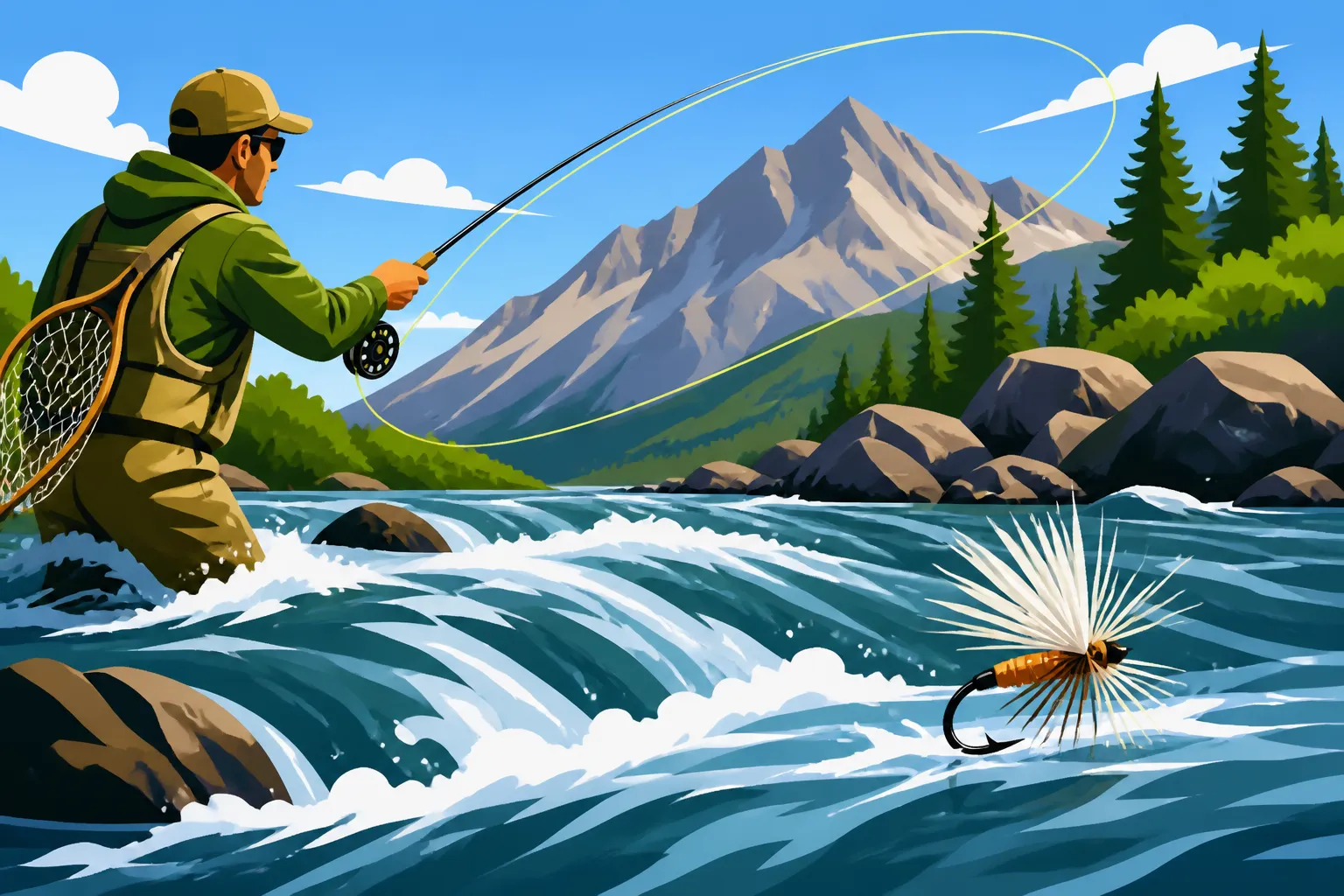
The number one enemy of a dry fly angler in fast water is drag. This happens when different current speeds pull on various parts of your fly line, leader, and fly, causing your dry fly to skate, submarine, or generally move unnaturally across the surface. Imagine a real insect struggling against the current – it's not going to suddenly jet across the water! Trout are incredibly attuned to natural drifts, and even a tiny bit of drag will send them scurrying or simply uninterested.
It's a common frustration to make what you think is a good cast, only to watch your fly immediately begin to drag. This is because the surface of a river is rarely uniform. You might have a slow current near the bank and a ripping current in the middle, or swirling eddies next to a powerful main flow. Your line, spanning these different speeds, acts like a sail, pulling your fly in directions it shouldn't go. Overcoming this requires understanding how to manage your line and manipulate your cast to outsmart these conflicting currents.
Identifying Prime Lies in Turbulent Flows
Trout are smart creatures, and they're always looking for the easiest way to live. In fast water, that means finding "lies" where they can expend minimal energy while still being in a prime position to ambush food. These spots are often overlooked by anglers who shy away from the chaos of the main current.
Look for areas where the main current slows down, even slightly. This could be behind a large boulder, in the calmer water along a seam where two different currents meet, or in an eddy created by a bank or submerged structure. Foam lines are particularly useful indicators; they collect natural insects and often mark the boundary between fast and slow water, where trout will stage. These fish are typically tucked in, facing upstream, darting out briefly to grab a meal as it drifts by before returning to their protected spot. Learning to spot these subtle havens amidst the rushing water is critical for successful dry fly fishing in these environments. Remember, trout don't want to fight the current any more than you want to fight your line.
Essential Gear for Fast Water Dry Fly Success
Having the right tools for the job can make a world of difference when you're tackling fast water with dry flies. While you might be able to get by with general-purpose gear in slower, calmer stretches, fast water demands a bit more thought in your setup. The goal is to maximize line control, improve accuracy, and ensure your flies stay afloat.
Rod, Reel, and Line Selection for Turbulent Streams
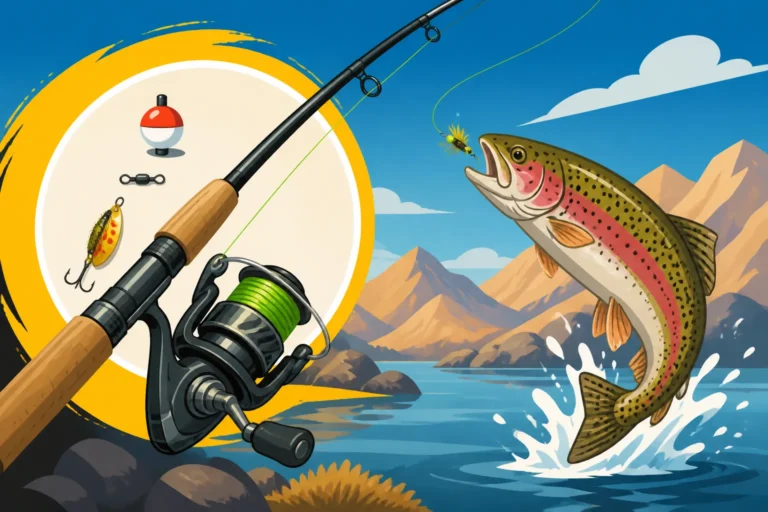
For fast water dry fly fishing, a longer rod is often your best friend. Think a 9-foot to 10-foot rod in a 4-weight or 5-weight. The extra length helps you keep more line off the water, which is crucial for reducing drag. A softer, more moderate action rod can also be beneficial as it allows for more delicate presentations and protects lighter tippets when a trout strikes aggressively. You can find excellent options for longer fly rods and reels on platforms like Amazon, offering a wide range of brands and prices.
When it comes to your fly line, a weight-forward floating line is almost always the way to go. This type of line has more weight concentrated at the front, helping it turn over larger flies and cut through wind. Pair this with a longer leader, typically 12 to 15 feet. A longer leader helps create separation between your fly line and your fly, which further aids in achieving a drag-free drift. Consider a leader with a stronger butt section that tapers down to a lighter tippet, allowing for better energy transfer during the cast. For example, a 5X or 6X tippet is usually sufficient for most dry fly situations, but in very fast and choppy water, you might step up to a 4X for durability if the fish aren't too line-shy.
Dry Fly Choices for Fast, Aerated Water
Selecting the right dry fly for fast, aerated water means choosing patterns that are inherently buoyant and highly visible. You need a fly that can withstand getting dunked and still pop back up, holding its shape and profile. Think about what a natural insect looks like struggling in that kind of water – often a bit disheveled, but still floating.
Bushy, high-riding patterns are excellent choices. Classic patterns like the Stimulator, Elk Hair Caddis, and Royal Wulff are fantastic starting points. Their robust construction and ample hackle or hair help them ride high and dry on choppy surfaces. Don't shy away from patterns tied with foam bodies, either. Foam provides incredible buoyancy and durability, making flies like foam beetles, grasshoppers, or parachute hoppers extremely effective. When shopping for these patterns, whether at your local fly shop or online through retailers like Amazon, prioritize flies with generous hackle or deer/elk hair wings. It's also a good idea to carry a high-quality floatant to apply liberally to your fly before casting and throughout your session to keep it riding high and dry. Remember, a fly that sinks isn't a dry fly!
Master Casting and Presentation Techniques
The real magic of dry fly fishing in fast water lies in your casting and line management. It’s not just about getting the fly to the fish, but getting it there in a way that mimics nature and then keeping it there for as long as possible. This often means breaking traditional casting rules and embracing a more dynamic approach.
The Art of the Reach Cast and Slack Line Cast
Achieving a drag-free drift in fast, complex currents requires more than just a simple overhead cast. You need to proactively introduce slack into your leader and fly line to allow your fly to float at the same speed as the immediate current around it. This is where specialized casts like the reach cast and various slack-line casts come into play.
The reach cast, also known as a curve cast, is invaluable. After your forward cast, as the line is still unrolling in the air, you 'reach' your rod tip either upstream or downstream, perpendicular to the target. This shifts the fly line in the air, landing it in a curve or "S" shape on the water. This built-in slack gives your fly a longer, drag-free drift before the currents inevitably straighten your line. It takes practice, but mastering this cast will dramatically improve your success. Another variation is the pile cast or parachute cast, where you intentionally collapse your forward loop a bit, causing the leader and line to fall in a heap, creating immediate slack right around the fly. It might look messy, but it's incredibly effective for maximizing a short, drag-free drift right into a small eddy or current seam. You can even find tutorials for these advanced casts online or in books on fly fishing, which you can often purchase through Amazon.
Mending and Line Management for Extended Drifts
Even with the most artful slack-line casts, the river will eventually try to assert its will and create drag. This is where continuous line management through "mending" becomes essential. Mending is the act of repositioning your fly line on the water without moving your fly. It's a constant dance between you and the river, extending your drag-free drift for precious extra seconds.
An upstream mend involves lifting your rod tip and flipping a loop of line upstream. This pushes the belly of your line into the slower current, delaying the pull on your fly. Conversely, a downstream mend can be used to pull excess line out of a fast current that's creating drag. The key is to make these mends subtly and frequently. You're not ripping the line off the water; you're gently rolling it. It's common to make several mends during a single drift, constantly adjusting as your fly floats through different current speeds. Many anglers find this the most challenging aspect of fast water dry fly fishing, but with practice, it becomes second nature. It's a constant observation of your fly's drift and anticipation of where drag will occur next. Consider looking into advanced techniques like those mentioned in a guide to Fly Fishing in Nevada.
Targeting Seams and Structure with Precision
In fast water, trout rarely position themselves randomly. They find specific holding lies, usually in slower water adjacent to a food conveyor belt. Your casting, therefore, needs to be incredibly precise, not just generally "into the river." You need to hit those specific seams, eddies, and pockets behind structure.
Focus your casts to land your fly and the initial slack directly into the target zone. Often, this means casting slightly upstream of the fish's suspected lie, allowing the fly to drift naturally into their feeding window. Pay close attention to current seams – those distinct lines on the water where fast and slow currents meet. These are prime feeding lanes. Casting just on the slower side of a seam, so your fly drifts parallel to it, is a highly effective tactic. Remember that even in fast water, trout will often rise in specific, predictable spots. Don't be afraid to experiment with different casting angles and approaches to find what works best. For tips on navigating different waters, check out How to Fly Fish a High Mountain Stream.
Reading the Water and Troubleshooting Your Drift
Successful dry fly fishing in fast water is an ongoing dialogue with the river. You cast, you watch, you learn, and you adjust. It's rarely a set-it-and-forget-it scenario. Developing a keen eye for reading the water and an adaptive approach to your technique will pay dividends.
Deciphering Current Seams and Eddies
Understanding how water moves is paramount. Current seams, as mentioned before, are your highway to finding fish. Look for distinct lines where faster water meets slower water, or where a turbulent current rubs against a calmer one. Often, these seams will be marked by foam or debris collecting on the surface, indicating a natural convergence point for food. Trout will often hold just out of the main current, tucked into the slower water of the seam, ready to dart into the faster flow to snatch an insect.
Eddies are also crucial. These are pockets of water that swirl or move in the opposite direction of the main current, often found behind large rocks, logs, or along irregular banks. Fish love eddies because they offer a comfortable resting spot with food drifting right to them as the main current sweeps by. Learning to distinguish between productive seams and dead water will save you a lot of wasted casts. Pay attention to even subtle changes in the water's texture and speed, and always be on the lookout for a tell-tale rise from a feeding trout, even in the choppiest sections.
Adjusting to Wind and Changing Conditions
Wind, especially in wide-open Nevada landscapes or deep canyons, can be a real nuisance for dry fly anglers. It can make accurate casting nearly impossible and wreak havoc on your carefully crafted drift. The first rule is to position yourself to minimize the wind's impact. If possible, cast with the wind at your back or across your body, rather than directly into it. Sometimes, however, you have no choice.
When faced with strong headwinds, shorten your leader slightly and use a more aggressive, compact casting stroke. You might also need to use a slightly heavier dry fly or a pattern with more inherent weight to help it punch through the wind. A good quality weight-forward line, which you can easily find on Amazon, will also assist in cutting through windy conditions. If the fish are still active, they're likely holding deeper or tighter to cover to avoid the surface turbulence. You might consider switching to a heavier nymph rig for a better presentation in these conditions, or exploring Best Nymph Patterns for Nevada Trout Streams to give yourself more options. Don't be afraid to change flies, even if your chosen pattern isn't actively sinking; sometimes a slight variation in size or profile makes all the difference when conditions change.
When to Switch Tactics or Give Up the Dry Fly
There's a time and a place for everything, and sometimes, even in ideal dry fly conditions, the fish just aren't looking up. This can be particularly true in fast, cold water where trout might be more focused on subsurface insects or simply conserving energy. If you've been fishing a promising section diligently, rotating through several proven dry fly patterns, and focusing on proper presentation without any success for a significant period (say, 30 minutes to an hour), it might be time to switch gears.
This doesn't mean you've failed! It just means the trout are telling you something. Consider transitioning to subsurface techniques. Nymphing is often highly effective in fast water, as many trout spend the majority of their time feeding on nymphs drifting along the bottom. You could also try swinging a streamer, mimicking baitfish. Sometimes, you might even consider the time of year; for example, understanding Nevada Trout Season Dates can give you insight into when trout are most likely to be feeding on top. Being adaptable and willing to change your approach is a hallmark of a successful angler, especially in challenging environments like fast water.
| Challenge | Solution | Key Technique |
|---|---|---|
| Drag | Use longer leader, introduce slack into cast. | Reach Cast, Slack Line Cast, Pile Cast |
| Hard to find fish | Look for seams, eddies, foam lines, current breaks near structure. | Focused Casting, Reading Water |
| Fly sinks/gets soaked | Use bushy, high-floating patterns, apply floatant often. | Proper Fly Selection, Floatant Application |
| Wind affects casting | Position with wind, use heavier line, compact casts. | Adjust Casting Stroke, Wind-resistant Gear |
| Short drifts | Constant line management, mending. | Upstream Mend, Downstream Mend |
| Fish not rising | Be patient, then switch to subsurface tactics (nymphs, streamers). | Adaptability, Gear Transition |
Don't let the daunting appearance of fast water deter you. With the right gear, a commitment to mastering your casting and line control, and a keen eye for reading the river, you'll soon discover the incredible rewards of dry fly fishing in these dynamic environments. It's challenging, yes, but those challenges are what make the eventual rise to your fly all the more satisfying. Good luck out there!
Disclaimer
This article is for general informational purposes only and does not constitute professional advice. Laws, prices and regulations vary by location and change over time. Consult a qualified professional for guidance on your specific situation.