Best Trolling Rods for Lake Trout
Navigating the deep, cold waters of Nevada's prime fishing spots for lake trout, especially the legendary Mackinaw in Lake Tahoe, presents a unique challenge. Many anglers find themselves frustrated when their standard bass or trout rods just don't cut it for the heavy demands of deepwater trolling, leading to missed bites, pulled hooks, or simply an inefficient day on the water. This comprehensive guide is designed to shed light on why specialized trolling rods are essential for success and how to choose the very best one to elevate your lake trout fishing game in the Silver State.
Understanding Lake Trout and Trolling in Nevada's Deep Waters
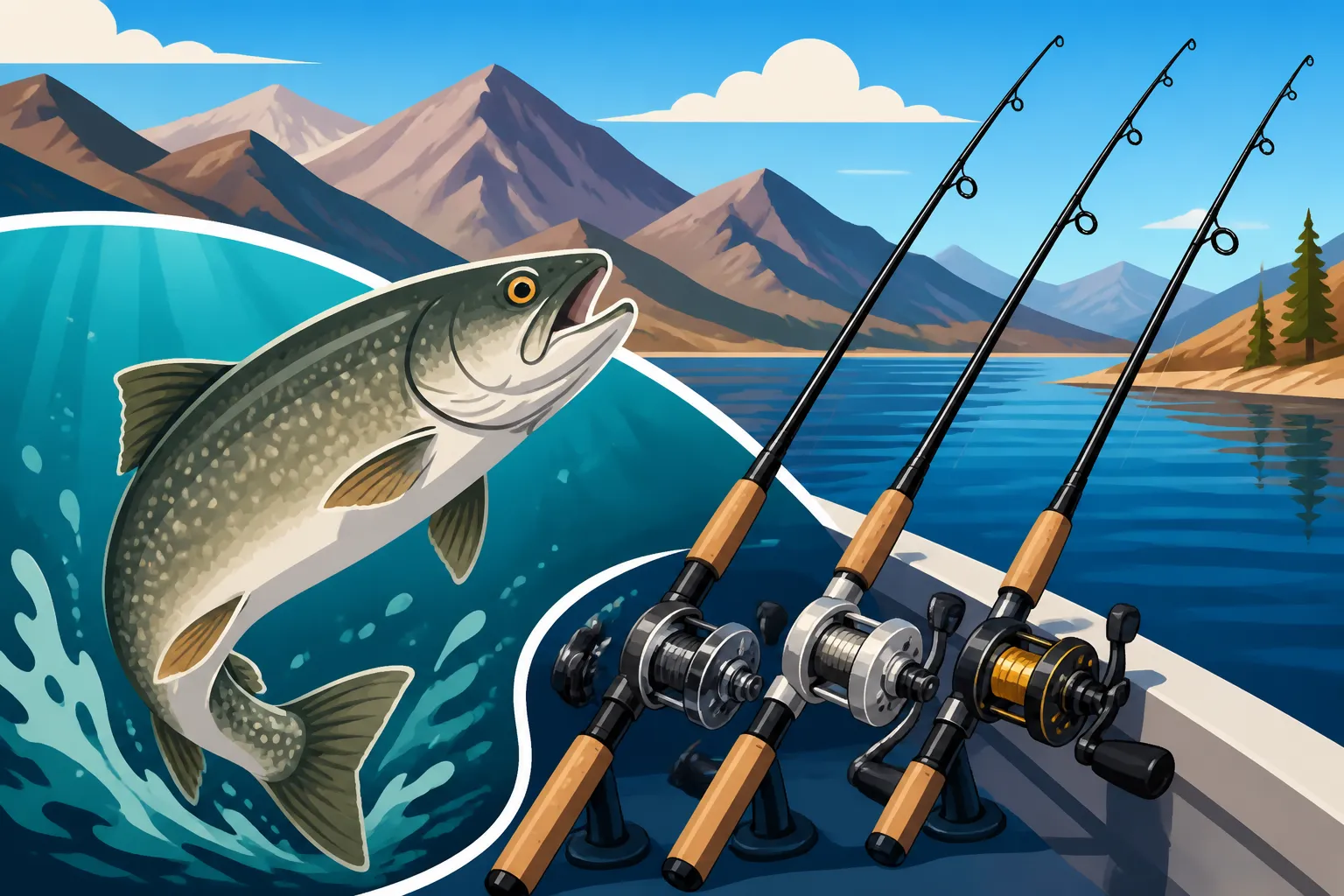
When you're targeting lake trout, often called Mackinaw, in Nevada, you're usually talking about some serious depth and some seriously strong fish. These aren't your average panfish or even your typical stream-dwelling rainbow trout. Lake trout grow large, live in deep, cold water, and put up an incredible fight. Trolling is the most effective method for consistently getting your lure into their strike zone, and this technique requires specific gear to be truly effective.
The Unique Challenges of Deepwater Trolling
Imagine trying to drag a heavy downrigger ball, a flasher, and a lure through hundreds of feet of water, often at significant boat speeds, while simultaneously trying to detect a subtle strike. That's the daily reality of deepwater trolling for Mackinaw in places like Lake Tahoe. Standard fishing rods lack the backbone to handle the immense drag created by diving planes, lead core lines, or downriggers, and they often transmit too much of the boat's movement directly to the lure, making it look unnatural. The sheer pressure on your gear is constant, and a rod that isn't designed to withstand it will quickly fail or, at the very least, make for an exhausting and unproductive day.
Furthermore, deepwater trolling often means managing multiple lines at once, each with significant weight and potential for a big fish. A specialized trolling rod helps absorb the shock of a sudden strike, preventing line breaks, and allows for a smoother, more controlled retrieve of both the fish and the heavy tackle. Without the right rod, you're constantly battling your equipment rather than focusing on the fish. You can learn more about how to set up for these specific conditions in Trolling Techniques for Lake Tahoe Mackinaw.
The Role of a Trolling Rod in Presentation and Detection
A dedicated trolling rod plays a critical role in both presenting your lure effectively and detecting those often subtle lake trout bites. These rods are designed to have a specific action that allows the lure to work naturally in the water, even when being pulled at speed. They minimize the "jerking" motion from boat chop, ensuring your bait or lure maintains a consistent, enticing presentation.
On the detection side, while these rods are stout, they also possess a tip that's sensitive enough to show the nuances of a fish nibbling or a lure momentarily snagging on bottom. A good trolling rod lets you differentiate between the vibration of your lure working, the drag of a heavy weight, and the distinct thrum of a lake trout strike. Without this sensitivity, you might miss a crucial bite, especially from a cautious Mackinaw in deep water.
Key Characteristics of a Great Trolling Rod for Lake Trout
Choosing the right trolling rod for lake trout, particularly the behemoths that lurk in the depths of Lake Tahoe, isn't just about grabbing the longest, stiffest rod on the rack. It's a nuanced decision that hinges on understanding a few key characteristics: action, power, and length. These elements work in concert to define how a rod performs under the unique stresses of deepwater trolling and fighting heavy fish.
Rod Action: Slow, Moderate, or Fast?
When we talk about "rod action," we're referring to where along the blank the rod bends when pressure is applied. For trolling lake trout, you'll generally be looking at rods with a slow or moderate action.
- Slow Action: A slow action rod bends throughout most of its length, starting closer to the butt section. This "parabolic" bend allows the rod to absorb a tremendous amount of shock, which is incredibly useful when a large Mackinaw strikes a trolled lure. The deep bend helps prevent hooks from pulling out of a fish's mouth and acts like a giant shock absorber, protecting your line from sudden surges. It's also excellent for keeping constant pressure on a fish during a long fight, which is common with big lake trout. However, a slow action rod might feel less "sensitive" to subtle bites.
- Moderate Action: A moderate action rod bends in the upper half of its blank, offering a balance between shock absorption and sensitivity. Many anglers find moderate action to be a versatile sweet spot for lake trout trolling. It still provides good give for heavy strikes and long fights, but it also allows for a bit more feel for what your lure is doing and those lighter bites. This can be particularly beneficial if you're experimenting with different lure presentations or fishing in areas with varying depths.
Fast action rods, which bend only in the very tip, are generally not preferred for lake trout trolling because they transmit too much shock and can lead to pulled hooks or broken lines with the sudden, powerful strikes of a large, deepwater fish.
Rod Power: Light, Medium, or Heavy?
Rod "power" refers to the amount of force required to bend the rod. It dictates the strength of the rod and its ability to handle different line weights and lure sizes. For lake trout, especially the larger specimens, you'll be leaning towards medium-heavy to heavy power rods.
- Medium-Heavy Power: These rods offer significant backbone and are suitable for handling heavier line weights and larger lures or bait rigs often used for lake trout. They provide the strength needed to effectively troll with downriggers or heavy lead core setups without feeling overwhelmed. A medium-heavy rod allows you to put substantial pressure on a fighting fish, helping you gain control quicker.
- Heavy Power: For targeting truly massive Mackinaw, especially in environments where you might hook into state record contenders, a heavy power rod is the way to go. These rods are built to withstand extreme forces, manage very heavy trolling setups, and muscle giant fish from the deep. They excel when you're using large dodgers, flashers, and hefty spoons or plugs. While they might sacrifice some sensitivity, their sheer strength is unmatched for big game trolling.
Matching your rod's power to the size of fish you expect to encounter and the weight of your trolling gear is crucial. Overpowering your rod will make small fish feel like nothing, while underpowering it risks equipment failure and lost trophy fish.
Rod Length: The Longer the Better for Trolling?
Trolling rods for lake trout typically range from 7 to 10 feet, with longer rods generally preferred. The length influences how well the rod can spread lines, absorb shock, and manage deepwater tackle.
- 7 to 8-foot rods: These are often considered entry-level trolling rods or suitable for smaller boats where space is a concern. They can be effective for single-rod trolling or if you're not running too many lines. They offer good control and are easier to handle for a single angler.
- 8.5 to 10-foot rods: This is the sweet spot for most dedicated lake trout trolling. The added length provides several advantages. First, it helps spread your lines out wider from the boat, reducing tangles when running multiple rods, which is a common strategy when trying to locate fish. Second, a longer rod provides more leverage during a fight, allowing for better line angles and more forgiving battles. Third, the longer blank acts as a better shock absorber, protecting your line and preventing pulled hooks from large, powerful fish. Many anglers swear by 9-foot rods for their versatility and effectiveness on bigger waters like Lake Tahoe.
When you're out on the water, you'll immediately appreciate the benefits of a longer rod, especially when trying to maintain separate lines from your boat's prop wash or managing the wide turns often needed to follow contours.
Types of Trolling Rods and Their Applications
The world of trolling rods isn't one-size-fits-all. Different designs cater to distinct trolling methods and specific target species, even within the realm of lake trout. Understanding the various types will help you pinpoint the best fit for your preferred style of fishing and the specific conditions you encounter in Nevada's deep lakes.
Downrigger Rods for Precision Depth Targeting
Downrigger fishing is one of the most effective ways to target deep-dwelling lake trout, and it requires a specialized rod. A downrigger uses a heavy weight to precisely control the depth of your lure, while a release clip attaches your line to the downrigger cable. When a fish strikes, the line pops free, and you fight the fish directly on your rod.
Downrigger rods are typically long (8.5 to 10 feet), with a moderate to slow action and a medium-heavy power. The length allows the rod tip to bend significantly when the line is clipped to the downrigger, storing energy that helps cushion the initial strike and protect light leaders. The moderate action ensures the rod has enough flexibility to handle the sudden "pop" of the line from the clip and the subsequent fight, while the powerful butt section provides the leverage needed to winch up a large Mackinaw from deep water. They often feature a sturdy graphite or composite blank, heavy-duty guides, and a comfortable, elongated handle for fighting big fish. When looking for these, you'll find a wide range of options at specialty stores or online via retailers like Amazon, offering different price points and features.
Lead Core and Copper Line Rods for Spread and Depth
Lead core and copper lines are alternative methods for achieving depth without a downrigger, relying on the weight of the line itself. These lines are much heavier than standard monofilament or braid and require a rod capable of handling their unique properties.
Rods designed for lead core or copper line trolling are typically 8 to 9.5 feet long, often with a more parabolic (slow) action and medium to medium-heavy power. The slow action is crucial because these lines have very little stretch, so the rod needs to absorb nearly all the shock of a strike and the surges of a fighting fish. The rod's continuous bend also helps manage the heavy, non-stretching line, preventing sudden snaps. Durability is key, as these rods are constantly under tension from the heavy line and the resistance of the water. Look for models with robust guides, as the heavy, abrasive lines can wear down lesser components over time. Many anglers find these rods to be excellent for covering large areas and varying depths, especially when targeting suspended fish.
Planer Board Rods for Wide Spreads
Planer boards allow you to troll lures far to the side of your boat, creating a wider spread that covers more water and keeps lures away from the boat's noise and shadow. While not as common for ultra-deep lake trout as downriggers, they can be highly effective in certain situations, especially when fish are shallower or when you're trying to target specific contours near shore.
Planer board rods are typically even longer than downrigger rods, often ranging from 9 to 12 feet, and sometimes even longer. They have a strong backbone (medium-heavy to heavy power) but with a softer, more forgiving tip (moderate action). The length and power are essential for handling the drag of the planer board, especially larger models, and for effectively fighting a fish that's a considerable distance from the boat. The softer tip allows the rod to bend with the planer board's movement, providing excellent visual indication of a strike. These rods often feature durable guides and an extended handle to accommodate fighting a fish and the leverage required. Many popular manufacturers offer specific planer board rod series that are built to handle the constant stress of pulling these offshore devices.
Matching Your Rod to Your Trolling Setup and Techniques
Choosing the best trolling rod isn't just about the rod itself; it's about how that rod integrates into your entire fishing system. From the line you spool on your reel to the specific lures and weights you employ, every component plays a role. A well-matched setup ensures efficiency, maximizes your chances of success, and makes the experience enjoyable rather than a constant struggle with mismatched gear.
Considerations for Line Type and Weight
Your choice of fishing line heavily influences the ideal trolling rod. Best Line for Desert Reservoir Fishing can give you an overview of line types, but for lake trout trolling, you'll typically be using heavy monofilament, fluorocarbon, braided line, or specialized lead core/copper lines.
- Monofilament/Fluorocarbon: If you're using heavy mono or fluorocarbon (say, 20-40 lb test), you'll want a rod with enough backbone to handle the line's diameter and breaking strength, often in the medium-heavy to heavy power range. These lines have some stretch, so a moderate action rod works well to complement that stretch and absorb shock.
- Braided Line: Braided line has virtually no stretch, which provides excellent sensitivity for detecting bites but also transfers more shock directly to the rod. When using braid (e.g., 30-65 lb test), a rod with a slower, more parabolic action is often preferred. This allows the rod to act as a shock absorber, compensating for the line's lack of stretch and preventing pulled hooks or snapped lines when a large Mackinaw makes a sudden run. You'll still need plenty of power, likely medium-heavy to heavy, to manage the heavy weights and fight big fish.
- Lead Core/Copper Line: As discussed, these heavy, low-stretch lines demand a specialized rod, typically 8.5 to 9.5 feet, with a continuous, slow bend. The rod itself provides the necessary flex to absorb the strains of trolling and fighting fish on these inherently stiff lines.
Always ensure the rod's line weight rating aligns with the line you intend to use. An under-rated rod could break under the strain, while an over-rated rod might lack the sensitivity needed.
Reel Pairing and Balance
A trolling rod is only as good as the reel it's paired with. For lake trout trolling, you'll almost exclusively be using conventional (baitcasting) reels, often larger models designed for heavy line capacity and strong drags. The key is to achieve balance.
When you mount your reel on the rod, the entire combo should feel comfortable and balanced in your hand. If the rod is too tip-heavy, it will be fatiguing to hold for long periods and might make subtle bites harder to detect. If it's too butt-heavy, it might feel sluggish. A good trolling rod will have a comfortable reel seat and handle length that allows for a balanced setup with a appropriately sized conventional reel. Brands like Penn, Shimano, and Daiwa make excellent conventional reels that pair well with these rods. Remember, the rod and reel work as a single unit, so consider them together.
Adapting to Specific Lake Trout Techniques
The "best" rod can also depend on the specific lake trout technique you're employing, beyond just the line type.
- Deep Trolling with Heavy Weights/Dodgers: If you're running massive dodgers, flashers, and heavy spoons or plugs with several ounces of lead or a downrigger ball in hundreds of feet of water, a longer, heavier power rod (9-10 feet, heavy power, moderate-slow action) is your friend. This setup provides the leverage and backbone to handle the drag and the potential for a truly enormous fish.
- Lighter Trolling/Smaller Lures: For times when lake trout might be shallower, or you're using smaller presentations like slim profile spoons or minnow baits, a slightly shorter, medium-heavy power rod (7.5-8.5 feet, moderate action) might offer better control and sensitivity. This is often the case in fall or spring when fish are more active in the upper water column.
- Flatlining or Lead Core in Shallower Areas: For situations where you're not going extremely deep but still need to get some distance from the boat, a mid-length (8-9 feet) moderate action, medium-heavy power rod is versatile for lead core or even heavy monofilament flatlining techniques.
Understanding Mackinaw Lake Trout at Lake Tahoe behavior will help you tailor your technique and, consequently, your rod choice. The more specific your approach, the more specialized your rod can become for that particular niche.
Important Features to Consider When Buying
Stepping into a fishing tackle shop or browsing online for a new trolling rod can be overwhelming with the sheer number of options available. Beyond the core characteristics of action, power, and length, several other features can significantly impact a rod's performance, durability, and overall suitability for deepwater lake trout trolling in Nevada. Paying attention to these details will ensure you invest in a rod that truly meets your needs.
Rod Blank Material and Construction
The material the rod blank is made from plays a huge role in its performance characteristics.
- Fiberglass: Traditional fiberglass rods are known for their incredible durability and slow, parabolic action. They are excellent shock absorbers, making them forgiving when a big fish strikes and helping to prevent pulled hooks. While they might be heavier and less sensitive than graphite, their robustness makes them a favorite for heavy-duty trolling, especially for larger lake trout. They are often more affordable as well.
- Graphite: Graphite rods are lighter, more sensitive, and generally have faster actions than fiberglass. While highly sensitive for detecting subtle bites, a pure graphite rod can sometimes be too "fast" or brittle for the constant stress and shock absorption required for heavy lake trout trolling, potentially leading to breakage.
- Composite: Many modern trolling rods are made from composite materials, blending fiberglass and graphite. This offers the best of both worlds: the durability and shock-absorbing qualities of fiberglass with some of the lightness and sensitivity of graphite. Composite rods are often an excellent choice for a versatile, robust lake trout trolling rod. They provide the strength needed to handle heavy weights and big fish, while still offering a good feel for the lure.
When inspecting a rod, physically flex it (gently!) to get a feel for its bend and recovery. The construction should feel solid and well-finished.
Guides and Guide Inserts
The guides are the rings that run along the rod blank, through which your fishing line passes. They are critical for line flow, friction reduction, and heat dissipation, especially with the heavy lines and long fights common in lake trout fishing.
- Durable Frames: Look for guides with strong, corrosion-resistant frames, typically made of stainless steel. These will stand up to the elements and the stress of heavy lines.
- High-Quality Inserts: The inserts within the guide frames are where the line makes contact. Ceramic inserts (like Fuji Alconite or SiC) are highly recommended. They are smooth, hard, and excellent at dissipating heat generated by fast-moving line during a drag-screaming run from a big Mackinaw. Cheaper guides with soft plastic or low-quality ceramic inserts can groove, fray your line, and eventually lead to line failure. This is especially important if you're using braided line, which is very abrasive.
- Number and Placement: Trolling rods generally have more guides than standard casting rods to distribute stress evenly along the blank. Ensure they are aligned perfectly straight, as misaligned guides can cause friction and line wear.
You can often find rods with high-quality guides from brands like Fuji on the racks at Bass Pro Shops, a trusted name for fishing gear.
Handle Design and Reel Seat
The handle and reel seat are where you maintain contact with the rod, and their design directly impacts comfort and control during long trolling sessions and arduous fights.
- Handle Material: EVA foam or high-density cork are popular choices. EVA foam is durable, comfortable, and provides good grip even when wet. Cork offers a traditional feel and good sensitivity. Some heavy-duty rods might feature slicker, more durable composite materials for easy removal from rod holders.
- Handle Length and Shape: Trolling rods typically have longer butt sections that extend past the reel seat. This provides leverage against your body when fighting a large fish and helps balance the rod in a rod holder. Ensure the handle is long enough to tuck under your arm or against your hip for support during a prolonged battle. The foregrip (the section above the reel seat) should also be substantial enough for a comfortable grip.
- Reel Seat: The reel seat needs to be robust and securely fasten your conventional reel without wobbling. Look for heavy-duty, corrosion-resistant reel seats, often made of aluminum or reinforced composite, with strong locking nuts. These will ensure your reel stays firmly in place, even when battling a trophy lake trout. A high-quality reel seat is a non-negotiable feature for serious trolling.
Consider your own comfort and how you typically fight fish when evaluating handle design. A well-designed handle reduces fatigue and gives you more control.
Trolling Rod Features Comparison Table
Here's a quick comparison of common trolling rod characteristics to help you visualize the differences as you shop:
| Feature | Light Trolling Rods | Medium Trolling Rods | Heavy Trolling Rods |
|---|---|---|---|
| Action | Moderate to Fast (for smaller fish) | Moderate | Slow to Moderate |
| Power | Light to Medium-Light | Medium to Medium-Heavy | Heavy to Extra-Heavy |
| Length | 7-8 feet (good for small boats) | 8-9 feet (versatile for most) | 9-10+ feet (for wide spreads & big fish) |
| Line Weight | 8-15 lb (mono), 15-30 lb (braid) | 15-30 lb (mono), 30-50 lb (braid) | 20-50+ lb (mono), 50-80+ lb (braid) |
| Target Fish | Smaller Lake Trout, Kokanee, Rainbows | Average Lake Trout, Larger Kokanee | Trophy Lake Trout, Large Mackinaw |
| Primary Use | Closer to boat, lighter tackle | General purpose, balanced setups | Deepwater, heavy weights, large lures |
| Key Benefit | Good sensitivity for lighter bites | Versatility, good all-around performance | Sheer power and leverage |
This table provides a general guideline, but remember that many rods offer nuanced characteristics that fall between these categories. Always check the manufacturer's specific ratings for line weight and lure weight. For a broader overview of fishing gear, check out Nevada Fishing Gear Essentials.
Maintenance and Care for Longevity
Investing in a quality trolling rod for lake trout is just the first step. These rods are subjected to significant stress from heavy lines, constant pulling, and the powerful fights of big fish. Proper maintenance and care are absolutely crucial to ensure your rod lasts for many seasons, performs consistently, and continues to be a reliable partner in your pursuit of Nevada's deepwater giants. Neglecting your gear is a sure fire way to shorten its lifespan and potentially lead to costly failures when you least expect them.
Post-Fishing Cleaning and Inspection
Every time you return from a fishing trip, especially if you've been on a large body of water like Lake Tahoe, a thorough cleaning and inspection of your trolling rods should be a routine. Salt and freshwater environments can be harsh on fishing gear.
- Rinse Thoroughly: Use fresh water to gently rinse your rods, paying close attention to the guides, reel seat, and handle. This removes any fish slime, dirt, sunscreen residue, or, critically, any potentially corrosive minerals if you've been in areas with high mineral content. Never use harsh detergents, as they can damage the blank's finish or the handle material. A soft cloth or sponge is usually sufficient for wiping down the blank.
- Inspect Guides: After rinsing, carefully inspect each guide for any cracks in the ceramic inserts, bends in the frames, or any signs of corrosion. A damaged guide can quickly fray and break your line, leading to lost fish. If you find any issues, address them promptly. Replacement guides can often be purchased at specialty tackle shops or online retailers like Amazon and Bass Pro Shops.
- Check Reel Seat: Ensure the reel seat still holds your reel securely and that the locking nuts aren't stripped or corroded. A loose reel can cause frustration and compromise your ability to fight a fish effectively.
- Examine the Blank: Look for any deep scratches, nicks, or hairline cracks on the rod blank itself. While minor surface scratches are normal, any damage that penetrates the blank's fibers could compromise its strength. Pay extra attention to the areas near the ferrule (where rod sections connect) and around the guides.
These few minutes of care after each trip can prevent major problems down the line and extend the life of your valuable equipment.
Proper Storage Techniques
How you store your trolling rods when they're not in use is just as important as how you maintain them on the water. Improper storage can lead to warping, damage to guides, or stress on the blank.
- Rod Tubes or Sleeves: For maximum protection, especially during transport or long-term storage, consider using padded rod tubes or soft cloth rod sleeves. These prevent guides from getting bent, blanks from getting scratched, and multiple rods from tangling together. This is particularly important for longer trolling rods that might be awkward to store.
- Vertical or Horizontal Storage: Store rods either vertically in a rod rack or horizontally on a flat surface, ensuring they are not under any constant pressure or bend. Leaning a rod against a wall or in a corner can eventually cause it to take on a permanent curve, affecting its action.
- Temperature and Humidity Control: Avoid storing rods in extreme temperatures, such as a hot garage or a freezing shed. Extreme heat can degrade glues and epoxy finishes, while extreme cold can make blanks brittle. A consistent, moderate temperature and humidity environment, like indoors, is ideal.
- Away from Sunlight: Prolonged exposure to direct sunlight can degrade rod finishes and components over time. Store your rods in a shaded area.
Taking care in how you put your rods away will ensure they're ready and in top condition for your next adventure chasing lake trout. For more on ensuring your fishing gear is always ready, consult Best Tackle Box Setup for a Day on the Water.
Addressing Wear and Tear
Even with the best care, trolling rods will eventually show signs of wear and tear due to their demanding use. Knowing how to address these minor issues can save you from having to replace an entire rod.
- Guide Repair: If a guide insert cracks or pops out, it's often a relatively simple repair for a tackle shop or a handy angler. Replacement guides can be purchased, and with some epoxy and thread, you can fix it yourself.
- Reel Seat Issues: If the reel seat becomes loose, sometimes the locking nut can be replaced, or the seat can be re-epoxied. For more severe damage, a complete reel seat replacement might be necessary.
- Handle Wear: EVA foam or cork handles can become worn, torn, or stained over time. While primarily cosmetic, severe damage can impact grip. Handle wraps or replacement grips are available if the wear becomes excessive.
- Minor Blank Scratches: Superficial scratches on the blank can often be covered with a clear protective epoxy or varnish to prevent further degradation. However, any deep damage should be assessed by a professional rod builder.
Regular attention to these small details ensures your trolling rod remains a high-performing tool for many years of successful lake trout fishing in Nevada.
Disclaimer
This article is for general informational purposes only and does not constitute professional advice. Laws, prices and regulations vary by location and change over time. Consult a qualified professional for guidance on your specific situation.