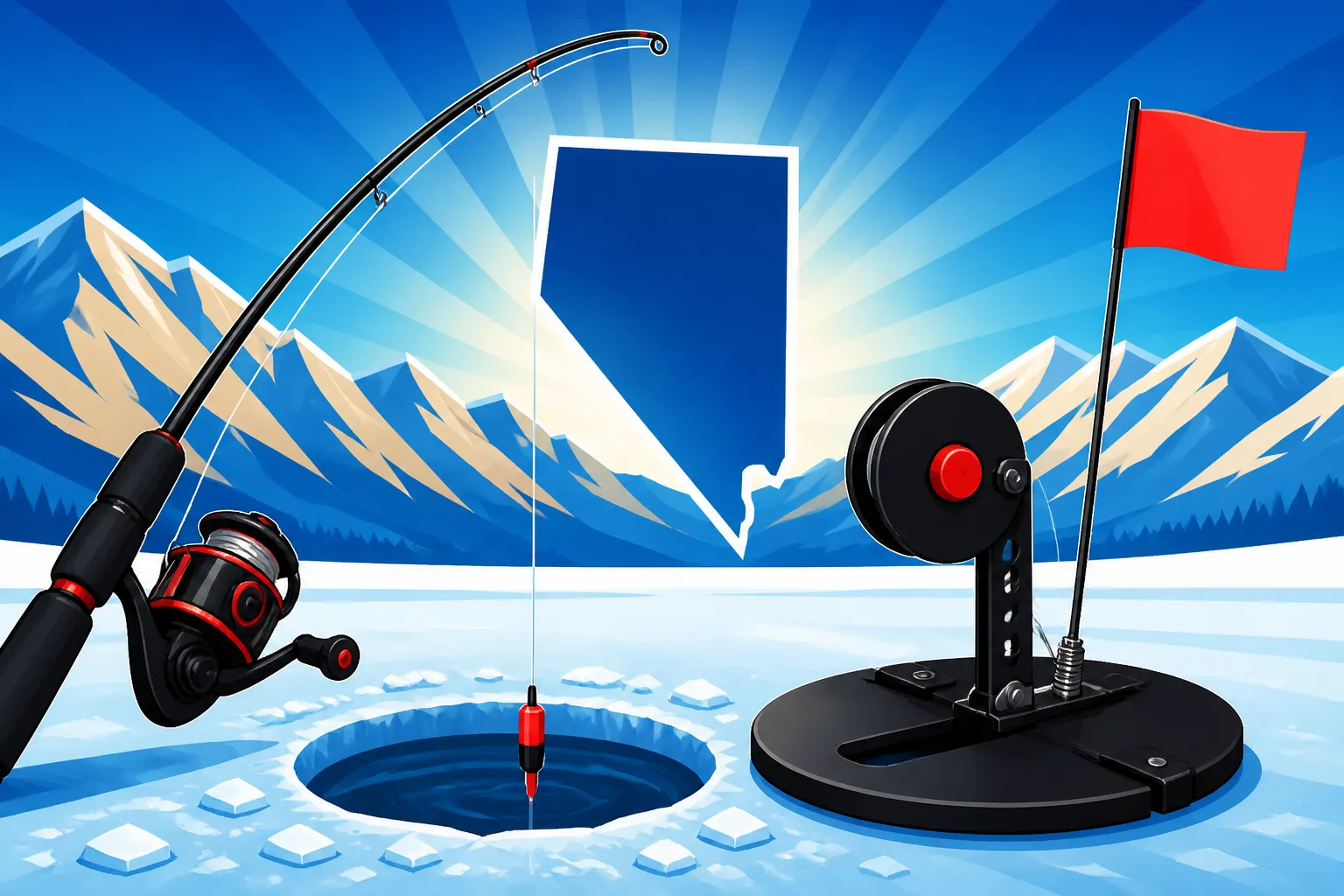
Best Ice Fishing Rod and Tip-Up Setup
For many anglers, the thought of ice fishing conjures images of Minnesota or Wisconsin, not the Silver State. But make no mistake, when Nevada's high-elevation lakes and certain reservoirs freeze over, a whole new world of angling opens up, bringing unique challenges. Getting your ice fishing rod and tip-up setup just right is crucial for success, ensuring you're prepared for the biting cold and the specific fish species waiting beneath the ice. This guide will walk you through building the ideal setup to enjoy Nevada's frosty fishing opportunities.
Understanding Ice Fishing Rods for Nevada
Choosing the right ice fishing rod isn't just about grabbing the shortest rod you can find. It's about matching the rod's characteristics to the fish you're targeting and the conditions you're fishing in. Nevada's ice fishing scene, though smaller than some other states, offers chances at everything from feisty rainbow trout in a stocked urban pond to larger yellow perch or even elusive Lahontan cutthroat trout in certain high-mountain waters.
Rod Action: Light, Medium, Heavy
The "action" of a rod refers to where it bends when pressure is applied. In ice fishing, this usually translates to how sensitive the rod tip is and how much backbone it has. Matching the action to your target species is paramount.
-
Ultra-Light to Light Action: These rods are your go-to for smaller fish, like panfish, crappie, or the frequently stocked rainbow trout in urban ponds like those in Las Vegas. The sensitive tip allows you to detect the subtlest bites, which can be incredibly light in cold water. A fish might just breathe on your bait, and a light-action rod will show that little twitch. This sensitivity is also key when using tiny jigs and baits, as it helps you impart the right action without overpowering the lure. Think about those days when the fish are finicky; a light rod can make all the difference between feeling a bite and wondering if you just imagined it. Many anglers find that for these smaller species, a shorter, more sensitive rod also provides a lot more fun and fight, even from a modest catch.
-
Medium to Medium-Heavy Action: When you're after larger fish, such as robust yellow perch at Wildhorse Reservoir, larger stocked trout in bigger reservoirs, or even smaller bass that might surprise you, a medium or medium-heavy action rod is a better choice. These rods have more backbone to handle a stronger fight and heavier lures. They provide the power needed to set the hook firmly into a larger fish's mouth and to steer it away from structure or the underside of the ice. While still offering enough sensitivity to feel many bites, their primary advantage is the strength they provide. If you're fishing waters known for bigger fish, or using heavier spoons and jigs, opting for a medium action ensures you're not under-gunned when that trophy strikes. You'll thank yourself when a chunky perch takes your bait and tries to pull your rod into the hole.
-
Heavy to Extra-Heavy Action: For the truly big game under the ice, like trophy Mackinaw trout at Lake Tahoe (though ice fishing for Mackinaw specifically on Lake Tahoe's Nevada side is less common than open water fishing), or if you anticipate hooking into a monster brown trout, you'll want a heavy or extra-heavy action rod. These rods are stout, designed to pull big fish out of deep water or heavy cover. They typically have less sensitivity but immense lifting power. The primary use for such heavy rods in Nevada's ice fishing context might be limited to very specific situations or targeting exceptionally large fish that are rarely encountered through the ice. However, having one on hand if you're exploring new, potentially big-fish waters can prevent heartbreak.
Rod Length: From Shacks to Open Ice
Ice fishing rods are notoriously short compared to their open-water counterparts, typically ranging from 24 to 48 inches. This short length isn't just a quirk; it's a functional design choice.
-
Shorter Rods (24-30 inches): These are ideal for fishing inside portable ice fishing shelters or permanent shacks. The limited space inside a shelter means a longer rod would be cumbersome, constantly bumping against walls or ceiling. A shorter rod allows for quick, controlled jigging movements and makes landing fish much easier within the confines of a shack. They also provide excellent leverage over the fishing hole. If you prefer to fish sitting on a bucket right over the hole, a short rod is perfectly comfortable and efficient. They reduce the amount of line you need to reel in between jigging and fighting a fish, making the process smoother and faster, especially when the fish are biting hot and heavy. Many dedicated panfish rods fall into this category.
-
Medium Rods (30-36 inches): This length offers a great balance and is perhaps the most versatile for Nevada ice fishing. It's still manageable inside most shelters but provides a bit more reach and often a smoother fight than shorter rods. These are excellent all-around rods for trout, perch, and small bass. The extra length can also give you a slight advantage in controlling a fish that tries to run horizontally under the ice. If you're not sure what you'll encounter or you're fishing both inside and outside a shelter, a rod in this range is a safe bet. It provides enough length for a good hook set without feeling overly long or awkward.
-
Longer Rods (36-48 inches): While less common, longer ice rods can be beneficial for specific situations. If you're fishing entirely in the open, without a shelter, the added length can help keep your hands further from the icy water and give you a better spread if you're fishing multiple holes. They can also be advantageous for fighting larger fish that make strong runs, as the added length provides more shock absorption and can help wear the fish down. However, inside a tight shelter, these can quickly become a nuisance. Consider a longer rod if you're sight fishing in open air, where a longer reach can sometimes help present a lure more subtly. For instance, if you're trying to reach a specific spot from a slightly elevated position, that extra length might be exactly what you need.
Rod Material: Graphite vs. Fiberglass
The material your rod is made from significantly impacts its weight, sensitivity, and durability.
-
Graphite Rods: These are known for their exceptional sensitivity and lightweight feel. Graphite transmits vibrations incredibly well, allowing you to feel even the slightest tap from a cautious fish. This makes them fantastic for jigging small lures or detecting light bites from finicky trout or perch. They are often preferred by experienced anglers who value the feedback the rod provides. However, graphite can be more brittle in extreme cold than fiberglass, making them more prone to snapping if mishandled or if a heavy fish puts too much stress on a poorly set drag. You might find a great selection of high-sensitivity graphite rods at a sporting goods store like Bass Pro Shops, perfect for feeling those delicate winter bites.
-
Fiberglass Rods: Fiberglass rods are generally more durable and flexible than graphite. They are less prone to breaking in cold weather and can absorb a lot of shock, making them more forgiving for beginners or when fishing for hard-fighting fish. While they are typically heavier and less sensitive than graphite, many anglers appreciate their robustness, especially in a potentially harsh ice fishing environment where gear can take a beating. For general-purpose ice fishing, or if you're just starting out, a fiberglass rod offers a reliable and sturdy option that can withstand some abuse. They might not give you the same subtle feedback as graphite, but they'll certainly hold up to the elements and provide a solid backbone for landing fish.
-
Composite Rods: Many modern ice fishing rods are made from composite materials, blending graphite and fiberglass to achieve a balance of sensitivity, strength, and flexibility. These rods aim to offer the best of both worlds, providing decent sensitivity without sacrificing too much durability. They are an excellent choice for anglers who want a versatile rod that performs well across various conditions and target species.
| Rod Action | Best For | Sensitivity | Power to Fight | Typical Use in Nevada Ice Fishing |
|---|---|---|---|---|
| Ultra-Light | Panfish, Crappie, Small Stocked Trout | Excellent | Low | Small urban pond trout, delicate presentations |
| Light | Rainbow Trout, Small Perch, Finicky Bites | Very Good | Moderate | General trout, small jigs, light bites |
| Medium | Larger Perch, Mid-Size Trout, Small Bass | Good | Good | Wildhorse Reservoir perch, larger stocked trout |
| Medium-Heavy | Larger Trout, Bass, Walleye (if applicable) | Fair | Very Good | Deep jigging, heavier lures, robust species |
| Heavy/Extra-Heavy | Trophy Fish, Deep Water Mackinaw (rarely) | Low | Excellent | Very specialized for large, powerful fish |
Choosing the Right Tip-Up for Nevada's Ice
While a rod and reel allow for active jigging, tip-ups are essential for a more passive, multi-hole approach to ice fishing. They're designed to signal a bite, allowing you to cover more ground and increase your chances, especially when fishing for species that might prefer a stationary bait.
Traditional vs. Modern Tip-Ups
The world of tip-ups has evolved, offering various designs to suit different preferences and conditions.
-
Traditional Wooden Tip-Ups: These are the classics you often see in old fishing photos, and for good reason—they work! Made from wood, usually pine or cedar, they typically feature a cross-shaped base that sits over the hole and a vertical flag mechanism. They're sturdy, reliable, and often more affordable. Their simple design means less to break, and they can be quite durable in the elements. However, some traditional designs may be prone to freezing up if water splashes onto the reel mechanism, or if there's heavy snow or slush. Their open spool design can also expose your line to freezing temperatures. Despite this, many anglers swear by their effectiveness and the nostalgic feel of a traditional wood tip-up. If you're looking for a tried-and-true option that won't break the bank, these are a solid choice and readily available at most sporting goods stores.
-
Modern Insulated Tip-Ups: These tip-ups often feature a circular or square base made of foam or plastic that covers the entire ice hole. The primary advantage here is insulation. By covering the hole, they significantly reduce the rate at which the hole freezes over, a huge benefit on bitterly cold Nevada mornings. They also block out light, which can sometimes make fish less wary. Many insulated tip-ups incorporate more advanced flag mechanisms, sometimes with adjustable tension or multiple settings for different bait sizes and fish. While often more expensive than their wooden counterparts, the convenience of not having to constantly chip ice out of your hole, especially if you're targeting fish like yellow perch or trout that might take longer to bite, can be invaluable. Brands like Frabill and HT Enterprises offer various insulated models that many ice anglers prefer for their functionality and durability.
-
Specialty Tip-Ups (e.g., Wind Tip-Ups, Automatic Hook-Setters): Beyond the traditional and insulated, there are specialized tip-ups designed for unique situations. Wind tip-ups harness the power of the wind to impart a subtle jigging action to your bait, mimicking natural movement even when you're not actively attending to the line. Automatic hook-setting tip-ups, as the name suggests, are designed to set the hook for you when a fish pulls the line, which can be useful if you're fishing a spread of many tip-ups or distracted. While these offer distinct advantages, they are usually more complex, can be pricier, and might not be necessary for every angler or every situation in Nevada.
Spool Size and Line Capacity
The spool on your tip-up holds your main line. Choosing the right size directly relates to the depth you'll be fishing and the size of the fish you expect to catch.
-
Standard Spool Size: Most tip-ups come with a standard spool that can hold a good amount of line, usually enough for typical depths in Nevada's ice fishing lakes. For most trout or perch fishing, a standard spool will be perfectly adequate, allowing you to fish in depths ranging from 10 to 40 feet without running out of line. The key is to spool it properly and to ensure you have enough slack for the fish to run a bit before it pulls the flag.
-
Large Spool Capacity: If you're targeting larger, deeper-dwelling species, or fishing particularly deep reservoirs (which might be less common for ice fishing in Nevada, but still possible), you might want a tip-up with a larger spool. A larger spool not only holds more line but can also reduce line coil memory, as the line isn't wrapped as tightly. This can be beneficial for presenting natural baits. While not a primary concern for most Nevada ice anglers targeting panfish or stocked trout, if you ever venture into waters known for monster lake trout, having that extra line capacity is a must. Remember, when rigging for deeper waters, you might need to carry more spooled line to ensure you're prepared.
Flag Sensitivity and Wind Resistance
The flag on your tip-up is your primary indicator of a bite. Its sensitivity and ability to withstand wind are crucial.
-
Adjustable Sensitivity: Many modern tip-ups offer adjustable flag sensitivity. This means you can control how much tension is required to trip the flag. For light-biting fish like rainbow trout in winter, you'll want a very sensitive setting, so the flag trips with minimal pull. For more aggressive fish or if you're using larger live baits that might cause false flags, you can increase the tension. This adjustability is a huge advantage, allowing you to fine-tune your setup to the conditions and the fish's mood. Without adjustable sensitivity, you might miss subtle bites or constantly be checking false alarms caused by minnows swimming too aggressively.
-
Wind Resistance: Nevada can be a windy state, even in winter. A tip-up flag that constantly trips in the wind is incredibly frustrating and counterproductive. Look for tip-ups with flags designed to be wind-resistant. This might involve a heavier flag, a more robust tripping mechanism, or a design that shields the flag from direct wind. Insulated tip-ups, by virtue of their design covering the hole, often offer some inherent wind protection for the entire mechanism. Some traditional tip-ups can be weighted down with snow or slush around their base to prevent them from being blown around, but a well-designed flag mechanism is always superior. When shopping for tip-ups, consider designs that prioritize stability and offer a reliable trip even in breezy conditions. Best Ice Fishing Auger and Shelter can also provide some wind break, but your tip-ups themselves need to be robust.
Essential Line, Lures, and Baits for Ice Fishing
Once you have your rod and tip-up, the next critical components are what connects you to the fish: the line, lures, and bait. The cold water conditions and often finicky nature of ice-bound fish demand specific choices.
Ice Fishing Line: Fluorocarbon vs. Monofilament vs. Braid
The line you choose needs to perform well in freezing temperatures, resist abrasion from ice, and be subtle enough not to spook fish.
-
Fluorocarbon Line: This is a favorite among many ice anglers for a reason. Fluorocarbon is nearly invisible underwater, which is a huge advantage in clear ice-fishing waters where fish can be very wary. It's also dense, meaning it sinks faster, helping your lure get to the strike zone quickly. Critically for ice fishing, fluorocarbon absorbs very little water and is highly abrasion-resistant, making it less prone to freezing onto your spool or getting frayed by contact with the ice edge. It also has less stretch than monofilament, offering increased sensitivity for detecting those light bites. For targeting wary trout or perch in clear Nevada lakes, fluorocarbon is often the top choice for a leader or even a main line.
-
Monofilament Line: Monofilament, or "mono," is the traditional, all-around fishing line. It's affordable, easy to tie, and has good knot strength. Its primary advantage in ice fishing is its stretch, which acts as a shock absorber, helping to prevent hooks from tearing out of a fish's mouth, especially when using lighter tackle. However, mono can absorb water, which can lead to it freezing onto your spool, causing issues with casting or line deployment. It also has more memory, meaning it retains the coil shape from the spool, which can lead to frustrating tangles. Despite these drawbacks, a quality, low-memory monofilament can still be a good choice, especially for beginners or when targeting smaller panfish where extreme sensitivity isn't as critical.
-
Braided Line: Braided line offers superior strength-to-diameter ratio and virtually no stretch, providing incredible sensitivity. You'll feel everything that happens at the end of your line. It's excellent for deep water fishing where sensitivity is crucial, or when you need the brute strength to pull a large fish from cover. The main drawback for ice fishing is that braided line absorbs water and freezes readily, becoming stiff and unmanageable. To counteract this, many ice anglers will spool their reel with braid as a main line but tie on a several-foot leader of fluorocarbon or monofilament. This gives you the best of both worlds: the sensitivity of braid and the nearly invisible, non-freezing qualities of fluoro at the business end. Best Line for Desert Reservoir Fishing can give you more details on general line choices, but for ice, these considerations are paramount.
Lures and Jigs: Matching the Hatch (or the Stocking Truck)
The type and size of lures you use should be tailored to your target species and their forage.
-
Small Jigs and Spoons: For panfish and stocked rainbow trout in Nevada's urban ponds, tiny jigs (1/32 to 1/8 ounce) tipped with a small piece of bait or a plastic grub are deadly. Micro-spoons, often called "ice spoons," are also very effective, as their fluttering action mimics dying baitfish. Colors can vary, but bright colors like chartreuse, orange, and pink often work well, as do natural patterns like silver, gold, or white. Jigging these with subtle twitches is often more effective than aggressive movements in cold water. You can find a vast array of these tiny but effective lures at your local Bass Pro Shops or even specialty online retailers on Amazon.
-
Larger Jigs and Spoons: When targeting larger perch, brown trout, or even bass through the ice, you can size up your jigs and spoons. Heavier jigs (1/8 to 1/4 ounce or more) tipped with minnows or larger plastics are good for getting down to deeper depths quickly. Larger spoons or even small blade baits can entice more aggressive strikes from bigger fish. Flashy colors are often good for attracting attention, but don't shy away from natural colors that imitate baitfish common in the lake. Remember that fish metabolism slows in winter, so while a larger lure might attract a bigger fish, they might be less willing to chase it aggressively.
-
Tungsten vs. Lead Jigs: Tungsten jigs are a game-changer for ice fishing. Tungsten is much denser than lead, meaning a tungsten jig can be smaller in profile for the same weight, or heavier for the same size. This allows for a faster fall rate to reach the fish quicker and a smaller, more subtle presentation. The smaller profile can be crucial when fish are finicky, and the added weight helps maintain contact with your bait in deeper water or current. While more expensive, the advantages of tungsten often outweigh the cost for serious ice anglers.
Live Bait and Power Bait for Nevada Species
Sometimes, nothing beats the real thing, or a convincing imitation.
-
Live Bait: For many ice anglers, live bait is king. Small minnows (such as fathead minnows, where legal) are incredibly effective for targeting perch, crappie, and even larger trout. They provide natural scent and movement that can be irresistible to hungry fish. Typically, minnows are hooked lightly through the back or lips on a small jig or bare hook suspended under a tip-up. Wax worms, mealworms, and larvae (like eurolarvae or spikes) are fantastic for panfish and trout. These small, wiggling baits are often used to tip jigs, adding scent and life to an artificial presentation. Make sure to check Nevada Fishing Regulations Explained for rules on live bait use, as some waters have restrictions.
-
Power Bait and Scented Artificials: For stocked trout, especially rainbow trout in Nevada's urban ponds like those at Floyd Lamb Park or Sunset Park, Power Bait is incredibly effective. The dough-like bait floats, lifting your hook off the bottom and putting it directly in the fish's feeding zone. Various colors and scents are available, with bright colors often being top producers. Scented soft plastics, mimicking worms, minnows, or grubs, also work well when tipped on jigs. These artificials can be stored easily and don't require the care of live bait, making them a convenient option. Adding a dab of fish attractant gel or spray to any lure or bait can often provide that extra edge, especially on slow days.
Putting It All Together: Setting Up Your Gear
Having all the right components is one thing; knowing how to properly assemble and rig them for optimal performance is another. A well-balanced rod and reel, correctly rigged tip-up, and strong knots are the foundation of a successful ice fishing trip.
Balancing Your Rod and Reel
Achieving a balanced setup is about more than just aesthetics; it's about comfort, sensitivity, and control.
-
Reel Choice: For ice fishing rods, ultralight spinning reels are the most common choice. Look for reels in the 500 to 1000 size range. They're lightweight, compact, and perfectly match the small diameter lines and light lures used in ice fishing. The smoothness of the drag is crucial, especially when battling a strong fish on light line. A jerky drag can lead to broken lines and lost fish. Some anglers prefer specialized ice fishing reels that are even more compact and have features specifically designed for cold weather, such as oversized handles or anti-reverse systems that won't freeze up.
-
Mounting the Reel: Position your reel so that when you hold the rod naturally, the setup feels balanced in your hand. This typically means the reel seat is positioned to provide a natural pivot point. A balanced setup reduces fatigue during a long day of jigging and enhances your ability to feel subtle bites. It also allows for smoother line control and more precise jigging movements. When your reel is balanced on the rod, the rod tip will be less prone to dipping or rising uncontrollably, giving you a better feel for what's happening beneath the ice.
-
Line Spooling: When spooling your reel with line, ensure it's spooled evenly and without kinks or twists. Overfilling the spool can lead to tangles and "wind knots," while underfilling can reduce casting distance (though less critical in ice fishing) and cause line memory issues. Most ice fishing lines come in smaller spools, perfect for filling an ultralight reel. Using a line conditioner designed for cold weather can also help reduce line memory and prevent freezing issues, particularly with monofilament. Remember, a smoothly spooled reel is a happy reel, and it will perform much better in the cold.
Rigging Your Tip-Up for Success
Properly rigging your tip-up ensures it functions as intended and maximizes your chances of a successful hook-up.
-
Main Line and Leader: Start by spooling your tip-up with a durable, low-stretch line. Dacron or braided nylon ice fishing line is commonly used for the main line on tip-ups because of its strength and resistance to abrasion. You'll want to spool enough line to reach the deepest part of the water you're fishing, plus extra for fighting fish and for potential line breaks. Typically, 50-100 yards is a good starting point. Tie a swivel to the end of your main line, and then attach a 2-4 foot fluorocarbon leader. The fluorocarbon leader provides invisibility for the bait presentation and is less prone to freezing than braid, especially if your tip-up spool isn't insulated.
-
Weight, Hook, and Bait: Below the swivel and leader, you'll attach your weight and hook. A small split shot or a sliding egg sinker can be used to get your bait down to the desired depth. Position the weight a foot or two above your hook to allow the bait to move naturally. For hooks, small treble hooks or single octopus hooks are common for minnows, while smaller jigs or bare hooks are used for wax worms or Power Bait. The size of the hook should match your bait and target species. For example, a #8 or #10 octopus hook for a minnow, or a #12 bare hook for a wax worm. Test the rigging to ensure the bait hangs naturally and the flag trips easily with minimal pull. Remember to always check the depth of the water you're fishing to present your bait just above the bottom or at the depth where fish are holding. Nevada Fishing License Guide is important to remember before you even get on the ice.
The Importance of a Good Knot
A fishing knot is the weakest link in your system if tied improperly. In cold conditions, with numb fingers, it's even more critical to tie strong, reliable knots.
-
Common Ice Fishing Knots:
- Palomar Knot: This is an excellent choice for tying hooks, swivels, and lures to your line. It's incredibly strong, easy to tie, and retains nearly 100% of your line's strength. Its reliability makes it a go-to for many anglers, especially when dealing with cold hands.
- Improved Clinch Knot: Another strong and popular knot for tying terminal tackle. While slightly more complex than the Palomar, it's very secure when tied correctly. Practice this one at home, so you can tie it efficiently on the ice.
- Uni Knot: A versatile knot that can be used for tying line to line (e.g., main line to leader) or for tying terminal tackle. It's strong and relatively easy to learn, making it a good all-purpose knot for ice fishing.
- Blood Knot/FG Knot: For connecting two lines of similar or different diameters (like a braid main line to a fluorocarbon leader), the Blood Knot or the more advanced FG Knot provides a strong, low-profile connection that passes smoothly through rod guides. Given the cold, the simplicity of a double uni knot for line-to-line connections might be preferred by some.
-
Practice Makes Perfect: Before you head out onto the ice, practice tying these knots at home in warm conditions. Get them down to muscle memory. Then, try tying them while wearing gloves or with cold hands to simulate real-world conditions. A hastily tied knot is a weak knot, and the last thing you want is to lose a trophy fish because of a knot failure. Always moisten your knots with saliva before tightening to reduce friction and heat, which can weaken the line. The small details like strong knots are what separate successful trips from frustrating ones.
Safety and Comfort: Beyond the Rod and Tip-Up
While having the right rod and tip-up setup is key for catching fish, ice fishing in Nevada demands a strong focus on personal safety and comfort. The conditions can be extreme, and being unprepared can turn a fun day into a dangerous ordeal.
Ice Fishing Safety Gear: More Than Just an Auger
Ice fishing comes with inherent risks, and it's vital to prioritize safety. Never assume the ice is safe, especially in Nevada where freezing conditions can be less consistent than in northern states.
-
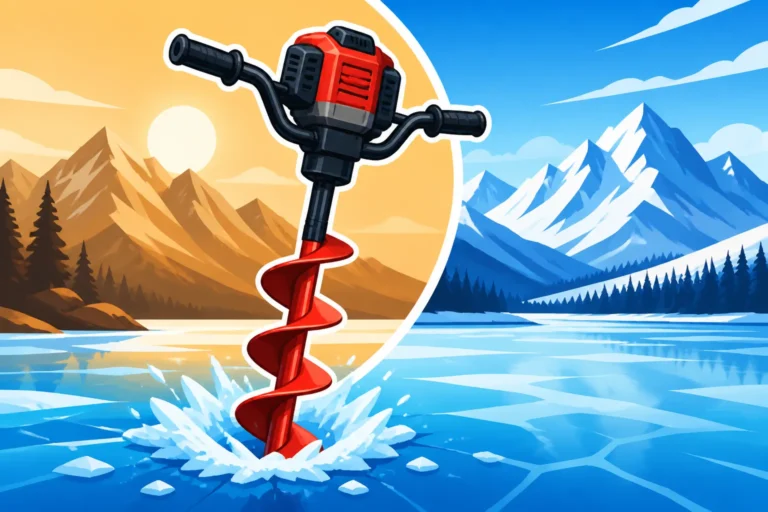
Ice Spud Bar or Auger: Before you even set up your first rod or tip-up, you need to check ice thickness. A spud bar is a heavy chisel-like tool used to test the ice ahead of you. It's invaluable for determining ice stability as you walk. Alternatively, a manual or powered ice auger can drill test holes. General guidelines suggest at least 4 inches of clear, solid ice for walking, 5-7 inches for a snowmobile, and 8-12 inches for a small vehicle. However, these are general rules; always exercise caution and consult local conditions. Ice Fishing Safety on Nevada Reservoirs provides much more detail on this critical topic.
-
Ice Picks: These are small, sharp metal spikes attached by a cord, worn around your neck. If you break through the ice, you can use these picks to gain traction on the ice edge and pull yourself out. They are inexpensive and can be life-savers. Every ice angler should carry a pair.
-
Flotation Suit or PFD: Wearing a specialized flotation suit (often called an ice fishing suit) provides warmth, protection from the elements, and built-in flotation in case of an ice breakthrough. If a flotation suit isn't feasible, always wear a U.S. Coast Guard-approved Personal Flotation Device (PFD) over your outer layers. This is non-negotiable, especially on larger, potentially less stable bodies of water.
-
Rope and Whistle: Carry a length of strong rope (at least 50 feet) that can be thrown to someone who has fallen through the ice. A whistle is important for signaling for help if you're in distress or need to attract attention.
-
First Aid Kit and Emergency Supplies: A well-stocked first aid kit for minor injuries, along with emergency supplies like a flashlight, fire starter, and high-energy snacks, should always be part of your gear. Ice Fishing Gear for Nevada Lakes is a full checklist for this.
Staying Warm and Dry on Nevada's Ice
Comfort dramatically impacts enjoyment and safety when ice fishing. Hypothermia is a real danger in cold, wet conditions.
-
Layered Clothing: Dress in layers! This allows you to adjust to changing temperatures and activity levels. Start with a moisture-wicking base layer (not cotton!), followed by insulating mid-layers (fleece, wool, down), and then a waterproof and windproof outer shell. This system traps heat effectively and manages moisture to keep you dry.
-
Insulated Boots and Socks: Your feet are especially vulnerable to cold. Invest in high-quality, insulated, waterproof boots rated for extreme cold. Pair them with moisture-wicking wool or synthetic socks. Bring an extra pair of socks, just in case your feet get wet.
-
Gloves or Mittens: Keeping your hands warm and functional is vital. A good pair of insulated, waterproof gloves or mittens is essential. Some anglers prefer convertible mittens that allow their fingers to be exposed for tying knots, then covered for warmth.
-
Headwear: A significant amount of body heat is lost through the head. Wear a warm, insulated hat that covers your ears. A neck gaiter or balaclava can provide additional protection for your face and neck, especially on windy days.
Portable Shelters and Buddy Heaters
For truly comfortable ice fishing, especially in exposed areas, a portable shelter and a heat source are game-changers.
-
Portable Ice Fishing Shelters (Shacks): These come in various styles, from lightweight pop-up tents to more robust flip-over shacks. They offer invaluable protection from wind, snow, and extreme cold. Inside a shelter, even on the coldest days, you can fish comfortably without the biting wind. They also allow for "sight fishing" in clearer water, where you can literally watch fish approach and take your lure. Many shacks are designed for quick setup and breakdown, making them practical for mobile anglers. Best Ice Fishing Auger and Shelter offers more details on these vital pieces of gear.
-
Portable Heaters: A small, portable propane heater (like a Mr. Heater Buddy or Big Buddy) can make your ice fishing shelter incredibly comfortable. Always ensure adequate ventilation when using any propane heater inside a confined space to prevent carbon monoxide buildup. These heaters are efficient and can raise the temperature inside a shack by many degrees, allowing you to shed bulky outer layers and focus on fishing. They can also help keep your fishing holes from freezing over within the shelter. Just be sure to bring plenty of propane canisters for the duration of your trip.
Nevada's ice fishing season might be brief and regional, but it offers a unique and rewarding angling experience. With the right ice fishing rod and tip-up setup, coupled with essential safety and comfort gear, you'll be well-prepared to enjoy the tranquility and excitement that frozen waters have to offer. Whether you're chasing panfish in an urban pond or battling a hard-fighting perch in a mountain reservoir, being properly equipped will make all the difference. Get out there, be safe, and tight lines!
Disclaimer
This article is for general informational purposes only and does not constitute professional advice. Laws, prices and regulations vary by location and change over time. Consult a qualified professional for guidance on your specific situation.