Best reel size for striped bass fishing
One of the most thrilling experiences for any angler in Nevada is hooking into a powerful striped bass. These hard-fighting fish in our vast desert reservoirs, like Lake Mead and Lake Mohave, demand robust gear that can handle their incredible runs and sheer strength. If you’re like many folks, you might be scratching your head trying to figure out what reel size is truly up to the task without being overkill or leaving you under-gunned. This comprehensive guide will break down everything you need to know to select the perfect reel size for battling Nevada's magnificent striped bass.
Understanding Striped Bass in Nevada Waters
Before we even dive into specific reel sizes, it’s crucial to understand the unique characteristics of striped bass in Nevada and the environments they call home. These aren't your average panfish; they’re apex predators that require specialized approaches, especially when it comes to your gear.
The Fight of a Nevada Striper
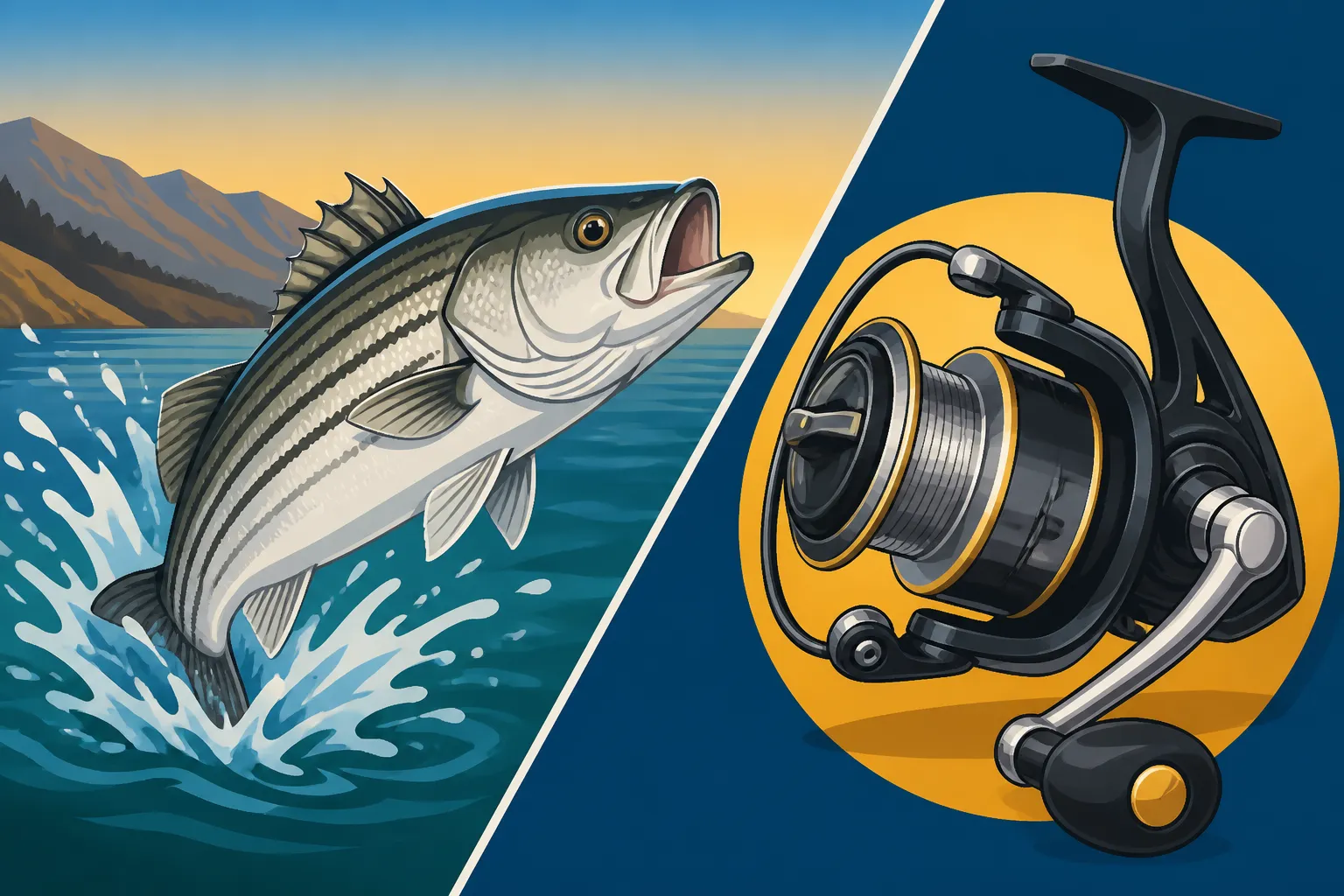
Imagine this: you've made a long cast out into the open water of Lake Mead, maybe near Hemenway Bay, and suddenly, your rod doubles over. The line screams off your spool as something incredibly strong bolts for deeper water. That's a Nevada striper! These fish are renowned for their explosive initial runs and sustained power. They don't just tug; they sprint, dive, and pull with a relentless force that can test even the most experienced angler's equipment. Because they inhabit large, open bodies of water, they have plenty of room to make those long, drag-testing runs. You need a reel that can withstand this kind of pressure, provide smooth, consistent drag, and hold enough line to give them a fighting chance without emptying your spool. A smaller reel simply won't have the necessary backbone or line capacity to handle these powerful bursts. This is especially true when you’re targeting larger fish, which are known to put on an even more impressive show.
Common Striped Bass Sizes
While you might occasionally encounter smaller "schoolies" (younger, smaller striped bass) that are great fun on lighter tackle, Nevada's main striped bass fisheries, particularly Lake Mead, are known for producing some truly substantial fish. Anglers regularly land stripers in the 5 to 15-pound range, and fish exceeding 20 or even 30 pounds are caught every season. These larger specimens are absolute beasts, capable of peeling off hundreds of feet of line in a single run. The average size of the fish you're likely to encounter directly impacts your reel choice. If you're consistently aiming for those double-digit bruisers, a reel with greater line capacity and more robust drag will be essential. On the flip side, if you're just looking for some casual fun catching smaller, more numerous school fish, you might get away with a slightly smaller setup, but you'd always risk being outmatched by an unexpected trophy. To learn more about these impressive fish, check out our guide on Striped Bass Size and Growth at Lake Mead.
Key Factors for Choosing Your Reel Size
Selecting the "best" reel size isn't a one-size-fits-all answer; it's a balance of several critical factors that work together to create an effective fishing system. For Nevada's striped bass, these factors are even more pronounced due to the fish's fighting prowess and the environment.
Line Capacity and Strength
This is arguably the most important consideration for striped bass fishing. When a big striper takes your lure, it's not uncommon for them to make a blistering run of 50 to 100 yards or more. If your reel doesn't hold enough line, you'll be spooled in seconds, watching helplessly as your fish swims away with your lure. For most striped bass applications in Nevada, you'll want a reel that can comfortably hold at least 150-200 yards of 15 to 20-pound monofilament or equivalent braided line. Braided line, with its thinner diameter for the same breaking strength, offers a significant advantage here, allowing you to spool up much more line. This extra capacity provides a crucial safety net during those long, unexpected runs. It's not just about surviving the first run; it's about having enough line to recover and continue the fight if the fish decides to take multiple powerful surges. When considering your line choice, our guide on Best Line for Desert Reservoir Fishing might be a great next read.
Drag Power and Smoothness
The drag system on your reel is your primary tool for tiring out a powerful fish like a striped bass. It needs to be strong enough to apply significant pressure, but equally important, it must be incredibly smooth. A jerky or inconsistent drag will lead to snapped lines, pulled hooks, or even broken rods. When a striper makes a run, the drag should allow line to peel off fluidly without any hitches or sudden increases in pressure. Look for reels with carbon fiber or high-quality composite drag washers. For typical Nevada stripers, you'll want a reel capable of delivering at least 15-20 pounds of maximum drag pressure, though you'll rarely fish it at maximum. The ability to set your drag to about one-third of your line's breaking strength, and have it perform flawlessly, is key. This smooth, consistent resistance helps prevent the fish from getting slack line and throwing the hook, while also saving your tackle from catastrophic failure.
Gear Ratio and Retrieval Speed
The gear ratio of a reel dictates how quickly it retrieves line with each turn of the handle. This can significantly impact your fishing technique and effectiveness for striped bass.
- High Gear Ratios (e.g., 6.0:1 and above): These reels retrieve line very quickly. They are excellent for techniques where you need to burn lures back to the boat, cover a lot of water, or quickly pick up slack line after a cast or during a fish's charge toward you. This can be particularly useful when fishing for fast-moving schoolie stripers that are aggressively chasing bait.
- Medium Gear Ratios (e.g., 5.0:1 to 5.9:1): These are considered all-around workhorses. They offer a good balance of power and speed, making them versatile for a wide range of lures and techniques, from casting swimbaits to jigging deeper waters. For many anglers, this is a fantastic starting point for general striped bass fishing.
- Low Gear Ratios (e.g., below 4.9:1): These reels prioritize cranking power over speed. While not typically preferred for most striper techniques where speed can be an advantage, a lower gear ratio might be useful if you're consistently pulling large, deep-diving crankbaits or heavy jigs, or battling exceptionally large fish from deep water, where sheer power is needed to move the fish.
Considering the diverse methods for Jigging Techniques for Lake Mead Stripers or retrieving various Best Lures for Striped Bass, having the right gear ratio can make a big difference in how effectively you present your bait and fight your fish.
Recommended Reel Sizes for Nevada Striped Bass
Now that we've covered the crucial factors, let's talk brass tacks about specific reel sizes you should consider for Nevada's striped bass.
Spinning Reel Recommendations
Spinning reels are incredibly popular for striped bass due to their ease of use, excellent casting distance with lighter lures, and versatility. For most Nevada striper scenarios, you'll be looking in the medium to large spinning reel categories.
- 4000-5000 Series: These are excellent all-around choices for light to medium striped bass fishing. They offer a good balance of line capacity (typically holding 180-250 yards of 15lb braid), drag power, and comfortable handling. If you're primarily casting medium-sized swimbaits, jerkbaits, or topwater lures for average-sized stripers, a 4000 or 5000 series reel will serve you well. They're also great for beginners or those who prefer a lighter setup. Many anglers find these sizes perfect for a full day of casting without fatigue. You can often find a good selection of these sizes at retailers like Bass Pro Shops.
- 6000-8000 Series: When you're consistently targeting larger striped bass, fishing with heavier lures, or need maximum line capacity for exceptionally long casts or deeper water, stepping up to a 6000 or 8000 series reel is advisable. These reels can hold significantly more line (often 250-400+ yards of 20-30lb braid) and typically feature more robust drag systems, making them ideal for battling trophy-sized fish. While they are heavier, the increased power and capacity are worth it when you hook into a true monster. For instance, when fishing deeper water at Lake Mohave, the extra line capacity can be a game-changer. These larger sizes are also often favored for techniques like Night Fishing Techniques for Striped Bass, where you might be casting larger baits into the dark.
Baitcasting Reel Recommendations
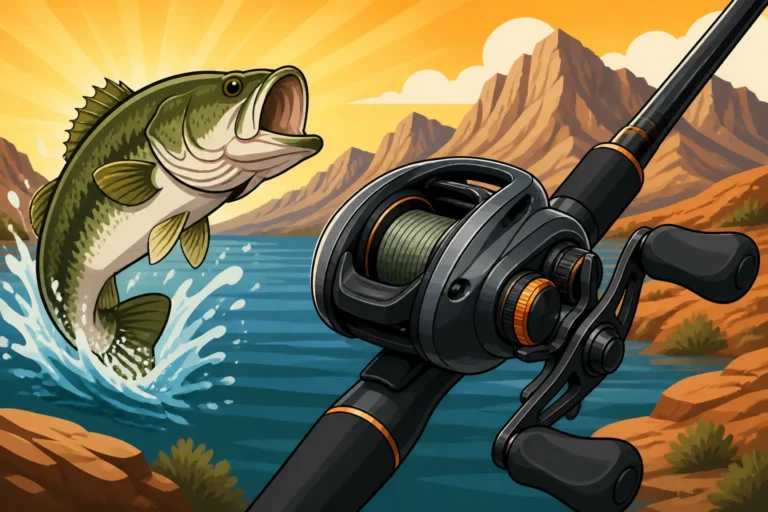
Baitcasting reels, often favored by more experienced anglers, offer superior casting accuracy, control, and immense cranking power. They are particularly effective when using heavier lures or needing to muscle fish out of structure.
- 200-300 Size Class (Low Profile): These baitcasters are fantastic for a wide range of striped bass applications, especially if you prefer throwing heavier swimbaits, deep-diving crankbaits, or jigs. They provide excellent line capacity (typically 150-200 yards of 15-20lb mono or 30-50lb braid) and impressive drag power in a relatively compact package. Their ergonomic design allows for comfortable casting and retrieving throughout the day. If you're an experienced baitcaster, these sizes offer the perfect blend of power and precision for most Nevada stripers.
- 300-400 Size Class (Low Profile or Round): For the serious striper angler who is consistently targeting trophy fish, making extremely long casts, or employing techniques that require maximum line capacity and brute strength, a larger 300 or 400 size baitcasting reel is the way to go. These reels boast even greater line capacity (200-300+ yards of 20-25lb mono or 50-65lb braid) and powerful drag systems, giving you the confidence to tackle the largest striped bass Nevada has to offer. They are often used in conjunction with heavier Best Fishing Rods for Nevada Lakes designed for big fish. While a round baitcaster might look a bit more traditional, many modern low-profile reels in this size class offer comparable performance with improved ergonomics.
When to Go Bigger or Smaller
While the recommendations above cover most scenarios, there are times you might adjust your reel size.
- Trophy Hunting: If your sole mission is to land a state-record class striped bass, or simply the biggest fish of your life, leaning towards the larger end of the recommended spectrum (e.g., 6000-8000 spinning or 300-400 baitcasting) is a smart move. The extra line capacity and drag power will give you a better chance when that once-in-a-lifetime fish hits.
- Light Tackle Fun: Sometimes, the bite is on for smaller schoolie stripers, and you want to maximize the fight. In these cases, you might drop down to a high-quality 3000-series spinning reel, spooled with 10-15lb braid. Be aware, however, that while incredibly fun, you'll be significantly under-gunned if a large striper decides to take your offering. This is a choice made for sport, understanding the potential risks.
- Specific Techniques: If you're primarily using a very heavy jig for deep-water vertical presentations, a reel with exceptional cranking power might be more important than ultimate casting distance, potentially favoring a slightly beefier baitcaster. Conversely, if you're strictly throwing small, lightweight topwater baits, a slightly smaller spinning reel might cast them more effectively.
Beyond Reel Size: Other Crucial Reel Features
While reel size is paramount, it's part of a larger picture. A good reel for Nevada stripers needs more than just appropriate dimensions.
Construction and Durability
Nevada's desert environment, with its intense sun and sometimes windy, dusty conditions, can be tough on fishing gear. Furthermore, striped bass fishing itself can be demanding. Look for reels constructed with robust materials. Aluminum frames and side plates are often preferred for their strength and rigidity, which prevent frame flex under heavy loads. Quality reels will also feature corrosion-resistant components, especially important if you're fishing waters with slightly higher mineral content, though Nevada's freshwaters are generally forgiving. A durable reel means it will stand up to the abuse of hard-fighting fish and prolonged use, providing reliable service season after season. Don't underestimate the value of a reel that can take a beating and keep on performing.
Ergonomics and Comfort
A fishing trip, especially for striped bass, can involve hours of casting, retrieving, and fighting fish. A reel that feels good in your hand makes a huge difference in your enjoyment and stamina. Consider the weight of the reel – a lighter reel will reduce fatigue over a long day. The handle design is also critical; look for a comfortable knob or paddle handle that provides good grip, even when wet. Test out different reels if you can, getting a feel for how they balance on your chosen Best Fishing Rods for Nevada Lakes. A reel that feels awkward or heavy will quickly become a burden, detracting from your fishing experience. Comfort often goes hand-in-hand with control, allowing you to react quicker and fight fish more effectively.
Bearings and Smooth Operation
Reel bearings are small, circular components that allow parts of the reel to spin smoothly and freely. Generally, more bearings (and higher quality bearings) translate to a smoother retrieve, smoother drag performance, and increased durability. For striped bass fishing, you want a reel with a good number of high-quality, corrosion-resistant stainless steel bearings (typically 5-7 or more). This contributes significantly to the overall feel of the reel, making it a joy to cast and retrieve, and critically, ensuring the drag system engages without stuttering during a powerful fight. While an excessive number of cheap bearings isn't necessarily better than fewer, high-quality ones, a reputable brand will typically use a good count of durable bearings in their striper-appropriate reels. When researching options, look for brands known for their smooth operation; many anglers consult reviews on sites like Amazon to gauge real-world performance.
Reel Comparison for Nevada Striped Bass
To help clarify the choices, here's a quick comparison of general spinning and baitcasting reel attributes when targeting striped bass in Nevada.
| Feature | Spinning Reel | Baitcasting Reel |
|---|---|---|
| Ease of Use | Very easy, great for beginners and experienced | Requires more practice, excels with experience |
| Casting Distance | Excellent, especially with lighter lures | Excellent, especially with heavier lures |
| Accuracy | Good | Superior, great for targeting specific spots |
| Line Capacity | Excellent (4000-8000 series) | Excellent (200-400 series) |
| Drag Power | Very good, generally smooth | Excellent, often more powerful |
| Cranking Power | Good | Superior, better for muscling big fish |
| Lure Versatility | Wide range, from light to heavy | Best with heavier lures, less ideal for light baits |
| Backlash Risk | Minimal | High potential if not properly managed |
| Cost | Can range from budget-friendly to high-end | Generally starts at a higher price point for quality |
Remember, this is a simplified comparison, and modern reels from both categories offer incredible performance. Your personal preference and fishing style will ultimately guide your choice.
Conclusion
Choosing the best reel size for striped bass fishing in Nevada isn't just about picking something that looks cool; it's about matching your gear to the powerful, aggressive nature of these fish and the expansive waters they inhabit. Whether you opt for a versatile 4000-5000 series spinning reel for general use or step up to a formidable 300-400 series baitcaster for trophy hunting, prioritizing line capacity, a strong and smooth drag, and durable construction will ensure you're well-equipped. Take the time to research, perhaps browse options at your local Bass Pro Shops, or compare models on Amazon, and you’ll find the perfect reel to make your next Nevada striped bass adventure unforgettable. Happy fishing!
Disclaimer
This article is for general informational purposes only and does not constitute professional advice. Laws, prices and regulations vary by location and change over time. Consult a qualified professional for guidance on your specific situation.