Best rod power for largemouth bass fishing
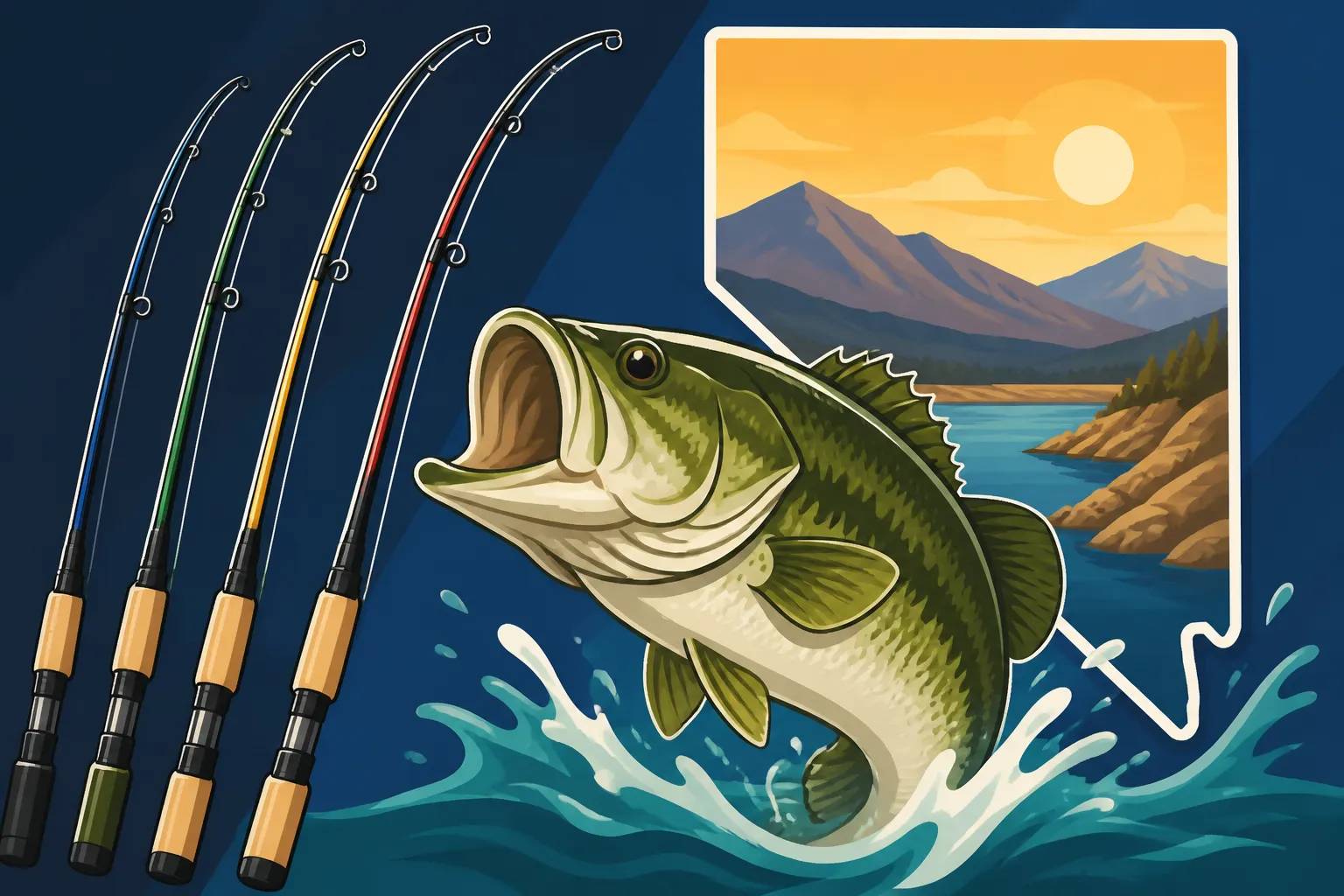
Choosing the perfect fishing rod can feel like a labyrinth, especially when you're trying to dial in your gear for a specific target like the feisty largemouth bass in Nevada's diverse waters. Many anglers struggle with the sheer variety of rods available, often ending up with equipment that doesn't quite match their technique or the fish's temperament. This comprehensive guide will cut through the confusion, helping you understand rod power and precisely how to select the ideal rod for largemouth bass fishing across the Silver State.
Understanding Fishing Rod Power for Largemouth Bass
When we talk about "rod power," we're essentially referring to how much pressure it takes to bend the rod blank. It's often confused with rod action, but they're distinct characteristics. Think of power as the rod's brute strength or backbone, determining its lifting capability and how well it handles different lure weights and fish fighting styles. For largemouth bass, choosing the right power is critical because these fish are known for their explosive strikes, powerful runs, and tendency to dive into heavy cover.
The Spectrum of Rod Power
Fishing rod power ranges from ultra-light to extra-heavy, with several steps in between. Each designation tells you something important about the rod's intended use, particularly regarding the size of the lure and the type of fish it's designed to subdue. A common misconception is that heavier power means a bigger fish, but it's more about leverage and control.
- Ultra-Light/Light: These rods bend easily and are designed for very small, lightweight lures and baits. They offer maximum sensitivity for subtle bites and provide an exhilarating fight with smaller fish, but they don't have the backbone to pull a big bass out of heavy brush. You wouldn't typically use these for serious largemouth bass fishing in most Nevada environments, unless you're targeting very small bass in open urban ponds.
- Medium-Light: A step up, offering a bit more backbone while retaining sensitivity. These can handle slightly heavier lures and provide more control over modest-sized fish. For largemouth, you might use one for very light finesse presentations where cover isn't an issue.
- Medium: A versatile choice for many freshwater species. A medium power rod can cast a decent range of lure weights and has enough strength to handle average-sized fish in open water. It’s a good general-purpose rod if you’re fishing for a mix of species, but for dedicated largemouth fishing, it might feel a bit underpowered in dense cover.
- Medium-Heavy: This is often the sweet spot for many largemouth bass anglers. A medium-heavy rod offers a fantastic balance of casting power, sensitivity, and the backbone needed to drive hooks home and extract bass from moderately heavy cover. We’ll dive deeper into why this power level is so popular for largemouth.
- Heavy: When you're dealing with truly dense vegetation, submerged timber, or trying to punch through matted grass, a heavy power rod provides the muscle you need. It's designed to handle heavier lures and offer significant leverage to control large, powerful fish and prevent them from burying themselves in structure.
- Extra-Heavy: The heaviest power rating, these rods are essentially winches designed for the most extreme conditions. Think punching massive jigs through thick lily pads or pulling giant swimbaits. While specialized, an extra-heavy rod can be invaluable for specific, heavy-cover largemouth techniques in places like the dense coves of Lake Mead.
Why Rod Power Matters Specifically for Largemouth
Largemouth bass are notorious for their aggressive strikes and their immediate instinct to seek cover once hooked. If you're fishing a medium-power rod in a patch of thick cattails and hook a 5-pound largemouth, you'll quickly realize how underpowered your rod can be. The fish will dive into the vegetation, wrap your line, and break off before you can react.
A rod with appropriate power allows you to:
- Cast heavier lures: Largemouth techniques often involve larger, heavier baits like spinnerbaits, jigs, Texas rigs, and swimbaits.
- Drive hooks effectively: Bass have tough, bony mouths. A powerful rod provides the leverage needed to set the hook firmly, especially with single hooks on jigs or Texas rigs.
- Control the fight: When a bass makes a run for cover, you need the rod's backbone to turn its head and steer it away from snags. This is often referred to as "horsing" a fish out of cover.
- Handle thicker lines: More powerful rods are designed to pair with heavier monofilament, fluorocarbon, or braided lines, which are necessary when fishing around abrasive structures.
Understanding this fundamental principle helps you prepare for the specific challenges and thrills of largemouth bass fishing in Nevada's unique environments.
Matching Rod Power to Largemouth Lures and Tactics
The key to choosing the best rod power isn't just about the size of the bass, but more importantly, the lures you're throwing and the type of cover you're fishing. Different techniques demand different rod characteristics to perform optimally and maximize your chances of landing that trophy largemouth. Let's break down the common scenarios you'll encounter in Nevada.
Lighter Lures and Finesse Techniques
Sometimes, especially when the bite is tough, or in clearer waters like some urban ponds, you'll need to scale down your presentation. This is where finesse techniques shine, using lighter line and smaller lures to entice wary bass.
- Shaky Heads, Wacky Worms, and Drop Shots: For these subtle presentations, a medium-light or medium power spinning rod is often preferred. These rods offer extreme sensitivity, allowing you to feel the most delicate bites that a heavier rod might mask. They're typically paired with lighter line (6-10 lb test fluorocarbon or monofilament) to give your lure a natural fall. While you might not be pulling fish out of thick brush, these rods excel in open water or around sparse cover, offering a great fight. Many anglers find the range of finesse plastics available at Bass Pro Shops perfect for these applications. You can also explore options for Best Soft Plastics for Bass Fishing to get an idea of what works best.
- Small Crankbaits and Jerkbaits: If you're throwing smaller crankbaits or jerkbaits, particularly in open water where long casts are beneficial, a medium power rod with a more moderate action can be effective. The forgiving nature of a medium power rod helps keep treble hooks from tearing out during a fight.
All-Around Versatility: The Medium-Heavy Workhorse
If there's one rod power that every largemouth bass angler in Nevada should have, it's the medium-heavy. This is truly the workhorse of bass fishing, incredibly versatile and capable of handling a vast array of techniques and conditions, making it an excellent choice for waters like Lake Mead or Lake Mohave.
- Jigs and Texas Rigs: Whether you're pitching a football jig on a rocky point or flipping a creature bait on a Texas rig into a submerged bush, a medium-heavy rod provides the perfect balance. It has enough power to drive that heavy single hook through a bass's jaw, and the backbone to prevent the fish from burying itself in cover immediately after the strike. This is essential when fishing around the abundant structure found in Nevada's reservoirs.
- Spinnerbaits and Chatterbaits: These reaction baits require a rod that can cast them accurately and absorb the strong vibration they produce, while still having the power to handle the often violent strikes. A medium-heavy rod fits the bill perfectly, offering excellent control and fish-fighting capability.
- Larger Topwater Baits and Frogs: When bass are hitting on the surface, especially in areas with scattered grass or lily pads, a medium-heavy rod gives you the leverage to set hooks on these often tricky baits and pull fish out of lighter cover.
- Standard Crankbaits: For medium to deep-diving crankbaits, a medium-heavy rod works well, especially if you opt for one with a slightly more moderate action to prevent those treble hooks from ripping free.
The medium-heavy rod is a fantastic starting point for any angler looking to get serious about Largemouth Bass Fishing in Nevada, providing the backbone needed for robust presentations without sacrificing too much sensitivity.
Heavy Cover and Punching Rigs
Nevada's desert lakes, particularly Lake Mead, can have areas with incredibly dense vegetation, flooded timber, or thick brush. When bass hide deep within this heavy cover, you need specialized gear to get them out. This is where heavy and extra-heavy power rods come into play.
- Flipping and Pitching: These techniques involve accurately presenting heavy jigs or creature baits into tight pockets within dense cover. A heavy power rod allows you to use heavier weights (1 oz or more) to penetrate the cover, and more importantly, it provides the sheer force to pull a big bass out of that cover before it can wrap your line around a branch or snag. You'll typically pair these rods with very heavy braided line, often 50-80 lb test, to withstand the abrasion.
- Punching Mats: In some areas, thick mats of vegetation can form, providing excellent overhead cover for bass. "Punching" involves using an even heavier weight (1.5 oz or more) to literally punch through these mats with a specialized rig. This demands an extra-heavy power rod – often 7'6" or longer – to handle the extreme weight, the impact of punching, and the immediate, brutal fight that ensues. Without this level of power, you simply can't extract these fish effectively.
- Large Swimbaits: When targeting trophy bass with large, heavy swimbaits (especially those 6 inches or longer), a heavy power rod is necessary to cast the bait accurately and control its retrieve. These lures are often heavy, and a weaker rod would struggle to load properly for casting. You might also want to check out our guide on Best Lures for Nevada Bass for more insights.
Using the right rod power in these scenarios is not just about convenience; it's about successfully landing fish that would otherwise be lost in the thick stuff. It’s also crucial to ensure your reel and line can match the rod's power, as a weak link will quickly fail.
| Rod Power | Typical Lure Weights (Oz) | Common Largemouth Lures & Techniques | Ideal Nevada Habitat/Cover |
|---|---|---|---|
| Medium-Light | 1/16 – 1/4 | Small plastics, tiny jigs, light drop shots | Open water, sparse cover, urban ponds |
| Medium | 1/8 – 1/2 | Finesse jigs, small crankbaits, smaller worms | Open water, docks, sparse weedlines |
| Medium-Heavy | 1/4 – 1 | Jigs, Texas rigs, spinnerbaits, chatterbaits, larger topwaters | Moderate cover, brush piles, rock gardens, main lake points |
| Heavy | 3/8 – 1.5+ | Flipping/pitching jigs & creature baits, large swimbaits, frog fishing | Dense brush, submerged trees, heavy vegetation |
| Extra-Heavy | 1.5 – 2.5+ | Punching rigs, large deep-diving crankbaits (specialized) | Extreme matted vegetation, thickest timber |
Considering Nevada's Largemouth Habitats
Nevada offers a surprisingly diverse range of fishing environments, from vast desert reservoirs to smaller, community-focused urban ponds. The specific characteristics of these waters play a huge role in dictating the most effective rod power for largemouth bass fishing. You wouldn't use the same rod for punching mats at Lake Mead as you would for casting a small worm in a Las Vegas urban pond.
Lake Mead and Lake Mohave: The Big Reservoir Challenge
These sprawling reservoirs are arguably Nevada's premier largemouth bass fisheries. They present a unique set of challenges and opportunities that often demand more robust gear.
- Abundant Cover: Both Lake Mead and Lake Mohave are characterized by rocky shorelines, submerged brush, palo verde trees, and sometimes dense patches of submerged or emergent vegetation in protected coves. When the water levels fluctuate, new cover emerges or gets submerged, creating dynamic fishing opportunities. Bass relate heavily to this structure, using it for ambush points and protection. To effectively pull a strong largemouth out of a gnarly mesquite bush or a submerged tree, you absolutely need the leverage of a medium-heavy or even heavy power rod. A weaker rod will simply buckle, allowing the bass to bury itself, resulting in a lost fish and often a snagged lure. Exploring Lake Mead Largemouth Bass Coves can give you an idea of the kind of structure you'll encounter.
- Larger Fish Potential: These lakes hold the potential for truly trophy-sized largemouth. While a 2-pound bass might be manageable on lighter gear, hooking a 5-pounder or larger in heavy cover requires a rod with serious backbone to turn its head and guide it to the boat. You don't want to be undergunned when that fish of a lifetime strikes.
- Wind and Waves: Being large bodies of water, Lake Mead and Lake Mohave can get incredibly windy. This makes casting lighter lures difficult and demands a rod with enough power to handle heavier baits that can cut through the wind. A medium-heavy rod generally casts heavier lures more efficiently, helping you maintain control even in choppy conditions.
For these reasons, the medium-heavy rod often serves as the most versatile choice for the main lake and larger coves, while a heavy rod is indispensable for pitching into the densest cover.
Urban Ponds and Smaller Waters
Nevada also has a network of urban ponds, especially around Las Vegas and Reno, that are regularly stocked and provide accessible fishing opportunities. These smaller bodies of water have different dynamics.
- Less Dense Cover: While urban ponds can have docks, sparse cattails, or submerged weeds, they typically lack the extreme, impenetrable cover found in large reservoirs. This means you often don't need the heaviest power rods.
- Finesse and Lighter Presentations: Largemouth in urban ponds can sometimes be pressured, making finesse techniques more effective. A medium-light or medium power rod allows for delicate presentations of small worms, grubs, or small spinnerbaits, which can be ideal for these environments.
- Family-Friendly Fishing: If you're introducing kids to fishing, these ponds are perfect. A lighter power rod is easier for a beginner to handle and provides a more exciting fight from smaller bass. You can still land decent fish, but the risk of getting completely snagged in heavy cover is lower. For more on these accessible spots, check out our Las Vegas Nevada Urban Pond Fishing Guide.
While a medium-heavy rod can still be used for versatility, anglers might find themselves reaching for lighter power options more frequently in these environments to match the conditions and fish behavior.
Making Your Choice and What to Look For
Selecting the "best" rod power ultimately comes down to your personal fishing style, the specific techniques you employ most often, and the types of water you primarily fish. However, there are some universal principles and considerations that can guide your decision and help you choose a rod that will serve you well for years to come.
Balancing Power with Action
While this guide focuses on rod power, it's impossible to completely separate it from rod action. Action describes where on the rod blank it bends when pressure is applied.
- Fast Action: Bends mostly in the top third of the rod. This offers maximum sensitivity and allows for quick, powerful hook sets. Great for single-hook lures like jigs and Texas rigs where you need to drive the hook home quickly.
- Moderate-Fast Action: Bends in the top half of the rod. A good balance between sensitivity and flexibility, making it versatile for many techniques.
- Moderate Action (or "Crankbait" action): Bends throughout the top two-thirds of the rod. This "parabolic" bend helps absorb the shock of a bass strike, prevents treble hooks from tearing out, and is excellent for reaction baits like crankbaits and lipless crankbaits.
For largemouth bass, you'll often find a medium-heavy power rod paired with a fast action for jigs and Texas rigs, giving you both the backbone and the quick hook-setting ability. For crankbaits, you might prefer a medium-heavy rod with a moderate or moderate-fast action. Always consider how these two characteristics work together.
Test Driving Your Rod
Buying a fishing rod without holding it in your hands is like buying shoes without trying them on – you might get lucky, but it's not ideal. Visiting a reputable tackle shop or a large outdoor retailer like Bass Pro Shops allows you to:
- Feel the Balance: A well-balanced rod will feel comfortable in your hand and won't feel tip-heavy or butt-heavy.
- Test the Weight: Lighter rods reduce fatigue during long days on the water.
- Whip Test the Action: While you can't test it under load, a quick flick of the wrist can give you an idea of how the rod loads and recovers, indicating its action.
- Compare Different Brands: Handle different models from brands you're considering. Sometimes, a "medium-heavy" from one manufacturer might feel more like a "heavy" from another. This hands-on experience is invaluable.
If an in-person visit isn't possible, reading detailed reviews on sites like Amazon or specialized fishing forums can help, but always be aware that personal preference plays a huge role.
Don't Forget Your Line
The best rod in the world won't perform optimally if it's not paired with the correct fishing line. Rod power is designed to work within a specific line weight range, which is usually printed on the rod blank near the handle.
- Medium-Light/Medium Power Rods: Typically rated for lighter lines, perhaps 6-12 lb test monofilament or fluorocarbon, or 10-20 lb braided line (used with a leader).
- Medium-Heavy Power Rods: Will handle a wider range, often 10-20 lb monofilament/fluorocarbon, or 20-50 lb braided line.
- Heavy/Extra-Heavy Power Rods: Built for substantial line, usually 15-30 lb monofilament/fluorocarbon, or 50-80 lb braided line.
Using too light a line on a heavy power rod can lead to line breakage on hook sets or during fights, as the rod won't flex enough to absorb shock. Conversely, putting too heavy a line on a light power rod can overwhelm the rod and limit its casting performance. Always check the manufacturer's recommendations. Understanding the interplay between your Best Line for Desert Reservoir Fishing and rod power is crucial for a successful setup.
By considering these factors and taking the time to match your rod power to your fishing style and the unique characteristics of Nevada's largemouth bass habitats, you'll be well on your way to more successful and enjoyable days on the water.
Disclaimer
This article is for general informational purposes only and does not constitute professional advice. Laws, prices and regulations vary by location and change over time. Consult a qualified professional for guidance on your specific situation.