Is a spinning reel or baitcaster better for beginners?
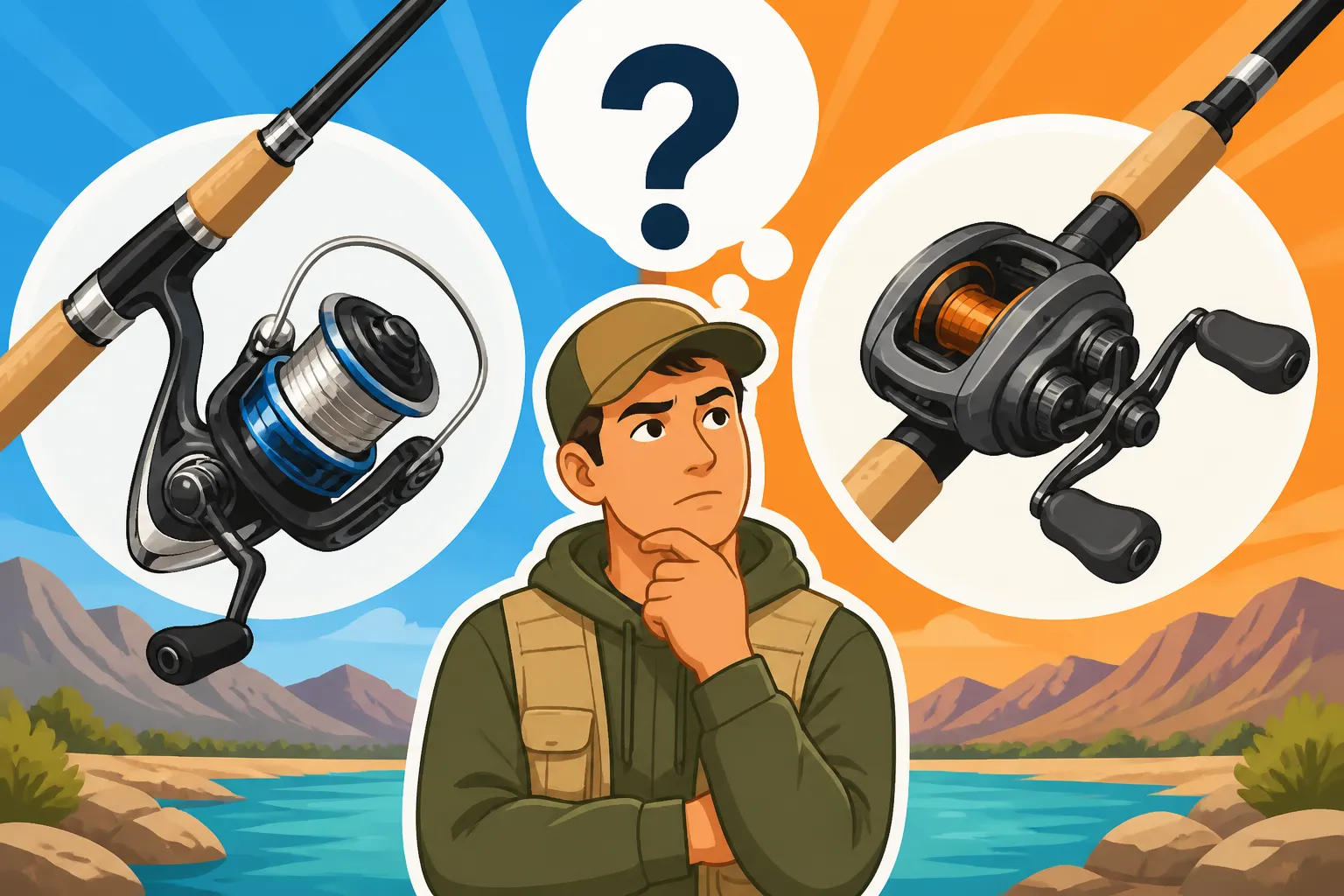
One of the biggest head-scratchers for anyone just getting into the wonderful world of Nevada fishing is picking out that first reel. You walk into a tackle shop, or scroll through options online, and suddenly you're faced with what feels like a million choices. The most common fork in the road is undoubtedly the spinning reel versus the baitcaster debate, and for a beginner, it can feel like you need a degree in engineering to understand the difference. This guide is here to untangle that confusion, explain the ins and outs of both types, and help you confidently choose the right reel to start your angling adventures across the Silver State.
Understanding Spinning Reels: The Beginner's Go-To for Nevada Waters
Let's be real, when most folks picture a fishing rod and reel, they're probably imagining a spinning reel. These are the workhorses of the angling world, incredibly popular for good reason, especially if you're just dipping your toes into fishing. Think of them as the friendly, forgiving option that helps you build confidence before tackling anything too complex.
How Spinning Reels Work Their Magic
At its core, a spinning reel is pretty straightforward. You'll notice it hangs below the rod, and it has an open-faced design where the spool is fixed and doesn't rotate during the cast. Instead, a metal arm, called a bail, wraps around the spool and guides the line on and off. When you're ready to cast, you manually flip that bail open, hold the line with your finger, and then whip the rod forward. As the lure or bait flies through the air, the line simply peels off the stationary spool. Once your offering hits the water, you flip the bail back down, and then crank the handle, which engages the retrieve mechanism, rotating the line roller and winding the line back onto the spool evenly.
This simple design is why spinning reels are so incredibly forgiving. There’s no complex synchronization needed between your thumb and the spool. It’s a pick-up-and-go kind of setup that lets you focus on the casting motion and where your bait is landing, rather than worrying about a tangled mess.
Advantages of Spinning Reels for New Anglers
For those just starting out, the advantages of a spinning reel are huge, making them an almost universal recommendation.
Firstly, the ease of casting is unparalleled. You don't have to worry about backlashing – that dreaded "bird's nest" of tangled line that can instantly ruin a fishing trip and test the patience of a saint. With a spinning reel, backlashes are incredibly rare because the spool doesn't spin. This means less frustration and more actual fishing time, which is key for keeping spirits high when you're learning. You can truly concentrate on your accuracy and distance without fear of a major snafu.
Secondly, spinning reels are remarkably versatile. They excel at casting lighter lures and baits, which are often what beginners start with, especially when targeting common species like panfish, smaller bass, or the abundant stocked rainbow trout found in many Nevada waters. Whether you're tossing a small spinner for trout in a high mountain lake or fishing with a bobber and worm at one of the Nevada Urban Pond Fishing Guide locations in Las Vegas or Reno, a spinning reel handles it beautifully. They are also fantastic for lighter lines, which can be crucial for enticing finicky fish or when fishing in clear water. This versatility also means you can often use one good spinning reel for a wide range of fishing styles and target species across the state, from the Truckee River to Lake Tahoe. Many anglers will find that a good quality spinning reel purchased at a store like Bass Pro Shops will serve them well for years.
When a Spinning Reel Might Be Limiting
While fantastic for beginners, it’s also fair to acknowledge that spinning reels aren't the answer to every fishing scenario. Their open-face design means that when you're dealing with extremely heavy lines or trying to cast very heavy lures a long distance with pinpoint accuracy, they can sometimes feel a bit less powerful than their baitcasting counterparts. The line twist can also be a minor issue over time, especially with certain types of line and retrieve methods, but for a beginner, this is usually a non-factor.
Another minor drawback can be line capacity on smaller reels. If you're targeting truly enormous fish that require hundreds of yards of heavy line, a small spinning reel might struggle. However, for 99% of beginner-level fishing in Nevada, including chasing trout after a Nevada Trout Stocking Schedule update, or even some decent bass, a spinning reel will serve you perfectly.
Decoding Baitcasting Reels: A Step Up in the Learning Curve
Now, let's talk about baitcasters. These reels are often seen as the mark of a more experienced angler, and there's a good reason for that: they require a bit more finesse and practice to master. But don't let that intimidate you! Once you get the hang of it, a baitcaster offers a level of control and power that can be truly addictive for certain types of fishing.
How Baitcasting Reels Operate
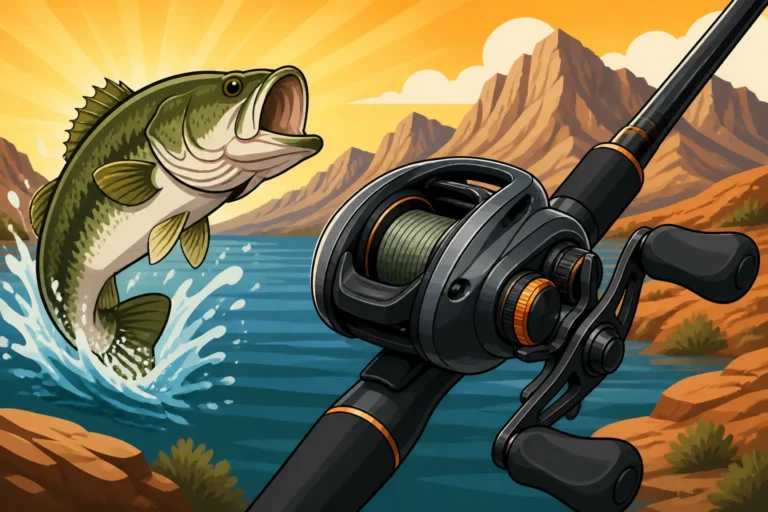
Unlike a spinning reel, a baitcasting reel sits on top of the rod, and its spool rotates as the line comes off during a cast. This is where the magic – and the challenge – happens. When you cast, the weight of your lure pulls line off the spool, causing it to spin. To prevent the spool from spinning faster than the line is actually peeling off (which is what causes those infamous backlashes), baitcasters come equipped with various braking systems and, critically, rely on the angler’s thumb to gently control the spool’s rotation.
Before casting, you press a button or lever to disengage the spool, then use your thumb to hold the line in place. As you cast, you release your thumb, and then immediately begin applying light pressure again as the lure flies, feathering the spool to keep it from over-spinning. It's a delicate dance of timing and touch, and it absolutely takes practice. Once the lure hits the water, you engage the reel and crank the handle to retrieve your line.
Why Anglers Choose Baitcasters (Eventually)
So, with all that talk of "delicate dance" and "practice," why would anyone choose a baitcaster? The answer lies in the incredible precision, power, and control they offer once mastered.
First, precision casting is a huge advantage. Because the line comes straight off the spool without twisting, you get a much more direct and accurate cast. This is particularly useful when you need to drop a lure into a very specific spot, like a small opening in a patch of cattails for a lurking bass in Lake Mead, or under an overhanging bush on the Truckee River. Casting Techniques for Beginners can show you the basics, but baitcasters take it to the next level of exactitude.
Second, baitcasters generally provide more power and torque, especially when fighting larger, harder-pulling fish. This makes them ideal for throwing heavier lures – think big swimbaits, deep-diving crankbaits, or substantial jigs – that would overwhelm a typical spinning reel. For targeting trophy Largemouth Bass Fishing in Nevada or wrestling with powerful Striped Bass Fishing in Nevada at Lake Mohave, a baitcaster often provides the brute strength and control needed to land those big fish. They are designed to handle heavier lines and stand up to the strain of battling aggressive species.
The "Backlash Beast" and Early Challenges
Ah, the "backlash beast." Every baitcaster user has faced it, especially in the beginning. It's that moment when your thumb pressure is off, or your braking system isn't quite right, and the spool spins wildly, creating a massive, frustrating tangle of line that resembles a bird's nest. This is the primary reason why baitcasters have a steeper learning curve for beginners.
Learning to control the spool with your thumb, adjust the braking systems (centrifugal and magnetic brakes are common), and synchronize your cast all at once takes time and patience. It’s not uncommon to spend more time untangling line than actually fishing during your first few outings with a baitcaster. This is why it's crucial to practice in an open field or even your backyard before hitting the water. Start with heavier lures that load the rod well, and be prepared for some frustrating moments. But stick with it, and the rewards of precision and power will become clear.
Making the Choice: Spinning vs. Baitcasting for Your First Steps
Okay, so you’ve heard the rundown on both. Now for the million-dollar question: which one is right for you, the beginner angler in Nevada? The simple answer is almost always a spinning reel, but let's dive into the nuances.
Factors to Consider as a Beginner
When you're trying to decide, think about a few key things:
- Your Patience Level: Are you someone who enjoys a challenge and is willing to put in the time to master a new skill, even if it means some frustrating setbacks? Or do you want to get on the water and start catching fish with minimal fuss? If it's the latter, spinning is your friend.
- Target Fish and Fishing Style: Are you mostly going to be tossing small lures or live bait for panfish and stocked trout in local ponds or smaller rivers? A spinning reel is perfect. Are you dreaming of slinging heavy jigs for big bass in Lake Mead or trolling for monster Mackinaw trout in Lake Tahoe right from the start? While a baitcaster can do some of that, a dedicated spinning setup for trout (Best Tackle for Nevada Trout Fishing) or a medium spinning setup for smaller bass (Best Tackle for Nevada Bass Fishing) will still get you far.
- Budget: While you can find budget options for both, a good quality spinning reel that performs reliably is often more affordable than an equivalently reliable baitcasting reel. The complex braking systems and tighter tolerances in baitcasters often mean that cheaper models can be more prone to backlashing and frustration.
- Where You'll Be Fishing: If you're primarily fishing from shore, a spinning reel is generally easier to manage. For boat fishing where you might need to make precise casts into tight cover, a baitcaster's advantages become more apparent, but that's usually after you've developed some foundational skills.
Practical Recommendations for Starting Out
My honest, empathetic advice for almost every new angler? Start with a spinning reel. Seriously. There’s absolutely no shame in it; many seasoned pros still use spinning reels constantly because they are effective and versatile.
A good medium-light to medium power spinning rod paired with a reliable spinning reel (size 2500-3000 is a great all-around choice for Nevada) will allow you to fish for a huge variety of species and techniques. You'll spend less time fighting your gear and more time learning the art of fishing – understanding fish behavior, reading the water, and developing a feel for bites. You can pick up a fantastic beginner spinning combo from a retailer like Bass Pro Shops or browse countless options on Amazon without breaking the bank. This combination will give you a solid foundation. You can find more specific recommendations in our guide on Best Spinning Reels for Trout Fishing.
When to Transition to a Baitcaster
Once you've spent some time with your spinning reel, landed a bunch of fish, and feel truly comfortable with casting, retrieving, and fighting fish, then you might consider trying a baitcaster. This transition usually happens when you find yourself consistently doing a certain type of fishing that specifically benefits from a baitcaster's strengths. For example, if you get really into throwing heavy jigs for bass, or consistently need to place a lure with extreme precision in tight quarters, that’s your cue.
Think of it this way: learning to drive a car. You wouldn't start with a high-performance manual race car, right? You'd learn on an automatic, get comfortable with the rules of the road, and then maybe transition to a manual later if you desired more control. The spinning reel is your reliable automatic; the baitcaster is the manual with more horsepower and intricate control. When you're ready, dive into guides like Best Baitcasting Reels for Bass Fishing to start your research.
Getting Started with Your First Reel in Nevada
Regardless of whether you choose a spinning reel or decide to tackle a baitcaster head-on, there are a few things to keep in mind to ensure your first fishing experiences in Nevada are successful and enjoyable.
Essential Gear Beyond Just the Reel
Remember, a reel is just one part of your fishing setup. You'll also need a rod that's appropriately matched to your reel. Most rods will have recommendations for line weight and lure weight printed on them. A good Nevada Fishing Gear Essentials checklist goes far beyond just your reel. You'll want appropriate fishing line (monofilament, fluorocarbon, or braided line, depending on your target and preference), hooks, weights, and some basic lures or bait. Don't forget a pair of pliers for removing hooks, and a small tackle box to keep everything organized.
If you're unsure about pairing, many sporting goods stores, including Bass Pro Shops, offer pre-matched rod and reel combos that are perfect for beginners, taking the guesswork out of the equation.
Where to Practice Your Casting Skills
Before you head out to a prime fishing spot like Lake Mead or Wildhorse Reservoir, spend some time practicing your casting. An open park, a large backyard, or even a local sports field are ideal. Tie on a practice plug (you can buy these, or just use an old lead sinker with the hook removed) so you don’t risk losing a lure or harming wildlife.
For spinning reels, practice getting a smooth, controlled cast. Focus on the wrist flick and releasing the line at the top of your forward motion. For baitcasters, this practice time is absolutely critical. Start with the heaviest lure you plan to use, set your brakes conservatively (often maxed out to start), and focus on a smooth, sweeping motion rather than a jerky whip. Expect backlashes, and learn how to patiently pick them out. Mastering Casting Techniques for Beginners on dry land will save you a lot of grief on the water.
Local Resources and Retailers
Nevada is a fantastic state for fishing, and you'll find plenty of resources to help you along the way. Local tackle shops are invaluable. The folks working there are usually passionate anglers themselves and can offer personalized advice based on current local conditions and the specific waters you plan to visit. They can also help you spool your reel with line correctly, which is a common stumbling block for beginners.
Major retailers like Bass Pro Shops have a wide selection of gear and often have knowledgeable staff who can guide you. Online giants like Amazon also offer an immense variety, but it's harder to get that hands-on advice. Don't forget that you'll also need to pick up a valid Nevada Fishing License Guide before your first cast! The Nevada Department of Wildlife (NDOW) website is also a treasure trove of information, including stocking schedules, regulations, and fishing reports.
Choosing your first fishing reel doesn't have to be overwhelming. For almost every beginner, a spinning reel is the clear winner for its ease of use and versatility, setting you up for success and enjoyment on Nevada's beautiful waters. Once you're comfortable and your skills have grown, the world of baitcasters will be waiting for you. Happy fishing!
Disclaimer
This article is for general informational purposes only and does not constitute professional advice. Laws, prices and regulations vary by location and change over time. Consult a qualified professional for guidance on your specific situation.