Best way to keep fish fresh on a hot desert day
There’s nothing quite like the thrill of reeling in a beautiful fish on a bright Nevada day. But let's be honest, the desert heat can be absolutely brutal, and it turns that victorious feeling into a frantic race against the clock to keep your catch from spoiling. Many anglers have faced the disheartening reality of a prime fish turning questionable before they even get it home. This guide is here to equip you with all the practical knowledge and proven strategies to ensure your hard-earned fish stays as fresh as possible, even when the Nevada sun is relentlessly beating down.
Pre-Fishing Preparation: Setting Up for Success
Before you even think about casting a line, the fight against spoilage on a hot desert day truly begins at home, or at least before you leave for the water. The scorching temperatures in Nevada mean you can’t afford to be reactive; you have to be proactive. Thinking through your cooling strategy before your trip is paramount, otherwise, you might as well just be cooking your fish right in the boat!
The Right Cooler Makes All the Difference
You wouldn't head out into the Nevada desert without plenty of water, and you shouldn't head out fishing without the right cooler. This isn't the time to grab that old, flimsy cooler you've had since college. Investing in a quality cooler is probably the single most important step for keeping your fish fresh. Look for coolers with thick, insulated walls and a tight-sealing lid. Many serious anglers swear by roto-molded coolers, and for good reason—they offer superior insulation. You can find excellent options from reputable brands at places like Bass Pro Shops, known for their robust outdoor gear.
Consider the size too. You want enough space for your fish and plenty of ice, with room to layer properly. A cooler that's too small means less ice and more crammed fish, which won't cool effectively. A light-colored cooler is also a smart choice, as it will reflect more of that intense desert sun rather than absorbing it. A dark cooler left out in direct sunlight can quickly turn into an oven, defeating the entire purpose of the ice inside. Remember, every degree counts when you're battling the heat.
Mastering Your Ice Strategy
Simply tossing a bag or two of ice into a cooler isn't enough in the Nevada heat. You need a deliberate ice strategy. Block ice melts much slower than cubed ice, so a combination often works best: a layer of block ice on the bottom for long-lasting cold, and cubed ice to fill the voids and surround the fish for maximum contact. Some anglers even freeze large plastic bottles of water to use as reusable ice blocks, which not only last a long time but also provide potable water once they melt.
Pre-chilling your cooler overnight, or at least for several hours before you load it, is a game-changer. Fill it with sacrificial ice or even frozen water bottles. Dump out the melted water right before you add your "good" ice and your catch. This prevents your fresh ice from wasting its energy cooling down a warm cooler interior. For extremely hot days or longer trips, some folks even use a small amount of dry ice at the bottom (with proper ventilation and handling precautions, as it’s extremely cold and can be dangerous if not used correctly). Just make sure your cooler can handle the extreme cold of dry ice without cracking.
On-the-Water Care: Immediate Steps After the Catch
You’ve landed the fish, the hard part is over, right? Not entirely! What you do in the moments immediately after catching a fish on a hot Nevada day will have a huge impact on its quality. Every minute that a fish spends uncooled in the heat allows bacteria to multiply, degrading the flesh and flavor. Don't let all that effort go to waste by neglecting these crucial steps.
Bleed and Gut Your Catch Promptly
This might sound a bit graphic, but it’s arguably the most important step for preserving fish quality. As soon as you decide to keep a fish, bleed it immediately. This involves making a cut to sever the main arteries (often near the gills) and letting the fish bleed out in a bucket of water or directly into the lake for a few minutes. Removing the blood dramatically improves the taste and shelf life, as blood is a prime breeding ground for bacteria and can give the meat a "fishy" flavor.
Following bleeding, gutting the fish quickly is the next essential step. Removing the internal organs eliminates another major source of spoilage and bacteria. You can do this right on the boat or shore, just be mindful of any specific regulations about discarding fish parts in certain bodies of water. For instance, while it's often accepted on large lakes, smaller, more confined waters or urban ponds might have different rules. Always check the Nevada Fishing Regulations Explained for your specific fishing spot. After bleeding and gutting, give the cavity a quick rinse with clean, cold water to remove any remaining blood or organ matter. This entire process should be done swiftly and cleanly before the fish even hits your cooler.
Submerging in an Ice Slurry
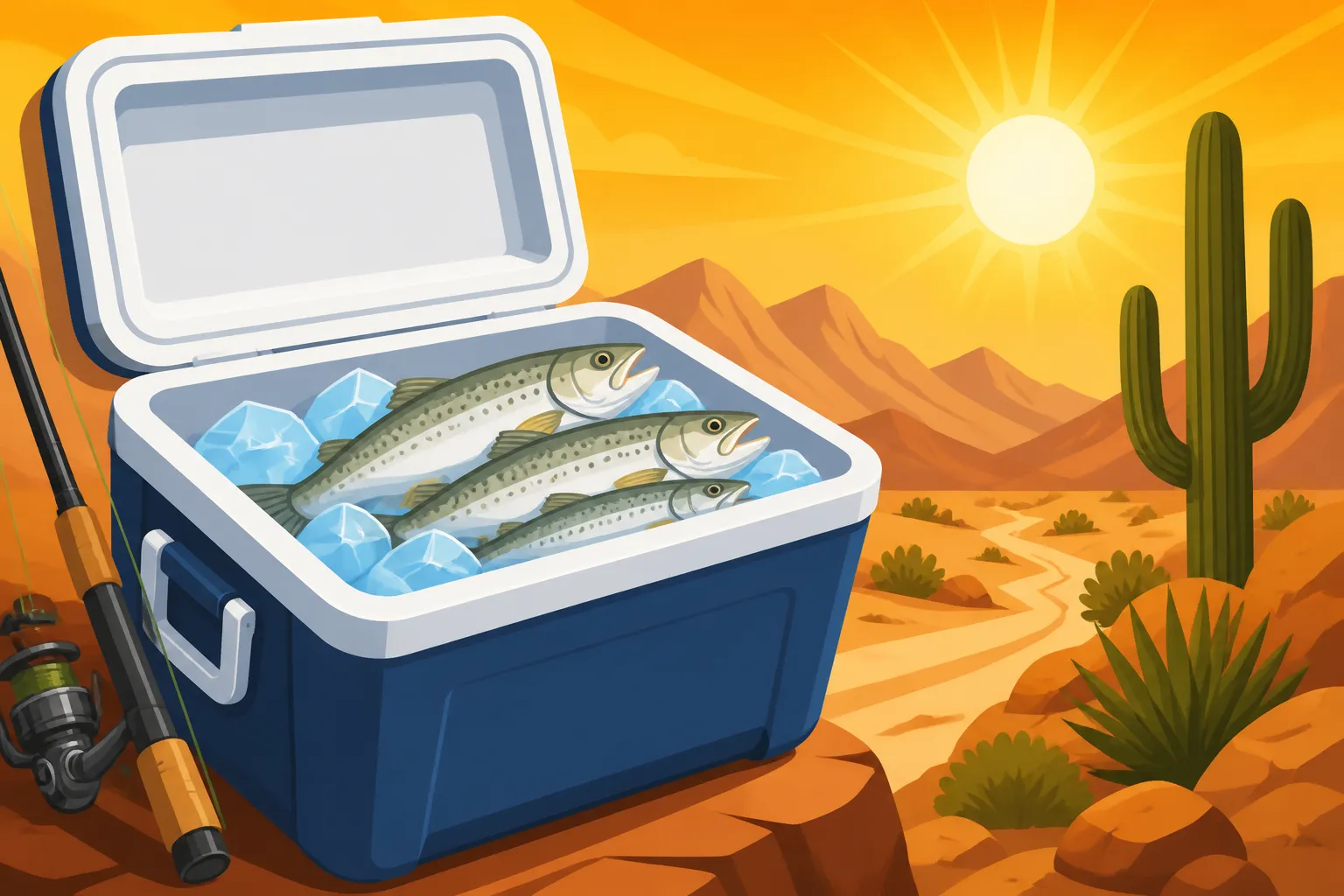
Once bled and gutted, your fish needs to go directly into an ice slurry – a mix of ice and a small amount of cold water – in your pre-chilled cooler. The goal is to get the fish's core temperature down as quickly as possible. Don't just lay fish on top of the ice. Submerging them in an icy bath provides maximum contact with the cold, cooling them much faster than simply being surrounded by cubes. Layer your fish with plenty of ice between each one, ensuring no fish is directly touching the bottom or sides of the cooler without ice buffering it.
It's tempting to put all your focus on the catch, but remember to keep your cooler out of direct sunlight throughout the day. If you’re fishing from a boat, try to place it in the shade of a bimini top or under a seat. If bank fishing, position it under a tree or even cover it with a wet towel (which will provide evaporative cooling). The less heat your cooler absorbs from the outside, the longer your ice will last and the fresher your fish will stay. Neglecting to shield your cooler is a common mistake that can compromise your entire effort.
Transport and Long-Term Storage
So, you've had a great day on the water, your fish are properly bled, gutted, and chilling in an ice bath. Now comes the journey home and preparing your catch for the dinner table or the freezer. The care doesn't stop once you leave the lake; proper handling during transport and at home is crucial for maintaining that pristine freshness.
Keeping It Cold on the Ride Home
During the drive back, especially if you've got a long haul from a spot like Lake Mead or Pyramid Lake under the blazing Nevada sun, you need to ensure your cooler continues to do its job. A good quality cooler, properly packed with plenty of ice, should be able to maintain optimal temperatures for hours. However, consider these extra precautions:
- Vehicle Placement: If possible, keep the cooler inside the air-conditioned cabin of your vehicle, not in the back of an uncovered truck bed where it will be exposed to direct sunlight and exhaust heat. If it must be in a truck bed, cover it with a reflective tarp or blanket to shield it from the sun.
- Drainage: While you want your fish submerged in an ice slurry, don't let the cooler become a swimming pool of melted water. A little bit of cold water is good, but too much warm meltwater can actually raise the temperature. Drain off excess water periodically and add fresh ice if needed, especially on very long trips. Many modern coolers from brands like Yeti or Orca have convenient drain plugs for this purpose.
Once you arrive home, move your fish indoors as quickly as possible. Don't leave the cooler sitting in a hot garage while you unpack other gear. Bring it directly into a cool environment to begin processing your fish.
Processing Your Catch for Lasting Freshness
The moment your fish hits the kitchen, it's time to get to work. Speed and cleanliness are key here.
- Filleting and Rinsing: Carefully fillet your fish, removing all skin and bones if that's your preference. Rinse the fillets thoroughly under cold running water to remove any scales, blood, or residue.
- Drying: This step is often overlooked but is incredibly important for long-term storage, especially freezing. Pat the fillets completely dry with paper towels. Excess moisture leads to freezer burn and a degradation of quality.
- Packaging:
- Short-Term (1-2 days): Place the dried fillets in zip-top bags, removing as much air as possible, then store them in the coldest part of your refrigerator.
- Long-Term (Freezing): For freezing, vacuum sealing is the absolute gold standard. A good vacuum sealer will remove all air, preventing freezer burn and keeping your fish fresh for months. You can find reliable vacuum sealers and bags on Amazon or at any major sporting goods store. If you don't have a vacuum sealer, wrap individual fillets tightly in plastic wrap, then aluminum foil, and finally place them in heavy-duty freezer bags, again, removing as much air as possible before sealing. Label everything with the date and fish type.
| Method | Pros | Cons | Best Use |
|---|---|---|---|
| Ice Slurry | Rapid cooling, effective for short-term | Needs frequent ice replenishment, can get messy | Immediate on-water cooling, short transport |
| Bleeding/Gutting | Improves taste, reduces spoilage factors | Messy, requires immediate action | Essential for all kept fish |
| Vacuum Sealing | Prevents freezer burn, extended freshness | Requires specific equipment | Long-term freezing |
| Wet Towel (Cooler) | Evaporative cooling, easy to apply | Limited effectiveness for extreme heat | Supplementary cooling, heat reflection for cooler |
| Block Ice | Slow melting, long-lasting cold | Takes up more space, slower initial cooling | Base layer in cooler for extended trips |
| Cubed Ice | Fills voids, maximizes contact for rapid cooling | Melts faster than block ice | Surrounding fish in cooler, initial rapid cooling |
Common Pitfalls to Avoid in the Nevada Heat
Even with the best intentions, it's easy to make mistakes when trying to preserve your catch in the relentless Nevada sun. Knowing what not to do is just as important as knowing what to do. Steering clear of these common pitfalls will significantly increase your success rate.
Ignoring Water Temperature and Air Exposure
Many anglers, especially when bank fishing or using a stringer, will leave their fish in the water they caught it from. While this might seem intuitive, if the lake or river water is warm (which it very often is in Nevada during summer), you're not cooling the fish; you're simply keeping it at the ambient warm temperature, or even worse, allowing it to slowly "cook." Bacteria thrive in warmer temperatures. A stringer is only a good option for very short periods in cold water, or if you're actively moving to deeper, cooler water. In most Nevada fishing scenarios, especially in shallower areas of Lake Mead Nevada Fishing Guide or Lake Mohave Nevada Fishing Guide during summer, the water is too warm for this to be an effective long-term cooling method.
Similarly, simply tossing your fish onto a boat deck or shore and letting it bake in the open air is a recipe for disaster. Even if it's only for a few minutes while you take a photo, direct sun exposure on a hot day can rapidly degrade the fish. The moment a fish is out of the water, if you intend to keep it, it needs to be processed and on ice. This quick transition is non-negotiable for quality.
Overlooking Cooler Capacity and Ice Management
It's exciting when the fish are biting, and you might find your cooler filling up faster than expected. However, resist the urge to cram your cooler full of fish without adequate ice. An overstuffed cooler leads to poor airflow and insufficient contact with the ice, creating warm pockets where bacteria can flourish. It's better to limit your catch or have a secondary cooler ready to go if you anticipate a banner day.
Another frequent mistake is neglecting to monitor your ice throughout the day. Ice melts, especially in the desert. If you open your cooler and find it's mostly water with a few sad ice cubes floating around, you're losing the battle. Regularly check the ice level, drain off excess water (leaving a small amount for the slurry), and be prepared to add more ice if your trip is extended. This might mean bringing an extra bag of ice in a separate, insulated bag or knowing where you can buy more if you’re fishing near a marina or store. Investing in a Best Cooler for Keeping Fish on Hot Days with good insulation helps, but even the best coolers need proper management.
Neglecting Cleanliness and Proper Handling
From the moment you touch a fish you intend to keep, cleanliness should be a priority. Using dirty hands, a grimy knife, or placing fish in a cooler that hasn't been thoroughly cleaned from a previous trip can introduce bacteria and accelerate spoilage. Always start with a clean cooler and clean tools. Bring a small bottle of soap and a brush for a quick scrub-down after each trip.
Additionally, handling fish roughly can bruise the meat, leading to quicker spoilage and an unappealing texture. Handle your catch gently, especially when bleeding, gutting, and placing it into the cooler. The goal is to minimize stress and physical damage to the flesh. A pair of fish grippers can help you handle slippery fish without squeezing them too hard. Even seemingly small details like these contribute to the overall quality and longevity of your catch. Think of it this way: your catch deserves the same care you'd give to any fresh meat you buy from the store.
Disclaimer
This article is for general informational purposes only and does not constitute professional advice. Laws, prices and regulations vary by location and change over time. Consult a qualified professional for guidance on your specific situation.