Best cooler size for a full day of fishing
There's nothing quite like reeling in a fantastic catch after a long, rewarding day out on a Nevada lake or river. But the joy can quickly turn to frustration if you don't have a reliable way to keep your fish fresh and your provisions cold under the desert sun. Many anglers have faced the disheartening reality of a cooler that's too small, too flimsy, or simply not up to the task, leading to spoiled food or, even worse, perfectly good fish wasted. This guide is here to help you navigate the often-overlooked but crucial decision of choosing the best cooler size for a full day of fishing in Nevada, ensuring your hard-earned catch makes it home in prime condition.
Why Cooler Size Matters More Than You Think in Nevada's Climate
When you're out fishing in Nevada, whether it's the vast expanse of Lake Mead or a high mountain reservoir, the elements are always a factor. The dry heat, even in cooler months, can be deceptive, and the sun's intensity demands a cooler that's prepared for battle. It's not just about fitting your fish; it's about preserving quality, managing your supplies, and ultimately enhancing your entire angling experience.
Battling the Desert Heat: Keeping Your Catch Fresh
Nevada's climate is notoriously arid and often hot, which poses a significant challenge for keeping anything cold, let alone freshly caught fish. Imagine spending hours battling a trophy striped bass at Lake Mohave, finally landing it, only to realize your cooler is too small to fit it properly, or doesn't have enough ice to keep it chilled for the ride home. Bacterial growth doesn't wait for cooler temperatures; it starts quickly, especially in the warm environment of a boat deck or a sunny shoreline.
A cooler that is adequately sized allows for a proper ice-to-contents ratio, which is absolutely critical here. Without enough ice, even the best insulated cooler will struggle. For a full day of fishing, especially if you're out from sunup to sundown, you're not just fighting the ambient air temperature, but also the heat radiating off the water and any surfaces in your boat or vehicle. The right-sized cooler helps create a stable, cold environment that drastically slows spoilage, ensuring your fish remains firm, fresh, and delicious, ready for the dinner table. This peace of mind is priceless when you've invested time and effort into your fishing trip.
Maximizing Space: Gear, Food, and Your Prized Catch
It's a common dilemma: you're packing for a full day, and suddenly the cooler feels like a black hole that swallows everything but doesn't have enough room for what truly matters. Besides your potential limit of fish, you've got to account for your lunch, snacks, drinks for hydration (essential in Nevada!), maybe some extra bait, and any other perishables. If your cooler is too small, you end up making compromises. Do you bring fewer drinks and risk dehydration? Do you skimp on bait and limit your options? Or do you stack your fish on top of your sandwiches, hoping for the best?
A properly sized cooler eliminates this juggling act. It provides dedicated space, allowing you to organize your provisions effectively. Many anglers even opt for two coolers for a full day: a smaller one for drinks and lunch that gets opened frequently, and a larger, primary cooler dedicated solely to ice and fish. This approach significantly extends the life of the ice in your main cooler, as it's not constantly exposed to warm air. Thinking ahead about what you'll realistically bring and what you hope to catch will guide you to a size that prevents unnecessary clutter and ensures everything has its place, including that potential record-breaking fish.
The Hauling Factor: Portability vs. Capacity
Choosing a cooler size isn't just about what fits; it's also about what you can realistically transport. A massive cooler might seem like a great idea for maximum capacity, but a 100-quart cooler packed full of ice and fish can weigh well over a hundred pounds. If you're bank fishing along the Truckee River or looking for a spot at a smaller urban pond, lugging such a behemoth across uneven terrain is simply impractical. Nevada Urban Pond Fishing Rules often mean easy access, but even then, a lightweight setup can be a blessing.
Consider your primary mode of fishing. If you're on a boat with plenty of deck space and a strong back (or a buddy with one!), then a larger, heavier cooler might be perfectly fine. However, if you're a solo angler, a kayak fisher, or someone who frequently moves locations on shore, portability becomes a huge factor. Smaller, more manageable coolers (think 25-45 quarts) often come with wheels or comfortable shoulder straps, making them much easier to get from your vehicle to your chosen fishing spot. You need to strike a balance where the capacity meets your needs without creating an unnecessary physical burden that detracts from the enjoyment of your day.
Understanding Cooler Capacity: What Do the Numbers Really Mean?
Cooler manufacturers throw around numbers like quarts, cans, and even specific ice retention days. But how does that translate to your fishing trip, specifically when you're trying to keep a stringer of crappie or a couple of chunky largemouth bass fresh? Deciphering these figures is key to making an informed decision.
Quarts, Cans, and the "Real World" Fish Count
Most coolers are advertised with their capacity in quarts. For example, a "45-quart cooler" is a common size. Some brands also give a "can capacity" (e.g., "holds 40 cans"). While these numbers are helpful starting points, they don't always directly correlate to how many fish you can fit. A can is a uniform shape; a fish is anything but!
Think of it this way:
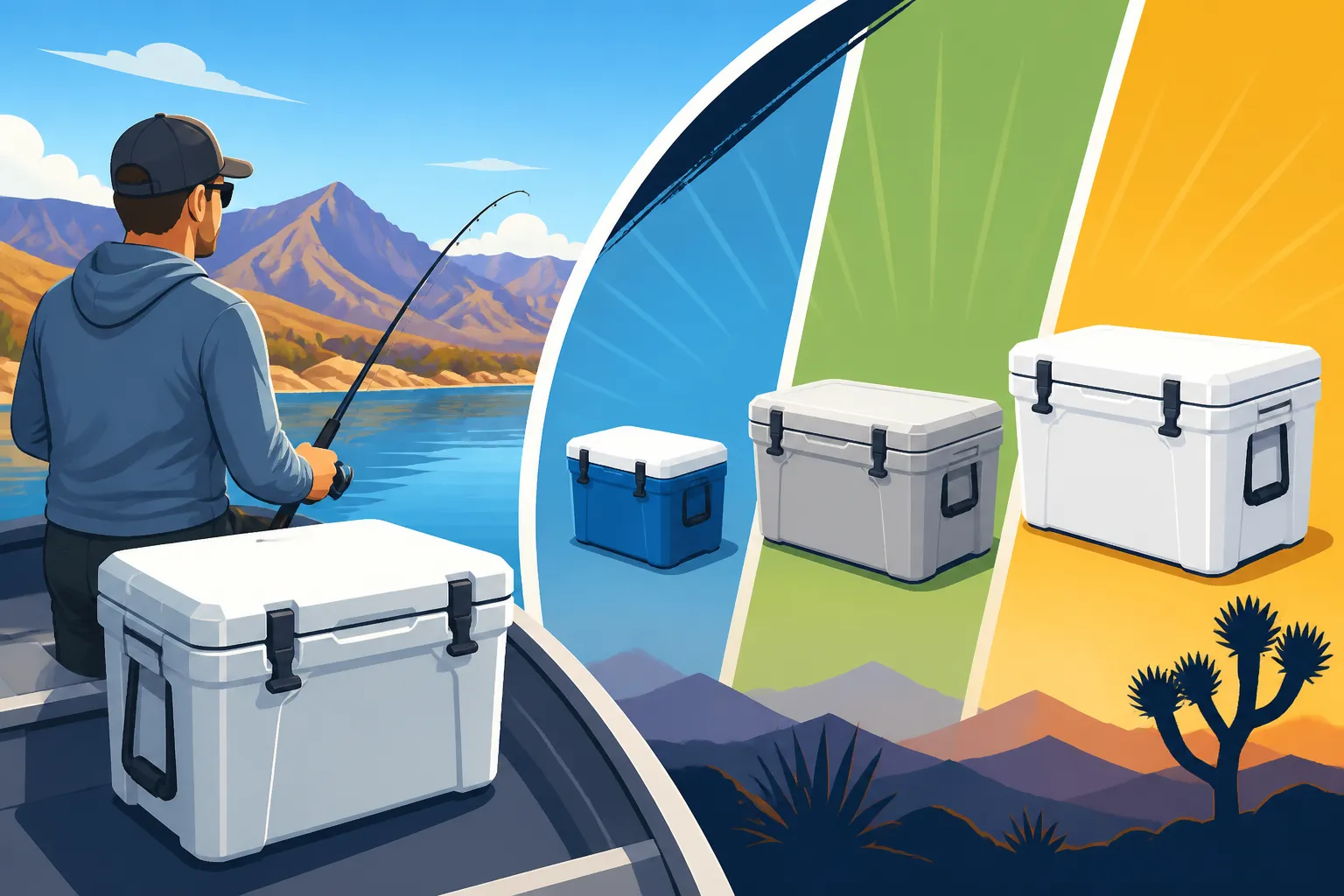
- Small coolers (20-30 quarts): These are often perfect for a solo angler or a short trip, holding a handful of panfish or a couple of good-sized trout. Nevada Trout Daily Limit Rules can help you visualize this. It's also great for keeping bait fresh or drinks separate.
- Medium coolers (35-50 quarts): This range is a sweet spot for many full-day trips for 1-2 people. You could reasonably expect to fit a limit of trout, several smallmouth or largemouth bass, or maybe one modest striped bass along with enough ice. If you're targeting species with a Nevada Statewide Bag Limits Explained that allows for a decent take, this size often works well.
- Large coolers (60-80 quarts): For family outings, multi-person trips, or when you're specifically targeting larger species like the bigger Lahontan cutthroat trout at Pyramid Lake or a healthy limit of Lake Mead stripers, you'll want this kind of space. This size allows for multiple good-sized fish and ample ice.
- Extra-large coolers (100+ quarts): These are for serious expeditions, perhaps a guided trip for trophy Mackinaw trout at Lake Tahoe, or if you plan to catch a substantial amount of fish for multiple families. They are heavy when full but offer unbeatable capacity. How to Catch Mackinaw Trout at Lake Tahoe is a great resource if you're considering targeting these giants.
When you're trying to picture how many fish will fit, always err on the side of caution. Fish are bulky, and you need to ensure they can lay relatively flat to maximize contact with ice. A good rule of thumb is to assume about 1 pound of fish per quart of cooler capacity, after accounting for ice.
Ice-to-Contents Ratio: The Unsung Hero of Cooler Performance
This is perhaps the most critical, yet often overlooked, aspect of cooler performance, especially in Nevada's unforgiving climate. It's not just about how much ice fits in your cooler; it's about the ratio of ice to your actual contents (fish, drinks, food). For optimal ice retention and to keep your catch truly cold, you generally want a 2:1 ice-to-contents ratio by volume. That means two-thirds of your cooler should be ice, and one-third should be your fish and other items.
If your cooler is too large for the amount of fish you're realistically going to catch, you might end up with too much air space, which makes it harder for the ice to keep the contents cold. Conversely, a cooler that's too small forces you to cram everything in with insufficient ice, leading to rapid melting and potential spoilage. Pre-chilling your cooler the night before with a sacrificial bag of ice also dramatically improves its performance on a hot day. Just dump that ice out right before you load up with fresh ice and your catch. Many anglers underestimate how much initial thermal energy a warm cooler can absorb, melting ice quickly before it even starts its real job.
Different Cooler Types for Different Needs
The material and construction of a cooler also play a huge role in its usable space and ice retention, which directly impacts what size you need for a full day.
- Rotomolded Coolers: These are the heavy-duty champions, often seen from brands like Yeti, RTIC, and some high-end options you might find at Bass Pro Shops. Their thick, insulated walls and seamless construction offer superior ice retention, often lasting for several days. This means for a "full day" in Nevada, they'll usually perform exceptionally well, potentially letting you use a slightly smaller size than a conventional cooler while still achieving excellent cold holding. The downside is they are often heavier and more expensive.
- Hard-Sided Coolers (Traditional): These are your everyday coolers, made from molded plastic with foam insulation. They are lighter and more affordable than rotomolded options. For a full day of fishing, especially if pre-chilled and packed with ample ice, they can do a respectable job. However, their ice retention usually won't match a rotomolded cooler, meaning you might need a slightly larger size to accommodate more ice for the same duration.
- Soft-Sided Coolers: Perfect for lightweight, portable needs, often for drinks or lunch. While some larger soft coolers offer decent insulation, they are generally not ideal for storing a large amount of fish for an entire hot Nevada day. Their primary advantage is portability and ease of storage, making them a great secondary cooler for personal items.
Understanding these differences helps you decide not just on size, but also on the overall strategy for keeping your catch in prime condition. For a serious full day of fishing in Nevada, a good quality hard-sided or rotomolded cooler is almost always the way to go for your main catch.
Matching Your Cooler to Your Nevada Fishing Adventure
Now that we've covered the basics, let's get specific. What kind of fishing trip are you planning? Your target species, the number of anglers, and the duration of your outing all influence the ideal cooler size.
Solo Angler or Small Group Day Trips
For those quiet days when it's just you, or maybe you and one friend, a smaller to medium-sized cooler is usually sufficient. If you're targeting trout in a stocked urban pond or a smaller mountain lake, or perhaps casting for a few bass at a less pressured spot, you're likely aiming for a daily limit that won't overwhelm a 35- to 45-quart cooler.
Imagine you're spending a morning at Floyd Lamb Park, hoping for a few stocked rainbow trout. Is Floyd Lamb Park stocked with trout? With a daily limit often around three fish, a 25-quart cooler could easily handle your catch, plus a few drinks and a sandwich. If you're venturing to a larger, more productive spot like the South Fork State Recreation Area for a full day of trout fishing, you might aim for a higher limit or larger fish. In that scenario, stepping up to a 45-quart cooler gives you plenty of space for ice, a full limit of trout, and all your essentials without feeling like you're hauling a refrigerator. Remember, it's always better to have a little extra space than not enough.
Family Outings and Multi-Species Days
When you're bringing the whole crew, or you're planning a full day to hit different spots and target various species, your cooler needs escalate quickly. More people mean more drinks, more snacks, and potentially a lot more fish. This is where a 50- to 70-quart cooler often shines, providing that crucial extra capacity.
Think of a full day on Lake Mead. Maybe you're starting early, trolling for striped bass, then heading into a cove to cast for largemouth. Lake Mead Nevada Fishing Guide offers a huge variety of species, and a family might want to bring home a diverse catch. A 65-quart cooler would allow you to keep drinks and sandwiches separate in one corner, while still having ample space for several decent stripers and a couple of bass, all surrounded by plenty of ice to last through the heat of the afternoon. This size also offers enough flexibility if one family member has an unexpectedly productive day and lands a few more fish than anticipated. Having a robust cooler allows everyone to enjoy the experience without worrying about compromised provisions or catch quality.
Big Game Hunters: Trophy Bass, Stripers, or Mackinaw
For the dedicated angler pursuing the giants of Nevada's waters, cooler capacity isn't just a convenience; it's a necessity. If you're heading to Pyramid Lake with the hopes of landing a massive Lahontan cutthroat trout, or setting out on Lake Tahoe to jig for deepwater Mackinaw, you know these fish can be substantial. Pyramid Lake Nevada Fishing Guide highlights the potential for truly enormous trout.
For these kinds of trips, you're likely looking at an 80-quart cooler or even larger. A 30-pound striped bass from Lake Mead, for instance, takes up a significant amount of space. A 100-quart cooler might seem excessive, but when you consider a couple of these big fish, plus enough ice to surround them for a full day, you'll be glad for the room. You can find excellent heavy-duty coolers in these sizes at specialty stores like Bass Pro Shops, or by browsing online retailers like Amazon, specifically designed for extreme cold retention and large capacities. These aren't just for keeping fish; they're for preserving a trophy, ensuring that its quality remains impeccable until you can process it.
The "Just-In-Case" Cooler: Planning for Success
Sometimes, even with all the planning, Mother Nature (and the fish!) can surprise you. You might hit a hot bite you didn't expect, or a planned short trip turns into an all-day epic because the fishing is just too good to leave. This is where the concept of the "just-in-case" cooler comes in handy.
Many experienced anglers carry two coolers: a smaller 20-25 quart cooler for their immediate needs—drinks, lunch, snacks—which they open frequently. This keeps the main, larger cooler (say, 50-70 quarts) packed with ice and reserved exclusively for fish. Since the main cooler isn't being opened repeatedly, its ice retention is drastically improved. This strategy is particularly effective on long, hot days. Alternatively, simply choosing a cooler that's slightly larger than your minimum estimated need provides a comfortable buffer for unexpected success. It's an investment in peace of mind, knowing that if you hit a jackpot, you're prepared to handle it responsibly and bring home every last fillet. After all, what's more frustrating than a great day of fishing ending with nowhere to put your catch?
To help you visualize, here's a table considering average fish sizes you might encounter in Nevada:
| Cooler Size (Quarts) | Estimated Can Capacity | Small Trout (1-2 lbs) | Medium Bass (2-5 lbs) | Large Striper/LCT (5-15+ lbs) | Best for |
|---|---|---|---|---|---|
| 25-30 | 20-30 cans | 5-8 fish | 2-3 fish | 1 (if small) | Solo angler, short trips, snacks/drinks |
| 35-45 | 30-45 cans | 8-15 fish | 3-5 fish | 1-2 fish | 1-2 anglers, full day, mixed bag |
| 50-70 | 45-65 cans | 15-25 fish | 5-8 fish | 2-3 fish | Small group/family, multi-species |
| 80-100+ | 70+ cans | 25+ fish | 8-12 fish | 3-5+ fish | Large group, trophy hunting, long trips |
Note: Fish capacity is approximate and assumes optimal ice-to-fish ratio. Always prioritize ice.
Disclaimer
This article is for general informational purposes only and does not constitute professional advice. Laws, prices and regulations vary by location and change over time. Consult a qualified professional for guidance on your specific situation.