Do you need a whistle or horn on a boat in Nevada?
One of the most common questions I hear from fellow anglers, especially those new to boating on Nevada's vast and beautiful waters, is about what seemingly minor pieces of safety gear are truly mandatory. It can feel overwhelming trying to remember every single item, and sometimes the rules for a simple sound-producing device like a whistle or horn can seem confusingly specific. This guide is here to cut through the noise, clarify exactly when and why you need a whistle or horn on your boat in Nevada, and help you understand the crucial role these devices play in ensuring your safety and compliance on the water.
The Indisputable Need for Sound Signals in Nevada
Let's get right to it: yes, you absolutely need a sound-producing device on your boat in Nevada. This isn't just a recommendation; it's a non-negotiable legal requirement, stemming from both federal regulations and Nevada state law. Failing to have one could lead to a citation, but more importantly, it could put you and your passengers in a dangerous situation out on the water. These aren't merely accessories; they're vital communication tools that can prevent accidents and signal distress.
Federal and State Regulations on Sound Devices
When you're out on the water, whether it's the vast expanse of Lake Mead or a smaller, calmer reservoir, you're operating under a layered set of rules. The U.S. Coast Guard (USCG) establishes federal regulations that apply to all navigable waters, which includes most of Nevada's larger lakes and rivers. Nevada's state laws often mirror or supplement these federal requirements. For recreational boats, the requirement for a sound-producing device is consistent across both levels of governance.
The basic premise is that every boat needs a way to make an efficient sound signal. For smaller vessels, this might mean a simple mouth-blown whistle. For larger boats, it generally means a horn or other mechanical device. The specific type and capability of the device often depend on the length of your vessel, but the underlying need to communicate audibly is universal. These regulations are designed to standardize communication on the water, much like turn signals and horns in a car, to enhance safety for everyone sharing the waterways.
Different Boats, Different Rules: Whistles vs. Horns
It's not a one-size-fits-all situation when it comes to sound-producing devices. The type of device required typically correlates with the size of your boat. This distinction often trips up new boaters, who might assume any noise-maker will do.
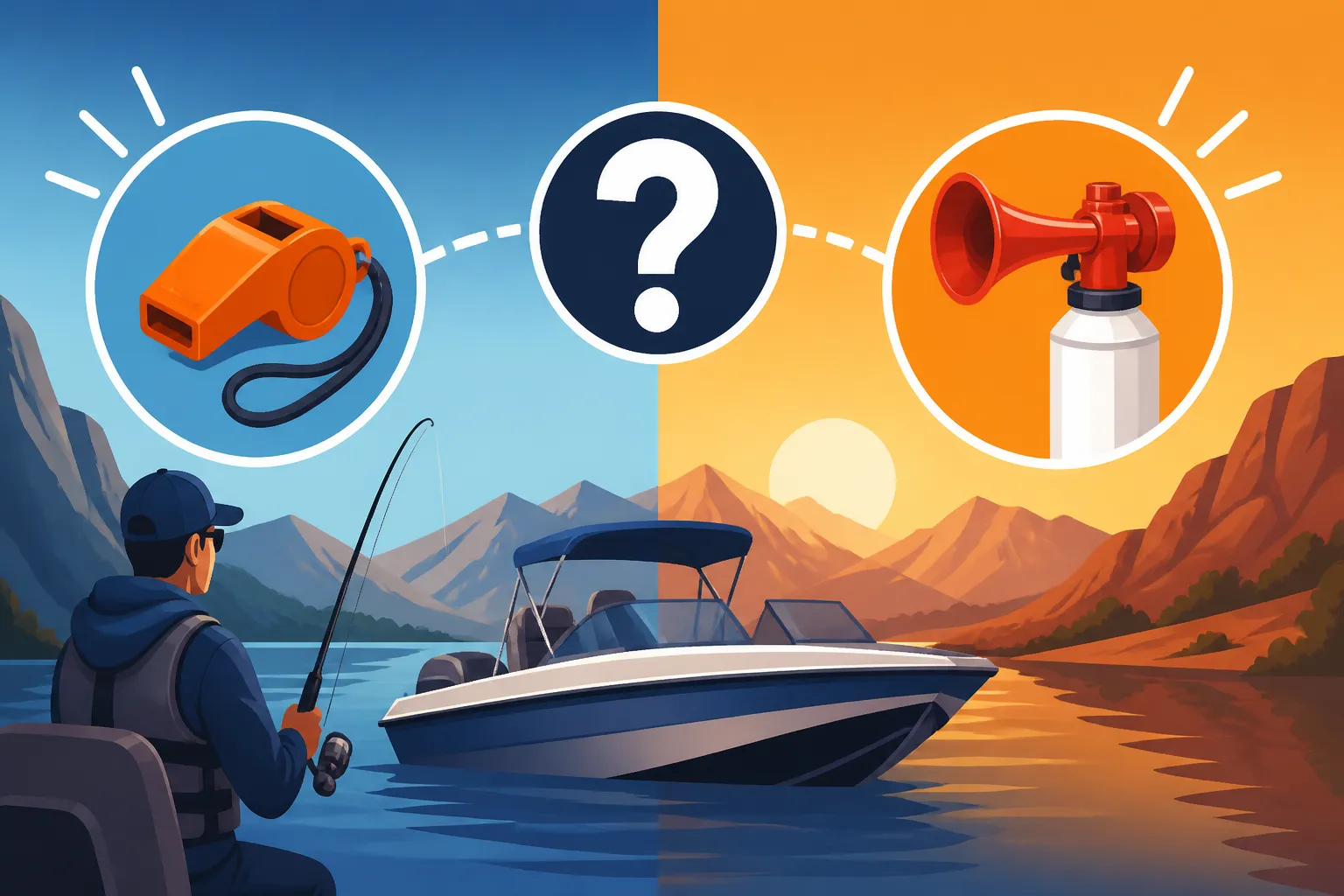
- For boats under 16 feet (less than 4.8 meters): A simple mouth-blown whistle is generally sufficient. It needs to be capable of producing a blast of four to six seconds and be heard for at least half a nautical mile. Think about those compact, bright orange whistles you might attach to a life jacket; many of those fit the bill. They're inexpensive, easy to carry, and don't rely on batteries or external power. However, always ensure it's loud enough to cut through wind and engine noise.
- For boats 16 feet to less than 40 feet (4.8 to less than 12 meters): You'll need a "whistle" that can produce a two-second blast and be heard for at least one nautical mile. This usually means a manual air horn (the kind with a canister you press) or a permanently installed mechanical or electric horn. A small, simple mouth-blown whistle usually won't cut it for this size range, as it typically doesn't have the necessary range or volume. The key is that it must be immediately available for use.
- For boats 40 feet and over (12 meters and above): The requirements become even more stringent, often demanding a whistle (horn) that can produce a sound signal of 4-6 seconds, audible for at least one nautical mile, and a bell. While most recreational anglers aren't piloting vessels of this size, it's good to understand the progression of requirements.
The crucial takeaway is to know your boat's length and equip it with the appropriate, USCG-compliant sound-producing device. A quick check of your boat's registration will confirm its length, then you can match it to the regulatory requirements. For a comprehensive overview of required safety equipment, you might find our guide on Nevada required safety equipment checklist for boats incredibly useful.
Understanding Your Options for Sound Signals
Once you know what kind of sound device you need based on your boat's length, the next step is to choose the right one and ensure it's always ready for action. There's a range of options available, each with its own advantages and considerations.
Manual vs. Powered Devices
The world of sound signals for boats essentially breaks down into two main categories: manual and powered. Knowing the difference can help you make an informed choice that suits your fishing style and vessel.
- Manual Whistles: These are your most basic and often your cheapest option. For boats under 16 feet, a simple plastic or metal mouth-blown whistle is perfectly acceptable. The beauty of these is their reliability—no batteries to die, no compressed air to run out. They are fantastic as backups even for larger boats. You can often pick up multi-packs at a place like Amazon for a low cost, or find robust, marine-specific options at Bass Pro Shops.
- Manual Air Horns: For boats 16 feet and up, a canister air horn is a popular choice. It uses compressed air to produce a loud, distinctive blast. These are effective and relatively inexpensive, but they do have a finite supply of air. You'll need to keep spare canisters on board, or monitor usage to ensure you don't run out when you need it most. They're great for quick, powerful signals.
- Electric or Mechanical Horns: These are typically permanently installed on larger boats (16 feet and up) and are powered by the boat's electrical system. They usually offer a consistent, loud signal with the push of a button. The main considerations here are ensuring your boat's electrical system is robust enough to support it, and regular maintenance to prevent corrosion or electrical failures, especially in a marine environment. They are generally the most reliable for consistent, long-term use.
No matter which type you choose, make sure it's designated as "USCG compliant" or "meets USCG requirements" when you purchase it. This ensures it meets the minimum decibel level and audibility range.
| Boat Length Category | Minimum Sound Device Requirement | Common Examples | Power Source | Considerations |
|---|---|---|---|---|
| Less than 16 feet | Whistle (mouth-blown or mechanical) audible for 0.5 nautical mile | Fox 40 whistle, plastic safety whistle | Manual | Reliable, no power needed, easy to store |
| 16 feet to less than 40 feet | Whistle (mechanical or electric) audible for 1 nautical mile | Air horn (canister), electric horn (installed) | Manual/Electric | Air horns need refills; electric horns need power/install |
| 40 feet and over | Whistle (mechanical or electric) audible for 1 nautical mile + Bell | Electric horn, installed air horn, marine bell | Electric | Professional grade, higher cost, requires installation |
Placement and Accessibility
Having the right sound device is one thing; having it ready when you need it is another. I've seen countless anglers frantically searching through tackle boxes or under seats when visibility suddenly drops, only to find their whistle buried.
For a manual whistle, consider attaching it to your life jacket, or keeping it on a lanyard around your neck or somewhere immediately accessible on the helm. If you're using an air horn, make sure it's stored in a visible, easily reachable spot that's protected from direct sunlight (which can affect the canister) and won't roll around. Many boaters keep them in a dedicated console compartment or securely mounted near the helm. For installed electric horns, regularly check the wiring and ensure the button is free from obstruction.
Remember, emergencies rarely give you time to dig around. The best place for your sound device is wherever you can grab it and use it in a matter of seconds. This principle extends to all your Essential Safety Gear for Boating on Lake Mead or any other body of water you're navigating.
Beyond the Whistle: Why Sound Signals Matter
It’s easy to think of a whistle or horn as just another item on a compliance checklist. However, their true value becomes apparent in critical situations. These simple devices are incredibly powerful tools for communication and safety, often serving as the only way to convey information or signal distress across open water.
Signaling in Emergencies
Imagine a sudden, unexpected weather change on Lake Tahoe. The clear skies give way to a dense fog that rolls in quickly, reducing visibility to mere boat lengths. This isn't just an inconvenience; it's a genuine emergency for boaters. In such conditions, your sound-producing device becomes your eyes and voice on the water.
You might use short, powerful blasts to warn other vessels of your presence, especially if you're anchored or experiencing mechanical failure. A specific series of blasts can signal distress, alerting nearby boats or rescue personnel that you are in trouble. For instance, a continuous series of blasts (more than 5 short blasts) is a universally recognized distress signal. Without that whistle or horn, you could be silently drifting, unseen and unheard, desperately hoping someone spots you. This is why understanding Nevada Boater Education Card Requirement is so important, as it covers these vital safety protocols.
Preventing Collisions
Boating, especially on busy lakes like Lake Mohave, requires constant vigilance. However, even with the keenest eye, blind spots exist, and other boaters might not always be as attentive as they should be. This is where your sound signals come in handy for collision avoidance.
Navigational rules dictate specific sound signals to indicate your intentions. For example, a single short blast might mean "I intend to leave you on my port side," while two short blasts indicate "I intend to leave you on my starboard side." These signals are crucial when approaching bends in rivers, exiting a tight cove, or when maneuvering in crowded areas. They provide an audible warning and declare your planned actions, helping to prevent misunderstandings that could lead to an accident. Think of it as honking your car horn to alert a distracted driver—but with specific, codified meanings on the water.
Navigational Rules and Their Sound Interpretations
The International Regulations for Preventing Collisions at Sea (COLREGS), which Nevada largely adopts, outlines a detailed system of sound signals for various situations. Knowing these isn't just about avoiding a fine; it's about navigating safely and predictably.
- When making way: A prolonged blast every two minutes in restricted visibility.
- When stopped (not making way) in restricted visibility: Two prolonged blasts every two minutes.
- Overtaking another vessel: One short blast to pass on the right, two short blasts to pass on the left.
- Danger signal: Five or more short, rapid blasts. This is the "get out of the way" or "I don't understand your intentions" signal.
These are just a few examples, but they highlight how critical a functional and accessible sound device is for safe boating. It’s about being able to communicate clearly and decisively, even when visual cues are limited. For anglers who spend a lot of time on the water, especially in variable conditions, these signals become an extension of their navigational skills.
Consequences of Non-Compliance and Best Practices
Nobody wants to deal with a fine, but beyond the financial penalty, not having the proper safety gear on board, including a sound-producing device, carries real risks. Understanding the enforcement side and adopting good habits can save you a lot of hassle and keep you safer.
Fines and Enforcement
Nevada Department of Wildlife (NDOW) game wardens, as well as other law enforcement agencies like the National Park Service on federal waters, regularly patrol the state's lakes and rivers. Part of their duty is to conduct safety checks, and this includes verifying that you have all the required safety equipment, such as a USCG-approved sound-producing device.
If you are stopped and found to be in violation, you could face a citation and a fine. While I can't give specific figures, penalties for boating infractions can range from a warning to a substantial monetary fine, and repeated offenses can lead to more serious consequences. The wardens aren't just looking to write tickets; they are ensuring compliance with safety regulations designed to protect everyone on the water. It’s an easy thing to check and an easy thing to fix before you even launch. Getting your Nevada Fishing License Guide and reviewing the full regulations will always serve you well.
Pre-Trip Checks and Maintenance
Ensuring your sound device works isn't a "set it and forget it" task. Just like checking your boat's engine or your life jackets, your whistle or horn needs a quick check before each outing.
- Manual Whistles: Give it a good blast to make sure it's loud and clear. Check for any blockages or cracks.
- Air Horns: Test it! Make sure it produces a strong, consistent blast. Always carry a spare canister, especially if you plan to be out for an extended period or in areas prone to fog. You can often find multi-packs of air horn refills at outdoor retailers or online from Amazon.
- Electric Horns: Press the button and listen. If it sounds weak, intermittent, or doesn't work at all, check the wiring for corrosion, loose connections, or blown fuses. A good maintenance practice is to periodically clean the electrical contacts and protect them with dielectric grease to prevent issues from the harsh marine environment.
Incorporating these quick checks into your routine will ensure that your sound device is ready when you need it most. It's a small habit that can make a big difference in an emergency. Always remember to check your full Nevada Fishing Regulations Explained before heading out, as regulations can have nuances specific to certain waters.
Conclusion
So, to definitively answer the question: yes, you do need a whistle or horn on your boat in Nevada. It's a fundamental piece of safety equipment, required by law for all vessels, with specific types mandated depending on your boat's length. More than just a legal obligation, these sound-producing devices are critical tools for communicating your intentions, signaling distress, and ultimately, keeping yourself and others safe on Nevada's beautiful but sometimes unpredictable waters.
Make it a habit to check your sound device, along with all your other safety gear, before every trip. It's a small investment of time and effort that could pay off immensely when you least expect it. Happy and safe boating, fellow anglers!
Disclaimer
This article is for general informational purposes only and does not constitute professional advice. Laws, prices and regulations vary by location and change over time. Consult a qualified professional for guidance on your specific situation.