Best electric trolling motor for calm cove fishing
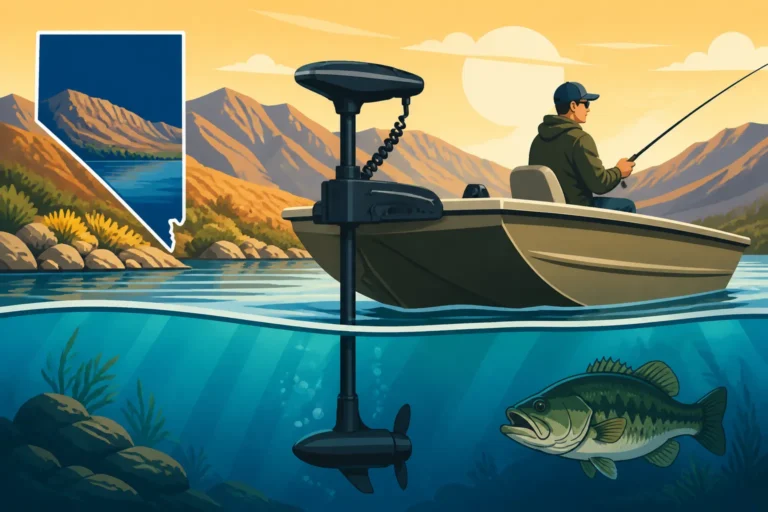
There's nothing quite like the serenity of a calm Nevada cove at dawn, the water glassy, reflecting the sunrise, and the promise of a big fish lurking just beneath the surface. But then you fire up your gas outboard, and suddenly that peaceful moment is shattered by noise and exhaust fumes. For those who cherish that quiet approach, trying to navigate silently with oars or a noisy engine is a constant battle. This guide is all about equipping you with the knowledge to select the best electric trolling motor, turning those frustrations into tranquil, effective fishing experiences in Nevada's most beautiful and sheltered waters.
Why an Electric Trolling Motor is Your Calm Cove Secret Weapon
When you're trying to sneak up on wary bass hiding in the submerged brush of Lake Mead or gently cruise the edges of a calm urban pond like the one at Sunset Park, an electric trolling motor isn't just a convenience; it's practically a necessity. These motors offer a level of control, quietness, and environmental consciousness that traditional gas outboards simply can't match, making them indispensable for specific fishing scenarios in Nevada.
Stealth and Maneuverability
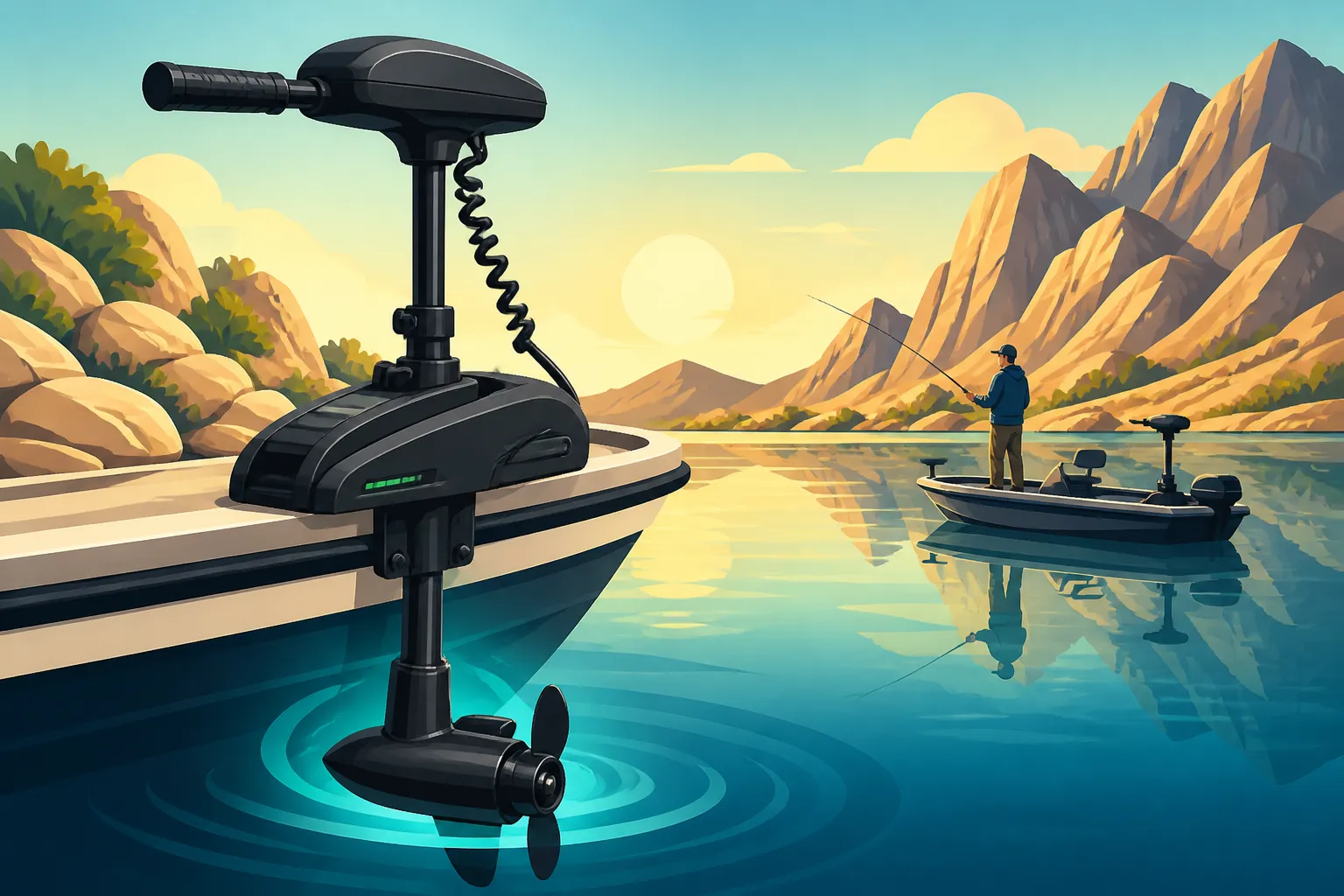
Imagine slowly gliding along a shoreline, barely making a ripple, your boat moving precisely where you want it to go with just a slight touch of a foot pedal or remote control. This is the magic of an electric trolling motor in a calm cove. Unlike gas engines that often require a deeper draft and create significant disturbance, trolling motors are designed for shallow water operation and whisper-quiet performance. That means you can approach those prime fishing spots, like a rock pile where smallmouth bass might be schooling or a shaded pocket where a largemouth is lurking, without spooking the fish before you even cast. The precision steering, often with 360-degree rotation, allows you to navigate tight corners, weave through submerged timber, and hold your position against a gentle breeze, giving you maximum control over your presentation. This stealth factor drastically increases your chances of success, especially when targeting fish that are sensitive to noise and vibration. It's about becoming part of the environment, not disturbing it.
Think about those moments when you've finally spotted a fish or a promising piece of structure, but the wind or current starts to push you away. With an electric trolling motor, a quick tap of the pedal or a button on your remote allows you to instantly correct your course, holding you in the "strike zone" for longer. This superior maneuverability is invaluable for techniques like pitching and flipping, where exact boat positioning is crucial. Without this silent helper, you'd be constantly adjusting, re-anchoring, or fighting the elements, losing precious fishing time and potentially alerting every fish in the vicinity.
Environmental Friendliness
Nevada's waterways, from the vast expanse of Lake Mead to the smaller, intimate urban ponds, are precious resources that we all want to protect. One of the significant advantages of electric trolling motors is their minimal environmental impact. Unlike gas engines that emit fumes and can potentially leak fuel or oil, electric motors run cleanly, producing zero emissions at the point of use. This is particularly important in sensitive ecosystems or smaller bodies of water where water quality is a primary concern. Many anglers appreciate knowing that their pursuit of a great catch isn't coming at the expense of the environment they cherish.
Beyond the lack of emissions, the quiet operation of these motors also contributes to a less disruptive environment for wildlife. Ducks, geese, and other waterfowl, as well as terrestrial animals coming to the water's edge, are far less likely to be disturbed by the silent hum of an electric motor compared to the roar of a gas engine. It allows for a more harmonious coexistence between anglers and nature, which is a big part of why many of us love to be out on the water in the first place. Plus, with increasing regulations concerning emissions and noise pollution in certain areas, an electric trolling motor future-proofs your fishing setup, ensuring you can access those tranquil coves for years to come.
Key Features to Look for in a Calm Cove Trolling Motor
Choosing the right electric trolling motor can feel a bit overwhelming with all the options out there. However, for calm cove fishing, certain features rise to the top as "must-haves" to ensure you get the best performance and enjoyment out out on the water. It's not just about raw power; it's about intelligent design and features that enhance your stealth and control.
Thrust and Battery Life
When you're talking about thrust, we're essentially discussing the pushing or pulling power of the motor, measured in pounds. For calm cove fishing, you might think you don't need much, but it's always better to have a little more than you think, especially if you plan to fish from a larger boat or if the wind decides to pick up unexpectedly. A good rule of thumb is at least 2 pounds of thrust for every 100 pounds of fully loaded boat weight. So, if your boat, gear, and passengers weigh 1,500 pounds, you're looking at a minimum of 30 pounds of thrust. However, for genuinely calm cove work, where precision and slow speeds are key, a motor in the 45-70 lb thrust range will offer plenty of power to maneuver effortlessly and hold your position. Brands like Minn Kota and MotorGuide offer excellent options across this spectrum.
Equally critical, if not more so, for extended calm cove sessions, is battery life. An electric trolling motor is only as good as the power source feeding it. You want a battery setup that can sustain your fishing trip without leaving you stranded or forcing you back to the dock prematurely. Deep cycle marine batteries are the standard here, designed to be discharged and recharged many times. The capacity of these batteries is measured in amp-hours (Ah). For a typical day of calm cove fishing, especially if you're frequently moving or using higher thrust settings, you'll want to aim for at least one good quality 100Ah deep cycle battery, or even two in parallel for longer outings or larger boats. Think about how long you realistically spend on the water and factor in occasional bursts of higher speed or fighting against a slight current. Many anglers learn the hard way that skimping on battery power can quickly turn a peaceful day into a stressful one. Investing in a reliable battery charger is also crucial for maintaining battery health and ensuring it's ready for your next adventure. You can find a lot of information on Best Battery for a trolling motor on long fishing days to help make your choice.
Mounting Options and Shaft Length
The way your trolling motor attaches to your boat and how far its propeller reaches into the water are critical considerations for calm cove fishing. There are generally two main mounting styles: bow mount and transom mount. For dedicated calm cove fishing, where precise steering and superior boat control are paramount, a bow-mount trolling motor is almost always the preferred choice. It pulls the boat through the water, much like pulling a wagon, offering far better maneuverability and control, especially when trying to navigate tight spaces or hold a specific line while casting. Transom mounts, while simpler and often cheaper, push the boat from the rear, which can make fine adjustments more challenging, especially in windy conditions.
Shaft length is another vital factor that often gets overlooked. If your shaft is too short, the propeller can come out of the water in choppy conditions or even during tight turns, causing the motor to cavitate and lose thrust. If it's too long, the motor can drag excessively in shallow water or make launching and retrieving more cumbersome. A good general rule for shaft length is to measure the distance from where the motor will be mounted to the waterline, then add 20 inches. For instance, if your mounting point is 15 inches above the waterline, you'd be looking for a shaft around 35 inches. However, for bass boats or those with a higher bow, you might need even longer. Consider your boat's freeboard and the types of water you typically fish. You want the propeller to be submerged by at least 12 inches under normal operating conditions. Don't be afraid to take a tape measure to your boat and do some calculations before you buy – it makes a huge difference in on-water performance.
Control and Advanced Features
The evolution of electric trolling motors has brought incredible advancements in control and integrated features. Gone are the days of simple tiller handles only. Today, you have options that vastly enhance your fishing experience. Foot pedal controls are popular, especially with bass anglers, as they allow for hands-free steering, leaving your hands free for casting and reeling. These are fantastic for maintaining constant boat control while actively fishing. Then there's the remote control option, which many anglers, particularly those on kayaks or smaller craft, find incredibly liberating. Imagine casting to a promising spot, and then, with a button press on a handheld remote or even a wrist-worn device, you can adjust your position without ever having to take your hands off your rod.
Beyond basic steering, many modern trolling motors come packed with advanced features that are game-changers for calm cove fishing. GPS-enabled features, often called "spot-lock" or "anchor mode," are revolutionary. With the press of a button, your motor uses GPS to maintain your boat's position, even in wind or current, acting like a virtual anchor. This is invaluable when you find a productive brush pile or a submerged hump and want to stay put without deploying a physical anchor. Other features like integrated sonar transducers, autopilot functions (to follow a set course), and even smartphone app control are becoming more common. While these advanced features might add to the cost, the convenience and efficiency they bring to your fishing can be well worth the investment. For instance, being able to tie your trolling motor directly into your fish finder system to follow contours or structure can drastically improve your success rate. For those looking to dive into kayak fishing, understanding these options can significantly enhance your experience, especially if you're looking into Kayak Fishing Gear for Nevada.
Choosing the Right Motor for Your Boat and Fishing Style
The "best" electric trolling motor isn't a one-size-fits-all answer; it's the one that perfectly matches your boat, your typical fishing locations (like those tranquil Nevada coves!), and your personal fishing style. What works for a small jon boat might be completely inadequate for a larger bass boat, and vice-versa. Thinking through these aspects before you buy will save you a lot of headache and ensure you're happy with your purchase.
Small Boats and Kayaks
For those who navigate the smaller, more intimate waters, like urban ponds in Las Vegas or the secluded coves of Lake Mohave, often in a kayak, canoe, or small aluminum jon boat, your needs for an electric trolling motor are distinct. You're looking for something lightweight, efficient, and relatively easy to install and remove. Thrust in the 30-55 pound range is usually more than sufficient for these smaller craft, providing ample power to move silently and precisely. A transom-mount motor can be a good, affordable option for these smaller boats if budget and simplicity are key, though a bow mount will still offer superior control.
Consider the portability of the motor. If you're frequently loading and unloading your boat by hand or transporting it on a Kayak cart for launching at a rocky shoreline, a lighter motor is a huge plus. Battery choice is also critical here; a single 12V deep cycle battery is often enough for several hours of intermittent use on smaller vessels, keeping weight down. Look for features that enhance solo operation, such as easy-to-reach controls or a handheld remote. When shopping, check out retailers like Bass Pro Shops or online platforms like Amazon, as they often have great selections of smaller, more nimble trolling motors perfect for these applications. You might also want to look into Best portable fish finder for a kayak which can integrate nicely with your small boat setup.
Larger Boats and Prolonged Use
If you're operating a larger bass boat, a substantial aluminum fishing boat, or even a pontoon on big reservoirs like Lake Mead or Lake Tahoe, your electric trolling motor requirements step up considerably. Here, you'll want more thrust, typically in the 70-112 pound range, often requiring a 24V or even 36V system with two or three deep cycle batteries. This extra power isn't just for speed; it's for holding your position against stronger winds or currents that can affect larger boats, even in relatively calm coves. You might be interested in Best Boats for Nevada Reservoir Fishing to ensure your setup is truly optimized.
For larger boats, a bow-mount motor with advanced features becomes almost mandatory. The precision of GPS spot-lock and autopilot is incredibly beneficial for covering expansive areas or maintaining position over specific structures. The increased power means more battery draw, so reliable, high-capacity batteries are non-negotiable for a full day of fishing. Consider battery gauges on the motor or an external monitor to keep track of your power levels. The convenience of a foot pedal or wireless remote control is also heightened on larger boats, allowing you to move freely around the deck while maintaining command. For those long days out on the water, you'll appreciate any feature that minimizes fatigue and maximizes fishing efficiency.
Understanding Saltwater vs. Freshwater
While most of Nevada's prime fishing spots are freshwater lakes and reservoirs, it's a crucial distinction when purchasing any marine equipment, including electric trolling motors. Freshwater motors are designed with components that hold up well in typical lake and river conditions. However, saltwater environments are far more corrosive due to the salt, which can quickly degrade unprotected metals and electrical components. Even if you only plan to fish freshwater, understanding this difference is important.
If there's even a remote chance you might take your boat to a brackish water environment or an area with higher mineral content, investing in a "saltwater series" trolling motor is a smart move. These motors feature specialized corrosion protection, including treated circuit boards, stainless steel hardware, and durable coatings on their exterior components. While they might be a bit more expensive upfront, they offer significantly longer lifespan and reliability if exposed to anything beyond pure freshwater. For anglers strictly adhering to Nevada's freshwater havens, a standard freshwater model is perfectly fine and often more budget-friendly. Just ensure you're aware of the conditions of the water bodies you plan to frequent.
| Feature Category | Small Boats/Kayaks (e.g., Jon Boats, Kayaks) | Larger Boats (e.g., Bass Boats, Pontoons) |
|---|---|---|
| Thrust Range | 30-55 lbs | 70-112 lbs+ |
| Voltage System | 12V (single battery) | 24V or 36V (two or three batteries) |
| Mounting Style | Transom (budget/simplicity) or Bow Mount (control) | Bow Mount (superior control) |
| Shaft Length | Shorter (36-48 inches) based on boat height | Longer (45-60+ inches) based on boat height |
| Control Options | Tiller, Handheld Remote (for hands-free operation) | Foot Pedal, Advanced Wireless Remote, Integrated Electronics |
| Key Features | Lightweight, portability, ease of installation, basic speed control | GPS Spot-Lock, Autopilot, Integrated Sonar, Bluetooth connectivity |
| Battery Life Need | Several hours of intermittent use | Full day of frequent/high-power use |
| Typical Fishing | Urban ponds, small reservoirs, secluded lake coves | Large reservoirs, big lakes, windy conditions (even in coves) |
| Cost Consideration | More budget-friendly options | Higher investment for advanced features and power |
Installation, Maintenance, and Maximizing Your Investment
Getting your electric trolling motor set up correctly and taking good care of it are just as important as choosing the right one. Proper installation ensures peak performance and safety, while diligent maintenance extends its lifespan and keeps it running smoothly for countless calm cove fishing trips. It’s not just about the purchase; it's about the ongoing care.
Setup Tips and Best Practices
Installing your electric trolling motor, especially a bow-mount model, is usually a straightforward process, but attention to detail can make all the difference. First, ensure you have a sturdy, flat mounting surface on your boat's bow. Many trolling motors come with templates, so use them to mark and drill your bolt holes accurately. Use stainless steel hardware and seal any holes with marine sealant to prevent water intrusion. If you're running wiring, make sure it's properly routed and secured to prevent chafing or damage. Use appropriate gauge wire for the length of the run and the motor's voltage requirements – too thin a wire will cause voltage drop and reduce motor performance.
For optimal performance, position the motor so that the prop is consistently submerged, even when the boat is pitching slightly. This might mean adjusting the shaft length. If you have an integrated fish finder transducer on your trolling motor, ensure its cable is routed carefully alongside the motor shaft, allowing for full motor articulation without pinching or stretching. Always double-check all electrical connections for tightness and proper polarity. Loose connections can lead to power loss, overheating, and even fire hazards. Don't be afraid to take your time during installation; a well-installed motor will serve you reliably for years. For specific details on your boat, you might find useful tips in Nevada boat registration cost for a 16 foot boat to give you context on boat types and sizes.
Essential Battery Care
Your deep cycle marine batteries are the heart of your electric trolling motor system, and their longevity largely depends on how well you care for them. The single most important rule of battery care is to never let them sit in a discharged state for an extended period. Recharge them as soon as possible after each use, even if you only used the motor for a short while. Leaving batteries discharged can lead to sulfation, which permanently reduces their capacity and lifespan. Use a marine-specific smart charger that can properly charge different battery types (e.g., flooded, AGM, lithium). These chargers often have maintenance modes to keep your batteries topped off during storage.
Regularly check your battery terminals for corrosion and keep them clean and tight. Loose or corroded terminals can impede current flow and heat up, reducing efficiency. If you're using flooded lead-acid batteries, periodically check the water levels and top them off with distilled water (never tap water!) when necessary, usually every few months, depending on usage. Store your batteries in a cool, dry place during the off-season, and if you live in an area with freezing temperatures, ensure they are fully charged, as discharged batteries can freeze and crack. Proper battery care isn't just about making them last longer; it's about ensuring you have reliable power when you're out on the water, especially if you're exploring Best fishing spot for a first-timer in Nevada and don't want to get stranded.
Troubleshooting Common Issues
Even the most reliable electric trolling motors can occasionally run into hiccups. Knowing how to troubleshoot some common issues can save you a lot of frustration and potential repair costs. If your motor isn't getting power, start by checking the obvious: are the battery terminals clean and tight? Is the circuit breaker (if you have one installed, and you absolutely should!) tripped? Is the battery fully charged? Sometimes a simple loose connection is the culprit.
If the motor is getting power but isn't turning, check the propeller. Is it fouled with weeds, fishing line, or debris? Even a small piece of line can wrap around the prop shaft and seize the motor. Always turn off the power before inspecting the prop! If the motor runs but isn't providing full thrust, it could be a partially discharged battery, a corroded connection causing voltage drop, or even a damaged propeller blade. A bent or chipped prop can significantly reduce efficiency and cause excessive vibration. Carry a spare prop and the necessary tools for quick replacement. While these motors are generally robust, understanding these basic troubleshooting steps will empower you to handle minor issues on the fly and keep your calm cove fishing adventures smooth and uninterrupted.
Disclaimer
This article is for general informational purposes only and does not constitute professional advice. Laws, prices and regulations vary by location and change over time. Consult a qualified professional for guidance on your specific situation.