Best technique for catching bass in clear water
There's nothing quite like the crystal-clear waters of many of Nevada's stunning lakes and reservoirs. While that breathtaking clarity offers incredible views, it often presents a frustrating challenge for bass anglers. Those highly visible fish can spot your line, your boat, and even your shadow from a mile away, making them incredibly wary and tough to tempt. This guide is all about empowering you with the strategies and finesse techniques needed to consistently catch bass, even when they're at their most cautious in these challenging, see-through conditions.
Understanding the Clear Water Challenge for Bass Anglers
Fishing in clear water isn't just about throwing a different lure; it's about fundamentally changing your approach because the bass themselves behave differently. They're not just harder to catch; they're actively working against you.
Why Clear Water Changes Bass Behavior
When the water is gin-clear, light penetrates much deeper, illuminating everything from the rocky bottom to your fishing line. This heightened visibility makes bass incredibly skittish and aware of their surroundings. They become much more perceptive to anything that looks unnatural, whether it's the thickness of your line, the glint of a hook, or the unnatural motion of a poorly presented bait. Think of it like trying to sneak up on someone in a brightly lit room – they're going to see you coming. This increased wariness means bass often shy away from aggressive presentations and prefer baits that are subtle, natural, and appear less threatening. They'll also hold tighter to cover or deeper structures, seeking refuge from the intense light and potential predators.
Furthermore, clear water often coincides with higher fishing pressure, especially in popular Nevada fishing spots like Lake Mead or Lake Mohave. When a lake sees a lot of anglers, the bass become "educated." They learn what a boat looks like, what a splashy lure sounds like, and what typical fishing lines feel like. This education combined with perfect visibility makes them incredibly hard to fool. You need to present something so natural, so unassuming, that it doesn't trigger their built-in alarm bells. It's less about brute force and more about surgical precision and deception.
The Impact of Sunlight and Depth
The sun's intensity plays a massive role in clear water fishing. On bright, sunny days, especially in Nevada's strong desert sun, bass will typically retreat to deeper water or seek out the darkest, densest cover they can find. This could be under docks, beneath submerged trees, in the shadows of steep canyon walls, or simply hunkered down on deep rock piles. The goal is to escape the harsh overhead light that exposes them to predators and makes them uncomfortable. They're looking for shade and a sense of security.
When bass are holding deep, your presentation needs to be able to reach them effectively without alarming them. Heavy, noisy baits dropped directly on their heads are likely to send them scattering. Instead, you need techniques that allow for a slow, controlled descent and a subtle presentation right in their strike zone. As the sun gets lower in the sky, during the golden hours of dawn and dusk, or on heavily overcast days, bass might move shallower as the light penetration diminishes. This is when you might find them cruising closer to the banks or around submerged grass lines, making them slightly more accessible. Understanding these daily movements based on light conditions is crucial to predicting where the bass will be holding and which techniques will be most effective. Think about how the sun casts shadows on the water – those shaded areas are often prime real estate for wary bass.
Finesse Techniques for Tricky Conditions
When bass are highly pressured and the water is like glass, finesse techniques become your best friend. These methods emphasize subtle movements, natural presentations, and lightweight tackle to trick even the most discerning fish. Forget the big, noisy crankbaits for a bit; it's time to get delicate.
The Drop Shot Rig: A Clear Water Secret Weapon
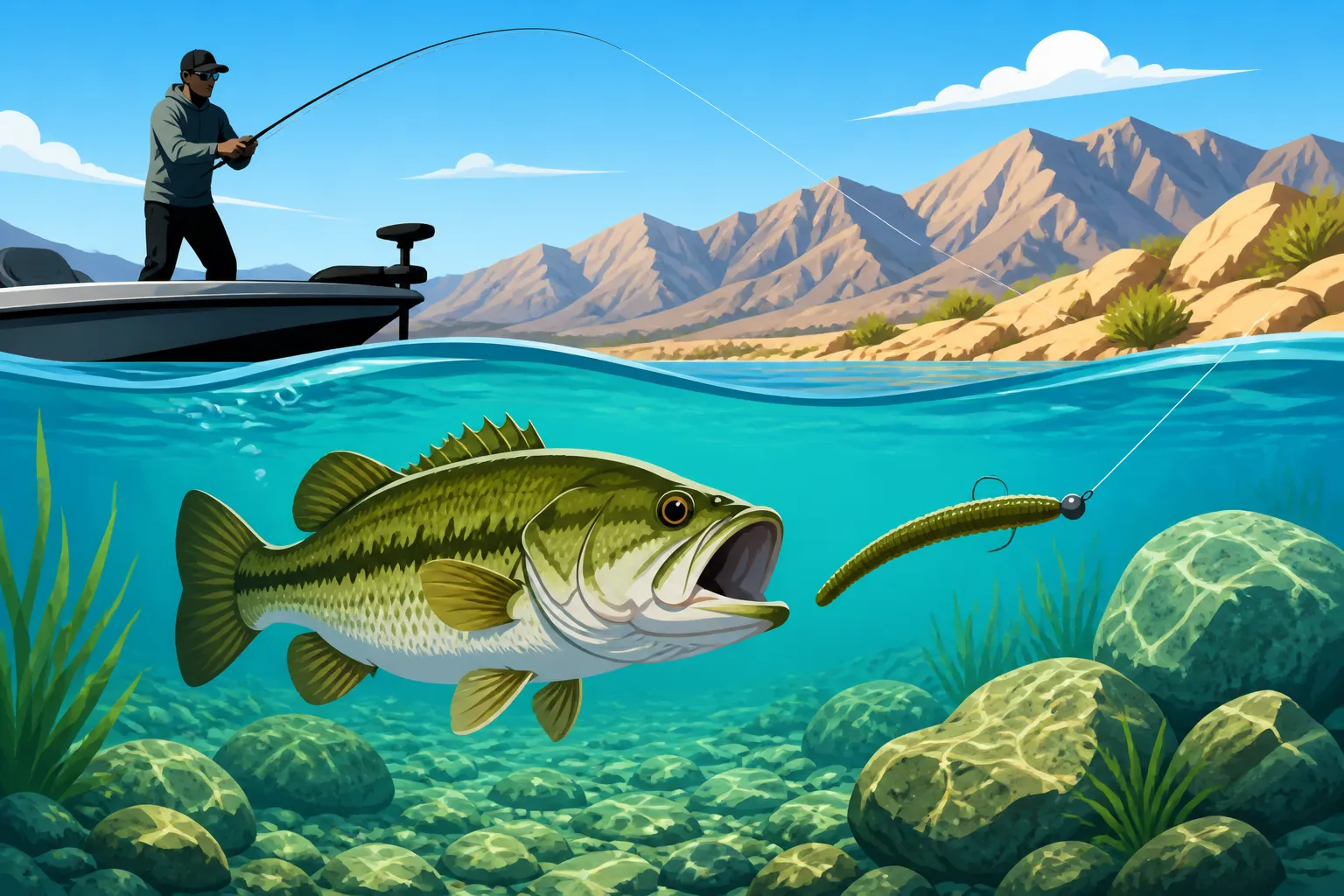
The drop shot rig is arguably the king of clear water bass fishing, especially when fish are suspended or holding tight to structure at various depths. Its genius lies in its ability to present a soft plastic bait at a precise depth, suspending it tantalizingly just above the bottom, while the weight rests directly on the lakebed. This means your bait maintains a natural, horizontal posture and can be shaken in place without moving it from the strike zone.
To set it up, you'll tie a hook (often a specialized drop shot hook or a small octopus hook) directly to your main line, leaving a tag end of line below it. Then, tie your weight to that tag end. The length of the tag end determines how high off the bottom your bait will sit. A 6-inch tag end will keep your bait just above the rocks, while a 2-foot tag end might suspend it above a submerged brush pile. For baits, think small and realistic: tiny worms, minnow imitations, or small creature baits. The key is to impart subtle action by gently shaking your rod tip while keeping tension on the line. The bait dances enticingly, while the weight stays put, not alerting any cautious bass. This technique is fantastic for fishing deep ledges, brush piles, and rock fields common in Nevada's lakes. You can find excellent drop shot weights and soft plastics on Amazon to build your perfect rig.
Wacky Rigging and Senkos: Subtle and Effective
The wacky rig might look simple, but its effectiveness in clear water is undeniable. It involves hooking a stick bait, like a popular Yamamoto Senko, right through the middle of its body. When cast, the bait sinks slowly with both ends wiggling seductively, mimicking a dying or injured worm. This subtle, natural fall is often irresistible to bass that are unwilling to chase a fast-moving lure.
The beauty of the wacky rig is its minimalist approach. There's no fancy hardware, just a hook and a soft plastic. This reduces the "noise" and unnatural elements that might spook clear water bass. You can cast it to specific targets like submerged bushes, dock pilings, or rock crevices and let it slowly flutter down. The retrieve is often just letting it sink, twitching it gently, and then letting it sink again. Many bites happen on the fall. For a more weedless option, you can use a weedless wacky hook. If you find your Senkos getting torn up too quickly, consider adding a small O-ring to the middle and hooking through that – it extends the life of your bait significantly. This technique shines when bass are shallow but holding tight to cover, reluctant to move far for a meal.
Ned Rig: Small Profile, Big Results
The Ned Rig, often called the "Midwest Finesse" technique, is another phenomenal choice for clear water, especially when the bite is tough. It utilizes a short, stubby soft plastic worm (typically 2.5-3 inches) paired with a mushroom-shaped jig head. The unique head design causes the bait to stand straight up off the bottom, presenting a small, natural, and non-threatening profile that mimics a foraging critter or a small baitfish.
The retrieve for a Ned Rig is generally slow and deliberate. You can drag it along the bottom, gently hop it, or use a "dead stick" approach where you let it sit motionless for extended periods. This tiny presentation is incredibly effective because it doesn't overwhelm wary bass. It's an easy meal that doesn't require much energy to chase. Think about targeting rocky areas, subtle ledges, or flats where bass might be grazing. The subtle action and small size make it perfect for highly pressured fish. When considering the Best Lures for Nevada Bass, don't overlook this unassuming but incredibly powerful option.
| Finesse Technique | Primary Bait Type | Ideal Scenario | Retrieve Style | Line & Tackle |
|---|---|---|---|---|
| Drop Shot Rig | Small worms, minnows, creature baits | Suspended fish, deep structure, precise depth targeting | Subtle rod tip shakes, minimal horizontal movement | Light spinning tackle, fluorocarbon leader, light weight |
| Wacky Rig | Stick baits (e.g., Senkos) | Shallow cover, bass holding tight to structure, slow fall needed | Cast, let sink, gentle twitches, let sink again | Light spinning tackle, medium-light line |
| Ned Rig | Short, stubby soft plastic worms | Heavily pressured fish, tough bites, rocky bottoms, subtle presentation | Drag, hop, dead stick on the bottom | Light spinning tackle, light fluorocarbon line, small jig head |
Stealth and Presentation are Paramount
In clear water, it's not just about what you're throwing, but how you're doing it. Your approach, line choice, and bait presentation can make or break your day.
Line Selection and Leader Considerations
This is perhaps one of the most critical aspects of clear water bass fishing. Heavy, visible line is a death sentence. You need line that is as invisible as possible in the water. For your main line, many anglers opt for a thin braided line, not for its invisibility, but for its sensitivity and casting distance. However, you absolutely must tie on a fluorocarbon leader. Fluorocarbon has a refractive index very close to water, making it virtually invisible underwater. It's also more abrasion-resistant, which is a bonus when fishing around rocky bottom or brush.
For clear water bass, a 6-10 lb test fluorocarbon leader is usually appropriate. Go as light as you dare, depending on the cover you're fishing. The length of your leader also matters; a 6-8 foot leader gives the bass plenty of "invisible" line before they see your main braid. When it comes to Best Line for Desert Reservoir Fishing, fluorocarbon is your champion in clear water conditions. Always check your leader frequently for nicks and abrasions, and retie often. The difference between catching and getting skunked can often be as simple as changing out a frayed leader.
Approach and Casting Accuracy
Bass in clear water are not just wary of your line; they're wary of your presence. This means quiet boat control and long, accurate casts are essential. Avoid running your trolling motor on high settings directly over the areas you want to fish. Instead, approach quietly, keeping your distance, and make long casts to your target. If you're fishing from shore, minimize your movement and use natural cover to break up your silhouette.
Casting accuracy is equally important. When bass are hiding in specific pieces of cover – a submerged brush pile, a rock outcropping, or the shadow of a dock – your bait needs to land precisely where they are or just beyond it, allowing a natural presentation into their comfort zone. A splashy, inaccurate cast that lands too close or too far can easily spook them. Practice your pitching and flipping, and master overhead casts that allow for maximum distance and stealth. Remember, these bass have excellent eyesight, so every detail of your approach matters. This patience and precision are key when trying to How to find fish in a new lake and tempt them in clear water.
Color and Size Selection
When the water is clear, it's generally best to stick with natural, translucent, or subtle bait colors. Instead of bright chartreuse or electric blue, think about colors like natural green pumpkin, watermelon seed, browns, tans, or clear with subtle flakes. These colors mimic natural forage like crawfish, small baitfish, or worms that bass commonly encounter in their environment. The idea is to blend in, not to stand out like a sore thumb.
Furthermore, scale down your bait size. A 6-inch worm that might work well in stained water can look enormous and threatening in crystal clear conditions. Opt for smaller worms (4-6 inches for Texas rigs, 2.5-3 inches for Ned Rigs), smaller swimbaits, and finesse jigs. If you're using creature baits, choose ones with less bulk and more subtle appendages. The goal is to offer a bite-sized, natural-looking meal that doesn't trigger any alarm bells. A smaller profile means less visual impact and a more realistic appearance to a fish that can see every detail.
Adapting to Changing Conditions
Even in generally clear waters, conditions can shift, and savvy anglers know how to adapt their finesse game plan to stay on the fish.
Low Light and Overcast Days
While clear water usually demands extreme finesse, low light conditions – such as early mornings, late evenings, or heavily overcast days – can sometimes allow for slightly more aggressive tactics. The reduced light penetration makes bass feel a little bolder and less exposed, and it also somewhat limits their ability to scrutinize your presentation.
During these times, you might be able to incorporate small topwater baits, like poppers or walking baits, especially around shallow cover. The excitement of a topwater strike is hard to beat, and the low light can mask your line and even your retrieve's minor imperfections. Consider subtle spinnerbaits or bladed jigs in natural colors, which still offer a refined profile but provide a bit more flash and vibration to call in fish that are on the prowl. Even a slightly larger soft plastic, perhaps a 7-inch worm on a Carolina Rig, might get attention without spooking them. Always start subtle, but don't be afraid to test the waters with a slightly more active presentation if the light allows.
Wind and Choppy Water
Wind can be a double-edged sword for clear water fishing. On one hand, strong winds can make boat control and casting difficult. On the other hand, a good chop on the water's surface can be your best friend. The disturbed surface breaks up light penetration and creates a "fuzzy" visual barrier that makes it much harder for bass to see your line, your boat, and even your presence. This visual distortion can make bass feel more secure and less pressured.
When there's a good chop, bass often move shallower and can be more aggressive. This is an excellent time to try those slightly more active finesse baits. Small jerkbaits, fished with short twitches and long pauses, can be deadly as they dart through the choppy water. Finesse swimbaits, retrieved slowly just below the surface, also work well. The chop can also help mask the sound of your boat and the splash of your lure. If the wind is consistent, target wind-blown points and banks, as the wind pushes baitfish into these areas, creating feeding opportunities for bass. Even in clear conditions, wind can give you a significant advantage by making the bass less wary and more willing to strike. You might even find some hidden gems for Reading Water Temperature for Trout Fishing on windy days, which can also apply to bass behavior in similar waters.
Disclaimer
This article is for general informational purposes only and does not constitute professional advice. Laws, prices and regulations vary by location and change over time. Consult a qualified professional for guidance on your specific situation.