How to fish from a kayak on a windy reservoir
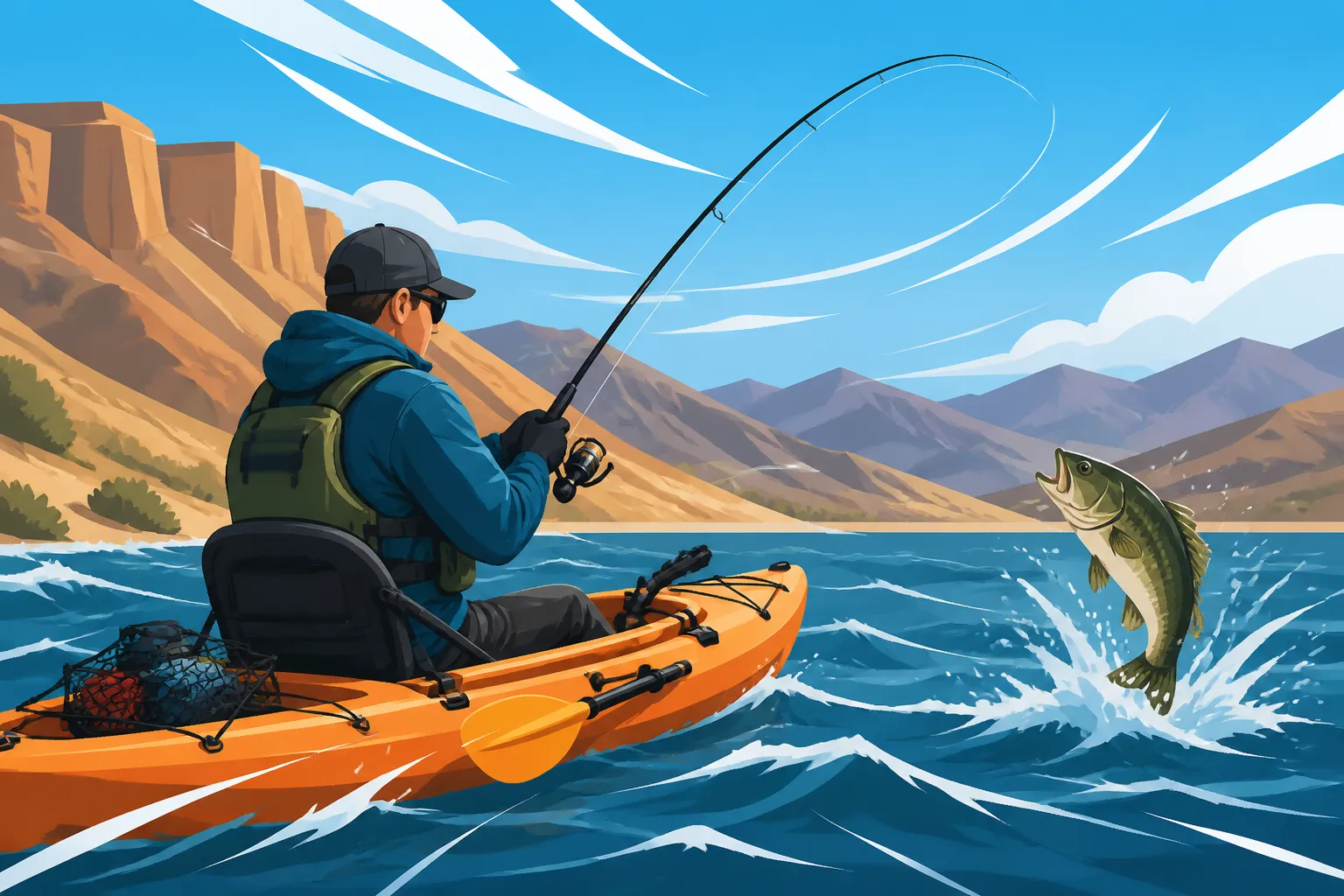
There’s nothing quite like the freedom of kayak fishing, is there? You’re close to the water, stealthy, and can get into spots bigger boats can only dream of. But let's be real, that tranquility can turn into a wrestling match faster than you can say "gust front" when the wind picks up. Battling the elements in a kayak on a wide-open Nevada reservoir can be exhausting, frustrating, and downright dangerous if you’re not prepared. This guide is all about equipping you with the knowledge, gear, and techniques to not just survive, but thrive, when the wind decides to challenge your day on the water.
Understanding the Challenges of Wind in Kayak Fishing
Wind is often the arch-nemesis of a kayak angler, especially on the vast, exposed surfaces of Nevada's larger reservoirs like Lake Mead or Lake Mohave. It's not just an annoyance; it fundamentally changes how you fish.
Why Wind is Such a Pain for Kayak Anglers
First and foremost, wind steals your stability. Imagine trying to cast a perfect line or tie a knot while your kayak is being tossed around like a toy boat. It’s nearly impossible to maintain a steady platform, which directly impacts your casting accuracy and lure presentation. A subtle twitch needed for a finesse worm can become a wild, uncontrolled jerk. Then there’s the drift. Even a light breeze can turn your leisurely paddle into a rapid journey across the lake, pushing you off your carefully selected fishing spot before you’ve even had a chance to get a bite.
And let's not forget the physical toll. You're constantly paddling, bracing, and fighting to maintain position, which can lead to early fatigue and cut your fishing day short. More subtly, wind creates surface chop and currents that can affect how fish behave, often pushing baitfish closer to shore or into protected coves, and making it harder for fish to see your line or lure. It can even make it difficult to hear or communicate with fishing partners, especially if you're out on larger bodies of water like Lake Tahoe.
Reading the Wind and Water Before You Launch
Before you even think about putting your kayak in the water, it’s absolutely crucial to become a meteorologist-for-a-day. Seriously. Start by checking detailed weather forecasts that include wind speed and direction, not just the general temperature. Look for predictions of sustained winds and especially gusts, which can be far more disruptive. Wind that's consistent from one direction is usually more manageable than swirling, unpredictable gusts.
Once you’re at the launch, take a moment to observe the water. Look at the ripples, the whitecaps, and how quickly debris is moving. Notice how the wind interacts with the shoreline, coves, and any structures. Often, one side of a reservoir might be relatively calm (the "lee" side, sheltered from the wind), while the other is a washing machine. Consider what time of day the wind is predicted to be strongest or lightest. Sometimes, an early morning start or a late afternoon session can offer a precious window of calm before the chaos. This pre-launch assessment is key to developing your overall Nevada Fishing Seasons by Month strategy.
Essential Gear and Setup for Windy Conditions
Facing the wind head-on in a kayak requires a specific arsenal of gear designed to give you an edge. Without the right setup, you’re just making your day harder, not smarter.
Stabilizing Your Kayak Against the Elements
This is where specialized gear really shines. For starters, a good anchor system is non-negotiable. Forget the tiny grappling anchors meant for ponds; on a windy reservoir, you need something substantial. A 3-5 lb folding anchor with plenty of rope (at least 50-75 feet for deeper Nevada waters) is a minimum. Many anglers prefer a "trolley system" that allows you to deploy your anchor from the bow or stern, shifting your position without having to re-anchor entirely. This is essential for maintaining your casting angle relative to the wind. You can find robust anchor systems and related accessories on platforms like Amazon. For more on this, check out our guide on the Best Anchor for Windy Desert Lakes.
Another fantastic tool is a drift sock (also known as a sea anchor). This parachute-like device deploys into the water, creating drag that slows your drift dramatically. It doesn’t stop you, but it controls your speed and often helps keep your kayak oriented correctly into the wind, making casting and retrieve much easier. For shallower areas, a stake-out pole or a shallow water anchor system (like a Power-Pole Micro or a Minn Kota Talon) can literally pin you in place. While an investment, these hands-free options are invaluable for precise positioning in wind. For maximum stability, some kayaks can even be fitted with outriggers, though these do impact speed and maneuverability.
Selecting the Right Paddle and Propulsion
Your paddle is your primary engine, and in windy conditions, the right one makes a huge difference. A longer, higher-angle paddle provides more leverage and power, which you'll appreciate when fighting a headwind or trying to maintain position. Carbon fiber paddles, while pricier, are significantly lighter, reducing fatigue over a long day. If you're serious about battling wind and covering ground, consider upgrading.
For hands-free propulsion, pedal-drive kayaks have revolutionized fishing in windy conditions. Brands like Hobie with their MirageDrive system or Native Watercraft with their Propel Drive allow you to pedal, leaving your hands free to fish, rig tackle, or adjust your drift sock. This is a game-changer when you need to slowly troll against the wind or hold position in a strong current. Electric trolling motors are another excellent option, especially for covering larger distances or maintaining precise speed. Many kayaks are now designed with motor mounts, and compact, battery-powered motors are becoming increasingly popular for Kayak Fishing Gear for Nevada.
Choosing the Right Kayak for Windy Reservoirs
Not all kayaks are created equal, especially when it comes to handling wind. The Best Kayak for Fishing Nevada Reservoirs for windy conditions generally prioritize stability over speed. Wider kayaks, often those with flatter or pontoon-style hulls, offer more initial stability, making you feel less tippy when the waves start to roll. Look for sit-on-top kayaks with ample storage and a comfortable seat that keeps you higher off the water, offering a better vantage point for casting and spotting fish.
The hull design also plays a critical role. Kayaks with a relatively low profile in the bow and stern will catch less wind, reducing the effect of being pushed around. Some kayaks also feature a "rudder system," which is incredibly helpful for steering and maintaining a straight course in crosswinds without constant paddle corrections. While a longer, narrower kayak might be faster in calm water, the increased surface area exposed to the wind can make it a nightmare to control when gusts hit.
Effective Kayak Fishing Techniques in the Wind
Once you have the right gear, it's time to adapt your fishing approach. Wind doesn't have to shut down your day; it just means you need to be smarter.
Managing Your Drift and Position
This is perhaps the most crucial skill to master. When fishing with the wind, deploying a drift sock off the bow or stern will slow you down and often align your kayak, allowing for a more controlled presentation. Experiment with the size of your drift sock; a larger one will slow you more significantly. If you’re trying to fish a specific piece of structure, you might deploy two drift socks, one off each side, to create a slower, more stable drift.
If you’re trying to fish against the wind, or hold a specific spot, that anchor system with the trolley becomes your best friend. Anchor upwind of your target and let out enough rope to slowly drift over it, or use your anchor to hold precisely. Pedal drives or trolling motors are invaluable here, allowing you to "hover" over a spot or slowly work a bank into the wind, leaving your hands free to manipulate your rod. Remember to use your paddle sparingly for minor adjustments, saving your energy for actual fishing. This kind of precise control is vital whether you're targeting bass around submerged brush or How to fish for trout in a desert reservoir.
Casting and Presentation in Gusty Conditions
Wind makes casting a challenge, but there are techniques to minimize its impact. First, orient your kayak so the wind is at your back, if possible. This makes casting much easier, as the wind will aid your cast rather than hinder it. If you have to cast into a crosswind, keep your cast low and aim slightly into the wind. A sidearm cast or a roll cast can be much more effective than a high overhead cast, which will turn into a sail.
When it comes to lures, choose heavier baits that can cut through the wind and reach your target. Jigs, heavier spinnerbaits, or compact crankbaits are often more effective than light, airy plastics or topwater lures that get easily blown off course. Use a heavier line if appropriate for your target species and Best Tackle for Nevada Bass Fishing, as lighter lines are more susceptible to wind knotting and getting blown around. After your cast, immediately engage your reel and retrieve any slack line quickly to prevent the wind from creating a huge bow in your line, which makes feeling bites and setting the hook incredibly difficult. On those blustery days, a quality rod from our Best Fishing Rods for Nevada Lakes guide can make all the difference in casting accuracy.
Locating and Targeting Fish in Windy Water
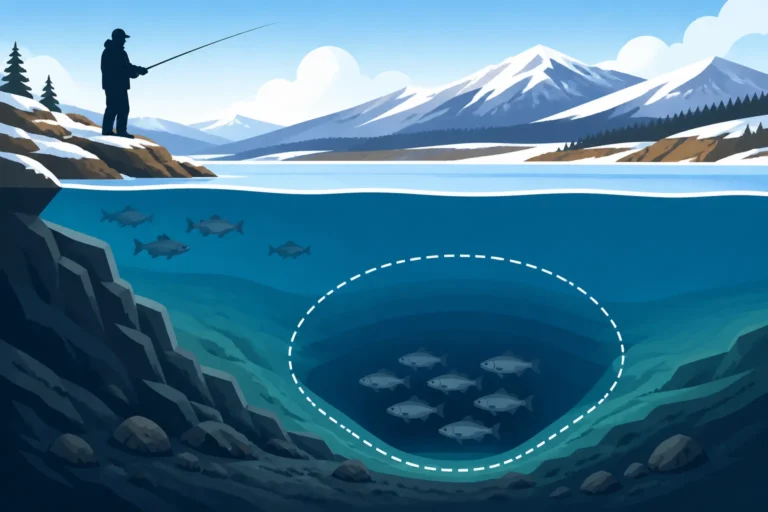
Wind affects fish behavior just as it affects your kayak. Often, fish will seek shelter from strong winds and heavy chop. Look for them in protected coves, on the lee side of islands, points, or submerged structures. The windward side of points can also be productive, as the wind pushes baitfish and nutrients against these areas, attracting predators. Pay close attention to current lines where wind-driven water meets calmer water; these are often ambush points for fish.
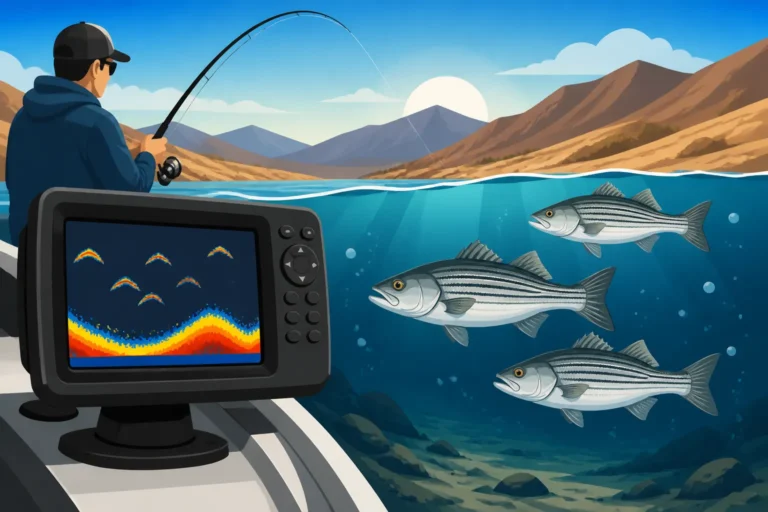
Another key is to look for areas with stained or churned-up water created by the wind. This can provide cover for fish and often indicates areas where baitfish might be disoriented. Don't be afraid to experiment with your retrieve speed; fish in windy, choppy conditions might prefer a slower, more deliberate presentation that allows them to track your lure more easily, or a more erratic retrieve if baitfish are being tossed around. Using a good Best Fish Finder for Reservoir Fishing can also help you pinpoint fish holding in deeper, more protected pockets.
Safety First: Staying Safe While Kayak Fishing in Wind
Safety should always be your top priority, even more so when dealing with windy conditions on large, potentially dangerous reservoirs. The fun stops when safety is compromised.
Personal Safety Gear and Awareness
Always, always wear your Personal Flotation Device (PFD). This isn't just a suggestion; it's a non-negotiable rule. Even if you're a strong swimmer, a PFD will keep you afloat and help conserve energy if you unexpectedly capsize in cold water or strong currents. Choose a comfortable, vest-style PFD that allows for full range of motion for paddling and casting. You can find excellent options for PFDs on Amazon.
Beyond your PFD, ensure you have appropriate layers of clothing. Nevada weather can be notoriously unpredictable; a sunny, calm morning can quickly turn into a windy, chilly afternoon. Waterproof and windproof outer layers are critical. Always carry a whistle or air horn for signaling distress. A marine radio or a fully charged cell phone in a waterproof case is also crucial for communication. Perhaps most importantly, know your limits. If the wind is truly howling and creating dangerous chop, reschedule your trip. No fish is worth risking your life. Our Essential Safety Gear for Boating on Lake Mead guide has more comprehensive advice.
Planning Your Trip and Emergency Preparedness
Before heading out, always create a float plan and share it with someone reliable. This plan should include where you're launching, your intended fishing area, estimated return time, and a description of your kayak. If you don't return on time, they'll know where to start looking. Double-check the weather forecast one last time right before you launch, and keep an eye on changing conditions while you're on the water. Dark clouds, sudden shifts in wind direction, or increasing whitecaps are all signs it might be time to head in.
Carry a dry bag with essential emergency items: a first-aid kit, extra water, high-energy snacks, a knife, a headlamp, and a small signaling mirror. Make sure your Nevada Fishing Gear Essentials includes a bilge pump or sponge to remove any water that gets into your kayak from waves or spray. Understanding Nevada Boat Registration and Titling Guide also ensures you're compliant and identifiable in case of an emergency. Remember, preparation isn't just about catching more fish; it's about making sure you get home safely after a challenging but rewarding day on the water.
| Kayak Stabilization Method | Pros | Cons | Best Use Case |
|---|---|---|---|
| Drift Sock (Sea Anchor) | Slows drift, helps orient kayak into wind. Lightweight, easy to store. | Doesn't stop drift completely. Can tangle with fishing lines. | Controlled drifting across open water, especially for covering ground. |
| Traditional Anchor System | Stops kayak in place, allows precise positioning. Relatively inexpensive. | Requires manual deployment/retrieval. Can get snagged. Heavy. | Holding a specific spot, fishing structure, shorelines. |
| Stake-Out Pole | Silent, quick to deploy/retrieve. Ideal for very shallow water. | Only effective in shallow water (typically 8 feet or less). Can pull out in soft bottoms. | Shallow water flats, marsh fishing, skinny water. |
| Shallow Water Anchor System | Hands-free, silent, quick electronic deployment. Remote controlled. | Expensive, adds weight to kayak, battery reliance. Only for shallow water. | Precision shallow water fishing, bass fishing a bank. |
| Outriggers | Maximizes stability, allows standing to cast. | Increases width, impacts speed and maneuverability. Can be cumbersome. | Anglers prioritizing maximum stability for standing, photographers. |
| Pedal Drive System | Hands-free propulsion, excellent for maintaining position or slow trolling. | Expensive, adds weight. Requires physical effort. | Battling wind and current, covering large distances, hands-free fishing. |
| Electric Trolling Motor | Effortless propulsion, precise speed control. | Requires battery, adds weight. Can be noisy. | Covering large distances, trolling, precise spot holding. |
Disclaimer
Please note that fishing regulations, conditions, and safety guidelines can change. Always consult the latest Nevada Department of Wildlife (NDOW) regulations and local weather forecasts before planning any fishing trip. The information provided here is for general guidance only and should not replace official sources or professional advice. Stay safe and enjoy your time on Nevada's beautiful waters!