How much wind is too much to fish a Nevada lake
Wind on large open reservoirs like Lake Mead, Lake Mohave and Pyramid Lake builds chop and waves that can swamp kayaks, canoes and small jon boats.
Match the method to the moment.
Seasonal patterns, proven tactics, rigging and presentation basics, bait choices, and how to adapt as conditions change.

Wind on large open reservoirs like Lake Mead, Lake Mohave and Pyramid Lake builds chop and waves that can swamp kayaks, canoes and small jon boats.
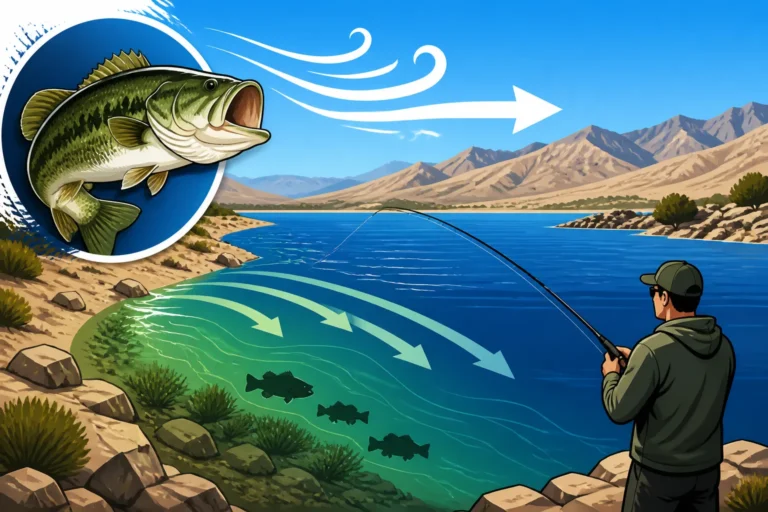
Southwesterly winds on Nevada reservoirs push warmer water and baitfish toward shorelines, creating prime feeding lanes for bass.
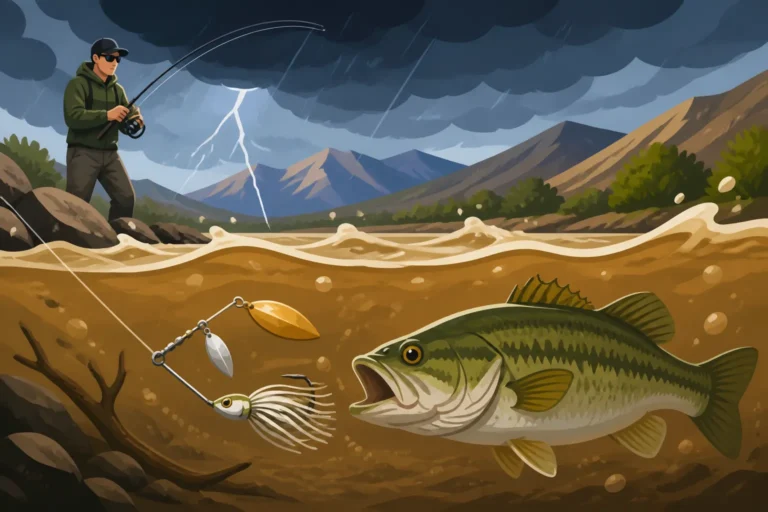
Post-storm Nevada fishing strategies explain how sediment runoff and turbidity alter fish behavior, helping anglers catch fish successfully.
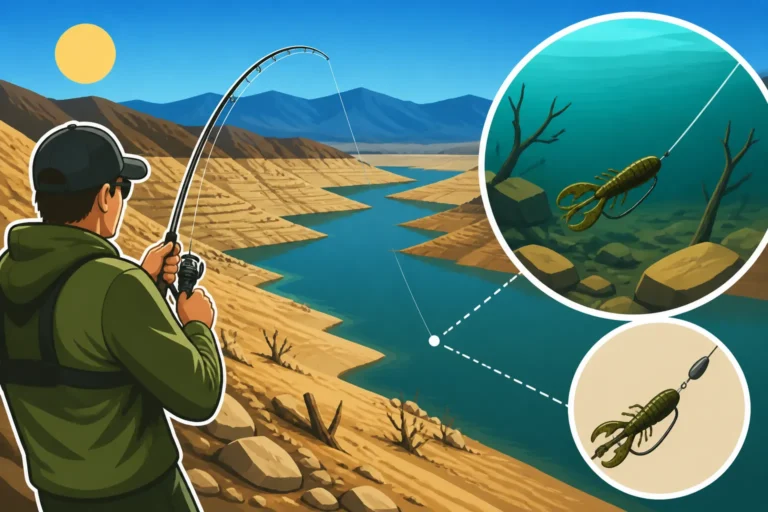
Drought-lowered reservoirs in Nevada change fish habitats and food sources, requiring anglers to adapt strategies and locate deeper water.
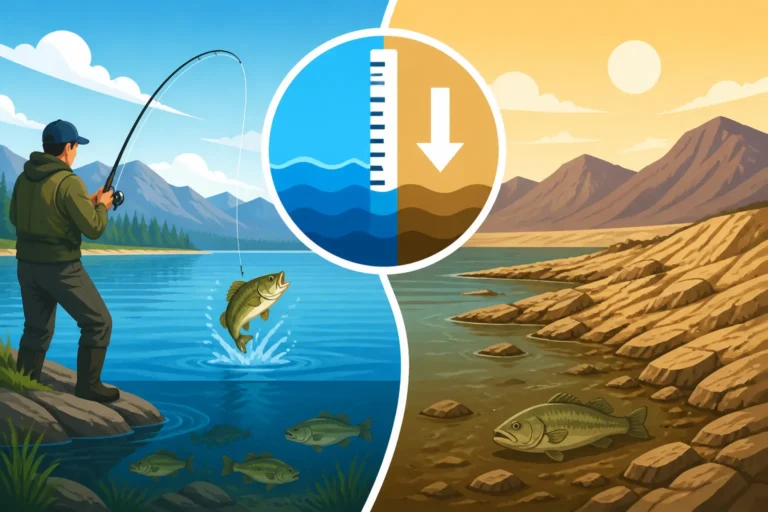
Falling lake levels impact Nevada fisheries by displacing fish and changing water temperatures, challenging anglers to adapt their strategies.
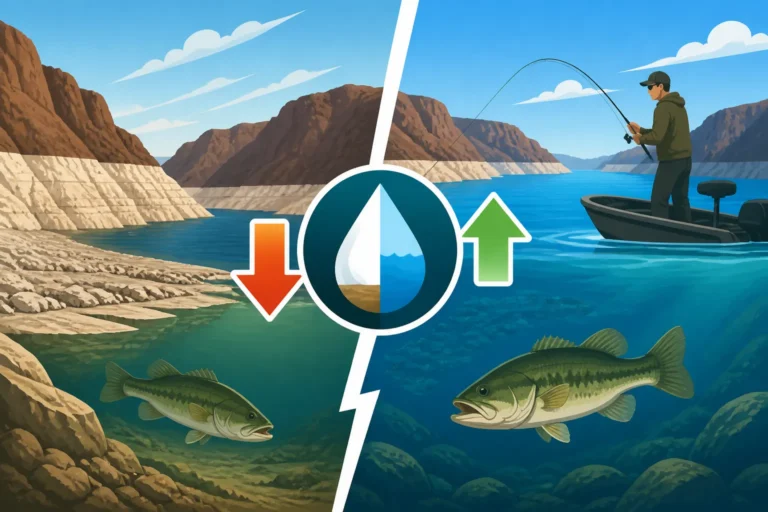
Lake Mead water level changes driven by the Colorado River and evaporation alter fish behavior, requiring new angler strategies.
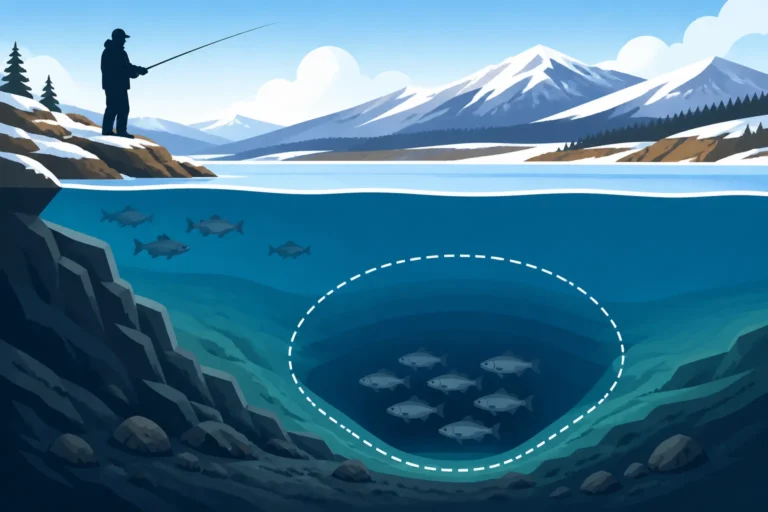
Winter water temperature changes and fall turnover in Nevada reservoirs dictate fish movement and deep sanctuary locations.
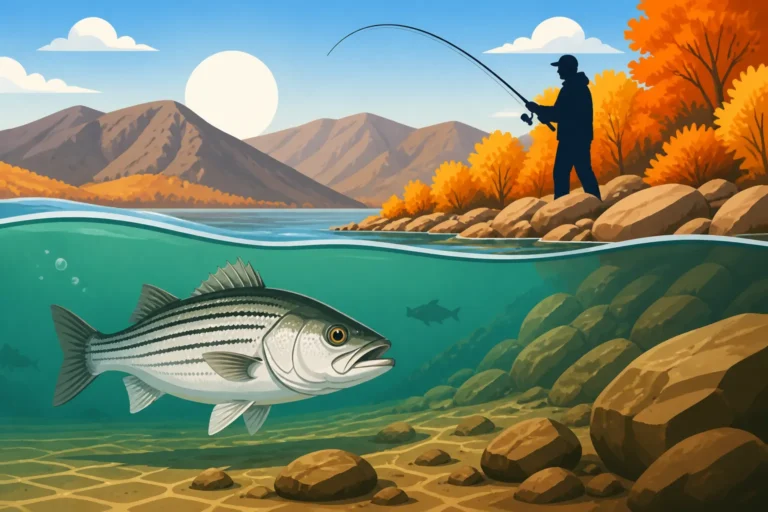
Nevada striped bass migration into shallow water during autumn, driven by cooling temperatures and threadfin shad movements.

Chumming for striped bass at Lake Mead using cut anchovies and shad creates scent trails to draw aggressive schooling predators to your boat.
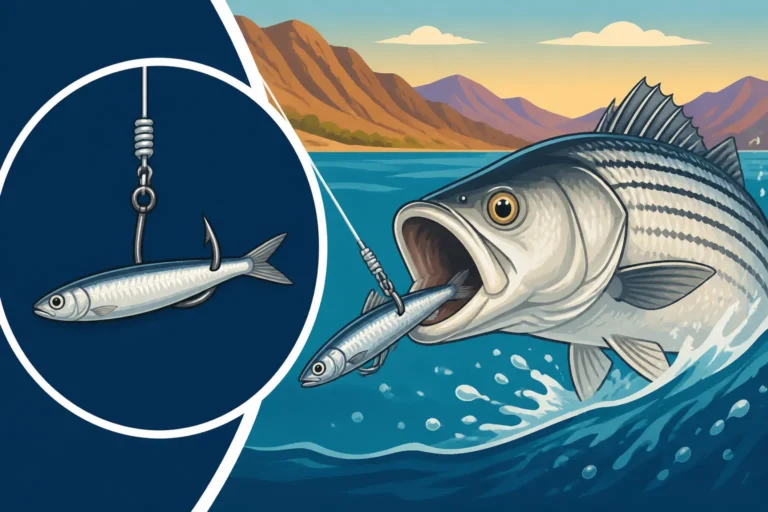
Anchovy rigging techniques for striped bass fishing in Lake Mead help keep soft bait secure on hooks and improve presentations.