Does a Nevada fishing license work in California too?
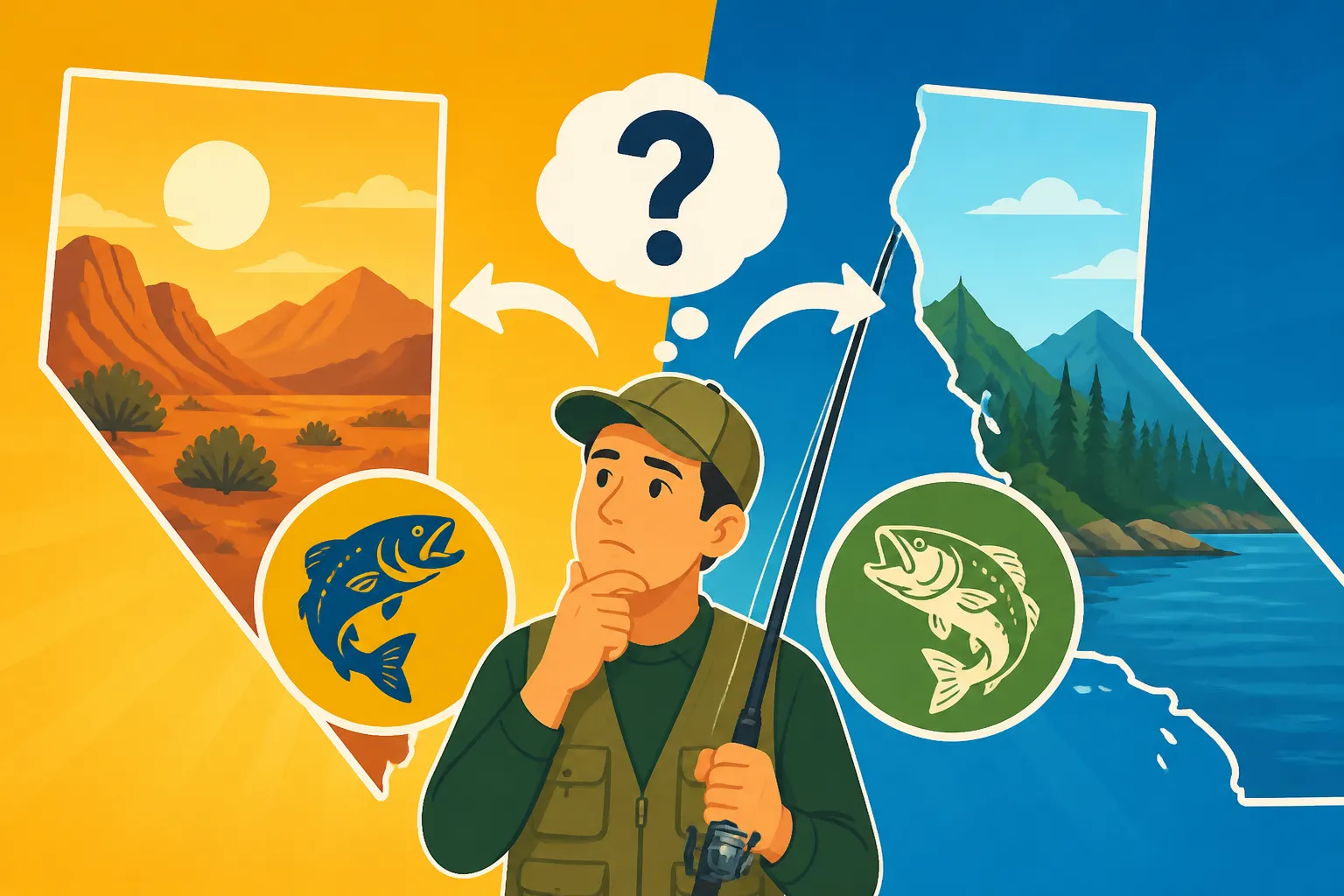
It’s a common scenario that catches even seasoned anglers off guard: you’re standing on the shore of a beautiful body of water, rod in hand, ready to cast, when a nagging thought pops into your head – "Do I actually have the right fishing license for this specific spot?" This question becomes even more complicated when you're fishing near state lines, especially along the Nevada-California border. Many anglers wonder if their Nevada fishing license will allow them to fish in California waters, or vice-versa. This comprehensive guide is here to untangle that confusion, explaining exactly how fishing licenses work when states share a watery border and ensuring you're always on the right side of the law.
Understanding Interstate Fishing Regulations
The idea that a fishing license from one state might magically work in a neighboring state is a perfectly understandable assumption. After all, fish don't exactly carry passports, and they certainly don't recognize invisible lines drawn on a map. However, the reality of fishing regulations is far more intricate, deeply rooted in legal jurisdictions and the unique environmental management efforts of each individual state.
Why State Licenses Don't Cross Borders
At its core, a fishing license is a legal permit issued by a state's wildlife management agency—like the Nevada Department of Wildlife (NDOW) or the California Department of Fish and Wildlife (CDFW). These agencies are responsible for managing the fisheries within their respective state boundaries. This includes everything from monitoring fish populations, stocking lakes and rivers, enforcing bag limits and size restrictions, and conducting conservation programs. The revenue generated from license sales directly funds these crucial efforts.
When you purchase a Nevada fishing license, you are essentially contributing to and agreeing to abide by Nevada's specific regulations and conservation initiatives. The same goes for a California license. Allowing a license from one state to be valid in another would complicate funding, enforcement, and the overall management of shared natural resources. Each state has distinct ecological concerns, stocking programs, and species management goals that often differ significantly from its neighbors. Therefore, to ensure proper funding and management, individual state licenses are required.
The Reciprocity Myth and Reality
The concept of "reciprocity" often comes up in discussions about state fishing licenses. While it sounds like a logical solution for shared waters, true, blanket reciprocity where one state's license is fully valid in another is extremely rare, especially between states as large and diverse as Nevada and California. Most commonly, where reciprocity exists, it's for very specific, often small, bodies of water that directly straddle a border, and even then, there are usually specific conditions or agreements in place.
For instance, you might find very limited, highly localized agreements on certain stretches of river, but these are exceptions rather than the rule. For the vast majority of fishing opportunities, if you're physically casting your line into waters considered part of California, you need a California license, regardless of where you launched your boat or parked your car. This holds true even if you're fishing from the Nevada side of a shared lake but casting into California waters. It's about the jurisdiction of the water your line is in.
Navigating Fishing on Border Waters Between Nevada and California
When you're dealing with a state line that runs right through a significant body of water, things can get a little confusing. Nevada and California share some truly iconic fishing destinations, and knowing which license you need for which part of the lake or river is absolutely critical.
Lake Tahoe's Unique Situation
Lake Tahoe is arguably the most prominent example of a shared fishery between Nevada and California, and it's a prime source of confusion for anglers. The state line runs roughly north to south through the middle of the lake, essentially splitting it down the middle. This means that if you're fishing the eastern half of Lake Tahoe, you need a valid Nevada fishing license. If you're on the western half, you need a California fishing license. There is no blanket reciprocity for the entire lake.
Imagine you launch your boat from a marina on the Nevada side, perhaps near Zephyr Cove or Incline Village. While your vessel might be registered in Nevada, if you navigate across the lake and start fishing near Tahoe City or South Lake Tahoe's California side, you must possess a California fishing license. The same applies if you're bank fishing: if you're casting from a California beach, you need a California license, even if you just drove over from Reno. This can be particularly tricky on a large lake where it's easy to drift or motor across the invisible boundary without realizing it. For more detailed information on specific regulations, check out our guide on Lake Tahoe Nevada Fishing License Rules.
Colorado River Border Rules
Another significant shared fishery is the Colorado River system, which forms a substantial portion of the border between Nevada and California to the south. This includes popular destinations like Lake Mohave and the stretch of river below Hoover Dam. Similar to Lake Tahoe, the general rule is that you need the license for the state whose waters you are fishing in.
For example, if you're fishing Lake Mohave, which also straddles the border, you'll need to pay close attention to your location. If you're fishing from the Arizona shore or casting into Arizona waters (as Arizona is also a border state here), an Arizona license would be required. If you're on the Nevada side, a Nevada license is a must. If you happen to cast into California waters from a boat, then a California license would be needed. This is where it can get really tricky, as the river's path is less clearly defined than a lake's surface. Always consult a detailed map and the most recent regulations for the exact area you plan to fish. You can find more specific details on the lower river in our guide to Colorado River Fishing Below Hoover Dam.
Other Bordering Waters
Beyond the major lakes, there are smaller rivers and reservoirs that mark the Nevada-California border. For instance, Topaz Lake, located in both states, is another shared water body. While the states do have a reciprocal agreement for Topaz Lake itself, allowing a valid annual fishing license from either state to be used anywhere on the lake, this is a specific agreement and not transferable to other shared waters. This is the kind of rare exception that often fuels the "reciprocity myth." The East Walker River is another example of a river that flows between both states. For stretches where it forms the boundary or flows entirely within one state, you need the appropriate license. For more information on fishing this specific area, you might look at our article on Where to fish the East Walker River in Nevada.
It’s crucial to understand that such agreements are rare and always confined to specific bodies of water. You cannot assume that because Topaz Lake has reciprocity, Lake Tahoe or the Colorado River will have the same arrangement. Always verify the specific regulations for the exact location you intend to fish.
How to Ensure You Have the Right License for Nevada or California
Given the complexities of state lines and fishing regulations, it's always better to be over-prepared than under-licensed. Making sure you have the correct documentation before you even wet a line is paramount.
Getting a Nevada Fishing License
If your fishing adventure is primarily focused on the Silver State, securing a Nevada fishing license is straightforward. The Nevada Department of Wildlife (NDOW) manages all license sales. You have several convenient options for purchasing your license. You can easily obtain one online through the NDOW website, which is often the quickest method. This allows you to print it at home or save a digital copy to your phone. For those who prefer an in-person transaction, licenses are also available at various authorized license agents across the state, including many sporting goods stores, bait and tackle shops, and even some general merchandise retailers.
Before you buy, be sure to understand the different types of licenses available. There are options for residents and non-residents, annual licenses, and shorter-term permits like the Nevada 1-Day Fishing Permit Details which is perfect for a quick weekend trip. You might also need specific endorsements, such as a Nevada Trout Stamp Requirements, if you plan to target trout in certain waters. Always check the current fees and requirements, which can change annually. Our guide on How to Get a Fishing License in Nevada provides a step-by-step walkthrough.
Getting a California Fishing License
Similarly, if your angling plans include dipping a line into California waters, you'll need a California fishing license, issued by the California Department of Fish and Wildlife (CDFW). California also offers online purchasing options through their website, allowing for immediate digital access to your license. Physical licenses can be purchased at a multitude of authorized vendors throughout California, including bait shops, outdoor retailers, and many sporting goods stores.
Just like Nevada, California has various license types tailored for residents, non-residents, and different durations (annual, one-day, two-day, etc.). California also has specific validations and report cards required for certain species, like steelhead, salmon, or sturgeon, so be sure to investigate those if your target species requires them. It’s always best to be thorough and ensure you have all the necessary permits before heading out.
The Importance of a Trout Stamp or Other Endorsements
Obtaining your basic state fishing license is just the first step. Both Nevada and California, like many other states, often require additional endorsements or stamps depending on what you're fishing for or where you're fishing. A prime example in Nevada is the trout stamp. While a general fishing license allows you to catch many species, if you intend to fish for trout, particularly in stocked waters, a Nevada Trout Stamp is often mandatory. It’s a small extra fee, but skipping it can lead to fines.
California has its own system of validations and report cards. For example, if you're targeting ocean fish or certain anadromous species, you might need specific validations that go beyond the basic freshwater license. These endorsements are not just bureaucratic hurdles; they are often designed to help manage specific fisheries, collect data on catches, and fund targeted conservation efforts for those particular species. Always review the detailed regulations for the specific fish you hope to catch and the exact body of water you'll be fishing in to avoid any surprises. You can find some general details on Nevada's trout stamp rules in our article on Nevada Trout Stamp vs Regular License.
What Happens if You Fish Without the Right License
It might seem like a minor oversight, a simple misunderstanding of an invisible line in the water, but fishing without the proper license or necessary endorsements in the correct state can lead to significant headaches and financial penalties. Ignoring these regulations isn't just a slight infraction; it's a violation that state wildlife agencies take seriously.
Fines and Penalties
If you're caught fishing in California waters with only a Nevada license (or vice versa), you're essentially fishing without a valid permit for that jurisdiction. This can result in fines that vary depending on the state, the specific violation, and whether it's a first offense. These fines can range from a couple of hundred dollars to much more substantial amounts, especially if combined with other violations like exceeding bag limits or fishing out of season. It’s not just a slap on the wrist.
Beyond monetary fines, game wardens have the authority to confiscate your fishing gear, including your rods, reels, and even your boat in egregious cases. They might also issue a citation that requires a mandatory court appearance. A conviction for fishing without a license can also mean that you could lose your fishing privileges for a certain period, impacting your ability to fish legally in that state in the future. It’s a situation no angler wants to find themselves in, especially when a little bit of planning can prevent it entirely. For more information on the consequences in Nevada, refer to our Penalty for fishing without a license in Nevada guide.
The Role of Game Wardens
Game wardens (or wildlife officers, depending on the state) are the frontline enforcers of fishing and wildlife regulations. These dedicated professionals are trained to identify violations and ensure that anglers are complying with state laws. They operate on both land and water, patrolling lakes, rivers, and coastal areas, and they have the authority to stop you, check your licenses, inspect your catch, and examine your gear.
On shared waters like Lake Tahoe or the Colorado River, game wardens from both Nevada and California frequently patrol their respective sides. They are well aware of the common confusion regarding state lines and will be vigilant. It's not uncommon for a Nevada game warden to patrol the Nevada side of Lake Tahoe, while a California game warden patrols the California side, and they coordinate on enforcement if needed. These officers are there to protect the resource and ensure fair play, and they won't hesitate to issue a citation if you're found to be non-compliant. Respect their authority and always have your license (and any required endorsements) readily accessible when asked. Our guide, Can a game warden check your fishing license in Nevada?, offers more insight into their powers.
Practical Tips for Anglers Fishing Both Sides of the Border
For those adventurous anglers who love to explore diverse fishing opportunities and might find themselves fishing in both Nevada and California, a little extra preparation can save you a lot of hassle and ensure a smooth, enjoyable trip.
Planning Your Trip
Before you even pack your tackle box, take some time to plan your fishing itinerary with state lines in mind. If you know you'll be fishing on Lake Tahoe, decide which side you plan to primarily target. If you're going to hop between the Nevada and California sides, then plan to purchase both licenses ahead of time. Don't rely on last-minute purchases, especially if you're heading to a remote area where license vendors might be scarce or connectivity is limited.
Check the current fishing regulations for both states for the specific waters you intend to visit. Regulations, bag limits, and seasons can differ significantly, even for the same species. For example, the daily limit for Lahontan cutthroat trout might be different at Pyramid Lake (which requires a special tribal permit) than for general trout in other Nevada waters, or even different from trout limits in California. Being informed is your best defense against accidental violations. Many anglers find it helpful to have printouts or digital copies of the regulation booklets for both states on their phone or tablet.
Carrying Both Licenses (if applicable)
If your fishing plans genuinely involve casting lines in both Nevada and California waters on the same trip, then the simplest and safest solution is to purchase and carry both states' fishing licenses. This eliminates any doubt or potential for fines. Keep them easily accessible, perhaps in a waterproof pouch along with your identification. Many states now offer digital licenses that can be stored on your smartphone, which can be incredibly convenient, but always ensure your phone is charged and protected from the elements.
It's a small investment to ensure peace of mind and full legal compliance. Think of it as a small price to pay for the freedom to explore all the fantastic fishing opportunities that both Nevada and California have to offer, without the stress of worrying about invisible lines. You might even find good waterproof license holders or gear bags on Amazon that can keep your important documents safe and dry on the water.
Gear Considerations
When fishing waters that span state lines, your core fishing gear—rods, reels, and basic tackle—will generally work in both jurisdictions. However, specific bait and lure restrictions can sometimes vary. For instance, some waters might have restrictions on the use of live bait, or require barbless hooks. Always check the regulations for the specific lake or river you're targeting. Many local tackle shops near the border, like those in South Lake Tahoe or along the Colorado River, will stock gear appropriate for both states' regulations and conditions. You can also find a wide array of specialized gear, from specific lures for Lahontan cutthroat trout at Pyramid Lake to heavy-duty rods for large Mackinaw trout at Lake Tahoe, readily available through online retailers like Amazon.
Furthermore, consider the conditions. Desert lakes in Nevada and California can be brutally hot, so having appropriate sun protection, plenty of water, and coolers to keep your catch fresh is paramount, regardless of which state you're fishing in. Our Nevada Fishing Gear Essentials guide can give you a good starting point for outfitting yourself for the unique challenges of the region.
| Feature / License Type | Nevada Resident Annual | Nevada Non-Resident Annual | California Resident Annual | California Non-Resident Annual |
|---|---|---|---|---|
| Typical Cost (approx.) | $40 | $80 | $60 | $170 |
| Validity Period | 365 days from purchase | 365 days from purchase | January 1 – December 31 | January 1 – December 31 |
| Where to Buy | NDOW Website, Agents | NDOW Website, Agents | CDFW Website, Agents | CDFW Website, Agents |
| Shared Waters Validity | Only in Nevada waters | Only in Nevada waters | Only in California waters | Only in California waters |
| Example Endorsement | Trout Stamp | Trout Stamp | Steelhead Report Card | Steelhead Report Card |
Note: Prices are approximate and subject to change. Always check official state wildlife agency websites for current fees and regulations.
Disclaimer
The information provided in this guide is for general informational purposes only and is not intended as legal advice. Fishing regulations, license requirements, and fees are subject to change by the Nevada Department of Wildlife (NDOW) and the California Department of Fish and Wildlife (CDFW). While we strive to keep this information up-to-date and accurate, it is the angler's responsibility to consult the official and most current regulations published by the relevant state agencies before engaging in any fishing activities. Compliance with all applicable laws and regulations is solely the responsibility of the individual angler.