Can a game warden check your fishing license in Nevada?
It's a question many of us have quietly wondered about while out on the water, rod in hand, enjoying the peace and quiet: "Can a game warden really just come up and check my fishing license in Nevada?" The short answer is a resounding yes, and it's a topic often shrouded in a bit of mystery or even mild anxiety for anglers. This guide will peel back the layers of that question, explaining the legal authority, what to expect, and why these checks are not just permissible but crucial for the health of Nevada's incredible fisheries.
The Authority of Nevada Game Wardens
Let's be clear right from the start: game wardens in Nevada aren't just folks in uniforms looking to spoil your day. They are commissioned law enforcement officers with specific training and authority to uphold wildlife and fishing regulations. Their presence is a vital part of maintaining the delicate balance of our natural resources, ensuring that future generations can enjoy the same fishing opportunities we do today.
Understanding Their Role and Responsibilities
A Nevada game warden, officially known as a game warden or conservation officer with the Nevada Department of Wildlife (NDOW), holds a unique position. They aren't just a regular police officer. Their jurisdiction is specialized, focusing on protecting, conserving, and managing Nevada's fish, wildlife, and their habitats. This means they spend their days and nights patrolling vast and often remote areas – from the serene waters of Lake Tahoe to the rugged canyons surrounding Lake Mead, and the countless rivers, streams, and high mountain lakes in between.
Their primary mission isn't to issue tickets, though that's a part of their job when violations occur. Instead, it's about education and enforcement to ensure compliance with the Nevada Fishing Regulations Explained. They are the front line in preventing poaching, illegal fishing methods, and habitat destruction. Think of them as custodians of Nevada's wild spaces, working tirelessly to preserve these precious resources for all residents and visitors. They're often the first responders to wildlife emergencies and play a crucial role in public safety within natural areas.
Legal Basis for Checks
The authority for a game warden to check your fishing license and compliance with regulations isn't arbitrary; it's firmly rooted in Nevada state law. Specifically, Nevada Revised Statutes (NRS) grant these officers the power to enforce all laws and regulations related to fish and game. This includes the right to stop individuals engaged in hunting, fishing, or trapping activities and inspect their licenses, equipment, and any harvested fish or game.
This legal framework is designed to protect public resources. Just as a police officer can pull you over to check your driver's license and vehicle registration if you're operating a car on a public road, a game warden can approach you while you're fishing in public waters or on public land to ensure you're legally entitled to do so. It's not about singling anyone out; it's about uniform enforcement to ensure everyone is playing by the same rules. This enforcement is critical because without it, the fish populations and habitats we all cherish could quickly be depleted or damaged by a few irresponsible individuals. If you've ever wondered about the larger picture, understanding the Nevada Fishing License Guide is your first step to being a responsible angler.
What to Expect During a License Check
So, you're out on the water, minding your own business, and a boat with an NDOW logo approaches, or a warden appears on the shoreline. What happens next? Knowing what to expect can significantly reduce any potential stress and ensure a smooth interaction. Most encounters are brief, professional, and courteous, assuming everyone is operating legally and respectfully.
The Standard Procedure
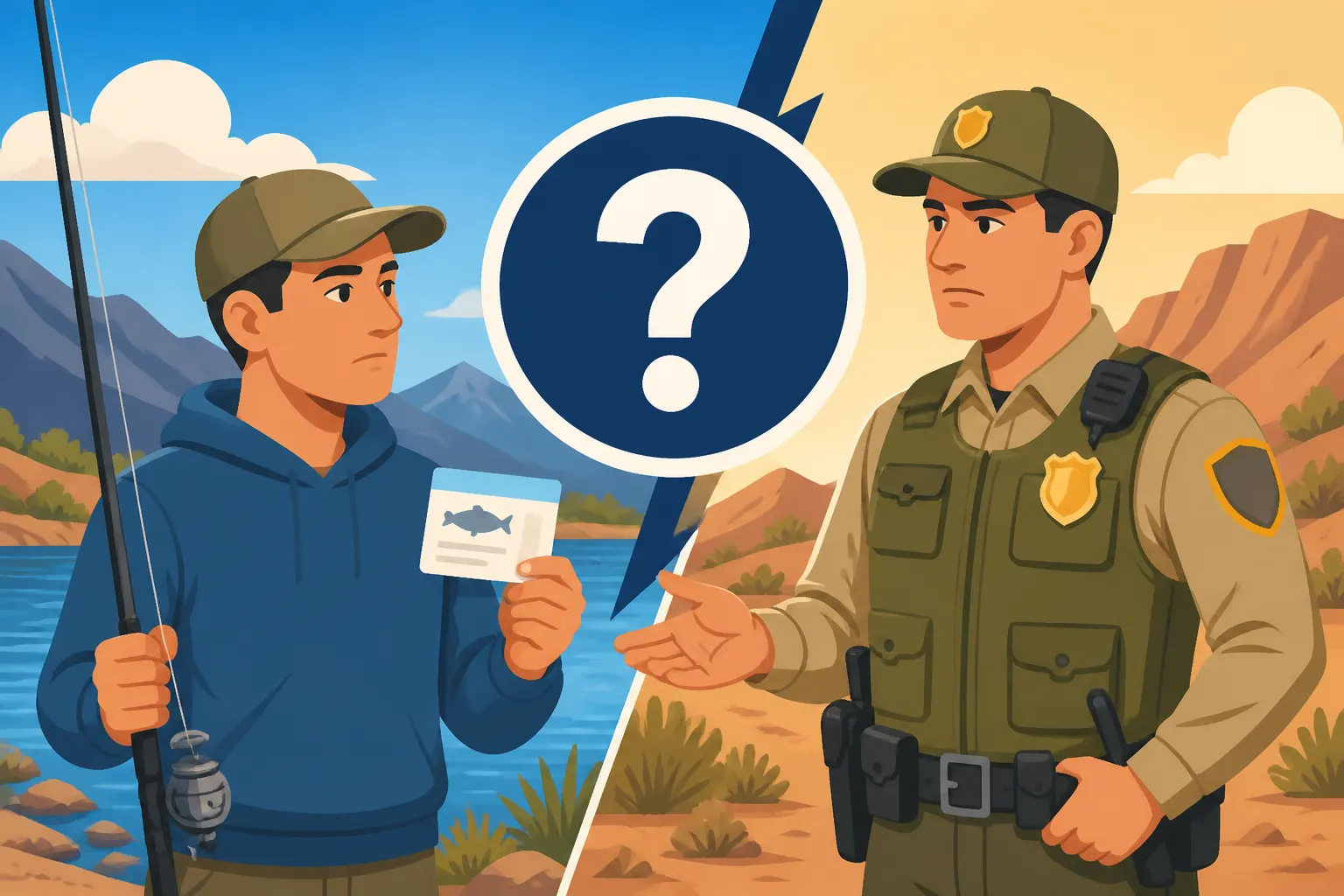
When a game warden decides to conduct a check, they will typically approach you in a clear, identifiable manner. If you're on a boat, they'll usually pull alongside, identify themselves, and signal for you to stop. If you're fishing from the bank, they'll walk up to you, again identifying themselves. Their first request will almost always be for your fishing license and a form of identification, such as a driver's license.
It's paramount to be cooperative and polite. Have your license readily available. Fumbling around for several minutes or expressing frustration will only make the interaction more awkward. They're simply doing their job to enforce the rules that protect our fisheries. A real-life scenario might be on a busy Saturday morning at Lake Mead: you're anchored in a cove, enjoying the solitude, when an NDOW patrol boat slowly idles over. The warden waves, smiles, and asks, "How's the fishing? Mind if I see your license and ID?" A quick, respectful exchange, and you're back to enjoying your day. This brief interruption is a small price to pay for the privilege of enjoying Nevada's incredible fishing spots.
Digital vs. Physical Licenses
One common question in our increasingly digital world is whether a digital fishing license is acceptable. Good news! The Nevada Department of Wildlife does accept digital copies of your fishing license displayed on a smartphone or other device. This means you don't necessarily need a physical printout anymore, which is super convenient, especially if you bought your license online through a platform like Amazon's digital services or the official NDOW website. You can learn more about this convenience with our guide on Nevada digital fishing license on a phone.
However, there's always a "but." What if your phone battery dies? Or you drop your phone in the water? Technology can be unpredictable, especially in the great outdoors. It's always a good idea to have a backup plan. Many anglers still prefer to print a physical copy of their license and keep it in a waterproof bag in their tackle box or wallet. This way, if your digital access fails, you still have proof of licensure. It also doesn't hurt to save a screenshot of your license on your phone, so you don't have to rely on an internet connection to pull it up. Whether digital or physical, ensure your license is current and easily accessible to make any warden check as quick and painless as possible. If you're ever in a pinch and need to know Where to Buy a Nevada Fishing License quickly, there are plenty of options available.
Beyond the License: Other Things They Might Check
While the license is often the first thing a game warden will ask for, their inspection might not stop there. Their role extends to ensuring all aspects of your fishing trip comply with state regulations. This is where things like bag limits, gear restrictions, and boat safety come into play, all designed to protect both the fish and the anglers.
Fish Limits and Sizes
After checking your license, a warden will often inquire about your catch. They have the authority to inspect your cooler, livewell, or stringer to verify that you are adhering to the Nevada Statewide Bag Limits Explained and size restrictions for the species you've caught. This is not to pry into your success but to prevent overharvesting and ensure the sustainability of fish populations.
For example, if you're targeting trout, they'll be checking to make sure you haven't exceeded the Nevada Trout Daily Limit Rules and that any fish you've kept meet minimum size requirements if applicable. If you're after bass, especially at popular spots like Lake Mead, they'll be looking at your Nevada Bass Daily Limit and Size Rules, which often include slot limits or minimum length requirements designed to protect breeding fish. They'll also differentiate between "daily limit" (what you can catch and keep in one day) and "possession limit" (the total number of fish you can have in your possession at any time, which includes fish kept over multiple days if you're on a multi-day trip or at home). Understanding these nuances is vital to avoid unintended violations.
Gear and Method Compliance
Nevada has specific rules about fishing methods and gear, and game wardens enforce these as well. Depending on where you're fishing, certain types of tackle or bait might be prohibited. For instance, at unique fisheries like Pyramid Lake, there are strict rules about Nevada Barbless Hook and Bait Rules, often requiring barbless hooks for certain species like Lahontan cutthroat trout to ensure catch and release practices are effective. They might also check the number of rods you have in the water, as there are typically limits on how many lines an individual angler can use simultaneously.
Sometimes, specific areas or bodies of water have special regulations, such as fly-fishing-only sections on certain rivers or streams. A warden will ensure your gear complies with these localized rules. These regulations are in place for various reasons, from protecting fragile fish species to ensuring fair chase for all anglers. They might even check to see if you are abiding by specific Pyramid Lake fishing season dates or Pyramid Lake legal fishing hours, as these can vary significantly from general statewide rules. It's always a good idea to review the specific regulations for the body of water you plan to fish before heading out.
Boat Registration and Safety
If you're fishing from a boat, expect a game warden to also check your vessel's compliance with Nevada boating laws. This includes ensuring your boat is properly registered and titled with the state. Our comprehensive Nevada Boat Registration for Anglers guide can help you with all the specifics. But beyond just paperwork, they'll also be looking for essential safety equipment.
This often includes a thorough check for the presence and accessibility of U.S. Coast Guard-approved life jackets for every person on board, including children who have specific wear requirements. Other critical items they'll look for are a sound-producing device (like a whistle or horn), a fire extinguisher if your boat has an enclosed engine compartment or fuel tank, and a throwable flotation device. These checks are not just about compliance; they are about your safety and the safety of everyone on the water. A good resource for ensuring you're squared away is the Nevada required safety equipment checklist for boats. Additionally, if you're a younger boater or operate a personal watercraft, you might need a Nevada Boater Education Card Requirement, which wardens will also verify.
Here's a quick summary of what a game warden might check:
| Item to Check | Reason for Check | Typical Requirement/Regulation |
|---|---|---|
| Fishing License | Legal right to fish | Valid, current Nevada state fishing license (physical or digital) |
| Photo ID | Confirm license holder identity | Driver's license or other valid government-issued ID |
| Fish/Cooler/Livewell | Adherence to bag/size limits | Compliance with daily and possession limits, and minimum/maximum sizes |
| Fishing Gear | Method and tackle compliance | Number of rods, hook types (e.g., barbless), bait restrictions |
| Boat Registration | Legal operation of vessel | Current registration sticker/card, proper titling |
| Boat Safety Gear | Passenger safety, legal compliance | Life jackets, sound device, fire extinguisher, throwable device |
| Pyramid Lake Permit | Specific tribal waters access | Valid Pyramid Lake tribal fishing permit (if applicable) |
| Trout Stamp | Specific species endorsement | Required for keeping trout in designated waters |
Consequences of Non-Compliance
It's natural to feel a bit of a thrill when you get away with something, but when it comes to fishing regulations, ignoring the rules can lead to serious repercussions. Game wardens take their job seriously, and violations aren't just minor inconveniences; they can result in significant fines, loss of fishing privileges, and even confiscation of your hard-earned gear.
Penalties for Fishing Without a License
Fishing without a valid Nevada fishing license is one of the most common violations, and it's treated seriously. It's generally considered a misdemeanor offense, which means it carries more weight than a simple traffic ticket. The Penalty for fishing without a license in Nevada can vary depending on the specific circumstances and whether it's a first offense, but you can expect a substantial fine.
Beyond the monetary cost, which can easily run into several hundreds of dollars, there are other consequences. In many cases, the game warden has the authority to confiscate your fishing equipment, including your rod, reel, and even your catch. Additionally, you could face the suspension or revocation of your fishing privileges for a period, meaning you wouldn't be able to legally obtain a fishing license for a certain amount of time. Imagine being passionate about fishing and then being told you can't cast a line for a year or more – it's a harsh reality that emphasizes the importance of simply having your license. You can find more details about this in our guide on the Nevada fishing without a license fine amount.
Dealing with Violations
If a game warden discovers a violation, the process typically starts with a verbal warning or, more commonly, a written citation. This citation will outline the specific charges against you and provide instructions on how to proceed, which usually involves paying a fine or appearing in court. It's crucial to take these citations seriously and respond as instructed. Ignoring them can lead to even more severe penalties, including warrants for your arrest.
If you believe there's been a misunderstanding or you genuinely disagree with the warden's assessment, it's always best to remain respectful during the interaction. Arguing heatedly on the spot rarely resolves anything and can sometimes escalate the situation. Instead, accept the citation politely and then seek legal advice or follow the court procedures to present your case. The legal system is where such disputes are meant to be handled, not on the bank of a lake or in the middle of a reservoir.
Why These Checks Matter for Nevada Anglers
While a license check might feel like an interruption to your peaceful fishing day, it's essential to understand that these interactions are a small but crucial part of a much larger conservation effort. Every check, every fine, and every educational conversation contributes directly to the health and sustainability of Nevada's diverse fisheries.
Protecting Nevada's Fisheries
The funds generated from fishing license sales and the fines from violations are not just sitting in a government vault somewhere. They are directly reinvested into the management and conservation of Nevada's aquatic resources. This means your license fees help fund critical programs like fish stocking, habitat restoration projects, scientific research into fish populations, and, of course, the enforcement efforts of game wardens. NDOW uses these funds to stock millions of trout into urban ponds and remote mountain lakes each year, ensuring there's always something to catch. They also work on improving water quality and restoring spawning habitats for native species.
Without these enforcement checks, the system would quickly break down. Unlicensed anglers wouldn't contribute to these vital programs, and unchecked violations could rapidly deplete fish stocks. Think about it: if there were no rules or no one to enforce them, how long would our favorite fishing spots remain productive? The simple act of checking your license ensures that everyone is contributing to and abiding by the rules that make Nevada fishing so special. It's an investment in the future of fishing, safeguarding those serene moments and thrilling catches for generations to come. If you're interested in the details of how your contributions help, check out Nevada Fishing License Cost Breakdown.
Ensuring Fair and Ethical Angling
Game warden checks also play a critical role in ensuring fair and ethical angling practices across the state. They help prevent situations where a few individuals might hoard fish beyond limits, use illegal methods, or take advantage of specific regulations (like those at special places such as Pyramid Lake with its unique Lahontan cutthroat trout). By consistently enforcing the rules, wardens create a level playing field for all anglers. Everyone has the same opportunities and responsibilities.
This doesn't just benefit the fish; it fosters a stronger, more responsible angling community. When anglers know that rules are enforced, it encourages a culture of compliance and respect for the resource. It's about protecting the experience for everyone – from the seasoned veteran chasing a trophy Lahontan cutthroat to a child excitedly reeling in their first stocked rainbow trout at a local pond. Responsible anglers often act as additional eyes and ears for NDOW, understanding that reporting suspicious activity is part of their role in protecting the resource. It’s all about maintaining a healthy, vibrant fishing environment for every Nevadan and visitor.
Disclaimer
The information provided in this article is for general guidance and informational purposes only and does not constitute legal advice. Fishing regulations in Nevada can change, and specific rules may vary depending on the body of water. Always consult the most current Nevada Department of Wildlife (NDOW) fishing regulations booklet or website before heading out to fish. Compliance with all applicable laws and regulations is the sole responsibility of the angler.