How to rig a bait for catfish in a reservoir
Few things are as satisfying as the powerful tug of a big catfish on your line, especially when you're fishing the vast, often challenging waters of Nevada's reservoirs. But let's be honest, figuring out the right way to rig your bait for these finicky eaters in a reservoir environment can feel like a guessing game. It's not always as straightforward as bank fishing a muddy river. This guide is all about cutting through that confusion, giving you the solid rigging strategies you need to put more catfish in your cooler from lakes like Lake Mohave, Rye Patch Reservoir, or even the sprawling depths of Lake Mead.
Understanding Catfish Behavior in Nevada Reservoirs
When you're chasing catfish in Nevada's big reservoirs, you're dealing with a different beast than their river-dwelling cousins. These open-water environments present unique challenges and opportunities that influence how you should rig your bait.
Why Reservoir Catfish are Different
Unlike a river where current dictates much of their movement, reservoir catfish, particularly channel and flathead varieties, are influenced by depth, water temperature, oxygen levels, and the availability of baitfish. They often relate to underwater structure much like bass do – points, humps, submerged channels, old creek beds, and even the steep faces of dam walls. They might roam vast areas in search of food or hold tight to specific ambush points. This means your rig needs to be versatile enough to present your bait effectively in a variety of situations, from deep-water presentations to shallower, structured areas. It's not just about getting bait to the bottom; it's about getting it to the right bottom, or even suspending it above an obstacle.
In the summer heat, catfish in Nevada's desert reservoirs will often seek cooler, deeper waters during the day, becoming more active and moving shallower during the cooler hours of dawn, dusk, and throughout the night. Conversely, in colder months, they might congregate in deeper basins or near thermal refuges. Understanding these seasonal and daily movements is crucial. You can't just throw out a generic rig and expect results; you need to adapt. This behavioral nuance is why specific rigs perform better in different scenarios, and why knowing your target water is half the battle.
Prime Locations to Target Catfish in Reservoirs
Catfish in reservoirs are opportunistic feeders, but they still have preferred haunts. The key is to think about where baitfish would hide or where food might naturally accumulate. Look for submerged creek channels that wind through the lakebed – these act as highways for fish. Points and humps that drop off into deeper water are excellent ambush points, especially where current or wind can push food. You'll often find success near the dam wall itself, as deeper water is usually present here, and natural debris or baitfish can congregate.
Don't overlook areas with submerged timber, rock piles, or old roadbeds, which offer cover and structure. In some Nevada reservoirs, like the lower Colorado River chain, the presence of various baitfish such as shad or smaller carp will heavily influence where the catfish are hunting. When fishing from shore, focus on longer points, deep coves, or areas near boat ramps where fish might be drawn to discarded bait or natural food sources. For a deeper dive into specific areas, you might want to check out our guide on Channel Catfish Habitat in Nevada Reservoirs. Knowing where to cast is just as important as how you rig your bait.
Essential Gear for Reservoir Catfish Rigging
Before you even think about tying a knot, you need the right tools for the job. Reservoir catfish, particularly the larger ones found in Nevada's big lakes, demand robust gear that can handle strong runs and the occasional snag.
Rods, Reels, and Line Choices
For reservoir catfishing, you'll want a medium-heavy to heavy action rod, typically between 7 to 9 feet in length. The longer rod provides better casting distance, which is often essential on vast reservoirs, and helps with leverage when fighting a strong fish or lifting it over shoreline obstacles. A good example would be a Ugly Stik GX2 or a more specialized catfishing rod from brands like Berkley. These rods have enough backbone to handle heavy sinkers and powerful fish, but enough tip sensitivity to detect subtle bites. If you're wondering about general rod recommendations, our Best Fishing Rods for Nevada Lakes guide might offer some broader insights.
When it comes to reels, you have a couple of solid options. A sturdy baitcasting reel is often preferred by experienced catfish anglers due to its power, line capacity, and controlled casting of heavy baits. Look for models with a smooth, reliable drag system, as this is paramount when a large channel or flathead decides to bolt. For those who prefer spinning gear, a larger spinning reel (size 5000-8000) with a strong drag and good line capacity can also work well, especially for lighter presentations or if you're comfortable with spinning gear for casting distance. As for line, braided line in the 30-65 lb test range is a popular choice because of its strength, minimal stretch (great for detecting bites), and abrasion resistance. However, a good quality monofilament in the 20-40 lb test range is also effective and more forgiving if you're just starting out. Many anglers find high-quality monofilament like Berkley Big Game or a durable braid like PowerPro to be excellent choices, readily available on platforms like Amazon.
Hooks, Sinkers, and Swivels
The choice of hook is critical. For most reservoir catfishing with natural baits, circle hooks are highly recommended. Sizes ranging from 4/0 to 8/0 are common, depending on your bait size and target fish. Circle hooks are designed to hook fish in the corner of the mouth, leading to fewer gut-hooked fish and making catch-and-release easier (if that's your goal). They also typically require less of a forceful hook set; just let the fish take the bait and start reeling, and the hook will set itself. J-hooks are an option for more aggressive hook sets, but carry a higher risk of deep hooking.
Sinkers are necessary to get your bait to the desired depth and keep it there against current or wind. Egg sinkers (1/2 oz to 3 oz) are popular for slip sinker rigs, allowing the line to run freely through them so a fish doesn't feel resistance. No-roll sinkers or pyramid sinkers are excellent for anchoring your bait in stronger currents or on sloping bottoms, preventing it from washing away. The weight depends entirely on the depth, current, and wind conditions; our article on Best Sinker Weight for Bottom Fishing a Reservoir offers more specific guidance. Finally, good quality swivels are indispensable. Barrel swivels or Sampson swivels (size 2 to 4/0) prevent line twist, especially when using cut bait that might spin in the water, and serve as a connecting point between your main line and leader, allowing the sinker to slide freely. You can often find bulk packs of these essential terminal tackle components on Amazon, making it easy to stock up.
Top Rigging Strategies for Reservoir Catfish
Now that you have your gear, let's talk about the specific rigging setups that prove most effective for catching catfish in Nevada's reservoirs. Each rig has its strengths and is designed for different conditions and catfish behaviors.
The Carolina Rig (Bottom Rig)
The Carolina Rig is arguably the most popular and versatile rig for reservoir catfishing, and for good reason. It’s excellent for presenting bait directly on the bottom, where many channel and flathead catfish feed. The "slip" action of the sinker allows a biting fish to pick up the bait and move off without feeling the weight of the sinker, leading to more confident takes.
Here's how to tie it:
- Main Line: Start by threading your main fishing line (braid or mono) through an egg sinker. The weight of the sinker will depend on your fishing depth, wind, and current – anywhere from 1/2 oz to 3 oz is common.
- Bead: Slide a small plastic or glass bead onto the line after the sinker. This bead serves a couple of important purposes: it protects the knot from the sinker constantly banging against it, and it can create a little extra sound attraction (though less critical for catfish than some other species).
- Swivel: Tie your main line to one eye of a strong barrel swivel or Sampson swivel using a Palomar or Uni knot. This is a critical connection point that prevents line twist and separates your main line from your leader.
- Leader Line: To the other eye of the swivel, tie a leader of fluorocarbon or monofilament line. The leader length can vary, typically from 12 inches to 36 inches. A longer leader allows your bait to drift more naturally, while a shorter one keeps it closer to the sinker. Many anglers use a slightly lighter breaking strength for the leader than the main line, so if you snag, you only lose the hook and leader, not your entire rig.
- Hook: Finally, tie your chosen hook (usually a 4/0 to 8/0 circle hook) to the end of your leader.
This rig is fantastic for fishing over relatively clean bottom areas, like sandy or gravel flats, or along the edges of channels. It presents your bait right where bottom-feeding catfish expect to find it.
The Santee Cooper Rig (Suspended Bait Rig)
When you're dealing with a muddy bottom, areas with significant snags, or if you suspect catfish are suspended slightly off the bottom (perhaps feeding on baitfish in the water column), the Santee Cooper Rig is your go-to. It's essentially a Carolina Rig with an added float to lift your bait.
To construct a Santee Cooper Rig:
- Follow the first three steps of the Carolina Rig: sinker, bead, swivel on the main line.
- Leader with Float: Tie a leader to the swivel, just like with the Carolina rig. However, before tying on your hook, thread a small, cigar-shaped foam float (often called a "Santee Cooper float" or "peg float") onto your leader. You can peg this float in place a few inches above your hook using a toothpick or rubber band to keep your bait suspended at a desired height.
- Hook: Tie your circle hook to the end of the leader.
The float lifts your bait anywhere from a few inches to a foot or more off the bottom, making it more visible to catfish and keeping it out of debris or mud. This is especially useful in reservoirs where the bottom can be silty or covered in vegetation, which might obscure your bait or cause it to get buried. It's a subtle but highly effective modification that can make a huge difference in murky water or snaggy conditions.
The Slip Sinker Rig (Basic Bottom Rig)
Sometimes, simplicity is key, and the Slip Sinker Rig is as basic as it gets while remaining incredibly effective, particularly for live or large cut baits. It's very similar to the Carolina Rig but often omits the bead, and sometimes even the swivel, allowing for a more direct feel.
Here's the setup:
- Main Line: Thread your main line directly through an egg sinker.
- Leader/Hook: Tie your hook directly to the end of your main line, or tie a short leader (6-12 inches) to the main line, and then the hook to the leader. Some anglers prefer to tie a swivel just above the leader, while others skip it for an even more direct connection, though this increases line twist potential.
The advantage here is the extreme sensitivity. A fish can take the bait and run, pulling line through the slip sinker without feeling resistance. This rig works well for both casting and for fishing directly below the boat. It's a fantastic option for new anglers or when you want to minimize components. For those looking to set up their tackle box effectively with these versatile components, our guide on Best Tackle Box Setup for a Day on the Water offers comprehensive advice.
| Rig Type | Ideal Conditions | Bait Presentation | Pros | Cons |
|---|---|---|---|---|
| Carolina Rig | Clean bottom, open areas, moderate current | On the bottom | Allows fish to run with bait, good sensitivity, versatile. | Can get snagged on rocky or vegetated bottoms. |
| Santee Cooper Rig | Muddy bottoms, snags, suspended fish, murky water | Suspended off the bottom (6-24 inches) | Keeps bait out of snags/mud, highly visible, good for suspended catfish. | More components, float can affect casting distance. |
| Slip Sinker Rig | Versatile, simple, direct feel | On or near the bottom (depending on leader length) | Simple to tie, excellent sensitivity, fewer components to snag. | Can suffer from line twist if swivel is omitted. |
Best Baits and Techniques for Nevada Reservoir Catfish
Even the best rig won't work without the right bait, and how you present that bait makes all the difference. Catfish are primarily scavengers with an incredible sense of smell, making certain baits exceptionally effective.
Natural and Prepared Baits
For channel and flathead catfish in Nevada's reservoirs, natural and smelly baits are king.
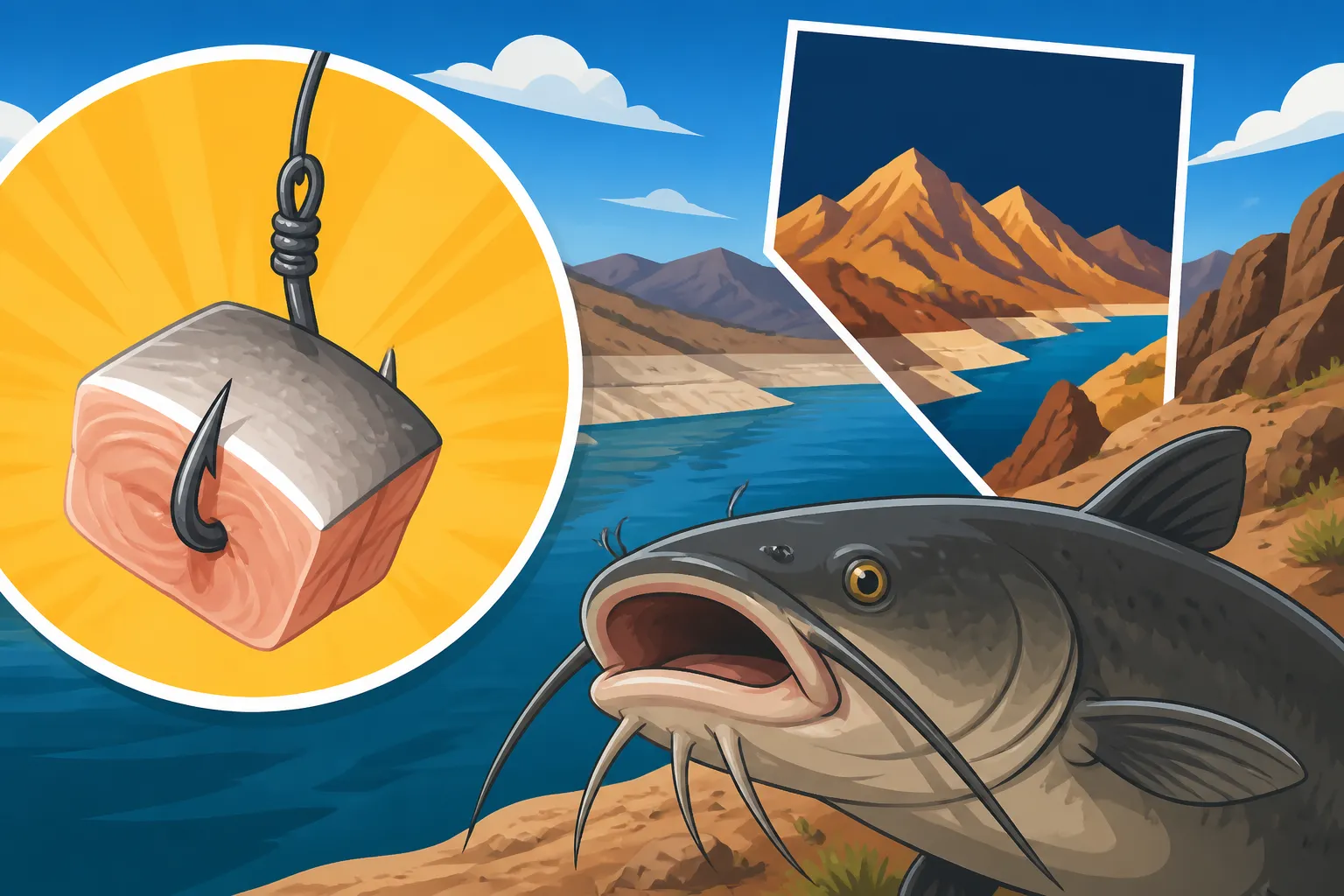
Cut Bait: This is a perennial favorite. Shad, carp, bluegill, or even mackerel cut into chunks or strips release strong oils and scents that catfish can detect from a distance. For bigger flatheads, a live bluegill or small carp can be irresistible. Be sure to check Nevada Fishing Regulations Explained for rules on using live bait, as some species are restricted. The fresher the cut bait, the better, as the scent trail is stronger. Many anglers will catch baitfish directly from the reservoir they are fishing, ensuring it’s a natural food source for the catfish.
Chicken Livers: A classic catfish bait, chicken livers are incredibly potent due to their strong scent and mushy texture. The challenge is keeping them on the hook, especially with a strong cast. Many anglers use mesh bait holders or wrap them with fishing line to secure them. While messy, their effectiveness is undeniable.
Stink Baits: Commercial stink baits, dough balls, and pre-formed "catfish baits" are designed to be highly attractive to channel catfish. Brands like Berkley PowerBait (PowerBait for Catfish) offer options that are easy to use and store. These often come in paste form to be molded around a treble hook or dip bait form used with sponges or plastic worms designed to hold the scent. While very effective for channel cats, flatheads typically prefer fresh cut bait or live bait.
Hot Dogs: Yes, plain old hot dogs can be surprisingly effective! They are cheap, easy to handle, and have a scent that catfish seem to like. You can even "doctor" them up by soaking them in garlic, Kool-Aid, or other potent scents.
Remember, the key is scent and natural presentation. While trout might prefer a different menu (as discussed in Best Bait for Nevada Trout), catfish are all about the funk.
Effective Fishing Techniques
Once your bait is rigged, it’s about putting it in the right place and being patient.
Cast and Wait: For most reservoir catfishing, especially from shore or anchored boats, the "cast and wait" technique is standard. Cast your rig to a promising spot (remember those submerged channels, points, and humps!), engage your reel, and place your rod in a sturdy rod holder. Keep your line relatively tight to feel subtle bites, or engage a bait clicker if your reel has one. Catfish bites can range from a gentle tap to a rod-bending drag scream. When you see a bite, resist the urge to immediately snatch the rod; let the fish take the bait, and if using a circle hook, just start reeling steadily.
Drifting: If you're on a boat, drifting can be an incredibly effective way to cover water and find active catfish. Use your trolling motor or the natural wind/current to slowly pull your rig across promising bottom structures. This technique can be especially good for covering large flats or searching for schools of fish. Adjust your sinker weight as needed to ensure your bait stays in the strike zone near the bottom.
Night Fishing: Catfish, particularly large ones, are often more active at night, especially during the warmer months in Nevada. The cooler temperatures and reduced boat traffic can make them more confident to forage in shallower areas. If you're planning a nighttime excursion, bring appropriate lighting and safety gear. The principles are similar to those outlined in Night Fishing Techniques for Striped Bass, but adapted for catfish. Set up your rigs, cast them out, and use glow sticks or bells on your rod tips to detect bites in the dark.
Checking Baits Frequently: Catfish baits, especially chicken livers and softer cut baits, can fall off the hook easily or be picked apart by smaller baitfish. It's a good practice to reel in and check your bait every 15-30 minutes, or sooner if you suspect you've had a light bite. Fresh bait always performs better.
Troubleshooting Common Catfish Rigging Challenges
Even with the perfect rig and bait, reservoir catfishing isn't without its challenges. Understanding how to address common issues can save you frustration and lead to more successful outings.
Dealing with Snags and Structure
Nevada's reservoirs, with their fluctuating water levels, can expose a myriad of underwater obstacles—submerged trees, rock piles, old fences, and other debris. Snags are an inevitable part of reservoir fishing, but you can minimize their impact.
Use Lighter Leaders: As mentioned earlier, using a leader that's slightly lighter in breaking strength than your main line means that if you get snagged, you're more likely to break off only the hook and leader, preserving the rest of your rig (sinker and swivel). This saves time and money.
Break-Away Sinkers: In extremely snaggy areas, some anglers will rig their sinkers on a very light leader (e.g., 6-10 lb test monofilament) that's tied to the main line, separate from the bait leader. This way, if the sinker gets hung up, it breaks off, but you still have a chance to retrieve your fish and the hook.
Positioning and Knowledge: Pay close attention to where you're casting. If you repeatedly get snagged in one spot, try casting slightly to the side or adjusting your distance. Using a fish finder (if fishing from a boat) to map out submerged structure can help you identify clear patches. When fishing from shore, observe the bank for clues about what might be under the water. Sometimes, a slight shift in your casting angle is all it takes to avoid a troublesome rock pile.
Adjusting for Water Depth and Current
Reservoir conditions can change throughout the day, influencing where catfish are holding and how your rig needs to perform.
Sinker Weight Adjustment: This is paramount. On a windy day, or if you're fishing in a current (like near a river inlet or dam discharge), you'll need heavier sinkers to keep your bait anchored where you want it. If the water is calm and shallow, lighter sinkers are sufficient to prevent your bait from being spooked by a heavy splash. Always carry a range of sinker weights in your tackle box so you can adapt on the fly. As discussed in Best Sinker Weight for Bottom Fishing a Reservoir, matching the sinker to the conditions is crucial for optimal bait presentation.
Leader Length Modification: If catfish are being finicky or the water is exceptionally clear, a longer leader (2-3 feet) can make your bait appear more natural, drifting enticingly away from the heavy sinker. In areas with dense bottom cover or if you want to keep your bait very close to a specific piece of structure, a shorter leader (6-12 inches) might be more effective. Experiment with leader lengths until you find what the fish prefer on that particular day.
Checking Depths: Catfish are often depth-oriented. If you're not getting bites at one depth, try moving your presentation shallower or deeper. Using a fish finder is invaluable for identifying these depth changes and locating channels or drop-offs where catfish might be congregating. Even without one, varying your cast distance and retrieving at different speeds can help you probe various depths. Just like you'd adjust your approach for trout during different Nevada Fishing Seasons by Month, you'll need to stay flexible with your catfish rigging to account for changing water conditions.
Disclaimer
Fishing regulations and conditions in Nevada can change. Always check the latest Nevada Department of Wildlife (NDOW) regulations before heading out. This guide is for informational purposes only and does not supersede official rules or personal safety precautions.