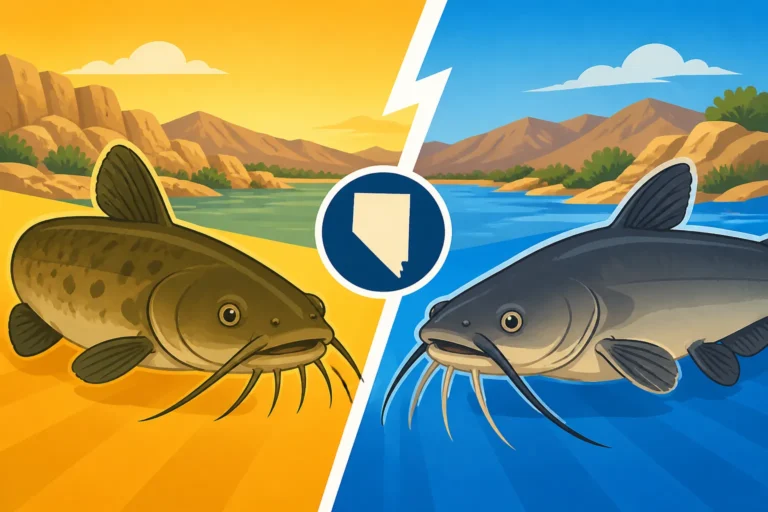
Lahontan cutthroat trout coloring and markings
For anglers venturing into Nevada's iconic waters, especially the legendary Pyramid Lake, there's a unique thrill in encountering the Lahontan cutthroat trout. But let's be honest, sometimes it can be a real head-scratcher trying to tell the difference between these magnificent native fish and other trout species you might hook. You want to be sure of what you've caught, whether for conservation, bragging rights, or simply to appreciate its beauty. This comprehensive guide is designed to peel back the layers of confusion, offering a deep dive into the specific coloring and markings that distinguish the Lahontan cutthroat trout, helping you confidently identify your next catch.
The Distinctive Palette of the Lahontan Cutthroat Trout
The Lahontan cutthroat trout (LCT) is a fish of striking beauty, and its coloration is as diverse as the Nevada landscapes it calls home. What you see on one fish can vary quite a bit from another, even from the same lake, which can make identification tricky. However, there are some undeniable characteristics that, once you learn to spot them, make these fish truly unique.
Overall Body Color and Patterns
When you first lay eyes on a Lahontan cutthroat, you might notice a range of base colors that truly reflect its environment. Many anglers describe them as having a silvery or brassy sheen, often with an olive or even yellowish-green hue on their backs, fading to lighter flanks and a white belly. This isn't just random; these colors often serve as camouflage, helping them blend into the varying depths and substrates of their habitats, from the rocky shores of Pyramid Lake to the more vegetated sections of a slow-moving river.
The spotting patterns are another key feature. Unlike the often uniform, small spots of a rainbow trout, LCTs typically display larger, more irregular spots that are concentrated towards the tail. You'll often find these spots extending onto the caudal (tail) fin, and they can vary in shade from dark olive to black. These spots might be sparse near the head and become denser as you move towards the rear of the fish. Some fish will have more defined, round spots, while others might have elongated or even X-shaped markings. The intensity and clarity of these spots can also be influenced by the fish's diet and the clarity of the water it inhabits. For instance, fish from deeper, clearer waters might exhibit more vibrant and distinct markings.
The Signature Cutthroat Markings
Ah, the "cutthroat" slash! This is arguably the most defining and captivating feature of the Lahontan cutthroat trout, giving them their very name. Underneath the lower jaw, on either side of the throat, you'll find a pair of vibrant, reddish-orange or sometimes even crimson streaks. These marks aren't just subtle; they can be quite bold and intense, often appearing as if someone has slashed paint across their throat.
These slashes aren't always equally prominent on every fish. Their intensity can vary depending on the individual fish, its age, its diet, and especially its readiness to spawn. During the spawning season, both male and female LCTs will often exhibit much brighter and deeper red slashes, a visual signal that plays a role in their reproductive rituals. Outside of spawning, they might be a softer orange or even a faint pink, but they are almost always present in some form. Learning to gently cradle a fish and look for these tell-tale marks can quickly confirm your identification. Do Lahontan cutthroat trout have red markings? delves deeper into this particular trait.
Fin Characteristics and Coloration
While the body and throat markings grab a lot of attention, don't overlook the fins of a Lahontan cutthroat trout. They offer additional clues for accurate identification. The dorsal (back) fin and caudal (tail) fin are typically spotted, mirroring the patterns on the body, though the spots on the fins may be slightly smaller or more faded. The caudal fin itself is usually broad and slightly forked, though a very large, older fish might have a tail that appears more square.
The pectoral (chest) and pelvic (belly) fins, along with the anal fin, are often a more subdued, yellowish, or even orange-tinged color. Sometimes, you'll see a faint dusky leading edge on these fins. While not as dramatically colored as the throat slashes, these subtle hues contribute to the overall aesthetic of the LCT. Observing the shape and condition of the fins can also give you an idea of the fish's health and age, with older fish sometimes showing more wear and tear on their fin edges.
Factors Influencing Lahontan Cutthroat Trout Coloration
It's truly fascinating how a fish's environment can mold its appearance. Just like us, what they eat and where they live plays a huge role in their overall look. For Lahontan cutthroat trout, these external factors can make their already diverse coloring even more varied, leading to a vibrant spectrum of shades and patterns.
Habitat and Water Conditions
Where a Lahontan cutthroat lives dramatically impacts its colors. Fish residing in the deep, clear, and vast waters of Pyramid Lake, for instance, often develop that classic silvery-brassy sheen, allowing them to disappear against the shimmering backdrop or the deep blue depths. The unique mineral content and high alkalinity of Pyramid Lake's waters are thought to contribute to the robust health and distinct appearance of these fish. These lake-dwelling LCTs tend to be larger and often exhibit more muted, silvery tones compared to their riverine cousins.
Contrast this with LCTs found in smaller, shallower streams or reservoirs with different bottom compositions. Fish from areas with dark, rocky bottoms might appear darker, with more pronounced, almost black spots and a deeper olive or brown back. Those from sandy or gravelly bottomed rivers might show lighter, more golden hues. Water clarity also plays a role; fish in turbid waters may have a duller coloration overall, whereas those in crystal-clear mountain streams might boast incredibly vivid markings. Understanding these environmental influences can help you anticipate the kind of coloration you might encounter in different parts of Nevada, whether you're fishing a high-alpine lake or a desert reservoir.
Diet and Age
You know the saying, "you are what you eat," and for Lahontan cutthroat trout, it's absolutely true! Their diet is a significant contributor to the pigments that show up in their skin and flesh. Fish that consume a lot of crustaceans, like the scuds and small shrimp that are abundant in some of Nevada's waters, can develop a deeper, more reddish or orange tint to their flesh, which can sometimes subtly influence their external coloration. A diet rich in baitfish or aquatic insects, on the other hand, might lead to more silvery or olive tones.
Age also brings about changes in an LCT's appearance. Younger fish, or "juveniles," tend to be more silvery with less defined spots and fainter cutthroat slashes. As they mature, their colors deepen, spots become more pronounced, and the signature throat markings grow more intense. A trophy-sized LCT from Pyramid Lake, having lived for many years and consumed countless cui-ui and other prey, will often display a truly majestic and deeply colored palette, a testament to its long life and successful foraging. Lahontan cutthroat trout size at Pyramid Lake offers more insights into these impressive fish.
Spawning Colors and Seasonal Changes
If you're lucky enough to witness Lahontan cutthroat trout during their spawning season, typically in late winter or early spring, you'll see a truly spectacular transformation. Their colors intensify dramatically, taking on a much more vibrant and pronounced appearance. Males, in particular, will develop incredibly rich, deep red or orange hues along their flanks, with their cutthroat slashes becoming almost fiery crimson. Their backs might darken, and their spots will stand out in stark contrast.
Females also exhibit enhanced coloration during this period, though often slightly less intense than the males. These vivid colors serve a vital purpose, acting as visual cues during courtship and rival displays. Outside of the spawning period, the colors mellow out again, returning to their more typical silvery, olive, or brassy tones. These seasonal shifts are important to remember, as a fish caught during peak spawning might look significantly different from one caught in the middle of summer. Observing these changes can also give you a deeper appreciation for the life cycle of these incredible fish. Pyramid Lake Season and Bag Limit Rules can provide more detail on fishing regulations during sensitive times of the year.
Differentiating Lahontan Cutthroat from Other Nevada Trout Species
One of the biggest challenges for new and even experienced anglers in Nevada is correctly identifying the exact species of trout they've caught. While all trout are beautiful, knowing the specific characteristics of the Lahontan cutthroat is crucial, especially given its unique conservation status and specific regulations in places like Pyramid Lake. Let's break down how to tell them apart from some common look-alikes.
Lahontan Cutthroat vs. Rainbow Trout
This is probably the most common identification dilemma. Rainbow trout are widely stocked across Nevada and often co-exist in similar waters. The most immediate difference, and often the easiest to spot, is the absence of the distinct cutthroat slash under the jaw on a rainbow trout. Rainbows might have a subtle reddish or pinkish gill plate, but it won't be a prominent, deep slash like the LCT's.
Next, consider the "rainbow" band. Rainbow trout are famous for the vibrant, iridescent pink or red stripe running horizontally along their lateral line, from gill to tail. Lahontan cutthroat trout lack this continuous, prominent band, though some might show a very faint, broken pinkish wash, especially during spawning. The spotting also differs; rainbow trout typically have smaller, more numerous, and often uniformly distributed spots, including on their dorsal and adipose fins, and often covering their head. LCT spots, as we discussed, are generally larger and more concentrated towards the tail. Their mouths are also slightly different; LCT often have a maxilla (upper jawbone) that extends beyond the rear of the eye, whereas on a rainbow, it typically stops at or before the rear of the eye. For a deeper dive into these distinctions, check out How to tell a rainbow trout from a cutthroat trout.
Lahontan Cutthroat vs. Brown Trout
Brown trout are another widely distributed species in Nevada, known for their wary nature and often impressive size. While they share the "trout" family resemblance, their markings are quite distinct from the Lahontan cutthroat. The most noticeable difference is in their spotting. Brown trout are characterized by dark spots, often surrounded by a lighter halo, giving them a "bull's-eye" appearance. They also frequently have reddish or orange spots mixed in with the dark ones, particularly along their flanks, something you won't typically see on an LCT. These spots are usually distributed across the entire body, including the head and gill covers, but rarely extend onto the tail fin as prominently as with LCT.
Brown trout also do not possess the cutthroat slash. Their base coloration tends to be more golden, brownish, or olive, often with a more uniform, buttery yellow belly. Their tails are usually squarer or even slightly convex, and they typically have a very distinct adipose fin (the small fleshy fin near the tail) that is unspotted. While both are powerful fish, the overall impression you get from a brown trout is distinctly different from the more silvery, heavily tailed-spotted Lahontan cutthroat.
Other Cutthroat Subspecies and Hybrids
While the Lahontan cutthroat trout is the primary native cutthroat subspecies in Nevada, it's worth noting that other cutthroat subspecies exist elsewhere, and hybridization can occur, though it's less common for pure LCTs in their core native range like Pyramid Lake. However, in some stocked or mixed waters, you might encounter different cutthroat varieties. Generally, all cutthroat subspecies will share that characteristic throat slash, but their body coloration, spotting patterns, and overall size might vary.
In areas where rainbow trout have been introduced, hybridization between cutthroat and rainbow trout can sometimes occur, leading to what are often called "cutbows." These fish can be particularly challenging to identify, as they might display a mix of features – perhaps a faint cutthroat slash combined with a hint of a rainbow band, or a spotting pattern that's intermediate between the two. Thankfully, at Pyramid Lake, efforts to protect the pure Lahontan strain mean that true cutbows are less common than in other mixed fisheries. For accurate identification in diverse fisheries, a good field guide or a quick reference from a reliable source like the Nevada Department of Wildlife (NDOW) is always your best bet. Nevada Fish Species Guide offers a broader look at all the fish you might encounter.
| Feature | Lahontan Cutthroat Trout | Rainbow Trout | Brown Trout |
|---|---|---|---|
| Throat Markings | Distinct, vibrant red/orange "slash" under jaw | Absent, might have faint red on gill plate | Absent |
| Lateral Stripe | Absent or very faint, broken pinkish wash | Prominent, iridescent pink/red stripe (rainbow band) | Absent |
| Body Spots | Larger, irregular, concentrated towards tail, often on tail | Smaller, numerous, evenly distributed, often on head | Dark spots with light halos, some red/orange spots, usually not on tail |
| Tail Fin | Broad, slightly forked, often heavily spotted | Moderately forked, usually spotted | Square or slightly convex, usually unspotted |
| Mouth | Maxilla extends past eye | Maxilla usually to or before rear of eye | Maxilla extends past eye |
| Overall Color | Silvery, brassy, olive back; lighter belly | Silvery, greenish back; lighter belly | Golden, brownish, olive back; yellowish belly |
| Native to Nevada? | Yes (Pyramid Lake, Truckee River basin) | No (widely stocked) | No (widely stocked) |
Practical Tips for Anglers: Observing and Identifying LCT
So you've hooked a fish, and your heart is pounding – is it a Lahontan cutthroat? Being able to confidently identify your catch isn't just satisfying; it's a vital part of responsible angling, especially when dealing with a species like the LCT that has specific regulations and conservation needs.
Best Practices for Catch-and-Release Identification
First and foremost, remember that gentle handling is absolutely paramount, particularly for a native and often protected species like the Lahontan cutthroat trout. If you're practicing catch-and-release, the less stress you put on the fish, the better its chances of survival. When you bring the fish close, try to keep it in the water as much as possible, or at least wet your hands before touching it. This protects its delicate slime coat.
To observe the markings, gently cradle the fish and carefully look at its throat for that unmistakable cutthroat slash. Pay attention to the size and distribution of spots, and look at the tail fin. Bright, natural light is your best friend here. Sometimes, if the light is poor or the fish is thrashing, it can be hard to get a clear view. Using polarized sunglasses, like those you might find on Amazon, can also help you see through the water's glare if the fish is still partially submerged, allowing for better observation of its patterns. Always keep a pair of release pliers handy to minimize handling time. For more on proper techniques, read up on Handling and Releasing Lahontan Cutthroat Trout.
Photography for Confirmation and Memory
Taking a good photograph can not only provide a lasting memory of your catch but also serve as excellent documentation for confirmation later. If you're unsure about an identification, a clear photo can be shared with experienced anglers or even local wildlife agencies for verification. When photographing, try to get a shot that clearly shows the key identifying features we've discussed.
Hold the fish horizontally and capture its entire body, paying special attention to the head, throat, and tail. Try to get a shot of the underside of the jaw to highlight the cutthroat slash. If possible, take a second shot of the whole fish against a ruler or a familiar object (like a fishing net handle) to give a sense of scale, but remember to minimize the time the fish is out of the water. Just a few seconds are usually enough for a couple of good snaps. Some anglers keep a small, waterproof identification guide in their tackle box, perhaps a regional fish guide purchased from Amazon, which can be a quick reference right there on the water. Remember, responsible angling means getting the fish back into its environment quickly and safely, so quick identification and photography are key. Don't forget that Are barbless hooks required at Pyramid Lake? for this very reason, helping protect the fish for future generations.
It's a wonderful feeling to confidently identify the fish you've caught, especially when it's a magnificent creature like the Lahontan cutthroat trout. By focusing on their unique coloring and markings, you'll not only enhance your fishing experience but also contribute to the appreciation and conservation of these remarkable Nevada natives.
Disclaimer
This article is for general informational purposes only and does not constitute professional advice. Laws, prices and regulations vary by location and change over time. Consult a qualified professional for guidance on your specific situation.