Best Spinning Reels for Trout Fishing
One of the trickiest parts about trout fishing in Nevada, especially for those new to the high desert or mountain lakes, is figuring out what gear will actually hold up and perform. You want to feel every subtle nibble without your equipment feeling flimsy, and you certainly don't want a sticky drag to cost you that trophy Lahontan cutthroat you've been dreaming of. This guide is all about helping you understand the world of spinning reels so you can choose the absolute best one for chasing trout across our diverse and beautiful Nevada waters, from small streams to vast reservoirs.
Understanding Spinning Reels for Trout
When we talk about trout fishing, especially with spinning gear, the reel isn't just a place to store your line; it's a critical piece of the puzzle that dictates how well you can cast, retrieve, and ultimately, fight a fish. Many anglers, especially those coming from bass or saltwater fishing backgrounds, might think any old spinning reel will do the trick. But trout, with their often light bites and spirited fights, require a more nuanced approach. We're looking for finesse, durability, and a smooth, reliable performance that won't let you down when it counts.
Key Components of a Spinning Reel
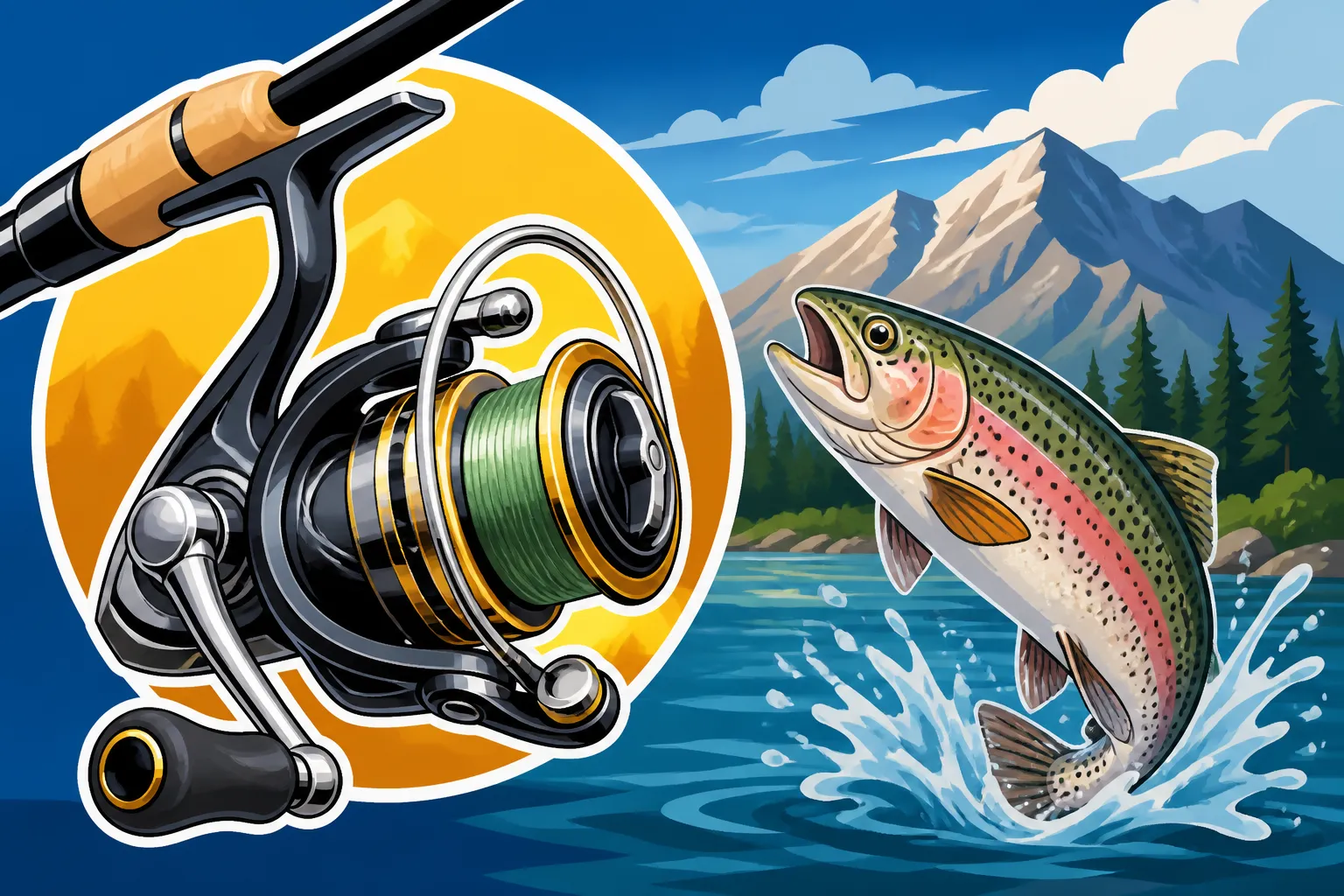
Let's break down the parts that make a spinning reel tick, because understanding these will empower you to make an informed choice. Imagine you're standing on the banks of the Truckee River or nestled in a cove on Lake Tahoe; each component plays its part in your success.
First, you have the spool, which is the cylindrical part that holds your fishing line. For trout fishing, we typically look for smaller spools designed for lighter lines. A good spool will manage line smoothly, reducing tangles and allowing for longer, more accurate casts. Then there's the bail, that metal arm that sweeps around the spool. When open, it allows line to peel off freely during a cast. When closed, it guides the line back onto the spool during retrieval. A strong, smoothly operating bail is essential, preventing frustrating line twists and missed bites.
The drag system is arguably the most crucial component for trout fishing. This mechanism allows line to peel off the spool under tension, preventing your line from snapping when a fish makes a powerful run. A butter-smooth, consistently adjustable drag is non-negotiable for trout, as they have delicate mouths and often fight hard. You’ll want to be able to fine-tune it perfectly for those light lines. Finally, the handle is what you crank to retrieve your line. Look for a comfortable, ergonomic design that won't fatigue your hand during a long day of casting and reeling, especially when battling a strong fish. Many reels offer interchangeable handles for left or right-hand retrieve, which is a nice touch for personalization.
Why Trout Fishing Demands Specific Reel Qualities
Trout fishing, particularly here in Nevada, isn't just about raw power; it's about finesse and sensitivity. Unlike targeting a hefty striped bass in Lake Mead, where you might be throwing heavy lures and pulling against strong currents, trout often require a much lighter touch. This is why the characteristics of your spinning reel become so important.
Think about it: many of us are using incredibly light monofilament or fluorocarbon lines, often in the 2-6 pound test range, especially when fishing for shy trout in clear mountain streams or high mountain lakes for summer trout fishing in Nevada. A heavy, clunky reel designed for bigger game will simply overwhelm such delicate lines, making casting a chore and detection of subtle bites nearly impossible. Moreover, trout, particularly the larger ones like the Lahontan cutthroat in Pyramid Lake or the Mackinaw in Lake Tahoe, have a reputation for sudden, powerful runs and head shakes. A reel with a poor or jerky drag system will either snap your light line instantly or tear the hook right out of the fish's mouth. You need a drag that gives line smoothly, consistently, and without hesitation.
Furthermore, balance is key. A good trout spinning reel should balance well with a lightweight, sensitive rod, forming an extension of your arm rather than feeling like a separate, cumbersome object. This balance enhances sensitivity, allowing you to feel even the most delicate takes. It also reduces fatigue, letting you cast and retrieve all day long, whether you're working a small spinner in a local pond or drifting bait in a swift current. The right reel helps you present your lure naturally, feel every twitch, and respond effectively when that trout finally commits. For more on matching your complete setup, check out our guide on Best Fishing Rods for Nevada Lakes.
Essential Features to Look for in a Trout Spinning Reel
Okay, so we know what a spinning reel is made of and why trout are special. Now, let's get into the nitty-gritty: what absolutely must your trout spinning reel have to ensure you're having more good days than bad on the water? When you're out there, battling the Nevada sun or a brisk mountain breeze, the last thing you want is your gear failing you. These features are your non-negotiables for a reliable trout reel.
Smooth Drag System
I cannot stress this enough: a smooth, consistent drag system is the single most important feature for any trout spinning reel. Imagine you’ve hooked into a gorgeous rainbow trout at a stocked pond, or perhaps a feisty brown trout in a high-country stream after a fresh Nevada Trout Stocking Schedule update. The fish makes a sudden, powerful run. If your drag isn’t smooth, if it stutters, sticks, or locks up, your light line is going to snap faster than you can say "fish on!" You'll be left with a heartbreaking tale of "the one that got away" and a tangled mess.
A quality drag system allows line to peel off evenly under pressure, absorbing the shock of a fish's run and protecting your line. Many reels use a multi-disc drag system, often made from felt, carbon fiber, or a combination of materials, which provides a larger surface area for consistent friction. When you're fishing with 4-pound test line, the difference between a jerky drag and a silky-smooth one is literally the difference between landing that fish and losing it. You should be able to set your drag to just the right tension—enough to fight the fish, but loose enough to give line when it pulls hard. A good rule of thumb is to set your drag to about 25-30% of your line's breaking strength. So, for 4lb line, you're looking for 1lb of drag. Test it by pulling line directly from the spool with a small scale before you even cast. This seemingly small detail will save you immense frustration and lead to many more successful catches on your Nevada adventures.
Gear Ratio and Retrieval Speed
The gear ratio of a spinning reel refers to how many times the bail (or spool, depending on the reel design) rotates around the spool with one full turn of the handle. This directly impacts your retrieval speed, which is a crucial factor when targeting trout. You'll often see numbers like 5.2:1 or 6.0:1. A 5.2:1 ratio means the bail goes around 5.2 times for every single crank of the handle.
For trout fishing, especially when using lighter lures like spinners, small crankbaits, or even just retrieving bait, a moderate to fast gear ratio is generally preferred. A ratio in the range of 5.0:1 to 6.2:1 typically offers a good balance. A moderate speed (around 5.2:1 to 5.6:1) is excellent for general purpose trout fishing, allowing you to work a variety of lures at a controlled pace, giving the trout time to react without appearing unnatural. This is fantastic for tossing out PowerBait or worms in one of the many Best Nevada Trout Lakes or even for slow-rolling a small jig.
However, if you're frequently fishing moving water like the East Walker River or needing to burn a spinner quickly to trigger a reaction strike, a faster gear ratio (closer to 6.0:1 or even higher) can be beneficial. It allows you to pick up slack line quickly, which is critical when a trout suddenly charges towards you, or when you need to keep a lure moving rapidly through a specific zone. The key is to match your retrieval speed to the lure and the fish's activity. Too slow, and some trout might lose interest; too fast, and they might not have a chance to strike. Having a reel that allows for versatile retrieval speeds, either through its gear ratio or by your own cranking adjustments, makes you a much more adaptable angler.
Reel Size and Weight
When it comes to spinning reels for trout, size definitely matters, but perhaps not in the way you'd first think. We're generally talking about smaller, lighter reels, often referred to as ultralight or light tackle. These reels are typically designated with numbers like 1000, 2000, 2500, or sometimes even 500 for the truly ultralight setups.
An ultralight reel (500-1000 size) is fantastic for small streams, ponds, or when you're targeting panfish alongside trout. They are incredibly light, allowing you to pair them with equally light rods (4-6 feet long) and fish with lines as light as 2-4 pound test. This setup is perfect for detecting the subtle takes of wary trout and making incredibly precise casts. Think about those serene moments fishing one of the Nevada Urban Pond Fishing Rules areas, where every ripple and twitch matters. The downside is less line capacity and generally less cranking power, which might not be ideal for larger, longer-running fish.
For more general trout fishing in larger lakes and reservoirs like Wildhorse or Lahontan, a 2000 or 2500 size reel is often the sweet spot. These reels offer a good balance of light weight, sufficient line capacity for 4-8 pound test line, and enough power to handle larger trout, including those aggressive Lahontan cutthroats. They pair beautifully with 6-7 foot light or medium-light rods. The overall weight of your reel needs to be balanced with your rod to create a comfortable, ergonomic setup that feels like an extension of your arm. An unbalanced setup will cause fatigue, reduce casting accuracy, and diminish your sensitivity to bites. When you're hiking into a remote mountain lake, every ounce counts, so a lightweight yet robust reel is a real blessing.
Advanced Considerations for Nevada Trout Anglers
Nevada fishing isn't always gentle. From the scorching summer sun reflecting off the water to the occasional dusty windstorms, our environment can be tough on gear. Taking your reel choice a step further means thinking about how it will stand up to these conditions and perform optimally, especially when chasing trout in diverse settings like Lake Tahoe Nevada Fishing Guide or smaller, remote waters.
Corrosion Resistance and Durability
The Silver State offers an incredible variety of fishing environments, but many of them share a common trait: they can be hard on your fishing gear. Think about the mineral-rich waters of some high desert reservoirs, or the fine dust that seems to get into everything when you're fishing along the shore. Even if you're not explicitly fishing saltwater, corrosion can still be an issue.
A reel with good corrosion resistance will feature components made from stainless steel, aluminum, or composite materials that are less susceptible to rust and degradation. Bearings, shafts, and other internal mechanisms are particularly vulnerable. Look for reels that advertise sealed designs or corrosion-resistant coatings. This is especially true if you plan to fish Pyramid Lake, where the alkaline water can be quite harsh, or if you ever find yourself venturing to the lower Colorado River below Hoover Dam, which, while freshwater, can still carry fine silty particles that can wear down unprotected parts. Investing in a reel with superior corrosion resistance means it will perform reliably for longer, requiring less intensive maintenance and saving you money in the long run. Durability also extends to the reel's overall construction, ensuring it can withstand accidental drops, bumps, and the general wear and tear of being transported to remote fishing spots. A sturdy frame and quality components mean your reel won't flex or bind under pressure, maintaining its smooth operation even after years of use.
Line Capacity and Type
Choosing the right line for your trout spinning reel is just as important as the reel itself, and the reel's line capacity dictates what you can comfortably spool on. For most Nevada trout fishing, we're talking about lighter lines, typically between 2 and 8-pound test.
- Monofilament (Mono): This is a classic for a reason. It's affordable, has good knot strength, and offers a bit of stretch, which can be forgiving when a trout makes a sudden lunge. Its buoyancy also makes it good for topwater presentations or floating baits. For small streams or urban ponds with stocked trout, 4-6 lb mono is perfect. Your reel should be able to hold at least 100 yards of this comfortably.
- Fluorocarbon: Known for its low visibility underwater and excellent abrasion resistance, fluorocarbon is a favorite for clear waters and wary trout. It sinks, which can be an advantage when you want your lure to get down quickly. It has less stretch than mono, offering more sensitivity. However, it can be stiffer and more prone to memory on smaller spools. If you opt for fluorocarbon, ensure your reel's spool design helps manage line twist.
- Braided Line: Braided line offers incredible strength-to-diameter ratio, zero stretch for maximum sensitivity, and excellent casting distance. For trout, you'd typically use a very thin braid (6-10 lb test, which is equivalent to 2-4 lb mono diameter) with a fluorocarbon or monofilament leader. The leader provides invisibility and stretch, while the braid gives you feel and power. The reel's line capacity should be ample enough to load a good amount of braid (say, 150 yards) plus your leader material. This setup is fantastic for detecting the softest bites, especially when fishing deeper reservoirs like Lake Mohave. For more on this, check out our article on Best Line for Desert Reservoir Fishing.
Ultimately, your reel needs to have enough capacity for your chosen line type and strength to handle long casts and strong runs without leaving you spooled. Too much line can cause tangles, while too little means you might lose that big fish that decides to run for the horizon.
Bearings and Smoothness
Ah, the magical number of bearings! You'll often see reels advertised with a "X+1" bearing count, like "7+1" or "4+1." The first number refers to the number of ball bearings, and the "+1" typically indicates a roller bearing for instant anti-reverse. More bearings generally equate to a smoother retrieve, a more fluid feel, and often, higher durability, as the load is distributed more evenly.
For trout spinning reels, while you don't necessarily need a ridiculously high bearing count, aim for a reel with at least 4-6 quality ball bearings. These bearings are usually made of stainless steel for corrosion resistance and are located in key areas like the main shaft, gear system, and line roller. A higher quality bearing, even if fewer in number, will almost always outperform a larger quantity of cheap, low-grade bearings. When you crank the handle, a good bearing system feels effortless and seamless, allowing you to focus on the feel of your lure and any subtle tugs from a fish.
The smoothness provided by good bearings isn't just about comfort; it also aids in casting distance and accuracy by reducing friction as the line peels off the spool and passes over the line roller. A smooth line roller, in particular, is critical to prevent line twist and wear, which can be a real headache, especially with lighter monofilament or fluorocarbon lines. When you're considering a reel, give the handle a few cranks. Does it feel buttery smooth? Is there any play or wobble? Does the bail snap over cleanly? These small tactile checks can tell you a lot about the quality of the bearings and the overall construction, ensuring you get a reel that performs consistently throughout your Nevada fishing expeditions.
Matching Your Reel to Your Nevada Trout Fishing Style
Nevada offers an incredibly diverse range of trout fishing experiences, from tiny high-desert creeks to vast, deep lakes. What works perfectly for a small stream won't cut it for a trophy hunt in Pyramid Lake. The key is to match your spinning reel not just to the fish, but to how and where you'll be fishing for them. Let’s dial in your setup for success.
Ultralight Setups for Small Streams and Ponds
There’s something truly special about the delicate dance of ultralight fishing, especially for trout. When you're wading a small mountain stream in the Ruby Mountains, or quietly working the edges of an urban pond like Floyd Lamb Park, a sensitive, ultralight setup is your best friend. For these situations, a spinning reel in the 500 to 1000 size range is absolutely ideal.
These reels are incredibly lightweight, often weighing just a few ounces. This minimal weight allows them to balance perfectly with ultralight spinning rods, typically 4.5 to 6 feet long, designed for incredibly light lines (2-4 pound test). The finesse of such a setup is unparalleled. You can cast tiny spinners, micro jigs, or even a single salmon egg with remarkable accuracy and feel. The smaller spool on these reels is designed to manage these fine diameter lines, minimizing line memory and promoting smooth casting. With a good ultralight reel, you'll feel every bump, every weed, and most importantly, every subtle take from a cautious trout. The joy of ultralight fishing isn't just about catching fish; it's about the connection to the environment and the heightened experience of the fight, even with smaller trout. Just be mindful of your drag settings; even a feisty 12-inch trout can snap a 2-pound line if your drag isn't set perfectly! For a deeper dive into techniques for these smaller waters, explore Nevada Urban Pond Fishing Rules.
Versatile Options for Lakes and Reservoirs
If you're like many Nevada anglers, you probably find yourself fishing a variety of waters: mid-sized reservoirs, larger rivers, and the more accessible parts of our bigger lakes. For this kind of general-purpose trout fishing, you need a reel that offers a good balance of capacity, power, and sensitivity. This is where the 2000 to 2500 size spinning reels truly shine.
These reels are the workhorses of trout fishing. They offer enough line capacity to spool 6-pound test monofilament or fluorocarbon (or 10-15 pound braid with a leader) for those longer casts required in open water. They pair beautifully with 6.5 to 7-foot medium-light or light action spinning rods, creating a balanced setup that can handle anything from casting small spoons to drifting bait under a bobber. A 2000-2500 size reel typically has a stronger drag system and more robust gearing than an ultralight, giving you the confidence to tackle larger, more aggressive trout. Imagine targeting rainbows and brown trout in places like South Fork State Recreation Area or Eagle Valley Reservoir; these reels provide the backbone you need without feeling overly bulky. They allow for controlled retrieves, essential whether you’re working a Rapala or slowly dragging a worm along the bottom. This versatility makes them an excellent choice for anglers who don't want to carry multiple rod and reel setups for every single fishing trip across the state. They're often found at stores like Bass Pro Shops or online retailers like Amazon, offering a wide range of options for every budget.
Heavy-Duty Reels for Trophy Trout Waters
When your sights are set on the giants – the massive Lahontan cutthroat trout of Pyramid Lake or the deep-dwelling Mackinaw (Lake Trout) of Lake Tahoe – you need to step up your gear. These fish are not only powerful but can grow to impressive sizes, demanding a reel with serious backbone and ample line capacity. For these trophy trout waters, you’ll typically be looking at spinning reels in the 3000 to 4000 size range.
These larger spinning reels are designed to handle heavier lines, often 8-12 pound test monofilament or up to 20-30 pound braided line for extreme power and casting distance. Paired with medium-heavy action rods (7-9 feet in length), they form a formidable combination capable of casting heavy spoons, swimbaits, or oversized minnow imitations, and then, crucially, landing those hard-fighting trophy fish. The drag systems on these reels are significantly more robust, providing greater maximum drag pressure and superior heat dissipation, which is vital during prolonged battles with a fish that might make multiple long runs. Think about a 20-pound Lahontan cutthroat ripping line off your spool at Pyramid Lake; a smaller reel simply wouldn't stand a chance. For targeting Mackinaw trout in the deep cold waters of Lake Tahoe, these reels give you the leverage needed to winch up a heavy fish from considerable depths. While they are heavier than ultralight or versatile reels, the added weight is a necessary trade-off for the power and durability required in these specialized fisheries. Check out How to Catch Mackinaw Trout at Lake Tahoe for more on what these fish demand.
Here’s a quick overview of spinning reel sizes for different Nevada trout scenarios:
| Reel Size Category | Typical Sizes (e.g.) | Ideal Rod Length (feet) | Line Test (mono/fluorocarbon) | Best for Nevada Waters | Key Application |
|---|---|---|---|---|---|
| Ultralight | 500, 1000 | 4.5 – 6 | 2-4 lb | Small streams, urban ponds, high mountain creeks | Finesse, small lures, subtle bites |
| Light/Versatile | 2000, 2500 | 6 – 7 | 4-8 lb | Medium lakes, larger rivers, general reservoirs | All-around trout, moderate lures/bait |
| Heavy-Duty | 3000, 4000 | 7 – 9 | 8-12 lb (or heavier braid) | Pyramid Lake, Lake Tahoe (Mackinaw), large reservoirs | Trophy trout, heavy lures, deep water |
Caring for Your Spinning Reel in the Nevada Environment
You've invested in a great spinning reel for your Nevada trout fishing adventures, and you want it to last. Our unique desert climate, with its dust, heat, and sometimes alkaline waters, can be surprisingly tough on fishing gear. Proper care isn't just about keeping your reel looking pretty; it's about ensuring it performs flawlessly season after season. A well-maintained reel will always out-perform a neglected one, and a little effort after each trip goes a long way.
Routine Cleaning and Maintenance
After a fantastic day of reeling in trout, whether you were at Wildhorse Reservoir or a local urban pond, your reel needs a little TLC. Dust, dirt, water (especially mineral-rich or alkaline water from places like Pyramid Lake), and even fish slime can wreak havoc on internal components and affect overall smoothness.
Your routine cleaning doesn't need to be an elaborate disassembly process after every trip, but a quick wipe-down is crucial. First, loosen your drag all the way. This relieves pressure on the drag washers, extending their life. Then, take a soft, damp cloth and wipe down the entire reel, paying close attention to the spool, bail, handle, and the reel foot. If you've been in dusty or muddy conditions, a slightly more thorough cleaning with a soft brush (like an old toothbrush) can help dislodge stubborn grime from crevices. Never use harsh chemical cleaners, as they can damage finishes or delicate parts.
Once wiped clean, allow the reel to air dry completely. Then, a tiny drop of reel oil on the handle knobs and the line roller will keep things spinning smoothly. A very light application of reel grease to exposed gears (if accessible) or the bail arm mechanism can also help. Remember, less is more when it comes to lubrication; over-oiling can attract more dirt. Periodically, maybe once or twice a season depending on use, you might consider a deeper clean following the manufacturer's instructions, or even take it to a professional for service. This preventative maintenance will ensure your reel maintains its factory smoothness and doesn't develop any sticky drag issues or grinding noises that could cost you a fish.
Storage Tips for Longevity
Where and how you store your spinning reel between fishing trips is just as important as how you clean it. Improper storage can lead to premature wear, corrosion, and damage, especially in Nevada's varying climate.
First and foremost, always store your reel in a dry, cool place, away from direct sunlight or extreme temperature fluctuations. A garage might seem fine, but if it gets blazing hot in the summer or freezing cold in the winter, those conditions aren't ideal for your gear. High heat can degrade lubricants and plastics, while extreme cold can make parts brittle. Many anglers use a dedicated tackle room or a climate-controlled storage area for their valuable equipment. If you keep your reel on a rod, store the rod vertically in a rack to prevent warping or damage.
Consider using a reel cover or a soft reel case. These simple additions, often inexpensive and available at Bass Pro Shops or other fishing retailers, protect your reel from dust accumulation, scratches, and incidental bumps during transport or storage. Again, make sure your drag is loosened before storing the reel, as continuous pressure can compress drag washers and reduce their effectiveness over time. If you use braided line and store your reels for long periods, consider unspooling a few yards to inspect for wear and to avoid line memory setting in, though braid is less prone to this than mono. Following these simple storage practices will dramatically extend the life and performance of your spinning reels, ensuring they're ready for action whenever you hit a prime Nevada Fishing Seasons by Month.
Troubleshooting Common Reel Issues
Even with the best care, sometimes reels act up. Knowing how to quickly troubleshoot common issues can save a fishing trip from frustration. Nobody wants a seized reel when the trout are biting!
Sticky Drag: This is perhaps the most common and infuriating issue. If your drag is grabbing, stuttering, or not allowing line to release smoothly, the first thing to check is if it was overtightened during storage. Next, try loosening and tightening the drag knob several times to reseat the washers. If that doesn't work, the drag washers themselves might be dirty, dry, or worn out. Some reels allow for easy access to the drag stack under the spool for cleaning and relubrication (with proper drag grease), while others might require professional service. Always carry a small tube of reel grease and oil in your Nevada Fishing Gear Essentials for emergencies.
Line Twist: This often manifests as loops springing off your spool, making casting a nightmare. Line twist is usually caused by improperly spooling line onto the reel, using lures that spin excessively without a swivel, or reeling against a stiff drag while a fish is pulling line. To fix it, you can strip all the line off your reel (either onto the ground or by dragging it behind your boat), let it untwist freely, and then reel it back on under light tension. Using quality swivels with spinning lures can also help prevent future twists.
Bail Arm Not Engaging/Closing Properly: If your bail arm is stiff, sluggish, or fails to snap shut, it's often due to dirt or corrosion in the bail spring mechanism. A careful cleaning and a drop of reel oil at the pivot points can often resolve this. If the bail arm is bent, it might need to be straightened or replaced. Don't force it, as you could cause more damage. A properly functioning bail is essential for efficient casting and retrieval, especially when targeting those quick-strike trout in the fast-moving sections of the Truckee River.
Disclaimer
This article is for general informational purposes only and does not constitute professional advice. Laws, prices and regulations vary by location and change over time. Consult a qualified professional for guidance on your specific situation.